

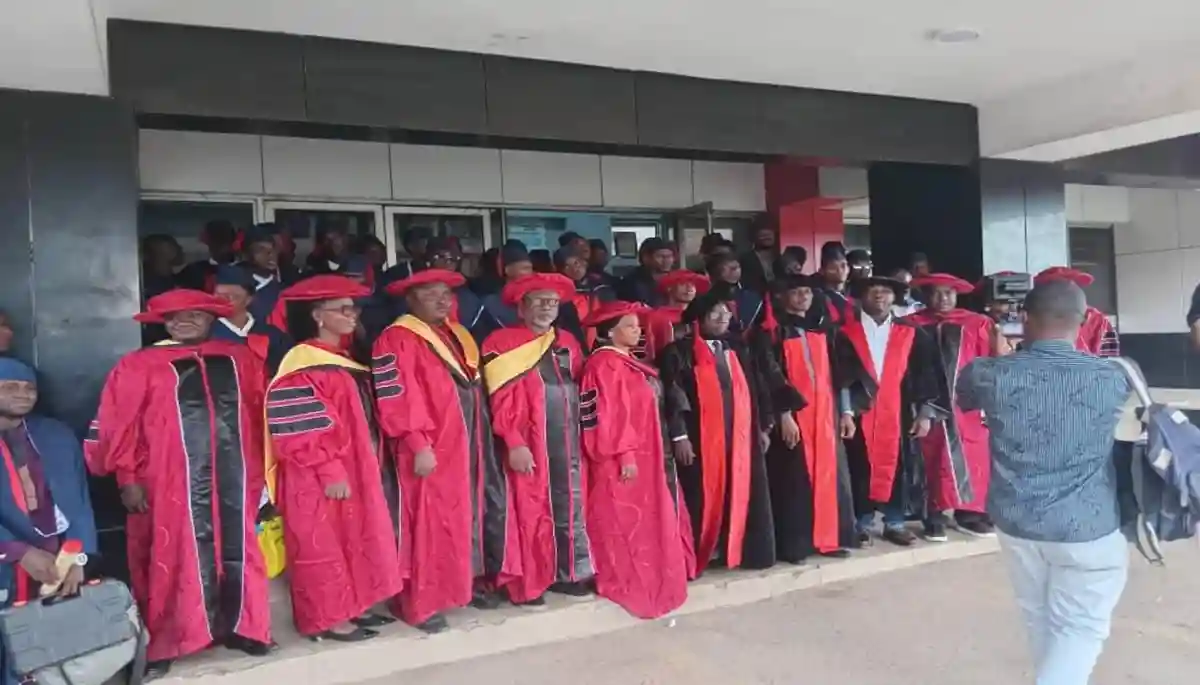
The Industrial Training Fund, in collaboration with the Nigerian Employers’ Consultative Association, has graduated 62 trainees of Batch XIV of the ITF-NECA Technical Skills Development Project at the Industrial Skills Training Centre, Ikeja, Lagos, marking another step in ongoing efforts to strengthen technical manpower for the Nigerian economy.
The graduation ceremony brought together officials of ITF, representatives of NECA, instructors, trainees and their families, as the latest batch completed months of structured technical training and industrial exposure designed to prepare young Nigerians for skilled employment and entrepreneurship.
Speaking at the event, the Director-General and Chief Executive of ITF, Dr Afiz Ogun, described the graduation as “another milestone towards generating a pool of indigenous human capital for the Nigerian economy.” He said the occasion reflected the statutory mandate of the Fund to support skills development and workforce readiness.
“This occasion marks another milestone in our efforts towards generating indigenous manpower for the Nigerian economy, as mandated by the Act which established ITF,” Ogun said. He explained that the ITF-NECA Technical Skills Development Project was created to equip Nigerian youths with employable and industry-relevant skills capable of addressing the country’s manpower deficit.
According to him, the project is structured to respond directly to real industry needs, ensuring that participants graduate with practical competence rather than just theoretical knowledge. “The ITF-NECA Technical Skills Development Project is a collaborative initiative aimed at equipping Nigerian youths with employable skills to address the country’s manpower needs,” he said.
Ogun commended NECA for sustaining the programme over the years, noting that the partnership showed the value of public-private collaboration in skills development. He said the continued involvement of employers ensured that training standards remained relevant and aligned with productivity goals.
“This collaboration stands as a powerful testament to what is possible when the public and private sectors unite with a shared vision. NECA’s understanding of industry needs, commitment to standards and drive for productivity have been indispensable in shaping this programme to be relevant, rigorous and result-orientated,” Ogun said.
Addressing the graduands, the ITF boss urged them to see themselves as agents of change and contributors to national development, despite the uncertainties they may face after training. “As you graduate today and anticipate confronting a world of uncertainties, I want you to create the country you want to be part of. Do the best you can and get involved in national development to move Nigeria forward,” he said.
He added that the graduates now carried the responsibility of representing the values of the programme in the workplace. “As ITF-NECA TSDP graduands and ambassadors, it befits you to bring into industry new ideas, innovations and inventions that would transform the nation,” Ogun said.
The ITF Director-General also highlighted other intervention programmes of the Fund, particularly the Skills-Up Artisans Programme, which he described as a flagship initiative aligned with the Federal Government’s National Talent Export Programme. He said the programme aimed to expand Nigeria’s skilled workforce for both local and international opportunities.
“The target of the SUPA programme is to train 10 million Nigerians in two years across major sectors of the economy. I encourage today’s graduands to key into the programme when the portal is reopened,” Ogun said, while urging them to continue upgrading their skills.
In his welcome address, the Training Manager of the Industrial Skills Training Centre, Ikeja, Mr Akeem Salimonu, said the ceremony was not only a celebration of achievement but also “a testament to the power of collaboration, resilience and vision.” He noted that the project was designed to address the gap between youth skills and modern industry demands.
“Through the foresight of ITF and NECA, this project was created to address one of the most pressing challenges of our nation, the gap between the skills of our young people and the demands of modern industries,” Salimonu said. He added that the partnership had empowered thousands of youths while supporting industrial growth.
“The impact is evident: thousands of young Nigerians have been empowered with employable skills, industries have gained access to competent manpower, and our nation has taken significant strides toward industrial development,” he stated.
Salimonu disclosed that ISTC-Ikeja had participated in the programme since its inception over 15 years ago and was recently commended by NECA for its leadership role in the 2025 implementation of the project. He also provided details of the selection process for the current batch.
“Eight hundred and four entries were received, 350 qualified for the examination, and 130 were invited for the final interview, from which 70 trainees were selected,” he said. According to him, 62 trainees met the criteria for graduation and received the ITF-NECA Certificate of Competence.
“I stand proudly here to announce that this year, we are graduating 62 trainees who have met our criteria in skill and character to build the future of our country,” Salimonu said. He listed the areas of training to include Automobile Mechanic Maintenance, mechanical maintenance and machining, electrical installation maintenance, welding and fabrication, instrumentation and process control, refrigeration and air conditioning, and information and communication technology.
Salimonu also highlighted female participation, saying, “Among the graduands, we have women who have proved that technical skills acquisition is not for men alone.”
Delivering the valedictory speech on behalf of the graduands, the Batch XIV representative, Mr Henry Okwonkwo, said the programme equipped participants with sustainable skills and real-world experience. Okwonkwo, who emerged as the best trainee in the welding and fabrication section, said the training combined theory with practice.
“Today officially marks the grand finale of our six months’ intensive classroom tutoring and hands-on training programme, which has sharpened us to become competent technicians in our various trades,” he said. He added that the three-month industrial attachment bridged theory and practice.
“The industrial attachment helped us translate classroom and workshop knowledge into real-life experience and imbibed in us the spirit of independence in job creation,” Okwonkwo said. He expressed gratitude to ITF and NECA, noting that trainees benefited from free tuition, lunch, monthly stipends, and support for industrial attachment and job placement.
“We enjoyed free tuition, lunch and monthly stipends to support our transportation, as well as assistance in securing industrial attachment and job placement,” he said, while also thanking families for their support. “Without your unflinching support and belief in us, we would not be among the celebrants today,” Okwonkwo added.
The ceremony ended with the presentation of certificates to the graduands and a call on them to serve as worthy ambassadors of the ITF-NECA Technical Skills Development Project in their various industries and communities.

