
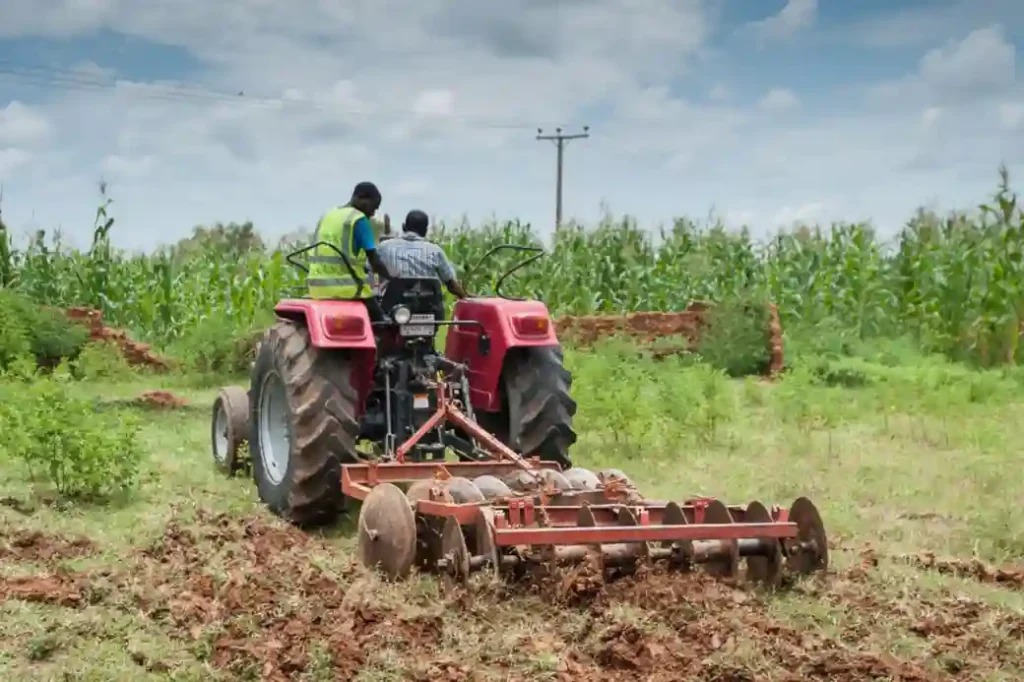
The Katsina State Government says it has invested more than N2.5 billion in mechanised agriculture over the last three years, a move that has led to the training and empowerment of over 1,000 young people across the state.
 Follow us on Google News
Governor Dikko Umaru Radda disclosed this while presenting the achievements of his administration under the “3-Year of Building Your Future” initiative.
According to the governor, the investment was designed to modernise agriculture, improve access to farm equipment, create employment opportunities for young people, and strengthen food production across Katsina State.
A major part of the programme is the establishment of a multi-million naira Agriculture Mechanisation Centre, which the government says has already equipped more than 1,000 youths with practical skills and opportunities in the agricultural value chain.
“We invested N2.5 billion to modernise farming and boost mechanised agriculture. We built a multi-million naira Agriculture Mechanisation Centre that has empowered over 1,000 youths with skills and opportunities,” Radda said.
The governor noted that the intervention goes beyond providing machinery to farmers. According to him, the programme was structured to build technical capacity among young people while creating a local ecosystem for the maintenance and sustainability of agricultural equipment.
As part of efforts to make mechanisation services available closer to farmers, the state government established 34 additional mechanisation centres across local government areas.
The centres are expected to improve access to farm equipment and reduce the challenges many rural farmers face in securing mechanised support during planting and harvesting seasons.
Radda said the administration has also expanded operations through the Katsina State Sustainable Platform for Agriculture (KASPA), an initiative focused on increasing agricultural productivity through modern equipment and technology-driven farming practices.
Through KASPA, the state has deployed more than 400 tractors, 10 combine harvesters and thousands of planters to farming communities across the state.
The governor explained that the initiative is helping to improve farm operations while supporting the state’s broader goal of increasing food production and strengthening its contribution to national food security.
“Through the Katsina State Sustainable Platform for Agriculture (KASPA), we have deployed over 400 tractors, 10 combine harvesters, and thousands of planters across the state,” he said.
Beyond equipment deployment, the state government is also focusing on local assembly and maintenance of agricultural machinery.
According to Radda, a significant portion of the equipment used under the programme is assembled locally at the Central Mechanisation Hub located in Tashar Bala, Batagarawa.
The facility serves as a production, maintenance and training centre where young people are being exposed to technical skills related to agricultural machinery.
The governor said the hub has helped create jobs, train young mechanics and establish a repair workforce capable of maintaining the growing fleet of agricultural equipment being deployed across the state.
“We assembled much of this machinery locally at our Central Mechanisation Hub in Tashar Bala, Batagarawa, creating jobs, training young mechanics, and building a repair team that sustains the equipment we have invested in,” he said.
The approach reflects a growing emphasis on developing local capacity rather than relying entirely on imported expertise for equipment maintenance and repairs.
For many young people, the programme opens opportunities beyond traditional farming activities. Training in equipment operation, maintenance, assembly and repairs provides access to technical careers that can support the wider agricultural economy.
Agriculture remains one of the largest employers of labour in Nigeria, but mechanisation levels across many states remain relatively low. Limited access to modern equipment has often been identified as one of the factors affecting productivity, especially among smallholder farmers.
Katsina’s investment seeks to address this challenge by combining infrastructure development, equipment deployment and youth-focused skills training within a single programme.
The state government believes the strategy will not only improve farming outcomes but also create a new generation of skilled workers capable of supporting agricultural modernisation efforts.
According to Radda, the results of the investment are already attracting recognition at the national level.
“The Federal Government has continued to recognise Katsina as a major contributor to national food security. That recognition, under this administration, is backed by investment and results,” he said.
The focus on youth participation is particularly significant given rising concerns around unemployment and underemployment among young Nigerians.
By linking skills development directly to agriculture and mechanisation, the programme aims to position farming and agricultural services as viable economic opportunities for young people.
The establishment of mechanisation centres across local governments is also expected to create additional demand for trained operators, technicians and maintenance personnel as more equipment becomes available to farming communities.
While the state government has highlighted the deployment of tractors, harvesters and planters as key achievements, the training of over 1,000 youths stands out as one of the programme’s most direct social and economic impacts.
The initiative demonstrates how agricultural investments can be structured not only to increase food production but also to generate employment, build technical skills and create local economic opportunities.
As Nigeria continues to explore ways of improving agricultural productivity and creating jobs for its growing youth population, Katsina’s mechanisation programme offers an example of how state-led investments can combine infrastructure, technology and human capital development within the agricultural sector.
With over N2.5 billion already committed, more than 400 tractors deployed and over 1,000 youths trained, the programme represents one of the state’s most visible efforts to use agriculture as a tool for economic empowerment and long-term development.