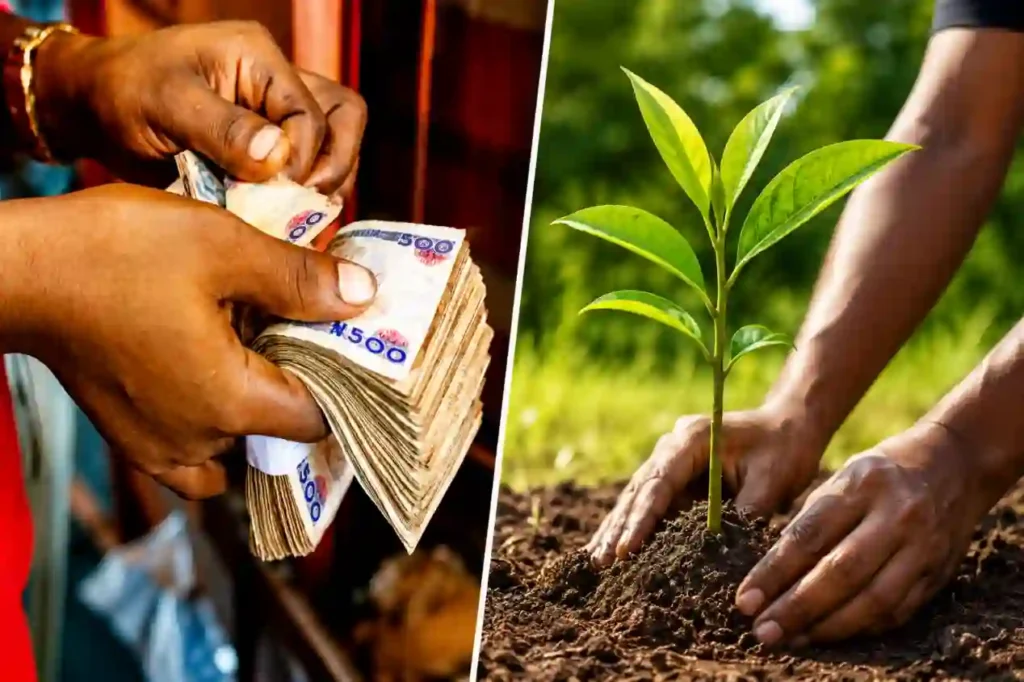
Lagos State Government has unveiled a N2.5 million prize for residents who successfully grow and maintain trees under a new environmental initiative designed to tackle rising temperatures and climate challenges across the state.
 Follow us on Google News
The initiative, tagged “Me and My Tree,” was announced on Friday by the Special Adviser to the Governor on Environment, Olalekan Rotimi-Akodu, during the 2026 World Environment Day celebration held at the Johnson Jakande Tinubu Park in Ikeja.
The programme forms part of Lagos State’s broader environmental sustainability strategy as authorities intensify efforts to address urban heat, flooding and the growing impact of climate change on Africa’s largest city economy.
Under the initiative, residents will receive free seedlings from the Lagos State Government and will be required to nurture and maintain the trees for one year. At the end of the exercise, the participant with the best-performing tree will receive a cash reward of N2.5 million.
According to Rotimi-Akodu, the initiative is aimed at encouraging residents to participate directly in environmental protection while also helping the state reduce the effect of extreme heat linked to rapid urbanisation and climate change.
“As we celebrate this year’s World Environment Day, the State Government, through the Ministry of the Environment and Water Resources, has committed to planting 500 trees to commemorate the occasion,” he said.
“The Ministry is also introducing a special initiative tagged ‘Me and My Tree.’ Under this programme, free seedlings will be provided to participants, who are expected to nurture them and ensure their survival. After one year, the best-performing tree will be awarded a prize of N2.5m.”
The announcement comes shortly after Lagos was identified among 50 cities globally with the potential of experiencing extreme temperatures of up to 50 degrees Celsius under the United Nations Environment Programme’s climate risk assessment initiative.
To align with global climate adaptation efforts, Lagos State also adopted the theme “50 Cities at 50°C: Lagos Rising Against the Urban Heat Island” during the event.
The state government said the move reflects its commitment to addressing the growing danger of heat concentration in urban areas caused by population growth, heavy construction activities, concrete expansion and declining vegetation.
Rotimi-Akodu warned that climate change is already putting significant pressure on cities around the world, especially densely populated commercial centres like Lagos.
According to him, rising temperatures are becoming a serious threat to public health, productivity and overall living conditions.
“Extreme heat affects every aspect of urban life. It impacts public health, labour productivity, energy demand, air quality and overall quality of life. Incidents of heat stress, dehydration, heat stroke and respiratory complications are becoming more frequent,” he said.
He explained that the state government is focusing on nature-based solutions such as tree planting because green infrastructure remains one of the most effective ways to lower city temperatures naturally.
Trees help absorb heat, improve air quality, reduce carbon emissions and provide shade in urban communities where concrete surfaces trap and retain heat.
The Lagos State Government also disclosed that more than seven million trees have already been planted across the state since 2009 through partnerships involving the Lagos State Parks and Gardens Agency, schools, businesses, communities and civil society organisations.
Despite these efforts, environmental experts say temperatures in Lagos have continued to rise steadily over the years.
Assistant Chief Meteorologist at the Nigerian Meteorological Agency, Benson Levi, said long-term climate records show that average minimum temperatures across Lagos have maintained an upward trend from 1991 to 2025.
“The minimum temperature we are recording in Lagos is on the rise. It has not declined over the years,” Levi stated during the event.
He noted that although Lagos State has introduced several environmental sustainability programmes and green infrastructure projects, the impact of climate change is still becoming more visible across the city.
Experts believe the increasing replacement of natural vegetation with roads, buildings and paved surfaces is contributing heavily to the urban heat island effect currently affecting Lagos.
Urban heat island refers to a situation where cities become significantly hotter than surrounding rural areas because concrete, asphalt and infrastructure absorb and retain heat.
This challenge has become more serious in Lagos due to rapid urbanisation, population expansion and rising transportation activities.
Rotimi-Akodu said the state government is also investing in integrated transportation systems including Bus Rapid Transit services, rail transportation and water transport as part of efforts to reduce carbon emissions and traffic congestion.
According to him, cleaner transportation systems are critical to reducing greenhouse gas emissions while improving mobility within the state.
The government further revealed that Lagos has developed a Health Adaptation Plan covering 2026 to 2030 to strengthen the healthcare sector’s response to climate-related health risks.
The plan is expected to improve disease surveillance, integrate climate risk management into healthcare planning and expand access to health services for vulnerable populations affected by extreme weather conditions.
Rotimi-Akodu stressed that climate resilience cannot be achieved by government alone and called on residents, businesses and communities to participate actively in environmental protection efforts.
“Government cannot build climate resilience alone. It requires the participation of everyone. The story of Lagos has always been one of innovation, ambition and resilience. Today, as we confront the realities of climate change, that story continues,” he said.
Also speaking during the event, the Global Chief Heat Officer for the United Nations Environment Programme, UN-Habitat and the Atlantic Council’s Climate Resilience Centre, Dr Eleni Myrivili, described extreme heat as one of the biggest urban challenges facing cities globally.
Myrivili, who joined virtually, said many cities are already experiencing the real effects of extreme temperatures driven by limited green spaces, excessive concrete infrastructure and transportation systems.
“For some cities, it might be 50°C and for others, it might be lower. The numbers may be different but whatever it is, we must prepare for it. That is what 50@50 is all about,” she said.
She urged participating cities to take proactive steps based on their unique environmental realities rather than waiting for climate conditions to worsen further.
The Lagos State Government believes initiatives such as “Me and My Tree” will not only improve environmental awareness among residents but also encourage long-term community participation in protecting the environment.
Environmental advocates have also described the N2.5 million incentive as a strategic way to drive public interest in tree planting and ensure residents remain committed to maintaining the trees instead of abandoning them after planting.
With temperatures continuing to rise globally and Lagos facing increasing climate pressure as one of Africa’s fastest-growing urban centres, the state government says sustainable environmental action can no longer be treated as an option.
Authorities insist that increasing green spaces across communities will remain a major part of Lagos’ long-term climate adaptation strategy as the city continues to battle heat, flooding and environmental degradation.