Ahmadu Bello University (ABU), Zaria has directed newly admitted students to pay and collect academic gowns ahead of the 2025/2026 Academic Session matriculation ceremony scheduled for Tuesday, 17 February, 2026.
The directive applies to all fresh students who are expected to collect their gowns from their respective faculties after payment. Students are required to pay the sum of three thousand naira only (N3,000) as hiring fee for the academic gowns.
All payments are to be made through Remita by generating a Remita Retrieval Reference (RRR). The procedure for generating the RRR is that students are to log in to the payment portal, click on Pay TSA and States, then select FGN: Federal Government of Nigeria.
Fill the payment form with the following details: who do you want to pay as Ahmadu Bello University, Zaria 1000110, name of service or purpose as COGCC, description as hiring of academic gown, GIFMIS code as 0000, amount to pay, payer’s name, phone number, and email address, before confirming the email and submitting.
After submission, select a preferred mode of payment such as debit card, bank branch payment, or internet banking. Where payment is made using debit card through the university POS, the cashier will issue the official receipt immediately.
However, for payments made through bank branches or internet banking, students must present a printout of the Remita receipt to obtain the official university receipt. All students are to AVOID making cash payments at designated gown collection centres.
To pay for ABU Zaria matriculation, students should visit www.remita.net and complete payment online.
The federal government, throughNational Automotive Design and Development Council (NADDC), in collaboration with the Kebbi State Government, has announced the official flag-off of the Argungu Motor Rally 2026. The event, hosted by NADDC, will take place at Eagle Square, Abuja, from 11th to 14th February, 2026, starting daily at 10:00am.
The rally is a historic drive celebrating Nigeria’s automotive innovation, resilience and locally assembled vehicles. The flag-off marks the start of a cross-country journey designed to showcase the strength and potential of Nigeria’s automotive industry.
Attendees will witness the beginning of an unforgettable rally as drivers set off across the country. The rally is positioned as a platform to highlight local vehicle assembly and industry growth while engaging the public.
Stakeholders and the public are invited to attend to be part of the moment as activities will run throughout scheduled dates.
The Central Bank of Nigeria (CBN) has approved the Bank of Industry (BOI) to operate a Non-Interest Banking window, marking a major expansion of the bank’s financing framework and service offerings.
The approval was disclosed in a statement issued on Sunday by the Managing Director of BoI, Dr. Olasupo Olusi, who said the move would strengthen the institution’s role in promoting sustainable industrial development across the country.
With the approval, BoI is authorised to commence non-interest banking operations, offering ethical, asset-backed financing options that prohibit interest and promote risk-sharing among stakeholders. The initiative is expected to improve access to finance for underserved and high-impact business segments nationwide.
Olusi said the development aligns with the growing demand for alternative financing structures that support inclusive growth and broader social development objectives in Nigeria.
“This development marks a significant milestone in the Bank of Industry’s growth and long-term development agenda,” Olusi said.
“It positions the bank to further advance Nigeria’s sustainable and inclusive industrial development through tailored financial solutions for underserved and high-impact business segments,” he added.
According to him, the new framework will allow BoI to finance assets and raw materials for customers using approved non-interest banking products, while maintaining strong governance and responsible financing practices.
He noted that the approval underscores the CBN’s confidence in BoI’s governance structure and institutional capacity to manage non-interest financial services.
Olusi explained that the licence would enable the bank to scale its operations, introduce innovative financing solutions, deepen support for Micro, Small and Medium Enterprises (MSMEs), and reach borrowers previously unable to access BoI funding nationwide across key sectors of the economy and industries nationwide.
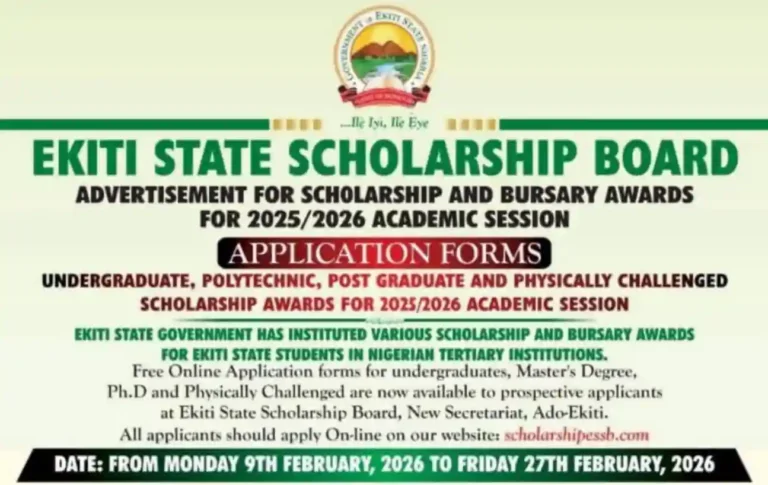
Ekiti State Government, through Ekiti State Scholarship Board, has opened applications for Scholarship and Bursary Awards 2025/2026 for targeting Ekiti State students studying in Nigerian tertiary institutions. Eligible undergraduates, polytechnic students, postgraduate candidates, and challenged students are invited to apply for the awards.
Free online application forms for undergraduates, Master’s Degree, Ph.D, and Physically Challenged categories are available to applicants at the Ekiti State Scholarship Board, New Secretariat, Ado-Ekiti. The scheme covers students enrolled in universities, polytechnics, colleges of education, schools of nursing and midwifery, and colleges of health technology.
For the Bursary Award category, applicants must be in their second year and above in their course of study. They are required to possess WASSCE or NECO results with a minimum of five credits, including English Language and Mathematics, obtained at one sitting. All qualified undergraduates, polytechnic students, college of education students, schools of nursing or midwifery students, and colleges of health technology students are eligible.
For the Scholarship Award category, applicants must also be in their second year and above and must meet academic requirements. Undergraduate university applicants are expected to have a minimum CGPA of 4.0 or its equivalent of Second Class Upper Division. Polytechnic and NCE applicants must have a minimum CGPA of 3.50 in their current institutions, alongside WASSCE or NECO with five credits including English Language and Mathematics at one sitting.
Applicants for Master’s Degree and Ph.D scholarship awards are required to possess a minimum of Second Class Upper Division at undergraduate level. In addition, a distinction at Master’s Degree level is a compulsory requirement for Ph.D scholarship applicants. Any Ph.D applicant with a first degree below Second Class Upper Division, even with a distinction in Master’s Degree, is not eligible.
Physically challenged students in institutions, including universities, colleges of education, schools of nursing or midwifery, colleges of health technology, and postgraduate institutions, are eligible for the Handicapped Scholarship Award. Students enrolled in part-time or sandwich programmes are not eligible for the bursary or scholarship awards.
Online applications will run from Monday 9th February, 2026 to Friday 27th February, 2026. Late applications will not be accepted.
To apply for Ekiti State scholarship and bursary 2026, applicants should visit https://scholarshipessb.com/ and apply.
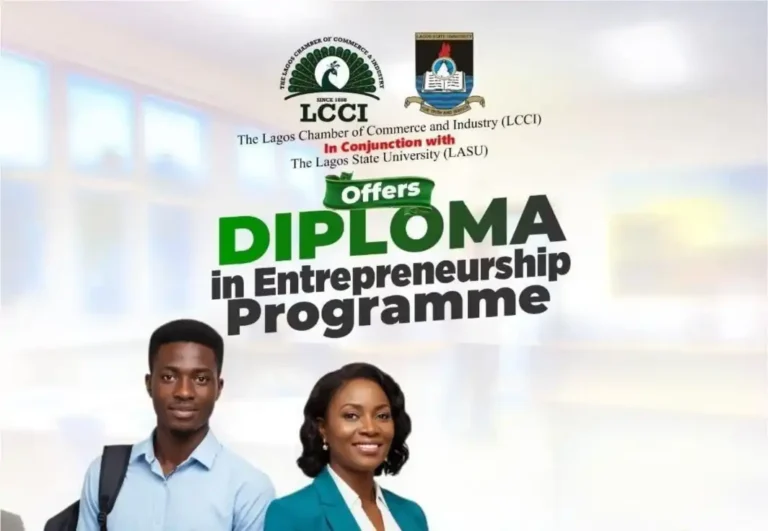
LCCI-LASU 2025/2026 Diploma in Entrepreneurship Studies has been announced by the Lagos Chamber of Commerce and Industry (LCCI) in partnership with Lagos State University (LASU) Consult.
The programme offers a Diploma in Entrepreneurship Programme aimed at helping participants earn a university diploma to further education and accelerate careers.
The programme provides an industry-recognized qualification, direct entry into full-time degree programmes at LASU, weekend and hybrid classes for flexible study, and access to the LCCI Entrepreneurship Mentoring Programme (EMP).
Eligibility requirements include a Senior Secondary School Certificate, being 16 years and above, ability to adapt to new technologies, and good communication skills.
The classes will hold at the LCCI Conference and Exhibition Centre, 10, Nurudeen Olowopopo Street, Alausa, Ikeja.
The announcement covers the 2025/2026 academic session, highlighting career-focused training for aspiring entrepreneurs seeking practical business skills nationwide.
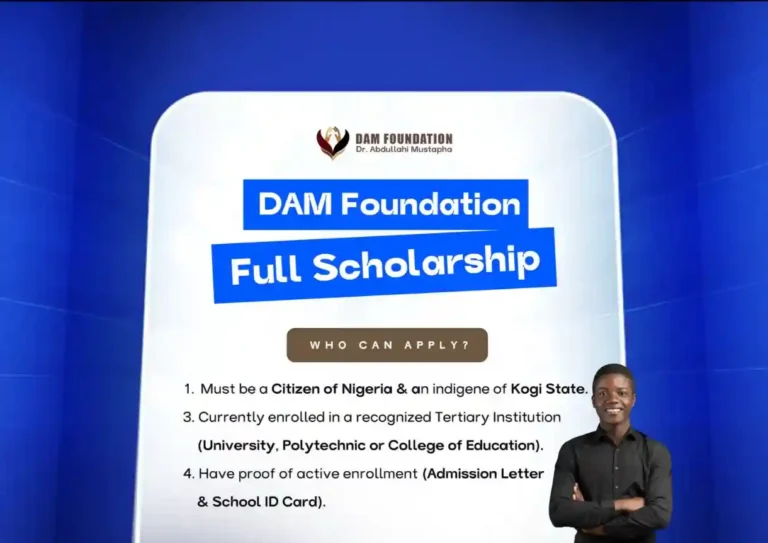
DAM Foundation (Dr. Abdullahi Mustapha Foundation) has opened applications for its Full Scholarship Programme aimed at supporting deserving students from Kogi State in their pursuit of higher education.
The initiative reflects continued commitment to expanding access to quality education and empowering young people to achieve their academic and career goals across Nigeria.
The scholarship is open to Nigerian citizens who are indigenes of Kogi State and are currently enrolled in a recognized tertiary institution. Eligible schools include universities, polytechnics, and colleges of education across the country.
Applicants are required to provide proof of active enrollment as part of the application process. This includes an admission letter issued by the institution and a valid school identification card to confirm student status at the time of application.
The eligibility criteria is that applicants must be citizens of Nigeria, must be indigenes of Kogi State, and must be currently studying in a recognized tertiary institution such as a university, polytechnic, or college of education.
Only applicants who meet all stated requirements and complete the application process correctly will be considered for the award. It added that only selected applicants will be announced after the application window has officially closed.
Interested and eligible students are encouraged to submit their applications online through DAM Foundation portal.
The application deadline for the Full Scholarship Programme has been fixed for 10th February, 2026. Applicants are to complete and submit their applications before the deadline, as late entries will not be considered under any circumstances.
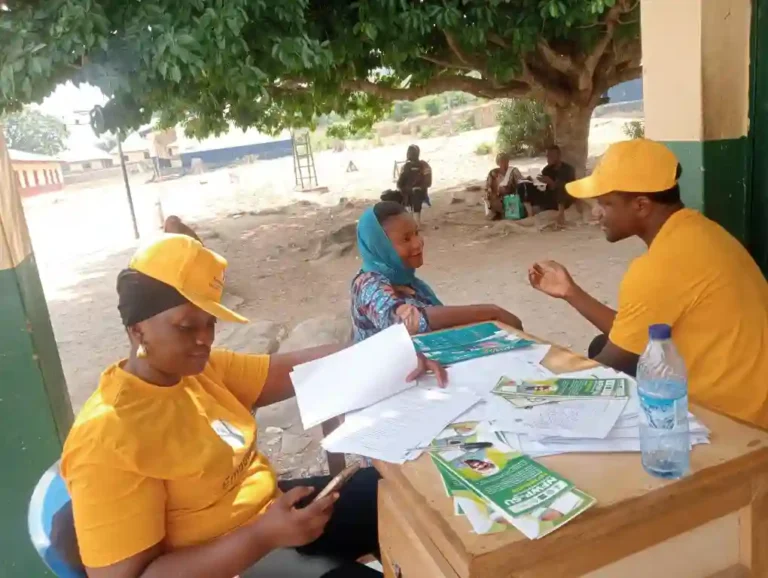
The Nigeria for Women Project Scale-Up (NFWP-SU) has commenced the recruitment of Ward Facilitators in selected local government areas of Kogi State. The recruitment is part of efforts to strengthen community-level implementation of the project, which focuses on improving women’s economic opportunities, financial inclusion, and social development in focal LGAs across the state.
The Ward Facilitators will serve as key links between the project team and women at the grassroots. Their role includes mobilising women into affinity groups, supporting programme activities at the ward level, monitoring participation, and ensuring that project information is properly communicated within communities. The facilitators are expected to work closely with local stakeholders to support smooth implementation and accountability.
According to the project structure, the recruitment is limited to selected LGAs where the NFWP-SU is currently active. This phase is aimed at strengthening local capacity and ensuring that women in targeted communities fully benefit from the Nigeria for Women Project interventions as the programme continues to expand in Kogi State.
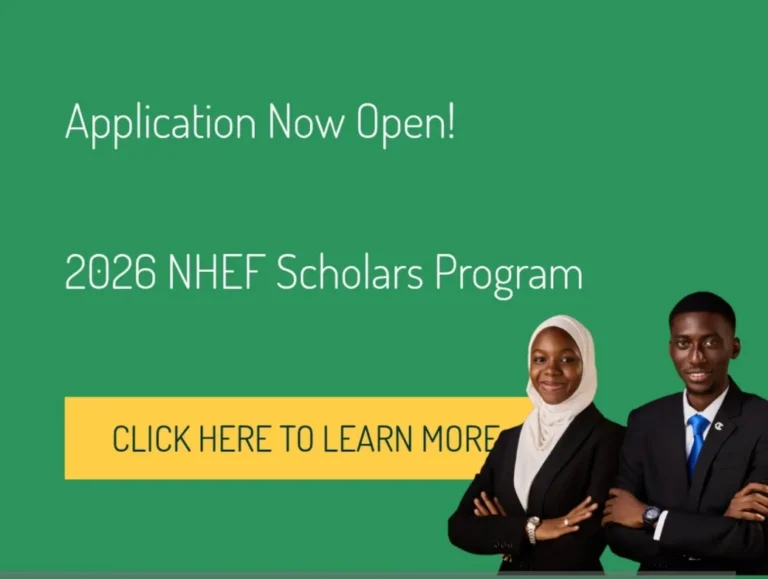
The Nigeria Higher Education Foundation (NHEF) has opened applications for the 2026 NHEF Scholars Program, marking ten years of impact in developing Nigeria’s future leaders. The programme is designed to equip talented Nigerian students with the skills, experiences, and professional networks needed to succeed as professionals and leaders across key sectors of the economy.
The Scholars Program is a prestigious and competitive initiative created to identify, develop, and support some of the brightest young Nigerian undergraduates. The programme focuses on helping promising individuals reach their full potential as leaders, innovators, and change makers through structured support.
Through sustained career support and coaching, scholars are placed into partner firms where they can gain real world work experience. This approach helps students bridge the gap between academic learning and professional practice, while building confidence and workplace skills.
Undergraduates selected for the programme will have the opportunity to work in leading companies across several sectors, including Financial Services, HR and Operations, Engineering, Technology, Consulting, Healthcare, and Law. These placements are designed to provide practical experience.
The programme also targets exceptional students in their penultimate year and equips them with exclusive internship opportunities, leadership and career development training, as well as mentorship and networking opportunities. NHEF scholars are connected with professionals and alumni excelling across industries.
For the benefits, becoming an NHEF Scholar gives participants access to a programme that has supported over 468 alumni in achieving career and leadership goals.
For eligibility, applicants must be penultimate year students enrolled at NHEF partner universities, including Ahmadu Bello University, Bayero University, University of Ibadan, University of Lagos, University of Nigeria, and University of Port Harcourt.
Applicants must be well rounded, demonstrate academic excellence, show involvement in extracurricular and professional activities, and exhibit commitment to community service and philanthropy.
The application deadline is March 13, 2026. Candidates are required to upload a one page CV, a one page cover letter, and their most recent statement of result in PDF format.
MTN Foundation has commenced its ICT Skills and Training programme, aimed at upskilling 6,000 young Nigerians to embrace digital transformation, at a time when small and medium-sized enterprises (SMEs) remain the backbone of the Nigerian economy. The initiative follows a strong response that saw over 61,000 applications submitted by young Nigerians seeking to improve digital capacity and business performance.
The programme, now in its fifth week, began on January 5, 2026. This seventh phase of the project is focused on supporting Nigeria’s SMEs. Data from the National Bureau of Statistics (NBS) shows that SMEs account for over 90 per cent of businesses in the country and employ a large share of the workforce, highlighting the need for interventions that strengthen productivity and sustainability.
After a one-month call for applications in September 2025, more than 61,000 entries were received from Nigerians aged between 18 and 35. From this pool, 6,000 participants were selected to take part in a five-week virtual training programme scheduled to end this month. The programme opened with an onboarding session that brought together participants across four business tracks and introduced them to a practical curriculum focused on digital growth.
Participants include microbusiness owners operating in sectors such as food services, fashion, retail, logistics, beauty, and printing. The training emphasises the use of practical and affordable digital tools instead of complex or expensive technologies. This approach ensures that early-stage SMEs with limited financial capacity can begin their digital journey and achieve measurable improvements in operations.
Central to the training is the understanding that digital transformation is a continuous process rather than a one-time effort. Participants were encouraged to start small, digitise repetitive tasks, and gradually scale operations using the Kaizen approach of continuous improvement. This perspective helps SMEs view technology as a practical tool for growth. As the training progressed, participants were also exposed to lessons on telesales and cybersecurity.
Speaking on the initiative, Executive Director of MTN Foundation, Odunayo Sanya, said the programme was designed to address real challenges faced by young business owners. She said, “Small businesses are the backbone of our economy, and helping young people adopt simple digital tools can make a real difference in productivity, sustainability, and long-term growth.”
The programme is being implemented by Learning Core Company, an e-learning platform focused on equipping Nigerian youth with relevant digital skills. The training commenced with a session facilitated by Babajide Jolaolu-Kehinde, a Business Analyst and Digital Transformation Expert, who guided participants through step-by-step digital strategies tailored to small businesses.
He also led a session titled “Digital Transformation: Meaning and Urgency for Nigerian Businesses,” where he explained how automating routine tasks can save time, reduce errors, and improve efficiency. During the session, Babajide introduced tools such as WhatsApp and WhatsApp Business for customer engagement, as well as the integration of similar tools with MTN’s MoMo API. He noted that improved digital visibility allows SMEs to better understand customer behaviour and make informed business decisions.
The impact of these tools was demonstrated through facilitator-led case studies shared with participants. One example was Amoke Alamala, a cafeteria owner who reportedly grew her customer base by 300 per cent within five months by adopting digital ordering and payment systems. Another case study featured Korede Spaghetti around the University of Lagos, which expanded from a roadside kiosk to online sales, increasing daily orders from 20 to 95 plates through digital storefronts, QR code payments, and social media marketing.
Participants will continue to have access to learning materials and session recordings throughout the five-week programme, ensuring that digital adoption extends beyond the training period nationwide.
The Governor of Lagos State, Mr. Babajide Sanwo-Olu, has launched the Lagos International Financial Centre (LIFC) Phase 1 Report in conjunction with EnterpriseNGR, outlining the strategy and pathway for implementing initiatives aimed at transforming Nigeria’s economic growth, deepening the financial market, and fostering innovation.
Speaking at the launch held at Lagos House, Marina, Governor Sanwo-Olu, who is the Chairman of the LIFC Council, called on stakeholders across the public and private sectors to support and sustain collaboration to position Lagos as a global financial hub through the Lagos International Financial Centre.
He said the LIFC project, conceived about two years ago, was designed to attract international capital, deepen financial markets, and create sustainable economic opportunities for Nigeria, adding that the initiative was structured to deliver long-term national benefits beyond Lagos State.
According to the governor, the Lagos International Financial Centre is a project of the Lagos State Government in partnership with EnterpriseNGR and captures a clear strategy and implementation pathway that aligns policy, regulation, and market development to strengthen the country’s financial ecosystem.
Reaffirming his administration’s commitment to the project, Sanwo-Olu described the LIFC as a strategic economic reform aimed at strengthening Nigeria’s global competitiveness and positioning Lagos as a leading international financial hub capable of competing with established centres.
He commended EnterpriseNGR for the initiative and the work done so far, while also appreciating the United Kingdom Government and TheCityUK for providing technical and financial support during the formative phase of the project.
“The foundation we are laying today is for the future of our economy, our children, and generations to come. This is not just about Lagos; it is about building an economic legacy that will transform Nigeria’s financial ecosystem,” the governor said.
He explained that the project was intentionally designed to involve both state and national institutions to ensure continuity and sustainability beyond individual administrations.
“We have designed a model that involves both state and national institutions so that the project becomes institutional rather than personality-driven. It is about building a sustainable structure that will outlive any administration,” he added.
Also speaking at the event, the co-chairman of LIFC, Mr. Aigboje Aig-Imoukhuede, commended the Lagos State Government for fostering strong collaboration with private sector stakeholders to drive financial and economic growth.
He underscored the importance of private sector participation, describing the Lagos International Financial Centre as a collaborative economic ecosystem that depends on strong partnerships between government and business institutions.
Aig-Imoukhuede described the completion of LIFC Phase 1 as a significant milestone and disclosed that Phase 2 would focus on policy reforms, legislative frameworks, and resource mobilisation to drive full implementation of the project.
“The scale and impact of the Lagos International Financial Centre will go beyond the Nigerian Stock Exchange. It will strengthen capital mobilisation, expand financial institutions, and position Nigeria as a global financial destination,” he said.
The British Deputy High Commissioner, Jonny Baxter, also applauded the Lagos State Government and EnterpriseNGR for driving the initiative and strengthening collaboration with federal institutions.
He disclosed that the United Kingdom, through TheCityUK, is providing expertise to help identify Lagos’ comparative advantages and the regulatory reforms required to establish a globally competitive international financial centre.
Baxter described the initiative as a major economic milestone capable of unlocking domestic and international capital flows into infrastructure development, job creation, and overall economic growth.
“A well-designed international financial centre can unlock significant domestic and international capital flows. These resources will support infrastructure development, boost productive sectors, and create employment opportunities,” he said.
In his remarks, the Lagos State Commissioner for Finance, Mr. Abayomi Oluyomi, said the journey toward establishing the Lagos International Financial Centre required collaboration among investors and stakeholders to build a competitive platform locally.