
Home Blog Page 119

FG to launch farm programmes after producing 2.5m metric tons under NAGS 2.0

0

The Federal Government has announced that the National Agricultural Growth Scheme and Agro Pocket (NAGS-AP) is making arrangements to commence the implementation of the Japan International Cooperation Agency (JICA) project and the National Agricultural Growth Scheme (NAGS) 2.0 programme.

The Minister of State for Agriculture, Federal Ministry of Agriculture and Food Security (FMAFS), Dr Aliyu Abdullahi, disclosed this on Thursday at the NAGS-AP project stakeholders workshop on the Modified Implementation Framework held in Abuja. He revealed that the programme has recorded a total of 2,536,184 metric tons of agricultural produce across four seasons of implementation.

The workshop was organised by NAGS-AP in collaboration with the Bank of Agriculture (BOA) and brought together key stakeholders to review progress and plan future actions.

Abdullahi outlined the phases of the programme to include the 2023–2024 dry season wheat farming, 2023–2024 dry season rice production, the 2024 wet season cultivation of rice, maize, soybeans, millet and cassava, as well as the 2024–2025 dry season wheat farming.

According to him, the total value of the produce generated from these activities was estimated at N2,312,746,400,000. He explained that this milestone has contributed significantly to improved food availability and the stabilisation of food prices nationwide.

“Currently, food prices are declining, and efforts are being made to address the high cost of agricultural inputs to balance input and output costs,” Abdullahi said.

He noted that the stakeholders’ workshop was convened to review past project activities, examine strengths and weaknesses, and identify areas that require modification to improve efficiency and overall impact.

“The stakeholders’ gathering is to objectively assess what has been done and to chart a better path forward,” he added.

The minister recalled that President Bola Tinubu, under the Agricultural Renewed Hope Agenda, declared a state of Emergency on Food and Nutrition Security as a way of prioritising agriculture and ensuring that food is sufficient, accessible and affordable for all citizens.

He said the NAGS-AP project focuses on six staple crops, namely wheat, rice, maize, sorghum, soybean and cassava, under the Food Security Emergency Support programme. According to him, the initiative is designed to bridge food supply gaps and guarantee national food and nutrition security.

Abdullahi assured stakeholders that the current administration remains committed to supporting the agricultural sector, especially externally funded projects with clearly defined objectives and measurable targets.

He explained that the two-day workshop would introduce new concepts, ideas and innovations for stakeholders to consider and possibly adopt.

“The discussions will follow careful alignment between the NAGS-AP Project and the Bank of Agriculture, in line with directives from President Tinubu.

“This alignment is aimed at developing a new implementation framework and operational strategies that will stand the test of time and include all relevant stakeholders to deliver verifiable results,” he said.

Abdullahi further disclosed that NAGS-AP is making concrete arrangements to commence the implementation of the JICA project alongside the NAGS 2.0 programme.

He said the JICA loan project will focus on rice, maize, soybean and cassava production, while NAGS 2.0 will concentrate on wheat and rice starting from the 2026 wet season.

“Under the 2025–2026 dry season, the project will focus on rice, maize and cassava across all 36 states and the FCT,” he said.

Earlier, the Permanent Secretary of FMAFS, Dr Marcus Ogunbiyi, said the meeting was aimed at examining past project implementation, identifying bottlenecks and developing new strategies to address existing challenges. He was represented by the Director of Planning and Policy Coordination, Ibrahim Tanimu.

Also speaking, the National Project Coordinator of NAGS-AP, Mr Ishaku Buba, said the project provides farmers with critical farm inputs, institutional support and agricultural extension services to boost productivity and sustainability.

“Fertiliser and seed quality control officers will also be deployed to ensure the supply of guaranteed quality inputs to farmers for maximum benefits,” he said.

Advertisement

FATE Foundation opens applications for Africa AI Upskilling Programme

0

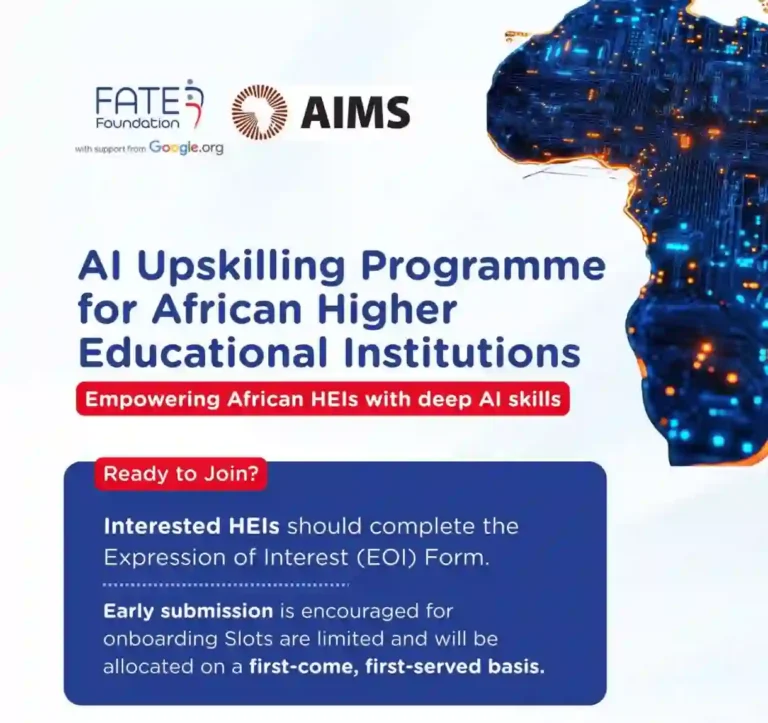
FATE Foundation, in collaboration with the African Institute for Mathematical Sciences (AIMS), and supported by Google, has invited Higher Education Institutions (HEIs) across Africa to express interest in joining the Africa AI Upskilling Programme, a multi-country initiative focused on building a sustainable and scalable ecosystem for advanced artificial intelligence education across Africa.

The programme is designed to equip lecturers and students with industry-aligned, future-ready AI skills using the Google DeepMind AI Research Foundation’s curriculum. Through the initiative, participating institutions are expected to strengthen teaching capacity, guide students in developing real-world AI solutions, and contribute to the growth of Africa’s AI ecosystem.

Africa AI Upskilling Programme, will deploy the Google DeepMind AI Research Foundation’s curriculum, which covers specialised courses ranging from building small language models.

Institutions selected for the programme will benefit from instructor-led and self-paced AI learning modules, certification for trained lecturers, and access to AI curriculum frameworks that can be embedded into existing courses. Schools will also have the opportunity to support students in building AI solutions while gaining entrepreneurial skills.

On the objectives of the initiative, the programme is structured to support African institutions to actively contribute to the continent’s AI ecosystem through collaboration, knowledge sharing, and responsible AI development.”

Participating institutions will gain access to a world-class, localised AI curriculum developed in alignment with the Google DeepMind AI Research Foundation and tailored to regional contexts while meeting global AI standards.

The initiative is also expected to help institutions lead AI innovation internally by positioning them at the forefront of artificial intelligence adoption across teaching, research, and learning activities.

Eligibility for the programme is open to accredited HEIs in Nigeria, Ghana, Kenya, and South Africa offering STEM programmes. Institutions must also be willing to integrate advanced AI curriculum into existing STEM courses to ensure sustainability, and demonstrate faculty availability as well as technical readiness.

Interested institutions are to apply by completing the Expression of Interest (EOI) Form via https://docs.google.com/forms/d/e/1FAIpQLSdcUDy8t9GExqMuj4-yuvsr1-21v9SWu2xNiXOpA0stS0-_HQ/viewform.

AIS Disburses N30m to 140 Nigerians at National Zakat and Waqf Day

AL-HABIBIYYAH Islamic Society (AIS) has disbursed approximately N30 million worth of items and cash to 140 Nigerians, aimed at lifting beneficiaries out of poverty.

The disbursement took place during the organisation’s fifth National Zakat and Waqf Day and its 15th Public Zakat Disbursement, where indigent Nigerians were empowered through the distribution of zakat and work tools.

The programme was held last weekend at the AIS National Secretariat in Guzape, Abuja, and was themed ‘Zakat, Waqf and the New Tax Regime’.

Speaking at the event, the National Chief Imam and Executive Director of AIS, Fuad Adeyemi, said the initiative was designed to bridge inequality gaps and reduce poverty.

He explained that zakat and waqf are living institutions meant to restore dignity, strengthen livelihoods and build futures.

Adeyemi said the organisation remains open, accountable and willing to collaborate with individuals, institutions and organisations that share a vision of integrity, compassion and development, with the aim of narrowing the gap between the rich and the poor.

According to him, “What we are doing today and discussing is the essence of zakat and waqf.

We are distributing approximately N30 million worth of items and cash to 140 people, and we have at least 10 to 15 Christians among the beneficiaries, as mentioned in the Qur’an. Therefore, non-Muslims are included.

“This initiative cuts across health, education, empowerment and entrepreneurship. Many areas are involved.

“The challenges facing our society are significant, but they are not insurmountable when we work together.

Zakat and waqf, when professionally managed, become tools not only for charity but for stability, peace and prosperity.

“We combine zakat for immediate human needs with waqf for sustainable development. This approach ensures continuity, transparency and lasting impact, and it is the reason partners continue to trust and work with Al-Habibiyyah.”

FG enrolls 250,000 TVET trainees, targets up to one million

0

The federal government has enrolled no fewer than 250,000 young Nigerians in the Technical and Vocational Education and Training (TVET) programme across the country, with a target of reaching one million beneficiaries nationwide.

The Minister of Education, Tunji Alausa, disclosed this on Thursday during his induction as a member of the Epe Club held in the Alausa area of Lagos State.

The ceremony was organised in honour of a political leader in the Epe Division, Shakiru Akanni, and brought together political stakeholders and traditional rulers from across the state.

Speaking at the event, Alausa, who served as Chairman of the ceremony, said the enrolment level reflected President Bola Tinubu’s administration’s commitment to strengthening the education sector through practical skill development.

He said skill acquisition remains a key driver of national growth and economic sustainability, especially for young people seeking employment and self-reliance.

“Skill is the present and the future. We have changed the interest of our young citizens in skill development, and that is why, within the last 14 months, we have put a robust technical and vocational education training programme in place, and we’ve seen millions of young Nigerians coming in,” he said.

The minister said the government was steadily working toward achieving the one million enrolment target within the next two years.

“I am happy to report that we have the first squad of the one million target that we aim to train in the next two years. 250,000 are being trained now in a way that will equip them with practical skills, and when they are through, we will support them with a starter pack and low-interest loan,” he said.

Alausa also thanked the Epe Club for inducting him and commended the recognition given to Akanni, noting that the gesture would “reinforce positive social norms, and inspire future leaders” in nation-building.

In his remarks, the Deputy Governor of Lagos State, Obafemi Hamzat, said Nigeria has continued to make progress under the current administration and urged citizens to ignore negative narratives.

Hamzat encouraged young Nigerians to focus on the positive side of the country and take advantage of opportunities that could support their growth.

He further urged young people to emulate the leadership qualities and community spirit of the honorary recipient.

Earlier, the President of the Epe Club, Olayemi Dada, said the club has continued to support indigent students and provide equipment to health centres within the division.

He said the celebration was meant to honour individuals who have contributed to the growth of the club and the Epe community while alive.

Dada explained that Akanni was chosen to recognise his commitment to community development, leadership and sacrifices toward younger generations.

The ceremony also featured fundraising for the proposed ultra-modern Epe Club building. The event attracted wide attendance.

Lagos Cooperative College concludes orientation for skills programme 2.0 trainees

0

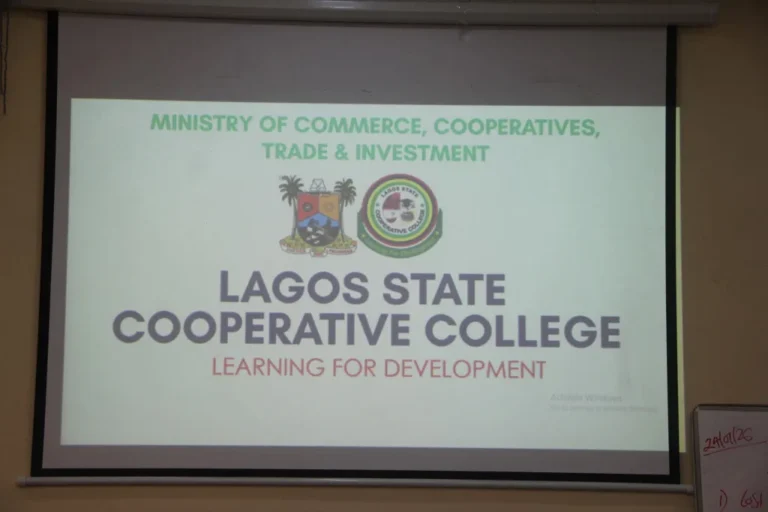
The Lagos State Cooperative College, Oko-Oba, Agege, has concluded a two-day orientation programme for the second batch of trainees under the Lagos State Cooperative College Skills Acquisition Programme 2.0.

The programme began with registration of participants and a welcome session that introduced the Acting Provost, Dr. Walid Gbadebo Adebosin, and the Registrar, Mrs. Senume Omolade Harrison-Fasakin.

Speaking during the opening, Dr. Adebosin urged trainees to take the six-month training seriously, saying it was created to address job scarcity and improve employability. “This programme is designed to prepare you for opportunities, so punctuality, discipline, and commitment are important,” he said.

He added that the College does not tolerate laziness, unseriousness, or immoral behaviour, and stressed the need for good conduct throughout training.

The orientation featured sessions on programme expectations, safety guidelines, an overview of available skills, introduction of trainers, fire safety drills, and a guided tour of the Henry Karll Workshops.

NDE, Arthurite, AWS Train Youths in AI, Cloud, Machine Learning

0

The National Directorate of Employment (NDE), in collaboration with Arthurite and Amazon Web Services (AWS), has trained Nigerian youths in Artificial Intelligence, Cloud Computing, and Machine Learning, and celebrated winners of a four-week intensive training programme.

The award ceremony marked the end of the programme and began with the National Anthem, followed by the introduction of dignitaries. Those present included the Director General of the NDE, H.E Silas Ali Agara, and the Chief Executive Officer of Arthurite, Mr. Somtochukwu Ezepue.

Speaking at the event, a delegate of Arthurite and Amazon Web Services, Dr. Paul Aderoju, explained that the programme was designed to equip young Nigerians with practical digital skills. He said the initiative aims to reduce unemployment and encourage entrepreneurship among youths. After his presentation, three participants were invited to demonstrate applications developed.

The Director General of the NDE, H.E Silas Agara, presented brand new laptops to the winners. The beneficiaries were Mr. Sufyan Zakariya Sani from Nasarawa State, who emerged first, Ms. Princess Prevail Sabina from Plateau State as first runner-up, and Usman Bashir Sani from Abuja FCT as second runner-up.

Agara commended the winners and praised Arthurite for the partnership, stressing that the NDE remains committed to supporting programmes that drive economic development. In response, Mr. Ezepue presented a plaque of honour to the Director General.

Ms. Princess Prevail also expressed appreciation to the NDE and Arthurite, saying the training opportunity would help improve their lives. The ceremony ended with remarks by the Director of Vocational Skills Development of the NDE, Mr. Christopher Bamsida, who urged beneficiaries to use skills acquired and thanked AWS for supporting job creation.

Katsina announces recruitment of additional 2,000 healthcare workers

Katsina State Governor, Malam Dikko Umaru Radda, has announced the recruitment of an additional 2,000 medical personnel to strengthen healthcare delivery across the state.

The Governor made the disclosure on Wednesday while overseeing a verification exercise conducted by the committee handling a comprehensive staff audit in his office. He also disclosed that his administration will soon issue employment letters to over 1,000 medical staff who have already completed required processes.

Governor Radda explained that the recruitment of medical personnel is part of the administration’s commitment to ensuring efficient healthcare services and addressing staff shortages in hospitals and primary health centres across Katsina State. He said improving manpower would help reduce pressure on existing workers and improve patient care.

In addition to healthcare recruitment, the Governor revealed that the state government plans to employ about 2,000 teachers to fill vacancies created by retirements in the education sector. “This recruitment exercise is aimed at addressing manpower gaps in our schools and ensuring that every child in Katsina has access to quality education,” Governor Radda stated.

He emphasized that the recruitment plans align with the administration’s broader agenda of enhancing public service delivery while creating employment opportunities for youths and qualified professionals in the state.

Governor Radda urged the verification and recruitment committees to conduct their duties with transparency, fairness, and professionalism. He also called on residents to cooperate with government efforts, noting that well staffed health and education sectors are critical to Katsina State’s development. The recruitment exercises expected to commence soon.

FG Flags Off Emergency Food, Nutrition Support in Borno

The Federal Government has flagged off the distribution of the Presidential Emergency Food and Nutrition Intervention in Maiduguri, Borno State, to support households affected by insurgency, rising living costs, displacement, and economic hardship.

The flag-off ceremony was held on Thursday at Ramat Square, where the Minister of Humanitarian Affairs and Poverty Reduction, Dr Bernard Doro, said the programme was designed to provide immediate relief to vulnerable communities.

Doro said Nigeria had faced compounded shocks in recent years, including conflict, climate-related challenges, and economic pressures that disrupted livelihoods and increased food insecurity.

“In response, the Federal Government under President Bola Ahmed Tinubu has prioritised urgent action to address hunger and strengthen food security, especially for the most vulnerable,” the minister said.

Addressing dignitaries at the event, Doro said, “Distinguished senators, the Secretary to the State Government, traditional leaders, advisers, ladies and gentlemen, I am honoured to be in Maiduguri today, a city that symbolises courage and resilience, to flag off the distribution of the Presidential Emergency Food and Nutrition Intervention across Borno State and affected states.”

He described the intervention as a coordinated effort to stabilise nutrition, protect lives, and restore hope among affected communities.

“Access to adequate and nutritious food is a fundamental human right. This programme reaffirms our commitment to humanitarian assistance and poverty reduction,” Doro said.

He explained that the intervention covers the 10 most humanitarian-affected states in northern Nigeria, including Borno, Adamawa, Yobe, Niger, Plateau, Katsina, Zamfara, Sokoto and Kebbi.

According to him, Borno State was allocated 8,565 bags each of millet, rice, and maize; 8,565 units of groundnut oil; 1,429 cartons of palm oil; 8,565 units of Tom Brown; 171 cartons of tomato paste; 611 cartons of seasoning cubes; 107 bags of salt; and assorted essential medicines.

“To the people of Borno, I commend your strength and perseverance. This support provides immediate relief to households affected by displacement and economic hardship. Each item distributed represents sustenance, dignity, and renewal,” Doro said.

He added, “No Nigerian should go hungry. Through compassion, coordination, and commitment, we will build a more resilient Borno and a secure Nigeria.”

Doro also said the Federal Government is committed to building resilience beyond emergency relief through support for agriculture, livelihoods, and nutrition education.

The acting Governor of Borno State said the initiative reflects the Federal Government’s commitment to food security and humanitarian support under the Renewed Hope Agenda.

He said the intervention has restored hope for children, vulnerable groups, and low-income families across the state.

The acting Governor commended Dr Doro, the Permanent Secretary, and implementing partners for supporting Borno’s resilience efforts, and urged beneficiaries to use the items strictly for feeding their families.

In his remarks, the Permanent Secretary of the ministry, Mr Olubunmi Olusanya, said the goal of the intervention is to address food insecurity and humanitarian needs among vulnerable populations, particularly in Borno State.

He thanked state and local authorities, community leaders, NGOs, and volunteers for ensuring “transparent and dignified delivery,” and said the distribution prioritised the elderly, children, persons with disabilities, and vulnerable groups.

Edo, NNPC confirm 10,000bpd condensate refinery project

0

The Edo State Government (EDSG) and the Nigerian National Petroleum Corporation (NNPC) Limited have confirmed their readiness to collaborate on establishing a 10,000 barrels-per-day (bpd) condensate refinery in Edo State, marking a major step toward boosting local refining capacity and industrial growth.

The refinery, slated for completion within 24 to 36 months, will be located across Oredo and Orhionmwon Local Government Areas. When operational, the facility is expected to produce about 20 truckloads of Premium Motor Spirit (PMS) and 10 truckloads of Automotive Gas Oil (AGO) daily to serve Edo State and neighboring regions.

Governor Monday Okpebholo disclosed this during a courtesy visit by the Executive Vice President for Downstream at NNPC, Alhaji Mumuni Dagazia, and his management team to the Government House. He described the planned investment as a reflection of President Bola Ahmed Tinubu’s Renewed Hope Agenda.

According to the governor, the refinery project will create jobs, reduce poverty, and strengthen Edo State’s industrial base. He assured the NNPC delegation that his administration would provide full backing to ensure the project is delivered within the projected timeline.

“We are delighted to welcome this major investment to Edo State. My administration is committed to creating jobs and reducing poverty, in line with the renewed hope agenda of President Bola Ahmed Tinubu. This is a huge step for Edo, and we are proud to be part of it,” Okpebholo said.

The governor further stated that the state government would provide land, Certificates of Occupancy (C of O), security, and logistics to support the project. “Security will not be an issue. We are committed to protecting investments and ensuring Edo State remains safe for business. Our political will is fully behind this initiative,” he added.

Earlier, Alhaji Mumuni Dagazia described the condensate refinery as a sustainable project designed to go beyond revenue generation. He said it would promote job creation, industrial expansion, and development across Edo State.

Also speaking, the Chief Downstream Investment Officer at NNPC, Mr. Ikedichi Dick-Nwoke, said the refinery would position Edo State as a key energy hub in the South-South region and expand employment opportunities statewide benefits.

FG launches Empower Academy Nigeria to train 2,000 professionals free

0

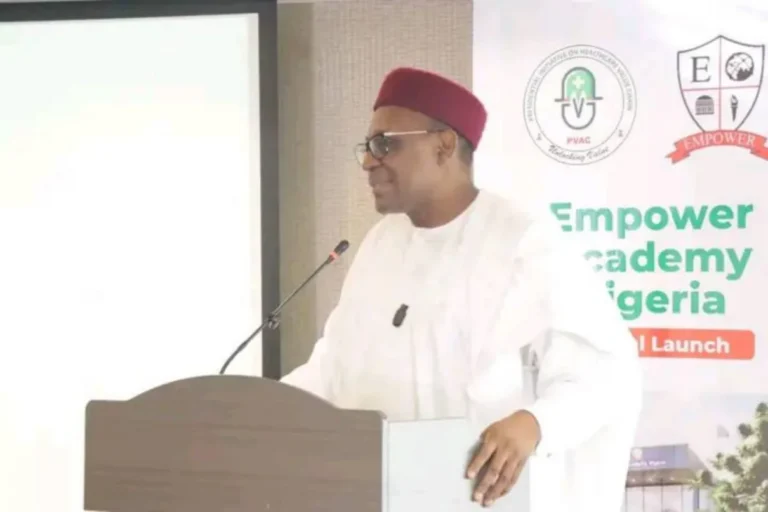
The federal government has officially launched Empower Academy Nigeria to upskill up to 2,000 professionals annually, free for qualified Nigerians for the next two years, as part of efforts to strengthen the country’s pharmaceutical and healthcare workforce.

The academy is a collaboration between the Presidential Initiative for Unlocking the Healthcare Value Chain (PVAC) and the Swiss-based Empower School of Health. It will initially offer 40 certificate courses covering areas such as regulatory science, quality assurance, supply chain management, good manufacturing practice (GMP), and advanced pharmaceutical manufacturing.

The launch took place on Wednesday in Abuja and was performed by the Coordinating Minister of Health and Social Welfare, Prof. Muhammad Ali Pate. He said the initiative reflects the Federal Government’s commitment to building local capacity and reducing Nigeria’s reliance on imported medicines.

Empower Academy Nigeria is described as a first-of-its-kind, state-of-the-art pharmaceutical manufacturing training institution designed to transform Nigeria’s health and industrial landscape. Developed as a national hub for pharmaceutical excellence, the academy combines classroom learning, laboratory practice, mentorship, and factory-style training to equip young Nigerians with practical, industry-ready skills.

According to the programme outline, all courses will be available free of charge to qualified Nigerians for the next two years. This scholarship-based access is aimed at fostering a skilled, world-class workforce that can support Nigeria’s goal of producing 70 percent of its pharmaceutical needs locally by 2030.

Phase one of the academy is already live and operates as a virtual learning platform. It currently hosts 40 certificate courses focused on GMP, supply chain operations, regulatory standards, and other critical manufacturing skill sets needed across the pharmaceutical value chain.

Speaking at the launch, the PVAC National Coordinator, Dr. Abdu Mukhtar, announced that PVAC will provide scholarships to Nigerians to ensure free access to the courses during the initial two-year period. He said the academy was designed to close skills gaps that have limited growth in local pharmaceutical production.

“The Empower Academy is a strategic investment in people,” Mukhtar said. “Through strong partnerships, we are ensuring that Nigerians can access high-quality training that directly supports local manufacturing and innovation in healthcare.”

The Coordinating Minister also directed that specific slots be reserved for the current and incoming cohorts of the National Health Fellows programme. According to him, this decision reinforces coordination across sector-wide initiatives and strengthens Nigeria’s healthcare workforce through targeted professional development.

The Director General of the National Biotechnology Research and Development Agency (NBRDA), Prof. Abdullahi Mustapha, also commended the launch, describing it as a timely intervention for Nigeria’s pharmaceutical and healthcare sectors.

Speaking at the event, Prof. Mustapha said Nigeria has for many years experienced a disconnect between academic training and the practical demands of the healthcare and pharmaceutical industry. He noted that Empower Academy Nigeria was deliberately created to address this gap by offering industry-aligned skills that translate into real-world impact.

He further highlighted NBRDA’s ongoing work in genomics research, local insulin production, and the development of antiretroviral drugs for HIV. According to him, these initiatives, alongside technology transfer partnerships, are aimed at expanding local medicine production, strengthening the healthcare sector, and reducing dependence on imported drugs.

Courses offered by the academy are co-developed with international partners, including the Africa CDC, the World Health Organization (WHO), and the United Nations Institute for Training and Research (UNITAR), giving participants exposure to globally recognized standards.

The launch event was attended by key stakeholders from government and the health sector, underscoring the Federal Government’s broader commitment to unlocking the healthcare value chain through skills development, innovation, and strategic partnerships for sustainable healthcare workforce growth.