Home Blog Page 124

Registration Opens for 2026 MCPE and BECE Exams in Abia

0

The Director of the Examinations Development Center (EDC), Mrs Kanu Ucheoma Peace, has announced the registration portal for the 2026 Mandatory Central Promotion Examination (MCPE) and the 2026 Basic Education Certificate Examination (BECE) is now open.

She said the information is directed to principals and head teachers, according to her. MCPE registration will close on Friday, 3rd April 2026, while BECE registration will end on Thursday, 30th April 2026.

Mrs Peace disclosed the General Placement Test (GPT) will hold on 11th March 2026, and registration for GPT and the Primary School Leaving Assessment Test (PSLAT) will close on 17th February 2026.

She stated compulsory MCPE subjects include English, Mathematics, Igbo Language, and Civic Education. Registration is to be done online via www.abiaunifyportal.com.ng/administrator, with payments made through Pay-Direct using the school’s ABSSIN Number. She added printed payment receipts must be submitted to the Examinations Development Center, Umuahia, and registration after April 3, 2026 will attract penalties.

Advertisement

NAFDAC denies ongoing recruitment claims circulating online

0

The National Agency for Food and Drug Administration and Control (NAFDAC) has dismissed claims of an ongoing recruitment exercise.

The disclosure was made on Tuesday after the Agency became aware of a fake press release on social media which falsely claimed that NAFDAC had announced a recruitment exercise.

NAFDAC stated that “the purported press release did not originate from the Agency and is entirely false.” The Agency explained that while NAFDAC periodically conducts recruitment exercises to engage qualified Nigerians, “no such announcement has been made at this time.”

The Agency cautioned the public against engaging with or relying on fraudulent recruitment information, saying such messages are circulated “with the intent of misleading and extorting applicants.”

“For the avoidance of doubt, NAFDAC has not issued any press release or notice announcing a new recruitment exercise,” the Agency said.

It added that all authentic information from the Agency is communicated exclusively through the official NAFDAC website and recognised, verified communication channels.

NAFDAC urged the public to remain vigilant, disregard announcements, and verify information from official NAFDAC platforms.

FUTA Suspends MBBS Admission for 2026/2027 Session

0

Federal University of Technology Akure (FUTA) has suspended admission into its MBBS programme for the 2026/2027 academic session. The decision was disclosed on Tuesday by the Registrar, C.O. Adeleye.

According to the notice, “The Federal University of Technology Akure will not be admitting students including Direct Entry into its MBBS Programme for the 2026/2027 academic Session.”

It added that candidates who picked the programme in FUTA during the ongoing UTME registration conducted by the Joint Admission Matriculation Board, JAMB, should “seek alternative institutions for the MBBS programme for the 2026/2027 academic session immediately nationwide.”

Katsina Govt Allocates ₦500m to Boost Women Entrepreneurship

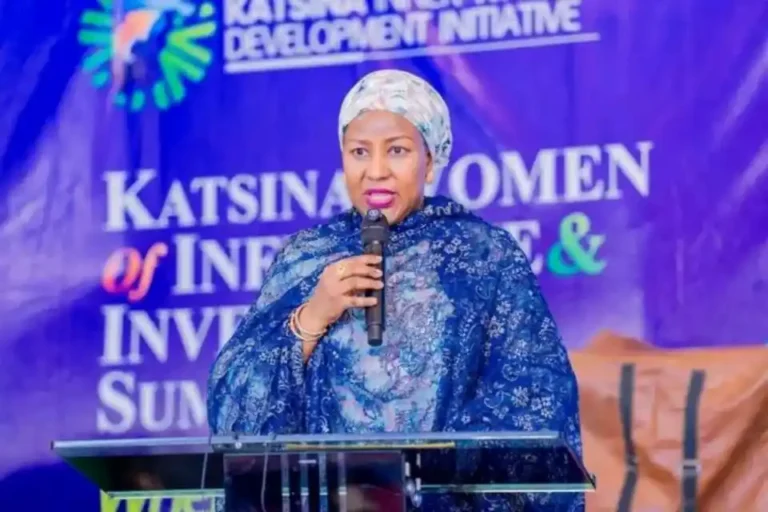
Katsina State Governor, Malam Dikko Umaru Radda, has announced that the Katsina State Government will provide an additional ₦500 million dedicated specifically to supporting women entrepreneurs across the state, with the aim of enhancing skills, expanding businesses, and creating sustainable livelihoods. The disclosure was made at the high-level Katsina Inner Wheel Development Initiative Summit held in collaboration with the Ministry of Women Affairs.

The Governor reaffirmed his administration’s strong commitment to women’s empowerment, describing the summit themed “Where Influence Meets Investment” as a vital platform for promoting inclusive economic development and sustainable growth in Katsina State. According to him, the event brings together women leaders, entrepreneurs, investors, and development partners to explore practical pathways for economic empowerment, leadership development, and skills acquisition.

Speaking at the summit, Governor Radda said his presence throughout the programme was deliberate. “I deliberately chose to come and remain until the end of this programme because any initiative that focuses on the development of women deserves my full attention and support. Developing women is, quite simply, developing society,” he stated.

He assured participants of continuous government backing for women-focused initiatives. “Let me assure you today that I stand firmly with you, and my administration will continue to support initiatives that empower women across Katsina State,” the Governor added.

Governor Radda stressed that the summit represents more than a routine gathering, describing it as a bold declaration to unite economic capital with leadership influence. “Influence without investment is inspiration without impact. Investment without influence is capital without conscience. But when influence and investment converge, economies grow, societies become more equitable, and nations rise,” he said.

Highlighting the critical role of women in societal development, the Governor noted that excluding women comes at a high cost. “Any society that marginalises its women limits its own potential. Any economy that excludes women undermines its productivity. And any leadership that fails to empower women weakens its foundation for peace, innovation, stability, and sustainable growth,” he said.

On women’s contribution to enterprise and community development, Governor Radda observed that women remain central to economic and social stability across communities. “Women drive enterprise, sustain families, strengthen communities, and shape future generations. Yet, too often, their influence has not been matched with equitable access to capital, markets, opportunities, and decision-making spaces,” he stated.

The Governor also highlighted Katsina State’s deliberate efforts to improve women’s representation in governance, including appointments to the State Executive Council. He said empowering women delivers direct benefits to households and communities. “When women thrive, households prosper. When women build businesses, jobs multiply. When women lead, communities become more inclusive, stable, and forward-looking,” he said.

Outlining recent achievements of his administration, Governor Radda disclosed that over 14,000 women were empowered last week alone, while 1,000 adolescent girls were supported two weeks earlier. He added that more than 36,000 women benefited from various empowerment programmes across the state last year.

The Governor further emphasised the need for intentional financing, calling on financial institutions to play a stronger role. “Capital must be intentional, and investment must be inclusive. Our banks and financial institutions must deliberately create pathways that allow local women to access finance with dignity and ease,” he said, noting that Katsina State has invested over ₦4 billion in the Nigerian Women Project.

Addressing women leaders and young women across the state, Governor Radda urged them to embrace leadership and self-belief. “To our women leaders and entrepreneurs, your voice, vision, and values matter. To young women across Katsina State, your future is not on hold. You do not need permission to prepare, nor validation to lead,” he said.

He concluded by stressing the importance of action over rhetoric in driving change. “History will not judge us by our speeches, but by the systems we build, the lives we uplift, and the courage we show when it matters most. Together, we can build a future where ideas become investment, influence becomes impact, and Katsina State emerges as a model of inclusive growth and shared prosperity,” the Governor stated.

In her welcome address, Hajiya Amina Zayyana, Founder of the Katsina Inner Wheel Development Initiative, said the summit positions women as investors, entrepreneurs, innovators, and problem-solvers in the state’s development journey. “When women’s businesses grow, families stabilise, communities thrive, and the state prospers,” she said.

She explained that the summit connects women to opportunities, support systems, and critical resources needed to scale their ventures. “This is about more than encouragement. It is about training, digital inclusion, market access, and systemic support,” she added.

Representing the Honourable Minister of Women Affairs, Hadiza Yaradua commended Governor Radda for recognising women as vital economic assets rather than passive beneficiaries. She highlighted the HAPI App, a digital ecosystem designed to provide mentorship, digital literacy, and seed capital to women nationwide.

The Commissioner for Women Affairs, Hon. Aisha Aminu Malunfashi, also applauded the organisers of the summit and reaffirmed the Katsina State Government’s commitment to structured, result-driven women empowerment initiatives. She highlighted key programmes, including Women Affinity Groups across all local governments, access to MSME funding, and ongoing skills development initiatives.

Former Inspector General of Police, Alkali Usman Baba, described women’s empowerment as a governance necessity, not a choice. “Societies that exclude women undermine their moral authority, institutions, and development potential,” he said, while commending Katsina State for adopting a comprehensive and inclusive approach.

The summit attracted representatives of federal agencies, the Director General of the Nigerian Tourism Development Authority, Dr Olayiwola Awakan, former Minister of Aviation and Pro-Chancellor of Umaru Musa Yar’adua University, Katsina, Senator Hadi Sirika, the Chief Executive Officer of KB Lamah Motors, Kabir Lamah Malumfashi, members of the Katsina State Executive Council, business leaders, women entrepreneurs, and development partners.


NECO Releases 2025 SSCE External Results With 71.63% Pass Rate

The National Examinations Council (NECO) has released the 2025 Senior School Certificate Examination (SSCE) External results, recording a 71.63 per cent pass rate.

The Registrar and Chief Executive of NECO, Prof. Dantani Ibrahim-Wushishi, announced this at a conference at the council’s headquarters in Minna.

Ibrahim-Wushishi said the examination was conducted from Nov. 26 to Dec. 13, 2025, while the marking exercise took place between Jan. 5 and Jan. 21, 2026. He noted that the results were released 52 days after the last written paper.

According to him, 96,979 candidates registered for the examination, comprising 51,823 males, representing 53.43 per cent, and 45,156 females, representing 46.56 per cent. He said 95,160 candidates sat for the examination, including 50,785 males, representing 53.36 per cent, and 44,375 females, representing 46.63 per cent.

The registrar disclosed that 93,425 candidates sat for English Language, out of which 73,167 candidates, representing 78.32 per cent, obtained credit and above. He added that 93,330 candidates sat for Mathematics, with 85,256 candidates, representing 91.35 per cent, scoring credit and above.

Ibrahim-Wushishi said 68,166 candidates, representing 71.63 per cent, obtained five credits and above, including English Language and Mathematics. He added that 82,082 candidates, representing 86.26 per cent, obtained five credits and above, irrespective of English Language and Mathematics.

The registrar explained that the SSCE External provided “a second opportunity” for candidates seeking admission into universities and tertiary institutions within and outside Nigeria. He said the examination covered 16 subjects and described the release of the results as “another milestone” in NECO’s mandate to deliver credible assessments.

Ibrahim-Wushishi disclosed that 9,016 candidates were booked for forms of examination malpractice during the exercise. He said the figure was higher than the 6,160 candidates booked in 2024, representing an increase of 31.7 per cent.

The registrar added that five supervisors were recommended for blacklisting for aiding and abetting malpractice. According to him, two of the supervisors are from the Federal Capital Territory (FCT), while one each is from Kano, Adamawa and Ondo states. He also said four examination centres were recommended for de-recognition over whole-centre malpractice, noting that two of the centres are from Niger, while one each is from Yobe and Kano states.

The registrar advised candidates to check their results on NECO’s website, www.neco.gov.ng, using their examination registration numbers.

Polaris Bank Assures MSMEs of Export Finance

0

Entrepreneurs in the micro, small and medium-sized enterprises (MSMEs) sector in Nigeria have been assured of access to finance by Polaris Bank Limited, as the lender steps up support to strengthen the country’s non-export ecosystem. The assurance was given at the NAHCO and NACCIMA Export Group Programme themed Breaking Barriers: Helping SMEs Navigate Export Procedures for Agro Products and Other Commodities.

Speaking at the event, an executive director at Polaris Bank, Mr Chris Ofikulu, underscored the importance of export diversification and the central role of MSMEs in building a resilient economy. He said reducing Nigeria’s dependence on oil revenues requires coordinated action across the public and private sectors to strengthen non-oil exports, particularly within agro-exports and commodity trade.

“Expanding non-oil exports is not optional; it is a strategic imperative for building a resilient, inclusive and competitive Nigerian economy. SMEs, particularly in agro-exports and commodity trade, hold the key to unlocking our true comparative advantage.

“Polaris Bank remains committed to providing the finance, advisory support and partnerships required to help them scale confidently and compete globally,” Mr Ofikulu said.

Also addressing stakeholders, the Team Lead for Trade Services at Polaris Bank, Mr Olaleye Arinola, highlighted the importance of removing trade and payment bottlenecks that limit exporter competitiveness and cash flow. He emphasized the lender’s focus on building confidence and certainty in the export process through practical support.

“Exports cannot grow if finance and payments remain obstacles. At Polaris Bank, our focus is on removing friction from international trade by ensuring SMEs get paid faster, safer and with greater certainty through efficient trade finance, secure cross-border payments and hands-on guidance across documentation, FX and compliance,” Mr Arinola said.

It was gathered that the one-day engagement brought together regulators, industry stakeholders, exporters and trade bodies to advance solutions for easing trade barriers, improving access to finance and building a more diversified Nigerian economy. The programme also marked the formal introduction and launch of the NACCIMA Export Group and the NAHCO Export Support Centre for MSMEs in Nigeria.

The platforms are expected to create a channel for exporters to access trade facilitation services, logistics support, regulatory guidance and financial solutions. Discussions at the engagement also focused on addressing structural challenges confronting exporters, including infrastructure gaps, port inefficiencies, logistics constraints, standards and certification requirements, and policy consistency.

Participants emphasized the need for stronger public-private collaboration among government agencies, trade bodies, financial institutions and logistics partners to simplify export procedures and improve market access for Nigerian SMEs. As part of its partnership with the business and trade community, Polaris Bank unveiled a Dedicated Help Desk for NACCIMA members to provide direct access to trade finance and payment support, resolution of export-related enquiries, and advisory services on FX documentation and regulatory compliance.

MDCN Doctors, Dentists to Verify Credentials via DataFlow Portal

0

Medical and Dental Council of Nigeria (MDCN) has announced an update on credentials verification for medical and dental practitioners. The Council said this applies to registered medical doctors and dentists, expatriate doctors and dentists seeking temporary registration in Nigeria, and foreign trained Nigerian medical and dental graduates, including those sitting for the MDCN assessment examination.

Applicants may apply for the primary-source verification of their credentials through DataFlow. All payments and documents submissions are to be made exclusively through the DataFlow portal.

To apply for credentials verification, applicants should visit the DataFlow portal via https://mdcn.dataflowgroup.com/en/onboarding/signin

Nigerian startups raised over US$520 million in equity funding in 2024

Nigerian startups raised over US$520 million in equity funding in 2024, reinforcing the country’s position as one of Africa’s leading startup and innovation hubs despite a tougher global funding climate. The figure forms part of a broader continental picture in which total African startup funding stood at about US$2.2 billion in 2024, according to the Central Bank of Nigeria Fintech Report.

The report shows that while investment levels in Nigeria remain strong, they reflect a shift from earlier peak years. In 2019, Nigerian startups raised about US$747 million, accounting for roughly 37 percent of all startup funding on the African continent at the time. That period marked one of the high points of venture capital inflows into Nigeria’s tech ecosystem.

According to the Central Bank, the 2024 funding outcome highlights both resilience and adjustment. Nigeria continues to attract a significant share of investment relative to peers, even as global macroeconomic pressures, rising interest rates in advanced economies, and tighter capital conditions have reduced overall venture flows into emerging markets.

“Nigeria hosts one of Africa’s largest and most dynamic fintech ecosystems,” the report stated, noting that the country has consistently ranked among the continent’s leaders by both capital raised and deal activity. The Central Bank added that this performance underscores Nigeria’s strategic importance as a hub for financial innovation, even amid shifting global investment trends.

The comparison between 2019 and 2024 illustrates how funding patterns have evolved. While the US$520 million raised in 2024 is below the 2019 level, the report explained that the earlier period coincided with a global surge in venture capital and lower borrowing costs. In contrast, the more recent funding reflects a cautious investment environment shaped by global inflation, monetary tightening, and increased risk aversion.

Despite these headwinds, Nigeria’s ability to attract more than half a billion dollars in startup funding in 2024 places it among the continent’s top destinations for venture capital. With Africa’s total startup funding at US$2.2 billion that year, Nigeria accounted for a substantial portion of overall investment flows, reinforcing its continued relevance in the regional innovation landscape.

The Central Bank said Nigeria’s historical share of African funding remains an important reference point. In 2019, when the country captured about 37 percent of total African startup investment, it demonstrated the scale and depth of its ecosystem. That legacy, the report noted, continues to shape investor perceptions, even as funding cycles fluctuate.

“Nigeria’s experience reflects both the opportunities and vulnerabilities of an ecosystem that has relied heavily on foreign capital,” the report stated. It explained that dependence on external funding sources makes startup investment sensitive to global financial conditions, currency movements, and shifts in investor sentiment.

The report also highlighted that the decline from 2019 levels should not be interpreted as a loss of relevance. Instead, it described the 2024 outcome as evidence of resilience, showing that Nigeria remains competitive even during periods of global capital contraction. This resilience, the Central Bank said, is supported by the scale of the domestic market, the maturity of leading startups, and the country’s role as a gateway to wider African markets.

At the continental level, the US$2.2 billion raised by African startups in 2024 reflects a more selective investment climate. Within this context, Nigeria’s ability to secure over US$520 million signals sustained investor interest, particularly in sectors linked to financial services, digital payments, and technology-enabled solutions.

Looking back to 2019, the Central Bank noted that Nigeria’s dominance during that period was driven by strong global liquidity and growing confidence in African tech. While conditions have changed, the report stressed that Nigeria’s long-term fundamentals continue to support its status as a leading destination for startup investment across Africa.

Apply: Commonwealth Young Leaders Fellowship (CYLF) Technical Committee

Commonwealth Youth Council has opened applications for Commonwealth Young Leaders Fellowship (CYLF) Technical Committee, inviting qualified individuals to help design a first of its kind Commonwealth Youth Leaders Fellowship.

Commonwealth is inviting applications for interested individuals to join a technical committee being established to design a first of its kind Commonwealth Youth Leaders Fellowship. The fellowship will equip, support, and elevate a new generation of Commonwealth youth leaders to advance the values of the Commonwealth Charter.

Requirements include experience in designing youth fellowships or leadership programmes, with fellowship members preferred. Applicants are expected to show strong alignment with the Commonwealth Charter, provide vision to build curriculum and mentorship frameworks, and commit minimum of six hours per week for six weeks.

The Deadline to apply is February 9, 2026.

To apply, interested applicants can submit their applications via the form https://docs.google.com/forms/d/e/1FAIpQLSfTTd27JIzaKDA65WM5ZW0_bSXZepPSuyeVQ3duJsIQIYWpiA/viewform

Nigeria records 11 billion digital payment transactions in 2024

0

Nigeria’s digital payments system processed about 11 billion transactions in 2024, highlighting the rapid scale Nigeria has reached in real-time payments and reinforcing policy plans to achieve near-universal e-payment penetration by 2030 under the Payments System Vision.

The figure, published in the Central Bank of Nigeria Fintech Report, represents a sharp rise from about 5 billion transactions recorded in 2022. According to the report, this growth reflects how instant payments have become deeply embedded in everyday financial activity across the country, covering personal transfers, business transactions, and institutional payments.

Nigeria’s real-time payments journey dates back to 2011, when the country launched a nationwide, real-time interoperable payments infrastructure. The report explained that this early rollout made instant interbank transfers a standard feature of financial life in Nigeria well ahead of many advanced and emerging economies, laying the groundwork for the scale now being recorded.

The Central Bank noted that this infrastructure has been strengthened through sustained collaboration with the Nigeria Inter-Bank Settlement System and other ecosystem players. “Nigeria’s instant payments system is one of the most mature, resilient, and widely adopted real-time payment platforms globally,” the report stated, pointing to more than a decade of operational experience managing payments at population scale.

Data in the report shows that over 25 percent of all electronic transactions in Nigeria are now processed through real-time payment channels. This share underscores the central role instant payments play in the financial system, moving them from a supporting tool to core national infrastructure that underpins commerce and daily economic activity.

The growth from about 5 billion transactions in 2022 to 11 billion in 2024 illustrates how quickly adoption has accelerated. The Central Bank said this pace places Nigeria among the top adopters of real-time payments globally and clearly positions the country as a leader on the African continent in terms of digital payments volume.

Beyond scale, the report linked transaction growth to long-term policy direction. It explained that the expansion of real-time payments aligns with the Payments System Vision 2025, which sets out a pathway toward near-universal electronic payment usage by 2030. This vision, according to the Central Bank, provides a framework for ensuring that digital payments become accessible, reliable, and widely used across sectors and regions.

“The maturity of Nigeria’s real-time payments infrastructure and the scale of transactions processed demonstrate what is possible when policy, infrastructure, and industry collaboration are aligned,” the report said. It added that Nigeria’s experience offers practical lessons for other high-growth and emerging markets navigating similar transitions to digital finance.

With more than a quarter of electronic transactions already occurring in real time, the Central Bank described instant payments as a foundation for broader digital economic activity. The report noted that salaries, retail purchases, transfers, and business settlements increasingly rely on these rails, reinforcing their importance to financial stability and efficiency.

The report also highlighted that managing high transaction volumes has helped build system resilience. Nigeria’s instant payment rails were described as widely adopted and trusted, attributes that have supported steady growth even during periods of broader economic pressure and adjustment.

Looking ahead, the Central Bank tied current performance directly to future ambitions. The Payments System Vision aims to deepen electronic payment penetration nationwide, ensuring that both urban and rural users can participate fully in the digital economy by 2030. Real-time payments, the report said, will remain central to achieving this goal.

By spotlighting the 11 billion transactions processed in 2024, the Central Bank positioned payments infrastructure as a pillar of Nigeria’s digital finance strategy. “Nigeria’s early adoption and operational experience provide a strong base for the next phase of resilience, access, and governance improvements,” the report stated, linking past investments to future readiness.

The report further stressed that sustaining growth toward near-universal e-payment usage will require continued coordination across the ecosystem. Ongoing collaboration between regulators, infrastructure providers, and market participants was described as essential to maintaining capacity, reliability, and public confidence as transaction volumes continue to rise.

The Central Bank said its role will remain focused on supporting a payments environment where scale is matched by stability. The report emphasised that as real-time payments grow, maintaining trust, operational efficiency, and system integrity will be key to meeting long-term targets set out in the Payments System Vision.

Nigeria’s experience since the 2011 launch of real-time payments illustrates how early infrastructure decisions can shape long-term outcomes. By building an interoperable system and scaling it steadily over time, the country has been able to accommodate rapid growth in transaction volumes while keeping instant payments at the centre of economic activity.

As Nigeria moves closer to its 2030 target, the Central Bank said the combination of scale, policy clarity, and established infrastructure provides confidence that near-universal e-payment penetration remains achievable within the Payments System Vision framework.