Home Blog Page 127

Apply: Delta State Tertiary Institutions Entrepreneurship Programme (TEP)

The Delta State Government has commenced applications for the Tertiary Institutions Entrepreneurship Programme (TEP) 2.0, an initiative aimed at promoting innovation, entrepreneurship, and economic empowerment among students of state-owned tertiary institutions.

The Tertiary Institutions Entrepreneurship Programme is an initiative of the Ministry of Youth Development designed to facilitate entrepreneurship development in students of Delta State origin. The programme is modeled to train and set up eligible undergraduate students with exceptional entrepreneurial drive through access to a venture-capital arrangement.

The programme is designed to identify, nurture, and support students with innovative and bankable business ideas, while equipping them with the skills and resources required to become successful entrepreneurs and job creators.

The need for the scheme is that it would help bridge the gap between academic learning and real-world enterprise, while preparing young people for self-reliance. TEP is structured to give students practical exposure to entrepreneurship, access to funding, and mentorship that can turn ideas into sustainable businesses.

The programme is also expected to contribute to economic growth in Delta State by encouraging students to become employers of labour rather than job seekers. Participants would benefit from training, access to resources, and opportunities that support innovation across different sectors.

Eligibility for the programme is limited to students of Delta State-owned universities, including the University of Delta (UNIDEL), Delta State University (DELSU), Southern Delta University (SDU), and Dennis Osadebay University (DOU). Applicants must be of Delta State origin, be between 18 and 35 years of age, and be in 200 Level, 300 Level, or their penultimate year. A minimum CGPA of 2.5 is required, alongside an innovative and bankable business idea.

Applicants are required to upload a recent passport photograph, admission letter, birth certificate, Local Government of Origin certificate, and a business plan proposal. All submissions would be thoroughly screened, and only applicants who meet the criteria and provide valid documentation will be considered.

Qualified students should take advantage of the opportunity as the programme aligns with the broader youth empowerment agenda of Delta State. The registration process is free online.

Registration for the programme officially opens on Monday, 2nd February, 2026.

Interested and eligible students are encouraged to apply for Delta State TEP 2.0 online via the official application portal https://www.tepapplication.com.


Advertisement

Edo Govt secures NEPC certification for MSMEs, attracts $109m investments

The Edo State Government has facilitated Nigerian Export Promotion Council (NEPC) certification for 10 Micro, Small and Medium Enterprises (MSMEs) as part of efforts to boost export readiness and promote Made-in-Edo goods. The Managing Director of the Edo State Investment Promotion Office (ESIPO), Mr. Amen Odigie, disclosed this during a media interaction with journalists in Benin City while highlighting the office’s major achievements in 2025 and outlining plans for 2026.

Odigie explained that the certification process was handled directly through the NEPC Headquarters in Abuja, a move he said helped to bypass bureaucratic bottlenecks and open global market access for Edo-based agro-processing businesses. “This intervention has unlocked international opportunities for our local enterprises and positioned them to compete effectively beyond Nigeria,” he said.

He listed the beneficiaries of the certification exercise as Tamah Limited, Fonwose Global Services Limited, Amineru Nigeria Enterprises Ltd, Osimhe Ventures Ltd, Neo-Ritzy Ltd, JVV Food Limited, Usediameg Limited, P. P. International Foods Ltd, Gem Organic Foods, and Varli Foods Limited. According to him, the initiative aligns with the State Government’s broader strategy of strengthening MSMEs and increasing non-oil exports.

The ESIPO boss also disclosed that Edo State attracted over $109 million of investments within the year under review, describing the figure as evidence of rising investor confidence in the State’s business environment. He noted that several investments announced by the government were already at advanced stages and expected to commence operations soon.

Citing specific projects, Odigie said Zeta Autos, valued at $3 million, has secured a proposed site with a memorandum of understanding already signed. He further revealed that Presco PLC is set to inject about $100 million in Foreign Direct Investment into the State’s agriculture sector, adding that the development would significantly support agribusiness growth.

Odigie noted that investment attraction is a collective responsibility that requires collaboration with ministries, departments and agencies (MDAs). He referenced Mandate as one of the businesses recently attracted to the State and said it is already working with the Edo State Signage Agency to facilitate its operations.

He also revealed that ESIPO delivered over 170 aftercare services to existing businesses despite logistical challenges inherited from the previous administration. “Many operational concerns raised by investors were resolved through these engagements,” he said, stressing that aftercare remains central to sustaining investor confidence.

Odigie commended Sen. Monday Okpebholo for his commitment to resolving challenges, assuring that the administration is focused on supporting MSMEs.

Delta Gov to inaugurate Omadino Model Technical College

Delta State Governor, Rt Hon. Sheriff Oborevwori, has announced that he will on Monday, February 2, 2026, inaugurate the Omadino Model Technical College in Warri South Local Government Area of Delta State to support youth empowerment through skills acquisition.

The disclosure was contained in a statement issued on Sunday by the Governor’s Chief Press Secretary, Sir Festus Ahon, and made available to journalists in Asaba, the Delta State capital. The statement said the initiative is expected to boost skill development.

According to the release obtained by Nigeria Startup News on Monday, the inauguration ceremony will take place at the college premises at 10:00 am, with guests seated by 9:30 am.

The statement read in part, “The Omadino Model Technical College is one of the legacy projects inherited by the Oborevwori administration and has now been completed and positioned to deliver technical and vocational education.”

It added, “The institution is designed to equip students with practical, industry-relevant skills, promote self-reliance, and enhance employability in line with national productivity goals.”

The statement further noted, “The college features purpose-built workshops, classrooms, laboratories, and training facilities tailored to technical education standards.”

It also stated that the institution “is expected to serve as a hub for nurturing a new generation of skilled technicians, artisans, and innovators capable of meeting the demands of a rapidly evolving economy.”

Governor Oborevwori, according to the statement, views technical and vocational education as “a critical pillar of his MORE Agenda, particularly in creating pathways for youths to acquire marketable skills, reduce unemployment, and contribute to socio-economic development.”

The statement added that “stakeholders, educationists, and community leaders are expected to attend the ceremony, marking another milestone in the administration’s resolve to strengthen human capital development and expand access to education state.”

Foundation flags off 3,000 women, youth empowerment programme in Kano

0

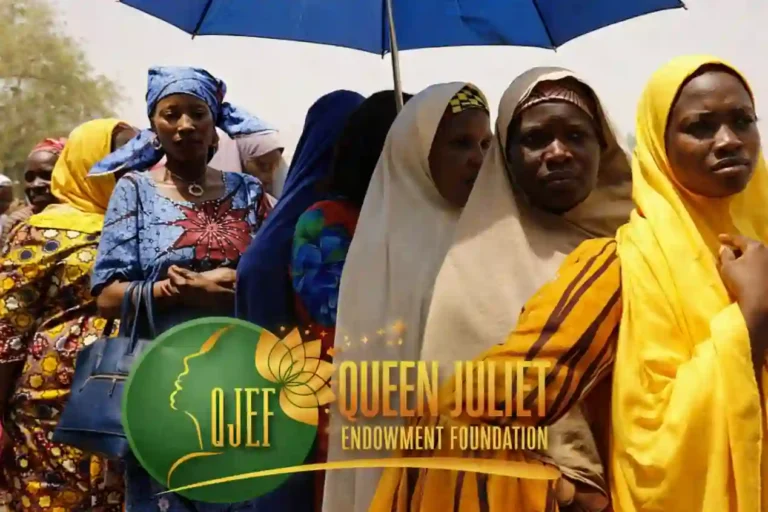
The Queen Juliet Endowment Foundation on Saturday flagged off its annual women and youth empowerment programme in Kano State, targeting at least 3,000 beneficiaries as part of a wider plan to empower one million Nigerians across the country.

Speaking at the flag off ceremony, the founder of the foundation, Ambassador Queen Uju-Obiaeli, said the initiative is one of the organisation’s core programmes for 2026 and is designed to align with President Bola Tinubu’s Renewed Hope Agenda.

She said, “Today we are in Kano to flag off our annual women empowerment programme. Our goal this year is to empower about one million women and youths across Nigeria, starting from Kano State on January 1, 2026.”

Uju-Obiaeli explained that Kano was selected for the take off because of its strategic importance in the northern region, adding that significant groundwork had already been completed before the official launch.

According to her, “Before today, we have trained many women in Kano State in various skills and small scale businesses that will enable them to support themselves and their families.”

She said about 500 women had already benefited from the training phase ahead of the flag off, describing it as part of the foundation’s approach to ensure continuity and impact.

The founder said the foundation distributed start up equipment to graduating trainees, including sewing machines, grinding machines, hairdressing tools, soap making kits and bead making kits.

“These tools will allow the women to become self reliant in their local communities. Our focus is mainly on women in rural areas across all local governments in Kano State,” she said.

Uju-Obiaeli disclosed that the foundation plans to empower at least 3,000 women and youths in Kano State in batches, noting that the programme would continue both before and after Ramadan.

She said, “By next week and in the coming weeks, we will continue this empowerment in batches. On or before Ramadan, or immediately after, we expect to have covered about 3,000 women and youths in Kano State.”

She also revealed plans to expand the programme to other states, adding that youths would benefit from digital literacy training aimed at improving computer skills and employability.

On government support, Uju-Obiaeli said the Kano State Government and the Presidency had provided backing for the initiative.

“The governor of Kano State has given us 100 per cent support. Representatives of the governor and the Presidency are here today. We are also supported by reputable companies and international organisations,” she added.

Also speaking, Ambassador Hussein Coomassie, Head of Mission of the International Peace Commission Nigeria and Global Vice Chairman of the International Commission for Peace and Good Governance, said his organisations were key partners in the programme.

He said, “We are partnering with the Queen Juliet Endowment Foundation to empower one million women and youths during President Tinubu’s administration, in line with the Renewed Hope Agenda.”

Coomassie explained that Kano was chosen as the starting point for the northern phase of the programme.

“We insisted that this phase should start in Kano because of its strategic position in the North. From here, the programme will spread to other northern states like Katsina, while similar efforts continue in the South,” he said.

He stressed that poverty alleviation was a gradual process and called for broad based support.

“Poverty cannot be eliminated overnight. This programme needs the support of government, individuals and organisations for it to achieve its ambitious goal,” Coomassie added.

Foreign firms with remote Nigerian workers not taxable under new reform

Foreign companies employing Nigerians to work remotely will no longer be deemed taxable in the country solely because of those remote roles, following clarifications under Nigeria’s ongoing tax reform programme. The clarification was disclosed by the Chairman of the Presidential Fiscal Policy and Tax Reforms Committee, Mr Taiwo Oyedele, during a virtual tax reform implementation engagement with human resources and payroll professionals, chief financial officers, and tax managers, organised in collaboration with the Joint Revenue Board.

Oyedele said the reform aims to make Nigeria more competitive in the global labour market while removing uncertainties that have discouraged foreign firms from hiring Nigerian talent. According to him, the presence of remote workers in Nigeria, without additional factors, does not create a taxable presence for foreign employers.

“Foreign employers are no longer deemed taxable in Nigeria solely because they have employees working remotely in the country,” Oyedele stated via his verified X, formerly Twitter, handle.

He explained that the clarification aligns Nigeria’s tax framework with global best practices on remote work, economic substance and permanent establishment, while still protecting the country’s fiscal interests.

The engagement session, which attracted nearly 15,000 registered participants, focused on the practical implementation of the recently enacted Tax Reform Acts and their implications for employers and employees.

Oyedele highlighted several worker-friendly provisions under the new tax laws, noting that low-income earners are among the biggest beneficiaries. He said the reforms were designed to reduce the tax burden on vulnerable workers.

Under the reforms, individuals earning the national minimum wage or less are automatically exempt from personal income tax. Employees earning up to ₦100,000 per month may also see their tax liability reduced to zero once allowable deductions are applied, including pension contributions and rent relief.

He clarified that despite the broader restructuring of Nigeria’s tax architecture, personal income tax remains payable to the relevant State Internal Revenue Services.

“To preserve fiscal federalism, all revenue agencies will work together under the Joint Revenue Board to ensure a harmonised and seamless experience for taxpayers,” Oyedele said.

On partnership income, he noted that taxes are payable to each partner’s state of residence, reinforcing the residence-based principle in personal taxation.

To ensure workers benefit from the reforms, payroll managers were advised to apply the new Pay-As-You-Earn computation process correctly. The process begins with gross income, after which benefits-in-kind are added where applicable. Statutory reliefs for pension, NHIS and NHF contributions are then granted.

Oyedele added that workers are entitled to rent relief of 20 percent of actual rent paid, capped at ₦500,000. He further explained that the first ₦800,000 of taxable income is exempt and taxed at zero per cent.

While the top marginal personal income tax rate remains 25 per cent, Oyedele said the effective tax rate for most workers would be lower due to the expanded reliefs.

The session reiterated compliance timelines. Employers must file annual PAYE returns by January 31 each year, detailing employees’ emoluments and deductions. Individual self-assessment returns must be filed by all taxable persons by March 31, covering all income sources.

In addition, a new tax incentives return has been introduced for individuals and entities benefiting from specific tax incentives, aimed at improving transparency and accountability.

Stakeholders said the clarification on remote work taxation and broader worker-focused reforms could attract foreign investment, expand employment opportunities for Nigerians, and strengthen confidence in the evolving tax system across public and private sector employers nationwide.

Flourish Africa awards N300m grants to 100 women entrepreneurs

Flourish Africa, a women-focused empowerment initiative founded by Apostle Folorunsho Alakija, has rolled out N300m in grants for women entrepreneurs across Nigeria after completing a nationwide training and business pitch process.

The grant announcement was made at Flourish Africa’s ninth annual conference held in Lagos under the theme ‘She Champions’, which attracted entrepreneurs, regulators, development partners and private sector leaders.

The grants were awarded under the fourth cycle of the Flourish Africa Grants Programme, during which 506 women entrepreneurs underwent intensive business training aimed at strengthening business structure and growth readiness.

From the total number trained, 409 participants submitted business plans for assessment. Out of these, 200 entrepreneurs progressed to the pitch stage, while 100 businesses were eventually selected to receive funding following evaluation by an independent panel of judges.

Each of the successful businesses is to receive N3m, bringing the total value of grants disbursed under the current cycle to N300m.

Speaking on the structure of the programme, the founder of Flourish Africa, Alakija, said the process was intentionally designed to emphasise merit, preparedness and accountability among beneficiaries.

“We designed this process to be rigorous because Nigerian women entrepreneurs are capable of building serious businesses. Out of 506 women trained, only 100 emerged for funding. That discipline matters because access to capital must be matched with capacity, structure, and accountability if businesses are to survive and scale,” she was quoted as saying in a statement released on Sunday.

The organisation noted that Nigeria has one of the highest rates of female entrepreneurship globally, but many women-owned businesses continue to struggle with access to formal finance.

Flourish Africa said its intervention is aimed at closing this gap by combining structured skills development with practical exposure to investment readiness and governance standards.

The businesses selected for the grants cut across sectors including manufacturing, agribusiness, food processing, fashion, beauty and services.

Judges involved in the process reportedly observed improvements in presentation quality, clearer business models and stronger market articulation among participants compared to previous cohorts, while also identifying the need for deeper financial literacy.

Beyond funding, the programme places emphasis on governance, record keeping and scalability to prepare participants for engagement with lenders and investors.

“Women are already driving Nigeria’s informal and small business economy. What Flourish Africa is doing is formalising that strength by equipping women with skills, governance, and funding. When women succeed in business, they reinvest in their families and communities, creating a multiplier effect that drives inclusive economic growth,” Alakija added. The scheme targets long term enterprise stability.

Tvet Begins Showing Attendance Percentage on Trainee Dashboard

0

The Federal Ministry of Education has commenced the display of attendance records for Technical and Vocational Education and Training (TVET) trainees on the portal, marking monitoring. Beneficiaries are now required to check their TVET dashboard to confirm their attendance status and percentage.

According to FME update for trainees, only those with 65 percent attendance will be paid, making the dashboard review important for beneficiaries. Trainees have been advised to log in and review their records, as attendance is now being added to everybody’s dashboard.

Attendance is based on biometric records. Those that record attendance with biometric are captured on the system. TVET beneficiaries are encouraged to check their dashboard to avoid issues.

However, some trainees have raised concerns that despite not missing any TVET attendance since November, they are seeing “No Data” under the attendance section. The Ministry noted that TVET has started adding attendance data and advised beneficiaries to keep checking.

To check TVET attendance percentage, trainees should log in to portal via https://www.tvet.education.gov.ng now.

Kaduna govt to verify scholarship students February 2, 2026

The Kaduna State Government, through the Kaduna State Scholarship and Loans Board, has announced a physical verification and enrollment exercise for Kaduna State students across selected tertiary institutions.

In a notice titled “Notice of Physical Verification and Enrollment Exercise of Scholarship to Kaduna State Students,” the board invited eligible students of Kaduna State University Kafanchan Campus, Ahmadu Bello University Zaria, Federal University of Education Zaria, Shehu Idris College of Health Sciences Makarfi, Nuhu Bamalli Polytechnic Zaria, Bayero University Kano, College of Education Gidan Waya, and the College of Nursing and Midwifery Kafanchan.

According to the board, students are to be present for the physical verification, enrollment, and award of scholarships under the Special Intervention on Scholarship Scheme approved by the Executive Governor, Senator Dr Malam Uba Sani.

The notice explained that the exercise is aimed at verifying the credentials of new applicants for enrollment formalities and facilitating the award of scholarships to qualified beneficiaries already on the existing list. It added that “the list of initial applicants will be pasted at the venue.”

All affected students are required to attend in person with original and photocopies of academic and personal documents. These include admission letters, student identity cards, evidence of Kaduna State indigene status, NIN, and documents.

The physical verification exercise is scheduled to hold on 2nd February 2026, by 09:00 am, at the main lecture hall of each institution.

The board stated that the verification activity will commence concurrently across all listed institutions.

The notice was issued for Prof. Yahya baleh Ibrahim, Executive Secretary.

Train and Employ programme to begin for 300 youths in Enugu

0

The “Train and Employ” digital skills acquisition programme for Greater Awgu youths from the enclave is set to commence on Monday, February 2, at the Digital Bridge Institute, Ibagwa Nike, Enugu.

The first batch of the programme will involve 50 unemployed graduates drawn from Aninri, Awgu and Oji River local government areas, out of the 300 youths already selected for the initiative. Subsequent batches of 50 participants will undergo the same training process at the same centre until all selected youths are covered.

Participants will receive training in cyber security, digital marketing, call centre management and software engineering. Beneficiaries will also be provided with basic working tools, including laptops, as well as monthly stipends throughout the programme.

The training is expected to last between three and six months and comes with a guarantee of automatic employment for successful trainees who demonstrate strong competence in their chosen digital skills.

The facilitator of the programme, Dr. Ezenwa A. A. Onyirimba, disclosed this to newsmen in Enugu on Saturday, January 31, 2026. He explained that the initiative forms part of his efforts to empower youths from the Greater Awgu enclave with relevant digital skills for the global economy.

Dr. Onyirimba commended the President Bola Ahmed Tinubu-led APC-controlled Federal Government for approving what he described as a laudable programme for unemployed Nigerian youths. He noted that the initiative offers participants the opportunity to acquire modern digital skills required to thrive in today’s economy.

He also expressed gratitude to the Minister of Communications, Innovation and Digital Economy, Mr. Bosun Tijani, for approving the programme and supporting efforts aimed at expanding digital skills development among Nigerian youths.

At the initial orientation for the 300 selected youths held at the Hanef Event Centre, Oji River Local Government Area, on August 23, 2025, the President and Chief Executive Officer of the Digital Bridge Institute, Dr. Daser David, was represented by the Head of the Enugu Campus, Engr. Daniel Chinagozie.

Engr. Chinagozie disclosed that the institute has the capacity to train and employ up to 50,000 Nigerian youths to compete in the global digital market. He noted that the training programme for the 300 graduates from the Greater Awgu enclave gives them the opportunity to be among the first beneficiaries.

He urged participants to make effective use of the training period to acquire digital competencies that would position them for the 50,000 digital job opportunities created by the institute’s foreign partners. According to him, “We are targeting at training and engaging 50,000 youths across Nigeria within the next two years. And our plan is to train them on skills like business process outsourcing skills because these are skills that our partners in the US and other countries have need for. We are training them on digital marketing, software development, cyber security so that they can work in our cyber security operation centres across the country nationwide.”

PAP distributes 900 laptops to Niger Delta scholarship students

0

The Presidential Amnesty Programme has distributed an additional 900 laptops to beneficiaries under its scholarship scheme in universities, marking the third batch of the exercise conducted.

The distribution took place on Friday, January 30, 2026, following the directive of the PAP Administrator, Dr Dennis Brutu Otuaro. Institutions covered include two partnering institutions, Nigeria Maritime University and Admiralty University of Nigeria, and three non-partnering schools, Dennis Osadebey University, Southern Delta University, and the University of Delta.

The laptop support is part of ongoing efforts by the Office of the Presidential Amnesty Programme to strengthen academic capacity among students from the Niger Delta. The Office conducted the first batch in May 2025 with 663 laptops and completed a second batch in November 2025 with 1,857 laptops.

Speaking during the presentation, Otuaro said the initiative demonstrated his unwavering commitment to human capital development in the Niger Delta. He noted that education is a critical driver of personal growth, innovation, and sustainable development in the region and across the country.

Otuaro, represented by his Special Assistant on Special Projects, Engr. Sokoto Ebikonde Victor, said the decision was aimed at equipping PAP scholarship students with essential tools for learning, research, and academic excellence in a technology-driven age.

He said, “This laptop distribution underscores our strong commitment to the overall academic success of our students. This laptop is an essential tool meant to enhance your learning, research, and innovation.

“We encourage you to utilize them responsibly so that you can achieve outstanding results and justify your enlistment for the scholarship scheme.

“We urge you to remain focused on your studies and to see the gesture as an investment by the Federal Government in your future and the development of the Niger Delta.

“We assure you that the Presidential Amnesty Programme will continue to implement initiatives aimed at supporting education, skills acquisition, and youth empowerment in line with the Renewed Hope Agenda of His Excellency, President Bola Ahmed Tinubu, GCFR.”

The PAP helmsman expressed appreciation to President Tinubu for his support of the agency and thanked the National Security Adviser, Mallam Nuhu Ribadu, for his supervision of the programme.

Many scholarship beneficiaries described the laptop distribution as timely, saying it would support their studies. They pledged to use the devices properly and thanked President Tinubu, the Federal Government, and the PAP Administrator for the opportunity to access higher education through the scheme nationwide access.