
Home Blog Page 129

FG, BOI to disburse ₦40bn zero-interest loans to tertiary institution staff

0

The Federal Government through the Federal Ministry of Education has concluded arrangements with the Bank of Industry (BOI) to provide zero-interest loans to eligible staff of tertiary institutions across Nigeria as part of a new welfare intervention. The initiative, tagged the Staff Loan Scheme, is designed to support both academic and non-academic staff in managing personal and professional financial needs while improving productivity in the education sector nationwide.

President Bola Ahmed Tinubu announced the introduction of the Staff Loan Scheme during the 45th convocation ceremony of Ahmadu Bello University, Zaria, held on Saturday. The President was represented at the event by the Minister of State for Education, Prof. Suwaiba Said Ahmad, who delivered the address on his behalf to graduands, staff, and invited guests.

According to President Tinubu, the scheme is intended to reduce financial pressure on tertiary institution workers, enabling them to focus more on quality teaching, research, and community service. He said the programme reflects the government’s commitment to staff welfare and institutional stability within the tertiary education system.

“To operationalise this initiative, the Federal Ministry of Education has concluded arrangements with the Bank of Industry (BOI) to provide zero-interest loans to all eligible staff of tertiary institutions nationwide, with the Ministry bearing the full cost of the interest as part of its staff welfare support,” the President stated.

He disclosed that some beneficiaries had already started receiving funds under the scheme since last year. “As I speak to you now, some of the beneficiaries have started collecting their monies since last year. For the current year, a total sum of ₦40 billion has been earmarked for disbursement, with individual loan amounts ranging from ₦1 million to ₦10 million,” he said.

President Tinubu explained that the loans would be repaid over five years, with a one-year moratorium included to ease the burden on beneficiaries. “The loans will be repayable over a period of five years, including a one-year moratorium, to ensure affordability and sustainability for beneficiaries,” he added.

The President also commended the management of Ahmadu Bello University for reducing electricity costs through energy conservation efforts, noting that such measures had helped lower expenses. He encouraged the university to take further steps by developing a comprehensive energy policy.

“I urge the Management to pursue with vigour its commitment to develop a comprehensive Energy Policy that translates long-standing theoretical solutions into practical steps to deliver tangible results in sustainable power management for the University,” he said.

According to him, “A well-formulated and implemented policy will help the University address power challenges and serve as a benchmark for other institutions.”

President Tinubu recalled his remarks at the university’s 44th convocation ceremony, where he spoke on government efforts to improve electricity supply in universities. “I recall that in my address at the 44th Convocation ceremony of this University, I stated that the Federal Government was making deliberate efforts to address electricity supply issues for universities to enable them to function optimally,” he said.

He announced progress under the Energising Education Programme. “I am pleased to inform you that the Federal Government and the Rural Electrification Agency (REA) have signed an agreement with the Federal Ministry of Education (FME) under the Energising Education Programme (EEP), to provide 24-hour electricity supply to all Federal tertiary institutions,” he stated.

The President said the project would improve learning, productivity, research, and entrepreneurship. He noted that Phases I–III had delivered over 100 megawatts of clean energy to 24 Federal universities and teaching hospitals. According to him, Ahmadu Bello University and others are in Phase IV, commencing soon. He congratulated the graduands, urging effective use of knowledge, self-improvement, and job creation through initiatives like the Students Enterprise Competition organised by ICERFE.
Advertisement

FG Distributes Free Farm Implements to Farmers in Imo

0

The Federal Government Saturday distributed farm implements to 90 groups of smallholder farmers in Imo State as part of efforts to attain food security nationwide.

The exercise took place in Owerri and was conducted by the Minister of Agriculture and Food Security, Sen. Abubakar Kyari, represented by a director in the ministry, Dr Iyere-Usiahon Perpetua. The implements were distributed to farmers drawn from commodity associations, cooperative groups, farmers with Special Needs and Internally Displaced Persons.

Kyari said the programme was a step toward delivering on the Renewed Hope Agenda of President Bola Tinubu, noting that food security was a key goal for every nation.

“This is an international priority reflected in the 2030 Agenda for sustainable development,” he said.

The minister said the administration was addressing challenges affecting food security through economic reforms aimed at improving productivity, job creation and affordability. “To address the underlying challenges impacting the attainment of our national food security goals, the present administration is implementing numerous economic reforms to stimulate productive capacity, create jobs, and reduce cost of living,” he said.

He listed the farm tools distributed to include power tillers, herbicides, liquid fertilizers, knapsack sprayers and water pumps.

Kyari recalled that President Bola Tinubu declared a state of emergency on food security in July 2023. “In this regard, I want to use this opportunity to assure you that this administration has demonstrated total political will to transform the Agriculture sector of our dear country by making food security a top priority,” he said.

He added that since assuming office on Aug. 21, 2023, the ministry had reviewed initiatives to align them with its mandate. “Since our assumption of office on Aug. 21, 2023, we have examined what needs to change and what we need to do to realign existing initiatives and programmes that are on course to be in line with the core mandate of the Federal Ministry of Agriculture and Food Security,” Kyari said.

According to him, several programmes and projects had been introduced to address farmers’ challenges and ensure food availability. “Accordingly, and going forward, we commit to ensuring that all our sectoral programmes and initiatives of Government in the sector are completely aligned to actualising the Presidential priority,” he said.

Kyari said the Federal and State Governments were engaging to address food security issues and building partnerships. “We also remain committed to promoting and creating synergies with Non-Governmental Organisations and the private sector to enhance efforts at ensuring food security, economic growth, job creation and poverty reduction,” he said.

He said the ministry had adopted short-term plans to make farm inputs more affordable. “The ministry has considered the implementation of short term plans and support mechanisms to make essential farm inputs more affordable and accessible to farmers through a transparent and accountable process,” he said.

Kyari said the focus was on supporting small-scale farmers affected by high input costs. “Our foremost concern is the facilitation of agro-inputs and basic farm machinery to small-scale farmers, who are constrained by the high market cost of these essential inputs, and thus need assistance,” he said.

He added that the programme aimed to boost food production, support farmers and advance the Sustainable Development Goals, zero hunger.

Earlier, the Permanent Secretary, Imo State Ministry of Agriculture and Food Security, Dr Alexander Onwumere, urged the Federal Government to sustain the programme and expressed satisfaction that the tools reached farmers on time.

Onwumere advised farmers to use the implements judiciously and warned against selling them, saying offenders would be dealt with severely.

Chief Tobias Iwu, former First Deputy National President of the All Farmers Association of Nigeria, thanked the Federal Government and said the tools arrived on time, advising farmers to use them well.

Mr Chinedu Madu, Head of Umudioka Multipurpose Cooperative, Orlu, who spoke for beneficiaries, also thanked the Federal Government and appealed for the programme to be sustained.

FG Urges Youths to Seize Reform Opportunities

0

The federal government has urged Nigerian youths to engage actively with opportunities, build relevant skills, embrace lifelong learning, and see public service as a platform for national contribution.

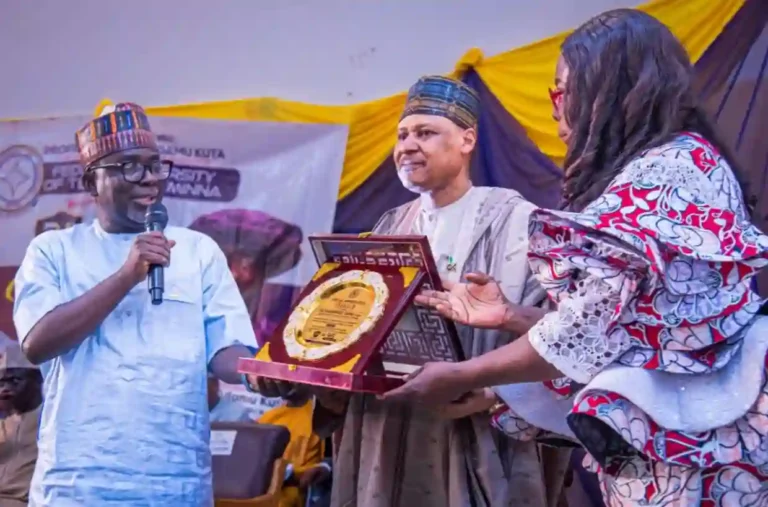
The call was made by the Honourable Minister of Information and National Orientation, Mohammed Idris, while delivering the 2026 Convocation Lecture at the 34th Convocation Ceremony of the Federal University of Technology, Minna, Niger State. The lecture was titled “Youth and Nation Building: Navigating Opportunities in an Era of National Reforms.”

Addressing graduating students, the Minister described Nigeria as a youthful nation with vast potential, stressing that the country’s future depends largely on how young people are educated, skilled, and engaged in productive activities. “Nigeria, like the rest of Africa, happens to be a very youthful country, with half of our population under the age of 20, and three-quarters under the age of 35,” he said. “With the right education, skilling, and preparation for the rapidly transforming workspaces of the 21st century, Nigeria will be an unstoppable global force.”

Idris explained that the reforms introduced under President Bola Ahmed Tinubu’s administration were deliberate steps aimed at resetting Nigeria’s economic and governance systems. He said nation-building cannot be achieved without change, noting that reforms are necessary to move the country forward. “There is no nation-building without reforms,” he said. “Reforms protect us from the trap of doing the same thing repeatedly while expecting different results.”

He highlighted policy changes, including the removal of petrol subsidy, foreign exchange unification, and the introduction of new tax laws. According to him, the reforms were not designed to place additional burdens on citizens, but to build a fairer and more transparent system that supports development. “The goal was never to take more from Nigerians, but to simplify taxation and make it fairer and more transparent,” the Minister said.

The Minister noted that the reforms are already helping to restore investor confidence and open up opportunities in key sectors such as technology, agriculture, renewable energy, and the creative economy.

Idris also referenced government-backed programmes aimed at supporting education and youth development, particularly the National Education Loan Fund (NELFUND). He said the initiative has supported hundreds of thousands of students and demonstrates the impact of the Renewed Hope Agenda. “Through NELFUND, we have incontrovertible proof that the Renewed Hope Agenda is real, functional, impactful, and transformational,” he said.

In remarks to the graduates, the Minister urged them to see themselves as active builders of the nation, regardless of their current status or resources. He encouraged them to keep learning, sharpen their skills, and take responsibility for contributing to national growth. “You can build from where you are, with what you have,” he said. “You do not need to wait until you have amassed wealth or influence before contributing to nation-building. Start now.”

He congratulated the graduating students and thanked the management of the Federal University of Technology, Minna, for the opportunity to deliver the Convocation Lecture.

Dignitaries at the event included the representative of the Governor of Niger State, Mr Obet Nana, who also serves as the Commissioner of Information; the Vice Chancellor of FUT Minna, Prof. Abdallah Adamu Kuta; former Vice Chancellor of the institution, Muftau Akanji; Senator Peter Nda Alkali, representing Niger South Senatorial Zone; the Director General of the Voice of Nigeria (VON), Malam Jibrin Baba Ndace; and a former Minister of Sports, Alhaji Sani Ndanusa, among others. At this time.

FG Targets 50 Million Digitally Literate Nigerians by 2027

The federal government through the National Information Technology Development Agency (NITDA) has announced an ambitious plan to ensure that 50 million Nigerians become digitally literate by 2027. The target was restated during Tech Revolution Africa 2025, an event that attracted innovators, policymakers, entrepreneurs and digital leaders to the Landmark Event Centre, Victoria Island, Lagos.

The Director General of NITDA, Kashifu Inuwa Abdullahi, made the announcement during a high-level fireside chat at the event. He was represented by Dr. Aristotle Onumo, Director of Stakeholder Management and Partnerships, who led the discussion and shared insights on Nigeria’s digital future.

The fireside chat, titled “Building Nigeria’s Digital Journey: Policy, Infrastructure, and the Road Ahead,” focused on NITDA’s strategic roadmap for national digital transformation. Dr. Onumo explained that the agency is working on adaptive and innovation-friendly policies that support growth in the digital space.

He said NITDA is also expanding modern digital infrastructure to improve connectivity across the country while investing consistently in talent development to fully engage Nigeria’s youthful population. According to him, the agency continues to support startups, digital creators and tech entrepreneurs.

Dr. Onumo stressed that partnerships are key to achieving these goals, saying strong public-private collaboration remains central to building a sustainable and competitive digital ecosystem. He added that the digital literacy target is designed to stimulate innovation, improve inclusion and strengthen Nigeria’s digital economy.

FG to create 10,000 jobs for Nigerians with EV manufacturing deal

0

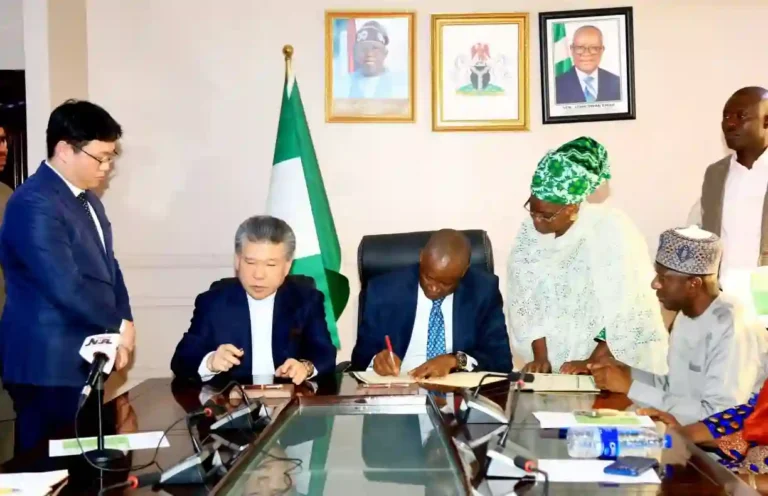
The Federal Government is set to create about 10,000 direct and indirect jobs for Nigerians following a major agreement on electric vehicle manufacturing signed in Abuja. Nigeria is expected to become Africa’s first electric vehicle manufacturing nation and one of the leading automotive manufacturing countries globally through the initiative.

On January 30, 2026, the Federal Government, through the office of the Hon. Minister of State for Industry under the Federal Ministry of Industry, Trade and Investment (FMITI), signed a memorandum of understanding with South Korea’s Asia Economic Development Committee (AEDC). The agreement covers the establishment of an Electric Vehicle (EV) manufacturing plant and the development of charging infrastructure across Nigeria.

According to officials, the MoU aligns with the Federal Government’s National Energy Transition Plan (ETP) and the National Automotive Industry Development Plan (NAIDP). These policies are designed to build a strong ecosystem for EV infrastructure development, expansion, and adoption, while supporting cleaner energy use and local industrial growth.

The project will be implemented in phases. Phase I will focus on building a complete EV assembly plant, while phase II will involve the establishment of facilities capable of full in-house production. When completed, the plant is expected to have a production capacity of 300,000 vehicles annually. The scale of production is also projected to generate about 10,000 jobs nationwide.

Government officials said the economic benefits of the initiative are significant. Increased EV adoption is expected to reduce the estimated $10 billion Nigeria spends each year on refined fuel imports. The project is also expected to stimulate nationwide economic growth through the expansion of related industries such as auto parts manufacturing, charging infrastructure deployment, and vehicle maintenance services.

Speaking at the signing, the AEDC Chairman, Yoon Suk Hun, expressed strong commitment to the partnership and the long-term development of Nigeria’s automotive industry. “We will devote all of our capabilities to ensuring that Nigeria’s EV industry is built in the most economically viable manner and operated with maximum efficiency, while achieving global competitiveness,” he said. He added, “Drawing on Korea’s spirit and development experience, our goal is to elevate Nigeria’s automotive industry to world-class standards within 20 to 30 years, an achievement that took advanced economies 150 years and Korea 60 years to accomplish.”

The Minister of State for Industry, FMITI, Senator John Owan Enoh, pledged to work closely with AEDC to ensure the rapid completion of Africa’s first advanced, world-class EV manufacturing plant. He affirmed that the Federal Government would provide full cooperation and mobilize all available resources to ensure the project becomes a major driver of Nigeria’s industrial development.

Emphasizing the importance of the MoU, the minister said the project aligns strongly with President Tinubu’s Nigeria First Policy, which focuses on boosting local production and strengthening industrial development. He noted that the agreement reflects the Federal Government’s commitment to building a diversified economy driven by domestic manufacturing.

The Director General of the National Automotive Design and Development Council (NADDC), Otunba Oluwemimo Joseph Osanipin, represented by the Head of Policy, Planning and Statistics, Mr. Nura Sidi, said the collaboration would focus on technology transfer, investment promotion, human capital development, and research and design.

He explained that the council had earlier initiated an EV development policy that led to the introduction and adoption of various EVs in Nigeria, with some assembled locally while others are imported.

Through the green energy initiative, Nigeria aims to transform its economy into a high value-added manufacturing base powered by green energy, with plans to expand charging infrastructure and battery production across different regions of the country nationwide

Kosofe Rep Empowers 1,000 Constituents With Vehicles, Tools

0

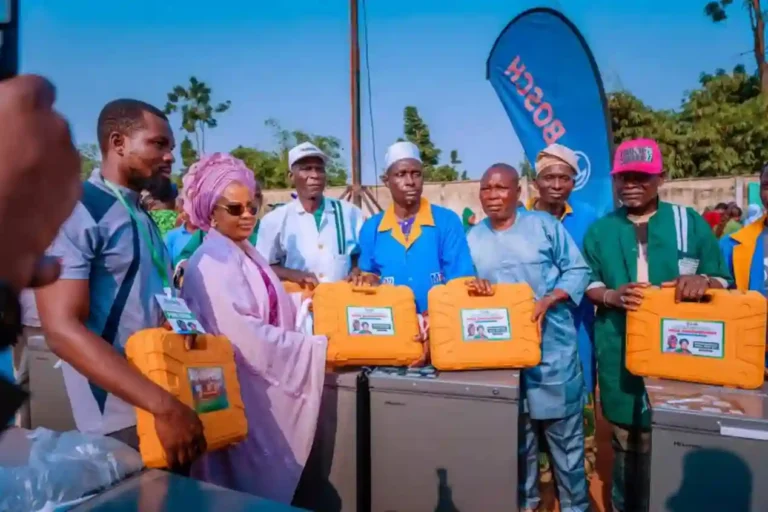
THE House of Representatives member representing Kosofe Federal Constituency, Lagos State, Alhaja Kafilat Ogbara, has distributed vehicles, work tools and business equipment to 1,000 constituents as part of a large-scale empowerment programme aimed at boosting livelihoods and economic self-reliance among residents.

The event, tagged a Mega Empowerment Programme, was held at the Centre for Management Development, Shangisha, Magodo, Lagos. It attracted political leaders, party officials, traditional rulers, market leaders and residents from across the constituency.

Items distributed included mini buses, tricycles, electric motorcycles, generators, sewing machines, grinding machines, hair dryers, makeup kits, mechanic tools, popcorn machines and other vocational equipment. Beneficiaries cut across different age groups, professions and communities within Kosofe.

Speaking at the event, Ogbara said the programme was part of her commitment to ensuring that development “comes home” to the people she represents, rather than remaining only in policy documents or legislative debates.

She said: “I stand here today not to boast, but to render an account of the journey you have given me so far. You trusted me with the mandate to represent you, and I promised that your voices will not only be heard in the National Assembly, but that tangible development will come to our streets, schools, markets and homes.”

The lawmaker noted that the empowerment initiative was a continuation of several constituency interventions carried out over the past two and a half years, including grants, vocational training, education support and infrastructure projects.

According to her, over N100 million had previously been disbursed as grants to women and youths in the constituency. She said beneficiaries received N200,000 each alongside financial literacy training to ensure proper use of the funds.

“It is not enough to give grants; people must also be taught how to manage and grow the money,” she said, adding that some beneficiaries had gone on to become employers of labour.

Ogbara also listed other interventions such as free cooking gas distribution to households, drug abuse awareness campaigns, donations of textbooks and exercise books to schools, construction of a secondary school in Agboyi Waterside, installation of transformers, solar street lighting projects and provision of toilet facilities in public schools.

She said beneficiaries were carefully profiled to ensure that items matched their actual needs and skills.

“We did profiling to know their age, status, profession and what they truly need. We don’t want to give a generator to someone who needs a sewing machine. I personally went through the stories behind the selections to ensure the support would be impactful,” she said.

The lawmaker added that the programme was not limited to members of her political party, stressing that all beneficiaries were verified residents of Kosofe Federal Constituency through their voter cards.

She disclosed that about 1,000 constituents were being empowered in the current phase, with more items, including electric tricycles, expected to arrive in subsequent batches.

“This is a continuous process. Those who have not benefited today should be assured that more opportunities are coming,” she said.

Some beneficiaries described the initiative as impactful, particularly those who had earlier received training under the programme.

Emmanuel Olubenga, an auto mechanic and Vice Chairman of the Nigerian Automobile Technicians Association (NATA), Lagos State, said he benefited from a compressed natural gas (CNG) conversion training sponsored by Ogbara before receiving tools.

“This is not the first time. We did CNG training last year, and they promised empowerment after the training. What we are seeing today is a promise kept,” he said.

He explained that the training involved theory lessons in Lagos and practical sessions in Abeokuta, Ogun State, which improved his skills.

“She sponsored our transportation and accommodation. Now, I can conveniently convert vehicles from fuel to gas, and it has improved my work already,” he said.

Another beneficiary, Balogun Jimoh Kayode, also an auto mechanic, said the training exposed him to new technical knowledge.

“Before the training, I was just hearing about CNG. Now I understand what compressed natural gas is and how the conversion works. Once you understand the basics, you can work professionally,” he said.

Kayode urged other lawmakers to replicate similar initiatives, noting that skills-based empowerment was critical during economic hardship.

In her remarks, Ogbara said her priority areas remained education, healthcare, infrastructure and economic empowerment.

“If you cannot serve the people, you have no business being there. Leadership is not about occupying offices; it is about improving lives,” she said. She said the programme reflected her belief that public service should be measured by visible impact, accountability and inclusion, adding that feedback from residents would continue to guide future interventions across wards in the constituency. She thanked community leaders for their support.

YASIF, IAVE, IBM train 15,000 youths on green and digital economy skills

0

Young Advocates for a Sustainable and Inclusive Future (YASIF) Nigeria, International Association for Volunteer Effort (IAVE) and the International Business Machines Corporation (IBM) have trained 15,000 youths on green economies as part of a skills development drive.

Mrs Blessing Ewa, the Executive Director of YASIF Nigeria, disclosed this in an interview with the News Agency of Nigeria (NAN) in Abuja on Saturday, saying the programme was designed to improve employability, job readiness and youth participation in the digital and green economies.

She said the intervention was delivered through the SkillsBuild Phase of the Reskilling Revolution Africa (RRA) initiative, which YASIF Nigeria is implementing to scale a tested model for youth skills development based on evidence from an earlier pilot phase.

“Through the SkillsBuild Phase of Reskilling Revolution Africa (RRA), YASIF Nigeria is scaling a proven model for youth skills development that is grounded in evidence from the pilot phase,” Ewa said.

She explained that the IBM SkillsBuild programme is a global skills development initiative created to expand equitable access to digital, professional and sustainability-related skills for young people and other underserved populations.

According to her, in Africa, SkillsBuild is delivered through the RRA initiative, implemented by IAVE in partnership with IBM and the African Union, and coordinated at country level through national civil society partners.

“The programme provides structured, labour-market-relevant learning pathways through a digital platform that supports self-paced learning, measurable progress, and the awarding of internationally recognised IBM SkillsBuild digital credentials,” she said.

Ewa added that the credentials are complemented by facilitation, mentoring and localised learner support, and are delivered across countries including Nigeria, South Africa, Kenya and Ethiopia to maintain quality standards.

She said YASIF Nigeria is implementing the SkillsBuild Phase, also known as Phase 2 of the RRA initiative, following the successful completion of the programme’s pilot phase, which recorded strong learner uptake, gender inclusion and measurable skills outcomes.

She explained that the RRA pilot phase, launched in October 2024, set out to engage 30,000 young Africans across Nigeria, Ethiopia and South Africa.

“Nigeria exceeded its national pilot target by enrolling 12,061 unique learners on the IBM SkillsBuild platform, drawn largely from unemployed and underemployed youth, including students in tertiary and technical institutions,” Ewa said.

The YASIF executive director expressed satisfaction with female participation, noting that it surpassed the minimum benchmark and contributed to an outcome in which nearly 60 per cent of learners were women.

She said learners collectively recorded almost 93,000 learning hours and earned close to 2,000 internationally recognised IBM SkillsBuild digital credentials, establishing a performance baseline for programme scale-up.

“Building on these results, the SkillsBuild Phase expands both the scale and structure of programme delivery in Nigeria,” Ewa said.

She disclosed that under Phase II, YASIF Nigeria, partnering with Emerging Communities and Little Gifted Hands Matter alongside other partners, will coordinate the enrolment of 15,000 young Nigerians over a 12-month period, with at least 50 per cent female participation.

According to her, implementation will take place in Abuja, Lagos, Kaduna, Katsina and Niger State.

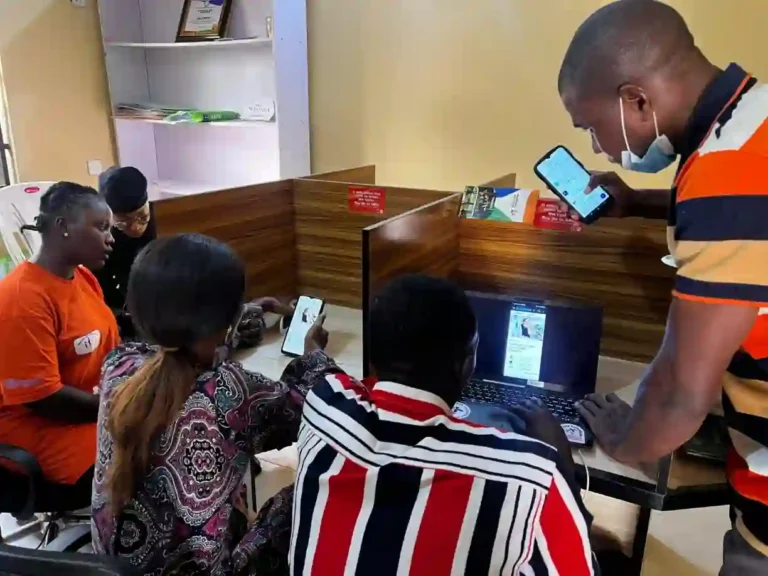
“Learners will be onboarded in weekly cohorts through a blended learning model that combines IBM SkillsBuild’s online curriculum with in-person facilitation, coaching and peer support delivered through trained volunteers and facilitators,” Ewa said.

She said YASIF and its partners would collaborate with various MDAs and the private sector.

Ewa said the focus areas include climate change and green economy, digital marketing, artificial intelligence, web development, project management, entrepreneurship and sustainability-related skills.

“Programme performance is monitored through the SkillsBuild platform, with Nigeria targeting a minimum of 1,500 digital badges earned during Phase 2, representing at least 10 per cent of enrolled learners achieving platform-recognised credentials,” she said.

She said that beyond skills training, YASIF Nigeria and partners are implementing an employability and alumni support framework.

“This includes career guidance such as Curriculum Vitae development and interview preparation, partnerships with job-placement organisations, and entrepreneurship training and mentorship,” Ewa said.

She added that volunteering remains a core component of the SkillsBuild Phase, with participants encouraged to apply skills through community-based activities nationwide programme rollout.

NOUN launches TISHIP health insurance platform for students

The Vice-Chancellor of the National Open University of Nigeria (NOUN), Prof. Olufemi Peters, has launched the Tertiary Institution Social Health Insurance Programme (TISHIP) platform for students of the university, describing it as a step toward improving student health.

The launch took place on Thursday, January 22, 2026, at the university’s Senate Building in Jabi, Abuja.

Speaking at the event, the Vice-Chancellor said the Tertiary Institution Social Health Insurance Programme was long overdue, explaining that the timing reflected the special nature of NOUN.

“It has taken us this long to be able to convince ourselves that, firstly, we need to engage the statutory requirements as enacted according to the Act of the National Assembly and also decided that it is high time we put the health and safety of our students in our heart and that’s the reason why we decided to go ahead with the implementation of this platform,” Peters said.

He stated that the university followed a transparent process in the selection of Health Maintenance Organizations.

“The university is operating on a very clear and open policy and the selection of the Health Maintenance Organization was done as transparent as possible,” he said.

Peters explained that the nationwide spread of NOUN students made it necessary to work with more than one HMO.

“Because of the widespread of our coverage in the country we cannot restrict the HMO to one organisation alone. We have to find geo-political coverage for our HMOs and with the new university clinic setup, the TISHIP has officially commenced,” he said.

The Vice-Chancellor assured students that the university would not charge them above the approved amount.

“For the students, I want to assure you that NOUN is not going to charge you above what is required of us to charge. This health programme is for the good of the students,” he said.

He announced that every student would be issued a separate identity card.

“This ID card will be given to you by the HMOs through which you will use to have access to the healthcare providers. Without the ID card you cannot have access to their services and also the registration is very important because you paid for it,” Peters said.

He urged students to register with the HMOs available within their six geo-political zones.

The Vice-Chancellor appreciated the Governing Council of the National Open University of Nigeria, led by Malam Isa Yuguda.

In his remarks, the Deputy Vice-Chancellor, Administration, Prof. Shehu Usman Adamu, said the innovation began during a sensitisation meeting organised by the Vice-Chancellor to explain how the TISHIP would operate.

The Director of Procurement, Ms. Dinah Abbas, issued approval letters to the various HMOs.

Representatives of the HMOs appreciated the recognition and promised effective service delivery, while the Director of Counselling and Career Development, Dr. Sefinat Omuya, gave the vote of thanks.

RECEF opens nationwide Data Collector recruitment

0

The Renaissance Care and Empowerment Foundation (RECEF) has announced a nationwide vacancy for Data Collectors to support its ongoing development programmes across Nigeria. The recruitment is open to qualified candidates in all 36 states and will be field based, allowing selected applicants to work directly within communities where projects are implemented.

RECEF is a non-governmental, non-profit and non-partisan organisation focused on societal development. Its work covers Health, Education, Vocational Training, Economic Empowerment and Conflict Prevention, with attention on children, women, youths and other vulnerable groups. Accurate data remains central to effective programme delivery.

For the role, Data Collectors would serve as primary field-level operatives responsible for gathering reliable information from assigned communities and project sites. The role connects community realities with our analytical teams, ensuring programme implementation is backed by accurate and reliable data.

Key duties include systematic data gathering through surveys, interviews and field observations. Selected candidates are expected to use digital tools such as KoboToolbox and ODK to record and transmit data in real time. Data Collectors must uphold the highest standards of accuracy, integrity and ethical conduct during fieldwork, while also engaging professionally with community members and stakeholders.

Candidates would be responsible for verifying data consistency and quality before submission to the analytical team. This is critical for evidence-based planning and reporting.

On qualifications, applicants must possess at least an OND, NCE, HND or Bachelor’s degree. Preferred fields include Social Sciences, Statistics, Public Health or related disciplines. Experience in Monitoring and Evaluation, data analytics or community-based programme implementation would be an added advantage, especially within the non-profit or development sector.

Technical requirements include digital skills in platforms such as KoboToolbox or ODK, as well as knowledge of Microsoft Excel and other analytical software. Successful candidates must demonstrate attention to detail, observation skills and the ability to work independently in diverse environments.

Applicants should clearly indicate their state of residence when applying and only shortlisted candidates will be contacted for the next stage of the recruitment process.

To apply, interested and qualified candidates are required to submit a CV via email to recefrecruitment@gmail.com.

SON, Niger State to boost women empowerment, local enterprises

0

The Standards Organisation of Nigeria (SON) has announced a new collaboration with the office of the First Lady of Niger State, Hajiya Fatima Mohammed Bago, aimed at fostering economic inclusion, enterprise development, and community resilience across the state.

The announcement was made during a courtesy visit to Her Excellency by SON’s Director General, Dr. Ifeanyi Chukwunonso Okeke, who was represented by the Niger State Office 1, Minna Coordinator, Mrs. Hauwa Nuhu Yusufu. The visit took place in Minna and was used to convey goodwill, express condolences over recent security challenges in the state, and explore areas for joint action in advancing women’s empowerment initiatives led by the First Lady.

During the engagement, Mrs. Yusufu highlighted SON’s mandate to support local industries and explained the organisation’s ongoing Entrepreneurship Support Programme. She said the programme has seen over 300 products certified under the MANCAP and PIS schemes, a development that has helped open access to both local and international markets for small businesses.

Mrs. Yusufu encouraged entrepreneurs in the state to take advantage of opportunities created by the African Continental Free Trade Area (AfCFTA), stressing that adherence to standards is critical for growth and sustainability. “Standardisation is key to ensuring that regulatory activities thrive, which in turn, will help to sustain the impact of the First Lady’s empowerment programmes,” she remarked.

As part of the visit, the SON delegation presented a Letter of Appreciation to the First Lady for her attendance at the recent official opening of the SON Niger State Office. Copies of the SON Act 2015 and other organisational publications were also handed over during the meeting.

In her response, Hajiya Fatima Mohammed Bago thanked the delegation for the visit and commended SON for improving its operations in Niger State. She reaffirmed her commitment to working closely with the organisation to improve the livelihoods of women and local communities through sustained collaboration.

The delegation was received by Her Excellency alongside senior officials, including the Commissioners for Women Affairs and for Culture and Tourism. The partnership is expected to boost resilience.