Home Blog Page 130

Renewed Hope Ambassadors Inaugurate Coordinators Across Edo State

0

The Edo State coordinator of the National Renewed Hope Ambassadors, Hon. Sylvester Aigboboh, has inaugurated senatorial, local government, and youth coordinators of the Renewed Hope Ambassadors in the state.

He described the initiative as a people-driven movement to deepen grassroots engagement and consolidate the Renewed Hope Agenda of President Bola Tinubu.

Aigboboh said the inauguration marked the formal activation of a strategic structure designed to bridge government, party leadership and the grassroots, charging the coordinators to mobilise, sensitise and defend government policies while promoting unity and inclusiveness within the party across Edo State.

Highlighting the achievements of President Tinubu’s administration since 2023, he noted that bold economic reforms are already yielding results, with headline inflation easing to 15.5 percent, foreign exchange reserves rising above $46 billion, and investor confidence returning to key sectors such as oil and gas, solid minerals and the Nigerian Stock Exchange.

“The Renewed Hope Agenda of President Bola Ahmed Tinubu is not a slogan; it is a reform-driven programme already restoring confidence in our economy and improving the lives of Nigerians.

“Our responsibility as Renewed Hope Ambassadors is to ensure that every Nigerian understands, appreciates, and benefits from the bold reforms and achievements of this administration,” he said.

He also cited major social and institutional gains under the Renewed Hope Agenda, including access to tertiary education for over 700,000 students through the education loan scheme, improved passport issuance timelines, stabilisation of the exchange rate, easing fuel and food prices, and enhanced national security.

Commending President Tinubu’s support for Edo State, Aigboboh praised Governor Monday Okpebholo for massive infrastructure development, education reforms, security improvements, and economic empowerment initiatives.

He stressed that the Renewed Hope Ambassadors would play a critical role in sustaining public engagement and consolidating support toward the re-election of President Tinubu in 2027 elections nationwide.

Advertisement

Apply: Teach For Nigeria Fellowship 2026 Recruitment for Graduates

0

The general public is hereby informed that the 2026 Teach For Nigeria (TFN) Fellowship recruitment application is now open. This highly impactful fellowship offers passionate and purpose-driven Nigerians the opportunity to contribute meaningfully to nation-building by improving access to quality education for underserved children and communities.

The Teach For Nigeria Fellowship is a two-year, full-time leadership and teaching program that equips fellows with essential skills in leadership, classroom instruction, problem-solving, and community engagement. Fellows are placed in public schools where they work directly with students while also developing solutions to address systemic challenges in education. According to the organisation, the fellowship is designed to build a pipeline of leaders committed to long-term educational reform across Nigeria.

Under the Young Graduate Pathway, the programme is targeted at highly motivated young graduates and mid-level professionals from diverse academic backgrounds. The eligibility criteria state that applicants must be Nigerian citizens between the ages of 18 and 35 at the time of application, hold a university degree with a minimum of second class lower, and possess at least five O’Level credits including Mathematics and English. Applicants are also required to have completed NYSC on or before July 2026.

Fellows are selected through a rigorous and competitive process. Prospective applicants are to apply if they believe in equitable, excellent education for all children, demonstrate leadership potential, and show openness to learning. Other requirements include willingness to relocate to an underserved location in Nigeria to lead positive change and readiness to commit to spending two years as a full-time teacher in an underserved community.

Candidates should dedicate adequate time to preparing a strong application. Applications are reviewed by trained assessors alongside thousands of submissions from other candidates.

The application process requires candidates to demonstrate leadership capacity through written essays. Applicants will be asked to write three essays focusing on leadership experience, motivation, and long-term goals. Candidates are to reflect on past experiences, personal achievements, and future career aspirations, and should explain how the fellowship aligns with and supports their desired career path. Use the STAR approach, which stands for situation, task, action, and result.

On documentation, only candidates with strong academic records would be considered. Applicants must upload relevant documents, including BSc certificates or statements of results from 2019 to 2023, S.S.C.E results from WAEC, NECO or NABTEB, NYSC certificates, and birth certificates. All submitted documents must be accurate and free from errors. Remember to proofread submissions carefully and avoid unprofessional language at all times.

Careful preparation increases chances of success and reflects commitment to educational leadership nationwide.

To apply for Teach for Nigeria recruitment, interested applicants should visit https://teachfornigeria.org/apply/ and apply.

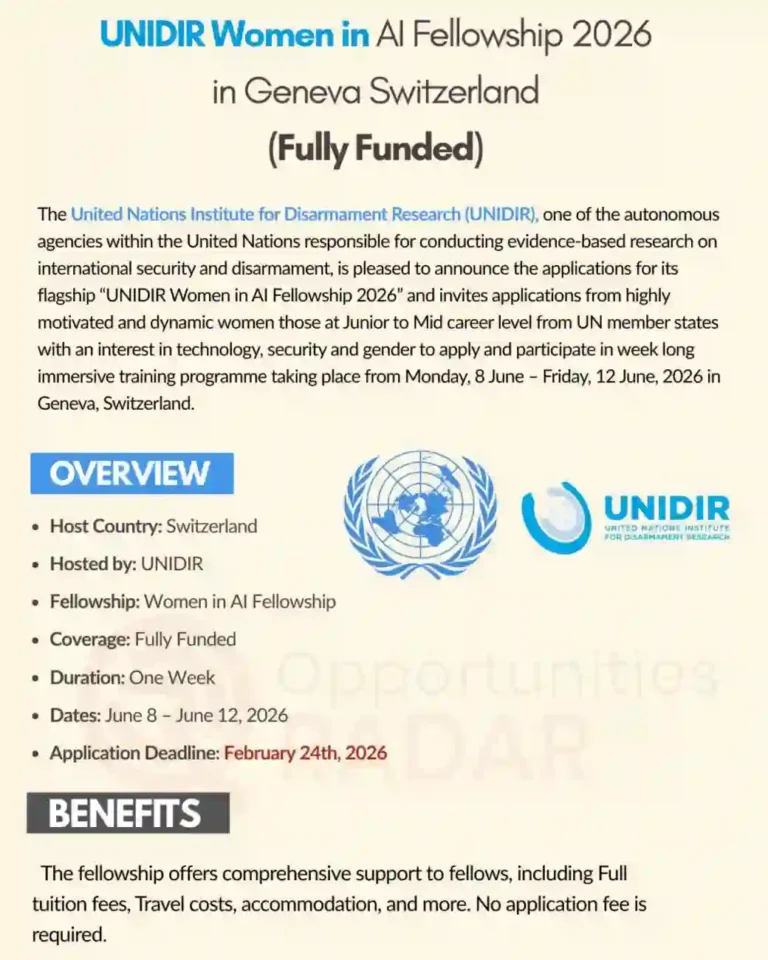
UNIDIR Opens 2026 Women in AI Fellowship for Diplomats

To redress gender inequalities and promote inclusive and effective policymaking, UNIDIR is convening the 2026 edition of the Women in AI Fellowship, a capacity-building programme for women diplomats working at the intersection of technology, policy, and international security.

The fellowship is designed to equip participants with up-to-date knowledge of the policy, legal, and technical dimensions of artificial intelligence, while strengthening their ability to engage in multilateral discussions on AI in the context of international peace and security.

Women in AI Fellows acquire the knowhow, skills, resources and networks required to engage effectively in multilateral AI discussion in the field of international peace and security. The 2026 fellowship will take place as a week-long, in-person training programme in Geneva, bringing together selected women diplomats and government representatives from UN Member States.

The programme is structured around three learning pillars that are intended to deliver a balanced and practical experience. Education introduces fellows to how AI works, its strengths and limits, current and emerging security use cases, and the international policy debates around AI governance, including links to law, ethics, military use, and gender perspectives. Exploration allows participants to interact directly with experts and institutions applying AI in technical and academic settings, helping them better understand how AI systems are designed, deployed, and governed in real environments. Networking focuses on building lasting professional connections through engagements with the diplomatic community, private sector actors, and civil society, including a Geneva-based diplomatic reception, virtual meetings with multi-sector experts, and integration into the UNIDIR Alumni Network and the UNIDIR Expert Network on the Governance of Artificial Intelligence in the Military Domain.

The fellowship is open to women diplomats and government representatives who are junior to mid-career level, represent UN Member States, have strong written and spoken English skills, and show interest in security, technology, and or gender issues. Applications will be carefully screened based on these criteria, and all applicants will be informed of their outcome.

The programme is delivered free of charge. Limited financial support for travel and accommodation in Geneva will be available, with priority given to fellows from developing countries.

UN Member States and delegations of international or regional organizations are invited to nominate candidates through their diplomatic representations. While multiple nominations are allowed, only one fellow per entity will be selected to ensure regional diversity, and individual applications will not be accepted.

Required documents include a passport copy, a two-page CV, two recommendation letters, and a one-page letter of interest sent to sectec-unidir@un.org.

To apply, applications must be submitted by Tuesday, 24 February, with selected fellows announced in mid-March.

Claims CDCFIB inviting candidates for physical screening/ verification

0

There is a circulating claim that the CDCFIB is inviting shortlisted candidates for physical screening/document verification, and have been urged to select their preferred screening venue and date.

The fake circular going viral online was obtained by Nigeria Startup News on Saturday.

The circular states that “the Civil Defence, Correctional, Fire and Immigration Services Board (CDCFIB) wishes to inform the general public that plans are ongoing towards moving to the next stage of its recruitment exercise i.e. physical screening/document verification.”

It further claims that “applicants who performed well have been shortlisted on merit and are advised to visit the Board’s official recruitment portal address at recruitment.cdcfib.gov.ng from Monday, 2nd to Wednesday, 4th February 2026 to select their preferred screening venue and date.”

According to the same circular, the screening exercise “will hold from Monday 2nd to Friday, 6th February 2026 across the 36 States and the FCT.”

It even adds that the Board “wishes to congratulate successful applicants” and claims that the selection process was conducted “in line with Federal Character principle as well as the needs of each of the Services.”

However, findings show that this circular is fake, as there has been no official announcement by the CDCFIB recruitment team so far. Official communication with respect to the next stage of the exercise will be only through the Board’s portal.

GEF Supports 94,000 Jobs, 115,000 Farmers in Northern Nigeria

A total of 94,000 on- and off-farm jobs have been supported across northern Nigeria through a large-scale agriculture and environment project funded by the Global Environment Facility (GEF), marking one of the most visible outcomes of efforts to link food production with sustainable land use.

The initiative has also expanded climate-smart agriculture practices, including the planting of 44,800 seedlings under agroforestry systems, leading to a 44 percent increase in standing tree cover. In addition, 115,000 smallholder farmers have been reached, with women accounting for 45 percent, improving soil fertility, crop yield, food security, and livelihoods.

The GEF-funded initiative is being implemented by the United Nations Development Programme (UNDP) and is officially titled Fostering Sustainability and Resilience for Food Security in the Savanna Zones of Northern Nigeria, identified as GEF ID 9143. Nigeria is the beneficiary country under the Food-IAP programme. The project is supported by $8.0 million in GEF financing and $57.0 million in co-financing aimed at expanding coverage and long-term impact.

Project data show that 273,000 hectares of farmland have been brought under integrated sustainable land and water management and climate-smart agriculture practices. These interventions target declining productivity in a region where agriculture remains the backbone of rural livelihoods. “The goal is to improve productivity while protecting ecosystems that farmers depend on,” the project stated, noting that environmental restoration and food production are being pursued together.

Northern Nigeria’s agricultural sector supports more than 70 percent of the population and contributes about 23 percent to national GDP, yet it continues to face declining yields. Environmental degradation, soil infertility, and low adoption of sustainable practices have reduced output over time. Rainfed smallholder systems dominate the region, while population growth, climate variability, and insecure land tenure worsen soil erosion, water scarcity, and land degradation.

Unsustainable farming practices have further weakened the natural resource base, limiting yields and threatening food security, while increasing reliance on food imports. Women and youth farmers, who often manage smaller plots with limited access to inputs and finance, are disproportionately affected. Farmer–herder conflicts and weak institutional coordination have also added pressure on already vulnerable communities. Addressing these challenges, according to the project, requires integrated interventions that raise efficiency, strengthen resilience, and promote sustainability across landscapes.

Results recorded so far include significant environmental and production gains. Soil erosion was reduced by 22 percent on 36 hectares through targeted interventions involving 10,600 farmers trained in erosion control techniques. Crop production increased by 25 percent for rice, groundnut, cassava, maize, and sorghum. National and state-level policies were also harmonized into the National Sustainable Food Security Resilience Framework to improve coordination and policy alignment.

Employment creation remains central to the project’s impact. A total of 94,000 jobs have been supported on- and off-farm, including 44,400 jobs taken up by women. These opportunities span agricultural production, processing, and market-linked activities that directly support household incomes. Gender inclusion has also advanced, with 31,900 women and youth actively participating in agricultural production and value chains, surpassing the original target set at project design.

The approach combined sustainable land management, climate-smart agriculture, and value chain development. Farmers received training and input support to adopt improved seeds, composting methods, erosion control techniques, and agroforestry systems that improve soil fertility, water retention, and yields. Partnerships with private sector actors established offtake arrangements and market linkages, encouraging investment and reinforcing economic gains.

Institutional strengthening was pursued through policy harmonization and multi-stakeholder platforms that supported governance and knowledge sharing. Community-based extension workers played a key role in encouraging adoption of best practices, while demonstration plots and training centres provided hands-on learning to ensure techniques were scalable and replicable. “Demonstration sites helped farmers see results directly, which increased confidence and uptake,” the project noted.

Lessons from implementation show that integrating policy, institutional, and technical actions enables smallholder farmers to adopt and maintain improved practices. Early engagement during planning supported realistic scheduling and adaptive management in complex, resource-constrained contexts.

While private sector partnerships strengthened value chain participation, the project said continued coordination is needed to align commercial incentives with social objectives. Planned actions focus on scaling climate-smart practices, strengthening training centres as knowledge hubs, expanding access to finance and markets, and keeping women and youth central to resilient farming systems across regions.

UNILAG Opens 2026 SGroup ICON Academic Exchange Application

0

The Office of International Relations, Partnerships & Prospects (IRPP), University of Lagos (UNILAG), has announced a call for applications for the 2026 SGroup Intercontinental Academic Exchange Programme (ICON), to promote collaboration, research cooperation, and institutional linkages.

IRPP said the ICON Programme provides administrative staff, as well as PhD candidates from SGroup member universities, the opportunity to undertake mobility at partner institutions abroad. UNILAG is an associate member of SGroup, making its eligible staff and doctoral candidates qualified to participate.

The programme offers grant funding of up to €3,000 to support mobility-related expenses such as travel, accommodation, visa processing, insurance, and other approved costs. Participants are also expected to benefit from opportunities to develop institutional partnerships, engage in research cooperation, exchange professional knowledge, and support internationalisation initiatives.

For 2026, IRPP disclosed that following approval by the SGroup General Assembly, the number of available ICON grants has increased, with a total of 18 grants available across participating regions.

The mobility programme is suitable for individuals seeking to initiate or strengthen research collaborations, develop joint academic and educational initiatives, enhance PhD-level cooperation, support internationalisation at departmental or institutional levels, and gain exposure to education environments.

Eligible applicants include academic staff involved in teaching or research, administrative or professional staff, and PhD candidates enrolled at an SGroup member university. Applications are open to European full-member universities for mobility outside Europe, including Africa, Asia-Pacific, and the Americas, while associate-member universities may apply for mobility to European full-member universities. Full eligibility requirements are contained in the ICON Programme Guide 2026.

The call timeline shows that the first application window opened on Wednesday, January 7, 2026, and will close on Monday, February 23, 2026. A second call, subject to grant availability after the first round, will open on Monday, April 6, 2026, and close on Friday, April 25, 2026. All approved mobility activities must take place between January 7 and December 31, 2026.

Applicants are required to review the ICON Programme Guide 2026 and consult the 2026 ICON To-Do Checklist for step-by-step guidance. They must identify a suitable host institution and secure two support or acceptance letters, one from their home institution and one from the host institution. Upon submission, applicants will receive an automated confirmation email.

Required documents include an online application form stating objectives, work plan, and expected impact, a short CV of not more than two pages, letters of support from both home and host institutions, and a cost estimate for mobility. More details are provided in the ICON Programme Guide.

For enquiries or institutional endorsement procedures, IRPP advised interested applicants to contact Professor Ismail Ibraheem via iibraheem@unilag.edu.ng and inter_rel@unilag.edu.ng, or Dr. Victor Onifade via vonifade@unilag.edu.ng.

To apply, interested applicants are to submit the online application form via the ICON platform. Apply here: https://sgroup-unis.eu/icon_form.

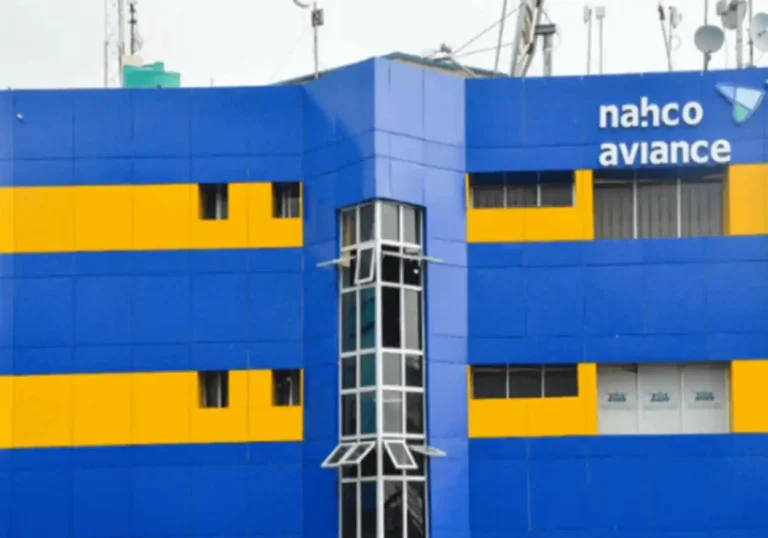
NAHCO Targets $1bn Export Economy Through SME Support

0

The Nigerian Aviation Handling Company Plc (NAHCO) Plc says it has keyed into the $1 billion economy by encouraging small and medium enterprises (SMEs) to grow and participate actively in exports.

The company disclosed this in a statement by its spokesman, Tayo Ajakaye, who said the Group Executive Director, Business Development, NAHCO, Saheed Lasisi, spoke at a capacity building forum on export processing for SMEs held in Lagos during the week.

Lasisi said NAHCO was committed to supporting the Federal Government’s drive to achieve a $1 billion economy within the targeted period.

“A major focus of the government in achieving this goal is commodity exports. And to record the needed volume in commodity exports, the nation needs the SMEs,” he said.

According to him, the ground handling company recognises the contribution of SMEs to national development and is charting the way forward to prepare them for foreign markets.

He noted that many SMEs still need to build capacity in export processing, stressing that exporting agro products and other commodities requires a strong logistics and handling backbone to meet standards.

Lasisi said NAHCO sits at the centre of the export value chain, serving as a link between exporters, airlines and regulators.

In this role, he explained that NAHCO would offer guidance on cargo handling, including product preservation quality, regulatory compliance, on-time flight connections, and meeting acceptance requirements set by buyers.

He also highlighted the need for specialised packaging for perishable and sensitive export items to reduce losses and improve market acceptance.

Lasisi said NAHCO, with the approval of the Federal Airports Authority of Nigeria (FAAN), has provided a packaging facility within the airport environment.

“Our packaging area is in the NAHCO Export Packaging and Processing Centre (NEPPC), the only one of its kind in Nigeria, and we started operations in July last year. NAHCO also has an export desk that provides support for exporters,” he said.

NDPC Enforcement Creates 23,000 Jobs, Generates N5.2bn Revenue

The Nigeria Data Protection Commission NDPC says its growing enforcement activities have helped create more than 23,000 jobs while strengthening Nigeria’s digital economy, as the broader data protection ecosystem now exceeds N16.2 billion in value.

The Commission has also concluded 246 investigations into data protection and privacy breaches, generating over N5.2 billion in compliance revenue, further cementing its reputation as a formidable regulator in the digital space.

The national commissioner and chief executive officer of the NDPC, Vincent Olatunji, disclosed this on Thursday in Lagos at a media workshop organised by the Commission.

According to the NDPC, the results reflect a deliberate shift toward aggressive, enforcement-driven oversight under the Nigeria Data Protection Act, 2023. The 246 concluded probes directly led to 11 enforcement actions, including significant fines and remediation directives, showing that the regulator is prepared to impose substantial penalties on violators, ranging from major corporations to financial institutions.

Several high-profile cases were cited to underline the Commission’s resolve. In July 2025, MultiChoice Nigeria was fined N766.2 million for intrusive, unfair, and disproportionate data practices, including unlawful cross-border transfers of subscriber personal information without adequate safeguards or consent.

Fidelity Bank also faced a N555.8 million penalty in 2024, with ongoing implications noted in recent reviews. The bank was found to have processed personal data without informed consent, used cookies in a non-transparent manner on its banking applications, and engaged third-party processors that failed to meet compliance requirements.

The NDPC said these landmark sanctions, among others, contributed to the N5.2 billion compliance revenue stream, which it said supports government finances while discouraging widespread non-compliance.

Olatunji linked the enforcement gains to Nigeria’s wider digital ambitions, stating that trust built through accountability is essential for the country’s push toward a $1 trillion digital economy.

“Enforcement is the backbone of privacy protection. By concluding 246 investigations and applying meaningful consequences, we are not only protecting citizens but also creating the secure environment needed for innovation, foreign investment, and sustainable growth,” he said.

The Commission reported expanded compliance efforts, including the registration of 38,677 Data Controllers and Processors of Major Importance, the licensing of 307 Data Protection Compliance Organisations, and the filing of more than 8,155 Compliance Audit Returns.

It also issued the General Application and Implementation Directive, which becomes effective in September 2025, translated the Act into three major languages, and launched a multi-sector compliance drive in August 2025. During the exercise, compliance notices were sent to 1,348 entities across banking, insurance, pension, and gaming, with further actions promised for defaulters.

Looking ahead to 2026, the NDPC said it will intensify enforcement against non-compliant organisations while expanding awareness, professional certification through the National DPO programme, and guidance on best practices.

The Commission said international recognition, including the Picasso Award for Best DPA in Africa and participation in global forums, has boosted confidence in Nigeria’s data protection regime.

It added that activities planned for National Privacy Week, scheduled for January 28 to February 4, will include nationwide campaigns and stakeholder engagements aimed at strengthening ethical data stewardship across the country.

100 Delta Youths Graduate From ICT Training, Receive Laptops

0

100 unemployed youths from various ethnic nationalities in Delta State have graduated from a six-month intensive computer training programme organised by the Tompolo Foundation in conjunction with Tantita Security Services Limited (TSSL) and PEB ICT Services.

The graduation ceremony, held on Thursday, marked the successful completion of the programme by participants drawn from the Urhobo, Isoko, Ijaw, Itsekiri and Ibo ethnic extractions.

Each graduate received a certificate of completion and a laptop computer to enable them to engage in small-scale ICT services for self sustenance and to train other youths within their communities.

The organisers disclosed that the programme was estimated at a cost of N500 million, covering monthly salaries of trainers, a monthly allowance of fifty thousand naira for each trainee, and the cost of procuring 100 laptops for the beneficiaries.

They added that the Tompolo Foundation and its partners have committed to sustaining the training programme to reach more youths.

Speaking at the event, the Managing Director of Tantita Security Services Nigeria Limited, High Chief Kestin Ebimorbowei Pondi, urged the graduates to apply the knowledge acquired to improve their lives and positively impact other unemployed youths.

“I am deeply honoured to stand before you today to formally commission the successful trainees of the Six-Month ICT Training Programme and Laptop Empowerment Initiative, fully funded by Tantita and delivered in partnership with the Tompolo Foundation through PEB ICT Services,” Pondi said.

He explained that the programme was designed to empower young Nigerians with digital skills relevant in today technology-driven world.

“We all know that digital skills are no longer optional. They are essential for employment, entrepreneurship, and competitiveness. This reality guided the design of the programme,” he stated.

Pondi said that over the six-month period, the 100 participants underwent intensive training in computer applications, web development, graphics design, cybersecurity and data analysis.

“These skills are relevant and provide a strong foundation for self-reliance and meaningful economic participation,” he said.

He added that sustainability informed the decision to provide laptops to all participants.

“Beyond training, we are intentional about sustainability. That is why each participant is being provided with a laptop today. This is not merely a reward; it is a tool to practice, to work, and to earn,” he said.

According to him, removing barriers to basic ICT equipment ensures that acquired knowledge can be put to immediate and productive use.

Continuing, Pondi noted that the outcomes of the programme were encouraging, with participants showing growth in competence, confidence and readiness for the digital workplace.

“I am pleased to note that the outcomes of this programme have been encouraging,” he said, adding that many participants were already applying what they learned.

He highlighted collaboration as a key factor behind the success of the initiative, commending PEB ICT Services for quality delivery and acknowledging the Tompolo Foundation’s commitment to human capital development.

“At Tantita, we remain committed to initiatives that empower our teeming youth,” Pondi said.

He congratulated the beneficiaries and cautioned them on responsible use of the skills and tools provided.

“With this training and these tools comes responsibility. Use them wisely, not for fraud, but to add value to your lives, your communities and our nation at large,” he said.

“Together, through initiatives like this, we are equipping our young people with the tools to compete and succeed on a scale, shaping a stronger and more prosperous digital future for Nigeria,” he added.

Also speaking, the Chief Executive Officer of PEB ICT Services, Dr. Paul Bebenimibo, commended Tantita Security Services and the Tompolo Foundation for sustaining the programme, describing it as a model for tackling youth unemployment through skills acquisition.

According to Dr. Bebenimibo, “we commend Tantita Security Services Nigeria Limited for its commitment to youth empowerment and for fully funding this programme.”

“We are proud to have delivered quality training to these young people, and we look forward to expanding the initiative to other parts of the country,” he said.

He explained that the partners plan to build on the success of the pilot batch by scaling up the training to create a pipeline of digitally skilled youths capable of securing jobs, starting small technology businesses and competing in the digital marketplace.

Dr. Bebenimibo added that initiatives of this nature are critical to Nigeria’s broader economic diversification drive, as digital skills continue to play a central role in productivity growth, innovation and inclusive development.


UNILAG Staff Begin Application for 2026 PAYE Rent Relief

0

Members of staff of the University of Lagos (UNILAG) have been asked to apply for the 2026 Rent Relief following a new tax reform that provides rent relief on PAYE. In a notice, the university said applications must be completed online via https://forms.gle/XGmjnwJMGtRNM46K6. “It is compulsory to attach evidence of rent payment for 2026,” the notice said, adding that the document must show the applicant’s name and address.

The deadline for submission is Friday, February 13, 2026. The application is for UNILAG staff eligible under the PAYE rent relief policy.