
Home Blog Page 132

Kaduna Launches Jobs for 5,000 Youths and Women Through TSAFTA

0

5,000 youths and women across Kaduna State are set to get jobs as Governor Uba Sani on Thursday launched an environmental initiative aimed at strengthening sanitation and improving public health across the state.

The programme, known as Operation TSAFTA, was unveiled at an event where the governor also announced that an additional 7,000 jobs would be created in the coming months as the initiative expands.

Speaking at the launch, said his administration has procured essential equipment to support the programme, including Roro bins, dustbins, water tankers and appropriate personal protective equipment for workers.

“These resources are intended to enhance operational effectiveness, improve safety for workers, and ensure that sanitation activities are carried out in a professional and sustainable manner,” the governor said.

He explained that the initial phase of Operation TSAFTA would focus on four local government areas that are “currently experiencing significant environmental stress arising from rapid urbanisation, increased commercial activity and population density.”

According to him, “lessons learned from this phase will guide expansion to the remaining local governments in due course.”

Governor Sani described the initiative as “a practical response to the environmental pressures that accompany population growth, urban expansion and economic activity,” adding that it reflects his administration’s resolve to tackle these challenges with purpose and coordination.

He stressed that a “clean and well-managed environment is fundamental to human health, economic productivity and social stability.”

“Operation TSAFTA is therefore not an isolated intervention, but part of a broader effort to embed environmental responsibility into governance and daily life across both urban and rural communities in ,” he said.

The governor commended the 23 local government councils, the Ministry for Local Government Affairs and the Ministry of Environment and Natural Resources for their roles in the programme.

“Effective governance depends on cooperation across institutions, and Operation TSAFTA demonstrates what can be achieved when agencies align their efforts towards a common objective,” he added.

Governor Sani said the programme creates opportunities for women and young people to engage in lawful and productive work while contributing directly to environmental cleanliness and public wellbeing.

“By linking environmental management with livelihoods, we are fostering a sense of ownership, encouraging responsible behaviour, and reinforcing the idea that environmental protection is a shared civic duty,” he said.

He noted that Operation TSAFTA aligns with his administration’s broader commitment to youth inclusion, skills development and shared participation in governance.

The governor disclosed that the programme prioritises private sector involvement in environmental management through partnerships with service providers and cleaning firms.

“Through the engagement of private service providers and competent cleaning firms, we are improving efficiency, professionalism and accountability in sanitation services,” he said.

“These partnerships are essential for building a resilient environmental management system that can adapt to growing demands and changing conditions,” he added.

He said the initiative will strengthen coordination, promote accountability, and support sustainable sanitation services across communities statewide effectively.


Advertisement

Kano Tech Hub Launches Digital Dashboard to Track Government Projects

0

Blue Sapphire Hub, a Kano-based technology hub, has unveiled a new digital platform aimed at strengthening transparency and accountability in local governance.

The platform, launched on Thursday, is known as the Strengthened Leadership Aware Citizen Digital Dashboard and is designed to allow citizens to track government projects in real time, submit feedback, and hold public officials accountable for service delivery.

Speaking at the launch, Blue Sapphire Hub Programme Coordinator, Sani Sulaiman, said the initiative was designed to bridge the gap between citizens and government.

“It creates an avenue for transparency, where people can see how public funds are being used, which projects are ongoing, pending, or completed, and even the budgets and expenses attached to them,” he said.

According to Sulaiman, the platform provides two interfaces to support monitoring of public projects.

He explained that the public portal allows citizens to view projects, budgets, and progress reports, while the administrative dashboard enables government officials and contractors to upload data, update milestones, and respond to community inputs.

The programme coordinator said the platform is currently being test-run in five local government areas.

“Citizens can rate projects, raise concerns about delays, or suggest improvements, while officials are required to acknowledge and address issues logged on the system,” he noted.

The Kano State Commissioner for Local Government and Chieftaincy Affairs, Muhammad Usman, commended the initiative, saying it aligns with the state’s plan to adopt a fully digitalised budget in 2026.

Represented by the Director of Admin and General Service, Bashir Baba, the commissioner praised SLAC’s effort in training local government staff since June 2025.

“This is a great step towards moving from analog to digital governance,” the commissioner said.

He assured that the ministry would continue to support the project by releasing staff for training and providing financial assistance where necessary.

“Blue Sapphire and the Ministry of Local Government are working on the same pipeline in terms of digitalising governance,” he said.

He added that the platform is being piloted in five local government areas, with hopes to scale and replicate it across other states facing similar governance challenges across the country soon.

Education District III, LCDA roll out 85% tuition scholarships for 500 students

The Tutor-General/Permanent Secretary (TG/PS) of Education District III, Mr. Olusegun Olawale Osinaike, has facilitated a strategic partnership with the Council Leader of Itire/Ikate Local Council Development Area (LCDA), Hon. Agbeyangi Olaoluwa Andre, to introduce a scholarship scheme for students and youths within Education District III.

The initiative was officially unveiled during a sensitisation visit and is designed to provide financial support for 500 beneficiaries to pursue academic programmes at Grace Polytechnic. The scholarship is targeted at students from indigent backgrounds who face challenges in continuing their education due to limited financial resources.

Under the scheme, successful candidates will receive up to 85 percent tuition fee coverage, a move aimed at easing the financial burden on families and encouraging more youths to remain in school. Hon. Agbeyangi described the programme as a deliberate investment in human capital development, noting that education remains a key tool for social and economic growth.

“This initiative is our way of giving back to society,” Hon. Agbeyangi said. “By alleviating financial constraints, we are not only encouraging academic excellence but also taking concrete steps to reduce the dropout rate among our youth.”

Mr. Osinaike explained that the scholarship model was informed by his experience of facilitating a similar programme during his tenure at Education District IV, which he said recorded positive outcomes. He added that the new intervention would ensure students in Education District III also benefit from opportunities that can positively shape their future.

Despite Education District III being outside his immediate jurisdiction, Hon. Agbeyangi approved the request in the interest of inclusive youth development and broader community impact.

Representing the TG/PS at the event, the Director of Administration and Human Resources, Mr. Olalekan Rufai, expressed appreciation to the Council Leader for supporting the initiative.

“On behalf of the students and youths of Education District III, we assure you that this opportunity will be maximally utilised,” Mr. Rufai said. “I encourage all eligible candidates to seize this rare privilege, as opportunities of this nature do not come often.”

ActionAid Trains 12,000 Women Farmers in FCT on Organic Farming

ActionAid Nigeria has trained over 12,000 small holder women farmers in the Federal Capital Territory (FCT) on organic farming practices aimed at improving healthy food production, climate resilience, and sustainable livelihoods.

The training was conducted under the three-year Strategic Partnership for Agroecology and Climate Justice (SPAC) project, implemented in partnership with the Smallholder Women Farmers Organisation of Nigeria (SWOFON).

The intervention focused on equipping women farmers with practical agroecological skills that support environmentally friendly agriculture and improved food systems across communities in the FCT.

Speaking at a stakeholders’ campaign on land ownership and market access for smallholder women farmers in Abuja, SWOFON Programme Officer, Hajara Ramson, said the initiative strengthened women’s capacity to produce food sustainably while protecting the environment and public health.

She explained that agroecology promotes organic farming practices that help regenerate soil, reduce dependence on chemical inputs, and improve food quality and safety.

Ramson said that despite the progress recorded from the training, many women farmers still face challenges that limit the benefits of the programme.

“Without secure land rights and functional market access, the skills and knowledge these women have gained cannot translate into improved food security or sustainable income,” she said.

According to her, the stakeholders’ engagement created an opportunity for government officials, development partners, and community leaders to examine ways to improve women’s access to land, strengthen market connections, and expand agroecological practices nationwide.

She urged governments at all levels to support agroecology through policies that guarantee women’s access to land, markets, and productive resources, noting its importance to food security and environmental protection.

Ramson added that although the SPAC project has ended, sustained government commitment and stakeholder collaboration are needed to scale its impact and improve the livelihoods of women farmers across Nigeria.

Also speaking, the District Head of Abaji, Alhaji Kamal Adamu Shuaibu, said improved farming practices could increase food production in the FCT.

He noted that with population growth, sustainable agricultural development remains essential to ensuring food security for residents.

While acknowledging the challenge of land grabbing in the FCT, Shuaibu encouraged women farmers to organise themselves to secure access to land.

He called on them to work collectively to position the FCT as a centre for organic food production, including supplying schools and institutions, to boost incomes and community wellbeing.

Youth of Enterprise opens Cohort 7 paid internship for Nigerian graduates

The Youth of Enterprise (YOE) has opened applications for Internship Programme, offering young Nigerian graduates an opportunity to gain paid work experience and begin their careers across the Financial and Professional Services sector. The programme, now welcoming applications for its Cohort 7, is positioned as a pathway for graduates seeking practical exposure and long-term career growth.

Founded in 2022, the Youth of Enterprise (YOE) Internship Programme is an initiative of EnterpriseNGR created to drive human capital development in Nigeria. The programme was established to address the growing challenges of youth unemployment and underemployment in the country. At the centre of the initiative is EnterpriseNGR’s commitment to preparing young people for the realities of the workplace through structured internship placements.

YOE offers young Nigerian graduates a paid internship, real workplace experience, and the chance to begin a meaningful career with reputable organisations. The programme is designed for ambitious and talented youths who are willing to take advantage of hands-on workplace exposure to build professional competence and improve their employability.

The programme aims to empower the next generation of workplace talent, create meaningful work experiences, foster an ecosystem of support and networking, curate opportunities for interns, and build capacity for future growth. Participants are supported throughout the internship period to ensure they gain relevant skills and confidence needed in today’s labour market.

The YOE Internship Programme is expected to make participants strong candidates for recruitment into Nigeria’s labour force. Benefits of the programme include employability skills development, on-the-job training, mentorship, and zero cost participation for interns.

Eligibility requirements for the programme is open to Nigerian university graduates aged between 18 and 26 years. Applicants must reside in Nigeria, hold a minimum of a Second Class Lower degree, and must have completed the National Youth Service Corps (NYSC) programme.

To apply, interested applicants can apply online through the registration portal at https://youthofenterprise.solutions/register.

UNILAG, University of Birmingham sign MoU to run UK degrees in Nigeria

0

The University of Lagos (UNILAG) and the University of Birmingham in the United Kingdom (UK) have signed a memorandum of understanding (MoU) to run a degree programme in Nigeria, marking a new phase in education collaboration.

The agreement was signed on Thursday at the UNILAG campus auditorium. The signing ceremony was witnessed by representatives of the University of Birmingham, the British High Commission in Lagos, officials of the National Universities Commission, and the Tertiary Education Trust Fund (TETFund).

Nick Vaughan-Williams, provost and vice-principal of the University of Birmingham, described the agreement as a commitment of two institutions “to make students benefit from the UK varsity in Lagos”. He said future collaboration between Nigeria and the UK must be rooted in quality, academic integrity and mutual benefit.

According to him, the partnership must align with Nigeria’s national priorities, regulatory frameworks and ambitions for the higher education system. Vaughan-Williams added that the initiative reflects “our wider commitment to global engagement that is thought to build capacity, to share knowledge and to contribute to social and economic development”.

He explained that the learning process under the partnership will include academic provision, student experience, governance, infrastructure, regulatory requirements and financial sustainability. “It commits our two great institutions, the University of Birmingham and the University of Lagos, to work together in a structured, evidence-led way to explore how we might work together to enable students to benefit from both a Unilag and University of Birmingham education right here in Lagos,” he said.

“Any future collaboration between us must be rooted in quality, academic integrity and mutual benefit. It must align with Nigeria’s national priorities, regulatory frameworks, and ambitions for the higher education system, and it must strengthen the standing of both our institutions and our nations,” Vaughan-Williams added.

Jonny Baxter, deputy British commissioner, said the partnership offers a practical solution to bringing UK education to Nigeria while expanding access to UK degrees. He noted that the collaboration will also expose students to emerging fields that support economic growth.

“We are all aware that Nigeria’s higher education sector faces significant capacity challenges, with over 1.3 million qualified students unable to secure admission,” Baxter said. “Partnerships like this are a practical solution, intending to bring UK education to Nigeria and expand access to high-quality UK degrees.”

Baxter added that artificial intelligence (AI) and data science are key focus areas of the partnership. “Artificial intelligence and data science are critical to the future of work and economic growth,” he said.

Hadiza Ismaila, director of academic staff training and development at UNILAG, said the MoU exemplifies a shared commitment to advancing research collaboration, postgraduate training, and global academic engagement between both institutions.

Tunji Alausa, minister of education, said the federal government, through its transnational education policy, aims to boost access to tertiary education, ease placement pressures, and promote the exchange of ideas and research. He said the MoU reflects the policy’s objective of attracting foreign investment and funding to institutions, driving growth and development in Nigeria’s education sector.

Alausa added that the collaboration will drive innovation, research, and skill development, noting that the government is “creating an ecosystem that fosters critical thinking and creativity, empowering graduates for global competition”.

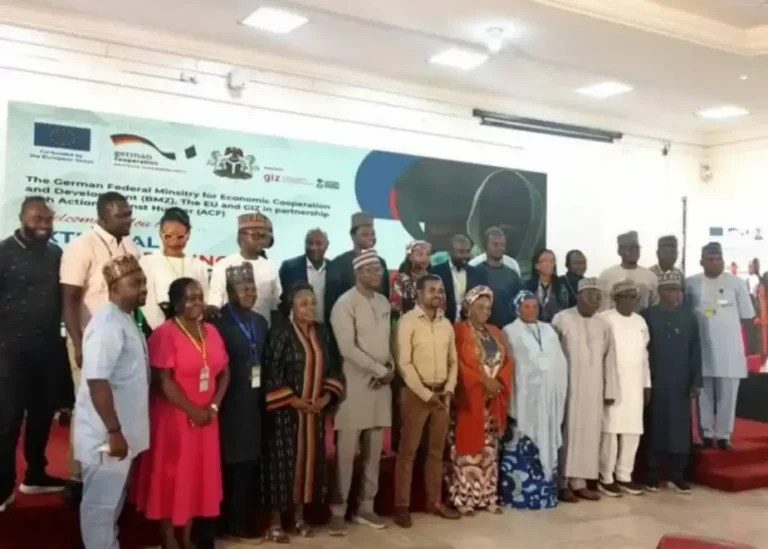
ACF, GIZ Launch EU-BMZ Funded Social Register Expansion in Borno, Adamawa

Action Against Hunger Nigeria (ACF) and the German Agency for International Cooperation (GIZ) have launched a new programme to strengthen social protection systems in Borno and Adamawa States, focusing on expanding and improving the social register through community-based and data-driven targeting approaches.

The initiative is funded by the European Union (EU) and the German Government (BMZ) under the SEPIN–SUSI framework. It is designed to support state efforts to identify vulnerable households and improve access to social support, especially in conflict-affected communities in the Northeast.

Speaking at the Kick-off Meeting on the Improving Social Protection in Adamawa and Borno States (ISPAB) through Expansion of the Social Register, the Country Director of ACF, Thierno Samba Diallo, said the programme reaffirmed the commitment of partners to protecting households from poverty, hunger, and shocks.

Diallo described social protection as a “core priority” for ACF, noting that experience from interventions in Jigawa and Kano States had shown that strong institutional systems could reduce vulnerability and help families regain dignity.

He raised concerns over worsening food and nutrition insecurity, citing findings from the October 2025 Cadre Harmonisé analysis, which indicates that about 27.2 million Nigerians are facing Crisis-level food insecurity or worse.

According to him, the situation is severe in the Northeast, where 1.92 million people in Borno are currently in crisis or emergency levels, while Adamawa has about 1.21 million people facing similar conditions.

“The nutrition outlook is equally alarming,” Diallo added, referring to the 2025 IPC Acute Malnutrition analysis, which estimates that 6.4 million children across northern Nigeria will suffer acute malnutrition between October 2025 and September 2026.

Representing GIZ, the Head of Programme, Mrs. Ana Vanambres, said the partnership with ACF goes beyond expanding the social register to improving its credibility, quality, and institutional ownership.

Vanambres, who was represented by Bolaji Aina, explained that the project supports Nigeria’s ongoing social protection reforms and strengthens systems to better reach women, internally displaced persons, returnees, and host communities.

“The social register is the cornerstone for shock-responsive support and effective resource allocation. This initiative strengthens the humanitarian-development-peace nexus needed in Adamawa and Borno,” she said.

Speaking on behalf of the National Social Register (NSR), Mr. Mohammed Bala disclosed that the national database is undergoing updates to improve accuracy.

“Of the 19 million households previously captured, over 10 million have already been visited, with 10 million individuals verified through NIMC,” he said, adding that household coordinates are being captured.

Also speaking, the Director of Social Welfare in Borno State, Mrs. Aisha Shattima, described the state’s vulnerable population register as a critical tool to fight hunger and ensure targeted assistance.

“I call for renewed action against hunger, which remains a serious public health concern in Borno,” she said.

In her remarks, the Executive Chairman of the Adamawa State Planning Commission, Dr. Mary Paninga, said the programme comes at a crucial time and affirmed the state’s readiness, highlighting innovations in social protection systems locally.

Wike Orders Recruitment of Health Workers in FCT

0

Nyesom Wike, minister of the Federal Capital Territory (FCT), has directed the recruitment of additional health workers and approved the rehabilitation and upgrade of 14 health centres across the territory to strengthen healthcare delivery for residents.

Wike disclosed this on Thursday in Abuja during the handover of 12 newly acquired ambulances to hospitals in the FCT, an initiative aimed at improving emergency response services within the territory’s health system and reducing avoidable delays in patient care.

He said the FCT Administration had commenced the procurement of equipment for the rehabilitation and furnishing of the health centres, adding that the FCT Head of Civil Service and other relevant authorities had been instructed to recruit more personnel to boost service delivery in the sector.

According to the minister, the interventions reflect the administration’s commitment to developing critical sectors beyond road infrastructure and education, with healthcare remaining a key priority for the current leadership of the territory.

“Many people ask why we focus so much on road infrastructure and education,” Wike said. “What they often forget is that emergency ambulances cannot function effectively without good roads.

“When patients place distress calls and the roads are bad, the entire purpose of emergency services is defeated.

“That is why we believe in getting the basics right first, and that is exactly what we are doing,” he added.

Wike assured residents that the FCT Administration would continue to take deliberate steps to ensure access to quality healthcare services across urban and rural communities. “For us, we will do everything possible to ensure that our people receive the best services,” he said.

Earlier, Olalodipo Fasawe, Mandate Secretary of the FCT Health Services and Environment Secretariat, described the procurement and distribution of the ambulances as a major milestone in strengthening emergency healthcare delivery in the FCT.

According to her, the initiative goes beyond the provision of ambulances and reflects the administration’s commitment to people-centred governance, emergency preparedness and improved health outcomes for residents of the territory.

Fasawe noted that strategic investments in road infrastructure under Wike’s leadership had significantly improved access to healthcare, particularly in rural communities that previously struggled with long travel times.

“In areas such as Abaji, Kwali and Gwagwalada, the construction of the A2–Pai road has reduced travel time from about one and a half hours to just 30 minutes, making it much easier for residents to access healthcare facilities,” she said.

She added that the FCT Administration had demonstrated a holistic understanding of healthcare systems, noting that effective healthcare goes beyond infrastructure to include immunisation, health insurance and human resources.

Fasawe commended the administration for clearing outstanding allowances owed to healthcare workers since 2021, including the 13-month hazard allowance, wage awards and the medical residency training fund.

“I can confidently say that the FCT is the only state that has paid all these allowances up to date,” she said.

She also highlighted other interventions, including the upgrade of the FCT School of Nursing to a full-fledged College of Nursing, noting that the measures reflect a deliberate and coordinated effort to deliver accessible, high-quality and responsible healthcare services to residents of the territory.

Kaduna Releases N40m Scholarship to 1,500 KASU Students

The Kaduna State Scholarship and Loans Board (KADSSLB) has commenced the disbursement of scholarship funds to beneficiaries, releasing N40 million to more than 1,500 students of Kaduna State University (KASU) as a special intervention under the scholarship scheme of Governor Uba Sani.

The Executive Secretary of the Board, Prof. Yahya Saleh Ibrahim, said the amount was increased from the initially planned N30 million due to the high number of students who met the eligibility requirements. He explained that the payment marks the official kickoff of the 2025/2026 scholarship cycle, while registration and screening for a second and wider batch of beneficiaries are already ongoing across the state.

According to Prof. Ibrahim, the Board has also expanded the scope of the programme to cover students of Kaduna Polytechnic. He noted that the decision aligns with the state government’s goal of widening access to educational support and ensuring that more students in public tertiary institutions benefit from the scheme.

He further announced the introduction of a Student Entrepreneurship Loan Scheme designed to promote youth empowerment and self-reliance. Under the initiative, graduates who have completed approved vocational and entrepreneurial training will be eligible to access start-up capital of up to N1.5 million. Prof. Ibrahim added that beneficiaries will enjoy a two-year grace period after establishing their businesses before repayment begins.

The intervention has attracted positive reactions from the academic community. Speaking on behalf of KASU management, the Deputy Vice-Chancellor, Prof. Yushau Ango Ibrahim, expressed appreciation for the sustained partnership between the university and the Board, saying the institution has consistently benefited from the Board’s support.

Officials also commended the inclusive design of the scholarship system, which extends assistance beyond tertiary institutions to include primary school teachers, a move described as critical to strengthening education at the grassroots.

The Special Adviser to the Executive Secretary on Scholarship Matters, Dr. Haulat Madu Umar, reiterated the Kaduna State Government’s commitment to transparency, inclusiveness, and continuous expansion of the programme.

Some beneficiary students described the scholarship as timely and life-changing, stating that it has reduced financial pressure on their families and encouraged them to focus more on their studies and academic excellence.

Youth Minister Hails WOW Electric Tricycle Empowerment

Minister of Youth Development, Comrade Ayodele Olawande, has commended an initiative by the Women of Wisdom Multipurpose Cooperative Society Ltd (WOW), in collaboration with House of Destiny Global Services Limited and the National Commercial Tricycles Owners Association (NATOMORAS), aimed at building the capacity of women and children in Nigeria.

The minister made the commendation during the launch and handover of seven electric tricycles to WOW units and members in Abuja on Tuesday.

Olawande said the initiative shows the importance of women and youth in national development. “When we talk about the future of Nigeria, we often talk about two groups: our women and our youth. I want to congratulate the WOW Cooperative for this landmark initiative. You aren’t just handing over keys today; you are handing over the tools for financial independence,” he said.

He added that the programme aligns with the Federal Government’s clean energy and empowerment goals. “What we are witnessing today is a perfect reflection of the federal government’s larger goals. You may recall that in November last year, the Ministry of Youth Development officially launched our Electric Tricycle Empowerment Initiative,” he stated.

According to him, the initiative aims to reduce reliance on costly fuels while supporting livelihoods. “Our goal back then was simple: to move away from expensive, polluting fuels and move toward affordable, clean energy that puts money back into the pockets of young Nigerians,” he said.

The minister was represented at the event by his Senior Special Assistant on Gender Matters, Hon. Kehinde Charity Awojoola.

He noted that House of Destiny Global Services further equipped the tricycles with solar panels. “It is important to point out that House of Destiny Global Services has taken initiative to further equip these electric tricycles with solar panels, which speaks to our commitment to Climate Action Resilience,” he said efforts