Home Blog Page 133

GPD Opens Livelihood Internship Positions in Yobe

Global Peace Development (GPD) has announced internship opportunities for young professionals in Yobe State, with applications currently open for the Livelihood Intern position based in Damaturu. The opportunity is part of an ongoing efforts to promote peace and development through practical community engagement.

Global Peace Development (GPD), a Non-Governmental Organization founded in April 2002, focuses on promoting peace for development in Nigeria. The organisation envisions a country where peace and development is enjoyed by all, while working to build peace, gender equality, social justice, democracy, and good governance at community, local, state, and national levels.

The Livelihood Intern will support the design, implementation, and monitoring of livelihood and economic empowerment interventions within Yobe State. Practical exposure to community-based livelihood activities aimed at improving income generation, resilience, and self-reliance among women, youth, and vulnerable populations in project communities.

The intern is expected to support field activities, beneficiary engagement, reporting, and documentation. GPD noted that the position will provide hands-on experience in development programming, community engagement, and results-based project implementation.

Key responsibilities include supporting the implementation of livelihood and economic empowerment activities, assisting in mobilising beneficiaries, and participating in field visits, community meetings, trainings, and sensitisation sessions. The intern will also support data collection for baseline, monitoring, and post-intervention assessments, while documenting success stories, lessons learned, and best practices from livelihood interventions.

Other duties involve maintaining accurate beneficiary records, coordinating with community leaders and local authorities, and adhering to GPD’s safeguarding, accountability, and code of conduct policies. The intern will also perform any other tasks assigned by the Livelihood Officer or Program Manager in support of project objectives.

Other available positions include Accountant Intern and WASH Intern roles.

Applicants are required to have a minimum of ND, HND, or Bachelor’s degree in Agriculture, Economics, Development Studies, Sociology, Business Administration, Social Sciences, or related fields. GPD said candidates should demonstrate interest in livelihoods, economic empowerment, or community development, with basic skills in data collection, documentation, report writing, and computer use.

The internship is open to candidates willing to engage in fieldwork and community travel. Applications close on 31st January, 2026.

To apply, interested candidates are to send their CV and cover letter as one document to procurement@globalpeacedev.org, using the job title and location as the email subject.

Advertisement

Zamfara second batch Recruitment of ICT and TVET teachers

0

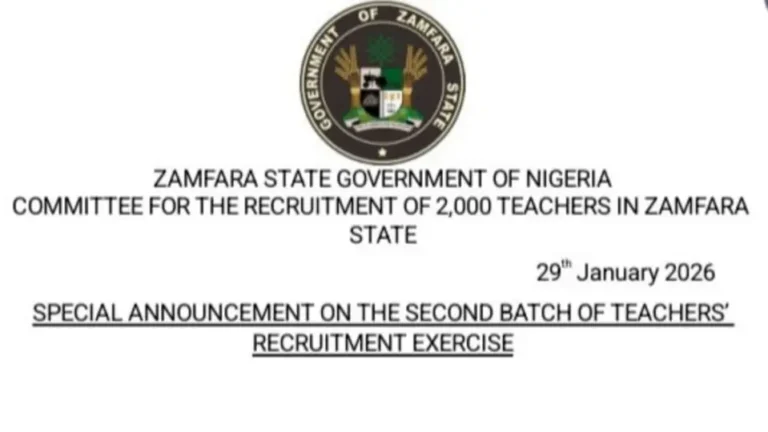
The Zamfara State Government has commenced recruitment for the second batch of 500 teachers for ICT and Technical and Vocational Education and Training (TVET) areas. The exercise is being handled by the Committee for the Recruitment of 2,000 Teachers following approval by the State Executive Governor, Dr. Dauda Lawal.

The recruitment is transparent, merit-based, and aligned with civil service rules. Priority will be given to candidates with skills in key technical areas needed in public schools across the state.

The technical and vocational subjects listed include Technical Drawing, Basic Electricity and Electronics, Woodwork and Furniture Making, Metalwork and Fabrication, Catering and Craft Practice, and Bookkeeping and Accounting under the vocational stream. Other subject areas open for recruitment are Mathematics, English Language, Physics, Chemistry, Biology, Agricultural Science, and ICT/Computer Science.

Prospective applicants are required to submit their applications online and pay a non-refundable application fee of N1,000 before gaining full access to the recruitment portal.

The portal will be open from Friday, 30 January at 12:00 am and will close on Thursday, 12 February 2026. After this date, no application will be accepted.

Applicants should read and follow all guidelines, eligibility conditions, and subject priorities on the portal, noting that only qualified candidates will be considered.

To apply, interested candidates are to visit the Zamfara State Recruitment Portal and apply via https://recruitment.zamfara.gov.ng/.

Hauwa Liman Teen Development Fellowship Opens for Youths

0

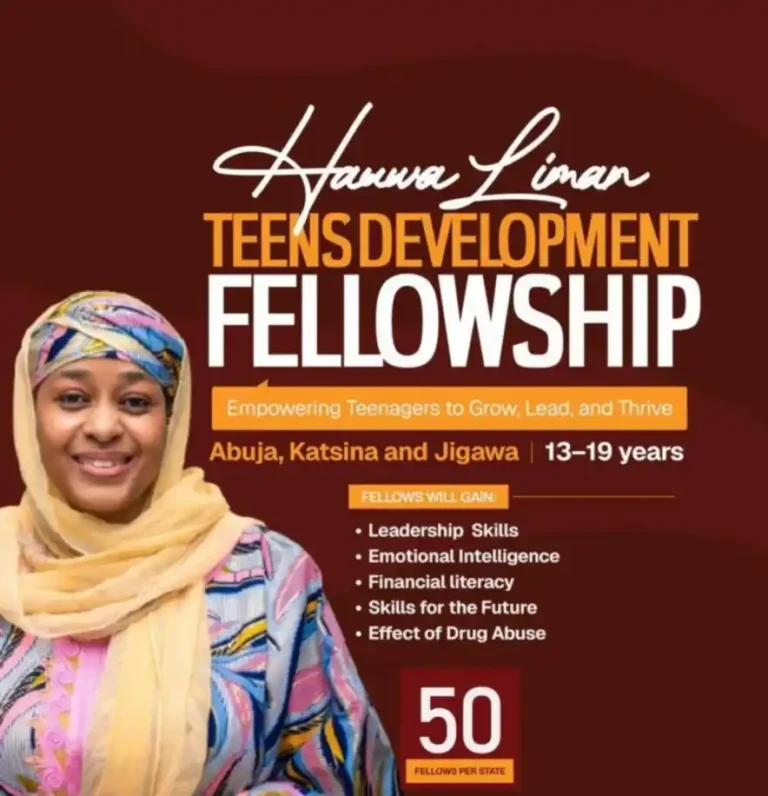
Application is now open for the Hauwa Liman Teen Development Fellowship for teenagers aged 13 to 19 years in Abuja, Katsina, and Jigawa.

The six-month mentorship and empowerment programme is designed to support young people to grow, lead, and thrive through structured learning, guidance, and practical exposure. It targets teenagers within the stated age bracket across the three locations.

According to the organisers, fellows will gain leadership skills, emotional intelligence, financial literacy, skills for the future, and education on the effect of drug abuse. The programme is positioned as part of a wider effort to prepare teenagers for responsible adulthood.

“This is not just a launch, it’s a continuation of a promise,” the organisers said, explaining that the fellowship builds on years of work under Inspire4Impact. They noted that the organisation has consistently invested in teenagers through hands-on development initiatives focused on mindset, values, and direction.

They recalled previous Teenagers Development Boot Camps held across Kano, Kaduna, and Abuja, as well as broader Impact Clinic programmes. Through these efforts, the organisers said they helped teenagers discover purpose and passion, supported them to identify strengths and explore talents, combined academic learning with fun indoor and outdoor activities, and created safe spaces for growth, confidence, and character building.

The Hauwa Liman Teens Development Fellowship is described as a structured and expanded intervention that deepens focus on key areas of teenage development. It offers intentional learning pathways, mentorship, values-based leadership training, and real-life skill building under the Impact Clinic framework.

The organisers stressed that the fellowship is not starting from scratch but stands on years of impact, experience, and community trust. Only 50 fellows will be selected per state. Applications close as slots fill.

To apply, interested applicants should visit https://forms.gle/EZwsYSiDdPcRw8Va6 and apply.

NCDMB, Partners Launch Well Testing Training in Port Harcourt

0

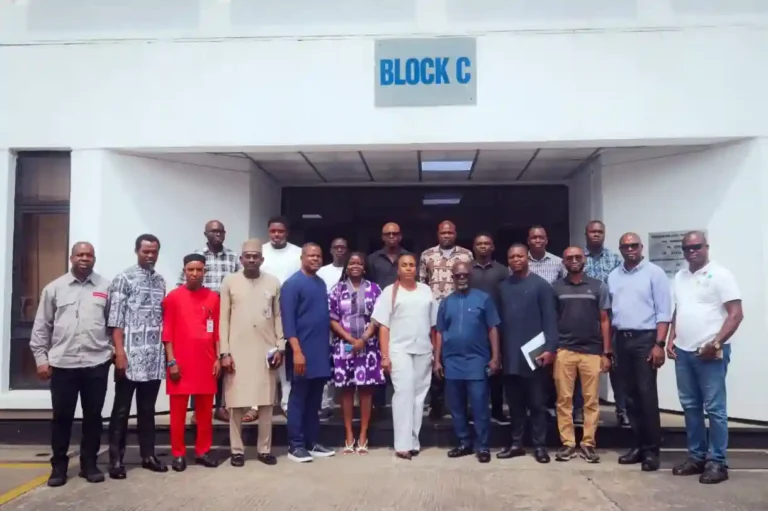
The Nigerian Content Development and Monitoring Board (NCDMB), in collaboration with Halliburton Energy Services, TotalEnergies and Hobark Consultants Services, on Thursday held the kick-off ceremony for the Well Testing Training Programme at Ave Maria International Academy, Port Harcourt, Rivers State.

The Executive Secretary of NCDMB, Engr. Felix Omatsola Ogbe (FNSE, FIPS), represented by Mrs. Tarilate Teide-Bribena, Manager, HCD, NCDMB, reaffirmed the board’s commitment to human capital development and the deliberate closure of skills gaps in the oil and gas industry and related sectors.

She described the programme as a strategic and life-changing opportunity for beneficiaries and urged trainees to uphold professionalism and comply with global best practices throughout the training.

Teide-Bribena said the initiative aligns with NCDMB’s mandate.

The representative of TotalEnergies, Mr. Daniel Dents, reiterated the company’s commitment to empowerment of Nigerians and encouraged trainees to cooperate fully to ensure the success of the programme.

The ceremony also featured the administration of the oath to trainees, marking the formal commencement of the capacity-building programme.

Sanwo-Olu Says Lagos Will Back NCC to Boost Tech and Economy

0

The Governor of Lagos State, Mr. Babajide Sanwo-Olu, on Thursday said his administration will continue to support the Nigerian Communications Commission (NCC) to drive economic growth.

Sanwo-Olu said the Lagos State Government is open to investment and will do more than what is expected to encourage investments in technology, communication and other key sectors that can strengthen economic growth.

The governor spoke during a courtesy visit by the Governing Board of the Nigerian Communications Commission (NCC), led by its Chairman, Chief Idris Olorunnimbe, at Lagos House, Marina.

He described the NCC as one of the foremost forward-looking Federal Government commissions in the country and commended President Bola Tinubu for appointing men and women of strong character to lead the commission. He said the leadership of the NCC has helped give direction to the communications industry, which he described as a major enabler of Nigeria’s economy.

Sanwo-Olu said, “We will be expecting so much from this sector. It is a very strong service industry that we believe will be one of the very deep growth paths that can also help us deepen the GDP of our country.”

He said Lagos is ready to serve as a model for national development through technology-driven policies and partnerships. “This is a national assignment and we want to ensure that Lagos can be used as a very strong demonstration and a test point to push development as even as possible to every nooks and crannies of this country. We believe there has to be fairness and purposeful governance all around,” he said.

The governor assured the commission of continuous support from the state government. “We will continue to support NCC. I can assure you that we will do more than what is expected. We are not a government that would be averse to investment. Technology, communication and the rest of it are the next growth paths that we want to be part of. We can use technology as a strong enabler to do a lot of catch-up,” he said.

Speaking earlier, Olorunnimbe described Sanwo-Olu as his mentor, noting that his first experience on a public service board came through the governor when he was appointed to serve on the board of the Lagos State Employment Trust Fund.

He said the visit was the first official engagement of the new NCC Governing Board after its inauguration, adding that Lagos remains critical to the commission’s operations.

Olorunnimbe said, “I am here, and I owe a service and a duty to Lagos State that Lagos must work. There are parts of Lagos that are unserved and underserved. And some of these places are not very commercially viable for the operators because every time they put infrastructure, the consideration is, ‘How will it generate its money back?’”

He appealed to the Lagos State Government to grant free right of way in some areas to encourage network expansion and added that the commission would work with the Commissioner and the Lagos State Infrastructure Maintenance and Regulatory Agency (LASIMRA) to design and implement the initiative as a pilot for other states.

FG distributes free seeds, fertiliser to Cross River farmers

The Federal Government has distributed free seeds and fertiliser to farmers in Cross River State as part of efforts to boost food production and support livelihoods.

The Minister of Agriculture and Food Security, Senator Abubakar Kyari, reaffirmed the commitment of the Federal Government to promoting partnerships with non-governmental organisations and the private sector to strengthen food security, economic growth, job creation and poverty reduction. He spoke in Calabar on Thursday during the distribution of farm inputs to farmers in the state.

Kyari, who was represented by Mr Bassey Iwara, Director of Agribusiness and Market Development in the ministry, said the present administration had shown strong political will to transform the agriculture sector. He noted that the President Bola Tinubu-led administration was implementing economic reforms aimed at stimulating productive capacity, creating jobs and reducing the cost of living for Nigerians.

He added that emergency responses and targeted humanitarian actions had also been introduced to address the current food crisis in the country. According to him, “Consequently, the ministry has rolled out many programmes and projects to address some of the challenges faced by farmers and to make food available, accessible and affordable to all Nigerians.

“The ministry has also considered the implementation of short-term plans and support mechanisms to make essential farm inputs more affordable and accessible to farmers through a transparent and accountable process.”

Kyari further stated that the major focus of the intervention was on small-scale farmers who struggle with the high cost of farm inputs. “Our foremost concern is the facilitation of agro-inputs and basic farm machinery for small-scale farmers, who are constrained by the high market cost of these essential inputs and therefore need assistance,” he said.

Also speaking, the state coordinator of the Federal Ministry of Agriculture, Ekori Nsan, said the administration had continued to put smiles on the faces of farmers, regardless of the scale of their operations. He urged beneficiaries to use the items for their intended purposes.

According to Nsan, “The era of collecting and selling or dumping these items is gone. A follow-up mechanism has been put.”

EBRD launches $100m trade finance facility for Access Bank in Nigeria

0

The European Bank for Reconstruction and Development (EBRD) has launched its first investment in Nigeria and its first in the sub-Saharan financial sector by providing a $100 million (€85.0 million) trade finance facility to Access Bank, Nigeria’s leading commercial bank.

In a statement emailed to BusinessDay, the EBRD said the trade finance limit, issued under its Trade Facilitation Programme (TFP), is designed to support Access Bank’s trade finance operations. The facility is expected to help the bank diversify its correspondent banking relationships and strengthen trade finance links with other EBRD countries of operation.

According to the statement, the limit and the expanded trade finance capacity will be used to issue guarantees in favour of foreign commercial banks. It will also provide cash advances to fund trade-related loans to local companies. These include pre-export financing, post-import financing and local distribution activities, while also enabling more intra-regional trade across markets.

The EBRD said the trade line will be supported by a comprehensive technical cooperation package funded by the bank. This support will offer Access Bank regular training sessions, workshops, e-learning courses and other capacity-building activities aimed at improving skills and operational standards in trade finance.

Speaking on the agreement, Odile Renaud-Basso, President of the EBRD, said, “We are delighted to sign our first agreement in Nigeria and partner with Access Bank. We remain committed to supporting the development of local financial institutions and fostering a business environment that drives sustainable private-sector growth and trade finance in Nigeria.”

Roosevelt Ogbonna, managing director of Access Bank, said the deal marked an important milestone for the bank and the country. “We are pleased to be the first financial institution in Nigeria to partner with the EBRD. This partnership represents a significant step in strengthening Africa’s trade ecosystem,” he said.

Ogbonna added, “This also aligns with our commitment to providing robust financial solutions that empower businesses, deepen regional trade and support sustainable economic growth. We look forward to leveraging this collaboration to enhance our trade finance capabilities and deliver even greater value to our customers and stakeholders.”

Access Bank is Nigeria’s leading commercial bank, with a network of more than 700 branches and other outlets. The bank serves about 60 million customers across 24 markets on three continents and is owned by Access Holdings plc, the largest financial holding company listed on the Nigerian Exchange.

After approval at the 2023 Annual Meeting in Samarkand, the EBRD began operating in Nigeria in September 2025, focused on growth.

FG Begins Distribution of Farm Inputs to Smallholder Farmers in Abia

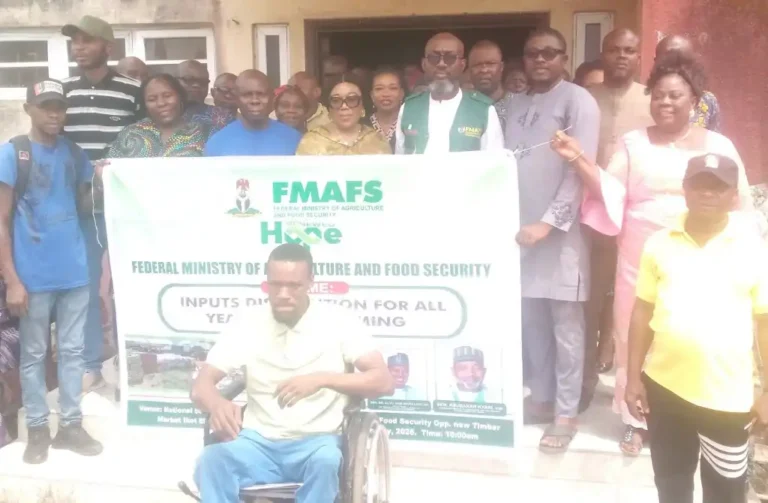
The Federal Ministry of Agriculture and Food Security on Thursday commenced the distribution of agricultural inputs to small-holder farmers in Abia to support farming groups in the state.

The exercise took place at the National Soil Laboratory, Umudike, where farm inputs were rolled out to beneficiaries drawn from different categories. Items distributed included power tillers, herbicides, liquid fertilizers, knapsack sprayers, water pumps, and other tools required for small-scale farming.

Officials said the inputs were distributed through commodity associations, cooperative groups, farmers with special needs, and internally displaced persons, to ensure support reached those most in need.

In a message to the event, the Minister of Agriculture and Food Security, Sen. Abubakar Kyari, said the initiative was aimed at delivering on the Renewed Hope Agenda of President Bola Tinubu. Kyari, represented by Mr Ikemefuna Ezeanya, Head, Department of Information in the ministry, urged beneficiaries to make judicious use of the inputs to increase food production nationwide.

He said the present administration was implementing economic reforms to stimulate productive capacity, create jobs, and reduce the cost of living. He added that emergency responses and targeted humanitarian actions had been introduced to address the food crisis.

The minister stated that the administration had shown political will to transform the agricultural sector by making food security a top priority. He said the ministry had rolled out programmes and projects to tackle challenges faced by farmers.

Kyari explained that the ministry had adopted short-term plans and support mechanisms to make farm inputs affordable and accessible through a transparent and accountable process.

“Our foremost concern is the facilitation of agro-inputs and basic farm machinery to small-scale farmers, who are constrained by the high market cost of these essential inputs, and thus need assistance,” he said.

In a remark, the State Coordinator, Mr Aloysius Mba, said the initiative was designed to boost agricultural productivity and enhance food security in Abia. He noted that the ministry had empowered smallholder farmers, including women in agriculture and farmers with special needs.

Mba urged beneficiaries to reciprocate the gesture by making use of the items distributed. “You must not go and sell the inputs. Please utilise them in your farms,” he said.

Reacting, a beneficiary and person with disability, Mrs Blessing Ononogbu, expressed appreciation to the government, saying, “With this, we will be able to provide food to eat and give to others.”

Reps to Probe N174.251bn Agric Funds Withheld From Implementing Agencies

0

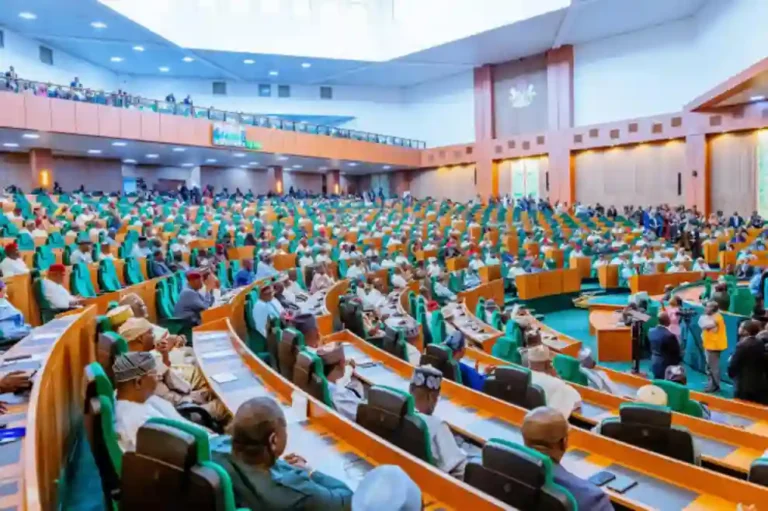
The House of Representatives, on Thursday, unveiled plans to investigate the non-release of N174.251 billion intervention funds received from Development Partners to support the National Agriculture Growth Scheme-agro Pocket and the Food Security Emergency Support Loan meant for implementing agencies.

The resolution followed the adoption of a motion on a matter of urgent public importance sponsored by Hon. Bello Ka’oje, who alleged that the failure to implement already disbursed agricultural intervention funds had prevented Nigeria from accessing about $200 million from the African Development Bank under the Result Based Financing arrangement.

According to the motion, the House resolved to investigate the circumstances leading to the non-release of N55,295,810,075 to the Federal Ministry of Agriculture and Food Security through the National Agriculture Growth Scheme Agro-pocket Project from the Consolidated Revenue Fund of the Federation. The sum was part of funds accessed from the African Development Bank to support the National Agriculture Growth Scheme Agro-pocket Project.

The House also expressed grave concern over the non-release of N118,955,186,000 to the Federal Ministry of Agriculture and Food Security for the National Agriculture Growth Scheme Agro-pocket Project. The amount, accessed from the Japanese International Cooperation Agency, was meant to support 550,000 smallholder farmers with subsidised critical agricultural inputs for rice, maize, soya beans and cassava value chains under the 2025 wet season and the 2025/2026 dry season farming.

Leading the debate, Hon. Ka’oje recalled that shortly after his inauguration, President Bola Ahmed Tinubu, on Thursday, July 13, 2023, declared a state of emergency on food security to address rising food shortages and boost local agricultural production across the country.

“The House is aware that in addition to funding efforts by the Nigerian Government, a lot of agricultural interventions were received through the efforts of several development partners all aimed at boosting agricultural production,” he said.

He explained that sometime in February 2023, Nigeria negotiated with the African Development Bank and signed an agreement for a 25-year tenor loan to support the National Agriculture Growth Scheme Agro-pocket Project for an amount not exceeding $134,000,000. He said the first tranche of $99,665,000 was released to the Federal Government Consolidated Account after deducting a Front-End-Fee of 0.025 per cent.

“The House is also informed that the Federal Ministry of Finance, out of the total sum of $134 million disbursed by the African Development Bank, released the sums of N55,986,301,549.95 and N40,486,800,000 to the Federal Ministry of Agriculture and Food Security National Agriculture Growth Scheme and Agro-pocket Project account at the Central Bank of Nigeria, leaving a balance of N55,295,810,075 outstanding and undisbursed,” he stated.

According to him, the plan was for the National Agriculture Growth Scheme Agro-pocket Project to honour its obligations to agro-dealers that supplied agricultural inputs to 280,000 targeted registered wheat farmers under the first phase of the 2024/2025 dry season programme, as well as distribute inputs to 150,000 rice farmers under the second phase.

Hon. Ka’oje further informed the House that sometime in April 2024, Nigeria negotiated with the Japanese International Cooperation Agency and signed a loan agreement on or about April 24, 2024, for a Food Security Emergency Support Loan for an amount not exceeding 15 million Japanese Yen.

He said the House was informed that on or about March 25, 2025, the Japanese International Cooperation Agency disbursed the sum of 12 billion Japanese Yen, less a Front-End-Fee of 0.025 per cent, equivalent to $78,778,800, representing N118,955,186,000, to the Consolidated Revenue Fund of the Federation as the first tranche.

“The plan is for the Federal Ministry of Agriculture and Food Security through the National Agriculture Growth Scheme and Agro-pocket Project to implement the support for 550,000 smallholder farmers with subsidised critical agricultural inputs for rice, maize, soya beans and cassava value chains under the 2025 wet season and 2025/2026 dry season farming,” he said.

He expressed worry that the respective funds for farm inputs were time bound for the 2024/2025 dry season farming, which had passed, the 2025 wet season, which had also passed, and the 2025/2026 dry season farming, which is currently ongoing.

“This ugly situation has left many farmers stranded for critical farm inputs and consequently reduced agricultural output in the 2025 harvests because the affected farmers could not go to farm during the seasons due to non-supply of critical inputs,” he added.

He further said the House was worried that the funds were accessed from development partners for specific purposes but had been unduly withheld from the implementing ministry and agency by the Federal Ministry of Finance beyond the timeframe for utilisation.

“The House is concerned that failure to release these funds for use to boost our agricultural production means the 2026 farming season will be greatly impacted negatively,” he said.

Hon. Ka’oje also raised alarm that funds of up to about $200 million were pending disbursement to Nigeria by the African Development Bank under the Result Based Financing arrangement but could not be released due to the non-implementation of interventions linked to funds already disbursed.

“The House is convinced that there is an urgent need to investigate the circumstances leading to the non-release of these intervention funds from the Consolidated Revenue Fund of the Federation to the Federal Ministry of Agriculture and Food Security National Agriculture Growth Scheme and Agro-pocket Project account domiciled in the Central Bank of Nigeria,” he said.

He noted that the investigation would enable the implementation of remaining components under the African Development Bank facility and the commencement of targeted activities under the Japanese International Cooperation Agency loan project from the forthcoming 2025/2026 dry and wet season programmes.

Following the debate, the House mandated its Committee on Agricultural Production and Services to investigate the circumstances surrounding the non-release of the intervention funds and report back within two weeks.


Jigawa launches wheat research programme, awards grants to 10 scholars

The Jigawa State Government has formally launched a Wheat Value Chain Research Programme as part of its ongoing efforts to modernise agriculture through research, innovation, and human capital development. The programme, described as the first of its kind in the country, also featured the award of research grants to ten postgraduate scholars made up of four PhD and six MSc candidates.

The grants award ceremony was presided over by Governor Malam Umar Namadi on Wednesday at the Council Chambers of the Government House in Dutse. Jigawa State is currently the leading producer of wheat in Nigeria, and the initiative followed a statewide invitation for research proposals as well as a rigorous, merit-based selection process.

Speaking at the presentation of the awards, Governor Namadi described the programme as a strategic intervention aimed at supporting innovation and promoting evidence-based policymaking in the agricultural sector. He said the initiative was designed to strengthen research capacity and ensure that government policies are guided by practical and scientific findings.

“This initiative is timely and important, especially considering global developments and the growing need for food security,” the governor said. He congratulated the beneficiaries on their selection and noted that their work would build on existing efforts to expand wheat production and strengthen agribusiness in Jigawa State.

Governor Namadi told the scholars that their selection showed their readiness to partner with the state in advancing agriculture. “Your selection has shown that you are intelligent, capable, and ready to partner with the government in advancing agriculture, which remains a critical sector for our state. We sincerely appreciate your commitment and encourage you not to relent in your efforts,” he said.

The governor also praised the selection committee for what he described as a fair and transparent process, adding that the quality of the selected scholars reflected the seriousness and credibility of the programme. He assured the beneficiaries that the state government is ready to implement the outcomes of their research, stressing that the initiative is expected to deliver practical solutions that will directly benefit farmers and support the broader agricultural development agenda of the state.

Governor Namadi further expressed appreciation to the Committee on the Wheat Value Chain Development Programme and the Jigawa Research Institute for their commitment and collaboration. He described them as reliable partners in the state’s agricultural transformation efforts and urged the beneficiaries to devote the required time, discipline, and intellectual rigour to their research assignments. According to him, their findings will serve as a foundation for future agricultural policies and programmes in Jigawa State.

Earlier, the Chairman of the Committee on Wheat Value Chain Development Programme, Professor Usman Haruna, explained that the initiative was informed by the central role agriculture plays in Jigawa State, where about 80 percent of the population depends on farming and related activities for their livelihoods. He identified wheat as a strategic crop with strong potential for income generation and food security.

Professor Haruna, however, noted that wheat production in the state has been constrained by limited research capacity, inadequate locally adapted seed varieties, and insufficient scientific support. “Wheat, in particular, has great potential in Jigawa State. However, our ability to produce wheat in large quantities has been constrained by several factors. These include the lack of adequate and improved wheat varieties suitable for our environment, as well as the shortage of research scientists capable of conducting in-depth research in wheat production,” he said.

He explained that the programme was designed to address these gaps by building the capacity of young scientists to undertake focused research aimed at developing the wheat value chain in Jigawa State. According to him, the Jigawa Research Institute initiated the programme to strengthen scientific support for wheat production and improve overall productivity.

Professor Haruna disclosed that 36 applications were received in response to the call for research proposals, out of which 17 candidates met the criteria and were invited for interviews. “The committee designed a robust and transparent interview process, and at the end of the exercise, 10 candidates emerged successful. These candidates were therefore recommended for the award of scholarships to conduct research on wheat value chain development in Jigawa State,” he said.

He added that the selected scholars will focus on critical areas across the wheat value chain, including seed development adapted to Jigawa’s climatic conditions, productivity enhancement, and value addition. According to him, strengthening research capacity in wheat production will not only improve output in Jigawa State but also contribute significantly to meeting national wheat demand.

“This initiative will not only impact wheat production but will also have positive spill-over effects on other crops such as rice and sorghum, which Jigawa State is well known for cultivating. The state has enormous agricultural potential, and the government has continued to support value chain development across various crops, including rice, sesame, and wheat,” Professor Haruna said.

He expressed confidence that the programme would lead to the development of viable wheat seed varieties adapted to the state’s climatic conditions. “With these young researchers now in place, we are confident that viable wheat seed varieties adapted to Jigawa’s climatic conditions will be developed. This will improve productivity, boost farmers’ yields, and ultimately increase the state’s contribution to the national wheat supply,” he added.

The programme’s research areas include Wheat Seeds Development Research, Wheat Value Chain Studies, and Wheat Irrigation Efficiencies. The initiative will be implemented in partnership with leading research institutions and universities, including Federal University Dutse, Sule Lamido University in Kafin-Hausa, Bayero University Kano, the Institute for Agricultural Research in Zaria, and the Lake Chad Research Institute.