Home Blog Page 134

Rivers Govt Reaffirms Support for Investors at Ease of Doing Business Seminar

The Rivers State Government has reaffirmed its commitment to partnering with credible investors and business organizations to drive economic growth and reduce unemployment across the state.

Governor Sir Siminalayi Fubara made this known at a one-day seminar on Ease of Doing Business, organized by the Rivers State Entrepreneurs and Investors Forum, REIF. The Governor was represented at the event by the Deputy Governor, Prof. Ngozi Nma Odu.

Fubara said achieving real economic transformation requires the combined efforts of policymakers, entrepreneurs, investors, and civil society working together toward shared goals.

He explained that the core responsibility of government is to create an enabling environment built on peace, security, transparent regulatory frameworks, infrastructural development, and policies that support innovation while attracting both local and foreign investments.

According to the Governor, the theme of the seminar, “Ease of Doing Business: The Role of Government,” is timely and relevant, noting that economic growth and sustainable development can only succeed where policies remain stable, institutions are responsive, and government deliberately supports enterprise.

He further stated that a strong and vibrant private sector remains the engine of job creation, wealth generation, and social stability in any economy.

Fubara commended forums such as REIF for encouraging dialogue, generating practical solutions, and actively involving the private sector in shaping economic outcomes.

“The insights and recommendations that will emerge from deliberations will no doubt contribute meaningfully to our shared goal of restoring Rivers State as a preferred destination for business investment,” the Governor said.

Delivering the keynote address on the theme, “Ease of Doing Business: The Role of Government,” the Managing Director of the Nigeria Export-Import Bank, NEXIM, Mr. Abubakar Bello, identified overdependence on oil, infrastructural deficits, and inadequate power supply as major challenges affecting the ease of doing business in Nigeria.

He praised the Rivers State Government and the Rivers Entrepreneurs and Investors Forum for organizing the seminar.

Also speaking, the President of the Rivers Entrepreneurs and Investors Forum, Mr. Ibifiri Bobmanuel, said the strength and potential of any economy lie in its private sector.

He explained that the seminar was organized to reset mindsets and explore the vast economic opportunities available in Rivers State.

Mr. Bobmanuel urged political leaders to close ranks, work together, and avoid divisive tendencies, stressing that “Rivers State can only achieve economic viability and prosperity through unity and collaboration.”

The seminar brought together government officials, investors, entrepreneurs, and key stakeholders to discuss strategies for improving the business environment in the state.

Participants also reviewed policy gaps and investment prospects across multiple economic sectors.

Advertisement

US Mission Launches Free Online English Courses for Career Skills

0

The United States Mission in Nigeria has announced the launch of free online English-language courses designed to boost professional skills and expand career opportunities.

The announcement was made in a post shared on the mission’s official X handle on Thursday, describing the programme as part of its education efforts.

According to the mission, the courses are structured to support learners’ professional growth and success. Participants can study at their own pace while interacting with a community.

The courses are offered through the U.S. Department of State’s Online Professional English Network, OPEN, programme. The initiative targets learners seeking to strengthen communication abilities in high-demand fields.

Enrollment for the current cycle opened on January 5, 2026, and will remain open until March 23, 2026. The courses are scheduled to run from January 5 to March 30, 2026.

Available options include English for Business and Entrepreneurship, focused on business vocabulary and communication skills. English for Tourism Professionals is designed for people working in travel, tourism, and hospitality. English for Career Development helps learners write resumes, apply for jobs, and perform confidently in interviews.

The US Mission said interested participants can enroll through its online learning platform. “To learn more and enroll, visit https://www.openenglishprograms.org/MOOC”

LavenderCare Launches Wellness Programmes for Working Mothers in Nigeria

LavenderCare has introduced a series of wellness programmes to support the health and well-being of working mothers in Nigeria, as concerns grow that pregnancy and motherhood continue to limit women’s career progression across different sectors.

A 2025 survey by BusinessDay showed that 73 percent of Nigerian women said pregnancy or motherhood had a negative effect on their career growth. The survey also found that 45 percent of respondents said they were overlooked for promotions or rejected for job opportunities after disclosing their pregnancy.

Speaking on the findings, Anne Ogunyomi, founder of LavenderCare, said the data highlights the urgent need for structured workplace wellness programmes that recognise the realities of motherhood.

“At LavenderCare, we have seen firsthand how difficult it is for mothers to manage work while raising a family,” Ogunyomi said. “Some women have had to leave their jobs after having children, while others push themselves beyond healthy limits to prove their value at work. This affects mental health, productivity and overall well-being.”

Mental health challenges remain a major issue for Nigerian mothers. Postpartum depression is estimated to affect between 20 percent and 35 percent of women in the country. In addition, a 2025 survey reported that 63.3 percent of Nigerian workers experienced workplace burnout, with women accounting for more than half of those surveyed.

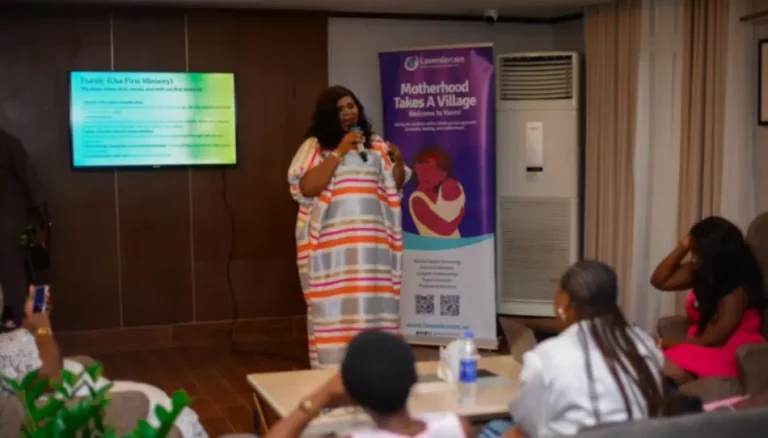
Through its sub-brand, The Mums’ Lounge, LavenderCare has introduced in-person wellness programmes designed to provide support beyond online platforms. One of its key initiatives, Mums’ Day Off, brought working mothers together for a day focused on learning, relaxation and personal development, in collaboration with wellness brand Unwind by Oriki.

“During Mums’ Day Off, mothers received health checks, mental health screenings and participated in interactive sessions led by experts,” Ogunyomi said. “It created a safe space for honest conversations and helped break the cycle of silent struggle many mothers face.”

Ogunyomi also stressed the responsibility of employers in supporting female staff, noting that nearly half of Nigerian mothers face challenges returning to work after maternity leave due to limited flexible work options.

“Organisations that truly value their people can partner with us to curate these wellness experiences,” she said. “Supporting mothers isn’t just good for employees; it’s good for business. Women who feel supported can continue to contribute fully and sustainably.”

Participants said the sessions improved confidence, reduced stress, and encouraged open dialogue among mothers facing similar workplace pressures daily together.

LavenderCare said it plans to expand the initiative to reach more women as workplace wellness gains attention among businesses nationwide.

FG Approves N2bn for Standard Labs to Boost Research Commercialisation

The Federal Government has approved N2 billion in the 2026 budget for the establishment of standard laboratories to strengthen scientific research and improve the movement of research outputs to the market.

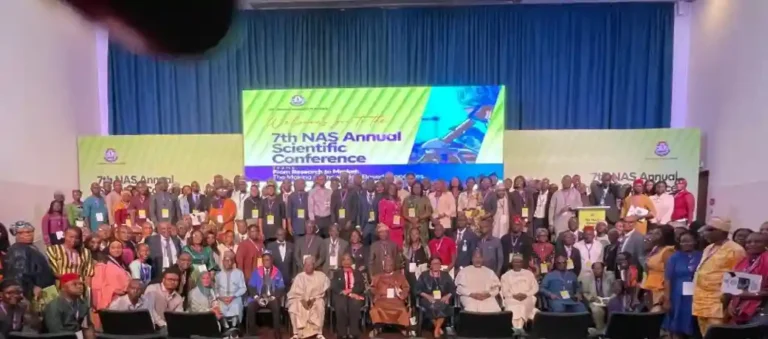
The Minister of Environment, Mr Balarabe Lawal, disclosed this on Wednesday in Abuja at the 7th Annual Scientific Conference of the Nigerian Academy of Science (NAS). The two-day conference has the theme, “From Research to Market: The Making of Knowledge-Based Economies.”

Lawal, who was represented by the Director-General of the National Biosafety Management Agency (NBMA), Dr Bello Bwari, said the approval followed concerns about the lack of standard laboratories required to guarantee the safety and credibility of products emerging from research institutions across the country.

“We have been able to bring the National Agricultural Seed Council, and the National Biotechnology Development Agency (NABDA) and National Biosafety Management Agency (NBMA) to develop a programme,” Lawal said.

“The programme will ensure the movement of research done around our institutions, creation of value and that they got to the markets, for food security.

“As part of urgency and in spite of paucity of funds, standard laboratories are required for the safety of most of the products being researched.

“I am glad to inform you that the President has approved the sum of N2 billion in the 2026 budget for us to get that lab as quickly as possible,” he said.

Lawal said the government had brought together key agencies, including the National Agricultural Seed Council (NASC), NABDA and NBMA, to drive research commercialisation and improve food security outcomes.

He added that a national working group had been constituted to reduce gaps in agriculture and food security by identifying and promoting completed research projects.

“One of such projects is a cowpea research initiative by the Institute of Agricultural Research, Zaria,” Lawal said.

“It is aimed at reducing post-harvest losses, which is expected to commence after the first quarter of the year,” he added.

Speaking at the conference, Retired Brig.-Gen. Mohammed Marwa, the Chief Executive Officer of the National Drug Law Enforcement Agency (NDLEA), said human capital remained the most valuable asset in any knowledge-based economy.

Marwa, who was represented by Malam Hamisu Lawal, said substance abuse and illicit drug trafficking posed serious threats to productivity, focus and mental resilience required for research and innovation.

“The reality is that human capital is the most valuable asset in any knowledge economy,” he said.

“This asset is under constant threat from the scourge of substance abuse and illicit drug trafficking.

“For research to thrive, we require a workforce that is healthy, focused and mentally resilient and at the NDLEA.

“We view science, not just as a tool for forensics, but as the backbone of our War Against Drug Abuse (WADA),” he said.

Marwa said the agency was moving away from traditional enforcement methods toward evidence-based approaches, including upgrading its laboratories to transform chemical research into actionable intelligence.

According to him, the agency is utilising research to map out drug use prevalence, ensuring that interventions are targeted and effective.

He expressed the agency’s commitment to supporting scientific institutions, saying, “A knowledge-based economy cannot be built on the ruins of a drug-addicted generation and NDLEA stands as a partner in progress.

“We will ensure that the environment in which your research operates remains secure, sane and productive,” he said.

Also speaking, the President of the Network of African Science Academies, Prof. Ekanem Braide, said Africa remained underdeveloped due to challenges in translating research outcomes into economic growth.

Braide said the conference theme aligned with efforts to strengthen collaboration among national science academies across Africa to promote sustainable development.

Similarly, Dr Kyari Mohammed, Director of the African Union Scientific, Technical and Research Commission, said Nigeria already had policies on research commercialisation, but implementation remained a challenge.

Mohammed urged Nigeria to prioritise investment in human capital, citing countries such as Singapore and China that transformed their economies through investments in science and innovation. He said coordination would improve research outcomes.

Kogi Unveils Youth Mining and Jewelry Craft Empowerment Programme

The Kogi State Government, in partnership with Malivelihood Luxury, has unveiled the Kogi State Youth Mining and Jewelry Craftsmanship Empowerment Programme to harness mineral resources and create jobs for young people.

The initiative targets ethical mining, mineral refinement, jewelry making, and entry into the global luxury market, with focus on value addition instead of raw extraction.

In a statement, John Otetah Agbenyi, Programs and Communications Officer at Malivelihood Luxury, said the programme is vital for sustainable growth, job creation, and wealth redistribution.

Kogi State has deposits of gold, iron ore, limestone, and other minerals, but the sector has faced skills shortages, informal operations, and limited local processing.

The programme addresses these gaps through structured training under the Ministry of Special Duties and Inter-Governmental Affairs, combining classroom lessons, practical sessions, and mentorship from local and international experts.

Participants are expected to gain globally competitive skills, while top performers will access overseas mining facilities and jewelry institutes.

Malivelihood Luxury, with nearly 20 years of experience in luxury production and consulting, will support foreign partnerships and investments.

Analysts say the initiative will help formalize mining, encourage value-added industries, and strengthen Kogi State’s economic position as Nigeria pursues resource diversification.

Media urged to intensify advocacy on WASH in Kano, Jigawa

The media has been urged to play a pivotal role in driving change through sustained advocacy on Water, Sanitation, and Hygiene (WASH) services in Kano and Jigawa states.

The call was made by the Chief of UNICEF Field Office Kano at a media dialogue on WASH services in Primary Health Care (PHC) and schools in Kano and Jigawa states.

The media dialogue, held recently at Tahir Quest Palace, Kano, brought key stakeholders together to examine challenges affecting WASH services and possible solutions.

“According to the Nigeria 2021 WASHNORM II survey, only 11% of schools nationwide have access to basic water supply, basic sanitation, and hygiene services, with Jigawa scoring below national averages in school hygiene infrastructure,” he said.

He added that the situation is dire, noting that poor WASH conditions contribute to child morbidity and undermine SDGs targets for education and universal WASH.

Farah said UNICEF is supporting government efforts to improve WASH services across both states.

According to him, the UK government is investing £19 million in the Climate Resilient for Basic Infrastructure (CRIBS) programme, which has led to the inauguration of 84 climate-resilient health and education facilities in Kano and Jigawa, statewide efforts.

Tantita Trains 100 Youths in ICT, Distributes Laptops in Delta

Tantita Security Services Nigeria Limited has expanded its corporate social responsibility efforts with the training and empowerment of 100 youths through an intensive ICT programme, ending with the distribution of laptops to all participants in Warri, Delta State. The programme focused on practical digital skills aimed at improving employability and self-reliance among young people in the host communities.

Speaking at the graduation ceremony, the Managing Director of Tantita, Chief Kestin Pondi, said the six-month ICT Training and Laptop Empowerment Initiative was fully funded by the company in partnership with the Tompolo Foundation and delivered by PEB ICT Services. He described the initiative as a deliberate investment in human capital development and digital inclusion.

Pondi said the programme was designed in response to the increasing demand for digital skills in today’s technology-driven economy, noting that ICT competence has become essential for employment, entrepreneurship and global competitiveness. According to him, the beneficiaries received intensive hands-on training covering computer applications, web development, graphics design, cyber security and data analysis.

He explained that the skills acquired are globally relevant and give participants a strong base for self-reliance and active participation in the digital economy. Beyond classroom training, Pondi said Tantita addressed sustainability by providing laptops to each graduate to support immediate use of the skills gained.

“By removing the barrier of access to ICT tools, we are enabling these youths to turn knowledge into income and long-term productivity,” he said. Pondi added that the participants demonstrated clear growth in competence, confidence and readiness for the digital workplace over the course of the programme.

The Tantita boss commended PEB ICT Services for its professionalism and quality delivery, describing the outcome as proof of what effective collaboration can achieve. He also acknowledged the Tompolo Foundation for its continued commitment to youth empowerment and human capital development, reaffirming Tantita’s resolve to keep supporting initiatives that prepare young Nigerians for the future.

Pondi urged the beneficiaries to use the laptops responsibly to add value to their lives, their communities and the nation. He stressed that programmes of this nature are important for building a stronger and more prosperous digital future for Nigeria.

Also speaking at the event, the Chief Executive Officer of PEB ICT Services, Dr Paul Bebenimibo, praised Tantita and the Tompolo Foundation for consistently funding and sustaining the initiative. He described the programme as a practical model for addressing youth unemployment through skills acquisition and digital empowerment.

Bebenimibo said his organisation was proud to have delivered quality training and expressed readiness to expand the programme to other parts of the country. One of the beneficiaries, Zikorebai Diepere, thanked the organisers and facilitators, saying such initiatives are vital to Nigeria’s economic diversification efforts and youth development agenda. The event drew community stakeholders.

Reps Urges FG to Harmonise Poverty Schemes as Hunger Deepens Nationwide

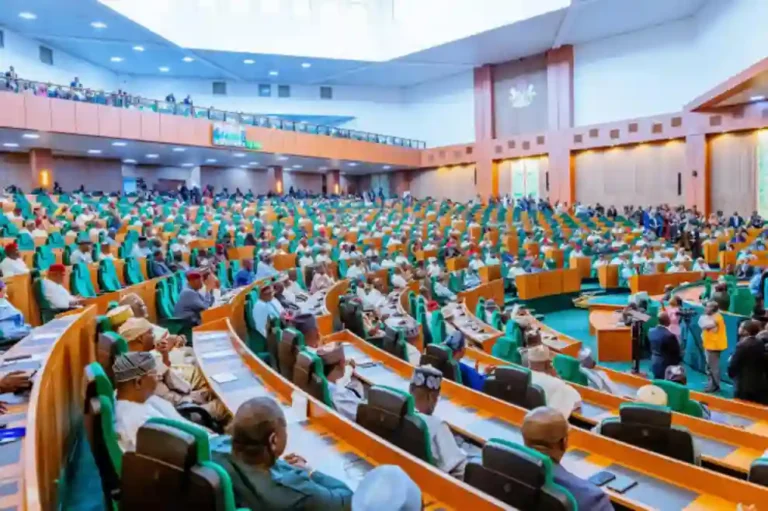
The House of Representatives on Thursday urged the Federal Government to address the growing scourge of hunger across the country through better coordination and harmonisation of the various poverty reduction schemes currently being implemented.

The call followed the consideration and adoption of a motion of urgent public importance moved by a lawmaker from Yobe State, Mrs Khadija Ibrahim, during a plenary session.

In her presentation, Ibrahim cited recent estimates showing that about 139 million Nigerians, representing 61 per cent of the population, are currently living below the national poverty line. She added that projections indicate the figure could rise to about 141 million by 2026 due to persistent economic pressures, including inflation and weak economic growth.

The House was also informed that Nigeria is facing a severe food security challenge, with the United Nations World Food Programme projecting that about 35 million Nigerians will experience severe food insecurity in 2026, the highest figure on the African continent.

Khadija said, “Millions of Nigerians are unable to afford basic food items and essential services, thereby aggravating food insecurity and malnutrition, especially among women, children, the elderly, and internally displaced persons.”

She further noted that the North East region, which is largely agrarian, has been the worst affected by the crisis. According to her, “For several years farming activities were severely hindered due to insurgency, displacement of rural populations, destruction of farmlands, and loss of productive assets.”

The lawmaker acknowledged that security conditions in the zone have improved but stressed that many farmers are still unable to return to full agricultural activities due to limited access to inputs, financing, extension services, irrigation, storage, and rural infrastructure.

She warned that failure to reintegrate displaced farmers into existing agricultural recovery and food security programmes would continue to deepen poverty, hunger, and dependency in the region, “with negative implications for national food sufficiency, economic stability, and peace-building efforts.”

Following the adoption of the motion, the House urged the President Bola Tinubu-led government “To strengthen and harmonise ongoing national poverty reduction, food security, and post-conflict agricultural recovery initiatives, with deliberate focus on agrarian communities affected by insecurity.”

It also mandated the Federal Ministry of Agriculture and Food Security, working with Ministries, Departments and Agencies, to mainstream farmers in the North East into existing agricultural recovery programmes by providing access to farm inputs, credit support, extension services, mechanisation, irrigation, storage facilities, and value-chain development.

The Committees of the House were directed to intensify oversight on agricultural recovery, poverty alleviation, and food security interventions and report back to the House for legislative action further.

BUA Foods profit jumps 91% to N507.7bn as revenue hits N1.8tn in 2025

BUA Foods Plc has reported a strong financial performance for the 2025 financial year, posting a 91 per cent increase in profit after tax to N507.73bn, compared with N265.99bn recorded in the previous year.

The company disclosed this in its unaudited financial results for the year ended December 31, 2025, released on Thursday.

According to the food manufacturing firm, the performance was driven by growth across its major product lines, improved operational efficiency, and relative stability in the foreign exchange market.

BUA Foods recorded revenue of N1.80tn in 2025, representing an 18 per cent increase from the N1.53tn posted in 2024. Gross profit also rose to N672.16bn, up from N540.82bn in the prior year.

Total assets expanded by 26 per cent to N1.39tn in 2025, compared with N1.09tn recorded in the previous year.

Although cost of sales increased to N1.13tn from N987.10bn, largely due to higher raw material costs, the company said stronger revenue growth helped cushion the impact on margins.

The firm also recorded a sharp reduction in foreign exchange losses, which fell by more than 90 per cent to N16.09bn in 2025, from N172.30bn in the previous year, which it linked to improved market conditions.

Commenting on the results, Managing Director of BUA Foods, Ayodele Abioye, said the company’s 2025 performance reflected strong execution and disciplined cost management across its operations.

He said, “The group recorded revenue of N1.8 trillion, representing an 18 per cent year-on-year increase, driven by robust volume growth across core product categories, effective pricing initiatives, and an enhanced product mix.

“Profitability improved significantly during the year, with Profit after tax increasing by 91 per cent and EBITDA reaching N575 billion, reflecting sustained operational efficiencies, margin expansion, and prudent cost management.”

Abioye said the company’s domestic and regional market position remained strong due to its efficient supply chain.

“For us, generally, we continue to drive operational efficiency, product quality, and customer satisfaction as we maintain a very disciplined expansion strategy while navigating the evolving economic landscape,” he said.

Also speaking, Acting Chief Financial Officer, Michael Ehimah, said efforts to diversify energy sources and strengthen supply chain processes helped the company manage rising input costs.

Looking ahead, the company said it remains optimistic about 2026, with plans to complete key expansion projects, including its sugar backward integration programme, expected to enable the refining of over 220,000 metric tonnes of sugar in its first phase.

BUA Foods ended the 2025 financial year as the most valuable company on the Nigerian Exchange, with a market capitalisation exceeding N14tn, reflecting strong investor confidence in the company’s long-term growth outlook.

NITDA Commissions AI-Powered Oluremi Tinubu Dream Centre at OAU

The Director General of the National Information Technology Development Agency (NITDA), Kashifu Inuwa, has praised a major innovation following the commissioning and handover of the Senator Oluremi Tinubu Dream Centre at Obafemi Awolowo University, Ile-Ife, Osun State.

Speaking at the event, Inuwa described the centre as a landmark project that blends digital technology, artificial intelligence, and storytelling to preserve Nigerian history, with a focus on the life and legacy of the First Lady, Senator Remi Tinubu, widely regarded as the Mother of the Nation.

He highlighted her journey, noting that she began as a classroom teacher, later became the wife of the governor of Lagos State, Nigeria’s most populous and economically important state, and went on to serve as a senator in the National Assembly, an environment he described as demanding and male dominated.

Inuwa also noted her role as an ordained minister who remained firm in her faith during difficult times, adding that she now serves as First Lady while supporting President Bola Ahmed Tinubu in national leadership.

According to him, the project was made possible through a partnership in which the Ooni of Ife, Oba Enita Adeyeye Ogunwusi, provided the physical structure, while NITDA equipped it with artificial intelligence tools to bring the centre to life.

He explained that the Dream Centre was designed for Gen Z and Alpha digital natives who are less interested in traditional museums. “Visitors can ask the AI about her roles, from teaching with patience to legislating with courage,” he said, adding that her life represents “four lives in one.”

Inuwa stated that the centre aligns with the Renewed Hope Agenda by inspiring young Nigerians to embrace leadership, ambition, and national development.