Home Blog Page 135

Nigeria to Rollout 80m Free Clean Cookstoves Nationwide

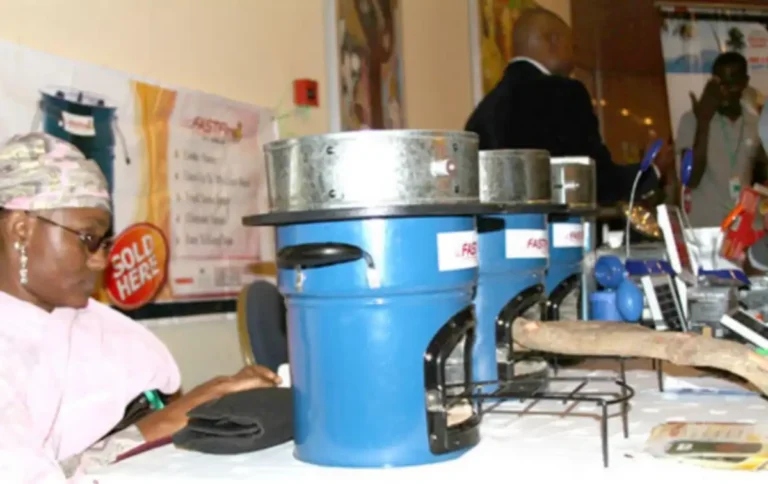
A carbon-credit-financed clean cooking project promoted by GreenPlinth Africa Limited and targeted at changing how households cook in Nigeria has moved closer to nationwide rollout, as stakeholders renewed their support at a media and sensitisation engagement held in Lagos on Wednesday.

The initiative plans to distribute 80 million highly efficient clean cookstoves free to households across the country. It is designed to cut dependence on firewood by more than 90 per cent, reduce deforestation, improve public health and support Nigeria’s Net Zero 2060 commitment. The programme also includes a plan to plant four billion economic trees nationwide and is projected to create about 3.5 million green jobs across the value chain.

Speaking at the engagement, former Deputy Governor of the Central Bank of Nigeria (CBN), Mr. Tunde Lemo, described the project as one of the most ambitious clean cooking and household energy transition programmes ever undertaken globally. He said the initiative is not a pilot scheme but a nationally endorsed and scalable intervention that has already been registered on the United Nations Framework Convention on Climate Change (UNFCCC) Climate Action Portal.

According to Lemo, full implementation of the project could eliminate about 1.2 billion metric tonnes of carbon dioxide annually, placing Nigeria in a strong position as a major contributor to global emission reduction through household energy reform. He explained that the intervention gives priority to women and children, who are most affected by indoor air pollution caused by traditional cooking methods that rely on firewood and other biomass fuels.

Lemo said the transition to clean cooking would be managed in a way that protects existing livelihoods. He explained that firewood sellers would not be displaced but retrained and absorbed into the clean energy value chain. He also disclosed that the programme was formally flagged off in Makoko, Lagos, in June, and that implementation would be phased across different states of the federation.

According to him, once fully implemented, the GreenPlinth Africa project is expected to “remove about 1.2 billion metric tons of carbon dioxide every year, making it the largest single clean cooking and household energy transition initiative globally.” He stressed that the programme is neither experimental nor speculative, noting, “This is not a pilot. It is not a promise. It is a nationally endorsed, structured, and scalable intervention.”

The Lagos State Government also expressed strong support for the initiative. The Special Adviser to the Governor on Environment, Engr. Olakunle Olamidosu Rotimi-Akodu, said challenges such as environmental degradation, flooding and air pollution are largely human-induced and require deliberate corrective actions. He described clean cooking solutions as interventions that combine environmental protection with social and economic benefits.

Rotimi-Akodu said Lagos State has consistently implemented policies aimed at reducing emissions and improving environmental outcomes. He cited the transition from diesel-powered generators to gas-powered independent power plants at the Alausa Secretariat, as well as the introduction of vehicular emission testing, as part of the state’s efforts to cut pollution and improve air quality.

On policy alignment, the Chief Executive Officer of Natural Eco Capital, Dr. Eugene Itua, said the clean cooking initiative directly translates Nigeria’s Long-Term Low-Emission Development Strategy into practical action. He noted that while climate-related policies and strategies already exist, implementation has often been the main challenge, which the cookstove project is helping to address.

Dr. Itua highlighted the public health benefits of the intervention, explaining that prolonged exposure to carbon monoxide and other pollutants from traditional cooking methods contributes to respiratory illnesses, fatigue and other health complications that are often misdiagnosed. He said clean cooking is therefore not only a climate solution but also a public health necessity.

Speaking on policy implementation, Itua said, “Perhaps without really realising it, you are supporting the on-the-ground implementation of what we call the Long-Term Low-Emission Development Strategy.” On the link between policy and action, he added, “The mitigation strategy in that document is what this project is solving, it serves as a wedge between policy announcements and actual implementation,” and noted, “I would like to commend and align with what is happening here today.”

From the legislative arm, the Chairman of the Lagos State House of Assembly Committee on Environment, Hon. Shabi Rasheed Adebola Adekola, said the state legislature would continue to support initiatives aimed at reducing carbon emissions. He recalled that Lagos was among the early adopters of emission control policies and said lawmakers were working on additional legislation to strengthen climate action in the state.

Adebola said the clean cooking initiative aligns with both state and federal priorities, especially as Nigeria seeks to show seriousness in addressing climate change following recent international engagements. He said the Lagos State Government views the project as timely and relevant to its broader environmental and development goals.

Making the position of the state government clear, Hon. Adebola said, “We definitely support this $800 million clean cooking stove initiative, because Nigeria, and especially Lagos, is serious about reducing carbon emissions and protecting our environment.”

Providing further insight into the broader scope of the project, the Chief Business Development Officer of GreenPlinth Africa Limited, Mr. Tony Ojobo, said the clean cooking programme is part of a wider effort to decarbonise major sectors of the economy, including telecommunications, banking and manufacturing. He said Africa is currently tapping into only about five per cent of available opportunities in the global carbon market.

Ojobo announced plans for a continental conference on decarbonisation and climate finance, which will be held in collaboration with the Office of the Vice President and the National Council on Climate Change. He said the conference is aimed at unlocking access to green finance, carbon credits and green job opportunities across the continent.

Also speaking at the event, the Managing Director of LAPO Microfinance Bank, Ms. Cynthia Ikponwosa, said the bank is supporting the initiative as part of its corporate social investment strategy. She disclosed that eight million out of the 80 million clean cookstoves planned for distribution nationwide have been allocated to Lagos State.

She said, “At the center of this initiative is the 80-million highly efficient clean cookstove project, a nationally significant intervention designed to improve health, protect the environment, and deliver measurable socioeconomic benefits at scale. Of the total units, 8 million are earmarked for Lagos State.”

Ikponwosa said the project would significantly reduce indoor air pollution, lower household fuel costs and free up time for women to engage in productive economic and educational activities. She added that beyond financing, LAPO Microfinance Bank plans to use its national network to support distribution, community engagement and sustained adoption of clean cooking solutions.

With implementation already underway, stakeholders at the engagement said the initiative shows how climate action, public health improvement and economic development can be pursued at the same time, particularly at the grassroots level, while delivering measurable benefits for households and the wider economy.

Advertisement

Cosmopolitan University launches AI programmes to tackle insecurity

Cosmopolitan University, Abuja, has introduced new artificial intelligence academic programmes designed to strengthen Nigeria’s capacity to address insecurity through technology, research and advanced crime analysis. The programmes were unveiled on Thursday in Abuja as part of the university’s broader effort to support national security and law enforcement using modern tools and data-driven approaches.

Speaking at the event, the Sub-Dean of the Faculty of Management and Social Sciences, Professor Suleiman Barnabas, said the initiative combines artificial intelligence training with the planned establishment of a world-class crime and forensic laboratory. He explained that the laboratory would support security agencies in crime prevention, investigation and evidence-based decision-making.

Barnabas said the AI courses are built around crime prevention, stressing that early detection and analysis of threats are more effective and cost-efficient than responding after crimes have occurred. According to him, technology-driven prevention offers security agencies a better chance to reduce crime and protect lives.

“The university has decided to establish a crime laboratory, also known as a forensic laboratory. Most of the security challenges faced in this part of the world are not due to a lack of theoretical knowledge of security or intelligence among security agencies, but rather the absence of the required laboratories to examine exhibits properly,” he said.

He added that the proposed facility would improve the ability of security agencies to determine where crimes were committed and identify individuals who may be responsible. Barnabas noted that the Vice-Chancellor is working to establish a world-class crime laboratory in partnership with institutions outside Nigeria, describing it as one of the standout features of the programme.

“The university also intends to deploy artificial intelligence to prevent crime occurrences, based on the principle that prevention is better than cure. In this regard, we are working closely with security agencies,” he said.

Barnabas disclosed that Cosmopolitan University is engaging key security institutions, including the National Defence College, with discussions ongoing to sign a memorandum of understanding. He said the collaboration would focus on training, research and the application of advanced analytical tools in security operations.

He expressed optimism that once the programme begins and security agencies start sending personnel for training, national capacity for threat analysis would improve. According to him, this would contribute to reduced crime across the country and support proactive security planning.

“The NDC is already involved, with efforts underway to sign a memorandum of understanding with Cosmopolitan University. We are hopeful that once the programme begins and security agencies send their personnel for training, it will help reduce crime in Nigeria. It will also enhance our capacity to analyse threats using modern and appropriate tools,” Barnabas said.

He added that security agencies would be able to leverage facilities and expertise at the university to address current security challenges and mitigate threats facing the country.

Also speaking, the Registrar of Cosmopolitan University, Dr. Mani Ahmad, said the introduction of the new programmes represents a major milestone in the institution’s commitment to academic excellence, innovation and workforce-ready education.

Ahmad explained that the programmes are structured to equip students, professionals and industry leaders with advanced knowledge, practical skills and globally competitive credentials aligned with national priorities and global trends.

“For the Master of Business Administration programme, students will undertake core MBA courses in the first two semesters, before specialising in their chosen areas in the third and fourth semesters,” he said.

He listed the MBA specialisations as Human Resource Management, Agribusiness and Rural Innovation Management, Law Enforcement and Justice Administration, Accounting, Digital Marketing, Public Health Management, Sustainable Energy Management and Forensic Accounting, adding that the university offers an MSc and a Postgraduate Certificate in Intelligence and Security Studies nationwide.

FG Distributes Farm Inputs to Smallholder Farmers in Yobe State

0

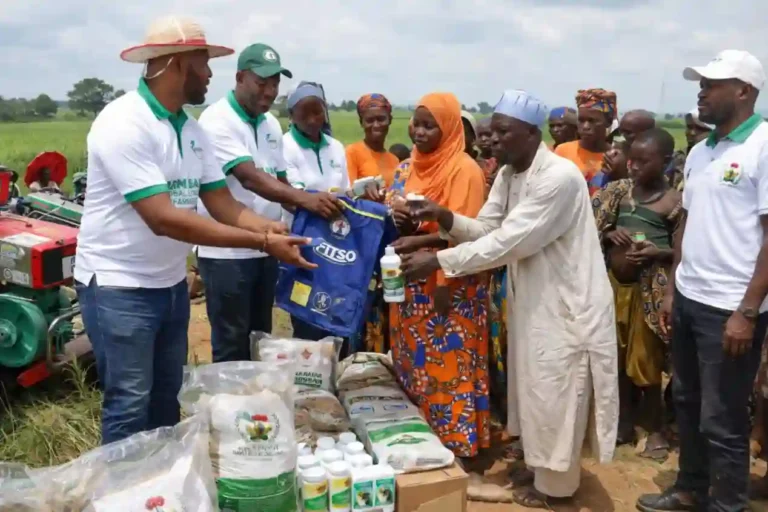
The Federal Government has commenced the distribution of agricultural equipment and farm inputs to smallholder farmers in Yobe State as part of efforts to boost food production and address food security challenges.

The distribution was officially flagged off on Thursday at the Federal Ministry of Agriculture and Food Security office in Damaturu, where beneficiaries drawn from different parts of the state received various items to support their farming activities.

Speaking at the event on behalf of the Minister of Agriculture and Food Security, Abubakar Kyari, the Director of Special Duties in the ministry, Zarah Kachalla, said the intervention was designed to respond to ongoing food security concerns facing the country.

“Food security remains a major concern both globally and nationally and is a core component of the 2030 Agenda for Sustainable Development,” she said.

Kachalla recalled that the Federal Government declared a state of emergency on food security in July 2023, noting that the declaration prompted a review of existing programmes and the introduction of targeted interventions to assist smallholder farmers struggling with rising production costs.

She explained that the items distributed during the exercise included power tillers, herbicides, liquid fertilisers, knapsack sprayers, water pumps, insecticides and certified seeds.

According to her, the inputs were provided free of charge and distributed through commodity associations, cooperative groups, farmers with special needs and internally displaced persons to ensure that vulnerable groups were adequately supported.

Earlier, the Yobe State Commissioner for Agriculture and Natural Resources, Ali Mustapha Goniri, said the programme would help improve agricultural productivity across the state.

Represented by the Permanent Secretary of the ministry, Garba Tahir, Goniri said the state government had implemented several reforms in the agricultural sector since 2020. These reforms, he said, included the organisation of an agricultural summit, the establishment of an Agricultural Revitalisation Committee, and the development of a five-year strategic plan alongside an agricultural policy.

He disclosed that “inputs and equipment valued at over ₦17 billion were distributed to 5,340 beneficiaries across 178 political wards in 2024,” while “more than ₦16 billion worth of inputs were distributed to about 27,000 beneficiaries in 2025.”

Earlier in his remarks, the Yobe State Coordinator of the Federal Ministry of Agriculture and Food Security, Sulaiman Musa, said the distribution formed part of a nationwide intervention targeting 50 cooperative groups and commodity associations along the agricultural value chain in the state.

Speaking on behalf of the beneficiaries, the Yobe State Coordinator of the Small Scale Women Farmers Association, Maryam Yakubu, said the intervention would ease the burden of rising input costs.

“This support will help farmers cope with the high cost of inputs and improve agricultural activities in the state,” she said.

SMEDAN urges tax reforms to protect low-income earners, MSMEs

The Small and Medium Enterprises Development Agency of Nigeria, SMEDAN, has called for tax reforms that protect low-income earners and reduce the burden on Micro, Small, and Medium Enterprises, MSMEs, across the country.

The call was made during the agency’s second Town Hall Meeting on Tax Reforms held in Abuja, where policymakers, tax experts, and MSME owners gathered to examine how ongoing fiscal reforms are affecting small businesses.

SMEDAN stated that the proposed reforms should exempt nano businesses from heavy tax obligations, eliminate multiple and nuisance levies affecting small traders, and simplify tax compliance procedures to make them easier to understand and follow.

According to the agency, the town hall meeting was organised to bridge the gap between fiscal policy formulation and the daily realities faced by MSMEs nationwide. The discussions focused on aligning Nigeria’s evolving tax framework with the needs of small businesses and vulnerable groups within the economy.

A major highlight of the event was a presentation by the Chairman of the Presidential Committee on Fiscal Policy and Tax Reforms, Taiwo Oyedele, who outlined the objectives of the ongoing reforms and their implications for MSMEs.

Oyedele explained that the guiding principle of the reforms is to “tax the fruit, not the seed,” noting that the measures are designed to protect low-income earners and small business owners from policies that could limit growth.

He said the reforms aim to exempt low-income earners and nano businesses from burdensome tax obligations, eliminate multiple levies that disproportionately affect small traders, and remove hidden taxes on essential goods and logistics in order to support price stability.

Oyedele also stressed the need to simplify existing tax codes and improve awareness among MSMEs about available tax incentives, including tax holidays and rebates that many eligible businesses are not currently accessing.

The Director General of SMEDAN, Dr Charles Odii, said the presence of the Presidential Committee at the event allowed for direct engagement between policymakers and entrepreneurs.

“The presence of Mr Oyedele here today ensures that our entrepreneurs are not just hearing about laws; they are participating in a movement that prioritises their survival and growth,” Odii said.

He reaffirmed SMEDAN’s role as the apex agency for MSME development in Nigeria and disclosed that similar engagements would be organised in other locations to ensure nano, micro, and small enterprises benefit from the reforms.

The town hall meeting concluded with a question-and-answer session, during which business owners raised concerns and sought clarification on issues affecting the ease of doing business in Nigeria.

Ekiti Govt Approves N76.6m Vehicle, Housing Loans for Teachers

The Ekiti State Government has approved N76.6 million as another tranche of vehicle and housing loans for primary school teachers in the state. The Executive Chairman of the Ekiti State Universal Basic Education Board (SUBEB), Prof. Femi Akinwumi, disclosed this on Tuesday in Ado-Ekiti.

Akinwumi said the approval reflects the commitment of the administration of Gov. Biodun Oyebanji to improving teachers’ welfare and boosting their morale. According to him, incentives for educators are critical to the delivery of free and quality basic education across public schools. He said, “Improved welfare would help teachers perform better and create a more conducive learning environment for pupils.”

The SUBEB chairman commended the governor for his commitment to the education sector, particularly in infrastructure development, manpower support and staff welfare. He recalled that the state government had earlier disbursed N200 million under the revolving loan scheme to enable more teachers benefit from the programme.

Akinwumi urged beneficiaries to utilise the loans judiciously and reciprocate the gesture by showing greater commitment and dedication to duty in their classrooms.

Also speaking, the Permanent Secretary of SUBEB, Mr Michael Omolayo, provided a breakdown of the approved loans. Omolayo explained that N43 million was approved as vehicle loans for 49 teachers, while N33.6 million was approved as housing loans for 72 beneficiaries statewide.

Shettima Says Procurement Reforms Are Restoring Global Confidence in Nigeria

0

The Vice President, Senator Kashim Shettima, has said that the ongoing reforms of the administration of President Bola Ahmed Tinubu are beginning to restore the confidence of the global community in Nigeria, noting that this renewed trust is already reflecting in the country’s growing appeal to foreign professionals.

He said this development explains why individuals from other countries are now choosing to participate in professional courses such as the Professionals’ Certification Programme being conducted in Nigeria.

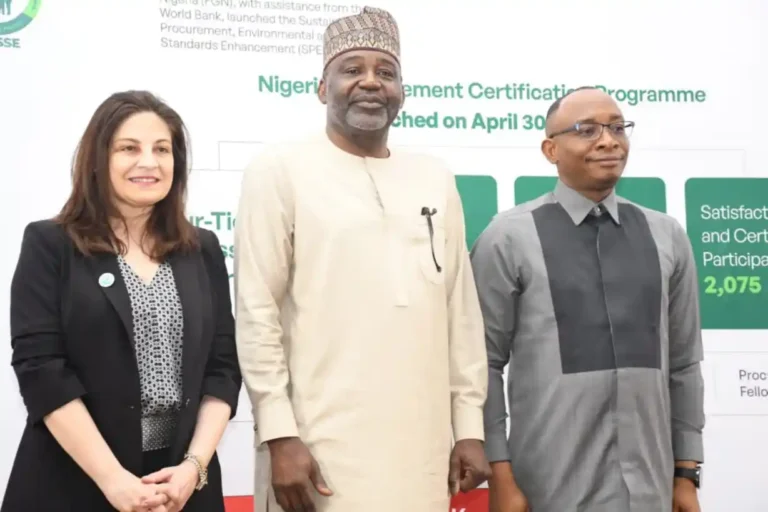
Senator Shettima made the observation on Thursday during the inaugural Convocation Ceremony of the Professionals’ Certification Programme held at the old banquet hall of the Presidential Villa in Abuja.

The Vice President, who was represented at the event by the Deputy Chief of Staff to the President, Senator Ibrahim Hadejia, described the graduation of the first cohort of certified procurement professionals as a major milestone that shows the firm resolve of the administration to implement the President’s Renewed Hope Agenda.

He said, “On this day, we commemorate the 2,100 certified procurement professionals from Nigeria and around the globe. This is far from a trivial accomplishment. It implies that the global community is beginning to have faith in Nigeria’s reform endeavours, the program’s credibility, and the gravity of its content.

“The fact that professionals from foreign countries have elected to participate in this inaugural cohort is a clear indication that Nigeria is no longer satisfied with mediocrity in procurement practices, but is instead consciously establishing itself as a benchmark on the continent and beyond.”

The Vice President recalled that in the past, procurement in Nigeria was largely viewed as an administrative necessity and was often misunderstood, mismanaged and abused.

He said that contrary to that perception, procurement under the current administration is now central to governance, stressing that it determines how public resources are translated into roads, hospitals, schools, security infrastructure and social services across the country.

“When procurement fails, development fails. People are adversely affected when procurement is not documented. The current administration recognises this reality and, motivated by its devotion to the nation, has elected to confront it directly,” he said.

Senator Shettima maintained that for an ambitious country like Nigeria, the prudent, transparent and strategic management of public resources should never be treated as a technical afterthought.

According to him, under the Renewed Hope Agenda, procurement has become the engine room of development and a key driver of national progress.

He said, “It shapes the quality of our roads and railways, the resilience of our healthcare system, the reach of our schools and universities, and ultimately the confidence citizens place in their government.

“This administration understands that truth clearly, which is why public procurement reform occupies a central place in our governance strategy.”

The Vice President also highlighted the role of the Bureau of Public Procurement in the reform process, describing the agency as being at the heart of efforts to strengthen accountability and professionalism in the system.

He said that beyond its regulatory responsibilities, the BPP carries a deeper duty of building a professional, ethical and highly competent procurement workforce, adding that reform cannot be sustained through policy circulars alone.

Addressing the graduands, Senator Shettima reminded them that as pioneers of the programme, they carry a special responsibility as the first set of certified professionals.

He urged them to ensure that their conscience is guided by their certification and that their conduct reflects the values they have been trained to uphold.

“Stewards of value for money and custodians of public trust, you are. In classrooms, clinics, markets, and communities throughout the nation, your decisions will have an impact on lives that may not garner headlines but will be felt,” he said.

“Let your conscience be guided by your certification. Your practice should be defined by integrity. Your compass should be the loyalty of one’s country.”

The Vice President congratulated the Bureau of Public Procurement, the leadership of the SPESSE Project, the World Bank and other development partners, saying the achievement should help strengthen institutions, rebuild public trust and move Nigeria closer to its national aspirations.

Earlier, the Chairman of the Senate Committee on Procurement, Senator Olajide Ipinsagba, pledged the continued support of the National Assembly to ensure the sustainability of the Nigeria Procurement Certification Programme.

He urged the graduands to maintain the highest ethical standards and to apply the skills and knowledge acquired through the programme to advance the public procurement system in Nigeria.

The lawmaker noted that the sustainability of the project has laid a solid foundation for a more transparent and progressive public service, where procurement is adopted as a catalyst for national transformation and development.

On his part, the Director General of the Bureau of Public Procurement, Dr Adebowale Adedokun, said the Nigeria Procurement Certification Programme, implemented in collaboration with development partners, is designed to strengthen sustainable capacity building and promote a viable procurement culture in Nigeria’s public service.

He said the programme serves as a special purpose vehicle for implementing capacity building initiatives for public procurement execution and for ensuring that officers are equipped with the skills required to achieve the goals and objectives of the Federal Government.

Dr Adedokun also announced that President Tinubu has approved the full deployment of community-based procurement officers across the country as part of measures to align Nigeria’s procurement practices with global standards, best practices and the judicious use of public resources.

Also speaking at the event, the National Project Coordinator, Dr Joshua Attah, presented the history and impact of the Sustainable Procurement, Environmental and Social Standards Enhancement Project.

He said Nigeria, through the project, is building a lasting legacy that will positively influence procurement processes in both the public and private sectors.

According to him, the commencement of the programme and the graduation ceremony mark a historic step toward strengthening accountability in public procurement and demonstrate the government’s commitment to transparency and integrity in public service.

He disclosed that the Centres of Excellence in Procurement have so far trained over 40,000 candidates through capacity building programmes, training and assessment, as well as professional certification delivered via digital learning and certification platforms developed by the Bureau of Public Procurement.

For her part, the World Bank’s Chief Procurement Officer, Ms Hiba Tahboub, said the Bank recognises the importance the Federal Government has attached to the programme.

She noted that this commitment is evident in the consistent investment and institutional support given to the procurement function within Nigeria’s public service.

Ms Tahboub urged other African countries to learn from the Nigerian example, saying the initiative has shown how an early vision can be transformed into a structured and credible certification framework for the procurement profession in the public sector.

FG disburses cash transfers to 34 million Nigerians, targets 50 million beneficiaries

The Federal Government has disbursed conditional cash transfers to over 34 million vulnerable households across Nigeria as part of ongoing efforts to ease economic hardship and reduce poverty nationwide.

The Minister of Humanitarian Affairs and Poverty Reduction, Dr Bernard Doro, disclosed this on Thursday in Calabar, Cross River State, during the maiden edition of the National Council on Humanitarian Affairs and Poverty Reduction.

According to the minister, the intervention reflects the Federal Government’s commitment to lifting millions of Nigerians out of poverty through coordinated, inclusive, and data-driven humanitarian programmes.

He added that the government is targeting 50 million beneficiaries before the end of the year, stressing that social protection remains a key pillar of the Tinubu administration’s poverty reduction strategy.

“The Federal Government has so far provided conditional cash transfers to over 34 million vulnerable Nigerians and is working to reach 50 million beneficiaries before the end of the year,” Doro said.

He explained that the National Council on Humanitarian Affairs and Poverty Reduction was established to strengthen coordination and effectiveness of humanitarian interventions, noting that fragmented and isolated efforts could not deliver sustainable impact.

Doro said the theme of the 2026 council, “Beyond the National: Strengthening Sub-national and Multi-Stakeholders’ Synergy for a Unified Approach to Humanitarian Response and Poverty Reduction,” highlights the need for collaboration among federal, state, and non-state actors.

“The maiden council is a clear statement that no single institution or level of government can resolve Nigeria’s humanitarian challenges alone. Only a coordinated, multi-stakeholder approach can restore hope and improve livelihoods,” he added.

Also present at the event were the Honourable Minister of Humanitarian Affairs, Dr Bernard Doro, the Minister of State for Humanitarian Affairs, Dr Tanko Sununu, commissioners of humanitarian affairs from across the country, delegates, and participants.

In his remarks, the Minister of State for Humanitarian Affairs, Dr Tanko Sununu, said changing global dynamics have reshaped humanitarian response, making collective action and innovation imperative.

At the council, stakeholders submitted a total of 99 memoranda. Out of this number, 37 memoranda were approved, 19 were merged, 25 were stepped down, while others received no recommendations.

One of the memoranda, submitted by the Development Research and Projects Centre, called on the Federal Government to develop a national framework to monitor and evaluate humanitarian and poverty reduction interventions across Nigeria.

The Executive Director of dRPC, Dr Judith-Ann Walker, said such a framework would harmonise indicators, improve coordination between federal and subnational governments, and enhance tracking of outcomes such as beneficiary reach, service quality, and impact on vulnerable groups.

She noted that variations in humanitarian and poverty reduction interventions across states currently pose challenges to effective monitoring and evaluation.

“At present, humanitarian affairs and poverty reduction interventions vary from state to state, presenting a challenge to coordinated and harmonised monitoring and evaluation of poverty reduction in Nigeria,” she said.

“The memo therefore challenged the federal government to create a framework that would provide a clear objective and indicators to track humanitarian outcomes, such as beneficiary reach, service quality, and impact on vulnerable groups in Nigeria,” Walker added.

Meanwhile, Cross River State Governor, Bassey Otu, represented by his deputy, Peter Odey, commended the Federal Government for convening the maiden council in Calabar.

The governor pledged continued support for poverty reduction initiatives and interventions targeted at border communities and displaced persons, particularly those affected by cross-border movements from Cameroon and refugees.

Tonye Cole launches COLE2LEARN to empower 230,000 Rivers youths

0

Tonye Cole, former governorship candidate of the All Progressives Congress (APC) in Rivers State, has launched an empowerment programme aimed at reaching 230,000 young people across the state.

The intervention is being implemented through the Collective Initiative and targets youths in all 23 local government areas, according to a statement.

Cole said the programme was designed to reduce youth restiveness while expanding access to practical education and development opportunities.

The initiative, tagged COLE2LEARN, is aligned with the 2026 International Day of Education, which carries the global theme, the power of youth in co-creating education.

According to Cole, the programme repositions education as a tool for empowerment rather than passive instruction. He said it is structured to equip young people with skills, knowledge and civic confidence needed for healthier living, livelihoods and safer communities.

Cole explained that participants are encouraged to apply what they learn directly to real-life challenges, including public health, economic inclusion, climate resilience and community security.

He said the programme emphasises youth-led and co-created learning systems, placing young people at the centre of decision-making and problem-solving within their communities.

Cole noted that COLE2LEARN departs from conventional classroom models by focusing on outcome-driven learning linked to civic participation, enterprise development, innovation and leadership pathways.

He added that the learning framework covers civic and democratic engagement, health and wellbeing, financial and enterprise skills, digital and media literacy, environmental and climate awareness, peace and community safety, gender and disability inclusion, as well as culture-based education.

Delivery of the programme is carried out through community learning hubs, platforms, mobile channels and peer-to-peer exchanges, enabling participants to learn.

Ogun, World Bank invest ₦5bn in women empowerment, livelihood initiatives

The Ogun State Government and the World Bank Group have jointly invested over ₦5 billion in women-focused empowerment and livelihood initiatives over the past six years, Governor Dapo Abiodun has disclosed.

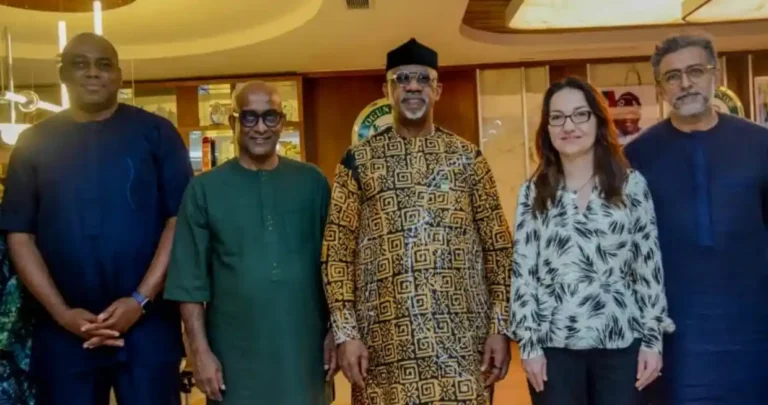
The governor made this known on Wednesday while receiving a delegation from the World Bank Group, led by its Vice President, Ms Galina Vincelette, at his office in Abeokuta.

Governor Abiodun said the investment was deployed through the World Bank–supported Nigeria for Women Project (NFWP) and the state’s domesticated empowerment scheme, Oko’Owo Dapo, which was established after the success of the initial programme.

According to him, the Nigeria for Women Project, implemented through Women Affinity Groups (WAGs), has significantly transformed the socio-economic lives of women across the state.

“The programme has deepened financial inclusion, strengthened social cohesion, and equipped women with leadership and basic accounting skills.

“About ₦3 billion was disbursed under the World Bank-supported initiative, while the Ogun State Government complemented it with another ₦2 billion. In total, roughly ₦5 billion has been invested in this impactful livelihood programme,” the governor said.

He added that the state government subsequently launched Oko’Owo Dapo to sustain and expand the gains of the initiative, noting that the programme has so far empowered about 55,000 women across Ogun State.

Governor Abiodun also highlighted the achievements of OGCARES — the Ogun State COVID-19 Action Recovery and Economic Stimulus Programme — describing it as a critical intervention that strengthened household resilience and supported food system recovery during and after the pandemic.

On the Ogun State Economic Transformation Project (OGSTEP), the governor said the programme has recorded measurable progress in skills acquisition, agricultural productivity, and land administration reforms.

“We have significantly increased the speed of issuing Certificates of Occupancy. Under the Rural Access and Agricultural Marketing Project (RAAMP), which focuses on connecting farms to markets, we are currently upgrading about 209 kilometres of rural roads. Improved rural access reduces transportation costs and enhances agricultural productivity,” he stated.

The governor further disclosed that Ogun State would soon commission its Electricity Distribution Company, as part of deliberate efforts to improve power supply and stimulate industrial growth.

He said the state is pursuing multiple Independent Power Projects (IPPs) and has already established the Ogun State Electricity Board, following recent constitutional amendments empowering states to generate, transmit, and distribute electricity.

“Power remains the biggest enabler of economic activities. We are working with strategic partners to generate and distribute electricity within the state.

“We are also on the verge of constructing mini-grids across Ogun State to meet our growing energy needs,” Mr Abiodun said.

Speaking earlier, the World Bank Group Vice President, Ms Galina Vincelette, reaffirmed the institution’s commitment to supporting Ogun State and Nigeria in addressing key development challenges.

She said the Bank would continue to promote public-private solutions, particularly in the electricity sector, while strengthening investments in human capital development.

Also speaking, the World Bank Country Director for Nigeria, Mr Matthew Verghis, disclosed that the Bank is preparing a new Country Partnership Framework for Nigeria, with strong emphasis on job creation.

“Creating jobs is the most sustainable way to reduce poverty and raise incomes. Our existing programmes, including the Nigeria for Women Project, will continue.

“Nigeria currently has a $17 billion World Bank portfolio, one of the largest globally, and our support remains strong,” Ms Verghis said globally

NASENI fertilizer plants to create 2,000 direct and over 20m indirect jobs

0

The federal government is set to create 2,000 direct jobs and over 20 million indirect jobs across the agricultural value chain as the construction of coal and liquid fertilizer plants by the National Agency for Science and Engineering Infrastructure (NASENI), which will contribute to food security, is nearing completion in Kano, Kano State.

The pioneering coal fertilizer project by NASENI and its Nigerian partner, Whitefog Environmental Services Limited, is a bilateral agreement on technology transfer between the Federal Government of Nigeria, represented by NASENI, and the Government of Indonesia, represented by PT Saputra Global Harvest, for coal fertilizer production in Nigeria.

In addition, NASENI and Whitefog are partnering on the production of liquid fertilizer in Nigeria. The NASENI–Whitefog projects aim to transform Nigeria’s agricultural landscape in line with President Bola Ahmed Tinubu’s eight-point agenda on food security, while aligning with Sustainable Development Goals 2 (Zero Hunger), 1 (No Poverty), 8 (Decent Work and Economic Growth), and 12 (Responsible Consumption and Production).

Nigeria’s soil quality has been a major concern for farmers, with traditional NPK fertilizers often failing to provide the necessary nutrients for optimal crop yields. The coal fertilizer, an innovative and eco-friendly alternative to conventional fertilizers, contains 26 additional mineral concentrates and activation technology, and is expected to address this long-standing challenge.

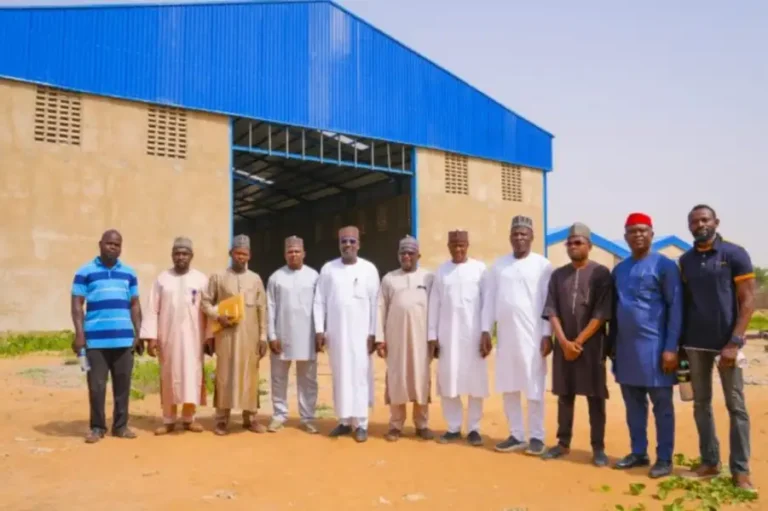
The Acting Coordinating Director, Engineering Infrastructure Directorate, NASENI Headquarters, and Coordinator of the NASENI–Whitefog project, Engr. Dr. Agava Abdullahi Abdulrasheed, who inspected the large production factory, massive warehouses, laboratories, and administrative buildings at the coal fertilizer plant, said the project would have a profound impact on Nigeria’s agricultural sector. According to him, it will ensure improved soil quality and fertility, increased crop yields, and better harvests for farmers across the country.

Chairman of Whitefog Environmental Services Limited, Alhaji Hassan Inuwa Babura, said that on the coal fertilizer project, the company has secured a permanent site along Wudil Road and that construction has advanced significantly. He explained that machinery is already on the way, awaiting clearance at the seaport, after which installation will begin. He added that production is expected to commence by May or June 2026.

With the potential to revolutionize farming practices and strengthen food security, the two projects are expected to create 2,000 direct jobs and over 20 million indirect jobs across the agricultural value chain, stimulating economic growth and improving livelihoods nationwide.