Home Blog Page 137

Kuda MFB Secures CBN National Licence to Expand Physical Presence

0

Kuda Microfinance Bank (Kuda MFB) has received approval from the Central Bank of Nigeria (CBN) to operate as a National Microfinance Bank, allowing the lender to establish a physical presence across Nigeria.

The new licence represents a shift from the Unit Microfinance Bank licence Kuda MFB held until December 2025, which restricted its physical operations to a single location. With the national licence, those geographic restrictions have been lifted, giving the bank the authority to open customer experience centres in different parts of the country.

According to the bank, the approval also regularises its licensing status in line with the Central Bank’s framework for microfinance banks and provides more operational flexibility as it continues to scale its services nationwide.

Kuda MFB said the national licence does not signal a move away from its digital-first model. The bank explained that it will continue to prioritise digital banking services, enabling Nigerians to make transfers, payments, save money, and access instant credit through the Kuda app.

Reacting to the development, the Managing Director and Chief Executive Officer of Kuda MFB, Musty Mustapha, said, “Securing a national microfinance banking licence is an important step for us as a regulated institution. It strengthens our relationship with the Central Bank and affirms our commitment to operating at the highest standards of compliance as we scale. While we remain digital at our core, this licence gives us the flexibility to create more physical touchpoints where customers want in-person support or engagement, allowing us to serve Nigerians across the country in whichever ways are most convenient for them.”

Subject to regulatory approval, Kuda MFB said it plans to open more experience centres focused on customer support and community engagement. These centres will follow the model of its existing experience centre in Yaba, Lagos, where customers and the general public can speak directly with the Kuda team to get help and learn about the bank’s products and services.

The bank added that the national licence does not change its existing product offerings or transaction capabilities but provides the regulatory backing needed for a nationwide physical presence.

Advertisement

DBN Begins Livestock SME and PFI Training Programme

Development Bank of Nigeria (DBN) Plc has commenced a nationwide capacity-building training programme for livestock-focused Small and Medium Enterprises and DBN participating financial institutions across Nigeria’s six geopolitical zones, under a World Bank–funded initiative.

According to DBN on Wednesday, the first phase of the training programme will commence in Enugu State, South-East Nigeria, before moving to other regions.

The capacity-building programme is being implemented under the Livestock Productivity and Resilience Support Project and is designed to strengthen the capacity of participating financial institutions to design and refine financial products that address the funding gap faced by SMEs operating in Nigeria’s livestock sector.

The training is also aimed at improving the financial readiness of SMEs within the livestock value chain by equipping them with the knowledge and tools needed to access funding, expand operations, and scale their businesses. DBN said the programme will also provide a platform for engagement, dialogue, and improved understanding between PFIs and livestock enterprises.

Speaking on the initiative, the Managing Director and Chief Executive Officer of the Development Bank of Nigeria, Dr Tony Okpanachi, highlighted the broader impact of the programme on the economy. He said, “Our capacity-building training programme is a catalyst for unlocking the potential of livestock enterprises as key drivers of economic growth, innovation, job creation, and prosperity in Nigeria,” and urged SMEs and PFIs across all zones to participate actively.

Okpanachi further noted that capacity-building remains critical to MSME growth in Nigeria, stressing that it helps bridge existing knowledge and skills gaps. “Capacity-building is pivotal for MSMEs’ growth in Nigeria as it bridges the knowledge and skills gap, empowering entrepreneurs to innovate, compete, and thrive in a rapidly-evolving economy,” he said.

He explained that the LPRES SME/PFI Regional Training will strengthen the skills and capacity of livestock-focused SMEs for business growth and sustainability, while also supporting national economic growth.

DBN said the programme aligns with the Federal Government’s Renewed Hope Livestock Development Initiative under the administration of President Bola Tinubu, which aims to improve food security, create jobs, and reposition the livestock sector.

The training will be implemented in selected LPRES states across the six geopolitical zones to ensure equitable national representation. Regional sessions are scheduled to hold in Enugu for the South-East, Adamawa for the North-East, Ondo for the South-West and South-South, Kano for the North-West, and Kogi for the North-Central.

DBN stated that the DBN-LPRES SME/PFI Regional Training will draw participants from SMEs, PFIs, the Federal Ministry of Livestock Development, the LPRES National Coordinating Office and State Coordinating Offices, as well as DBN and ICGL teams.

It is projected that no fewer than 200 PFIs, 300 SMEs, and DBN and ICGL staff will be reached through the sessions. DBN added that SMEs qualify for a grant.

Nigeria driving Africa’s future through impact, inclusion, investment: Shettima

0

The Vice President, Senator Kashim Shettima, has restated Nigeria’s commitment to shaping Africa’s future through impact, inclusion, and investment, saying the country is strengthening key initiatives to support sustainable development across the continent.

Speaking on Wednesday at the Africa Social Impact Summit High-Level Policy Engagement held at the Banquet Hall of the Presidential Villa, Abuja, Shettima noted that Nigeria is launching and reinforcing platforms such as the Business Coalition for Education and the Women and Youth Financial and Economic Inclusion Platform to drive inclusive growth. He stressed, however, that “government alone cannot solve Africa’s development challenges.”

The Vice President was represented at the event by his Technical Adviser on Women, Youth Engagement, and Impact, Hajiya Hauwa Liman. According to him, the Africa Social Impact Summit, held in partnership with Sterling One Foundation and other local and global collaborators, must go beyond talk.

“Beyond Nigeria’s commitment to shaping Africa’s future through impact, inclusion, and investment, this convening of the Africa Social Impact Summit (ASIS), held in partnership with Sterling One Foundation and our local and global collaborators, must be more than an exercise in social relations,” he said.

“It must serve as a platform where intent is converted into execution, where dialogue matures into decision, and where partnerships are forged with outcomes firmly in view,” Shettima added.

He said Nigeria has never taken the potential of ASIS for granted, recalling that the summit has grown steadily over its past four editions. According to him, ASIS has evolved “into one of Africa’s most consequential platforms for development dialogue.”

“We do not need a lecture on why this engagement matters. None of us doubts its relevance, because all of us here share the same aspiration: to build platforms of execution strong enough to carry the immense potential of this continent into lived reality,” the Vice President stated.

Shettima observed that development in previous decades had been “framed primarily as expenditure,” adding that the current responsibility of government is to reposition development as long-term investment. He said such investment must focus on human capital, productive systems, climate resilience, digital infrastructure, and inclusive markets.

According to him, Africa’s future will not be financed by aid alone. He explained that it will also depend on “patient capital, catalytic capital, blended finance, and private enterprise deployed at scale and guided by impact.”

In line with this thinking, the Vice President said Nigeria is positioning itself to deliver measurable results. “We are strengthening delivery systems across education, health, social protection, agriculture, climate action, digital public infrastructure, and financial inclusion,” he said.

“We are reforming institutions. We are aligning incentives. We are building national results architectures not to impress donors, but to serve citizens,” Shettima added.

While acknowledging ongoing reforms under President Bola Ahmed Tinubu, the Vice President said no administration can achieve such an ambitious agenda alone. He noted that President Tinubu “has without doubt begun the work of turning Nigeria’s fortunes around,” but added that collaboration remains essential.

According to him, this is why Nigeria views ASIS as “a convening ground for co-investment, co-design, and co-delivery.” He described the summit as a space “where policymakers sit with CEOs, development partners, entrepreneurs, civil society leaders, and innovators to build solutions together.”

On youth empowerment, Shettima said the Tinubu administration has expanded opportunities for young people and women as part of its inclusive agenda. “Our focus on strengthening human capital is unmistakable,” he said.

He warned, however, against disjointed efforts, stressing the need for unity. “But let me be candid. If we fail to stand together, we leave ourselves vulnerable to avoidable setbacks,” the Vice President said.

“This is a reminder to our development partners, to our social innovators, to civil society, and most importantly to the young people and women across Nigeria and across Africa. The stakes are too high for fragmentation. Progress demands coalition,” he added.

Earlier, the Minister of Budget and Economic Planning, Atiku Bagudu, represented by Dr. Sampson Ebimaro, Director of the International Cooperation Department, said the goals of ASIS align with the Renewed Hope Agenda of President Tinubu.

According to him, the summit reflects the federal government’s focus on translating policy decisions into real implementation outcomes. He said ASIS 2026 reinforces the need for strong collaboration between government and the private sector.

Bagudu assured development partners that the federal government will continue to accelerate the implementation of the Sustainable Development Goals (SDGs). He added that efforts will also be made to deepen collaboration for measurable impact within Nigeria and across Africa.

The United Nations Resident and Humanitarian Coordinator in Nigeria, Mohamed Malick Fall, also spoke at the event through a prepared statement that was read on his behalf. He highlighted that Nigeria’s commitment to the SDGs remains central to government planning.

Fall said that for Nigeria to meet the SDGs, states must serve as the main drivers of implementation. He added that this must happen alongside effective revenue mobilization and the strategic deployment of resources.

On her part, the Chief Executive Officer of Sterling One Foundation, Mrs. Olapeju Ibekwe, said the engagement signals a new phase of cooperation. According to her, it marks a shift where the Presidency, the Office of the Vice President, the private sector, investors, development partners, and civil society move beyond alignment to active cooperation.

She said the launch of the initiatives represents institutional infrastructure for impact, noting that they are designed “not for announcements, but for execution.”

A major highlight of the engagement was the launch of flagship, policy-backed initiatives. These include the Business Coalition for Education (BCE), the Nigeria Foundational Learning Fund, and the Women and Youth Financial and Economic Inclusion (WYFEI) Nigeria.


FMBN disburses over N7bn in mortgages, housing support for Police Officers

0

The Federal Mortgage Bank of Nigeria (FMBN) has disbursed over N7 billion in mortgage and housing development support to officers and men of the Nigeria Police Force (NPF), as part of efforts to improve access to affordable housing for personnel.

Managing Director and Chief Executive of FMBN, Shehu Usman Osidi, disclosed this during a courtesy visit to the Inspector-General of Police, Kayode Adeolu Egbetokun, on Tuesday, January 27, 2026, at the Force Headquarters in Abuja. He said both institutions reaffirmed their commitment to strengthening collaboration on housing delivery for police officers nationwide.

Osidi, who was accompanied by the Executive Director, Loans and Mortgage Services, Hon. Dr. Muhammad Sani Abdu, and other top management staff, described the Nigeria Police Force as one of the Bank’s most strategic institutional partners under the National Housing Fund (NHF) Scheme.

He revealed that FMBN has advanced about N3.3 billion in NHF mortgage loans to 944 police personnel for the purchase of homes in estates across Abuja, Lagos, Kaduna, Katsina, Enugu, Benin, Yola, and other locations nationwide.

Beyond individual mortgages, Osidi said the Bank approved N4.74 billion in Cooperative Housing Development Loans to the Nigeria Police Multipurpose Cooperative Society, with over N2.5 billion already disbursed.

According to him, the funds are being used for the development of 606 housing units in estates located in Abuja, Kaduna, Nasarawa, Ogun, Abia, and Adamawa states, providing a structured route to homeownership for officers through cooperative arrangements.

Osidi further disclosed that 804 police officers have benefited from Home Renovation Loans valued at N752.6 million, which were used to improve existing homes. He added that 25,167 retired police personnel have also received NHF refunds totaling N533.3 million.

He commended the leadership of the Nigeria Police Force for its cooperation in addressing discrepancies in NHF contribution records, noting that accurate records are essential for officers to access their housing benefits.

According to Osidi, a total of 139,000 contribution records have already been updated, a move he said would ensure seamless access to housing benefits for serving and retired personnel.

“We remain firmly committed to sustaining and deepening this mutually beneficial relationship with the Nigeria Police Force,” Osidi said. He noted that the partnership is focused on delivering practical and affordable housing solutions that directly improve the welfare of officers and their families.

In his response, Inspector-General of Police, Kayode Adeolu Egbetokun, appreciated the FMBN management for its sustained housing interventions for police personnel. He assured the Bank of his support for initiatives aimed at improving the welfare of officers and men of the Force, noting that welfare and security are closely linked.

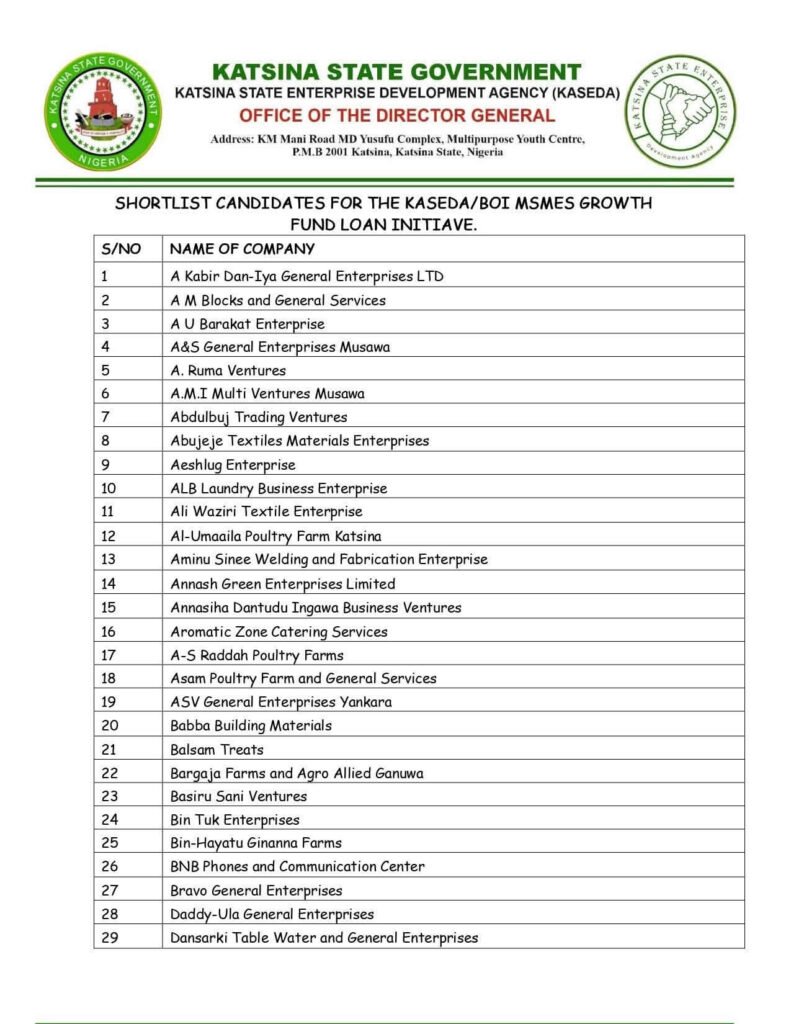
KASEDA to Disburse ₦254m Interest-Free BOI Loans to MSMEs

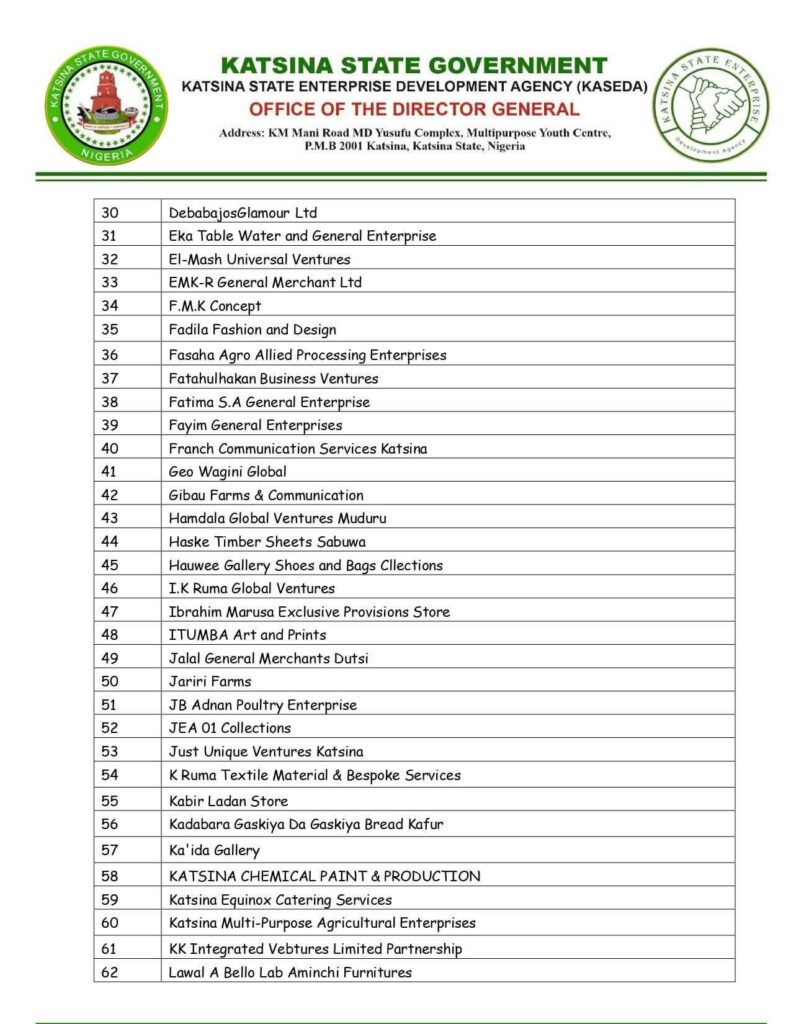
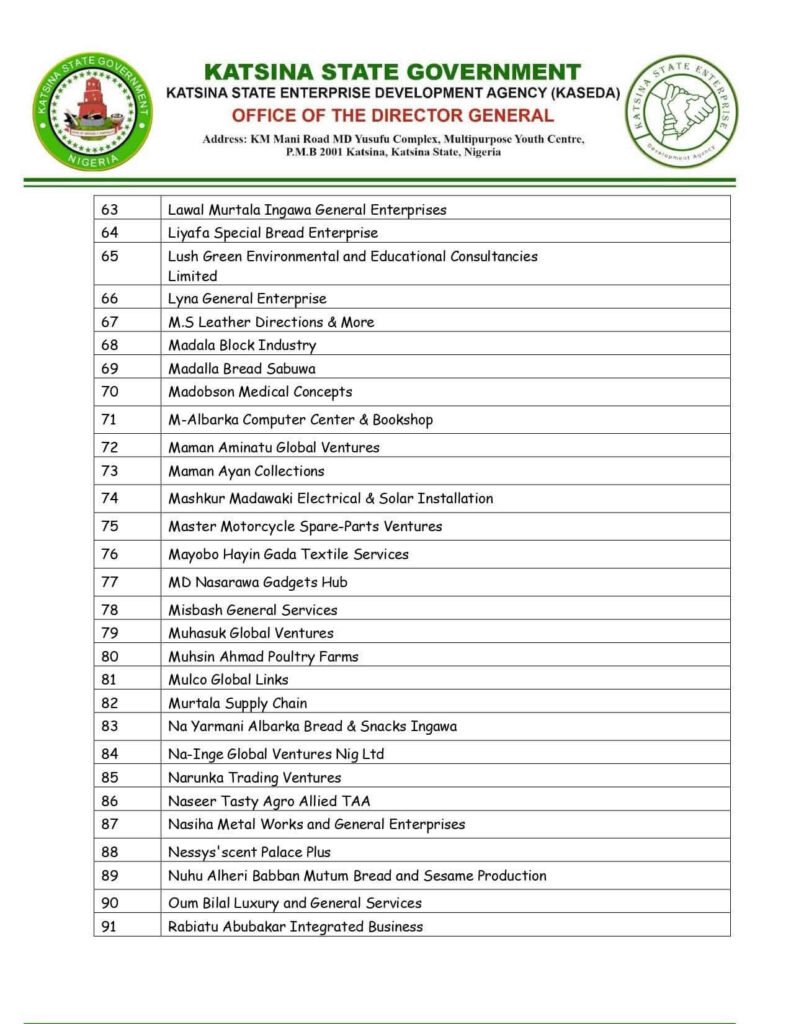
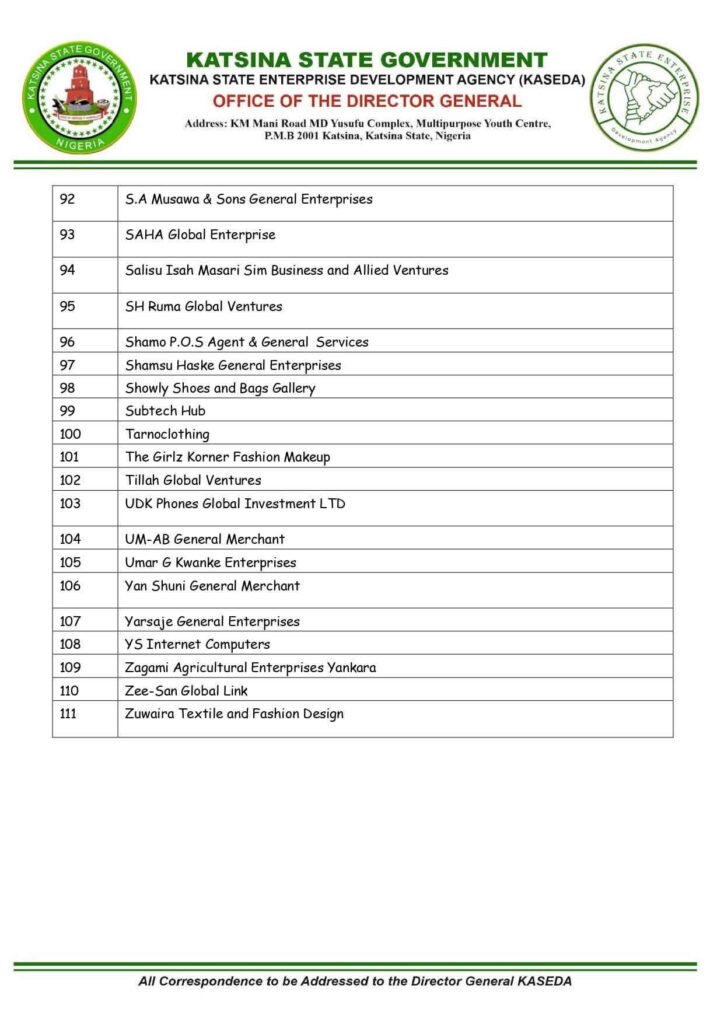
KASEDA has announced that 111 beneficiaries under the KASEDA/Bank of Industry (BOI) Interest-Free Loan Initiative have been successfully verified, with their offer letters now ready for signing ahead of disbursement.

According to the Katsina State Enterprise Development Agency, a total of ₦254 million will be disbursed to the verified beneficiaries to support Micro, Small, and Medium Enterprises (MSMEs) across Katsina State. The agency said the move is aimed at expanding access to finance, encouraging entrepreneurship, and stimulating sustainable economic growth within the state.

“All verified beneficiaries are advised to visit the Bank of Industry from Monday, 2nd February 2026, to sign their offer letters and complete the necessary processes for loan disbursement,” the agency stated.

KASEDA also disclosed that documentation and verification exercises are still ongoing for additional companies captured in the first and second lists earlier published on its official website, assuring applicants that updates will be communicated.

Speaking on the development, the Director General of KASEDA, Dr. Babangida Ruma, reaffirmed the agency’s commitment to supporting small businesses. He said the initiative is designed to ensure MSMEs receive the financial backing needed to expand operations, create jobs, and contribute meaningfully to the state’s economy.

The agency added that the programme is being implemented with the support of His Excellency, Malam Dikko Umaru Radda, PhD, CON, Executive Governor of Katsina State, noting that the administration remains focused on empowering MSMEs and driving economic growth across Katsina State in the state.

NCEVECC Opens Batch Two Recruitment for Rivers State Residents

0

The National Community Ethics and Values Environmental Compliance Corps (NCEVECC) has called on committed residents of Rivers State to apply for Batch Two of its ongoing recruitment exercise. The exercise targets people passionate about service, discipline, ethics, and nation-building. This is a chance to step forward and serve.

Requirements include being a Nigerian citizen aged 18 years and above, physically and mentally fit, and possessing a National Identification Number (NIN) and original certificates. Applicants must have a minimum of FSLC or higher qualification, be of good character with a clean record, and be residents of Rivers State.

Form collection officially ends on February 8, 2026, and applicants should not wait until the last minute. For enquiries, call 08030404986 or 08063646204.

To apply, interested applicants should visit the Office of the Chairman, Traditional Rulers Council, No. 3 Asarama Street, Old GRA, Port Harcourt.

WAEC Announces Date for 2026 CB-WASSCE Private Candidates First Series

0

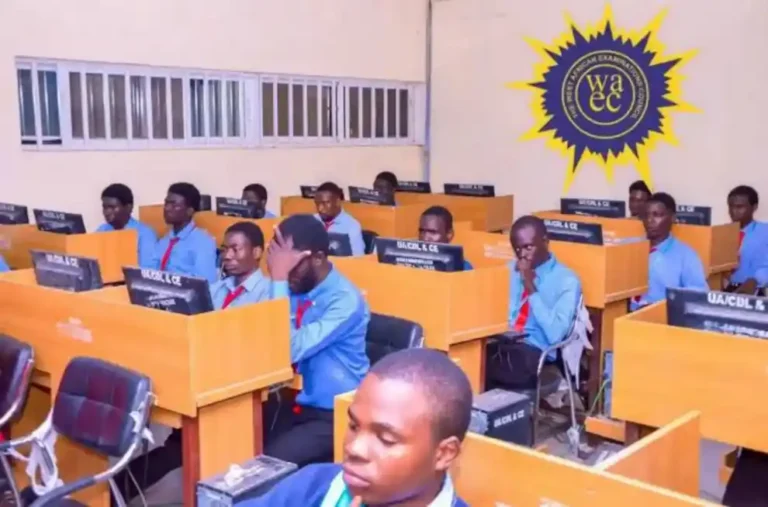
The West African Examinations Council (WAEC) has officially announced the examination dates for the 2026 computer-based West African Senior School Certificate Examination (CB-WASSCE) for private candidates, first series.

WAEC disclosed this in a post on its official X handle, where it released the timetable outlines, subject schedules, dates, and times for the examination, providing private candidates with key details needed for preparation and planning.

“Here’s the timetable for the CB-WASSCE for Private Candidates, 2026, first series https://waecinternational.org/timetable/. We wish you success and a wonderful experience,” the council stated.

The council advised private candidates to carefully review the timetable to confirm their individual examination dates, subjects, and requirements ahead of the assessment.

WAEC also encouraged candidates to strictly adhere to all examination guidelines issued by the council in order to avoid unnecessary issues during the conduct of the test.

According to the announcement, the release of the timetable marks an important stage in preparations for the 2026 examination, allowing candidates and stakeholders to intensify final arrangements.

WAEC confirmed that the CB-WASSCE for private candidates, first series, will commence on January 28 and will be conducted as a computer-based test (CBT).

The council explained that the computer-based format forms part of its efforts to modernise examination processes and test administration nationwide today.

NCDMB Urges Youths to Embrace Skills Training for Self-Reliance

0

The Nigerian Content Development and Monitoring Board (NCDMB) has urged Nigerian youths to take full advantage of its skills and capacity development programmes nationwide to become self-reliant amid a rapidly changing economic environment.

The call was made by Abayomi Bamidele, a director in the Capacity Development Directorate of the NCDMB, at a graduation ceremony held in Lagos on Monday, January 26, 2026, for 250 young participants who completed a three-week high-selling, self-reliance skills training programme.

In his keynote address, Bamidele, who was represented at the event, said the programme exposed participants to diverse areas of skills acquisition and capacity building aimed at improving employability and entrepreneurship among young Nigerians.

He noted that youth development remains a core mandate of the NCDMB and a key priority of the Board’s Executive Secretary, Felix Omatsola Ogbe, stressing that structured capacity building is central to Nigeria’s local content development agenda.

Bamidele encouraged the graduates to apply the knowledge gained from the training to improve their livelihoods, adding that skills acquisition has consistently proven to be a sustainable source of income for individuals and families across the country.

He cautioned beneficiaries against selling off their starter packs, noting that studies have shown that individuals who effectively utilise skills acquired from such programmes can earn more over time than those engaged in traditional white-collar employment.

According to him, an upcoming programme is designed to equip participants with specialised skills that will enhance their employability and competitiveness in Nigeria’s oil and gas sector. He advised interested applicants to visit the NCDMB website for details on participation.

Meanwhile, Funmi Ogbue, ceo and programme coordinator of Jake Riley Academy, which executed the training on behalf of the NCDMB, described the initiative as a major milestone in Nigeria’s local content development efforts.

She said the programme recognises Nigerian youths as future builders of the economy who must be adequately equipped with practical and entrepreneurial skills to play that role effectively in a competitive environment.

Ogbue explained that the 250 participants were selected through a rigorous and competitive process and trained in areas including business development, digital marketing and social media strategies, financial literacy, solar panel installation, textile production, catering and food business, as well as corporate business models.

She also advised the graduates to uphold strong moral values as they venture into the business world, warning that knowledge without ethics could hinder long-term growth and business success.

Speaking after ceremony, beneficiaries Adenike Arewulo and Chinemerem Amadi thanked NCDMB, saying the training enabled self-reliant career paths.

DBN entrepreneurship training programme for Anambra MSMEs with grants

0

The Development Bank of Nigeria has opened the application portal for the 2026 DBN Entrepreneurship Training Programme (ETP) as 3,000 micro, small and medium enterprises in Anambra State are set to benefit from N8.5 million grants and business development support.

This follows the formal engagement of the Anambra State Small Business Agency by the Development Bank of Nigeria for the implementation of the 2026 DBN Entrepreneurship Training Programme, positioning the agency as a partner for the rollout in the state.

ASBA is a state strategic partner for DBN’s flagship annual programme, which is designed to strengthen the capacity, sustainability and bankability of MSMEs across Nigeria.

Introducing the programme to the ASBA team led by its Managing Director and Chief Executive Officer, Clement Chukwuka, during a virtual sensitisation meeting, the DBN programme anchor, Mr Fortune Tamunokuro Granville, said the 2026 edition was structured to expand reach while deepening grassroots impact.

“The DBN Entrepreneurship Training Programme is designed to build the capacity of MSMEs and make them more sustainable and bankable. In 2026, our target is to train over 100,000 MSMEs nationwide by working closely with State Entrepreneurship Development Centres such as ASBA,” Tamunokuro said.

He explained that ASBA is expected to mobilise a minimum of 3,000 MSMEs in Anambra State and host the in-person workshop scheduled for June 2026.

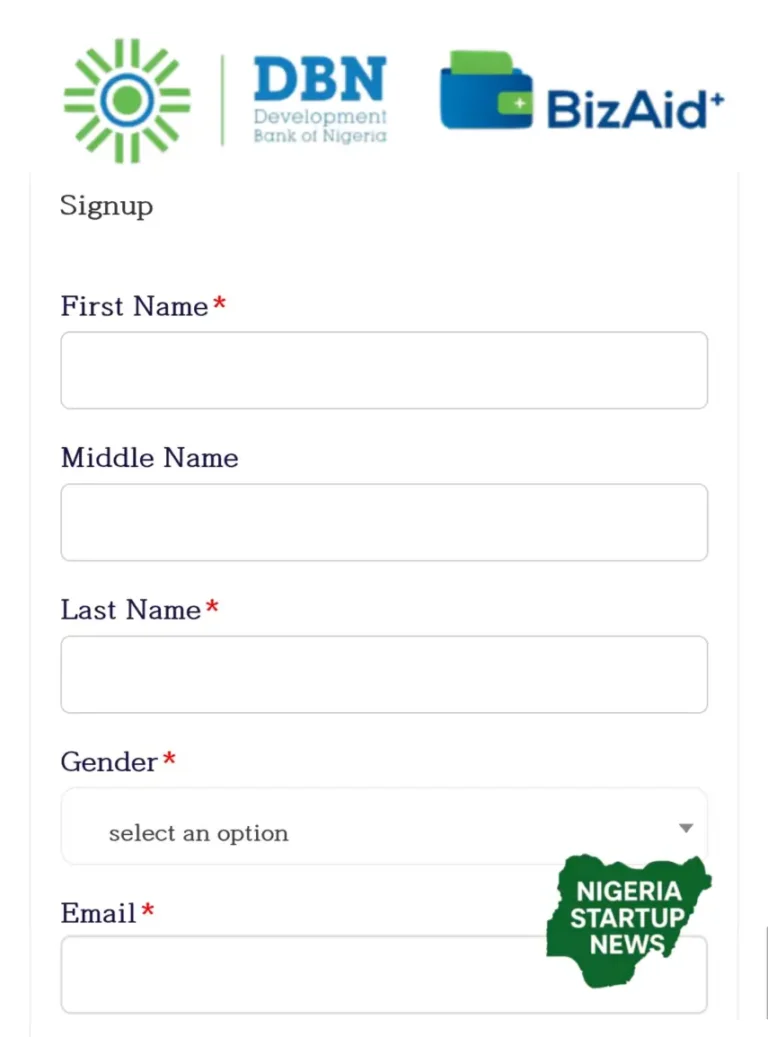
The programme is delivered through the BizAid Learning Management System, which provides entrepreneurs with free, high quality, self-paced online training in business management, financial literacy and sustainability.

“Participants will first go through the online courses, and only those who complete the four mandatory modules and score at least 80 per cent will be eligible for the physical workshop,” Tamunokuro said.

According to him, 50 top performing participants will be selected for the in-person training in Anambra State, from which 15 entrepreneurs will emerge as grant winners after pitching their business ideas.

“At the in-person workshop, participants will work with consultants, refine their business plans and pitch for grants,” he added.

Tamunokuro said the programme offers N8.5 million in grants to be won by the 15 finalists in Anambra State, while all learners on the platform can also compete for a share of N50 million in cash prizes.

The DBN-ETP is open to micro, small and medium business owners seeking growth and improved capacity. DBN noted that grant beneficiaries must present evidence of CAC registration or proof of commencement of business name registration before funds are disbursed.

The DBN–ASBA collaboration underscores efforts to empower MSMEs in Anambra State with skills, networks and financing opportunities required to scale businesses.

To apply, interested Anambra entrepreneurs should register via the official portal at https://learning.devbankng.com/asba.

Tinubu launches $250m empowerment programme for displaced Nigerians

President Bola Tinubu has unveiled the Climate-Resilient Livelihoods Empowerment Programme for Displaced Populations, a 10-year, US$250 million initiative designed to restore livelihoods and empower Nigerians displaced by climate-related disasters.

The President announced the programme in his opening address at a special event on climate-induced mobility held under Nigeria’s chairmanship of the Rabat Process, which brought together global leaders and development partners to examine the links between climate change, migration, security and development.

A statement issued on Wednesday by the Special Adviser on Media and Publicity to the Secretary to the Government of the Federation, Yomi Odunuga, said the President, who was represented by the Secretary to the Government of the Federation, Senator George Akume, explained that the initiative would focus on long-term solutions for people affected by climate shocks.

According to the statement, the Climate-Resilient Livelihoods Empowerment Programme for Displaced Populations, known as CLEP4DPS, will focus on empowering displaced persons through climate-smart agriculture, renewable energy entrepreneurship, climate data and digital employment, green value chains, as well as dedicated leadership tracks for women and youth.

The President said the programme reflects the Federal Government’s shift from short-term emergency responses to long-term, people-centred solutions that strengthen resilience and preserve human dignity.

The statement partly quoted the President as saying, “He also announced the Climate-Resilient Livelihoods Empowerment Programme for Displaced Populations (CLEP4DPS), a 10-year, US$250 million initiative designed to empower displaced persons through climate-smart agriculture, renewable energy entrepreneurship, climate data employment, green value chains, and dedicated women and youth leadership tracks.

“He said the programme is built on the premise that economic empowerment is a critical form of climate adaptation.

“The President further noted that the Federal Government has supported targeted relief, resettlement, and recovery efforts for flood-affected families through coordinated cash and material assistance. He said displaced families are being resettled into planned communities, such as the Resettlement City Project, with access to basic services and livelihood support.”

Tinubu said the CLEP4DPS complements other initiatives under the Renewed Hope Agenda, including the Global Flood Disaster Management Project, which focuses on early warning systems, resilient infrastructure, disaster coordination and community engagement nationwide.

The President described climate change as one of the most significant drivers of human mobility globally, stressing that for Nigeria, climate-induced displacement is a lived reality rather than a distant threat.

He cited the 2022 floods that affected more than 4.4 million people and displaced about 2.4 million persons across over 30 states, noting that recurring floods continue to strain host communities and infrastructure nationwide.

Tinubu also highlighted environmental degradation in the Lake Chad Basin, coastal erosion along Nigeria’s shoreline, and desertification in other regions, which he said have undermined livelihoods and forced communities to migrate in search of survival.

He called for stronger international cooperation, noting that climate-induced mobility is a transnational challenge that no country can tackle alone.

The President reaffirmed Nigeria’s commitment to inclusive partnerships, evidence-based policymaking and sustained dialogue within the Rabat Process.

He expressed appreciation to Switzerland, the European Union, the International Centre for Migration Policy Development and other partners for their support, expressing hope that the engagement would translate into concrete collaboration linking climate action, migration governance and sustainable development.

Nigeria has in recent years faced increasing climate-related disasters, including flooding, desertification and coastal erosion, which have displaced millions of people and disrupted livelihoods across several states.

In response, the Federal Government has been advancing climate adaptation and disaster preparedness initiatives under the Renewed Hope Agenda, while engaging international partners through platforms such as the Rabat Process to address the growing link between climate change, migration and development, affecting vulnerable communities nationwide today across rural and urban areas nationwide continuously.