Home Blog Page 139

FG Issues ₦501bn Power Sector Bond, Achieves Full Subscription

0

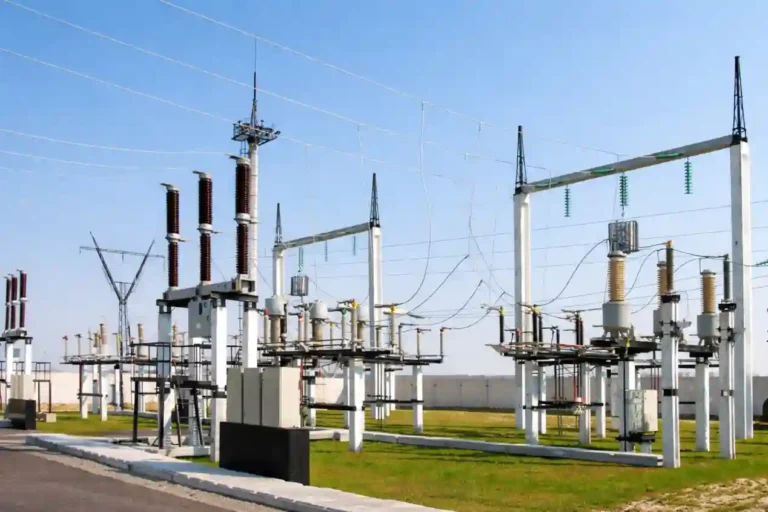
The Federal Government of Nigeria has successfully issued a ₦501 billion inaugural bond under the Presidential Power Sector Debt Reduction Programme (PPSDRP), achieving 100 per cent subscription from pension funds, banks, asset managers and other institutional investors. The development marks a major step towards resolving long-standing legacy debts in the Nigerian Electricity Supply Industry (NESI), restoring liquidity across the value chain and rebuilding investor confidence in the power sector.

The Programme, championed by President Bola Ahmed Tinubu, GCFR, is aimed at addressing payment arrears owed to power generation companies, which for more than a decade constrained liquidity, weakened company balance sheets and discouraged new investments in electricity generation, transmission and distribution. These challenges had continued to affect power supply reliability and limited the sector’s ability to expand capacity.

Speaking at the bond issuance signing ceremony held in Lagos on 27 January 2026, the Special Adviser to the President on Energy, Olu Arowolo Verheijen, said the Programme represents a decisive reset of the electricity market. According to her, the initiative combines debt resolution with broader financial and structural reforms designed to put the sector on a sustainable path.

She explained that the signing followed the successful completion of the Series 1 Power Sector Bond Issuance by NBET Finance Company Plc. The Series 1 issuance closed at ₦501 billion, comprising ₦300 billion raised from the capital markets and ₦201 billion in bonds allotted directly to participating power generation companies. This structure, she noted, reflects strong investor confidence in the Federal Government’s power sector reform agenda.

Under the Programme, verified receivables for electricity supplied between February 2015 and March 2025 are being settled through negotiated agreements with power generation companies. So far, five power generation companies representing fourteen power plants across the country have executed Settlement Agreements with the Nigerian Bulk Electricity Trading Plc (NBET). The companies are First Independent Power Limited (FIPL), Geregu Power Plc, Ibom Power Company Limited, Mabon Limited and Niger Delta Power Holding Company Limited (NDPHC).

The total negotiated settlement amount for these companies stands at ₦827.16 billion, which is to be paid in four phased instalments. Proceeds from the Series 1 bond issuance will be used to fund the first and second instalment payments to participating power generation companies with signed Settlement Agreements. This initial payment phase is estimated at ₦421.42 billion, representing about 50 per cent of the total negotiated settlement amount, and will be made through a combination of cash payments and notes.

Reacting to the development, Mr. Kola Adesina, Group Managing Director of Sahara Power Group, which owns five power plants, said the bond issuance restores confidence needed for new investments. He said, “Capital formation can only come when there is confidence, when you can truly see a line of sight in recovering investments previously made. Because we were being owed so much, it was a bit of a problem for us to put in more money. But last year we took the bull by the horns, based on President Bola Ahmed Tinubu’s commitment in resolving the legacy issues, and I can say that once this process is over, construction will commence immediately on the second phase of our Egbin Power Plant. On behalf of the Generation Companies, I’d like to thank the President for this resolution.”

By clearing historic arrears, the Programme is expected to improve liquidity for power generation companies, strengthen their ability to meet operating and debt obligations, and unlock new investments across the sector. The Federal Government also expects the initiative to support more reliable electricity supply to households and businesses while reinforcing fiscal discipline through validated claims, negotiated settlements and transparent capital market financing.

When fully completed, the Programme is projected to impact 4,483.60MWh/h of electricity generation capacity by Nigerian generation companies. It will effectively finalise settlement of payments for 290,644.84GWhr of electricity billed since February 2015 and provide a strong foundation for new investments in capacity enhancement and expansion. These improvements are expected to benefit companies serving about 12.03 million active registered electricity customers nationwide.

Verheijen acknowledged the leadership of President Bola Ahmed Tinubu in driving the Programme and also recognised the support of the Honourable Minister of Finance and Coordinating Minister of the Economy, Mr. Wale Edun, and the Honourable Minister of Power, Chief Adebayo Adelabu, in making the PPSDRP a reality. She also commended members of the Presidential Power Sector Debt Reduction Committee for their roles in the successful capital raise.

She further acknowledged the contributions of key government authorities and institutions, including the Debt Management Office, the Central Bank of Nigeria, the National Pensions Commission and the Nigerian Revenue Service, for facilitating critical enhancements that supported the bond issuance process.

CardinalStone Partners Limited served as Lead Financial Adviser and Lead Issuing House for the Series 1 Bond Issue, leading a consortium of appointed professional parties. The firm worked closely with the Nigerian Bulk Electricity Trading Plc, which acted as Sponsor on the transaction, and the Office of the Special Adviser on Energy, which led settlement negotiations and engagements with power generation companies.

Verheijen said, “The Federal Government reaffirms its commitment to disciplined implementation of the Programme, and we look forward to the participation of other power generation companies, as part of our broader reforms aimed at building a financially sustainable electricity market that is capable of supporting Nigeria’s long-term economic growth.”
Advertisement

NSIPA to support over 15 million beneficiaries annually by 2027

The National Social Investment Programme Agency (NSIPA) has disclosed plans to support over 15 million beneficiaries annually by 2027 and contribute to lifting 100 million people out of poverty by 2030.

The disclosure was made during a Humanitarian Council Meeting where NSIPA renewed its call for stronger federal and state collaboration and wider multi-stakeholder partnerships to strengthen social protection and accelerate sustainable poverty reduction in Nigeria.

Speaking on behalf of the Acting National Coordinator and Chief Executive Officer of NSIPA, Mr. Hamza Baba, National Programme Manager of the Government Enterprise and Empowerment Programme (GEEP), said progress will depend on a holistic approach that combines federal policy reach with state agility, private sector innovation, and support from development partners and civil society.

“We must move beyond ad-hoc relief and build a holistic social protection system that ensures every Naira is purposeful, transparent, and directed to those who need it most,” Baba said.

According to the agency, NSIPA is promoting a unified approach that reduces duplication, aligns mandates, and harmonizes state laws with the National Social Protection Policy (NSPP). It said this framework is expected to improve coordination and accountability across all levels of government.

NSIPA also disclosed plans to strengthen its flagship interventions, including the National Home-Grown School Feeding Programme (NHGSFP), GEEP, N-Power, Conditional Cash Transfer (CCT), Government to Vulnerable Groups (GVG), and the National Social Safety Nets Coordinating Office (NASSCO).

Key initiatives outlined include establishing State Social Investment Offices (SSIOs), leveraging Local Government structures for community verification and monitoring, piloting joint federal-state financing models, and seeking partnerships with the private sector, development partners, civil society, and traditional institutions.

The agency reiterated its target of supporting over 15 million beneficiaries annually by 2027 and contributing to lifting 100 million people out of poverty by 2030, while inviting stakeholders to join efforts to institutionalize an integrated, accountable, and sustainable social protection system.

Meanwhile, NSIPA is yet to comment on the planned nationwide N-Power protest as beneficiaries raise concerns over payments and delays.

Kaduna Free Mass Transit Helps Workers Save 30%

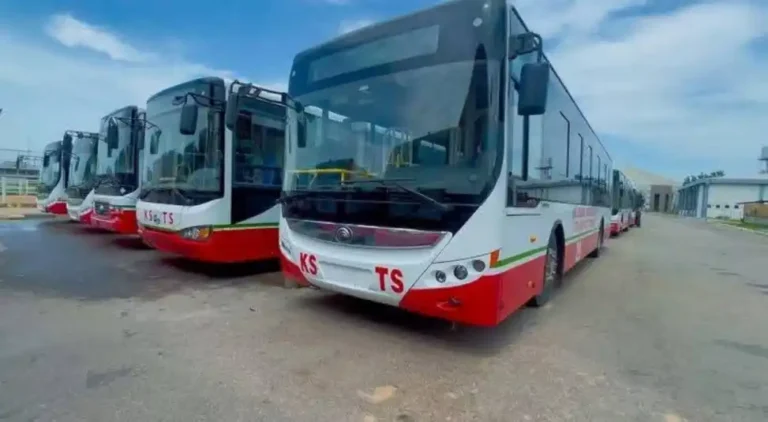
Labour unions in Kaduna State say the state government’s free mass transit scheme has helped workers save up to 30 per cent of their monthly salaries, easing cost-of-living pressures and improving access to workplaces and essential services across the state.

The State Chairman of the Nigeria Labour Congress (NLC), Comrade Ayuba Magaji Suleiman, stated this at the groundbreaking ceremony of the Kaduna Ultra-Modern Interstate Bus Terminal along the Eastern Bypass in Chikun Local Government Area, describing the project as a major milestone in Kaduna’s transport reform agenda.

According to Suleiman, “the free mass transit programme has reduced transportation expenses for workers, allowing them to retain more of their income during difficult economic conditions.”

The terminal, which sits on 20 hectares of land, is expected to become Nigeria’s largest interstate bus facility and will operate as a dual terminal capable of accommodating over 5,000 vehicles.

Project details show that the facility will feature smart traffic management systems, surveillance infrastructure, escalators and elevators, petrol, diesel and CNG stations, as well as a three-star hotel to support travellers.

Speaking at the event, Governor Uba Sani said the project builds on achievements already recorded in the transport sector, including the deployment of 100 Compressed Natural Gas (CNG) buses.

He said the buses moved more than 1.4 million passengers between July and December 2025, saving citizens an estimated ₦1.5 billion in transportation costs.

The governor added that his administration has constructed 200 bus stops across Kaduna State, noting that the Kakuri Bus Terminal is over 90 per cent completed, while the Sabon Tasha Park has reached 50 per cent completion.

Looking ahead, Sani disclosed that by March 2026, the state will launch two light rail lines covering 30 kilometres and 20 kilometres respectively, alongside a 24-kilometre Bus Rapid Transit (BRT) corridor with 30 stations and 120 buses.

He said these interventions have positioned Kaduna as the second-highest ranked state nationally in transport infrastructure development.

FG Launches EduRevamp Mobile Platform for Teacher Training

0

The Federal Ministry of Education on Tuesday announced the launch of EduRevamp, a mobile-based teacher development platform built by Nigerians for use in classrooms across the country. The ministry said the platform is designed to support teachers with digital skills, structured learning, national certification and Continuous Professional Development stipends.

According to the ministry, EduRevamp is aligned with the National Education Sector Reform Initiative Education Quality Assurance agenda and is expected to strengthen teaching quality nationwide. The platform is backed by President Bola Ahmed Tinubu and the First Lady of Nigeria, Senator Oluremi Tinubu, as part of broader efforts to improve learning outcomes.

In a statement welcoming teachers to the programme, the Minister of Education, Tunji Alausa, said EduRevamp was created with teachers’ realities and challenges in mind. “Dear teachers, welcome to the EduRevamp Teacher Capacity Building program. Designed with you in mind, shaped by your realities, your challenges, and the hopes you carry for your learners,” he said.

Alausa noted that teachers play a central role in opening opportunities for learners, even under difficult conditions. “Every day, you step into the classrooms and open doors to possibilities. Even on the toughest days, you show up. That courage and commitment matters,” he stated, adding that the government is committed to supporting teachers in building their capacity.

He explained that digital skills training is a core requirement of the programme, describing technology as essential in modern classrooms. “In today’s classroom, technology is the new language of learning. That’s why the need for digital skills training,” the minister said, noting that the training unlocks access to EduRevamp modules.

According to him, the programme will help teachers blend content, pedagogy and technology through TPAC, connect lessons to students’ lives, expand learning with open educational resources, and use tools such as edutermate and storytelling to improve engagement.

Alausa said the initiative also recognises teacher values, passion and commitment. “This program honors your dedication. It stands as a national affirmation that the strength of our classrooms begins with you,” he said, adding that participation and growth will be celebrated and rewarded.

He further described EduRevamp as a community of practice where teachers can reflect, question, share and grow with colleagues nationwide. “We will build a network that supports you long after the course ends,” he said.

He urged educators to fully engage with the training, saying the journey will progress model by model and reflection by reflection, with government walking alongside participants. “May this training come alive in your classroom, renew your passion, and inspire every learner you teach,” he said across Nigeria today.

Edo Govt to make clean energy affordable for households and SMEs

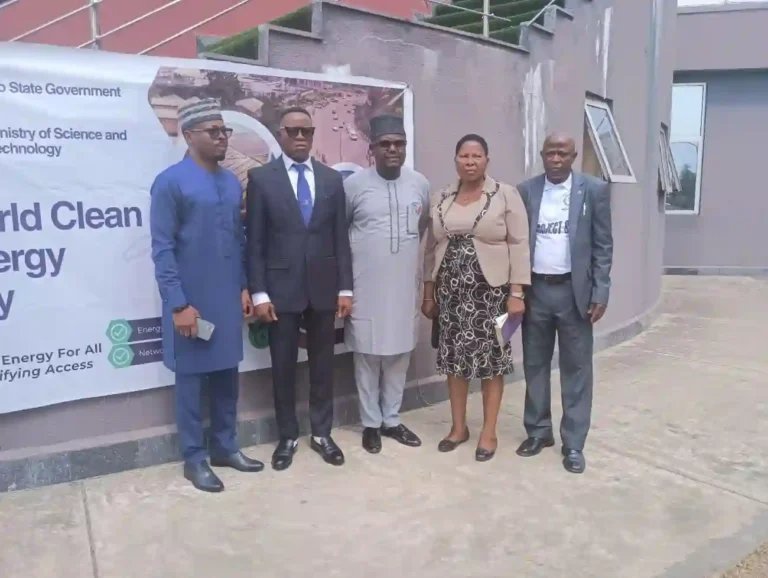
The Edo State Government has said it will make clean energy affordable and accessible empowers households and small and medium-sized enterprises (SMEs) as it joined the rest of the world to mark World Clean Energy Day at the annex of the Edo State Library in Benin City.

The Edo State Commissioner for Science and Technology, Hon. Etin-Osa Ogbeiwi, reaffirmed the commitment of the State Government to promoting clean, affordable, and sustainable energy, describing renewable power as a key driver of development and improved quality of life. He noted that the global observance of World Clean Energy Day draws attention to the importance of renewable energy in protecting the environment.

According to Ogbeiwi, the theme, “Clean Energy for All – Simplifying Access,” underscores the need to make clean energy solutions not only available, but also affordable, accessible, and practical for everyone, especially in developing regions. He explained that the commemoration provides a platform to raise awareness on renewable energy sources such as solar, wind, hydro, and bioenergy, while encouraging governments, the private sector, and communities to reduce reliance on fossil fuels.

The Commissioner emphasized that access to clean energy plays a major role in economic growth, improved healthcare delivery, quality education, and technological advancement. He said reliable and affordable power remains critical to productivity across households, schools, and businesses, particularly small enterprises.

Aligning clean energy initiatives with the Edo State development vision under Sen. Monday Okpebholo’s SHINE Agenda, Ogbeiwi stated that renewable energy is central to sustainable industrial growth, digital transformation, improved social services, and environmental protection. He stressed that simplifying access to clean energy requires removing technical, financial, and policy barriers. According to him, “clean energy for all is not only a global aspiration, but also a shared local responsibility essential to securing a healthier environment and a more prosperous future.”

In a keynote address, Engr. Kelvin Ehimare of K-Tech Energies, while speaking on the theme, highlighted the growing demand for solar power solutions in both urban and rural areas. He noted that unreliable grid power has continued to drive interest in alternative energy sources. According to him, solar microgrids provide a sustainable and scalable option capable of meeting the energy needs of homes, businesses, and public institutions.

Ehimare emphasized the importance of affordability, flexibility, and accessibility in expanding the adoption of solar energy. He explained that different payment and financing plans are being developed to enable more individuals and communities to embrace solar power. Describing solar energy as a critical alternative means of energy production for economic and industrial development, he urged governments to fully harness Nigeria’s abundant solar resources.

Speaking on behalf of stakeholders, the Managing Director of Delwitt Engineering, Engineer Dallington Okoka, commended the Edo State Government for creating an avenue to mark the day and for sustaining initiatives aimed at increasing public awareness. He noted that such platforms enhance access to clean energy solutions and reflect the State Government’s commitment to innovation and adoption of sustainable energy practices.

In attendance were the Commissioner for Power, Hon. Paul Usenbor (Esq); the Commissioner for Water Resources and Sanitation, Hon. Washington Osa Osifo; and the Senior Special Adviser to the Governor on Climate Change and Green Economy, Hon. Collin Tenebe locally

Edo Trains 70 E-Gov Champions on Edo Cloud Platform

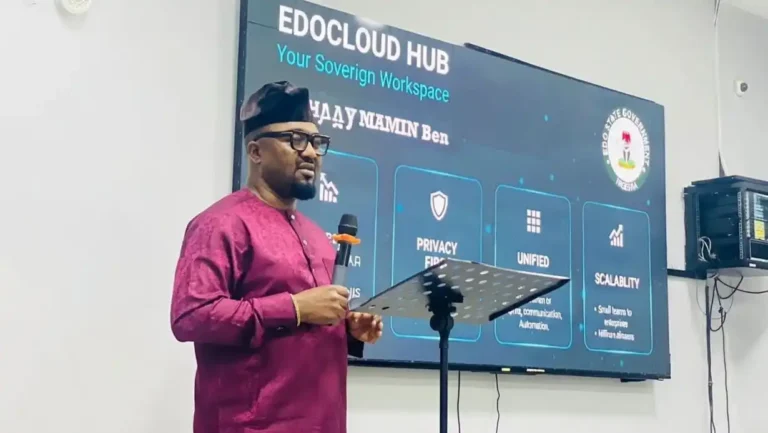
The Edo State Government, through the Office of the Head of Service, has trained over 70 E-Governance Champions on the interface, functionality and deployment strategy of its newly developed, state-owned electronic governance platform known as Edo Cloud.

The one-day intensive workshop, held at the John Odigie-Oyegun Public Service Academy (JOOPSA) in Benin City, brought together E-Gov Champions drawn from various ministries, departments and agencies (MDAs), alongside technical experts and other key stakeholders within the State’s digital governance ecosystem. The sessions exposed participants to the platform’s enhanced features, improved user experience and operational framework, with the objective of repositioning Edo State as a leading sub-national in e-governance.

Declaring the workshop open, the Edo State Head of Service (HOS), Dr. Anthony Okungbowa, described the Edo Cloud Platform as a major milestone in the State’s digital governance journey. He explained that the training was designed to equip E-Gov Champions with the knowledge and skills required to support the seamless deployment of the platform across MDAs, beginning with a phased rollout approach aimed at ensuring stability, efficiency and long-term sustainability.

Dr. Okungbowa clarified that the present administration did not discontinue e-governance in the State, but instead conducted a detailed review of the former system due to fundamental structural challenges. According to him, issues related to intellectual property ownership and restricted backend access made it impossible for the State to exercise full control over its digital infrastructure.

He said the Governor, Sen. Monday Okpebholo, considered it unacceptable for Edo State to “breathe through the nostrils of another,” a situation that led to the decision to develop a home-grown, fully state-owned platform. He noted that the new solution guarantees data sovereignty, full backend access and sustainability over the long term.

Commending the technical team led by Dr. Benjamin Ben for what he described as diligence and professionalism, the HOS said the Edo Cloud Platform is more robust, secure and user-friendly than the previous system. He also acknowledged the critical role previously played by E-Gov Champions in positioning Edo State as one of the first states in Nigeria to operate a paperless public service.

The HOS urged the champions to take ownership of the Edo Cloud project and drive its adoption across MDAs. He stressed that resistance to change often arises from poor communication and limited understanding, and encouraged them to serve as ambassadors of the new system by clearly explaining its benefits and impact on daily work processes.

According to him, the adoption of e-governance will enhance transparency and accountability, improve service delivery, increase citizen participation in governance and significantly reduce paperwork. He added that the initiative would once again position Edo State at the forefront of digital public service administration in the country.

“E-Governance was not stopped by this administration. What the Governor did, which was needful and expedient, was to review things with the former structure. We are very grateful to His Excellency, Sen. Monday Okpebholo, for this more advanced and developed solution,” the HOS said.

In his welcome address, the Permanent Secretary, Ministry of Youth Affairs, Dr. Peter Osagie, described the current phase of the Edo State civil and public service as an era of digital revolution. He said the workshop was deliberately organised to familiarise E-Gov Champions with the new platform, enabling them to effectively cascade knowledge and provide support across MDAs.

“This workshop is about charting a clear path forward and ensuring that we not only return to e-governance but significantly surpass what we achieved in the past,” Dr. Osagie stated.

Providing technical insights into the platform, Dr. Ben explained that the Edo Cloud Platform offers improved total data control, a unified user experience, enhanced scalability and automated workflows. He expressed confidence that users would easily adapt to the platform due to its simplicity and intuitive design.

Dr. Ben said the training was structured to empower E-Gov Champions to independently support and train other staff members within their MDAs, thereby reducing the need for constant technical interventions. He added that the platform has been successfully test-run for several months and is ready for full deployment across the State.

“With what we have done, there will be no need for micro managing. The E-gov champions will provide support for their community and this is the view of His Excellency’s directives, that civil and public servants be able to do their jobs independently,” he said.

Also speaking, the Head of IT Infrastructure and System Engineering at the Edo State Information and Communication Technology Agency (ICTA), Engr. Courage Adaghe, emphasised that the platform is a state-owned design, which guarantees sustainability, security and flexibility. He explained that the modular structure of Edo Cloud allows for continuous updates and expansion by in-house technical teams, ensuring the solution evolves in line with the needs of the service.

“Working as part of the team that designed this solution, I would say that the platform will serve as a one-stop digital solution for public service operations. It was fully built, managed and maintained within Edo State’s technology ecosystem,” Engr. Adaghe said.

One of the participants, the E-Gov Champion representing the Edo State Social Investment Programme Office, Mr. Ogbewe Osaro Anthony, expressed appreciation to the Governor for approving a fully state-owned e-governance platform. He described Edo Cloud as richer in content, more flexible and better suited to public service operations than the previous system, noting that its features would significantly enhance collaboration and productivity across MDAs.

FG to boost innovation and research commercialisation

The federal government, through the National Agency for Science and Engineering Infrastructure (NASENI), and the African University of Science and Technology (AUST), Abuja, have signed a Memorandum of Understanding to strengthen collaboration on innovation, technology development, and the commercialisation of research outputs.

The agreement was signed at NASENI’s headquarters and is aimed at moving research beyond academic publications into practical, real world applications that can support national development and industry needs across sectors.

Speaking at the signing, the Executive Vice Chairman and Chief Executive Officer of NASENI, Khalil Halilu, described the partnership as a step toward fostering institutional collaboration with clear and measurable impact.

In a statement on Monday, NASENI’s Director of Information, New Media and Protocol, Olusegun Ayeoyenikan, said the agency remains committed to partnerships that translate research findings into practical, real world solutions for society.

“NASENI is focused on innovation that targets the right audience and produces tangible outcomes. Our Innovation Hub ensures promising ideas are nurtured, supported, and scaled into usable technologies that contribute to national development,” Halilu said.

He also stressed the importance of collaboration with universities and research institutions to bridge the long standing gap between academia and industry.

“This is your home, and we look forward to doing a lot of collaborations together,” he added.

Responding, AUST President, Peter Onwualu, highlighted the long standing relationship between both institutions, recalling earlier collaborations, postgraduate training programmes, and joint initiatives that benefited NASENI staff and researchers.

Onwualu said the MoU would help address the persistent challenge of limited research commercialisation in Nigeria.

“We are changing the narrative from research done solely for academic promotion to research that ends in products, innovation, and real value,” he said, citing ongoing agro waste conversion projects being implemented under NASENI’s Delta-2 programme.

Both institutions agreed to deepen cooperation, while AUST invited NASENI to its April innovation conference in Abuja.

BOI, NHIA sign MoU to link health insurance with MSME loans

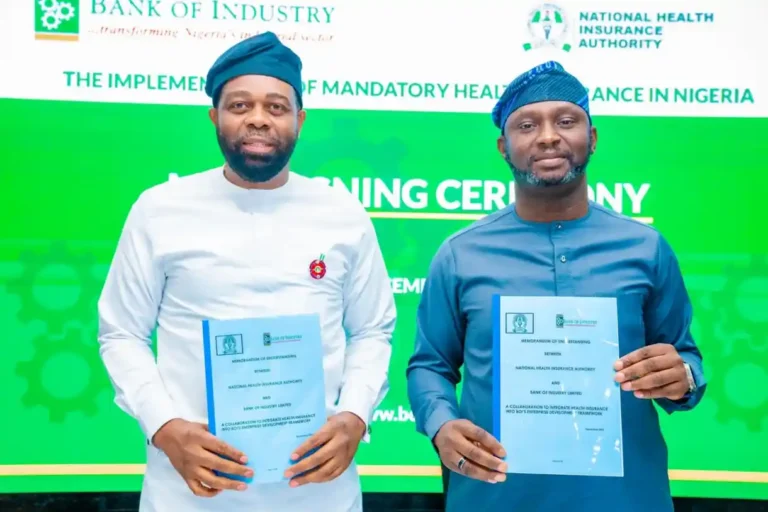
The Bank of Industry (BOI) and the National Health Insurance Authority (NHIA) have signed a Memorandum of Understanding (MoU) to expand access to health insurance for Nigerian businesses, focused on Micro, Small and Medium Enterprises (MSMEs), cooperatives, and entrepreneurs.

The partnership aligns with the Presidential directive mandating health insurance nationwide and is aimed at reducing catastrophic out-of-pocket healthcare expenses among Nigerians. Under the collaboration, health insurance enrolment will be integrated into BOI’s loan application and disbursement processes. This will ensure that BOI-funded beneficiaries and their employees are enrolled in NHIA-approved health insurance schemes.

Speaking at the signing ceremony, the Director-General of NHIA, Kelechi Ohiri, described the partnership as a critical step toward aligning development finance with national health priorities. He said making health insurance a requirement for accessing BOI facilities would improve health outcomes, enhance productivity, and speed up progress toward Universal Health Coverage in Nigeria.

The collaboration is anchored on the provisions of the National Health Insurance Authority Act, 2022, which makes health insurance compulsory for all residents in Nigeria. It also follows President Bola Tinubu’s directive enforcing nationwide implementation of health insurance across Ministries, Departments, and Agencies.

The Managing Director and Chief Executive Officer of BOI, Olasupo Olusi, described the MoU as a strategic response to Nigeria’s evolving healthcare, productivity, and inclusion priorities. He stated that integrating health insurance compliance into BOI’s financing processes translates national policy into practical action within the private sector.

Olusi added that the move strengthens enterprise resilience, supports sustainable economic growth, and protects businesses and workers from financial risks linked to ill health. The partnership also reinforces BOI’s commitment to human capital development, financial inclusion, and economic resilience.

The BOI–NHIA partnership also aligns with efforts by the Bank of Industry to deepen access to inclusive financing for small businesses, including the rollout of targeted funding interventions such as the GLOW Loan.

BOI to Deploy ₦10bn GLOW Loans for Women-Owned MSMEs

0

The Bank of Industry (BOI) is set to deploy up to ₦10 billion in guaranteed financing to women-owned enterprises under the Bank’s Guaranteed Loans for Women (GLOW) Programme. This follows the execution of a Memorandum of Understanding (MoU) with the National Credit Guarantee Company (NCGC), aimed at expanding access to credit for women-led Micro, Small and Medium Enterprises (MSMEs).

The agreement was signed in Abuja and establishes a structured credit-guarantee framework designed to improve financing opportunities for women-owned businesses, while also strengthening BOI’s risk-sharing and portfolio-management capabilities. Under the arrangement, NCGC will provide a 25 percent credit guarantee cover on eligible BOI loans issued under the GLOW Programme.

The guarantee mechanism is expected to reduce lender exposure, improve credit risk distribution, and enable BOI to extend financing to commercially viable women-owned enterprises that have historically faced collateral-related constraints within the formal financial system.

The GLOW Programme targets high-impact sectors aligned with Nigeria’s industrialisation and productivity objectives. These sectors include manufacturing, ICT and digital services, e-commerce, creative industries, healthcare, education, renewable energy, and waste management.

Speaking at the signing ceremony, BOI Managing Director, Dr Olusi, said the programme reflects the Bank’s strategic focus on inclusive financing and portfolio diversification. “This partnership represents a deliberate effort to expand access to finance for women-owned MSMEs while strengthening risk-management outcomes through structured credit-guarantee support,” he stated.

Dr Olusi explained that the GLOW Programme was structured to deliver concessionary financing products tailored specifically to the needs of women entrepreneurs. “With a ₦10 billion fund size, single-digit pricing at seven percent, flexible collateral arrangements, and embedded capacity-building support, GLOW addresses long-standing gender-financing gaps while maintaining prudent credit standards,” he said.

He disclosed that demand for the programme has been significant, noting that more than 33,000 loan applications are currently in progress. According to him, these applications represent an estimated financing value exceeding ₦65 billion. “The level of demand highlights both the scale of women’s participation in enterprise activity and the importance of scalable risk-mitigation frameworks such as this partnership with NCGC,” he added.

Dr Olusi further noted that NCGC’s initial ₦5 billion guarantee envelope enhances BOI’s capacity to grow its MSME loan portfolio, manage risk, and increase outreach to underserved but bankable women-owned enterprises.

Beyond credit provision, the GLOW Programme incorporates non-financial support, including business advisory services, mentorship, and capacity-building initiatives aimed at improving enterprise resilience, governance, and performance. He said the initiative aligns with national priorities on financial inclusion, MSME development, job creation, and the Federal Government’s credit-reform agenda, while acknowledging the role of BOI’s MSME Directorate and Gender Business Group in operationalising the programme.

In his remarks, NCGC Managing Director, Mr Okhaimo, said the company’s guarantee interventions are designed to support responsible credit expansion and strengthen Nigeria’s credit ecosystem. By reducing lender risk and improving credit confidence, he said the framework enables women-owned enterprises to access financing at lower cost and with approval timelines, supporting transformation across key sectors.

BOI, NCDMB to Launch $100m Nigeria Content Equity Fund

The Bank of Industry (BOI) has signed a Memorandum of Understanding (MoU) with the Nigerian Content Development and Monitoring Board (NCDMB) to launch the Nigeria Content Intervention Fund (NCIF) Equity Investment Scheme, a 100 million dollar initiative aimed at providing long term risk capital to high potential Nigerian companies.

The agreement was signed at the Practical Nigeria Content Forum in Yenagoa and officials described it as a significant milestone in advancing local content development and indigenous participation in Nigeria’s oil and gas industry.

According to the partners, the NCIF Equity Investment Scheme is designed to support Nigerian owned companies with scalable business models by providing patient capital that enables business expansion, improved competitiveness, and deeper participation across the oil and gas value chain.

They said the initiative prioritises sustainable growth, value retention within the local economy, and the development of globally competitive Nigerian enterprises operating from Nigeria.

By leveraging BOI’s development finance expertise and NCDMB’s mandate to promote local content, the partnership is expected to reinforce Nigeria’s industrialisation agenda and expand access to equity financing for indigenous players in the oil and gas sector.

The collaboration underscores BOI’s commitment to long term industrial development nationwide.