Home Blog Page 140

FG, NHEF Launch Programme to Boost University Fundraising Capacity

0

The federal government has partnered the Nigerian Higher Education Foundation (NHEF) to strengthen advancement offices in federal tertiary institutions, as part of efforts to diversify university funding sources and improve the quality of education.

The partnership was announced at the launch of the National University Advancement Programme (NUAP) held in Lagos, where the Minister of Education, Dr. Tunji Alausa, said the initiative is designed to equip federal and state universities with the capacity, expertise, and global best practices required to raise funds beyond government subventions.

Alausa said public funding alone can no longer meet the growing needs of tertiary education, noting that universities must adopt sustainable approaches to mobilising additional resources.

According to him, the programme focuses on building effective advancement offices within universities, enabling them to engage alumni, attract philanthropic support, and sustainably manage endowment funds.

“As government funding for tertiary education continues to decline globally, universities must begin to explore additional ways of mobilising resources,” the minister said. “This programme is about guiding institutions on how to build capacity, develop technical expertise, and adopt global standards in fundraising and endowment management.”

He explained that NUAP will provide universities with practical toolkits and technical assistance, including guidance on setting up boards of trustees, investment teams, governance frameworks, and reporting structures to ensure transparency and accountability in the management of endowment funds.

The minister added that many universities already have advancement offices but are yet to optimise their potential, stressing that the current initiative is intended to help institutions quickly adopt effective fundraising models that complement budgetary allocations from government, TETFund, and other funding sources.

Earlier, the Chairman of NHEF, Mr. Wale Adeosun, said sustainable university financing is critical to restoring Nigerian universities to a globally competitive position.

According to Adeosun, the programme is aimed at strengthening institutional advancement structures within universities, enabling them to mobilise private sector support, alumni contributions, and philanthropic funding to complement government resources.

He explained that NHEF was established over 20 years ago following a partnership among leading global foundations, including the MacArthur, Rockefeller, Ford and Packard foundations, to support higher education development in Africa, with Nigeria as a major focus.

“At inception, the goal of NHEF was to help Nigerian universities become self sustaining,” Adeosun said, adding that the MacArthur Foundation initially selected four Nigerian universities to participate in the initiative before additional institutions, including the University of Nigeria and the University of Lagos, were incorporated.

He said NHEF now works with a growing network of universities across the country, focusing on strengthening governance, faculty development, student success, and institutional advancement.

Adeosun noted that the foundation’s work is structured around three core pillars, which include improving university administration and governance, strengthening faculty capacity through exchange programmes with universities in the United States, and supporting students through leadership and scholarship initiatives.

He also emphasised the importance of partnerships, thanking the federal ministry of education, university vice chancellors, governing councils, and international partners for their continued support of the foundation’s mission.

Adeosun expressed optimism that the National University Advancement Programme would help universities develop long term fundraising strategies, build strong alumni relations, and attract sustainable funding for teaching, research, and infrastructure development.

Also speaking at the event, the President and Chief Executive Officer of Africa Finance Corporation (AFC), Mr. Samaila Zubairu, said the organisation is ready to support endowment fundraising and the development of data centres in universities.

Zubairu said the proposed data centres are intended to support teaching, research, and innovation, while preparing students and institutions for the growing influence of Artificial Intelligence and the digital economy.

“The idea is not just fundraising for its own sake, but fundraising that delivers infrastructure critical to the future of education,” he said.

He added that AFC is aligning with the federal government’s drive to advance 10 Nigerian universities by supporting comprehensive fundraising campaigns focused on alumni contributions and long term endowment structures.

According to Zubairu, “the initiative will begin with two pilot universities, with a focus on mobilising financial resources and engaging alumni to contribute directly to the development of their respective institutions.

“We want to create programmes that allow us to actively engage alumni and encourage them to give back through endowments targeted at their universities.”


Advertisement

Ogun Aquaculture Programme Generates ₦9.17bn for Fish Farmers

0

The Ogun State Government has announced that its aquaculture support programme under the Ogun State Economic Transformation Project (OGSTEP) has generated an estimated ₦9.17 billion in revenue for fish farmers across the state, following investments in feed subsidies, infrastructure development and capacity building.

The Commissioner for Agriculture and Food Security, Hon. Bolu Owotomo, disclosed this in Eriwe, Ijebu, while addressing stakeholders during an ongoing inspection of OGSTEP-funded agricultural projects across fish clusters and farm settlements in Ogun State.

According to Owotomo, a total of 4,256 aquaculture farmers have benefited from the intervention, which is designed to boost fish production, reduce operating costs and improve farmers’ incomes. He said the programme was introduced to help farmers manage rising input prices.

He revealed that the state government supplied 195,436 bags of fish feed to farmers at a 30 percent subsidy, representing a direct government investment of ₦2,745,875,800. Owotomo said the subsidy was meant to cushion the impact of rising production costs and enable farmers to remain productive.

The commissioner stated that the intervention resulted in an estimated aquaculture output of 4,256 metric tons of fish, noting that the increase has contributed to food security and reduced dependence on imported fish in the state.

He added that the government also extended support to the poultry subsector, with 1,272 broiler farmers benefiting from the programme. According to him, 77,703 bags of professional and commercial broiler feed were distributed across the state, while other broiler farmers were supported with the production of 500 birds each and linked to off-takers to prevent post-harvest losses.

During the inspection, Owotomo visited the Ijebu Development Initiative for Poverty Reduction at the Eriwe Fish Farm Cluster, which comprises about 600 fish farmers and has been equipped with a modern fish processing facility.

The facility includes a five-ton solar-powered blast freezer, a 10-ton cold room, a 500/900-capacity chest freezer, four 50kg smoking kilns, three 100kg smoking kilns, a 500kg-capacity digital weighing scale, stainless steel work tables, 400-litre holding tanks, as well as rehabilitated fish processing buildings and market shops.

He also inspected ongoing fish processing facilities at the Ikangba Fish Farm Cluster, which has about 1,224 fish farmers, and the Ikenne Fish Farm Cluster, noting that similar infrastructure is being deployed in Ibiade, Ado-Odo and Ilashe fish clusters.

Owotomo stressed that the OGSTEP intervention is statewide and inclusive, aimed at reducing post-harvest losses, promoting value addition and stabilising prices across the aquaculture value chain. “This is a clear demonstration that when government support is well-targeted, agriculture becomes profitable for farmers and beneficial to the economy,” he said.

They noted that the programme aligns with efforts to build resilient communities and support youth participation in agribusiness statewide sustainably.

In separate remarks, other stakeholders commended the initiative, saying the facilities would reduce gluts, curb distress sales, improve incomes, expand production and strengthen local economic development, while reaffirming Governor Dapo Abiodun’s commitment to sustainable agricultural growth in Ogun State.

Rivers launches Safe Schools, Safe Future Project in public schools

0

The Rivers State Government, through the Ministry of Education, has launched the Safe Schools, Safe Future Project, an initiative aimed at strengthening children’s rights and promoting violence-free learning environments across schools in the state.

The project is being implemented by Solution Social Initiative (SSI), a non-governmental organization, with support from the Global Integration Alliance (GIA), a United States–based organization. The collaboration reflects the project’s alignment with international child rights and education protection frameworks.

The initiative was officially flagged off on January 23, 2026, at Community Secondary School, Igwuruta, Port Harcourt. Speaking at the event, the Executive Director of SSI, Prophet Ede Cyril-Edah, described the programme as the first school-based sensitization initiative of its kind in Rivers State, noting that it marked an important milestone in child protection advocacy.

He explained that the launch coincided with the celebration of International Education Day, stressing the need to safeguard learners alongside academic development. According to him, education should go beyond classroom instruction to include the protection of learners’ rights and their overall well-being.

“Empowering students with human rights knowledge equips them to recognize abuse, seek help responsibly, and contribute to safer communities,” Cyril-Edah said.

He further stated that the Safe Schools, Safe Future Project represents SSI’s preventive and rights-based intervention, designed to strengthen child protection awareness across schools in Rivers State and encourage positive behavior among learners.

In his remarks, the Principal of Community Secondary School, Igwuruta, Mr. Amadi Nwosu, commended the initiative, describing it as timely and relevant to current realities in the education sector.

He reaffirmed the school’s commitment to promoting child rights awareness and safeguarding principles, adding that such engagements reinforce the role of schools as spaces of safety, respect, and holistic development for learners.

The event featured interactive sessions with students, exposing them to their fundamental rights to education, dignity, protection, and participation, in line with Nigeria’s Child Rights Act and international standards guidelines.

“There Is Still More for Me to Do,” Says First Lady

0

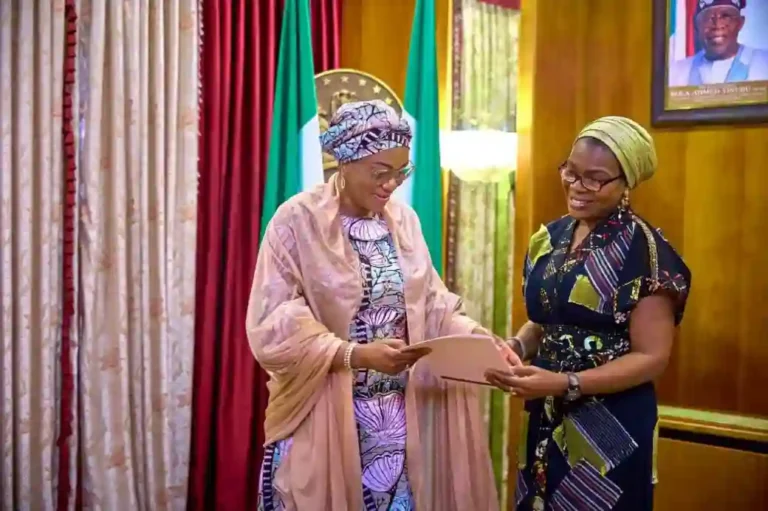
Saying there is still more for her to do, the First Lady of Nigeria, Senator Oluremi Tinubu, has reaffirmed her commitment to service and empowerment as Leadership Newspapers notified her of her selection as Person of the Year.

The notification was delivered during a courtesy visit by the management of Leadership Newspapers, led by its Chairman, Mrs Zainab Nda-Isaiah. The First Lady thanked the organisation for the honour and described it as a renewed call to work harder for Nigerians.

“With this, I am fired up for the year,” she said.

She explained that her approach to public service is guided by faith and purpose. “I am guided by the scripture, which says I can do all things. There is still more for me to do, what I am doing for the common man,” the First Lady stated.

Senator Tinubu also spoke about dedication, noting that hard work remains central to her values. “I like to work hard because my husband is a hard-working man,” she said.

She expressed appreciation that her contributions are being recognised as a woman, noting that she moves through life and leadership at her own pace. According to her, acknowledging that society is often described as a man’s world should encourage women to put in more effort.

“I have never seen man as a challenge, but that makes me know that I have to work three times as the man works to get ahead. I tell girls all the time, you have to be confident, focused and hardworking to get ahead,” she said.

The First Lady also paid tribute to the late founder of the Leadership Group, Mr Sam Nda-Isaiah, describing him as a man of integrity. She thanked members of management for sustaining the organisation. “I also thank all members of management who have been holding your hand up since you assumed the leadership. Thank you all,” she added.

In her remarks, Mrs Zainab Nda-Isaiah said the decision to select the First Lady as Person of the Year 2025 was unanimous among the Board and Management. She said the choice was based on records and the impact of interventions across the country through the RHI since the start of President Bola Ahmed Tinubu’s administration in 2023.

The Senior Vice Chairman of the group, Azu Ishiekwene, said the First Lady has redefined the Office of the First Lady, impacting lives without tribal, religious or political considerations. He added that the award recognises excellence.

The award ceremony is scheduled to hold on 12 February 2026 and marks the 18th edition of the event, out of which President Bola Ahmed Tinubu has received the honour three times.

Akwa Ibom flags off Nigeria for Women Project Processing Mills

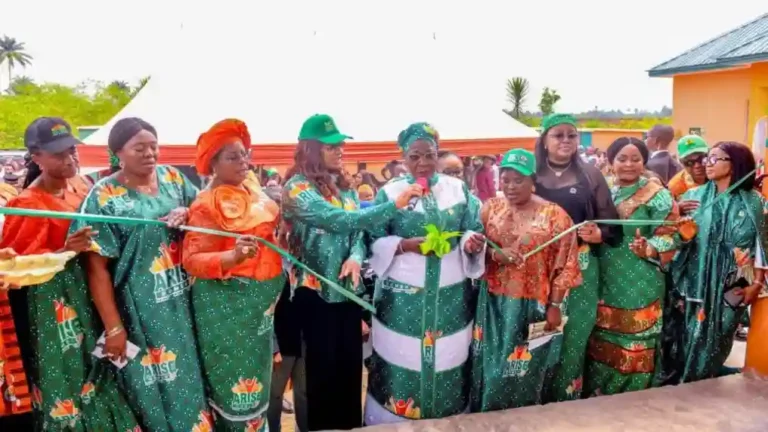
Akwa Ibom State Governor, Pastor Umo Eno, PhD, has commissioned the Nigeria for Women Project (NFWP) Livelihood Collectives Processing Mills at Oku Abak in Abak Local Government Area, as part of efforts to deepen grassroots development and promote women’s economic empowerment in the state.

The commissioning formed part of activities to flag off a statewide Women Sensitization Tour on Civic Responsibilities. Governor Eno was represented at the event by his deputy, Senator Akon Eyakenyi, who said the project aligns with the administration’s bottom-up development agenda that focuses on rural communities and vulnerable groups.

Speaking during the ceremony, Senator Eyakenyi said the governor remains committed to policies that lift women out of poverty and give them sustainable means of livelihood. She described the processing mill as a practical example of governance that targets the needs of people at the grassroots.

“This project reflects the heart of the governor for inclusive growth. Economic empowerment of women is not just a promise but a core pillar of his governance philosophy,” she said.

The deputy governor, accompanied by the Coordinator of the Office of the First Lady, Lady Helen Obareki, and the Commissioner for Women Affairs and Social Welfare, Mrs Inibehe Silas, began the sensitization tour with visits to Abak and Ikot Ekpene local government areas.

The oil processing plant commissioned on Monday was executed in collaboration with the World Bank, in line with Governor Eno’s poverty alleviation and women empowerment initiative. The project is designed to provide women with shared production facilities that can generate steady income and support household livelihoods.

Senator Eyakenyi disclosed that Abak Local Government Area now hosts 11 processing mills spread across all wards. According to her, each mill is capable of producing about eight drums daily, making the initiative commercially viable.

She added that the products already have an export market, which places the venture on a sustainable path. “This is not a short-term intervention. The products have ready markets beyond our borders, and that guarantees income for the women,” she said.

Governor Eno, through his deputy, also announced that the state government has released ₦890 million as start-up capital to women collectives involved in the project. He further disclosed that an additional ₦450 million would be released for the immediate upscaling of the project across other local government areas.

On security and infrastructure, Senator Eyakenyi pledged government support to protect the facility. She said security personnel would be placed on payroll to ensure day and night surveillance, and promised to relay requests for access roads and lighting to the governor.

Earlier, the Coordinator of the Office of the First Lady, Mrs Helen Obareki, described the processing mill as a laudable initiative conceived by the First Lady, Pastor Mrs Patience Eno, to reduce hardship among women at the grassroots.

She thanked Governor Eno for being gender-friendly, noting that his support for women goes beyond speeches. “The governor has shown that gender inclusion is not just about words but about concrete actions that improve lives,” she said.

Mrs Obareki also commended the Nigeria for Women Project for ensuring the successful completion of the initiative, saying the project demonstrates what can be achieved when government and development partners work together.

In a welcome address, the Chairman of Abak Local Government Area, Mrs Ime Effiong Charles, expressed appreciation to the state government and its development partners for siting the project in the area. She said the processing mill would significantly improve the livelihoods of women and stimulate economic activities within the community.

Delivering a technical explanation of the project, Barrister Ofonime Etuknwa said the processing mill is collectively owned by 200 women organised into livelihood collectives. She explained that the ownership structure promotes accountability, shared responsibility and long-term sustainability.

“The women are not employees here. They are owners. This model ensures transparency, shared benefits and positions them for long-term economic independence,” she said.

Also speaking, the Village Head of Oku Abak, Obong Okokon Udo, JP, said the community embraced the initiative wholeheartedly, noting that land belonging to three communities was freely donated for the project.

He formally handed the facility over to God and prayed for its sustainability and positive impact on the lives of women and the wider community.

In her vote of thanks, Mrs Comfort Etim, who represented the women collectives, expressed gratitude to all stakeholders and partners for their support. She appealed for the construction of an access road and the provision of electricity, lighting and security around the premises to enhance smooth operations.

During a rally held in Abak as part of the sensitization tour, the deputy governor called on women across the state to take ownership of their civic responsibilities, especially voter registration and participation in elections.

Senator Eyakenyi said she was speaking not only in her official capacity but also on behalf of the governor, whom she described as a leader who values the strength and contributions of women in Akwa Ibom State.

She noted that the governor recognises the numerical strength of women and has continued to demonstrate this through deliberate inclusion in governance. She cited appointments of women as commissioners, council chairmen, ward supervisors and in other strategic positions.

The deputy governor disclosed that the sensitization tour, which began in Abak Local Government Area, is aimed at mobilising women to register with the Independent National Electoral Commission, obtain their Permanent Voter Cards and be prepared to vote on election day.

She urged women to also register with their respective local government councils and reminded them that she now belongs to the ruling All Progressives Congress, unlike in previous elections.

She further charged women to support and vote for President Bola Ahmed Tinubu, Senate President Godswill Akpabio and Governor Pastor Umo Eno in future elections.

Earlier, the Coordinator of the Office of the First Lady, Lady Helen Eno Obareki, thanked the women of Abak for their consistent support for the governor over the years. She stressed that voting is the right of every eligible woman and urged them to continue spreading the message of support for Governor Eno, Senator Akpabio and President Tinubu at the grassroots.

In a keynote address, the Commissioner for Women Affairs and Social Welfare, Hon. Inibehe Silas, said the governor had directed her ministry to sensitise women across the state on their civic duties, starting with voter registration.

She encouraged women, especially mothers, to ensure that their daughters from the age of 18 obtain their Permanent Voter Cards, stressing that political participation is central to empowerment.

She also urged women to join cooperative societies to improve their access to government programmes and economic opportunities.

The Chairman of Abak Local Government Area, in a separate welcome address, expressed happiness at hosting the sensitization programme and assured the state government of the continued support of Abak women and youths for people-focused policies.

The APC Women Leader, Mrs Awaudo Uko, encouraged women to formally register with the party and collect their membership cards to strengthen their political relevance.

Similarly, Mrs Maureen Umanah, wife of the Commissioner for Information, said the presence of the First Lady’s team showed that serious grassroots mobilisation had commenced. She pledged to move around all wards to ensure women are properly registered and prepared ahead of the 2027 general elections.

The Commissioner for Information, Hon. Aniekan Umanah, said the governor deliberately gathered women to ensure they understand the importance of obtaining Permanent Voter Cards. He said this would enable them to participate actively in the electoral process and support President Tinubu, Senator Akpabio and Governor Eno.

The event attracted women from across Abak Local Government Area and featured sessions focused on political participation, empowerment and grassroots mobilisation.

NELFUND Explains Delay in LAUTECH Loan Disbursement

0

The Nigerian Education Loan Fund, NELFUND, has issued an update clarifying the status of loan disbursements to Ladoke Akintola University of Technology, LAUTECH, stating that payment to the institution has not yet been concluded due to pending institutional processes required under the Education Loan Scheme.

In a statement released on Monday and signed by the Director of Strategic Communications, Oseyemi Oluwatuyi, the Fund explained that engagements are ongoing with the management of LAUTECH, led by the Vice-Chancellor, Professor Rasak Olatunde Rom Kalilu, to resolve the outstanding issues and complete the disbursement process as soon as possible.

According to NELFUND, disbursements to institutions are only executed after the completion of institution-specific validation and reconciliation procedures, which were not finalised in the case of LAUTECH during the last disbursement cycle.

The statement said, “In the case of LAUTECH, these processes were not concluded at the time of the last disbursement cycle. However, the Fund confirms that engagements with the University are ongoing, with a view to resolving the outstanding issues and effecting payment as soon as the required steps are completed.”

NELFUND also addressed concerns around examinations, stressing that students should not be affected by the delay. “In the interim, NELFUND emphasises that 12,733 verified LAUTECH students under the scheme should be allowed to sit for their examinations, as the Fund remains fully committed to settling its obligations to the institution once the process is concluded. Students and parents are advised to remain calm, as no beneficiary will be disadvantaged,” the statement added.

In a related development, the Fund confirmed the successful disbursement of education loan funds to the University of Benin, UNIBEN, for eligible student beneficiaries under the scheme.

NELFUND disclosed that the confirmation followed an official acknowledgement letter from the University, signed by its Vice-Chancellor, Professor Edoba Bright Omoregie (SAN), confirming receipt of two additional tranches of disbursements covering 2,673 students and amounting to a total of ₦230,599,250.

“The funds were received in January 2026 and have been duly acknowledged by the University,” the statement said, adding that the clarification became necessary following the circulation of a purported repayment circular.

According to NELFUND, the University of Benin has formally disowned the circular, confirming that it did not originate from the institution and that no repayment guideline has been issued.

“NELFUND reiterates that funds have already been paid directly to UNIBEN, and as such, no student is required to make any payment in connection with the loan scheme at this time. Neither NELFUND nor the Federal Government has authorised any individual, group, or institution to request payments from students or beneficiaries,” the statement said.

The Fund reaffirmed its commitment to transparency, accountability, and collaboration with institutions to ensure eligible Nigerian students benefit fully from the Education Loan Scheme.

Katsina Gov seeks Poland partnership across agriculture, education, others

0

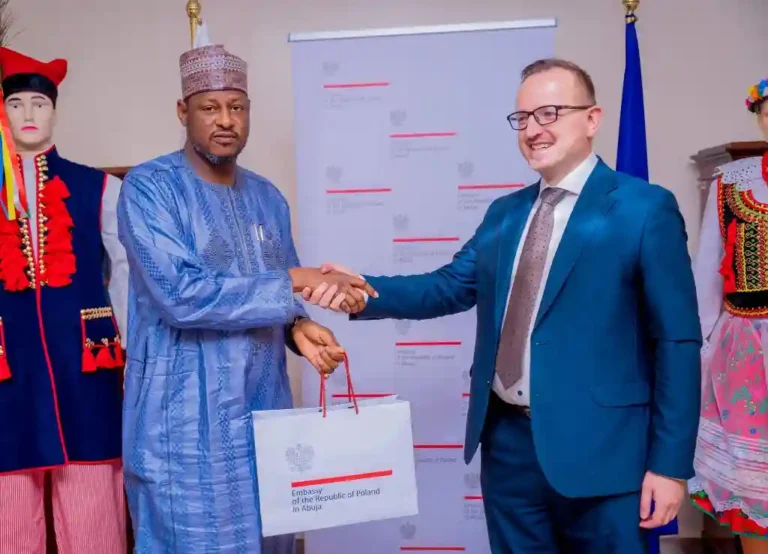
Katsina State Governor, Malam Dikko Umaru Radda, has reaffirmed the readiness of the Katsina State Government to build strong, strategic and mutually beneficial partnerships with the Republic of Poland across several critical sectors, including agriculture, livestock, security, education, mining, technology, culture and investment. The Governor made this position known during a high-level engagement with the Ambassador of the Republic of Poland to the Federal Republic of Nigeria, Mr. Michał Cygan, during his official visit to the Polish Embassy in Abuja.

Governor Radda expressed appreciation to the Polish Embassy for what he described as a cordial relationship and the opportunity to deepen cooperation between Katsina State and Poland. He stressed that the state is determined to move beyond expressions of goodwill and shift toward concrete partnerships driven by institutions and the private sector, with clear benefits for both sides.

“Katsina State is an agrarian state, with over 90 per cent of our people engaged in agriculture and the agricultural value chain, mostly as smallholder farmers. We have completed a comprehensive baseline survey of more than 440,000 farmers, capturing their data, land size and location. This database is guiding our planning, targeting of interventions and efforts to improve productivity,” the Governor stated.

He explained that while the state government is investing in mechanisation and the provision of farm inputs, there is still a strong need for support in improved seed technology, seed enhancement, post-harvest handling, storage and value addition. According to him, these areas are critical to unlocking the full potential of the state’s agricultural sector. He listed major crops cultivated in Katsina State to include maize, millet, wheat, rice, groundnut, cotton, sesame, hibiscus, soybean and others.

“Low productivity is largely due to poor seed quality and weak post-harvest systems, which lead to significant losses. With improved seeds, modern processing, storage and strong value-chain development, yields can rise sharply and post-harvest losses can be drastically reduced,” Governor Radda noted.

Speaking on livestock development, the Governor disclosed that Katsina State is in the process of establishing a modern meat processing plant and adopting global best practices in feedlot and abattoir operations. He said this follows recent exposure to large-scale livestock facilities abroad that are capable of processing up to 2,000 cattle per day.

“These interventions in agro-processing and value addition are aimed at revamping our economy, creating jobs, reducing poverty and strengthening food security,” he added.

In the solid minerals sector, Governor Radda revealed that Katsina State has significant mineral deposits and has already engaged a German firm, Geoscan, which has completed comprehensive geotechnical and geological surveys across parts of the state. He said the state also holds relevant mining licences and that detailed reports from the surveys will be shared with prospective partners to guide investment decisions and open new areas for collaboration.

On security, the Governor highlighted the impact of the Community Watch Corps, which he said has been locally recruited, trained and equipped to support security efforts at the grassroots. According to him, the initiative has strengthened intelligence gathering and community-based security responses. He added that collaboration with conventional security agencies, supported by improved equipment and logistics, has led to a significant reduction in insecurity across Katsina State.

“We have recorded remarkable progress, and we are also preparing for the future, including the evolving framework for state policing, with emphasis on modern equipment, drones, surveillance technology and rapid response capabilities,” he said.

In the education sector, Governor Radda recalled existing partnerships with Egypt and China, under which Katsina students are currently studying medicine, artificial intelligence and biotechnology through scholarship arrangements. He expressed the state’s readiness to establish similar cooperation with Polish universities through exchange programmes, joint research initiatives, staff capacity building and institutional linkages.

The Governor also appreciated Poland’s participation in Katsina’s cultural activities, particularly the Durbar Festival, describing the display of Polish traditional attire during the event as a symbol of cultural exchange and shared values between the two sides.

Governor Radda welcomed the proposal for the establishment of a joint technical committee to follow up on the discussions held during the engagement. He said the committee would help identify concrete areas of cooperation, coordinate engagements and facilitate visits by investors, universities and technical institutions from both Katsina State and Poland.

“Our doors are open. Katsina State is ready to partner with Poland in security, education, agriculture, livestock, mining, technology, culture and investment. We look forward to translating today’s engagements into practical, sustainable and mutually beneficial outcomes,” the Governor affirmed.

Earlier, the Polish Ambassador, Mr. Michał Cygan, commended the speed with which the engagement was arranged, describing it as a clear shift from dialogue to action. He recalled his earlier visit to Katsina State during the Durbar Festival, which he said deepened his interest in the state and strengthened his resolve to explore concrete areas of cooperation.

The Ambassador said Poland has strong capabilities in security, education, agriculture, energy, information technology, cyber security, mining, railways, space technology, pharmaceuticals, defence equipment and food production. He added that Poland is a diversified economy valued at over one trillion dollars, with a population of about 40 million people.

Mr. Cygan identified security and education as immediate priority areas for collaboration and expressed interest in understanding Nigeria’s evolving security architecture, including the prospects of state policing, to ensure effective and well-aligned partnerships. He disclosed plans to engage Polish and European business leaders and export agencies with a view to organising a structured delegation of investors and institutions to Katsina State.

He also pledged to facilitate a business roundtable that will bring together Katsina and Polish business communities, chambers of commerce, universities and security institutions to establish direct working contacts and translate discussions into concrete projects. “The key outcome of today’s meeting is the establishment of practical cooperation mechanisms that will link our institutions, private sectors and people for mutually beneficial and sustainable development,” the Ambassador stated.

Those in attendance at the meeting included the Chief of Staff to the Governor, Alhaji Abdulkadir Mamman Nasir; the Principal Private Secretary, Abdullahi Aliyu Turaji; Alhaji Shamsu Sule, Board Member of the North West Development Commission; Ambassador Hussaini Coomassie; and Hajiya Hadiza Maikudi, Special Adviser on Intergovernmental and Development Partners. Also present were Umar Usman Machika, Ambassador of the United Nations State of Cherokee, as well as the Deputy Head of Mission and the First Secretary of the Polish Embassy.

FG to Launch Learning Fund, WYFEI Nigeria at ASIS 2026

0

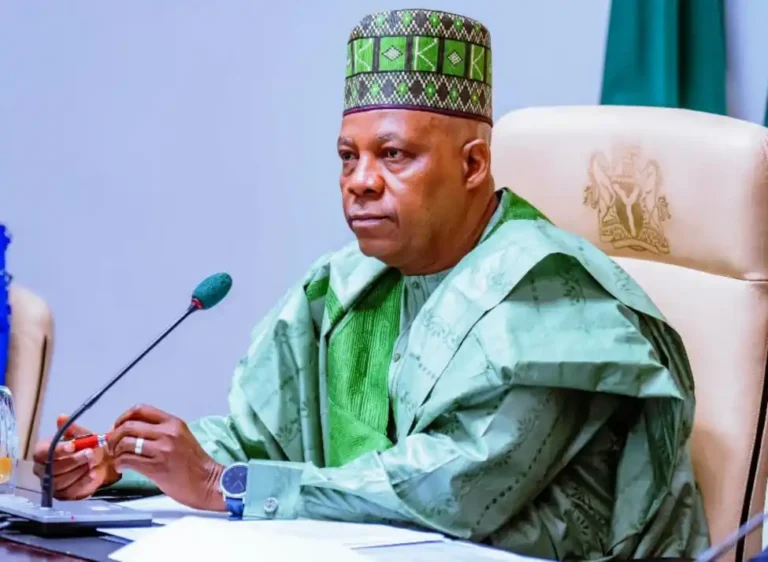
The federal government, through Vice-President Kashim Shettima, in collaboration with Sterling One Foundation, the United Nations System and other ASIS partners, is set to inaugurate a new learning fund and empowerment initiative aimed at unlocking the potential of Nigerian children, women and youths.

The inauguration is scheduled to hold on Wednesday at the State House Conference Centre, Abuja.

The development was disclosed in a statement issued on Monday by the Senior Special Assistant to the President on Media and Communications, Office of the Vice President, Stanley Nkwocha.

According to Nkwocha, “the initiative, convened by the Office of the Vice President in collaboration with Sterling One Foundation, the United Nations System and other ASIS partners, will form part of the outcomes of the Africa Social Impact Summit (ASIS) 2026 High-Level Policy Engagement.”

He added that “also to be launched on Wednesday is the Women and Youth Financial and Economic Inclusion (WYFEI) Nigeria, the country’s flagship platform for advancing women and youth economic empowerment through compact-based delivery, co-investment frameworks and performance accountability.”

Nkwocha further explained that “this will make Nigeria the implementation platform of the African Union’s WYFEI programme,” noting that “WYFEI will also be launched in other countries after Nigeria.”

Speaking ahead of the engagement, Vice-President Shettima said Nigeria was positioned for a prosperity-filled future through sustained and effective mobilisation of funding, support and expertise from both international and local partners.

“Nigeria’s future prosperity depends on how effectively we mobilise the private sector, development partners and public institutions around shared national priorities,” Shettima said.

He described the engagement as a strategic move, adding that “this engagement marks a critical step toward delivery-driven partnerships that unlock the full potential of our women and youth, strengthen human capital and accelerate inclusive growth.”

On her part, the Chief Executive Officer of Sterling One Foundation, Mrs Olapeju Ibekwe, said the ASIS 2026 High-Level Policy Engagement represents a pivotal shift from conversation to national execution.

Ibekwe said the high-level meeting would deliberately align policy, innovation and financing frameworks that enable solutions to scale, delivering real impact.

Apply: Enugu SUBEB vendor school feeding and cleaning services

0

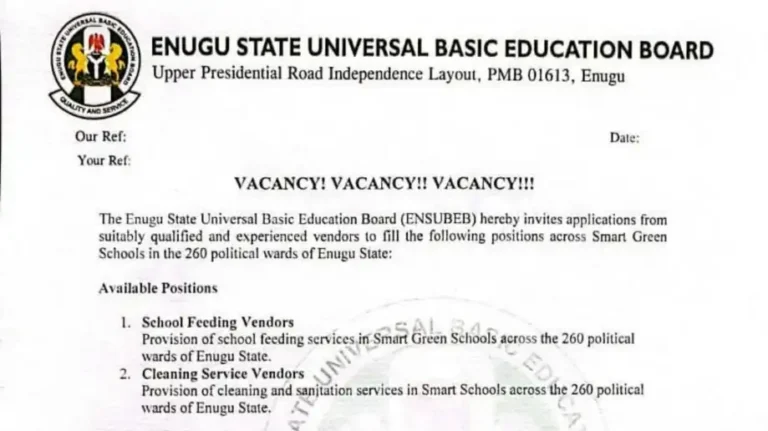
The Enugu State Universal Basic Education Board (ENSUBEB) has announced a call for applications from qualified and experienced vendors to provide services in Smart Green Schools across the 260 political wards of Enugu State. The vacancy exercise is open to vendors interested in school feeding and cleaning services.

Available positions include School Feeding Vendors, who will handle school feeding services in Smart Green Schools across the state, and Cleaning Service Vendors, responsible for cleaning and sanitation services in the schools. ENSUBEB stated that the engagement will cover all 260 political wards.

The board listed general requirements for all vendors, including “relevant experience in similar services” and the “ability to operate within assigned political wards”. It also stressed compliance with ENSUBEB/SUBEB guidelines and warned that “one application only” is allowed, noting that multiple submissions will be disqualified. Applicants “must be indigene and reside in that ward where the Smart School is cited”.

For School Feeding Vendors, applicants must have experience in school feeding or catering services, provide medical fitness clearance for food-handling staff, and show capacity to deliver safe, hygienic, and nutritious meals.

Cleaning Service Vendors are required to have experience in cleaning or Sanitorial services, trained personnel, cleaning equipment, and the ability to maintain high hygiene and sanitation standards.

Interviews for shortlisted vendors will hold on Thursday 5th February, 2026, at 10:00 a.m. at the ENSUBEB Headquarters, Enugu.

To apply, interested vendors are to address applications to the Executive Chairman and submit them to the office or via ensubebofficial@outlook.com on or before 30th January, 2026. Only shortlisted vendors will be invited.

Sahara Group Foundation Commissions 17th Recycling Hub

Sahara Group Foundation, the corporate social impact arm of Sahara Group, has commissioned its 17th Sahara Go Recycling Hub in Ibeju-Lekki, Lagos State, strengthening efforts around sustainable waste management, environmental protection, and community empowerment in Nigeria.

The foundation said in a statement issued yesterday that the hub supports a circular economy by diverting recyclable waste from landfills, improving resource recovery, and creating income opportunities for households through waste-to-wealth initiatives.

According to the statement, the newly commissioned facility expands the Foundation’s recycling footprint across Lagos, while extending access to structured, community-led recycling solutions in urban communities.

Located in Ibeju-Lekki, the hub is designed to promote responsible waste disposal and allow residents to earn value from recyclable materials brought to the centre.

The statement noted that the facility is the second Sahara Go Recycling Hub to feature a solar-powered Reverse Vending Machine, reflecting the Foundation’s focus on clean energy and innovation at the community level.

“The Reverse Vending Machine allows residents to easily deposit recyclable materials and receive instant rewards, reinforcing positive environmental behaviour,” the statement said.

Speaking at the commissioning, the Director of Sahara Group Foundation, Chidilim Menakaya, said the initiative demonstrates the organisation’s commitment to people-focused solutions.

“The Sahara Go Recycling Hub in Ibeju-Lekki is more than a recycling point; it is a platform for dignity, livelihoods, and environmental responsibility. By bringing structured recycling closer to communities, we are empowering residents to take part in protecting their environment while creating economic value,” she said.

In his remarks, the Executive Chairman of Ibeju-Lekki Local Government, Olowa Abdullahi Sesan, highlighted the importance of the recycling hub to residents, noting its strategic location within the community and its potential to improve environmental practices.