Home Blog Page 150

World Bank approves $50m solar agriculture project for Nigeria, others

0

The World Bank has approved 50 million dollars in funding for a solar-powered agricultural expansion project that will be implemented in Nigeria and five other African countries, according to programme updates involving its development partners.

The project targets long-standing energy and storage gaps that affect agriculture across the region. In Nigeria, agriculture employs more than a third of the workforce, yet inefficiencies linked to poor electricity access, weak storage systems, and limited processing tools continue to reduce farmers’ incomes and disrupt food supply.

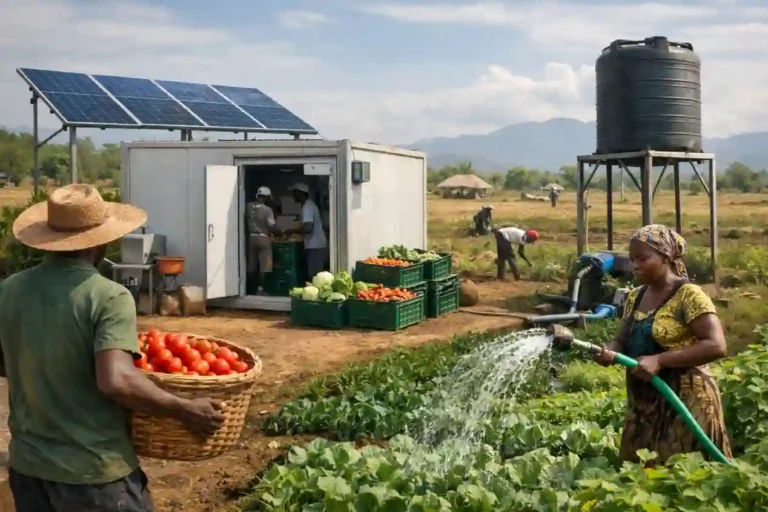
A Bloomberg report said the programme will boost productivity, reduce post-harvest losses, and expand access to clean energy solutions for farmers and small agribusinesses. The funding will be used to deploy solar-powered cold rooms, refrigerators, water pumps, and grain mills across Kenya, Nigeria, Ethiopia, Sierra Leone, Uganda, and the Democratic Republic of Congo.

Implementation of the project will be led by Clasp, a Washington DC-based non-profit organisation that focuses on energy efficiency and clean energy access in emerging markets. The expansion of PUFF-backed solutions is expected to strengthen Nigeria’s agricultural value chain by addressing losses caused by inadequate storage, unreliable power supply, and limited access to modern equipment.

The initiative has received strong backing from development partners, with officials indicating that the programme could grow further as implementation advances at the country level. The Rockefeller Foundation has already committed 12 million dollars to the scheme and has signalled that additional resources may be deployed over time.

“There is always the ability to scale that up,” said Rajiv Shah, President of the Rockefeller Foundation, on January 15 during a visit to a solar-powered cold storage facility operated by SokoFresh in Nairobi. “There’ll be more resources country by country as well,” Shah added.

Speaking during a separate visit to a farm facility using solar-powered cold rooms for export-bound produce, Shah said, “We finance the innovations, the new projects and the new ideas that governments, the World Bank and others can then take to scale.”

The financing is being channelled through the Productive Use Financing Facility, PUFF, which operates under Mission 300, a flagship programme backed by the World Bank and the African Development Bank. Mission 300 aims to mobilise tens of billions of dollars to provide electricity access to 300 million Africans by 2030.

Sub-Saharan Africa remains the epicentre of global energy poverty, accounting for more than 80 per cent of the world’s population without access to electricity. An estimated 600 million people in the region still live without reliable power, limiting economic growth and productivity.

PUFF is designed to close the affordability gap by providing grants, subsidies, and technical assistance to suppliers and distributors of solar-powered equipment. Between 2022 and 2024, PUFF completed a two-year pilot phase, supporting 24 businesses across the six participating countries. The programme is now transitioning into full-scale deployment with new World Bank financing. Officials said rollout timelines will vary based on readiness levels.

Read also: EU allocates €557m Aid to Africa, North-West Nigeria included

Advertisement

EU allocates €557m Aid to Africa, North-West Nigeria included

The European Union on Wednesday announced a grant of €557 million in humanitarian aid to African countries for 2026, placing Nigeria’s North-West region among key areas of focus. The amount, which excludes a separate €14.6 million allocated to North Africa, is part of an initial €1.9 billion humanitarian aid budget unveiled by the European Commission for the year.

The funding announcement comes amid worsening global humanitarian conditions, with an estimated 239 million people worldwide currently in need of assistance. This situation is unfolding at a time when several major international donors are reducing their funding, creating wider gaps between humanitarian needs and available resources. The European Union said its early commitment for 2026 is intended to respond to this growing pressure and sustain support for the most vulnerable populations.

European Commissioner for Equality, Preparedness and Crisis Management, Hadja Lahbib, is bringing the EU’s commitment to Davos, where she is engaging global leaders on ways to mobilise additional resources. The EU said her presence at the global economic forum reflects efforts to attract private sector finance and innovative solutions that can complement public funding and expand the reach of humanitarian assistance.

Humanitarian Needs and EU Commitment

The European Union stated that its humanitarian aid continues to prioritise life-saving assistance in crisis zones, particularly in regions affected by conflict, displacement, climate-related shocks, and economic hardship. The EU emphasised that its approach is guided by humanitarian principles, even as international humanitarian law faces increasing strain.

EU humanitarian assistance focuses on:

  • Emergency food assistance and temporary shelter for displaced communities
  • Access to critical healthcare services in crisis-affected areas
  • Protection and support for the most vulnerable populations
  • Education support for children whose schooling has been disrupted by emergencies

The EU noted that while other donors scale back, it remains committed to ensuring aid reaches people in need, wherever they are located.

Breakdown of the €1.9 Billion Allocation

The European Union outlined how the initial €1.9 billion humanitarian aid budget for 2026 will be distributed across regions facing severe and complex humanitarian challenges.

The allocation includes:

  • €557 million to West and Central Africa, covering the Sahel, the Lake Chad basin, North-West Nigeria, Central Africa, Southern Africa, the Great Lakes region, and the Greater Horn of Africa
  • €448 million to the Middle East, particularly Gaza following last year’s fragile ceasefire, as well as Iraq, Yemen, Syria, and Lebanon
  • €145 million to address humanitarian needs in Ukraine, as Russia’s invasion enters its fourth year, with an additional €8 million for humanitarian projects in Moldova
  • €126 million allocated to humanitarian needs in Afghanistan, Pakistan, and Iran
  • €95 million to Central and South America and the Caribbean, regions affected by armed conflict, violence, political instability, inequality, and environmental challenges
  • €73 million to support Southeast Asia and the Pacific, especially in response to the Myanmar crisis and its impact in Bangladesh
  • €14.6 million allocated to North Africa, a region facing ongoing political, economic, and social challenges

In addition, more than €415 million has been reserved for responding to sudden-onset emergencies worldwide and for maintaining a strategic humanitarian supply chain.

Mobilising Private Sector Support in Davos

The European Union acknowledged that public funding alone is no longer sufficient to meet record humanitarian needs. Closing the gap between growing demands and limited resources, it said, requires new approaches and broader partnerships.

Commissioner Lahbib is in Davos this week to engage business leaders and investors on how the private sector can contribute innovation, scale, and new financing models to humanitarian responses. The EU believes private sector involvement can help deliver faster, more efficient, and more sustainable humanitarian assistance.

Together with the World Economic Forum, Lahbib will co-host an event titled ‘New Alliances in Aid and Development’ on 22 January. The event will focus on strengthening cooperation between governments, businesses, and development actors. Her full Davos agenda, including bilateral meetings, has been made available through official channels.

Background

The European Union and its Member States remain the world’s leading humanitarian aid donors. The European Commission has provided humanitarian assistance since 1992, supporting operations in more than 110 countries worldwide. Aid is delivered through humanitarian non-governmental organisations, international organisations including United Nations agencies, and specialised agencies within EU Member States.

The European Emergency Response Coordination Centre operates on a 24-hour basis and supports countries affected by major disasters upon request from national authorities or United Nations bodies. The centre ensures rapid deployment of emergency support and serves as a coordination hub linking EU Member States, participating countries, affected states, and humanitarian experts.

Commenting on the funding commitment, Hadja Lahbib said, “The humanitarian system is under unprecedented strain, and public funding alone will not meet the scale of the crisis. Europe is taking action, committing an initial €1.9 billion for 2026. As the largest humanitarian donor, we are taking our political responsibility and leading the global response. That’s why I’m in Davos: to mobilise the private sector to think bigger, move faster, and act together. This is a test of solidarity, and Europe is rising to the challenge.”

Read also: World Bank Group Opens Applications for 2026 WBG Pioneers Internship

FG launches CVFF portal for $25m ship financing at 6.5% interest

0

The Federal Government has launched the Cabotage Vessel Financing Fund (CVFF) application portal to enable indigenous shipowners to process and access a $25 million loan facility within 70 to 80 days at a 6.5 per cent interest rate and a repayment period of eight years.

Speaking at the launch, the Director-General of the Nigerian Maritime Administration and Safety Agency (NIMASA), Dr Dayo Mobereola, said the applicable interest rate on the loan was fixed at 6.5 per cent after adjustments by the financial consultant, the agency and the Primary Lending Institutions (PLIs). He said the revised rate reflects the agency’s commitment to easing the financial burden on indigenous shipowners.

Mobereola explained that shipping is a capital-intensive industry that requires long-term and patient capital to grow and remain competitive. According to him, the eight-year repayment window is designed to allow shipowners enough time to stabilise their operations, build confidence, generate revenue and meet repayment obligations without excessive pressure.

He also disclosed that NIMASA has set up a dedicated CVFF unit to drive implementation of the fund. The unit will manage applications, coordinate with financial institutions and ensure strict compliance with eligibility requirements, risk management standards and operational guidelines.

Presenting details of the disbursement process during the launch of the portal in Lagos, the Financial Consultant for the CVFF, Buhari Yusuf, said disbursement of funds would commence in a few weeks now that funding ratios, interest rates, timelines and bank participation have been clearly defined.

Yusuf explained that the application and structuring phase, which runs from the applicant through the PLIs and includes the preparation of a term sheet and notification to NIMASA, is capped at a maximum of 30 days. He said this step is aimed at ensuring faster processing and reducing delays that have affected similar interventions in the past.

He added that NIMASA’s internal review, issuance of an eligibility certificate and forwarding of applications to the Minister of Marine and Blue Economy for final approval is expected to take about seven days. According to him, this internal timeline has been streamlined to improve efficiency and accountability.

Yusuf further stated that the final approval by the Minister has been allocated a maximum of 30 days, excluding the time taken by applicants to meet conditions precedent for disbursement. He said once all conditions are met and a disbursement request is submitted by a PLI, NIMASA will release its portion of the funds within 72 hours.

He noted that the PLIs are expected to immediately deploy the loan to beneficiaries to enable them acquire vessels or other approved maritime assets. Yusuf explained that applicants must present bankable, transaction-based proposals supported by feasibility studies and must also provide equity contributions to show commitment to the projects being financed.

He listed the 12 financial institutions pre-qualified to participate in the CVFF framework as Zenith Bank, United Bank for Africa, Union Bank, Taj Bank, SunTrust Bank, Stanbic IBTC, First Bank, Optimus Bank, Lotus Bank, Jaiz Bank, Fidelity Bank and the Bank of Industry.

The Minister of Marine and Blue Economy, Dr Adegboyega Oyetola, said the digital and rules-based framework would ensure that the CVFF is insulated from arbitrariness, opacity and administrative practices that have undermined similar funding initiatives in the past. He said the approach would reinforce confidence among investors, financial institutions and indigenous operators.

Oyetola urged beneficiaries to meet their obligations fully, stressing that responsible use of the fund would ensure its availability to current applicants and future generations of Nigerian maritime entrepreneurs. He added that the Ministry, working with NIMASA, is collaborating with the Federal Ministry of Finance, the Central Bank of Nigeria and other stakeholders to resolve outstanding issues around the CVFF.

Meanwhile, shipowners welcomed the digital initiative and expressed support for the fund but called for a review of the repayment structure and period. They also urged the government to support access to cargo to ensure the initiative strengthens local shipping capacity.

Former President of the Ship Owners Association of Nigeria, Dr MkGeorge Oyung, raised concerns about the sustainability of the repayment structure. He said the eight-year duration for a $25 million vessel financing facility may be too short for operators to remain commercially viable.

Giving a financial breakdown, Oyung said a $25 million loan spread over eight years would require repayments of about $8,500 per day, excluding operational costs. He added that for such a repayment plan to be realistic, vessel owners would need to secure daily charter contracts ranging between $14,000 and $20,000.

Read also: Tinubu Approves Oil Drilling, Olokola Deep Seaport Take-Off in Ogun

Dangote commits N1trn to STEM, girls’ education amid donor funding cuts

0

Business mogul and philanthropist Aliko Dangote has announced a commitment of N1 trillion, estimated at about $688 million, to promote science, technology, engineering and mathematics education and support girls’ education in Nigeria.

The initiative is designed to address barriers to tertiary education for economically disadvantaged youths, at a time when international donor funding for development programmes is facing significant cuts.

Dangote made the announcement at the launch of the STEM Scholarship and Girls Education Programme, where he explained that the endowment is focused on expanding access to quality learning opportunities across the country.

“This N1 trillion endowment is dedicated to enabling vulnerable students to access quality education, ultimately making a significant difference in their lives,” Dangote said.

According to details released at the event, the programme is projected to benefit about 1,325,000 students across Nigeria’s 774 local council areas within the next 10 years.

International development expert and Executive Director of the Development Research and Projects Centre, Dr Judith-Ann Walker, described the initiative as timely, noting that it comes amid a recent reduction in USAID funding for development programmes in Nigeria.

“His investment is timely and will help fill the gap left by international funding cuts,” she said.

Dr Walker, in a statement issued by the dRPC Director of Communication and Partnerships, Hassan Karofi, said the Nigerian Education Forum had earlier called for innovative private sector funding in the sector.

Read also: PD Farms launches agribusiness, tech training via N1,000 empowerment promo

PD Farms launches agribusiness, tech training via N1,000 empowerment promo

Paradise Dynamic Farms (PD Farms) has launched an agribusiness, technology and financial literacy training programme for its customers, linking participation to its concluded Empowerment Value Promo. The company said every ticket purchased under the promo qualifies holders for the training programme, which will commence in February.

The disclosure was made in Lagos at a prize-giving event that marked the end of the firm’s 2025 Christmas Empowerment and Value Promo, where winners emerged through a raffle draw. Speaking at the event, Executive Assistant, PD Farms, Favour Ebi Dakoru, said the initiative was designed to go beyond product sales and focus on skills development for participants.

According to Dakoru, the ticket costs N1,000 and serves as entry into the training sessions, which are aimed at helping participants start and sustain businesses. “The ticket is just N1,000 and it qualifies you for the training, where you’re going to be taught how to start your own agricultural business,” he said. “Most people do not have the challenge of starting a business. The challenge they mostly have is how to financially sustain that business.”

He explained that the agribusiness module would focus on poultry and fish farming, while the technology track would cover web development, app development, artificial intelligence and digital marketing. “We believe that another way to empower our people economically is by leveraging technology,” Dakoru said. “AI today is empowering people, making life easier. So we want to expose people to that.”

Winners of the promo received cash prizes and farm produce. Chiamaka Umegwu, who emerged as the first prize winner, received N1 million and a one-year supply of farm produce. Abayomi Omolofe and Rashidat Monisola, who emerged as second and third winners respectively, received N500,000 and N250,000, alongside produce supplies for six months and three months.

Umegwu said she only purchased a N1,000 ticket and did not expect to win the top prize. “I just purchased the ticket worth N1,000. They gave me live chicken. After that, they told me that I won the first prize in Paradise Dynamic Farms’ promo,” she said.

She added that she initially doubted the scheme but changed her view after receiving her prize. “So now, I will tell my friends, my family and everybody that this is real,” Umegwu said. “I was not expecting this from them. I am just saying thank you.”

Brand Director, PD Farms, Gloria Robson, said the promo was structured to combine consumer participation with training opportunities. “We are not just feeding them. We are also going to equip them with training, tech training and financial literacy,” she said.

PD Farms operates in poultry and fish farming and said it currently runs its operations within Lagos, with plans to expand later. “We are starting with Lagos. This is where we are based,” Robson said.

Vice Chairman of PD Farms, Abraham O. Ofokor, said gaps in Nigeria’s agricultural value chain remained a major challenge to food production and distribution. “From our experience, we discovered that the market is big. It’s large. But the value chain is small,” he said. “Consumption is high, but the middle between producers and consumers is small.”

Ofokor added that to sustain seamless operations and deliver value to customers, the firm relies on advance sales through brand representatives, a model he said helps manage pricing and demand.

Read also: Katsina Reports 5,373 Jobs, ₦3.4bn MSME Fund in 2025 Impact

City & Guilds certifies 22 ITF staff as international examiners

0

Industrial Training Fund (ITF) has recorded a major boost in its efforts to certify Nigerian artisans with internationally recognised qualifications, as a Director, Mrs. Olayinka Shodunke, and 21 other staff members were certified on Wednesday as international examiners by the City & Guilds of London Institute.

The certification followed a specialised training programme aimed at strengthening staff capacity in instructional delivery, learner engagement, and assessment practices in line with City & Guilds international standards. The exercise came after the formal approval of the Industrial Training Fund as a City & Guilds Approved Examination Centre.

The approval was formally communicated through a letter dated November 1, 2024, by the Chief Executive Officer of City & Guilds, Kirstie Donnelly, MBE. The recognition further affirmed the ITF’s growing stature as a credible institution for skills certification and workforce development, while empowering the Fund to deliver, assess, and certify a wide range of globally recognised qualifications across engineering, information technology, construction, hospitality, and allied technical fields.

With the certification of its staff as international examiners, the ITF can now administer City & Guilds examinations in industry relevant competencies that meet international benchmarks for Levels 2 and 3 diplomas and other certificates. These trades include Electrical and Electronics Engineering, Engineering Maintenance Technology, Housekeeping Services, Food Preparation and Culinary Arts, Basic Electronic Engineering, Basic Plumbing, ICT Systems and Principles, Bricklaying, and IT Systems Support.

Speaking on the milestone, the ITF Team Lead and Director of Standardisation, Certification and Consultancy Services Department, Mrs. Olayinka Shodunke, described the certification as a landmark achievement for the Fund. She commended the Director General of the ITF, Dr. Afiz Oluwatoyin Ogun, for his pivotal role in securing the City & Guilds approval and positioning the ITF as an internationally recognised examination centre.

According to her, the Director General’s leadership and reform driven approach have ensured that the ITF remains at the forefront of manpower development in Nigeria, particularly through strategic partnerships and alignment with global standards.

Mrs. Shodunke noted that the certification would have a far reaching impact on the Skill Up Artisans (SUPA) Programme, a flagship Federal Government initiative being implemented by the ITF to train, retrain, certify, and licence Nigerian artisans to international standards.

She explained that with City & Guilds certification now available within the ITF system, SUPA trainees would be able to earn internationally recognised qualifications that would enhance their employability both locally and abroad.

“This means that our artisans will not only be skilled but globally competitive. With internationally recognised certification, SUPA beneficiaries can access decent jobs anywhere in the world with dignity, skills, and certification that meet global requirements,” she said.

She added that by producing City & Guilds certified examiners from within its ranks, the ITF has strengthened its internal capacity to deliver quality assured training and assessment, reduced dependence on external examiners, and significantly enhanced the employability of Nigerian trainees, as City & Guilds qualifications are widely recognised and valued by employers across the globe.

Read also: ITF denies artisans’ payment fraud, says delay is “cleaning a mess”

Katsina Reports 5,373 Jobs, ₦3.4bn MSME Fund in 2025 Impact

0

The Katsina State Enterprise Development Agency (KASEDA) has released its 2025 Impact Report, outlining wide-ranging interventions that led to job creation, expanded access to finance, youth empowerment, skills development, and stronger support for Micro, Small and Medium Enterprises (MSMEs) across Katsina State.

According to the report, KASEDA’s programmes and partnerships in 2025 resulted in the creation of 5,373 direct and indirect jobs, the deployment of a ₦3.4 billion MSME Managed Fund, and support for over 3,600 businesses across all 34 local government areas of the state. The figures highlight the agency’s growing role in driving enterprise growth, income generation, and economic inclusion.

The report showed that the ₦3.4 billion MSME Managed Fund was implemented in collaboration with the Bank of Industry and Sterling Bank Plc to provide interest-free loans to entrepreneurs. Within the reporting period, 394 MSMEs accessed loans through Sterling Bank, while 111 MSMEs were disbursed loans through the Bank of Industry. In addition, 3,131 MSMEs were submitted to the Bank of Industry and are currently undergoing documentation processes.

KASEDA noted that beneficiaries of the zero-interest loans recorded improvements in sales, production output, profit margins, and employee retention. The agency said performance monitoring revealed that most beneficiaries used the funds as working capital to stabilise and expand their businesses, while loan repayment performance showed strong commitment and accountability among MSMEs.

Beyond access to finance, the report detailed several targeted empowerment initiatives. Under the ₦200 million Building Your Future Youth Empowerment Programme, over 1,000 youths across the 34 local government areas received startup capital through a collaboration between KASEDA and the Ministry of Youth and Social Development. Beneficiaries were monitored at their business locations to assess growth and sustainability.

During the International MSMEs Day Fair held in 2025, KASEDA provided entrepreneurship training and ₦50,000 grants to 200 MSMEs that participated in the event. Similarly, at the National Expanded MSMEs Clinic, 60 exhibitors received ₦50,000 scale-up grants from KASEDA, while 20 outstanding vendors were supported with ₦250,000 each by the Office of the Vice President of the Federal Republic of Nigeria.

The report also highlighted skills development efforts through the KASEDA and Nigeria Automobile Technicians Association Mechatronics Apprenticeship Support Programme. The programme was designed to train 3,000 youths in auto-related technical skills, including auto-mechanics, auto-electricians, auto-sprayers, panel beaters, vulcanisers, and other related trades. In the first batch, 1,500 apprentices were enrolled, with 1,169 actively participating across workshops in all 34 local government areas.

Evaluation results showed that 1,093 apprentices demonstrated technical competence, safety awareness, punctuality, and commitment during assessments. As a result of the strong performance, starter packs valued at ₦233 million were distributed to participating apprentices to support self-employment and business setup.

In the area of digital skills, the KASEDA Digital Academy trained 684 beneficiaries drawn from all local government areas, with female participants accounting for 41 percent. The programme awarded 312 professional certifications, completed 64 practical digital projects, and supported 19 startups and digital service businesses.

The Dikko Social Innovation Academy also graduated 18 participants who completed intensive training programmes covering software development, data analytics, digital marketing, product management, and social innovation. The programme produced nine startups and recorded a total of 18,000 training hours.

Speaking on the report, the Director General of KASEDA, Dr Babangida Kabir Ruma, said the agency’s interventions reflected a clear focus on building a resilient and inclusive economy. He said, “The 2025 Impact Report reflects our commitment to empowering entrepreneurs, strengthening MSMEs, and positioning Katsina State for sustainable economic growth driven by the private sector.”

The report further noted that KASEDA institutionalised enterprise competitiveness through the first Katsina MSME Awards Dinner, which recognised outstanding businesses contributing to job creation, innovation, and compliance. A total of 48 MSMEs were nominated, with the nominated enterprises supporting over 1,850 direct jobs.

KASEDA stated that its integrated approach combining finance access, skills development, digital transformation, and enterprise formalisation has continued to strengthen business resilience, expand market access, and support livelihoods across Katsina State in 2025.

Read also: ITF denies artisans’ payment fraud, says delay is “cleaning a mess”

ITF denies artisans’ payment fraud, says delay is “cleaning a mess”

0

The Industrial Training Fund (ITF) has denied allegations of fraud and deliberate non-payment of artisans under the Skills-Upgrading Programme for Artisans, SUPA, describing the situation as a necessary effort to clean up long-standing financial lapses and stop public funds from vanishing without trace.

The denial followed a detailed statement by the ITF on Thursday amid public outcry over corruption and delayed payments to artisans. The post, written from the perspective of a concerned Plateau citizen and widely believed to reflect insider knowledge, defended the leadership of the Fund and its Director-General, Dr. Afiz Ogun, against what it described as a coordinated smear campaign.

According to the statement, the current ITF leadership inherited several programmes that were already bleeding funds before reforms began. It said SUPA is undergoing auditing and restructuring to ensure accountability and that training numbers are now being verified to confirm genuine beneficiaries. “You call it fraud; we call it cleaning a mess that was created. Before he came, money vanished without trace. Now, there’s a paper trail,” the post stated.

ITF explained that payments were being systematized to prevent abuse and diversion of funds, arguing that the process had angered individuals who previously benefited from weak controls. The statement insisted that the changes were designed to ensure artisans receive support in a transparent and traceable manner.

Addressing claims that the ITF Director-General prioritized personal benefits over workers’ welfare, the Fund dismissed comparisons between salary matters and the provision of official vehicles. It noted that official vehicles remain government property and are standard for chief executives. On salary issues, it stated that no chief executive can unilaterally increase pay without a government circular, approval, and budgetary provision, adding that the 2024 minimum wage is a national matter subject to due process.

The statement also responded to allegations of irregular procurement practices, stressing that ITF operates through a procurement unit and tender board. It said the Director-General does not award contracts alone and challenged critics to present evidence if wrongdoing exists. “Otherwise, stop confusing transparency with your loss of access to kickbacks,” the post said.

On accusations of ethnic bias and unfair staff transfers, the statement described them as misleading and harmful. It argued that staff deployment follows federal character principles and that transfers are routine civil service practices aimed at improving efficiency. “You shout 90 percent Yoruba? Show the staff roll. Prove it,” the writer said, accusing critics of attempting to poison public opinion in Plateau State.

The post further addressed claims that the Director-General was not working from Jos, the ITF headquarters. It stated that leadership responsibilities require engagement across multiple locations, including Abuja for government matters, Lagos for partnerships and revenue issues, and Jos for headquarters oversight. “Must he sit in one office to be effective?” it asked.

Defending the appointment of Dr. Afiz Ogun, the statement linked the controversy to political and ethnic sentiments following his appointment by President Bola Ahmed Tinubu. It alleged that opposition stemmed from prejudice and the loss of corrupt privileges rather than performance concerns.

ITF warned Plateau residents against supporting actions that could weaken the Fund or threaten its headquarters, citing past missed federal opportunities linked to internal divisions. It urged patience, saying ITF programmes are being reviewed, youths are being reached, and funds are now being accounted for.

“Dr. Afiz Ogun has stopped the free flow of illegal money. That is why you are in pain,” the statement said, calling on petitioners to embrace positivity and allow the reforms to continue for the benefit of artisans and national development.

The controversy was triggered by a petition addressed to President Bola Ahmed Tinubu by Abubakar Doma Haruna, chairman of Nigeria Advocacy for Transparency, accusing the Industrial Training Fund and its Director-General, Dr. Afiz Ogun, of corruption, abuse of power, and ethnic bias. The petition alleged mismanagement of funds meant for SIWES and SUPA, non-payment of beneficiaries, lack of transparency in procurement, refusal to implement the 2024 minimum wage while providing SUVs for directors, dominance of Yoruba staff through recruitment and transfers, and the DG’s limited presence at the Jos headquarters, while calling for an investigation, possible removal of the DG, and reforms to restore accountability in the Fund.

Only recently, the National Association of Nigerian Students (NANs) also gave the ITF DG 14 days to step down over delayed SIWES payments.

Read also: NYSC, SMEDAN boost partnership to empower Corps Members’ business skills

NYSC, SMEDAN boost partnership to empower Corps Members’ business skills

The National Youth Service Corps has reaffirmed its commitment to enhancing the empowerment of Corps Members with business skills and relevant tools through a strengthened partnership with the Small and Medium Enterprises Development Agency of Nigeria.

The Scheme said the collaboration is aimed at equipping serving Corps Members with practical entrepreneurship knowledge that can help them create jobs, grow sustainable businesses and contribute to national economic development after service.

The Director-General of NYSC, Brigadier General Olakunle Nafiu, stated this when the Director-General of SMEDAN, Dr. Charles Odii, paid him a courtesy visit at the NYSC headquarters in Abuja.

Nafiu described SMEDAN as a critical stakeholder in the NYSC Skill Acquisition and Entrepreneurship Development programme, noting that SAED has trained and empowered thousands of Corps Members to establish thriving businesses across the country.

He said the NYSC continued to pursue policies and programmes that promote national unity, integration and socio-economic development, adding that entrepreneurship remains a key pathway to youth empowerment.

“SMEDAN is a key partner of NYSC because it has helped in birthing Corps businesses that are contributing to Nigeria’s gross domestic product, thereby boosting the national economy,” Nafiu said.

The NYSC DG commended SMEDAN for its impact across several value chains, particularly in entrepreneurship advocacy, financial literacy, skills acquisition training and the facilitation of access to funding.

He added that the Scheme would continue to prioritise the SAED programme while strengthening linkages with relevant funding institutions to ensure Corps entrepreneurs have better access to loans and grants.

Speaking earlier, the Director-General of SMEDAN, Dr. Charles Odii, stressed the need to review the existing Memorandum of Understanding between both agencies to further enhance the empowerment of Corps Members with business skills and relevant tools.

Odii disclosed that SMEDAN currently supports over 39 million small businesses across Nigeria and called for the creation of an NYSC Community Development Service group dedicated to increasing public awareness of its programmes.

“He described SMEDAN as Government’s apex institution for small business development, adding that NYSC is a strategic partner. “From Orientation Camp, Corps Members and retiring officials will be trained,” he said. “SMEDAN ready”

Read also: Heifer Nigeria launches 2026 AYuTe Challenge with $40,000 for Agritech Innovations

Heifer Nigeria launches 2026 AYuTe Challenge with $40,000 for Agritech Innovations

Heifer Nigeria, an international NGO, has unveiled the 2026 AYuTe Nigeria Challenge, offering $40,000 to support youth-led agritech innovations aimed at transforming Nigeria’s food system and improving smallholder farmers’ incomes.

The disclosure was made on Thursday in Abuja during the unveiling of the 2026 annual Agriculture, Youth and Technology (AYuTe) initiative, themed “Catalysing Youth-Led Innovation to Transform Nigeria’s Food Systems”.

Speaking at the event, Dr Lekan Tobe, Country Director of Heifer Nigeria, said the 2026 edition would focus on identifying innovations that are technically feasible, climate-smart and capable of delivering tangible value to smallholder farmers who drive Nigeria’s agri-economy.

“The future of our nation’s food security lies in the innovation and energy of our youth. We also believe that the challenges facing our food systems, ranging from climate change to supply chain inefficiencies, require modern yet local solutions,” he said.

According to Tobe, the organisation would provide financial and technical resources to help transform youth-led, technology-driven ideas into scalable tools capable of strengthening Nigeria’s agricultural value chain.

“We are looking for solutions that address the real-world hurdles our farmers face every day, from climate resilience to supply chain efficiency and access to innovative finance and premium markets,” he said.

“Our goal this year is to find ideas that directly address the daily problems farmers encounter. The success stories of our past winners serve as proof that the talent exists within this country to revolutionise agriculture,” he added.

Also speaking at the unveiling, Mr Chuba Ezeigwe, Communications Manager of Heifer Nigeria, said the AYuTe Nigeria Challenge, which began in 2022, had attracted over 2,000 entries across editions.

He explained that the 2026 edition would award a total of $40,000, with the grand prize winner receiving $20,000, while the first runner-up and second runner-up would receive $12,000 and $8,000, respectively.

Ezeigwe said the application portal for the 2026 challenge opened on Jan. 22 and would close on March 14, adding that more information was available at www.ayute.africa/Nigeria for interested agripreneurs.

He added that beyond the financial rewards, successful participants would also receive post-award business advisory support to help translate innovative ideas into viable expansion strategies.

“By amplifying youth-led innovations, we are showing that young people are the architects of Nigeria’s agri-future. We are empowering changemakers to create jobs while solving the daily needs of smallholder farmers,” Ezeigwe said.

In his remarks, Mr Mustapha Abokede, Venture Lead at Wennovation Hub, the project’s technical partner, said the partnership was designed to identify farmer-centric technologies that could withstand market conditions.

“We are moving beyond incubation to provide rigorous venture support. By focusing on technical feasibility and economic suitability, we ensure these youth-led agritech solutions can scale aggressively,” he said.

“Our goal is to empower changemakers to build a more resilient food system that offers prosperity for Nigeria’s smallholder farmers,” Abokede added.

Sharing his experience, Mr Seyi Alabi, the AYuTe 2025 winner and Founder of Crop2Cash, said the support from Heifer had enabled him to empower smallholder farmers through mobile-based access to financing while introducing new products.

“Winning the AYuTe challenge opened door for more opportunities for my business and we have been able to expand operations in Kano, Kaduna and other regions,” he said.

“Our supply chain also increased and we expanded our warehouse from 5 to 9 within this short period, as well as designed a new product,” Alabi added.

Similarly, Ms Deborah Oigocho, the 2025 second runner-up and Co-Founder of Erido Agro, said emerging as one of the winners had boosted her pursuit of investment opportunities and expanded her reach to over 1,000 smallholder farmers.

She said, “we have also launched our platform, which gives farmers access to inputs markets and tech solutions boosting their productivities and incomes.

“We also opened a rice processing plants that provide a ready market for local rice farmers in Benue State and enhanced the rice value chain.

“We also empowered farmers to manage finances, secure and store their produce and access profits.

“We are so grateful for this platform, because this gave us the opportunity to kick-start and do big things in the agricultural market and drive sustainability for smaller farmers.”

The AYuTe Africa Challenge Nigeria is an enterprise development programme initiated by Heifer International to identify, nurture and support innovative and technology-driven agri-centric enterprises through national competitions.

The initiative awards up to $40,000 in each participating country, including Ethiopia, Kenya, Nigeria, Rwanda, Senegal, Tanzania and Uganda.

Read also: FG begins empowerment of 14 million farmers in cassava Bioethanol Project