Home Blog Page 151

Sahara Foundation, Plan International expand recycling program for girls

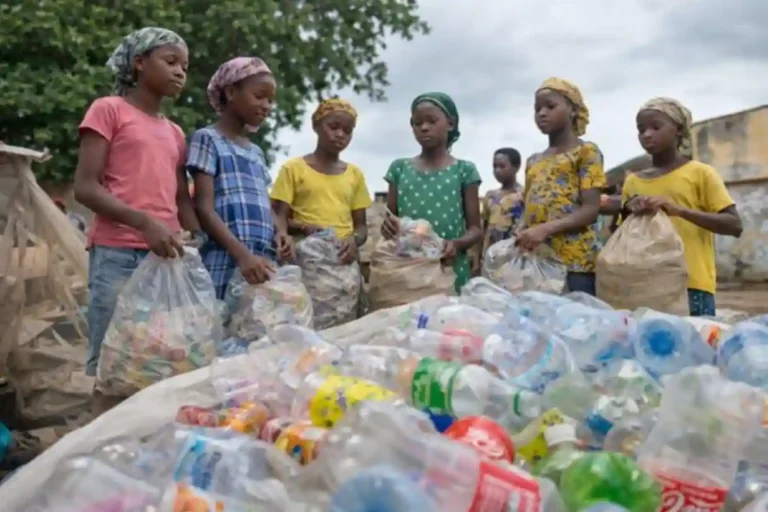
Sahara Group Foundation and Plan International Nigeria have signed a partnership agreement to expand a waste recycling program that prioritises economic empowerment for adolescent girls and vulnerable communities in Nigeria.

The collaboration was formalised through a memorandum of understanding signed on January 19 in Lagos. It links Sahara Group’s existing Sahara Go Recycling Project with Plan International Nigeria’s expertise in gender equality, child protection, and youth development. Under the agreement, at least 60 percent of program participants will be adolescent girls.

Speaking during the signing ceremony, Chidilim Menakaya, director of Sahara Group Foundation, said, “Sahara Go Recycling was conceived in 2021 as more than an environmental initiative; it is a deliberate platform for inclusion, dignity, and sustainable livelihoods.”

The program converts recyclable waste into economic value while creating income-generating opportunities for participants in host communities. By embedding social inclusion metrics directly into its operational targets, the initiative marks a shift from traditional corporate environmental programs that focus mainly on waste recovery.

Plan International Nigeria will contribute development frameworks focused on gender inclusion and safeguarding to strengthen the existing recycling infrastructure. The organisation implements education, protection, and economic empowerment programs across several states in the country.

Commenting on the partnership, Charles Usie, country director of Plan International Nigeria, said, “When environmental action is intentionally designed to create livelihood, dignity, and economic empowerment, girls are better positioned to learn, build skills, and contribute meaningfully.”

The agreement reflects growing interest among multinational corporations operating in Nigeria to align sustainability initiatives with measurable social outcomes. Sahara Group, an international energy conglomerate, launched the Sahara Group Foundation recycling program in 2021 as one of its four flagship social responsibility projects.

Sheila Ojei, director of philanthropy at Plan International Nigeria, said safeguarding protocols be integrated into program delivery. She added that the organisation plans to track outcomes across eight UN Sustainable Development Goals, including responsible consumption, gender equality, and reduced inequalities.

Read also: EU Sets €1.9bn Humanitarian Aid Budget for 2026

Advertisement

EU Sets €1.9bn Humanitarian Aid Budget for 2026

The European Commission has announced an initial €1.9 billion humanitarian aid budget for 2026 at a time when global needs are rising and funding from major donors is falling. The Commission said 239 million people currently need humanitarian assistance worldwide. Commissioner for equality, preparedness and crisis management, Hadja Lahbib, is presenting the commitment in Davos, where she is engaging the private sector on ways to support humanitarian response through innovative financing.

Global humanitarian funding priorities

The EU said its humanitarian aid will continue to focus on life-saving support in crisis areas. This includes emergency food and shelter, access to basic healthcare, protection for vulnerable groups, and support for children’s education in conflict and disaster zones. The Commission noted that as other donors reduce spending and humanitarian law faces growing pressure, the EU remains committed to principled aid that reaches people based on need.

The initial €1.9 billion allocation covers several regions and crises, including:

  • €557 million for West and Central Africa, the Sahel, the Lake Chad basin, North-West Nigeria, Central Africa, Southern Africa, the Great Lakes region, and the Greater Horn of Africa
  • €448 million for the Middle East, with a focus on Gaza following last year’s fragile ceasefire, as well as Iraq, Yemen, Syria, and Lebanon
  • €145 million for humanitarian needs in Ukraine as Russia’s invasion enters its fourth year, plus an additional €8 million for humanitarian projects in Moldova
  • €126 million for Afghanistan, Pakistan, and Iran to address ongoing humanitarian needs
  • €95 million for Central and South America and the Caribbean, where armed conflict, violence, political instability, inequality, and environmental challenges continue to drive humanitarian crises
  • €73 million for Southeast Asia and the Pacific, particularly for the Myanmar crisis and its impact in Bangladesh
  • €14.6 million for North Africa, which continues to face complex political, economic, and social pressures

In addition to regional funding, more than €415 million has been set aside to respond to sudden-onset emergencies worldwide and to maintain a strategic humanitarian supply chain.

Private sector engagement in Davos

The Commission said closing the gap between record humanitarian needs and limited public funding requires new approaches. In Davos, Lahbib is meeting business leaders and investors to discuss how private companies can contribute innovation, scale, and alternative financing models to humanitarian action.

Together with the World Economic Forum, she will co-host an event titled ‘New Alliances in Aid and Development’ on 22 January. The Commission said her full Davos programme, including bilateral meetings, is publicly available.

Context on EU humanitarian role

The EU and its Member States remain the world’s leading humanitarian aid donors. The European Commission has provided humanitarian assistance since 1992, delivering aid in more than 110 countries through non-governmental organisations, international bodies including United Nations agencies, and specialised agencies.

The European Emergency Response Coordination Centre operates and can assist countries affected by major disasters, following requests from national authorities or a UN body. The centre coordinates rapid emergency deployments and links EU partners and humanitarian experts globally.

Read also: FG inaugurates WorldSkills Nigeria to prepare TVET trainees for global competition

NWDC, Lawmakers Set North-West Development Summit in Kaduna

0

The Senate and House of Representatives Committees on the North-West Development Commission, working with the North-West Development Commission, have announced plans to hold a One-day North-West Stakeholders’ Development Summit on January 31, 2026, in Kaduna State.

The summit, themed Advancing a Coordinated Regional Development Agenda for North-West Nigeria, will take place at the Umaru Musa Yar’Adua Conference Centre, Murtala Muhammad Square, Kaduna. The event is scheduled to begin at 10:00am.

According to the Chairmen of the Senate and House of Representatives Committees on the North-West Development Commission, the summit is aimed at bringing together key stakeholders from the seven North-West states to collectively examine development challenges facing the region and agree on shared priorities for sustainable growth.

They stated that, “The North-West faces complex and interconnected challenges ranging from insecurity and infrastructure gaps to youth unemployment and social development deficits. These issues cannot be addressed in silos. This summit provides a platform for honest dialogue, shared ownership, and coordinated action.”

The Committees explained that the summit will include plenary sessions, technical discussions, and sector-focused engagements designed to strengthen collaboration, improve policy alignment, and support the effective delivery of the Commission’s mandate across the region.

Expected participants include members of the North-West Governors Forum, Federal and State Government officials, National Assembly members, Traditional and Religious leaders, Development Partners, Private Sector representatives, Non-Governmental Organisations, Civil Society Organisations, Academia, Youth and Women groups, as well as representatives of the Press.

The Committees further noted that outcomes from the summit would help shape the programmes and interventions of the North-West Development Commission and promote stronger partnerships among stakeholders committed to the region’s development.

Interested participants have been advised to register through nwdc.gov.ng/summit. For further enquiries, contact@nwdc.gov.ng. The notice was jointly signed by the Chairmen of the Senate and House of Representatives Committees on the North-West Development Commission.

Read also: SEDC Calls South East Indigenes to Share Ideas for Vision 2050

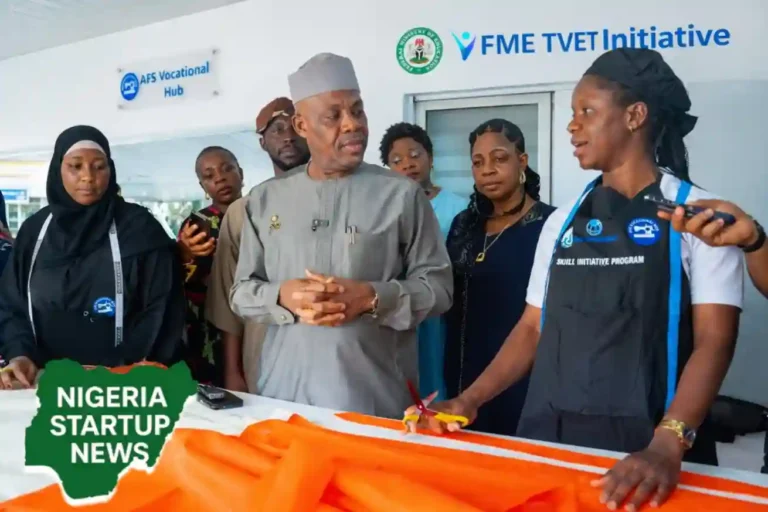
FG inaugurates WorldSkills Nigeria to prepare TVET trainees for global competition

0

The federal government has inaugurated the National Working Committee of WorldSkills Nigeria to promote skills development, vocational excellence, and competitiveness among Nigerian youths, with a focus on preparing Technical and Vocational Education and Training, TVET, trainees for assessment and competition at global standards.

Minister of Education, Dr Maruf Alausa, who inaugurated the committee in Abuja, said the initiative is designed to ensure that skills acquired in Nigeria align with international best practices and the objectives of WorldSkills Nigeria, while repositioning skills training as a viable pathway for young people.

According to the minister, the inauguration marks a critical step toward building a globally competitive workforce and transforming the future of TVET in Nigeria. He described the move as “a bold national commitment to skills excellence, significance, and readiness to benchmark Nigeria’s skills development system against the highest global standards.”

Dr Alausa said the platform would equip young Nigerians with world-class competencies. “With the inauguration of WorldSkills Nigeria, we are opening a new chapter defined by opportunity, competitiveness, and national pride. Our youth will be inspired to develop a passion for skills and motivated to choose high-quality skills as a first-choice educational pathway,” he said.

He added that industries would benefit from a more agile workforce, while the country would gain through increased productivity. The minister commended stakeholders for laying what he described as a solid foundation for a stronger Nigeria.

“On behalf of the Federal Ministry of Education, I reaffirm our commitment to supporting WorldSkills Nigeria as a national flagship for skills development and youth empowerment,” Dr Alausa stated.

Nigeria’s journey into WorldSkills

The minister recalled that Nigeria’s admission into WorldSkills International in August 2024 was the culmination of over a decade of sustained effort and collaboration.

He explained that since 2013, Nigeria had pursued membership by engaging global partners, strengthening national structures, and aligning its skills ecosystem with international standards.

“These achievements reflect the collective efforts of the National Board for Technical Education, federal and state TVET agencies, sector skills councils, industry partners, and other stakeholders,” he said, adding that WorldSkills Nigeria represents more than membership.

WorldSkills and TVET integration

Speaking at the event, a representative of WorldSkills Nigeria, Mrs Yemisi Akirinade, said WorldSkills International sets standards for TVET benchmarking, teacher capacity building, research, and skills development.

She explained that TVET differs from purely academic education because of its strong multi-sectoral nature, requiring close collaboration between education providers and industry.

“WorldSkills sits at the intersection of education, the economy, and industry. Countries with weak linkages in this nexus often struggle economically. WorldSkills Nigeria is designed to strengthen these linkages and drive a skills-based economy,” she said.

Mrs Akirinade noted that although TVET implementation comes with challenges, it remains a powerful tool for national development.

NBTE and committee assurances

Executive Secretary of the NBTE and Vice Chairman of the committee, Professor Idris Bugaje, said members were drawn from the core of Nigeria’s skills ecosystem, including academia, industry, training institutions, and consultants.

He acknowledged Mrs Akirinade for her role in Nigeria’s decade-long journey to gaining WorldSkills membership. “It was an audacious journey that lasted more than ten years. At the time Nigeria was admitted into WorldSkills International in November 2024, NBTE did not even have the €4,000 membership fee. Mrs Akirinade paid it, and we reimbursed her later,” he disclosed.

In his acceptance speech on behalf of the committee, Engineer S. M. Yusufu assured that members would work diligently to meet expectations and called for increased visibility for WorldSkills Nigeria.

“We are grateful for this opportunity and propose a national launch of WorldSkills Nigeria,” he said.

The committee is chaired by the Minister of State for Education, Professor Suwaiba Ahmad, with the Executive Secretary of the NBTE, Professor Idris Bugaje, serving as Vice Chairman.

Other members include representatives of the Dangote Foundation, WorldSkills Nigeria, the Industrial Training Fund, ITF, and Dr Ahmadu Ali Usman representing the Committee of Heads of Technical Colleges, COHTEC.

What is WorldSkills Nigeria

WorldSkills Nigeria is an affiliate of WorldSkills International and serves as a platform to reposition skills development and Technical and Vocational Education and Training, TVET, as drivers of industrialisation, economic growth, and competitiveness in Nigeria.

Read Also: MTN Foundation launches Phase 7 ICT training for 2,000 SMEs

NAFDAC Begins Enforcement of Sachet Alcohol Ban Nationwide

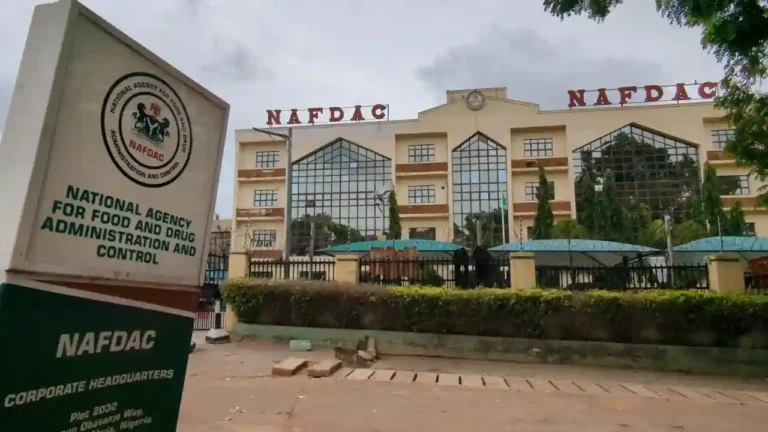
The National Agency for Food and Drug Administration and Control (NAFDAC) has commenced enforcement of the ban on the production and sale of alcohol in sachets and PET bottles below 200ml nationwide, following a directive from the Senate.

The Director-General of NAFDAC, Prof. Mojisola Adeyeye, disclosed this on Wednesday during a media parley in Lagos, confirming that enforcement began after an order from the Senate.

“We already started the enforcement to ban alcohol production in sachet and bottles below 200ml, after we received order from the senate to proceed,” Adeyeye said.

NAFDAC had earlier announced on November 11, 2025, that it would enforce a total ban by December 2025, in line with a Senate directive. The move was, however, temporarily suspended after the Federal Government called for consultations with stakeholders before a final decision.

Adeyeye explained that the renewed enforcement was driven by public health concerns, especially the need to protect children, adolescents and young adults from the harmful effects of alcohol consumption.

“NAFDAC is not against alcohol, but we are against its proliferation of high alcohol content in sachet and small bottles, to prevent children from having easy access to it,” she said.

According to the Director-General, sachet alcohol products previously contained between 50 and 90 per cent alcohol concentration, which she described as extremely dangerous to public health.

“We asked the manufacturers to reduced the content to 30 per cent, they went directly to the ministry to express their displeasure, citing loss of jobs and investment,” Adeyeye said.

She added that manufacturers were granted a five-year transition period between December 2018 and January 31, 2024, to restructure their businesses ahead of full enforcement.

Reaffirming the agency’s position, Adeyeye said NAFDAC remains committed to safeguarding public health through regulatory actions aimed at reducing alcohol abuse among vulnerable groups nationwide.

Read also: Lagos Begins Enforcement of Mandatory Health Insurance Scheme

EU, UN Reaffirm Support for Children and Vulnerable Families in Sokoto

A delegation from the European Union in Abuja, working with UNICEF, UNFPA, International Labour Organization, and partners including Plan International Nigeria, Action Against Hunger Nigeria, CARE Nigeria, and Danish Refugee Council, has concluded a mission to Sokoto State, reaffirming a shared commitment to strengthening systems that support children, women, adolescents, and vulnerable families.

During the visit, the delegation met with the Governor of Sokoto State, Dr. Ahmed Aliyu, to review ongoing collaboration and discuss priorities for delivering essential services across communities. Governor Aliyu highlighted the state government’s resolve to focus on practical interventions that improve lives. “Our administration is committed to practical solutions that uplift our people—consistent with the Renewed Hope Agenda and our state priorities,” he said. “We will continue to prioritise the well-being of women, children, and vulnerable families and to work with partners to sustain results.”

The mission allowed the EU delegation, the Sokoto State Government, and development partners to observe progress across EU-supported initiatives in schools, primary health care facilities, Internally Displaced Persons camps, and community-based services. The visits provided direct engagement with beneficiaries and frontline workers implementing education, health, protection, and social services. Reflecting on the mission, Massimo De Luca, Head of Cooperation at the EU Delegation and leader of the visit, said the engagements highlighted the importance of strong systems. “This visit has shown how critical it is to invest in systems that protect and empower people—especially children and young people,” he said. “The EU remains committed to supporting Sokoto State in ensuring inclusive development that leaves no one behind.”

At schools and community sites, the delegation observed how safe learning environments, teacher support, and community engagement are expanding access to inclusive education. Officials noted improvements linked to coordinated support from government and partners. Speaking on UNICEF’s role, the UNICEF Deputy Representative for Programmes, Rownak Khan, said the focus remains on rights and wellbeing. “UNICEF’s mandate is to support realising the rights and wellbeing of every child—and to support women, families, and communities who care for and guide them,” she said. “In Sokoto, that means strengthening education, primary health care, and adolescent services through EU-supported programmes for health and education and helping families withstand shocks through social protection so that children not only survive but thrive.”

As part of the mission, government and partners presented a new tool designed to capture all dimensions of poverty within the National Social Register under the EU-funded Supporting Sustainable Social Protection Systems in Nigeria programme, known as SUSI. With funding of $14 million from the EU, SUSI aims to strengthen social protection policy and budgeting while supporting the creation of a social registry in Sokoto. The registry will focus on children and families in need, including those without birth registration or NIN, out-of-school children, families facing malnutrition, and households with limited access to primary health care.

Emphasising the systems-based approach of SUSI, the ILO Country Director said durable social protection depends on institutions and coordination. “Sustainable social protection requires strong institutions, clear policy, and coordinated financing,” the Director noted. “Through advancing program-based budgeting and an interoperable social registry, Sokoto can better identify need and deliver support where it matters most.”

At primary health care facilities, the delegation observed efforts to make services more adolescent-friendly and gender responsive. The UNFPA Nigeria Resident Representative said access to quality care remains essential. “Women and adolescents must be able to access quality, respectful care close to home,” the Representative said. “The dedication of frontline healthcare providers in Sokoto shows what is possible when we invest in the people and use data to reach the most vulnerable communities.”

Community organisations were also highlighted as key to sustaining progress. The CARE Nigeria Country Director said local ownership drives lasting impact. “Communities are the engine of lasting change,” the Director said. “We remain committed to approaches that strengthen local leadership and accountability, ensuring that services reach those who need them most.”

Education partners stressed the need for safe and supportive learning spaces. Plan International Nigeria’s Country Director said collaboration remains central. “Every child deserves a safe, supportive place to learn,” the Director said. “Together with government and communities, we are working to make that a reality for girls and boys across the state.”

For displacement-affected families and host communities, inclusive and climate-smart solutions were identified as priorities. The DRC Country Director said dignity and coordination are essential. “Displaced families need pathways to rebuild with dignity,” the Director said. “Coordinated and community-driven responses are key to resilience and recovery.”

Addressing food security and nutrition, ACF Nigeria’s Country Director said multiple pressures have weakened coping capacity. “The conflict and insecurity, climate change, and natural disasters have severely faded vulnerable Nigerians’ ability at all levels to cope and thrive,” the Director said. “These collective efforts strengthen our shared commitment to supporting affected communities and the Nigerian government in advancing its strategies to end hunger and malnutrition for the well-being of the Nigerian people.”

The mission concluded with a renewed joint commitment by the EU, the Sokoto State Government, UN agencies, and partners to continue supporting the state’s social and economic development goals through coordinated and inclusive action.

Read also: Food Security Is Now a Macroeconomic and Security Issue for Nigeria – Shettima

Food Security Is Now a Macroeconomic and Security Issue for Nigeria – Shettima

0

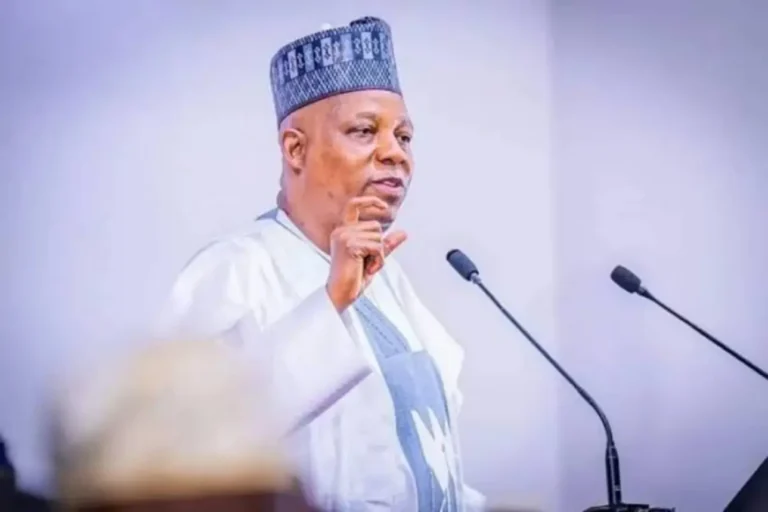
Vice President Kashim Shettima has said Nigeria no longer treats food security as a narrow agricultural matter but as a major macroeconomic, security, and governance priority, as the Federal Government rolls out a broader strategy to protect the country from global shocks.

He said the government has begun a multi-dimensional agricultural drive aimed at restoring productivity across Nigeria’s food basket regions while strengthening national stability and economic resilience.

The Vice President spoke at a high-level panel titled “When Food Becomes Security” at the Congress Centre during the 56th World Economic Forum meeting in Davos, Switzerland, where he explained that food security now sits at the heart of Nigeria’s policy planning.

“In Nigeria, we don’t look at food security purely as an agricultural issue. It is a macroeconomic, security and governance issue. Our focus is to use food security as a pillar for national security, regional cohesion and stability,” Shettima said.

According to him, Nigeria’s food security framework is built on three key pillars, which include increased food production, environmental sustainability, and deeper regional integration within the West African sub-region.

He explained that shifting global trends and repeated supply chain disruptions have forced Nigeria to look inward and rebuild its agricultural base by developing resilient food systems suited to its different ecological zones.

“Nigeria is a very large country, and there is an incestuous relationship between economy and ecology. In the Sahelian North, we are dealing with desertification, deforestation and drought. In the riverine South and parts of the North Central, flooding is our major challenge,” he said.

To tackle these environmental pressures, the Vice President said the Federal Government is promoting drought-resistant, flood-tolerant, and early-maturing varieties of staple crops such as rice, sorghum, and millet. He added that food systems in flood-prone southern areas are being redesigned to withstand climate-related shocks.

Shettima noted that security challenges remain a major obstacle to food production, particularly because many of Nigeria’s conflict-affected areas also serve as key food-producing zones.

“Most of the food baskets of our nation are security-challenged. That is why we are creating food security corridors and strengthening community-based security engagements so farmers can return safely to their land,” he said.

He disclosed that the Federal Government has launched the Back to the Farm Initiative, a programme designed to resettle displaced farmers. According to him, the initiative provides agricultural inputs, insurance, and access to capital to enable farmers restart food production and regain livelihoods.

Addressing Nigeria’s macroeconomic vulnerabilities, the Vice President identified heavy import dependence and foreign exchange volatility as major contributors to food inflation across the country.

“We largely import wheat, sugar and dairy products, and this has a direct impact on inflation. Our strategy is to accelerate local production and promote substitutes such as sorghum, millet and cassava flour to correct these structural imbalances,” Shettima said.

He explained that the current approach aligns food security with inflation control, national stability, and regional cooperation, positioning agriculture as a frontline response to both economic and security risks.

The Vice President further said Nigeria, often described as the African giant, has “woken up from its slumber” under President Bola Tinubu, adding that the government is working to make “it possible for smallholders and fishers to become investable at scale” within the next 12 months.

Shettima also highlighted the growing importance of intra-African trade, noting that recent global developments have made regional trade almost unavoidable for African economies.

“In Africa, especially in light of global trends, intra-African trade has almost become a necessity, and there have been some alignments,” he said.

He urged African leaders to intensify collaboration under the African Continental Free Trade Area framework to ensure African countries strengthen internal systems and markets.

The Vice President expressed optimism that with the ongoing Renewed Hope Agenda reforms, Nigeria will see climate adaptation efforts move from pilot stages to reality, alongside a significant rise in intra-African trade beyond the current 10.7 percent level.

Read also: Rivers flags off first batch of School to Land agribusiness training scheme

Heirs Insurance launches N9m student hackathon

0

Heirs Insurance Group (HIG) has rolled out its maiden hackathon, offering a N9 million prize to students of tertiary institutions to develop technology-driven solutions for the insurance industry.

The initiative is expected to deliver tangible benefits to ordinary Nigerians by improving claims settlement, enhancing customer experience, and expanding access to affordable insurance products across the country.

The Heirs student hackathon is open to students in universities, polytechnics, and other tertiary institutions. Participants are tasked to design solutions across the insurance value chain, including underwriting, claims processing, distribution, data analytics, and operational efficiency.

Registration for the programme closes on February 16, 2026, while winning teams will be announced at the grand finale scheduled for April. The programme is positioned as a talent pipeline and innovation platform, allowing young Nigerians to apply emerging technologies such as artificial intelligence (AI) to real business problems within the financial services ecosystem.

Commenting on the initiative, Chief Executive Officer of Heirs Life Assurance, Niyi Onifade, said the hackathon reflects the company’s belief that technology and youth talent are critical to fixing long-standing inefficiencies in the insurance industry.

According to him, empowering students to build practical solutions will not only support industry growth but also enhance trust, accessibility, and service delivery for policyholders across the country.

The hackathon is being delivered in partnership with Redtech, the digital payment solutions arm of Heirs Holdings. Redtech will provide technical support and assess submissions based on creativity, feasibility, scalability, and real-world impact.

Also speaking, the Chief Digital Officer of Heirs Insurance Group, Peace Philips, said the programme was designed to give young people the opportunity to apply their ideas and technology skills to economic challenges, while contributing to an inclusive financial system.

Read also: TD Africa, Enugu launch sponsored Cybersecurity, Data Science training

TD Africa, Enugu launch sponsored Cybersecurity, Data Science training

TD Africa, in collaboration with the Enugu Tech Festival (ETF) and the Enugu State Ministry of Innovation, Science and Technology, has announced the launch of a fully sponsored Cybersecurity and Data Science training initiative branded “Code Your Defence.”

The announcement comes as digital transformation continues to expand across Africa, increasing the need for skilled professionals in Cybersecurity and Data Science. From protecting digital infrastructure to supporting data driven decision making, both fields are now central to innovation, governance, and business growth across multiple sectors.

The programme is designed to equip young Africans with practical and industry relevant skills aligned with global standards. Participants will undergo a structured curriculum that combines foundational knowledge with hands on learning and real world application, ensuring they are prepared for employment opportunities after completing the training.

Speaking on the initiative, Head of Marketing at TD Africa, Fridel Makun, said the organisation remains focused on building digital capacity and creating real opportunities for young people across the continent.

“At TD Africa, we believe Africa’s digital future will be shaped by people who are equipped, not just inspired. ‘Code Your Defence’ is our way of expanding access to the kind of training that builds confidence, competence, and career readiness. By investing in cybersecurity and data science, we are helping young Africans develop skills that are globally relevant and urgently needed across industries,” he said.

According to the organisers, selected participants will benefit from free professional training delivered by experienced instructors, an industry standard curriculum, globally recognised certification, and access to pathways for job placements, internships, and career advancement.

The programme is open to students and recent graduates, early career professionals seeking to upskill, and individuals looking to transition into Cybersecurity or Data Science. Organisers noted that no advanced prior experience is required, but applicants must demonstrate a strong willingness to learn.

Training is scheduled to commence on January 19, 2026, and interested applicants have been advised to register early due to limited slots.

The partners said the initiative supports sustainable development goals across Africa and future innovation.

Read also: MTN Foundation launches Phase 7 ICT training for 2,000 SMEs
Abebi AfroNonfiction Institute Announces 2025 Abebi Award Winners

The Abebi AfroNonfiction Institute has announced the winners of the 2025 Abebi Award in AfroNonfiction, honouring Nigerian women writers whose essays bear witness to lived experience with courage, literary rigour, and emotional clarity. The award continues its mission of creating space for women to tell their stories in ways that are honest, reflective, and rooted in personal truth.

Speaking on the purpose of the award, the founder of the Institute, Mofiyinfoluwa Okupe, said it was created to give women permission and power to tell their stories without apology. She noted that while fiction and poetry writers often enjoy multiple platforms and development opportunities, creative nonfiction does not always receive the same level of attention or support as a literary genre.

Okupe emphasised that the Abebi Award is intentionally designed to hear Nigerian women speak in their own voices, on their own terms, and through their chosen forms. According to her, the goal is to allow society to listen closely and learn from these experiences, recognising the value of women’s perspectives in shaping cultural and literary conversations.

“We believe literature can be both a mirror and a hammer,” she said. “These essays do not only reflect truth; they shape it. They break silence, build community, and remind us that women’s lived experiences are worthy of serious literary attention.”

Now in its third edition, the Abebi Award invited submissions on the theme “Witness,” encouraging writers to observe themselves, their communities, and the forces influencing their lives with radical honesty. The organisers disclosed that the 2025 call attracted over 200 submissions from Nigerian women writers, addressing themes such as grief, faith, embodiment, technology, survival, healing, and personal transformation.

Beyond the award itself, selected writers took part in an intensive creative nonfiction residency facilitated by Okupe. The programme focused on mind mapping, editorial development, close reading, and literary analysis, while also building a supportive creative community. Participants described the residency as transformative, providing both artistic growth and personal affirmation.

The 2025 Abebi Award winner is Sapphire Mclaniyi-Agbley for her essay Ká ríra lọrun, an intimate work presented in five fragments that holds a father’s death as both burden and gift, resisting easy binaries while exploring loss and freedom. The runner-up, Nneoma Kenure, was recognised for The Weight of Our Bodies, a reflective meditation on girlhood and the female form that examines objectification and self-surveillance before arriving at self-compassion.

Other notable entries include Chisom Benedicta Nsiegbunam’s A Lineage of Mantles, Erere Onyeugbo’s There Is a Bullet With Your Name On It, and Chinwendu Queenette Nwangwa’s Hold Me in Love, Hide Me in God. Sponsored by Selar, the Abebi Award in AfroNonfiction celebrates Nigerian women’s creative nonfiction through publication opportunities and international recognition.

Read also: MTN Foundation launches Phase 7 ICT training for 2,000 SMEs