Home Blog Page 156

Delta Govt rolls out food system transformation initiative

0

The Delta State Government has announced the rollout of a new initiative aimed at transforming food production in the state, with a focus on sustainability, food security, and ethical agricultural practices.

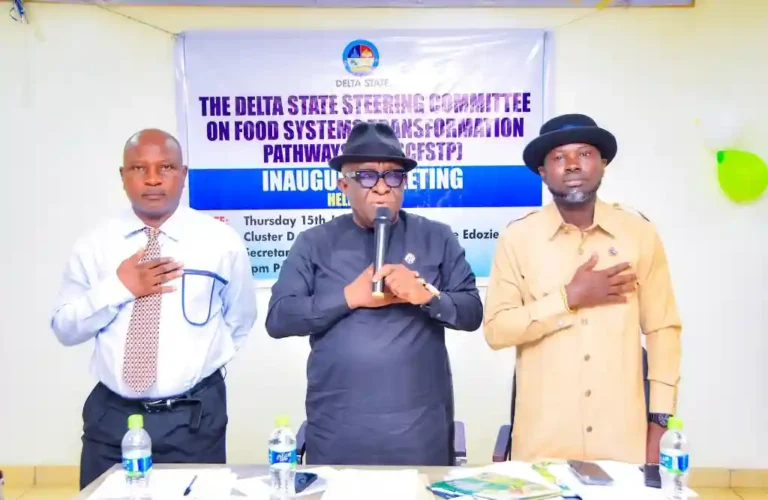
The Commissioner for Economic Planning and Chairman of the Delta State Steering Committee on Food System Transformation Pathways, Mr. Sonny Ekedayen, made this known at the inaugural meeting of the Committee. He said food production can only succeed when critical factors such as soil quality, access to appropriate machinery, favourable climate conditions, and the responsible use of agro-chemicals are addressed.

Mr. Ekedayen stressed the importance of deliberate and well-planned strategies in food production and propagation, warning that ignoring these elements could lead to serious consequences. According to him, “Our lands have been affected by urbanization and flooding, but we must be intentional in managing our resources to guarantee food security.”

He explained that developing food system transformation pathways is vital to the growth of Delta State. He noted that the initiative would help improve the incomes of farmers, processors, traders, and other food system workers, while ensuring that residents have access to safe and nutritious food.

The chairman added that the programme would translate national priorities into practical actions designed to meet Delta State’s needs. He said this approach would improve food availability, affordability, safety, and nutritional value, while supporting job creation, higher incomes, and poverty reduction.

Mr. Ekedayen further emphasized the need for collaboration among committee members drawn from ministries, departments, agencies, parastatals, and development partners. He said the exchange of ideas would be key to achieving the committee’s objectives.

Also speaking, the Commissioner for Environment, Mr. Jamani Ejiro, described farming as central to achieving food security. He highlighted the need for a clean and healthy environment, especially for poultry and pig farming, and stressed that proper waste disposal must be taken seriously.

Mr. Ejiro disclosed that the Ministries of Environment and Agriculture are working together to facilitate land allocation for agricultural activities.

In his contribution, the Commissioner for Works (Rural Roads) and Public Information, Mr. Charles Aniagwu, represented by the Functioning Permanent Secretary, Mrs. Stella Macaulay, said the Ministry of Information has a strategic role. He explained that the ministry would focus on spreading information and collecting feedback from the public.

He advocated the promotion of homestead farming and assured that awareness would be created through advert jingles, publications, and interpersonal communication.

Meanwhile, the Commissioner for Agriculture and Natural Resources, Barr. Val Areyinka, represented by the Functioning Permanent Secretary, Dr. Edmund Orioko, said food production covers both crop farming and animal husbandry. He disclosed that the 2026 focus is on crop production, particularly cassava, with about 650 hectares under cultivation.

Dr. Orioko added that programmes are in place to support small-scale livestock farmers to increase protein supply. He noted that the Steering Committee would drive implementation across sectors.

Other committee members introduced themselves, outlined their responsibilities, and expressed optimism about achieving the mandate. The meeting ended with the administration of the Oath of Allegiance on members of the Delta State Steering Committee.

Read also: Nigeria LPG supply hits 5.2k mt/day in December 2025

Advertisement

NANS gives ITF DG 14 days to leave over unpaid SIWES allowances

0

The National Association of Nigerian Students (NANS) on Monday demanded the immediate removal of the Director-General of the Industrial Training Fund (ITF), Dr. Afiz Oluwatoyin Ogun, within 14 days over the prolonged non-payment of Students’ Industrial Work Experience Scheme (SIWES) allowances to students across tertiary institutions in the country.

The students’ body also called on the Economic and Financial Crimes Commission (EFCC) and the Independent Corrupt Practices and Other Related Offences Commission (ICPC) to launch a full investigation into the handling of SIWES funds, citing alleged administrative failure, lack of transparency and possible mismanagement.

In a statement signed by the Assistant Secretary-General of NANS at the National Headquarters, Comrade Adejuwon Olatunji Emmanuel, the association expressed deep outrage over what it described as the persistent and unjustifiable failure of the ITF to resolve the non-payment of allowances owed to thousands of Nigerian students.

According to NANS, for several years, students who participated in the SIWES programme have been denied their statutory entitlements despite repeated complaints, petitions and engagements by students’ bodies and other relevant stakeholders.

The association said the situation has subjected affected students to severe financial hardship, with many struggling to cope with basic expenses during their industrial training periods, while also undermining the credibility of a programme created to promote skills acquisition, employability and national workforce development.

“We note with grave concern that under the leadership of the Director-General of the ITF, Dr. Afiz Oluwatoyin Ogun, there has been no transparent, comprehensive or credible explanation to Nigerian students regarding the status of these outstanding payments,” the statement said.

NANS added that the continued silence, poor communication and lack of accountability surrounding SIWES disbursements amounted to a clear administrative failure and a serious breach of public trust expected of a public institution.

While stating that it was not pronouncing guilt on any individual, the association said allegations of mismanagement and possible diversion of SIWES funds circulating among affected students were deeply disturbing and could not be ignored by responsible authorities.

It therefore demanded the immediate removal of the ITF boss, describing his continued stay in office as untenable and inimical to accountability, transparency and institutional credibility in the management of students’ welfare programmes.

The students’ body also issued a 14-day ultimatum to the Federal Government to take decisive action on the matter and restore confidence in the administration of SIWES.

“Within fourteen days from the date of this statement, the Director-General of the Industrial Training Fund, Dr. Afiz Oluwatoyin Ogun, should either be removed from office by the appropriate authorities or honourably resign to allow for a transparent and unhindered investigation into the prolonged non-payment of SIWES allowances,” NANS said.

It warned that failure to act within the stipulated period would be interpreted as institutional indifference to the plight of Nigerian students and would compel the association to escalate its response through all available democratic means.

NANS further called on President Bola Ahmed Tinubu to urgently intervene by ordering a comprehensive forensic audit of SIWES funds and ensuring that all outstanding allowances owed to students are paid without further delay.

“SIWES is not a privilege; it is a statutory entitlement. Any leadership that consistently fails to honour this obligation has failed its mandate,” the statement added.

Read Also: NJFP 2.0 Approves Fellows!

Nigeria LPG supply hits 5.2k mt/day in December 2025

0

Nigeria’s total daily supply of Liquefied Petroleum Gas LPG to the local market averaged 5.2 thousand metric tonnes per day in December 2025, marking the highest monthly level recorded. The figure was contained in a fact sheet on the midstream and downstream sector for December 2025 released by the Nigerian Midstream and Downstream Petroleum Regulatory Authority NMDPRA.

According to the regulator, the increase in supply was driven by improved market logistics and heightened demand during the peak consumption period. The authority said these factors combined to support stronger product movement and availability across the domestic market.

Analysis of the data showed that domestic producers, including Nigeria LNG NLNG, Dangote Refinery Dangote Refinery, and other gas processing plants operating across the country, supplied 3.7 thousand metric tonnes per day, representing about 71 percent of total LPG supply in December. Domestic output for the month stood at 3.7 thousand metric tonnes per day, lower than the peak of 4.5 thousand metric tonnes per day recorded in July and the 4.4 thousand metric tonnes per day achieved in August 2025.

Importers supplied the remaining 1.5 thousand metric tonnes per day, accounting for roughly 29 percent of total supply. Cooking gas importation declined slightly compared to November, when imports averaged 1.6 thousand metric tonnes per day, reflecting reduced dependence on external supply.

On the demand side, NMDPRA data showed that average daily LPG consumption in December 2025 stood at 4,380 metric tonnes per day, while retail prices ranged between ₦1120 and ₦1,600 per kilogram.

The fact sheet also reported strong upstream performance, with NLNG Trains 1–6 operating at an 82.67 percent utilisation rate, supported by the Gbaran-Ubie Gas Plant at 86.36 percent utilisation. Additional supply came from MPNU BRT, Escravos Gas Plant, Soku Gas Plant,

Read Also: FG trains officers to boost food security and farmer income

NJFP 2.0 Approves Fellows!

0

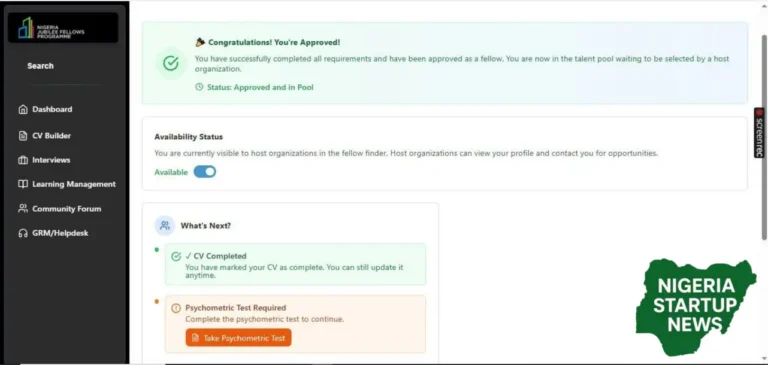
Nigeria Jubilee Fellows Programme (NJFP) 2.0 has commenced the approval of fellows. This approval is for candidates who completed their CBT exam and video submission for review.

After a successful video review, shortlisted applicants have now entered the NJFP 2.0 Pool of Fellows.

The approval notification obtained by Nigeria Startup News reads:

“Congratulations! You’re Approved!

You have successfully completed all requirements and have been approved as a fellow. You are now in the talent pool, waiting to be selected by a host organization.”

The status of selected fellows also shows “Approved and in Pool”.

All newly approved fellows are now visible to host organizations in the Fellow Finder. Host organizations can view your profile and contact you for opportunities.

Candidates can simply log into their dashboard to see their status. Note that you’re one step closer in your NJFP 2.0 journey.

Applicants who have successfully passed the CBT and video review are being admitted into the NJFP 2.0 talent pool.

The next phase focuses on the psychometric assessment, alongside updating your profile and uploading a strong CV. This stage helps NJFP better understand your strengths, work style, and readiness for matching with host organizations.

NJFP 2.0 fellows are to keep an eye on their email for invitations into the pool and instructions on completing the psychometric test.

Note that admission into the pool does not automatically guarantee placement.

What You Need to Do Next

In summary, the next steps after approval include:

  • Upload a strong CV
  • Keep your profile up to date
  • Complete the psychometric assessment
  • Indicate your availability

Again, check your inbox, stay informed after uploading your CV, and wait to be contacted by a host organization.

Congratulations to all newly approved NJFP 2.0 fellows!

Read Also: Elowell Max opens applications for EMIP 2026 internship programme

Lagos begins 2026 BECE e-registration

0

The Lagos State Government, through the Lagos State Examinations Board, has announced the commencement of the Year 2026 e-Registration and payment process for the Basic Education Certificate Examination (BECE).

According to the Board, the exercise is scheduled to begin on Monday, 26th January 2026, and will run until Friday, 27th March 2026. The initiative is in line with the state government’s policy of using technology to streamline examination processes and ensure a smooth registration system without the physical presence of school owners at the Board.

Speaking on the exercise, the Registrar of the Examinations Board, Mr. Adebayo Orunsolu, said schools are required to use the newly issued School Code for the registration process.

He explained that Public Junior Secondary Schools are to download the Offline Data Capturing Application through bece.examsboard.lagosstate.gov.ng to complete their entries.

Orunsolu further stated that Approved Private Junior Secondary Schools, schools operating with Special Permission, and Continuing Education Centres (CEC) are expected to access the Board’s portal via pay.examsboard.com.ng to complete payment, registration, and generate their login credentials.

The Registrar disclosed that Approved Private Junior Secondary Schools and Approved Public Continuing Education Centres would pay a registration fee of ₦10,000 per candidate, while Junior Secondary Schools with Special Permission and Private CECs would pay ₦15,000 per candidate.

He also advised schools presenting candidates with special needs, including visual challenges or albinism, to notify the Lagos State Examinations Board in writing ahead of time to allow for proper arrangements before the examination begins.

Orunsolu urged all participating schools to strictly follow the approved guidelines and procedures for payment and registration, noting that late registration may attract penalties.

He added that further details, where necessary, would be communicated to schools through their respective Zonal Officers across the entire state.

Read also: Elowell Max opens applications for EMIP 2026 internship programme

Elowell Max opens applications for EMIP 2026 internship programme

0

Elowell Max has announced the opening of applications for the first cohort of the Elowell Max Internship Programme (EMIP) 2026, a structured initiative designed to develop young media talents across editorial and digital publishing roles. The programme is scheduled to run from 26th January, 2026 to 25th March, 2026.

The launch of EMIP marks a significant step for the publication as it formalises its commitment to training emerging writers and creatives through practical newsroom experience. The programme is positioned to bridge the gap between academic learning and real-world media practice by exposing interns to professional publishing standards and live editorial operations.

Founded in 2020 by Nigerian writer, Elohor Ogaga-Edafe, Elowell Max focuses on African women across a wide range of topics. Over the years, the publication has grown into a platform known for amplifying African women’s voices while engaging with contemporary societal conversations. According to the publication, interns selected for EMIP will work closely with editors across multiple desks, contribute original content, and take part in the magazine’s digital workflow.

“This is beyond becoming an Elowell Max Intern,” the editorial team stated. “It is a platform to learn, grow, and be part of a professional team that values originality, quality, and insight.”

The programme is open to applicants interested in editorial writing, features, beauty and fashion journalism, digital publishing, and visual storytelling. Throughout the internship period, participants will receive structured editorial feedback, mentorship, and guidance.

At the end of the programme, interns who successfully complete EMIP will receive certificates, while outstanding participants will be recognised through merit-based awards during a closing session. Applications for the first cohort are currently open, with selection based on writing ability, creativity, and willingness to learn. Further details are available through the magazine’s official platforms.

Read also: RegTech Africa to host Startup World Cup 2026 regional competition

UBA Foundation supports over 100,000 people across Nigeria and Africa

UBA Foundation, the Corporate Social Responsibility arm of United Bank for Africa (UBA) Plc, has distributed essential materials worth several millions of naira and dollars to school students, orphanages, IDP camps, and vulnerable communities across Nigeria and 19 other African countries where the bank operates.

The support was delivered through the Foundation’s Food Bank and Giving Back drive, which reached over 100,000 individuals between November 2025 and January 2026. The initiative focused on easing financial pressure linked to the end of the year and the start of a new one, while reinforcing the bank’s commitment to building hope and resilience in the communities it serves.

In Nigeria, the outreach covered all regions of the country. Beneficiaries included the Daughter of Mercy Mother of Mary Orphanage Home in Abia, the Trinitarian Foundation for Orphans and the Helpless in Ebonyi, The Destitute Home Okobaba in Lagos, Oyiza Orphanage and Foster Foundation in Oyo, Itsoghena Orphanage Home in Edo, Enoima Children Home in Akwa Ibom, Yekope Orphanage in Kogi, IDP camps in Niger and Borno, UMCN Orphanage Home in Taraba, Kebbi Children’s Home, and the Orphanage Home in Dutse, Jigawa.

Beyond Nigeria, the Foundation replicated its humanitarian and nutrition support across Africa. Countries covered include Benin Republic, Burkina Faso, Cameroon, Chad, Congo Brazzaville, Congo DRC, Côte d’Ivoire, Gabon, Ghana, Guinea, Kenya, Liberia, Mali, Mozambique, Senegal, Sierra Leone, Tanzania, Uganda, and Zambia, where several hundreds of thousands of people were also impacted.

The Managing Director and Chief Executive Officer of UBA Foundation, Bola Atta, visited some of the beneficiary locations, including The Destitute Home Okobaba in Lagos. During the visit, she distributed non-perishable food items and school materials to adults and students.

Speaking during the outreach, Atta said the Foundation believes in supporting lives throughout the year to achieve lasting impact, regardless of location or economic barriers. She said, “At UBA Foundation, we believe that true development begins with compassion and action. Through our various Food Bank and Giving Back initiatives, we are not only providing nourishment and essential support, but also restoring hope and creating pathways for children and families to learn, grow, and thrive. This is our commitment to Africa: to show up consistently, act responsibly, and leave no community behind.”

Explaining further, she said, “Our various interventions aim to support people by equipping them not only with the right tools but also with the essential nourishment required for cognitive development and physical well-being.”

The Foundation maintains a long-standing tradition of philanthropy across Africa. Its initiatives include the National Essay Competition, Read Africa Project, Tree Planting for Sustainability, health outreaches, Each1 Teach 1, Kindness Connect, Food Bank, and other programmes designed to empower the underprivileged and reduce poverty.

UBA Foundation, the CSR arm of the UBA Group, remains focused on socio-economic development in its host communities, with priority areas covering education, the environment, economic empowerment, and special projects. The recent outreach also reflects collaboration with local partners to ensure transparent distribution, community engagement, accountability, and alignment with regional needs during periods of heightened household vulnerability. Nationwide impact.

Read also: NG-CARE supports 89000 Katsina farmers through FADAMA

NG-CARE supports 89000 Katsina farmers through FADAMA

A total of 89,000 farmers in Katsina State have received support under the Nigeria COVID-19 Action for Recovery and Economic Stimulus (NG-CARE) programme, marking one of the most expansive agricultural empowerment interventions in the state’s recent history.

The intervention, implemented through the FADAMA component of the programme, is aimed at restoring livelihoods disrupted by the COVID-19 pandemic while strengthening food security and rural incomes across the state.

In an exclusive interview with LEADERSHIP as obtained by Nigeria Startup News on Tuesday, the state coordinator of NG-CARE, Nafiu Mohammad Musa, disclosed this, saying the programme was deliberately designed to cushion the economic shock suffered by farmers during the pandemic when movement restrictions, market closures, and supply chain disruptions crippled agricultural production.

“During COVID-19, many farmers could not access farms, inputs, or markets. NG-CARE was introduced to reverse that damage and build long-term resilience,” he said.

According to him, beneficiaries of the programme received a wide range of agricultural inputs and productive assets, including improved seeds, fertilizers, agro-chemicals, sprayers, fingerlings for fish farming, and day-old chicks for poultry production.

In addition, farmer groups were supported with mechanised assets such as power tillers, threshers, grinders, and milling machines to improve productivity and reduce post-harvest losses.

Musa explained that the agricultural intervention forms a key pillar of Governor Dikko Umaru Radda’s Building Your Future agenda, which prioritises food security, rural development, and economic empowerment.

“Katsina’s economy is largely agrarian. By supporting 89,000 farmers, the state government is not only improving household income but also strengthening food availability and price stability across communities,” he added.

The NG-CARE programme operates on a Performance-for-Results (P4R) model, under which the Katsina State Government invests in projects while the World Bank assesses and reimburses verified outcomes, noting that this approach has enabled the state to attract significant funding while ensuring accountability and value for money.

Farmers across several local government areas have already reported increased yields and reduced production costs as a result of the intervention, particularly those who benefited from shared mechanisation equipment and improved inputs.

Beyond immediate gains, the programme is also laying the foundation for sustainable agricultural growth by promoting modern farming practices, cooperative ownership of assets, and inclusive access to resources for smallholder farmers.

With the first phase of NG-CARE officially concluded in December 2025, Katsina State has signalled its readiness to build on the gains recorded.

Governor Radda has submitted an expression of interest to the World Bank for the continuation of the programme under NG-CARE 2.0, a move expected to further expand agricultural and livelihood support across the state.

“As we move into the next phase, the focus will be on deepening impact and ensuring that more farmers and rural households benefit from government-supported interventions,” he said across Katsina State communities.

Read also: Katsina launches UK-backed SPRiNG programme

MDCN directs inducted doctors to apply for housemanship through portal

0

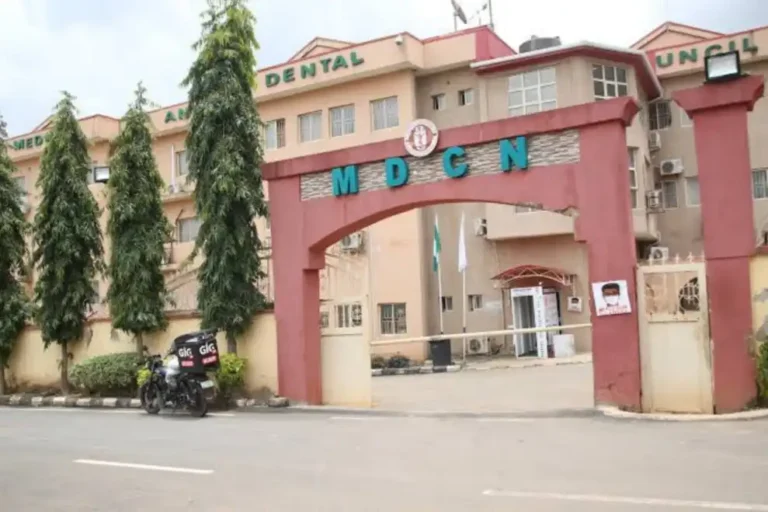
The Medical and Dental Council of Nigeria has informed newly inducted medical and dental practitioners that they must create a profile on the MDCN Housemanship portal as the primary step for accessing federal housemanship placements. The council said this requirement applies immediately after doctors and dentists receive their provisional registration certificate following pledge-taking and is central to the placement process.

In a notice addressed to practitioners seeking housemanship opportunities, MDCN explained that housemanship remains a mandatory engagement carried out in approved hospitals, where first-year doctors are supervised by consultants with a structured transition to independent practice. The council said the process is designed to ensure accountability, patient safety, and professional development at the early stage of medical practice.

MDCN stated that all newly inducted doctors and dentists are required to create their profiles on the Housemanship portal at www.housemanship.mdcn.gov.ng. According to the council, the portal gives applicants access to apply for placements in any of the 47 federal training institutions nationwide under the management of MDCN. It added that applications are to be made directly by candidates on the portal.

The council warned applicants to refrain from directly contacting federal hospitals or MDCN, either personally or through proxies, including parents. It said such actions are regarded as a contravention of the Centralised Housemanship Placement System. MDCN clarified that the provisional registration certificate is issued strictly for obtaining a certificate of experience through housemanship and is valid for 24 months, within which the doctor is expected to have commenced training.

Providing further clarification, MDCN said portal updates are strictly limited to the 47 federal hospitals approved for centralised housemanship placement. It noted that each hospital has an approved number of slots based on training capacity. The council also emphasised that there is never a time when the portal is “closed” or “opened”, explaining that the absence of a hospital simply means no vacancy exists.

MDCN disclosed that vacancies on the portal are updated every four to six weeks, depending on the completion of house officers in facilities. It acknowledged heavy traffic on announced update days and said measures such as expanded server bandwidth, single user log-in, and login OTP have been introduced to manage demand.

The council further stated that 81 non-federal hospitals accredited by MDCN also offer housemanship placements, advising applicants to approach such institutions directly. It added that details of approved hospitals, how the centralised scheme works, and all accredited training centres across federal, state, private, and military institutions are listed on its website, noting that existing spaces can accommodate all inducted doctors and dentists yearly.

In a disclaimer, MDCN said it has not and will not form social media groups for housemanship placement, warning that anyone who joins such groups does so at their own risk and should not blame the council for any consequences, including disciplinary measures.

Read also: NYSC releases full schedule and camp addresses for 2026 Batch A Stream 1

Kebbi Danruwantan Gwandu launches empowerment for 1000 beneficiaries

0

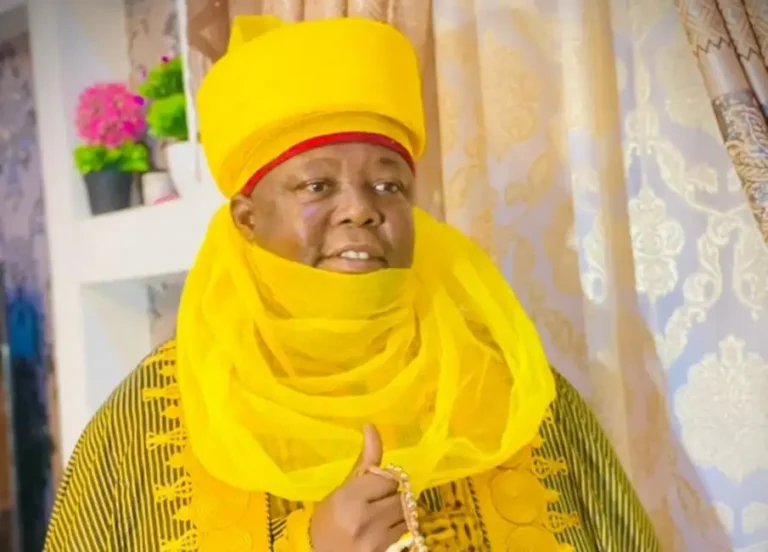
Alh. Idris Shuaibu, the Danruwantan Gwandu of Kebbi State, has kicked off his annual empowerment programme in Bagudo Local Government Area of Kebbi State, with hundreds of residents already benefiting from the initiative.

The event attracted notable figures from across Kebbi State’s political and economic landscape and was organised to ensure that residents of Bagudo Local Government Area enjoy what organisers described as the undiluted dividends of democracy and the Renewed Hope Agenda of President Bola Ahmed Tinubu, as reflected through the goodwill of Alh. Idris Shuaibu.

According to details from the office of the Danruwantan Gwandu of Kebbi State, the proposed number of beneficiaries for this year’s empowerment programme is projected at 1,000 by the end of January 2026. However, as at the time of this report, the number of beneficiaries had already risen to over 300 persons, indicating a faster rollout of support than initially anticipated.

Some beneficiaries of the empowerment programme expressed happiness over what they described as Alh. Idris Shuaibu’s consistent benevolent foresight, noting that the initiative has remained a steady source of support for many families in the area. They offered prayers for Allah’s blessings upon him and pledged to utilise the free grants for meaningful and sustainable ventures that would improve their livelihoods.

Speaking during the programme, Alh. Idris Shuaibu conveyed deep appreciation to all stakeholders and guests who attended the event despite their busy personal schedules. Among the dignitaries present were Hon. Bello Kaoje, member representing Bagudo/Suru constituency in the 10th National Assembly; Muhammed Samaila, Deputy Speaker of the Kebbi State House of Assembly, representing Bagudo East constituency; Hon. Sani Abubakar Lolo, member of the Kebbi State House of Assembly representing Bagudo West; as well as chairmen and chairpersons of various socio-political groups.

In his words, “my gratitude is beyond words, it knows no bounds…for everyone who came to show their support for my empowerment program, both from within Kebbi State, and outside, I am grateful for your presence, and I promise to do more for my people”.

He further assured residents that no one in Bagudo Local Government Area would be left out of his various empowerment programmes. He urged the people to keep faith with God and with the government, adding that better days lie ahead.

Alh. Idris Shuaibu currently serves as the Coordinator of Tinubu Kauran Tinubu (TKT) in Bagudo Local Government Area and as Treasurer Matan. He is also the Coordinator of the Independent Petroleum Marketers Association of Nigeria (IPMAN), Kebbi State. Through his humanitarian efforts, he has continued to support residents while contributing to the legacy of the administration of Kebbi State Governor, Comrade Nasiru Idris Kaura.

Read also: SFEG, MTN Nigeria launch Her Safety, Her Power social media competition