Home Blog Page 159

Niger State releases list of LGA Ward Coordinators for RHWDP

0

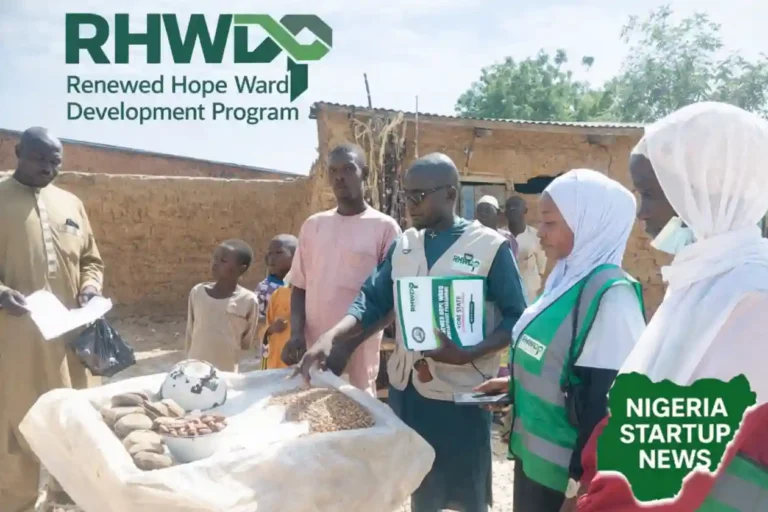
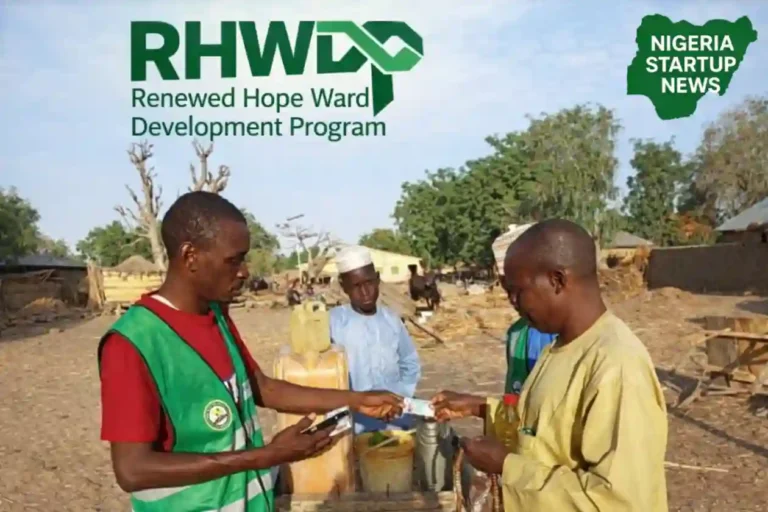
The Niger State Government has released the official list of coordinators appointed under the Renewed Hope Ward Development Programme (RHWDP) across the state’s 25 Local Government Areas.

The appointments are aimed at strengthening grassroots mobilisation and ensuring effective coordination of the Renewed Hope programme at the local government level.

The coordinators have been assigned to their respective LGAs, with contact details to support communication and implementation of the RHWDP activities across the state.

Below is the full list of appointed coordinators as released.

25 Local Government Coordinators**

  • 1. Ndagi Ibrahim – Agaie – 08029089340
  • 2. Ibrahim Bako – Agwara – 07055776379
  • 3. Aisha Ndazungi – Bida – 08036801440
  • 4. Suleiman Kilishi Yarima – Borgu – 08032843457
  • 5. Musa Bawa Bosso – Bosso – 08035887503
  • 6. Aminu Isa Danasabe – Chanchaga – 08037385597
  • 7. Ibrahim Mohammed Mustapha – Edati – 07051980064
  • 8. Abdullahi A. Ibrahim – Gbako – 08032902202
  • 9. Yusuf Waili – Gurara – 08188888929
  • 10. Hassan Abubakar – Katcha – 08036541585
  • 11. Lawal Madangen – Kontagora – 08068981116
  • 12. Mohammed Ibrahim Kawu Koko – Lapai – 07034896361
  • 13. Isah Mohammed – Lavun – 08036068219
  • 14. Salisu Ubandoma – Magama – 08032908040
  • 15. Isah Yusuf – Mariga – 08080740475
  • 16. Zakari Manigi – Mashegu – 08044912373
  • 17. Ibrahim Yusuf Bokani – Mokwa – 08105239149
  • 18. Yahuza Mohammed – Munya – 08034663915
  • 19. Hon. Abdulkadir Aliyu Achi – Paikoro – 08056337038
  • 20. Musa Adamu Maikujeri – Rafi – 08157570044
  • 21. Alhaji Maruf Rijau – Rijau – 08144464640
  • 22. Suleiman Kato – Shiroro – 08035931007
  • 23. Rabiu Barde – Suleja – 08035882847
  • 24. Saidu Yusuf – Tafa – 08034522765
  • 25. Farida Habibu – Wushishi – 09091976860

Read Also: Kwara targets mentorship in next Tech 4 Market Women phase

Advertisement

Jigawa Releases List of 27 LGAs Coordinators for RHWDP

1

The Jigawa State Government has released the official list of coordinators appointed to oversee the Renewed Hope Ward Development Programme (RHWDP) across the state’s 27 Local Government Areas.

RHWDP programme, which is part of ongoing efforts to drive grassroots development and strengthen ward-level governance, will be implemented through coordinators assigned to each local government area in the state.

Below is the full list of appointed coordinators as released.

S/N – NAME – LOCAL GOVT. – PHONE No.

  • 1. Abdulrahman Muhammad – Auyo – 08081865337
  • 2. Nura Ali Hazeek – Babura – 09070651064
  • 3. Abdulrazak Yakubu – Birnin Kudu – 07045556227
  • 4. Muhammad Dahiru Hassan – Birniwa – 08146634682
  • 5. Tasi’u Ibrahim Kukuma – Buji – 07039468587
  • 6. Dr. Zurki Ibrahim – Dutse – 08068322809
  • 7. Muhammad Taha Sani – Gagarawa – 07066791070
  • 8. Kabiru Lawan – Gumel – 08069317317
  • 9. Yusuf Abubakar – Garki – 08039745830
  • 10. Adamu Idris – Guri – 08064315219
  • 11. Nura Ibrahim Inyas – Gwaram – 08069232378
  • 12. Mustapha Usman – Gwiwa – 08081367034
  • 13. Abdullahi Muhammad Kade – Hadejia – 07032420548
  • 14. Abubakar Umar – Jahun – 08032365315
  • 15. Muhd Usman – Kafin Hausa – 07076535413
  • 16. Muhd Saidu – Kaugama – 09131415309
  • 17. Abbas Iliyasu – Kazaure – 08031817115
  • 18. Shamsu Madachi – Kiri Kasamma – 07036597574
  • 19. Gali Idris – Kiyawa – 07031311222
  • 20. Ado Umar – Maigatari – 07035496445
  • 21. Abubakar Isyaku – Maiam Madori – 07060986120
  • 22. Mustapha Yahaya Tsakuwawa – Miga – 08066606428
  • 23. Aminu Ismail – Ringim – 07036206385
  • 24. Yasir Lawan – Roni – 08062203094
  • 25. Rabiu Mohammed – Sule Tankarkar – 09064682375
  • 26. Gwani Musa Mohammed Yariwa – Taura – 08021111355
  • 27. Ibrahim Dahiru – Yankwashi – 08149301187

This was signed by Hon. Ibrahim Babangida Umar Gantsa, FCNA, the State Coordinator/commissioner, Ministry of Budget and Economic Planning, Jigawa State.

Read Also: FG to give TVET trainees grant and BOI loan after training

FG to give TVET trainees grant and BOI loan after training

0

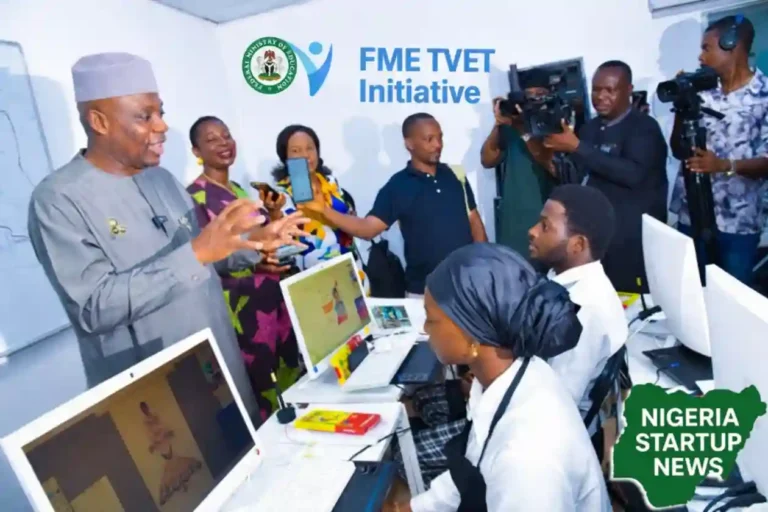
The federal government has disclosed that trainees under the Technical and Vocational Education and Training (TVET) initiative will receive entrepreneurial grants and access to soft loans from the Bank of Industry (BOI) to enable them to start businesses after completing their training.

The Minister of Education, Tunji Alausa, made this known during an interview on Channels Television, where he explained that the administration is repositioning technical and vocational education to play a central role in job creation, skills development, and economic growth.

“Yes, we’re making technical and vocational education very prestigious now,” the minister said. “Please give me about five minutes to talk about this technical and vocational education, because this is a big part of our agenda.”

He said the renewed focus on TVET was necessary to reduce Nigeria’s dependence on foreign skilled labour and to rebuild a strong local workforce across key sectors of the economy. According to him, many skilled jobs in Nigeria are currently being done by artisans from neighboring countries, a situation the government is determined to reverse.

“Today you go, your tiling, you go to most construction sites, the tilers that you get there from the Republic of Benin, Togo, that should not be the case,” he said. “We have to build this big part of our agenda system. We’re bringing it back, and we’re bringing it back with full force.”

Alausa also compared earnings of skilled workers in developed countries to highlight the economic value of vocational skills. “You go to any UK, US today, a plumber earns more than a doctor. An electrician in England earns more than a doctor,” he said. “So what are you talking here? So we want to now bring this pool of workers back.”

He explained that the government has developed a four-step approach to transform technical and vocational education nationwide. The first step, according to him, is direct financial support for students enrolled in TVET institutions.

“We would pay a student to go to those schools,” he said. “We’ve modeled how much we’re going to pay them when we roll the program out. We’ll be announcing that. We’ll pay them to go to school.”

The second step focuses on funding the institutions themselves. Alausa said schools offering technical and vocational training would receive proper tuition payments to enable them to improve facilities and expand capacity. “The school that they’re actually going to, we will pay them decent tuition fees because we need to really unlock a new value chain in our technical education system,” he said. “They’ll make money from tuition coming to them so that they can expand their workshop and expand their infrastructures.”

The third step, which he described as critical, is the MasterCraft training model that prioritizes hands-on learning. According to him, the government has redesigned the instructional method used in technical colleges.

“We’ve really, 360-degree, changed the education, the instruction,” he said. “What we will be doing with our technical education will just be 20% didactic and 80% hands-on training.”

He added that the MasterCraft model involves artisans and professionals from large, medium, and small industries directly training students. “Say you want to train our students on tiling. We quality assure you that you have the capacity to train them,” he explained. “We’ll ask you, how many students can you train? Ten students. We’ll give you ten students and we’ll pay for each of those students every month.”

To ensure quality, Alausa said the government will recruit 774 performance monitoring officers, one for each local government area. “We will go back to come and check to be sure those students are being taught properly,” he said. “They will go around to ensure those students are getting the right practical training.”

He further disclosed that three categories of instructional centres have been designed under the TVET framework. These include skill training centres, vocational enterprise institutes, and technical colleges at both state and federal levels.

For skill training centres, Alausa said the program will run for six months and target school dropouts and individuals who did not complete basic education. “That will be open to people that drop out from school, people that didn’t finish primary school, people that didn’t complete their JSS,” he said.

He noted that the government conducted labour gap analysis to determine which skills are most needed. “We’ve been very careful and deliberate in the kind of skills we will be training at these schools,” he said.

According to him, emerging sectors such as CNG conversion, renewable energy, mechanized farming, plumbing, electrical works, woodwork, and livestock production are among the priority areas. “We’re going to be training CNG conversion technicians,” he said. “Solar installers and renewable energy technicians to manage, install, and repair.”

Alausa said the number of skills in the national compendium has been reduced from 98 to 26 to focus on relevance. “We’ve cut it down to about 26 that we know are relevant to the needs of our country today,” he said.

He explained that training will be tailored to state-specific needs to avoid unemployment. “If today a labour gap analysis shows that in FCT we need more tilers or plumbers, we will zero in on those training so that we’re not producing people and not have job,” he said.

On the final step, Alausa said graduates will receive entrepreneurial grants to start businesses. “As they’re finishing their training, we will also give them an entrepreneurial grant to start up,” he said.

He added that beneficiaries can also access additional funding through BOI. “Beyond the entrepreneurial grant, if they need more money, we’ve met with the Bank of Industry CEO that they can arrange a top-up credit, single-digit credit,” he said.

Read Also: FG to Link TVET Trainees With Employers Via New Job Portal

Kwara targets mentorship in next Tech 4 Market Women phase

0

Kwara State Government says the next phase of the Tech 4 Market Women initiative will focus on mentorship and community building, as efforts continue to support women traders with practical digital skills. The disclosure was made as the state reiterated its commitment to inclusive economic growth through technology driven programmes.

The Commissioner for Business, Innovation and Technology, Damilola Yusuf Adelodun, stated this while receiving the AY Community and Tumishe Johnson Household Foundation on a courtesy visit to her office to discuss the Tech 4 Market Women initiative. She said the programme aligns with the vision of the present administration of AbdulRahman AbdulRazaq to empower women, strengthen the informal sector, and deepen financial inclusion through innovation.

According to the Commissioner, training market women in financial literacy and internet usage is critical to improving productivity and helping traders access digital financial services. She explained that such knowledge enables women in the markets to adapt to the evolving digital economy.

She emphasised that technology remains a key tool for transforming micro and small businesses across Kwara State, noting that many traders can grow income and improve record keeping when equipped with simple digital tools.

Hon. Adelodun assured the delegation of the Ministry’s readiness to collaborate with credible partners to scale up similar initiatives. She said the Ministry of Business, Innovation and Technology would continue to support programmes that directly impact market women and promote sustainable economic development across communities.

Speaking on behalf of the AY Community and Tumishe Johnson Household Foundation, Solomon Adami thanked the Commissioner for the warm reception and expressed appreciation for her openness to the engagement. He sought the support and partnership of the Kwara State Government to further strengthen and expand the Tech 4 Market Women initiative.

Adami disclosed that the initiative has successfully trained 220 market women across selected markets within the Ilorin metropolis. He said the training focused on practical financial literacy, basic internet usage, and the use of simple digital tools to support daily trading activities.

He further revealed that the next phase will focus on mentorship and community building, providing continuous guidance, peer learning, and support for trained women across Kwara State going forward.

Read also: Kwara launches RHWDP to reach 193,000 ward beneficiaries

Digital Green Nigeria, IFAD deploy technology to help farmers

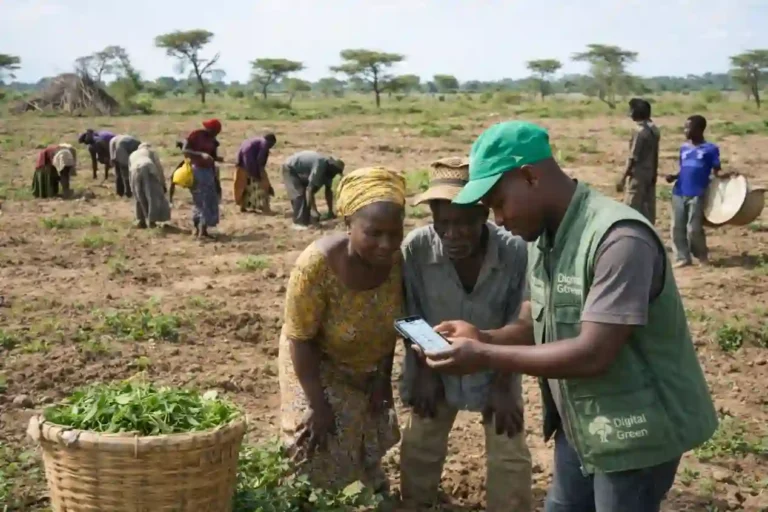
Digital Green Nigeria, in collaboration with the International Fund for Agricultural Development, IFAD, is deploying digital technology to help farmers get faster and better access to extension services across the country.

The pledge was made by David Edimu, Country Lead for Digital Green Nigeria, during an interview with the News Agency of Nigeria, NAN, in Abuja.

Edimu said Nigeria faces a serious extension service deficit, noting that the current ratio of one extension agent to about 8,000 farmers is grossly inadequate for effective service delivery.

He said the figure falls far below the Food and Agriculture Organisation standard of one extension agent to a maximum of 600 farmers.

“We want extension services in the hands of every farmer, so they no longer wait five to seven days without seeing an extension agent,” Edimu said.

He explained that farmers are accessing timely and relevant information through a digital application designed to improve productivity.

“Our intention is to ensure farmers get the right information at the right time through a digital app,” he added.

Edimu said Digital Green maintains a strong partnership with IFAD, with a focus on improving the livelihoods of smallholder farmers.

“With timely access to information, farmers can improve productivity and close existing gaps,” he said.

He stressed the need to move away from conventional approaches and adopt innovative methods to boost agricultural output.

Edimu said the organisation’s AI driven solutions allow farmers to access information in their local languages.

“We speak local languages to bridge literacy gaps. Not speaking English should not stop anyone from using the app,” he said.

He disclosed that Hausa language has been embedded on the platform, while Igbo and Yoruba are currently being integrated.

Edimu identified Kano State as a key state where the programme has gained prominence.

He said one extension agent supporting 400 farmers installed the app for 100 farmers with android phones.

“This reduced his workload to 300 farmers without smartphones, effectively bridging the extension gap,” Edimu said.

He added that households could share information using one or two phones, significantly reducing the extension service gap nationwide.

Read Also: FG RHWDP Registration

NeoLife pays Nigerian distributors N31bn in 2025 as earnings rise

Global health and wellness company NeoLife has disclosed that it paid a total of N31bn to its Nigerian distributors in 2025, a sharp increase from the N18bn paid in the previous year, highlighting strong growth in its local operations.

The payout was announced on Friday at NeoLife’s RISE meeting held in Lagos, an annual flagship event that opens the company’s business calendar and brings together distributors from different parts of the country.

Speaking at the event, Vice President, Field Development, West Africa, Olusanmi Asalu, said the significant rise in payouts shows the expanding scale of NeoLife’s business in Nigeria and the increasing earning potential within its distributor network.

“In 2025, we paid out a total of N31bn to thousands of NeoLife distributors across Nigeria,” Asalu said. “That figure rose from N18bn in 2024 to N31bn in 2025, showing that our business is getting bigger, bolder, and brighter.”

Asalu urged distributors to remain focused on ethical business practices and long-term growth, stressing that sustainability depends on integrity and full compliance with company standards.

“This is the time to build the right way to build with integrity and with a long-term vision at heart,” he said. “When we build with integrity, success follows. As long as we continue to build honestly and correctly, this business has no limit to what it can pay out.”

NeoLife operates in more than 50 countries worldwide and offers a range of nutritional supplements, weight management products, and eco-friendly home care solutions. Nigeria continues to rank among the company’s key growth markets in Africa.

Asalu explained that the RISE meeting is part of a structured series of events organised yearly to support distributors and monitor performance. According to him, NeoLife holds eight RISE meetings across the country at the beginning of each year, followed by a Mid-Year Rally in July to review progress and recognise achievements from the first half of the year.

He added that the company also organises an Impact Summit at the end of the year, which showcases cumulative achievements recorded over the year, alongside monthly opportunity meetings aimed at strengthening distributor engagement and business development.

During the Lagos meeting, NeoLife also restated its policies on ethical promotion and proper brand representation, following concerns around misleading product claims and unauthorised sales channels.

Director of Field Support, Nigeria, Adesina Mustapha, cautioned distributors against misrepresenting the company online or presenting themselves as official spokespersons.

“When using any social media platform, it is important to remember that you are not only representing yourself but also NeoLife as a company,” Mustapha said. “We like to maintain a high standard of ethics and uphold our good reputation.”

He said distributors are not allowed to create social media accounts or handles that suggest they are official NeoLife platforms or that they speak on behalf of the company.

Mustapha also raised concerns over unauthorised individuals listing NeoLife products on platforms such as Facebook, Instagram, Jumia and Konga, outside approved sales channels and in violation of company policy.

“These listings not only misrepresent our brand but also put consumers at risk of purchasing counterfeit, expired or improperly handled products,” he said.

The company stated that it would continue to strengthen internal controls and distributor education to protect consumers, maintain brand integrity, and support sustained long-term growth in Nigeria.

Read also: Champion Breweries raises N42bn to acquire Bullet brands

Champion Breweries raises N42bn to acquire Bullet brands

0

Champion Breweries Plc has announced plans to raise N42bn through a public offer of ordinary shares to fund the acquisition of the Bullet brand portfolio and strengthen its growth strategy, according to a statement made available to our correspondent on Sunday.

The company said the public offer is priced at N16 per share and represents the second leg of its N58bn capital-raising programme, complementing an earlier rights issue. The offer remains open until 21 January 2026 and is expected to support the acquisition of Bullet brands while boosting working capital for operations, innovation and market expansion.

Champion explained that the Bullet transaction marks a significant shift in its business model by expanding beyond traditional brewing into high-growth ready-to-drink and energy beverages. The acquisition was structured as an asset carve-out covering Bullet’s brands, trademarks, product formulas, packaging rights, commercial intellectual property and distribution agreements across 14 African markets, without the purchase of a manufacturing facility.

According to the company, this structure provides immediate access to an established pan-African distribution network that would otherwise take several years to build organically. Production of Bullet products will continue through an existing European manufacturing partner, with plans for phased localisation in Nigeria over time.

The Bullet portfolio includes Bullet Black, described as Nigeria’s leading ready-to-drink alcoholic beverage, and Bullet Blue, a caffeine-free energy drink. Champion noted that the Nigerian energy drink segment remains one of the fastest-growing within Africa’s FMCG space, with projected annual growth of about 14.53 per cent through 2030, driven by rising urbanisation and changing consumer lifestyles.

Commenting on the transaction, the Managing Director of Champion Breweries Plc, Dr Inalegwu Adoga, said the acquisition would strengthen the company’s long-term growth platform. “The Bullet acquisition is strategically important because it adds proven brands, regional scale and foreign-currency earnings through an asset-light structure. It strengthens Champion’s platform for long-term growth,” Adoga said.

Also speaking, the Group Managing Director of enJOYcorp, David Butler, said the deal would allow Champion to scale more efficiently across Africa. “Bullet brings together brands, demand and distribution that are already established across multiple markets. This allows Champion to scale efficiently and compete more effectively across Africa,” he said.

Champion highlighted its improving financial performance, noting that revenue has risen sharply in recent years alongside strong growth in earnings, reflecting improved operational discipline and economies of scale. The company added that the Bullet acquisition would further diversify its revenue base and enhance earnings resilience through foreign exchange-linked income.

The company advised prospective investors to review the offer prospectus and consult professional advisers before making investment decisions. Champion Breweries Plc is a listed Nigerian beverage company with a portfolio that includes Champion Lager and Champ Malta and operates under the enJOYcorp Group.

Read also: Structures in place to make Nigeria self-sufficient in sugar production – FG

Structures in place to make Nigeria self-sufficient in sugar production – FG

The Federal Government says structures are being strengthened to support Nigeria’s long-term goal of becoming self-sufficient and competitive in sugar production, following reforms at the Nigeria Sugar Institute aimed at repositioning it as a national centre of excellence for the industry.

The Executive Secretary and Chief Executive Officer of the National Sugar Development Council, Mr. Kamar Bakrin, clarified the institutional status of the Nigeria Sugar Institute, dismissing public misconceptions and outlining reforms designed to support the country’s sugar sector. He spoke during a recent interview with journalists, where he explained that the Institute was established as a purpose-built national institution to serve as the research, training and technical backbone of the industry, operating under the strategic oversight of the Council.

According to Bakrin, the Nigeria Sugar Institute was incorporated in June 2019 and formally commissioned in January 2021, with its headquarters located in Ilorin, Kwara State. He said the Institute was deliberately designed as a shared, industry-wide platform to consolidate research, manpower development and technical support in a single national hub serving all segments of the sugar value chain.

“The Nigeria Sugar Institute is a purpose-built national institution established to serve as the research, training and technical backbone of Nigeria’s sugar industry,” he said. “It operates under the strategic oversight of the NSDC and exists to ensure consistent access to quality planting materials, skilled manpower and credible technical expertise for the industry.”

Bakrin explained that the Institute houses specialised bio-factory and tissue culture laboratories that play a critical role in varietal development, seedcane multiplication and applied research. He noted that these facilities support both the sugar and ethanol value chains and directly address one of the sector’s long-standing challenges, which is limited access to high-quality planting materials for commercial cultivation.

He stressed that contrary to some public perceptions, the Institute was not created to serve a narrow group of operators. Rather, it was established as an industry-wide resource accessible to all players across the sugar sector. According to him, sugar operators are already making use of NSI services, including seedcane supply, technical support and structured capacity building programmes.

“As the Institute continues to scale and demonstrate value, discussions around broader industry participation and long-term support will naturally evolve,” Bakrin said. He added that NSI is “functioning exactly as intended—as a national centre of excellence strengthening the growth, resilience and competitiveness of Nigeria’s sugar industry.”

On reforms implemented since his appointment, Bakrin said the Council embarked on a deliberate and systematic rebuilding of the Institute, starting with governance and institutional structure. He explained that the objective was to reposition NSI into a fully functional, industry-facing centre capable of delivering practical research, training and technical support to the sector.

“We set out to reposition NSI into a fully functional, industry-facing centre for research, training and technical support,” he said. “With the support of KPMG, we strengthened governance systems, clarified roles and aligned the Institute with global best practices.”

Beyond governance reforms, Bakrin disclosed that the NSDC prioritised human capacity development. He said more than 60 NSI staff members have undergone targeted managerial and technical training over the past two years. According to him, the training covered project management, stakeholder engagement, laboratory instrumentation, soil analysis and equipment maintenance, among other areas critical to the Institute’s mandate.

He added that NSI has also been repositioned as a national training hub through the NSDC/NSI Boot Camp initiative. The programme delivers hands-on training in sugar processing, refining, quality control, industrial safety and environmental compliance, with the aim of raising technical standards across the industry.

Bakrin said significant investments were also made in curriculum development and standard operating procedures covering the full sugar production cycle, from cane preparation to refining and by-product utilisation, with strong emphasis on safety and sustainability. He noted that the strengthened capacity at NSI is already translating into direct industry impact.

He cited joint technical training programmes conducted for Golden Sugar Estate in Sunti, Niger State, as well as comprehensive field-to-factory training delivered for new hires at the BUA-owned Lafiagi Sugar Company in Kwara State. According to him, these engagements reflect how the reforms are laying a solid foundation for the Institute to fully deliver on its mandate and support Nigeria’s long-term drive towards self-sufficiency and competitiveness in sugar production.

“When we speak about progress at NSI, we are talking about a systematic rebuilding of institutional capacity,” Bakrin said. “These reforms are positioning the Institute as a credible national centre of excellence for the sugar industry.”

Read also: FG says over 100,000 vehicles run CNG, targets one million by 2027

NELFUND plans to start paying part-time, private institution students

0

The Nigeria Education Loan Fund (Nigeria Education Loan Fund), NELFUND, has disclosed that plans are ongoing to eventually include students on part-time programmes and those studying in private institutions in the federal student loan scheme, even as it clarified why the categories are currently excluded.

Managing Director of NELFUND, Mr. Akintunde Sawyerr, told journalists in Abuja that the exclusion is based strictly on legal and operational limitations contained in the NELFUND Establishment Act. According to him, the law establishing the Fund does not presently permit the participation of students enrolled in part-time programmes or private tertiary institutions.

Sawyerr explained that beyond the legal restriction, there are basic eligibility requirements that applicants must meet to qualify for the loan scheme. He said many students on part-time programmes are unable to meet these requirements, especially those related to proper authentication and verification.

“And in addition to that, there are basic requirements that a student must meet to stand qualified for the scheme. Sadly, most students involved in part-time programmes don’t have such requirements that would help for proper authentication,” he said.

He further noted that one of the most critical requirements is admission through the Joint Admissions and Matriculation Board, JAMB, which he described as compulsory for all applicants under the scheme.

“And one of key requirements is that your admission must come from the Joint Admissions and Matriculation Board (JAMB). It’s a compulsory requirement, and sadly, many students in the part-time programmes don’t have it,” Sawyerr stated.

He said the requirement is necessary to ensure credibility and prevent abuse of the scheme, noting that NELFUND must be able to confirm the status of every applicant before disbursement.

“This is because we have to validate the applicant, we have to verify if you are a student or not. Because anybody can come at any time and claim to be a student of any particular institution,” he added.

Despite the current exclusion, the NELFUND boss assured that the Fund is already considering future inclusion of part-time students and those in private institutions. He said such an expansion would require amendments to existing laws and is therefore projected for later years.

“Nevertheless, plans are on to cover the interest of students in part-time programmes, as well as those in the private institution. It’s something that will come in later years, because it will require some legislative actions,” Sawyerr said.

Meanwhile, the Executive Director, Operations, NELFUND, Mustapha Iyal, disclosed that data shows a steady and impressive rise in the number of students applying for the loan, reflecting growing trust in the scheme.

“At NELFUND, we have a five-year plan running. But the figures from 2023/2024, and 2024/2025 applications indicated a significant increase of almost 40 per cent. In 2025/2026 cycle, we are looking at about 60 per cent increase in application,” he said.

Iyal explained that the Fund has made adequate budgetary provisions to accommodate the projected surge, adding that the increase is largely due to sustained awareness campaigns.

“Hence, we have been making adequate budget for the expected surge. Significantly, this could be attributed to the massive awareness and campaign we created over the period,” he noted.

He also addressed concerns raised by students over delays in the payment of the monthly upkeep allowance of N20,000, assuring that all outstanding payments would be settled promptly.

“We acknowledge the outbursts and concerns of the affected students. But we have done the necessary cleansing of the system to ensure timely and seamless disbursement of the upkeep now and going forward,” he said.

Iyal disclosed that a reconciliation exercise carried out after the 2024/2025 academic session revealed that 11,685 students are owed a total of N927.98 million in outstanding upkeep payments.

“But let me be very clear. These are not cases of withheld funds or policy failure. Rather, they are the result of technical and operational issues, including temporary network downtime, failed transactions, and instances where bank account details could not be validated at the time of processing,” he explained.

He added that management has approved a one-time reconciliation process involving direct engagement with affected students, a grace period for updating bank details, multi-layer validation, and prompt payment once issues are resolved.

“Nevertheless, our objective is straightforward: every eligible student must receive what is due to him or her, accurately, transparently, and without delay,” he said, adding that some beneficiaries from the 2023/2024 batch have already indicated interest in repaying their loans.

Read also: DSI Movies launch to empower youths for careers in film industry

The Alternative Bank Sukuk enters Sharia screening ahead of issuance

0

The Alternative Bank has commenced the 2026 financial year with a major move in Nigeria’s Islamic capital market, as its newly unveiled $20 million and ₦5 billion Sukuk programme undergoes the mandatory Sharia compliance screening required before issuance.

Information available to Nigeria Startup News on Monday indicates that the Sukuk programme, announced in the first week of January 2026, is currently being reviewed by relevant Sharia advisory bodies to ensure full compliance with non-interest finance principles ahead of its entry into the market.

The development follows closely on the heels of the successful liquidation of the Federal Government of Nigeria (FGN) Sukuk II assets on December 31, 2025, an event that capped a strong performance year for Nigeria’s domestic Sukuk market and reinforced confidence in non-interest capital instruments.

Industry analysts have described The Alternative Bank Sukuk as historic, citing two major factors. According to market watchers, it represents the first public Sukuk in Nigeria to be issued in a foreign currency, a move expected to draw fresh participation from dollar-based and offshore investors into the country’s Islamic capital market space.

They also noted that the Sukuk introduces a new structural model not previously deployed in the FGN Sukuk I–VII series. Structured as an Additional Tier-1 (AT1) Mudarabah Sukuk, the issuance is seen as a significant innovation that could deepen the Sukuk market and expand its use across Nigeria and the wider West African sub-region.

Market observers said the transaction reflects the growing maturity and sophistication of Nigeria’s Islamic capital market, as institutions increasingly adopt innovative products designed to meet regulatory requirements, investor expectations, and development financing needs.

With the Alternative Bank Sukuk programme entering its screening phase, stakeholders said the Islamic capital market has started 2026 on a solid footing, building on years of steady growth driven by sovereign and corporate Sukuk largely used to fund infrastructure and real sector projects.

Beyond capital market activity, 2026 has also opened with a key institutional development in the Islamic finance ecosystem. New leadership has been announced for the Islamic Finance Scholars Forum, Nigeria (IFSN), a body that brings together experts in Sharia, finance, and policy.

Prof. Luqman Zakariya of the University of Abuja, who also serves as one of the imams of the National Mosque, Abuja, has been appointed President of the Forum. Dr. Abdullah Lamido of Bayero University, Kano, was elected Vice President.

The IFSN Board of Trustees includes academics and industry professionals such as Prof. Saadatu H. Liman, Vice-Chancellor of Nasarawa State University; Dr. Umar Oseni, Secretary-General of the OIC Arbitration Centre in Istanbul; Hajia Hajara Adeola, Founder and Chairperson of Lotus Bank; and Prof. AbdulRazzaq A. Alaro, who chairs the Board.

Analysts say the combination of innovative Sukuk structures and strengthened professional leadership positions Nigeria’s non-interest finance sector for sustained growth and increased regional relevance in 2026.

Also read: Apply: The Alternative Bank Recruitment for Sales Team 2026