Home Blog Page 166

FG allocates ₦202bn to NSIPA programmes

The Federal Government has proposed a total of ₦202 billion for the (NSIPA) in the 2026 Appropriation Bill, positioning the agency as one of the central platforms for poverty reduction and social welfare interventions in the coming fiscal year.

A breakdown of the proposal shows that NSIPA is allocated ₦200 billion for recurrent expenditure and ₦2 billion for capital spending. The recurrent component is intended to support programme operations, coordination, administration, and nationwide implementation of social investment initiatives, while the capital allocation is expected to cover systems, institutional support, and other enabling infrastructure. The budget document does not provide itemised allocations to individual programmes, with funding captured at the agency level.

NSIPA is responsible for coordinating several of the Federal Government’s flagship social intervention programmes. One of the most prominent among them is , which focuses on skills development, work placement, and employability support for young Nigerians. While the programme has been a major part of past social investment efforts, the 2026 Appropriation Bill does not specify a separate funding line for N-Power, indicating that any activity under the scheme would fall within the broader NSIPA allocation and subsequent implementation decisions.

Another programme coordinated by the agency is the Conditional Cash Transfer initiative, which provides direct financial support to vulnerable households, often linked to basic education, health, or social outcomes. NSIPA also oversees the Government Enterprise and Empowerment Programme (GEEP), designed to support micro traders, artisans, and small-scale entrepreneurs through targeted financial assistance and inclusion-focused interventions.

In addition, the National Home Grown School Feeding Programme falls under NSIPA’s coordination mandate. The programme is aimed at improving nutrition for public primary school pupils while supporting local farmers and food vendors through structured supply chains. Funding for school feeding appears as a separate service-wide item in the 2026 budget, but NSIPA remains the coordinating agency.

Beyond its direct allocation, the proposed budget also includes ₦250 billion under the National Poverty Reduction with Growth Strategy, a service-wide intervention that explicitly references the upscaling of national social investment efforts. Although this funding is not booked directly under NSIPA, the language of the budget suggests the agency plays a key role in implementation and coordination.

The 2026 Appropriation Bill remains a proposal and is subject to review, adjustment, and approval by the National Assembly. Until the budget is passed and signed into law, all figures and programme expectations remain provisional, with final outcomes dependent on legislative approval and subsequent execution guidelines.

Read Also: Yobe State begins RHWDP beneficiary enrolment in all Wards
Advertisement

Apply: Katsina KASEDA Free MSME Business Registration Portal

0

The Katsina State Government, through the (KASEDA), has opened an official portal for business registration across the state. Registering your business with KASEDA is the first step to accessing real support for growth. Through registration, business owners can benefit from training programmes, funding opportunities, and other enterprise development support provided by the Katsina State Government.

The process is simple, free, and open to all micro, small, and medium-scale enterprises (MSMEs) operating in Katsina State. If you are running a business and want to position yourself for future opportunities, now is the time to register and be part of the state’s official MSME database.

About Programme

The KASEDA portal serves as the official platform for MSME registration in Katsina State. It allows business owners to register, verify certificates, and confirm registration status online without visiting any physical office.

Key options available on the portal include:

  • Register
  • Sign in
  • Verify certificate
  • Check registration status

Once registration is completed, businesses receive an official certificate that is recognized across Katsina State.

Benefits of Registering With KASEDA

Registering your business with KASEDA comes with several advantages designed to support enterprise growth and sustainability.

These benefits include:

  • State-recognized certification issued directly by KASEDA and accepted by Katsina State government offices
  • Verifiable online certificates with unique identification numbers for authenticity checks
  • Instant certificate download in PDF format with no waiting period
  • Improved access to Katsina State entrepreneurship programmes, trainings, and interventions
  • Better positioning for funding opportunities, grants, and partnerships linked to state programmes

The certificate also helps build credibility when dealing with customers, financial institutions, and business partners.

Who is Eligible

The KASEDA certificate is relevant to a wide range of businesses operating within Katsina State.

This includes:

  • New businesses in Katsina State, such as small shops, startups, and farming cooperatives in areas like Dutsin-Ma, Katsina city, and Funtua
  • Existing enterprises seeking legitimacy and formal recognition for growth and expansion
  • Businesses applying for state programmes, grants, training opportunities, or government-backed initiatives

Many Katsina State programmes require proof of business registration, and the KASEDA certificate serves as that official proof.

There is currently no deadline from the state government.

How to Apply

Business owners are encouraged to visit the KASEDA portal, complete the online registration, and download their certificate instantly.

Link to apply: APPLY HERE

Read Also: GEEP Initiative Provides Interest-Free Loans for Nigerian MSMEs

GEEP Initiative Provides Interest-Free Loans for Nigerian MSMEs

0

Access to affordable capital remains one of the toughest challenges facing Nigerian entrepreneurs. Many micro, small, and medium enterprises (MSMEs) struggle to expand because bank loans are difficult to obtain, and even when available, the interest rates are often too high for sustainability.

In response to this, the Federal Government established the Government Enterprise and Empowerment Programme (GEEP) to make interest-free loans available to small business owners, agricultural workers, skilled tradespeople, merchants, and young entrepreneurs across the country. The Bank of Industry manages the scheme under the National Social Investment Programme.

According to officials, GEEP was designed to meet genuine business needs rather than emergency requests, with repayment schedules spread over reasonable periods. The structure also includes a grace period that allows businesses to stabilize their income before starting repayment.

“GEEP loans are structured to support real business growth by giving entrepreneurs time to build revenue before repayment begins,” a programme source explained.

Through its various loan products, beneficiaries can access up to ₦300,000 without paying any interest, significantly reducing borrowing costs. The initiative also removes the need for traditional collateral, making it easier for small business operators to qualify.

GEEP offers several categories of loans tailored to different business segments. TraderMoni provides micro-financing to small traders and artisans, with initial amounts starting modestly and increasing after successful repayment. MarketMoni targets marketplace vendors and cooperative members with amounts between ₦50,000 and ₦100,000. FarmerMoni offers larger financing of up to ₦300,000 for small-scale farmers to purchase inputs and expand their farms.

“These products were developed to reach diverse economic actors — from market women to farmers — who contribute daily to Nigeria’s economic growth,” a programme representative stated.

To qualify, applicants must be Nigerian citizens aged 18 or above, have a Bank Verification Number (BVN), a functional bank account, and engage in productive activities such as trade, agriculture, or skilled work. For certain loan types, particularly MarketMoni, applicants are also required to belong to a registered association or cooperative.

Read Also: Delta State launches ₦1bn MSME revolving loan with BoI

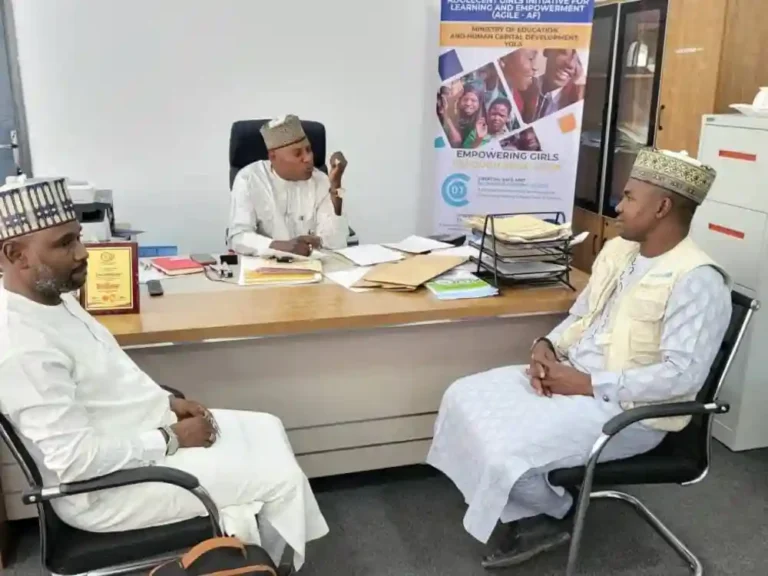
Adamawa AGILE, UNICEF Partner to Boost Girl Child Education

The Adamawa State Adolescent Girls Initiative for Learning and Empowerment (AGILE) Project has entered into a partnership with UNICEF to strengthen educational development in the state. UNICEF officials visited the AGILE Office in Yola, the state capital, to deliberate on effective collaborations aimed at improving girl child education outcomes in Adamawa State. The meeting brought together representatives from the UNICEF Bauchi Field Office and the Adamawa State UNICEF team, who discussed key areas of partnership and strategies for progress.

Members of the UNICEF delegation included Mal. Abdulrahman Ibrahim Ado, Education Specialist from the Bauchi Field Office; Mal. Kabiru Ibrahim, UNICEF Consultant for Adamawa State; and Mr. Lucky Godwin Kure, UNICEF Focal Officer from the Adamawa State Ministry of Education and Human Capital Development, Yola.

In his remarks, the Project Coordinator, Engr. Siddiki Liman, said AGILE remains committed to embracing innovative ideas and working closely with partners to fast-track educational growth in the state.

Yobe State begins RHWDP beneficiary enrolment in all Wards

2

Yobe State has commenced beneficiary enrolment for the Renewed Hope Ward Development Programme (RHWDP) across all the 178 political wards in its 17 Local Government Areas.

This disclosure was made by the Yobe State Coordination Office, Damaturu, as part of efforts to kick-start the implementation of the programme at the grassroots level in line with national guidelines.

In Yobe State in particular, the RHWDP is targeting to enrol a total of 178,000 prospective beneficiaries across 178 wards in 17 LGAs. As a pilot exercise, the Yobe State RHWDP Coordination Office intends to enrol 89,000 individuals, representing 50 percent of the overall target, between 16th and 19th January 2026, covering all locations within the state.

According to the Coordination Office, the pilot phase is designed to ensure quality implementation, address identified gaps, process feedback from citizens and stakeholders, and promote learning. The exercise is also aimed at ensuring equity and inclusion in the enrolment process before full-scale implementation begins.

The State Coordination further stated that it is determined to implement the directives of His Excellency Governor Mai Mala Buni, which emphasise the prioritisation of Unemployed Youths, Smallholder Farmers, and Owners of Micro, Small and Medium Enterprises (MSMEs) during the targeting and enrolment exercise. This approach, it noted, aligns with the economic realities of Yobe State and the broader objectives of the RHWDP.

The programme is expected to strengthen grassroots participation, improve access to economic support, and ensure that beneficiaries are selected transparently and fairly across communities.

Guideline for Ward-level Targeting

  • All wards across all LGAs in the state must be captured on the enrolment portal
  • There should be adequate spread across communities and sub-units within each ward
  • Relevant stakeholders must be engaged and sensitised on the programme, especially on enrolment requirements and targeting procedures
  • At least 30 percent of the population targeted should be economically active women
  • Beneficiary enrolment must take place at the community level
  • Beneficiary data must be verifiable at all levels

RHWDP Beneficiary Enrolment Criteria

  • Prospective beneficiaries must have a valid National Identification Number (NIN)
  • Applicants must be residents within the LGA or ward of enrolment
  • Enrollees must be economically active, including smallholder farmers, entrepreneurs or traders, technicians, craftsmen and women, artisans, and persons with disabilities
  • Unemployed youth should be highly prioritised during the enrolment process

Prospective Beneficiaries Per LGA Map

  • Bade – 10 wards
  • Bursari – 10 wards
  • Damaturu – 11 wards
  • Fika – 10 wards
  • Fune – 13 wards
  • Geidam – 11 wards
  • Gujba – 10 wards
  • Gulani – 12 wards
  • Jakusko – 10 wards
  • Karasuwa – 10 wards
  • Machina – 10 wards
  • Nangere – 11 wards
  • Nguru – 10 wards
  • Potiskum – 10 wards
  • Tarmua – 10 wards
  • Yunusari – 10 wards
  • Yusufari – 10 wards

KEY METRICS

  • 17 – number of LGAs
  • 178 – number of political wards
  • 1,000 – potential beneficiaries per ward
  • 178,000 – total potential beneficiaries

RHWDP Overview

The Renewed Hope Ward Development Programme is a nationwide grassroots initiative designed to deliver support to economically active Nigerians across 8,809 wards in 774 LGAs, 36 states, and the FCT. In line with national implementation guidelines, states are required to activate coordination structures and commence the targeting and enrolment of prospective beneficiaries across all wards within their jurisdictions.

Read Also: Canada, Germany to fund 5,000 women-led businesses in Nigeria

NASENI targets research commercialisation, AI, greenhouse expansion

0

The National Agency for Science and Engineering Infrastructure (NASENI) has outlined plans to expand the commercialization of locally developed technologies, strengthen industry partnerships, and roll out new innovation-driven projects aimed at boosting Nigeria’s economic growth in 2026.

The Executive Vice Chairman and Chief Executive Officer of National Agency for Science and Engineering Infrastructure, Mr. Khalil Suleiman Halilu, disclosed this on Thursday, January 15, 2026, during a townhall meeting with staff of the agency.

Speaking at the engagement, Halilu commended employees for what he described as their dedication, resilience, and commitment, noting that their efforts have contributed to NASENI’s growing impact across key sectors of the Nigerian economy. He reaffirmed management’s resolve to prioritize innovation, staff welfare, and institutional growth as part of the agency’s long-term strategy.

The NASENI boss encouraged staff to freely raise concerns, offer constructive feedback, and identify challenges early, stressing the importance of collective responsibility in public service delivery. According to him, “effective problem-solving requires foresight, collaboration, and a shared sense of responsibility at all levels of governance and administration,” while acknowledging the complexities involved in leadership and decision-making.

Halilu added that taking responsibility for difficult choices remains essential to driving institutional progress, urging workers to contribute positively and sincerely in their daily duties to strengthen teamwork and improve service delivery.

Looking ahead to 2026, the EVC said the agency will deepen the commercialization of its research outputs, strengthen industry linkages, and intensify staff capacity development under the theme “Get Involved.” He noted that the goal is to build a robust innovation ecosystem capable of delivering practical solutions and supporting sustainable economic growth nationwide.

He also announced plans to provide greenhouse facilities to all NASENI institutes, similar to the one at the Agriculture Machinery and Equipment Development Institute in Lafia, and to establish an Artificial Intelligence Unit at the agency’s headquarters. Other projects, he said, are in the pipeline to further expand NASENI’s national impact.

During the interactive session, coordinating directors, research directors, union leaders, and other staff highlighted achievements recorded under the current leadership, citing progress in innovation, digital migration, technology transfer, agriculture, renewable energy, and job creation. They said these efforts are positioning NASENI as an emerging hub for technological advancement and industrial innovation in Nigeria.

Read Also: NYPF targets 1.1 million youths with free ICT, EV training

NYPF targets 1.1 million youths with free ICT, EV training

0

The Nigeria Youth in Parliament Forum (NYPF) has announced plans to train 1.1 million youths nationwide in information and communications technology (ICT) and electric vehicle (EV) technology and maintenance under its Take Action (TAC) campaign.

The Forum said the training will be offered free of charge, while calling on state governments, through their ministries of youth affairs, to mobilise young people for effective participation across the states.

Director General of the Forum, Hon. Tony Nwulu, disclosed this at a media briefing on Thursday in Abuja, saying, “Nigeria stands at a defining moment in its youth development journey,” with a fast-growing young population and a changing global economy.

He said the need for structured, large-scale skills development is urgent for employable, globally relevant skills.

According to Nwulu, “Following strategic deliberations, the Youth in Parliament Forum has resolved that the Take Action Campaign (TAC) will serve as our primary national focus for this year.”

He explained that within TAC, efforts have been streamlined around two high-impact interventions aimed at employability, innovation, and economic participation among young Nigerians.

“These are the National ICT Skills Training Programme and the National Electric Vehicle (EV) Technical Training Programme,” he said.

Nwulu added that the initiatives are inclusive, scalable, and regionally balanced, noting that every state and geopolitical zone will benefit equitably.

“Our targets are ambitious but necessary,” he said.

He further explained that the ICT component will cover a range of disciplines including cybersecurity fundamentals, data protection and privacy, data analytics, cloud computing and data governance, as well as emerging digital skills aligned with global demand.

Read Also: Lagos to empower artisans, unemployed youths with skills training

Renewed hope development programme disbursement to take place at wards

0

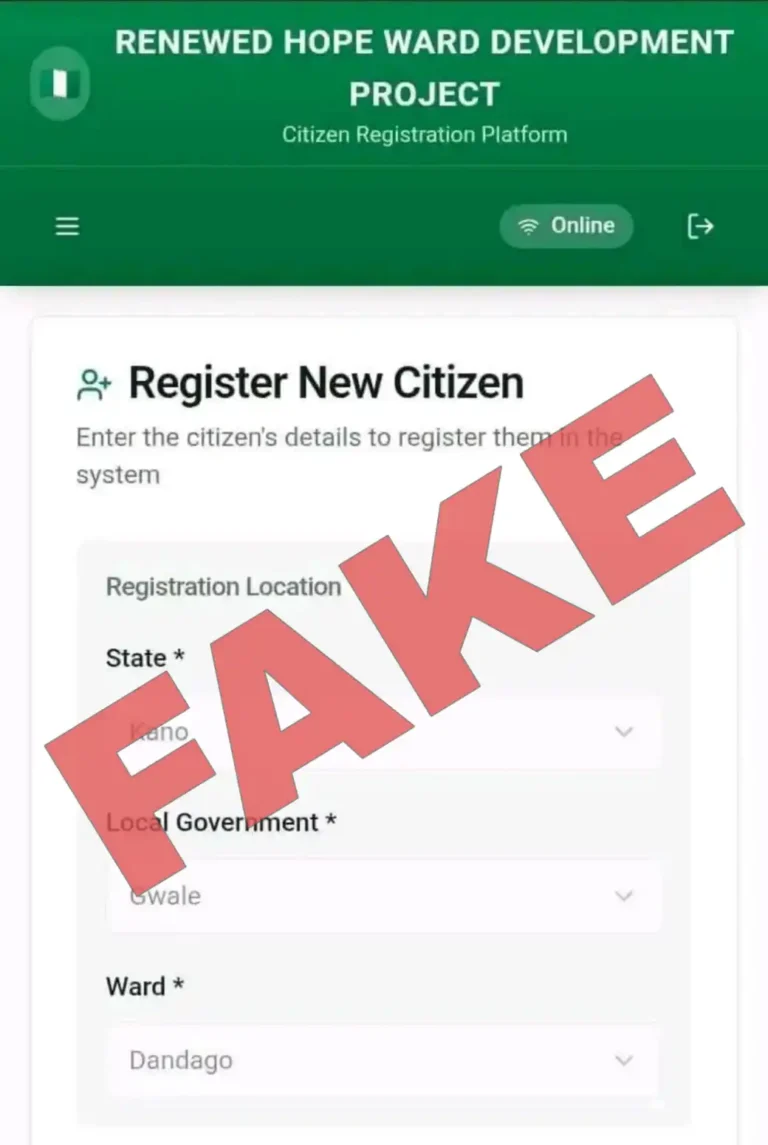
The disbursement of funds from the Federal Government through the Renewed Hope Ward Development Programme (RHWDP) will take place in all 8,809 electoral wards across the country. There is no registration or payment portal for this programme.

Nigeria Startup News can confirm that the programme will support 1,000 economically active persons in each ward, and up to 2,000 persons in larger wards.

Each ward has the opportunity to benefit from this intervention to support citizens and empower youths and women with skills in order to reduce poverty and strengthen development at the ward level.

What is required of beneficiaries is to apply through their ward, after which beneficiaries will be selected. Circulating reports claim that each selected person will receive ₦50,000 as part of the federal government’s support under the leadership of Bola Ahmed Tinubu. However, there has been no official statement on the amount to be paid yet.

There is no online link for this programme. Applications will be coordinated through wards across all 774 local government areas in Nigeria. You should register through your ward by contacting your ward councillor.

When Renewed Hope Ward Development disbursement begins, the public will be informed. The project is expected to generate employment and reduce poverty.

All beneficiaries are advised to be careful of scammers. Registration is free, and there is no online payment or application fee.

World Bank says Nigerian states rely too much on federal revenue

Under Nigeria’s federal system, states have wide political powers but depend heavily on their constitutional share of oil and non-oil revenues collected by the federation, a structure the World Bank says has weakened accountability and reduced incentives for strong financial management.

In a new report, the World Bank explained that this long-standing dependence has encouraged poor use of public resources, as states face little pressure to improve systems or raise revenue independently. The situation became clear during the 2015 commodity price crash, when many states struggled to pay salaries and meet basic obligations, exposing deep weaknesses in fiscal governance.

This crisis led to the World Bank-supported States Fiscal Transparency, Accountability and Sustainability, SFTAS, Program for Results, which ran from 2018 to 2022. Through the programme, about $1.5 billion was distributed to Nigeria’s 36 states as performance-based grants aimed at encouraging common standards in fiscal governance and financial transparency.

Measured by official programme results, the World Bank said SFTAS exceeded expectations by helping states establish basic fiscal management systems from a very low starting point. All 36 states now publish their budgets and audited financial statements, while nearly all states publish budget implementation reports, citizen budgets, and citizen accountability reports. In addition, 24 states passed laws granting their audit offices financial and operational autonomy.

On revenue generation, the report said average internally generated revenue increased from about 20 percent to 30 percent in nominal terms. It also noted that 29 states adopted consolidated revenue codes, while 17 states expanded Treasury Single Account coverage to at least 80 percent of their total state finances.

Spending controls also improved. According to the report, 33 states passed procurement laws establishing autonomous procurement agencies. About half of the states now publish contract data and have adopted e-procurement systems. Nearly all states also linked their payroll systems to biometrics and Bank Verification Numbers to reduce payroll fraud.

In the area of debt management, 35 states passed debt management legislation, and all 36 states are now publishing annual debt sustainability analyses.

Despite these gains, the World Bank said the reforms have not gone far enough to stop fiscal mismanagement or guarantee accountability. The report highlighted persistent challenges such as poor-quality fiscal data, politically inflated budgets that lack credibility, limited use of fiscal data by civil society groups, weak functionality of Treasury Single Account systems, frequent use of direct contracting in procurement, and failure by governments to act on debt data that is already published.

The Bank noted that SFTAS did not expect uniform reform adoption across all states, and results showed wide variations in performance depending on local conditions and political choices.

The report identified five key factors shaping how reforms take root. First, it said financial incentives clearly worked. Performance-based grants motivated reforms, especially in states with lower internally generated revenue per capita. Oil-producing states, which are buffered by higher revenues, were slower to embrace reforms. However, the report stressed that money is only one factor, as political, institutional, and social considerations also influence decisions.

Second, the World Bank said fiscal governance reforms are deeply political because they shift power. Measures such as credible budgets, independent audits, transparent procurement, and centralized revenue collection reduce discretion and weaken patronage networks. In many clientelist settings, the report said transparency reforms do not produce quick electoral rewards, leading politicians to use budgets to signal ambition or appease groups instead.

Still, SFTAS helped change political dynamics in subtle ways. Budget officials gained tools such as medium-term expenditure frameworks to limit politically motivated spending. Peer learning and competition also played a role, as public rankings increased the cost of lagging behind. As one interviewee quoted in the report said, “It’s one thing to be incompetent and people don’t know. It’s another when every other state is doing something and you are not.”

Third, the report said vested interests remain the hardest obstacle. Patronage networks and weak accountability encouraged some states to meet SFTAS rules on paper while avoiding real change. Procurement showed this tension, as e-procurement improved transparency in some cases, but politically connected firms still won large contracts through non-competitive processes.

Fourth, the World Bank said accountability takes time. While transparency improved quickly, oversight remains weak due to underpowered legislatures, limited civic capacity, and dominant party systems. Many public consultations were symbolic, and audit offices often remained underfunded.

Finally, the report said bureaucratic routines matter. Repeated use of reporting templates and data systems created habits within civil services that continue even when political support fades. The Bank described this as “bureaucratic stickiness,” noting that these quiet shifts are critical for lasting reform.

Overall, the World Bank said Nigeria’s fiscal reform journey reflects a difficult middle ground shaped by politics, interests, and uneven capacity, but progress remains possible when incentives, institutions, and accountability slowly align.

Read Also: Canada, Germany to fund 5,000 women-led businesses in Nigeria

Sokoto approves food aid for 500 widows of fallen heroes

Governor Ahmed Aliyu of Sokoto State has approved the distribution of food items to 500 widows of fallen heroes as part of activities marking the 2026 Armed Forces Remembrance Day celebration in the state.

Speaking during the wreath-laying ceremony held in Sokoto, the General Officer Commanding, 8 Division, Nigerian Army, Major General Ajose, commended the governor for the gesture, describing it as the first of its kind in the state. He said the initiative would go a long way in supporting the families of those who made sacrifices for national security.

Out of the 500 bags of rice procured by the state government, 50 were allocated to the barracks community, while 450 will be distributed to members of the Nigerian Legion across the 23 local government areas of the state. The food items also include cooking oil and salt for the beneficiaries.

Governor Ahmed Aliyu, who led other dignitaries at the event, joined in the symbolic wreath-laying ceremony marking the conclusion of the 2026 Armed Forces Remembrance Day. Other dignitaries who participated included the Speaker of the Sokoto State House of Assembly, Rt. Hon. Tukur Bala Bodinga; the Chief Judge of Sokoto State, Justice Saidu Muhammad Sifawa; Commander, 119 Composite Group, Group Captain Gumut; the Sokoto State Commissioner of Police, Ahmed Musa; the State Chairman of the Nigerian Legion, Alhaji Aliyu Danchadi; and a representative of widows of fallen heroes, Jamila Gambo.

Speaking to journalists after the ceremony, Governor Aliyu addressed a viral video suggesting that residents of Tidibale community were driven out by bandits. He clarified that the people seen in the video were only relocated to Isa Local Government headquarters after rumours of a possible attack.

“The community members have since returned home, and security has been strengthened in the area,” the governor said. He cautioned against politicising security matters and urged residents to work with the state government and security agencies to maintain peace across the state.

Major General Ajose assured residents of Tidibale and nearby communities of continued security presence and encouraged them to go about their normal activities without fear.

The wreath-laying event marked the end of this year’s Armed Forces Remembrance Day, which is held annually to honour fallen heroes who gave their lives in defence of the country.