Home Blog Page 174

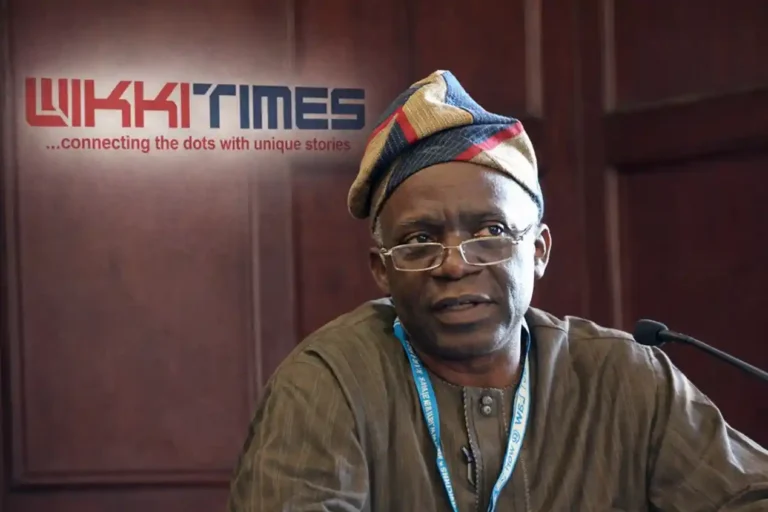
WikkiTimes Launches Femi Falana Legal Defenders Fellowship

WikkiTimes has launched the Femi Falana Legal Defenders Fellowship, a new initiative aimed at strengthening legal protection for journalists and civic actors facing growing legal intimidation in Nigeria.

In a press statement issued on Monday by Nana Mohammed, WikkiTimes Operational Manager, the organisation said the fellowship is “a year-long pilot program designed to strengthen legal defence for journalists and civic actors facing growing legal intimidation in Nigeria.”

According to the statement, Nigeria continues to rank among the most dangerous environments for journalists in West Africa, with media professionals facing arbitrary arrests, harassment, physical attacks and a culture of impunity. WikkiTimes cited reports from international press freedom groups showing that 2025 was a particularly deadly year for journalists globally, with Nigerian journalists still facing persistent threats.

The organisation noted that the situation is worsened by a lack of specialised legal support, even as thousands of young lawyers graduate every year without adequate training in media law, digital rights and the defence of journalists against Strategic Lawsuits Against Public Participation (SLAPPs).

According to the statement, “this gap leaves journalists vulnerable and deprives young lawyers of meaningful pathways into public-interest legal practice.”

To address this challenge, the Femi Falana WikkiTimes Legal Defenders Fellowship will train, mentor and place 25 early-career Nigerian lawyers in law firms, chambers and legal aid organisations, where they will support journalists and civic actors facing legal threats.

Report available to Nigeria Startup News indicates that the programme will combine intensive training with supervised practice and the development of shared legal defence tools aimed at strengthening Nigeria’s media defence ecosystem from within the legal profession.

The fellowship is named after Femi Falana, a Senior Advocate of Nigeria, in recognition of his decades-long commitment to public-interest litigation, human rights and press freedom.

WikkiTimes said the initiative reflects Falana’s consistent courage in challenging the misuse of the law to silence dissent and his role in mentoring generations of rights-focused lawyers.

The statement also highlighted the growing trend of using the legal system as a weapon of intimidation, noting that journalists and public-interest actors are increasingly targeted with defamation suits, cybercrime charges and other actions meant not to secure justice but to drain resources and discourage accountability reporting.

“These practices,” WikkiTimes said, “are often described as ‘the process as punishment,’ and pose serious threats to press freedom, especially for independent and regional newsrooms with limited access to specialised legal support.”

The fellowship will run for an initial 12-month pilot phase, during which fellows will receive specialised training in media law, constitutional rights, digital rights and the application of the Cybercrimes Act to journalism.

Fellows will also help develop a shared legal defence repository and a SLAPP Defence Cheat Sheet for Nigerian lawyers, resources that WikkiTimes says will remain publicly accessible beyond the fellowship year.

Announcing the next steps, the organisation said it would soon issue a formal call for applications, inviting qualified early-career lawyers committed to defending media freedom and civic accountability to apply.

Advertisement

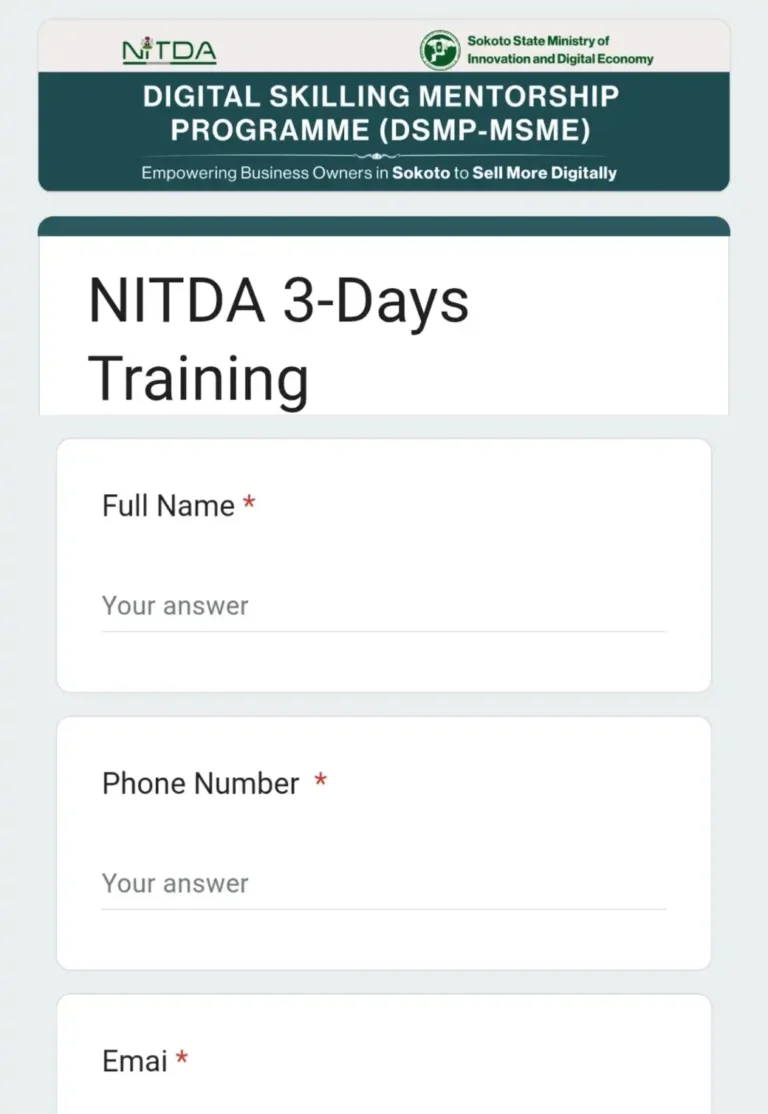
Apply: Sokoto Free Digital Skilling Programme for MSMEs

1

The Ministry of Innovation & Digital Economy(MIDE), Sokoto State under the leadership of Hon. Bashar Umar Kwabo, in collaboration with the National Information Technology Development Agency (NITDA), invites eligible Micro, Small and Medium Enterprises (MSMEs) to apply for the Digital Skilling Mentorship Programme (DSMP-MSME) under the Federal Government’s Digital Literacy for All (DL4ALL) initiative.

This call is part of ongoing efforts to strengthen the digital capacity of local businesses, improve productivity, and support sustainable economic growth across Sokoto State. The programme is open to qualified MSMEs seeking practical support to adapt to the fast-changing digital business environment.

About DSMP-MSME Programme

The programme is a free 3-day hands-on training designed to equip business owners with practical digital skills to increase sales, enhance online visibility, and compete effectively in the digital economy.

Participants will be exposed to real-life business use cases, guided learning sessions, and interactive mentorship focused on applying digital tools to everyday business operations. Outstanding participants will be recognised, and laptop computers will be awarded to them at the end of the programme. The initiative also aims to build a network of digitally skilled MSMEs that can support others within their communities.

Are you a Registered Business Owner?

Learn how to grow your sales using digital tools and understand how digital platforms can help expand your customer base, improve efficiency, and strengthen business resilience in today’s market.

Benefits

  • Free 3-Day Practical Training
  • Hands-On Digital Marketing Skills
  • Laptop Prizes for Top 3 Performers

Requirements

  • Established business registered with Corporate Affairs Commission (CAC)
  • Minimum of three (3) full time staff members
  • Demonstrated readiness to adopt digital tools
  • Willingness to mentor other MSMEs
  • Must be a Sokoto resident

Deadline

Application Closes on

15 Jan, 2026

Application Deadline: 15 January 2026

How to apply
Interested applicants are to complete the official application form to be considered. Applicants are advised to provide accurate information and ensure all requirements are met before submission, as only eligible MSMEs will be shortlisted.

Application Link: APPLY HERE

Firm launches Iseyin Agric Value Hub to boost Oyo food production

Lukom Integrated Services Ltd has unveiled the Iseyin Agric Value Hub, a large scale agribusiness development designed to boost food production, attract investment and create employment opportunities in Oyo State.

The Chief Executive Director of Lukom Integrated Services Ltd, TPL Lukman Komolafe, disclosed this in a statement, describing the project as a deliberate effort to drive deep agribusiness development and reposition Nigeria’s agricultural sector.

According to him, the initiative is expected to galvanise food production while stimulating job creation across multiple segments of the agricultural value chain.

Komolafe explained that Lukom Integrated Services Ltd, in partnership with R & D Courtyard, established the Iseyin Agric Value Hub as a strategic response to long standing challenges in Nigeria’s agric space, including poor infrastructure, limited access to modern facilities and investment risks.

He said the hub is strategically positioned to strengthen food systems and accelerate rural economic growth within Oyo State.

Located at kilometre five along Iseyin Road, the project is being developed as a world class agribusiness ecosystem that integrates agricultural production, processing, marketing and capacity development within a single coordinated environment.

The promoters noted that the hub is expected to become a major destination for agribusiness investors and value chain players seeking modern infrastructure, security and sustainability.

According to the developers, the Iseyin Agric Value Hub is designed to improve efficiency and profitability for investors by providing a purpose built environment that significantly reduces operational risks.

The project will feature state of the art infrastructure, including an all year water supply, reliable power, well constructed access roads and a 24 hour security network supported by the Agro Rangers.

Planned activities within the hub include greenhouse farming, open field crop production, processing and packaging facilities, warehousing and logistics services, as well as a dedicated market and car park to support agribusiness transactions.

The development will also host a clinic and relaxation centre, alongside training, meeting and conference facilities aimed at supporting capacity building, stakeholder engagement and community wellbeing.

As part of its investment framework, the promoters have opened subscriptions for land spaces within the hub to interested investors and agripreneurs.

Available options include 5,000 square metres priced at N12 million, while a prelaunch offer of 1,000 square metres is available for ₦3 million, targeting early stage investors.

The project is being implemented through strategic partnerships with key institutions, including the , the , the and the NSCDC Agro Rangers.

According to the promoters, these partnerships strengthen the credibility of the hub and enhance its potential development impact.

Developers said the initiative aligns with national objectives of boosting food security, attracting private sector investment into agriculture and promoting inclusive rural development, while welcoming agribusiness investors, agripreneurs and stakeholders through direct investments, leasehold arrangements and value chain partnerships across southwestern Nigeria.

Nigeria set to regulate AI with new digital governance bill

Nigeria is set to become one of the first African countries to formally regulate artificial intelligence (AI), as lawmakers prepare to pass a bill that will strengthen oversight of the rapidly growing digital sector currently led by global technology firms.

The proposed National Digital Economy and E-Governance Bill seeks to give regulators wider powers over data use, algorithms, and digital platforms, closing a gap that has existed since Nigeria released its draft national AI strategy in 2024.

Lawmakers have indicated that the bill could be approved by the end of March.

Under the proposal, AI systems considered high-risk, such as those used in finance, public administration, surveillance, and automated decision-making, would undergo stricter scrutiny. Developers will be required to submit yearly impact reports explaining potential risks, how they plan to reduce them, and how their systems perform.

The bill also includes penalties for violations, allowing regulators to issue fines of up to 10 million naira ($7,000) or as much as 2 percent of an AI company’s yearly income generated in Nigeria. However, it does not specify exactly how these fines will be calculated or enforced.

According to Kashifu Abdullahi, director-general of the National Information Technology Development Agency (NITDA), the move is meant to regulate AI early before its widespread adoption becomes more complex. He said the framework would help guide the use of AI in Nigeria’s finance industry, public sector, and private businesses.

“If passed, Nigeria would be among the first African countries to adopt an economy-wide regulatory framework for artificial intelligence,” Abdullahi said in an interview with Bloomberg.

While countries like Mauritius, Egypt, and Benin have developed AI strategies, few have created complete laws to govern the technology.

The new law promotes ethical standards built on transparency, fairness, and accountability. It follows a risk-based model similar to emerging frameworks in Europe and parts of Asia. This could influence how major international tech companies, including Google and Chinese cloud service providers, operate in Nigeria.

“In governance, we need safeguards and guardrails to ensure the AI we build operates within acceptable boundaries,” Abdullahi said. “That way, bad actors can be detected and contained.”

The bill also gives regulators the authority to request information from AI providers, issue enforcement orders, or suspend unsafe or non-compliant systems. It introduces regulatory sandboxes to help startups and institutions test AI models under supervision, balancing regulation with innovation.

“Regulation is not just about giving commands,” Abdullahi said. “It’s about shaping market and societal behaviour so people can build AI for good.”

Cross River Announces N600m Youth Grant Across 6 LGAs

0

The Cross River State Commissioner for Special Duties and Intergovernmental Relations, Oden Ewa, has announced a N100 million youth grant for each of the six local council areas in the state’s Central Senatorial District, amounting to N600 million. The announcement was made during the just-concluded tour of the district under the Oden Ewa Central Youths Connect initiative.

Ewa said the initiative is designed to promote youth inclusion, foster purposeful engagement, and support the economic empowerment of young people across the six councils—Boki, Etung, Ikom, Abi, Obubra, and Yakurr. In addition to the grants, he also donated food items, including bags of rice, and provided other forms of financial support to communities visited.

Speaking at various engagements, the Commissioner charged Nigerian youths to support and embrace progressive ideals, which, according to him, are fully represented and demonstrated by the All Progressives Congress (APC) through purposeful governance.

He noted that President Bola Tinubu and Cross River State Governor, Bassey Edet Otu, have made impactful and sustainable contributions to youth development at both national and state levels by investing in programmes and policies that secure the future of young Nigerians.

During his sessions with youths, APC members, and community leaders, Ewa emphasized the need for visionary and value-driven leadership. He said progressive leaders are distinct from what he described as static and retrogressive “push-and-start” leaders, who “lack the zeal, vision, and capacity to create value or provide purposeful leadership,” and only offer “temporary handouts rather than lasting solutions.”

Ewa further stated that “stomach infrastructure” cannot bring about genuine development, urging youths not to settle for less but to align themselves with progressive leaders and the APC, who, he said, continue to prioritize investments in infrastructure and human capital development.

Read Also: Apply: SMEDAN GrowHer Accelerator Program Cohort 2

Yobe to employ 89,000 residents under RHWD Program

0

Yobe State is set to employ about 89,000 vulnerable men, women, and youth under the Renewed Hope Ward Development Program (RHWD) across the 178 political wards of the state.

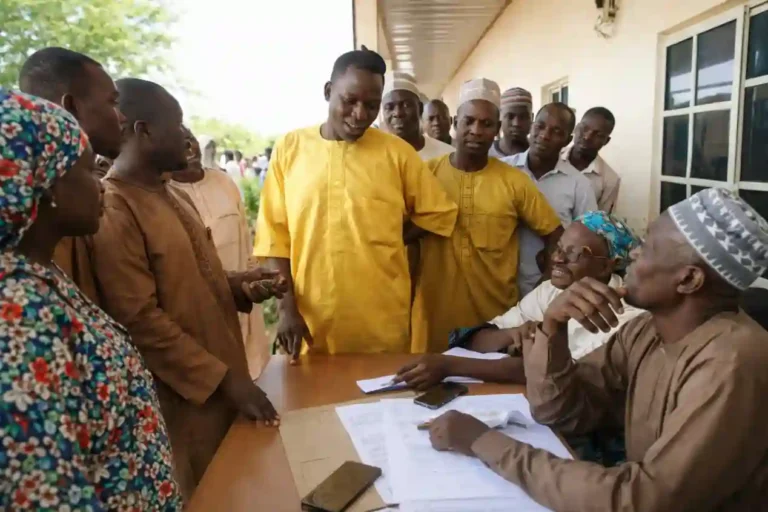
The announcement, made available to Nigeria Startup News on Tuesday, was delivered by the Secretary to the State Government, Baba Mallam Wali, during a high-level stakeholders’ engagement where he represented Governor Mai Mala Buni.

The engagement brought together legislators, government officials, local government chairmen, and youth groups to discuss the objectives, mission, vision, and implementation strategies of the Renewed Hope Ward Development Program. The initiative aims to bring development and renewed optimism to rural communities in Yobe State.

According to Baba Mallam Wali, “The purpose of this very, very important meeting, stakeholders’ engagement, is to start registration of our youth and women, especially youth and women. Out of the people, especially now, 500 people will be enrolling each ward, and out of that, 30% will be female and 70% will be male.”

Baba Shehu, the coordinator of the Renewed Hope Ward Development Program in Yobe State, explained the focus of the initiative, saying, “Making sure the economic reforms of the federal government get down quickly. This economic mapping is to identify each ward with its unique potential and then tailor the support to be given to individuals towards such kind of economic activities.”

The empowerment program mirrors the federal government’s Renewed Hope Initiative, with local government coordinators appointed to oversee registration and enrollment of the targeted population across the state.

The initiative is designed to support livelihoods, reduce vulnerability, and strengthen community resilience through structured opportunities for men, women, and youths. With stakeholder engagement guiding coordination, the programme reflects a people-centred development approach focused on job creation as a pathway to dignity, stability, and growth at the grassroots level.

Read also: SMEDAN GrowHer Accelerator Program Cohort 2

JAMB orders institutions to stop admitting low score candidates

0

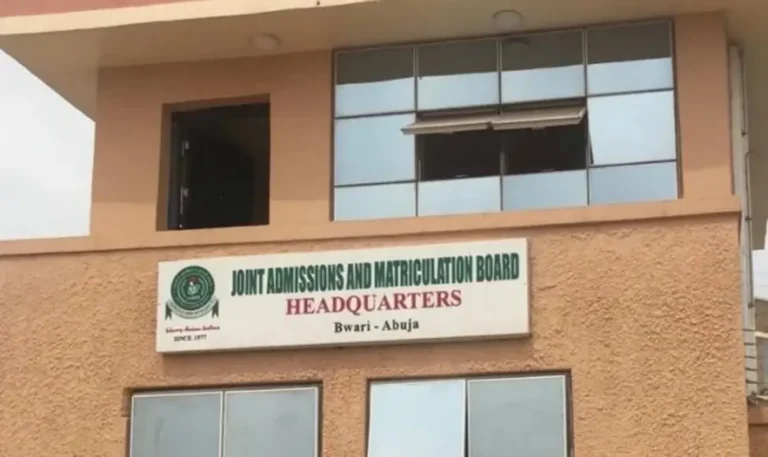
The has warned tertiary institutions to stop admitting lower-scoring candidates ahead of better-qualified applicants, ordering the immediate reversal of admissions that violated established guidelines.

The board said its decision followed a recent audit that exposed admission practices where candidates with higher scores were deliberately bypassed in favour of those with lower marks. JAMB described the trend as a serious breach that weakens trust in Nigeria’s tertiary education system and undermines fairness in the admission process.

The directive was announced in JAMB’s weekly bulletin released on Monday in Abuja by its Public Communication Adviser, Fabian Benjamin. According to the bulletin, the board became concerned after receiving reports of irregular admissions across several institutions.

“The attention of the Joint Admissions and Matriculation Board has been drawn to the conduct of admissions by some tertiary institutions, where higher-ranked candidates are reportedly being bypassed in favour of lower-ranked candidates,” the bulletin stated.

Reacting to the findings, the board said it had taken corrective action. “The board has cautioned the affected institutions and directed the immediate reversal of such irregular admissions,” JAMB said, adding that compliance with the directive was mandatory.

JAMB stressed that institutions must take responsibility for enforcing admission rules internally and not wait for external intervention. “Notwithstanding these reversals, JAMB reiterates its call on all institutions to strictly adhere to the established guidelines governing the selection and admission of candidates,” the bulletin added.

The board reminded stakeholders that admissions into Nigerian tertiary institutions operate under a three-tier structure comprising Merit, Catchment Area, and Educationally Less Developed States, ELDS. It emphasized that ranking remains compulsory within each category.

Clarifying how the rules should be applied, JAMB stated: “Each tier is guided strictly by ranking (merit), such that candidates with higher rankings must be selected first, followed by others in descending order. Any situation in which a better-ranked candidate is skipped for a lower-ranked candidate under any of these categories will not be tolerated by the Board.”

The board also addressed a widely discussed complaint involving a candidate who alleged she was unfairly denied admission by the . Following an investigation, JAMB dismissed the allegation, explaining that the candidate did not meet the competitive cutoff score for her chosen course.

“Consequently, her non-admission was in line with due process, as she did not rank high enough to fall within the selected limit,” the board clarified.

While acknowledging that some admission irregularities were discovered in other cases, JAMB said the complainant was not among those affected. “While the Board observed instances where some better-ranked candidates were indeed skipped and had ordered the reversal of those admissions, the said candidate was not affected by such irregularities,” it stated.

Reaffirming its position, the board said it remains committed to equity and transparency in admissions. “JAMB remains resolute in ensuring that no candidate with a higher ranking is displaced by a lower-ranked candidate in the admission process,” it said.

JAMB also cautioned candidates against spreading unverified claims online. “The Board therefore advises candidates to refrain from allowing themselves to be used by individuals seeking attention or followership on social media through baseless allegations,” the bulletin warned, urging students to verify complaints through official channels.

Abia MOBSE to release shortlisted candidates for second batch teachers

Abia State Government through the Ministry of Basic and Secondary Education (MOBSE) is set to release the list of shortlisted successful candidates from the 28,213 individuals who applied for the second batch of the teachers’ recruitment exercise approved by Governor Alex Otti, with the aim of employing an additional 4,000 teachers across the state.

This development is expected to take place as the window for verification of submissions by candidates closes this week. The Commissioner for Information, Prince Okey Kanu, disclosed this on Monday at Government House Umuahia while briefing journalists on the outcome of the first edition of the 2026 weekly State Executive Council meeting presided over by the governor.

Prince Kanu recalled that the state government opened the recruitment portal for the teachers’ exercise on November 6, 2025, and that the portal officially closed on Friday, November 29, 2025. He explained that the process attracted strong interest from qualified applicants across the state.

“Following the closure of submissions, applicants were granted a review window to verify and correct their application details,” the commissioner said. “The window for verification of submissions closes this week. The applicants shortlisted thereafter will be meant to sit for the computer-based tests (CBT).”

He added that candidates who successfully pass the CBT would proceed to the interview stage of the recruitment process. According to him, the recruitment exercise is designed to strengthen the education sector and improve teaching quality in public schools across Abia State.

“Those who pass the tests will now go for the interview. It is worthy to recall that the state government plans to employ an additional 4,000 teachers from this exercise, to add to the 5,394 teachers already employed sometime in the past year,” Prince Kanu stated.

Beyond the recruitment exercise, the commissioner announced that the state government has inaugurated the Abia State Safe Schools Steering Committee. He said the committee was set up to safeguard lives and property in educational institutions across the state.

“This is in response to the growing need to safeguard educational institutions in the state, following emerging security concerns around the country,” he explained. He noted that safety in schools has become a national concern and that Abia State is taking proactive steps to protect learners and education workers.

Prince Kanu said that during the inauguration, it was highlighted that the committee would serve as a multi-sectoral strategic platform. According to him, the committee will coordinate state-level implementation of the Safe Schools Declaration and oversee the development and monitoring of safety and protection protocols for schools.

He added that the committee would also engage stakeholders from the education, security, humanitarian, and civil sectors, while mobilising financial and technical resources aimed at providing safer learning spaces across the state.

The commissioner further disclosed that two smart schools would be ready for commissioning in February, noting that work is progressing steadily across the state on the smart school projects initiated by the administration.

“Very significant milestones have been recorded in terms of infrastructure, equipment, and training for the teachers who will run the smart schools when fully operational,” Prince Kanu said, adding that the schools are expected to support digital learning and modern teaching methods.

On the academic calendar, he informed that schools resumed on Monday, January 12, 2026, for the second term of the 2025–2026 academic year. He said monitoring of school resumption would be carried out by education officers overseeing basic and secondary education to ensure compliance by all schools.

Prince Kanu also highlighted major digital milestones recently achieved by the Governor Otti-led administration through the Office of the Chief Information Officer. He listed these to include the establishment of a Document Digitisation Bureau for land records, a centralised Online Recruitment Platform, the redesign of the Abia State Government website, and the rollout of an e-Health project in six pilot hospitals.

He further informed journalists that laptops have been procured and distributed to certain categories of senior government officials as part of efforts to fully digitise government operations in the state and improve efficiency in public service delivery.

On transportation, Prince Kanu noted that the pilot phase of the electric bus ride scheme in the state has recorded a very strong commuter response, which he said reflects growing public trust in the government’s transport initiatives.

“So far, over 31,500 passengers have enjoyed the free bus rides, which will continue until full commercial operations commence,” he said. He explained that several supporting infrastructure projects are being completed ahead of the full rollout.

“The free rides will continue until the full commercial services commence. The supporting infrastructure for the operations of the bus mass transit service such as the ultra modern bus terminal, junction improvement works in Umuahia, the installation of the charging stations, and all other support infrastructure are being readied for the full commencement of the bus commercial services,” Prince Kanu stated.

Responding to questions on the attitude of some passengers who rush to board the buses, the Commissioner for Transport, Dr Chimezie Ukaegbu, said such challenges are expected at the pilot stage of the project.

“You know, like I said initially, this is the pilot stage, and the pilot stage is the learning period,” he said. “I know in all the bus shelters, we’ve actually procured the services of the Harmonised Task Force, and of course, Homeland Security for the provision of security at the bus shelters.”

Dr Ukaegbu added that the presence of security personnel is to ensure passengers feel safe while using the new transport system. “They know this is a new thing. It’s just the first of its kind. And because it’s free, we will see a lot of people trying to board the buses at the same time. They will take notice of that, and it will be corrected,” he explained.

The press briefing was attended by the Commissioner for Basic and Secondary Education, Elder Goodluck Ubochi, and the Senior Special Assistant to the Governor on Transport, Dr Obioma Nwaogbe.

Waltersmith Launches Graduate Internship Programme for Nigerians

Waltersmith Refining and Petrochemical Company has announced the launch of its Graduate Internship Programme, aimed at Nigerian graduates seeking practical experience in the energy sector. The initiative, according to Nigeria Startup News, comes at a time when the federal government under President Bola Tinubu is driving reforms to increase local refining capacity, reduce dependence on imported fuel, and strengthen economic diversification amid a global transition toward cleaner energy sources.

Founded in 2017 and headquartered in Lagos, Waltersmith operates the Waltersmith Modular Refinery located in Ohaji/Egbema, Imo State. The refinery, one of Africa’s first privately owned modular plants, began with a 5,000-barrel-per-day capacity and was recently expanded to 10,000 bpd. The company produces diesel, kerosene, and premium motor spirit (PMS), helping to ease Nigeria’s recurring fuel shortages.

Speaking on the company’s growth, a representative said the new internship programme reflects Waltersmith’s commitment to “nurturing the next generation of Nigerian professionals who will sustain and transform the local energy industry.”

Even as the Nigerian National Petroleum Company Limited (NNPCL) and the Dangote Refinery begin large-scale operations in 2025, Waltersmith’s modular strategy continues to demonstrate flexibility and innovation in addressing supply gaps, generating employment, and enhancing indigenous technical capacity.

The Graduate Internship Programme is open to candidates with degrees in Engineering, Economics, Humanities or Social Sciences, IT, Finance, or Law. Applicants must possess a minimum of Second Class Upper (2:1) honours, have up to three years of post-graduation experience including NYSC, and be no older than 25 years.

600 Kaduna youths graduate from Foundation’s free skills programme

0

No fewer than 600 youths in Kaduna State have graduated from a free skills acquisition and empowerment programme organised by the Mercy Angel Foundation, an outreach arm of the Restoration Bible Church, as part of efforts to promote self-reliance, reduce unemployment and foster peaceful coexistence across religious and ethnic divides.

The graduation ceremony, held on Saturday in Kaduna, attracted traditional rulers, religious leaders, community stakeholders and church members, with beneficiaries drawn from Kaduna North, Kaduna South, Chikun Local Government Area and neighbouring communities. The event brought together participants from different backgrounds in a show of unity, cooperation and shared commitment to youth development.

Speaking at the event, the founder of the foundation, Rev. Tunde Bolanta, said the initiative was designed to equip young people with practical and marketable skills that would enable them to become economically independent and productive members of society. He explained that the programme focused on hands-on learning and real-life skills that could translate directly into income opportunities for participants.

Bolanta explained that the programme was part of a broader 18-month empowerment project aimed at addressing youth unemployment, poverty and social vices, particularly crime, drug abuse and the manipulation of young people for violent activities. According to him, empowering youths economically was a key step toward reducing social tension and insecurity in the state.

The graduates were trained in vocational areas that included fashion design, baking, bead-making, hairdressing, soap making, phone and computer repairs, and other skills tailored to meet everyday societal needs. Trainers were drawn from experienced professionals, some of whom had previously benefited from earlier empowerment programmes organised by the church.

According to the cleric, the training programme, which is offered free of charge, recorded a high turnout, with over 1,200 youths currently involved in different batches, while about 580 beneficiaries are graduating in the present class. He noted that the large number of participants showed the growing demand for practical skills among young people in Kaduna.

“As we are doing training here, the programme is still ongoing and it is totally free. Anyone who needs this kind of training is welcome to come,” he said. He added that the foundation remained committed to keeping the programme accessible to youths regardless of their religious or ethnic background.

He said similar training sessions were ongoing in Kaduna North, even as he announced that another graduation ceremony would be held the following Saturday in collaboration with the Ashafa Foundation, traditional rulers and religious leaders. He explained that working with multiple stakeholders helped strengthen trust and widen the programme’s reach.

Bolanta stressed that beyond vocational training, the foundation was also committed to promoting dialogue and engagement among religious and traditional leaders as a strategy for building trust, mutual understanding and peaceful coexistence in Kaduna State. He said the empowerment programme was deliberately structured to bring people together across divides.

“Dialogue is the key to resolving problems. What you don’t know, you are afraid of, but when you engage with others, you begin to understand each other better,” he said. He noted that sustained engagement remained essential in a state with a history of ethno-religious tensions.

The cleric recalled that similar empowerment programmes were organised by the church in 2008 and 2012, noting that many beneficiaries from those initiatives were now business owners, with some returning as trainers in the current programme. He said this cycle of learning and teaching showed the long-term value of skills development.

“Some of the trainers you see today are products of those earlier programmes, and that tells us that what we are doing is working,” he added. He said the foundation remained encouraged by stories of past beneficiaries who had become employers of labour.

Bolanta, however, expressed regret that the foundation could not provide start-up equipment for all the graduates due to limited resources, despite the scale of the programme. He said the demand for support was high and resources remained stretched.

“My heart’s desire would have been to give over 400 sewing machines to graduates to take home, but we are doing the little we can,” he said, while announcing the introduction of a small loan scheme for qualified beneficiaries. He explained that the loans would help some graduates start or expand small businesses.

He further explained that traditional and religious leaders in Kaduna North and South would play a role in identifying beneficiaries eligible for the loan support, to ensure transparency and community ownership of the process.

Describing himself as a native of Kaduna, Bolanta said the initiative was his contribution to restoring the unity and peaceful coexistence for which the state was once known. He also commended both the federal and state governments for their efforts at bridging divides and supporting peace initiatives.

He called on philanthropists, corporate organisations and other stakeholders to support youth empowerment initiatives, pointing out that more needed to be done to secure the future of young people in the state and reduce the risk of social unrest.

Also speaking at the event, Sheikh Nuraini Ashafa, the Co-Coordinator of the Interfaith Mediation Centre, commended Mercy Angel Foundation for deploying youth empowerment as a practical tool for bridging religious and ethnic divides.

Ashafa, who also leads the Ashafa Foundation, described the initiative as “bridge-building in action” in a city long affected by ethno-religious tensions. He said the programme demonstrated how economic inclusion could support peace.

“Kaduna has become a divided city – north and south, Muslim and Christian. Many talk about peace, but few build bridges. What we are seeing here today is not just talk. It is action,” he said.

While lamenting what he described as the “artificial poverty” created by poor governance, he insisted that youths had become the greatest victims of failing education, health care delivery and economic systems.

“No matter how comfortable you are, as long as your neighbour is living in pain, that comfort becomes a threat to your own peace and security,” Ashafa said.

He disclosed that over 5,000 people had benefited from the foundation’s food bank initiative, while more than 100 individuals had received medical support, adding that the shift to skills acquisition was aimed at achieving long-term impact.

Earlier in her remarks, Dr. Tina Bolanta, wife of the foundation’s founder, emphasised the importance of combining formal education with practical skills, urging youths not to rely solely on academic qualifications.

“School is very important, but having a skill in hand is sometimes what puts food on the table,” she said.

She announced that the programme would continue until December, with another intake scheduled for the long vacation period between July and September, and urged beneficiaries to start small businesses with the skills acquired.

The event concluded with prayers, goodwill messages and the distribution of start-up kits, including sewing machines and hairdressing equipment, to selected beneficiaries through a raffle draw, as graduates expressed optimism about their economic future.