Home Blog Page 182

Waltersmith Petroman Oil Graduate Internship | Apply

The Waltersmith Petroman Oil has opened applications for Graduate Internship Programme for young graduates, an opportunity to start a rewarding career in the oil and gas sector. Selected candidates will gain practical exposure across key departments, participate in value-driven projects, and receive mentorship from seasoned industry experts. The program is designed to build both technical and professional skills, preparing interns for possible long-term employment within the company.

Successful interns who perform exceptionally well may be considered for full-time roles. Waltersmith Petroman Oil Limited emphasizes growth, continuous learning, and sustainable career development for all participants.

Dragnet Solutions, which manages the application process, has stated clearly that no payment is required at any stage of the recruitment. Any request for money or guaranteed placement should be reported immediately to compliance@dragnet-solutions.com with proof of the message or contact received.

Intern Role

As a graduate intern, you will:
• Participate in a structured training program that accelerates career growth and technical exposure.
• Engage in challenging projects across vital business and operational functions.
• Receive mentorship, coaching, and feedback from professionals in the field.
• Combine office and field experience to gain insight into real oil and gas operations.
• Exhibit teamwork, adaptability, and problem-solving skills in a dynamic work environment.
• Outstanding interns may secure permanent roles after completing the internship successfully.

Requirements

• Applicants must be Nigerian citizens with degrees in Engineering, Economics, Law, Humanities/Social Sciences, IT, or Finance.
• Minimum qualification: Second Class Upper (2:1).
• Not more than 3 years post-graduation, including NYSC.
• Maximum age: 25 years.
• Master’s degree holders must have completed it by 2025.
• Candidates should demonstrate motivation, leadership, analytical ability, and strong communication skills.

How to Apply

Interested applicants can apply via the official link.

FAQs

Who can apply for the Waltersmith Petroman Oil Graduate Internship Programme?

The programme is open to Nigerian graduates who studied Engineering, Economics, Law, Humanities or Social Sciences, IT, or Finance and meet the stated requirements.

Is the application currently open?

Yes, the application is currently open, and interested candidates are encouraged to apply before the deadline stated on the application portal.

Is there any application or processing fee?

No. Waltersmith Petroman Oil Limited and Dragnet Solutions do not charge any fee at any stage of the recruitment process. Any request for payment should be reported.

What is the age limit for applicants?

Applicants must not be older than 25 years at the time of application.

How many years after graduation can one apply?

Candidates must be within three years post-graduation, including completion of the NYSC programme.

Can candidates with a Master’s degree apply?

Yes, but the Master’s degree must have been completed by 2025 to be eligible.

What academic qualification is required?

Applicants must have at least a Second Class Upper (2:1) degree from a recognized institution.

What will interns gain from the programme?

Interns will gain hands-on experience, mentorship from industry professionals, exposure to both office and field operations, and practical knowledge of oil and gas activities.

Is there a chance of full-time employment after the internship?

Yes. High-performing interns may be considered for full-time employment after successfully completing the programme.

How do I apply for the internship?

Applications must be submitted online through the official Dragnet Solutions recruitment portal using the provided application link.

Apply Here
Advertisement

NDE says RHEI 2 Stipend Payment is based on training duration

1

The National Directorate of Employment (NDE) has said that RHEI 2 training stipends are paid strictly based on training duration. Beneficiaries who undergo training of up to one month receive ₦10,000, while those who undergo training of up to 3 months receive ₦30,000.

In a public notice issued on Friday, the NDE clarified that following complaints from some trained beneficiaries of the Second Phase of the Renewed Hope Employment Initiative (RHEI 2) regarding training stipends, it has become imperative to provide the following clarifications:

Training stipends are paid strictly based on training duration.
Trainings lasting one week to one month attract a stipend of ₦10,000.
Trainings lasting three months attract a stipend of ₦30,000.

Stipends are uniform across all 36 states and the Federal Capital Territory (FCT), and is N10,000 per month.

This explains why some beneficiaries were paid ₦10,000, while others were credited ₦30,000 by the NDE.

No beneficiary has been short-paid, as all payments were made in accordance with the approved training duration.

Any trainee with concerns regarding his or her stipend is advised to contact the NDE State Coordinator in his or her respective state for clarification or necessary correction, where applicable.

The NDE appreciates the cooperation and understanding of all beneficiaries.

FG Says School Textbooks Must Last 4 to 6 Years

0

The Federal Government has introduced a new policy to make school textbooks last between four and six years to cut costs for parents while also cutting waste. The policy also prohibits the bundling of disposable workbooks with textbooks to allow textbooks to be reused across multiple academic sessions for siblings to share.

The signed statement was issued on Friday by the Federal Ministry of Education.

The comprehensive policy framework was unveiled to reduce the cost of education for parents, improve learning outcomes, and promote sustainability in schools through the adoption of reusable, high-quality textbooks and strengthened quality assurance mechanisms.

The policy, jointly issued by the Honourable Minister of Education, Dr. Maruf Tunji Alausa, and the Honourable Minister of State for Education, Professor Suwaiba Sa’id, is part of ongoing reforms to reposition Nigeria’s education sector and ease financial pressure on families.

The Ministers explained that “the policy prioritises standardised, durable textbooks designed to last four to six years and expressly prohibits the bundling of disposable workbooks with textbooks.”

“This will allow textbooks to be reused across multiple academic sessions, enable siblings to share learning materials, significantly lower recurring costs for parents, and reduce waste, thereby supporting environmental sustainability,” the statement added.

They further noted that “the Federal Government has introduced a uniform academic calendar to promote consistency in teaching, learning, and school planning nationwide. Graduation ceremonies have also been streamlined, with only pupils and students completing Primary 6, JSS3, and SSS3 permitted to hold such ceremonies.”

The policy also strengthens the assessment, selection, and quality assurance of instructional materials. It addresses concerns over frequent cosmetic textbook revisions and practices that compel parents to purchase new books annually without any improvement in content.

According to the statement, “structured revision cycles now require substantive content improvements, while limits on the number of approved textbooks per subject and grade align with international best practices.”

The Nigerian Educational Research and Development Council (NERDC) will continue to lead textbook quality assurance. The Federal Ministry of Education reaffirmed its commitment to education reform, equity, and access to high-quality instructional materials nationwide.

C’ River youth empowerment scheme denies ₦13,000 extortion claims

0

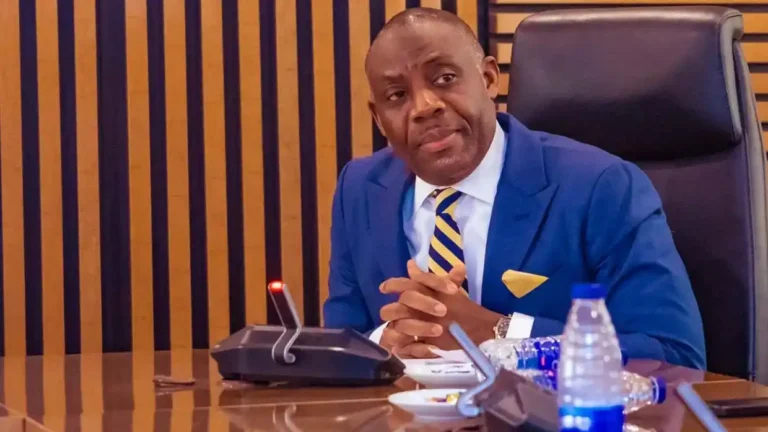
The Office of the Chairman of the Cross River State Youth Empowerment Scheme has denied allegations of extortion and diversion of funds linked to the ₦5 million Youth Empowerment Loan Scheme, following an earlier directive by the state government ordering a suspension of all related payments.

In a public notice on Thursday, the office said misleading information was circulating about the scheme and sought to clarify the process surrounding the controversial ₦13,000 fee that sparked public criticism.

The statement said a member of the Chairman’s team was physically present at designated venues during the exercise and monitored the entire process, stressing that at no time was money collected by the scheme, the Chairman, or any government official.

According to the notice, the ₦13,000 referenced is paid into each applicant’s personal account with Zenith Bank Plc and is debited by the bank solely for CAC search, documentation, and customized ATM processing connected to loan administration. It added that the funds do not pass through the scheme or any government office and can be verified through bank records.

The Chairman’s office also disclosed that Governor Bassey Edet Otu has approved the reimbursement of the ₦13,000 to all verified and successful beneficiaries who submit complete and genuine documentation, describing allegations of personal enrichment as false and misleading.

The denial follows an earlier memo from the Governor’s Office, issued through the People First Complaints and Solutions Desk Office, which ordered an immediate halt to all payments under the loan scheme, including the ₦13,000, after complaints of extortion, illegal taxation, and fraudulent activities were received.

That memo stated that the Executive Governor condemns any form of exploitation of citizens and warned that non compliance with the suspension directive would attract serious consequences.

The Office of the Chairman said the Youth Empowerment Scheme remains committed to transparency, accountability, and genuine youth empowerment, while advising members of the public to rely only on information from official and verifiable sources as clarification efforts continue.

Applicants and stakeholders have been urged to await further communication from authorities.

PwC Projects 141 Million Nigerians to Live in Poverty by 2026

PricewaterhouseCoopers (PwC) has projected that about 141 million Nigerians could fall into abject poverty in 2026, according to its Nigeria Economic Outlook 2026 report, which warns that the country’s poverty rate is expected to rise sharply to 62 per cent.

The report stated that Nigeria’s poverty rate stood at 59 per cent in 2024 before rising to 61 per cent in 2025, representing about 139 million people, and is projected to climb further to 62 per cent, or 141 million people, in 2026.

PwC attributed the projected increase to persistent food insecurity, high energy costs and what it described as a “consumer dilemma,” where any recovery in spending is limited by weak real income growth.

The firm said most Nigerians are likely to struggle to achieve income gains strong enough to offset rising prices in the near term, especially as inflation continues to erode purchasing power across households.

“Poverty is projected to rise to 62 per cent (141 million people) by 2026, reflecting weak real income growth and lingering inflation effects,” the PwC report noted.

While inflation is expected to ease gradually, the report warned that the underlying cost structure of the economy would limit meaningful affordability gains for households.

It added that consumption patterns among low-income households are worsening the impact of rising prices, noting that poorer Nigerians remain more vulnerable to sharp increases in food prices.

PwC stated that high energy costs, logistics expenses and exchange rate pass-through effects would continue to keep the prices of food and other essential goods elevated, even if headline inflation moderates slightly.

The firm cautioned that without targeted interventions such as job creation, productivity improvements and effective social protection programmes, reducing poverty levels in Nigeria would remain difficult.

According to PwC, rising poverty levels pose significant risks to Nigeria’s economic stability and growth prospects, as more people struggling to meet basic needs.

C’ River Govt Suspends Payments on ₦5m Youth Loan Scheme

0

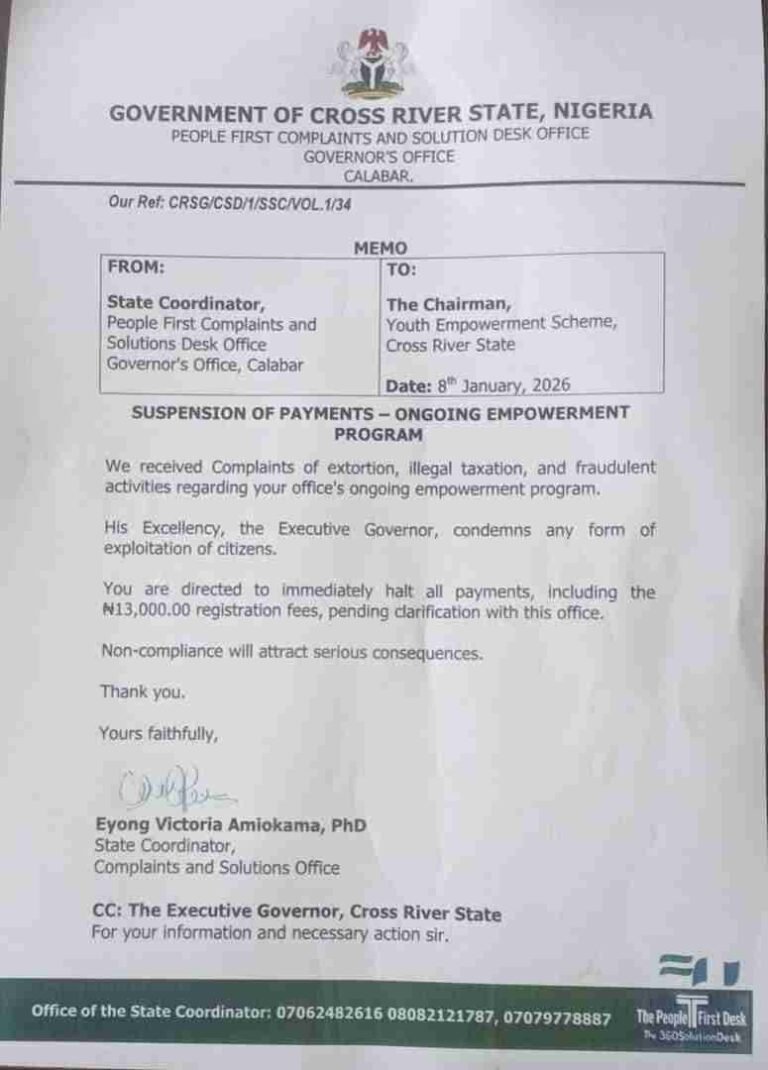
The Cross River State Government has ordered an immediate suspension of all payments linked to the ₦5 million Youth Empowerment Loan Scheme, including the ₦13,000 registration fee, following complaints of extortion and alleged illegal charges raised by members of the public.

The directive was contained in an official memo dated January 8, 2026, issued by the People First Complaints and Solutions Desk Office in the Governor’s Office, Calabar. The memo said the office had received multiple complaints concerning the collection of money from applicants under the youth empowerment programme.

According to the memo, the State Coordinator of the complaints desk stated that the Executive Governor “condemns any form of exploitation of citizens under whatever guise” and has directed that all payments connected to the scheme be stopped with immediate effect.

The memo instructed the Chairman of the Cross River State Youth Empowerment Scheme to suspend the collection of any fees, levies or charges from applicants, pending further engagement with the complaints office to clarify the issues raised by members of the public.

It warned that failure to comply with the directive would attract “serious consequences,” stressing that the government would not tolerate actions capable of undermining public confidence in programmes funded with state resources. The directive was also copied to the Executive Governor for information and necessary action.

The suspension follows public criticism over the ₦13,000 registration fee introduced as part of the application process for youths seeking loans of up to ₦5 million to scale their businesses. The fee was described as payment for “search and customized ATM,” a requirement that sparked widespread concern.

A citizen, Agba Jalingo, had earlier faulted the fee in a Facebook post, warning that charging applicants under a government-funded empowerment scheme could amount to exploiting desperate young people seeking financial support.

He questioned the justification for the charge, asking whether applicants who fail to secure the loan would be refunded, and warned that the fee could generate huge sums of money without guarantees for beneficiaries.

Jalingo noted that if only 20,000 youths paid ₦13,000 each, about ₦260 million would be realised, raising concerns about transparency and accountability in the handling of the scheme.

He also argued that commercial banks do not usually collect loan processing fees upfront and that ATM cards typically cost far less than the amount being demanded, describing the requirement as a red flag.

The government’s latest action is expected to halt further collections while authorities review the complaints and determine appropriate steps to address the concerns raised by the public.

Delta govt set to unlock $750m World Bank agribusiness support

The Delta State Government has said it is set to unlock a $750 million World Bank–assisted, performance-based initiative aimed at easing the business environment in the state, particularly in agribusiness, through the implementation of the Framework for Responsible Investment in Land-Intensive Agriculture (FRILIA).

Delta State Governor Sheriff Oborevwori on Thursday inaugurated a 10-man Steering Committee on FRILIA, as part of efforts to position the state to meet requirements for accessing the funding support.

The governor, who was represented by the Deputy Governor, Sir Monday Onyeme, also chairman of the committee, performed the inauguration in Asaba, the state capital. He explained that “FRILIA was conceptualized to facilitate ease of doing business in Delta State, particularly agribusiness.”

Oborevwori stressed that “agricultural development remains a key priority of the Federal Government,” adding that the framework would help attract responsible investments while protecting host communities and land users.

While presenting the eight-point Terms of Reference for the committee, the governor charged members to “promote transparency in land acquisition and resettlement for large-scale agribusiness investment.”

He further directed the committee to “promote the application of inclusive agriculture, agricultural production models” and to “promote and safeguard measures against the dispossession of tenure rights holders.”

The committee was also tasked to “monitor the application of compensation standards and promote environmental sustainability in the utilization of land for agri-business investment.”

In their separate remarks, the Commissioner for Agriculture and Natural Resources, Val Areyinka, and the Director-General of the Delta State Investment Development Agency, Anthony Elekeokuri, disclosed that “FRILIA is a $750 million World Bank-assisted programme available to the state if effectively implemented.”

According to them, the World Bank facility is a performance-based financial support scheme that can only be accessed upon meeting clearly defined benchmarks set by development partners.

Also inaugurated was a 20-man Technical Committee to provide expert and technical support to the Steering Committee, alongside a six-member Grievance and Redress Committee to handle land-related complaints and disputes arising from agribusiness investments.

NGO Supports Vulnerable Lagos Traders With ₦50,000 Cash Grant

Refuge Network International (RNI), a Non-Governmental Organization, has reaffirmed its commitment to grassroots empowerment by supporting vulnerable small business owners along the Victoria Island Coastal Road in Lagos.

The outreach focused on poor, homeless, and petty traders who depend on small-scale businesses for their daily survival. Many of them face challenges such as limited access to capital and harsh economic realities.

Speaking on the initiative, Santabenny, Special Assistant, Refuge Network International, West Africa, said the programme was created to restore hope and provide both immediate relief and long-term empowerment.

“This outreach brought smiles to people who had lost hope. Beyond the cash support, we offered encouragement and knowledge to help families sustain their businesses. It was fulfilling for both the beneficiaries and our volunteers,” he said.

As part of the intervention, 40 beneficiaries received ₦50,000 each to support business restocking, continuity, and other urgent financial needs.

During the exercise, participants also took part in interactive sessions on basic financial management, investment awareness, and strategies for sustainable business growth.

Ms. Lilian Dikeirem, a leader at RNI, described the outreach as a reflection of the organisation’s mission and passion for community impact.

“At RNI, we believe empowering local businesses is key to economic growth and community development. We are passionate about supporting the poor, the helpless, and the hopeless, and today’s outreach brought our mission to life,” she said.

Some beneficiaries expressed deep gratitude and shared how the support would change their lives.

Wale Kayode AY said the funds would enable her to start a food business, while Uduak Innocent said she would expand her current enterprise. Blessing Methombonadesh shared plans to grow her orange-selling business, and Sikira Kazeem, a pap and akara vendor, noted the funds would help her meet increasing customer demand.

Many of the recipients described the support as a timely New Year gift and prayed for the organisation’s continued success. RNI said ongoing initiatives like this will keep promoting entrepreneurship, reducing vulnerability, and strengthening local economies.

Bauchi State Shortlisted Candidates List for Screening

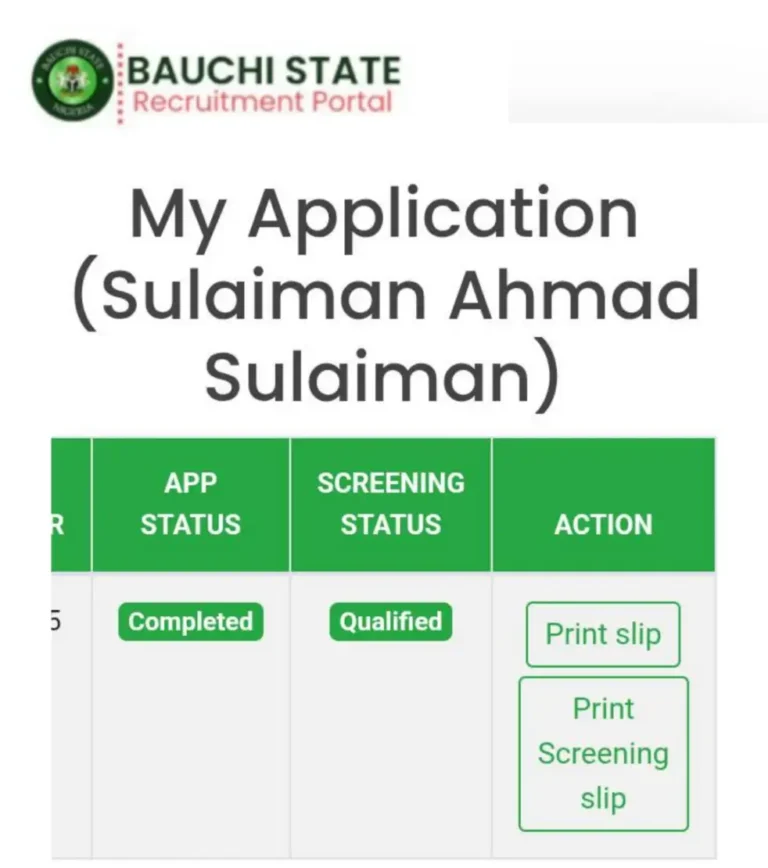
The Bauchi State Government has released the list of shortlisted candidates for the 2026 recruitment exercise. Candidates who applied for the job through the Bauchi State Government portal should check their dashboard to confirm their status, whether qualified or disqualified.

Candidates whose screening status shows “Qualified” are eligible for the screening stage and should print their Screening Confirmation and Qualification Slip from the dashboard.

This document serves as the official Screening Confirmation and Application Summary. Candidates are required to present it during the next stage of the recruitment process as proof of qualification.

Further communication regarding interview dates, venue, and additional requirements will be sent to candidates via their registered phone number and email address.

To check the shortlisted candidates list, visit the Bauchi State recruitment portal at https://recruitment.bauchistate.gov.ng and log in using your email address and password.

Congratulations to all successful candidates.

Customers to receive refund for failed airtime, data after 30 seconds

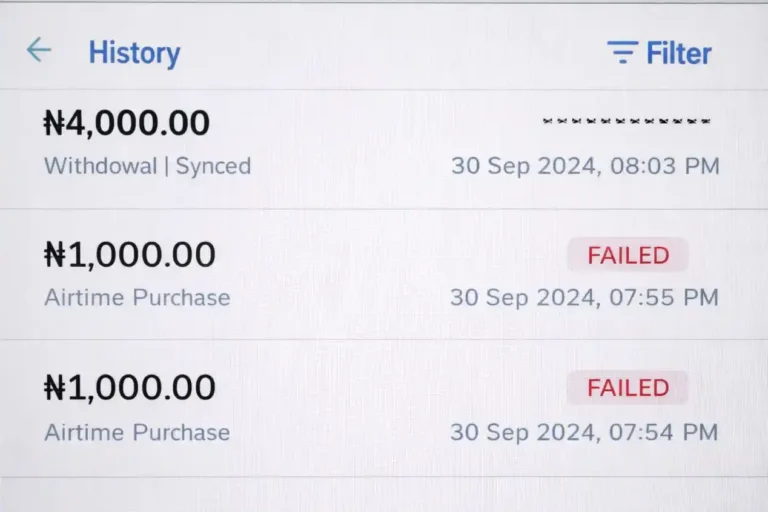
The Nigerian Communications Commission (NCC) and the Central Bank of Nigeria (CBN) have introduced a new system requiring instant refunds for failed airtime and data purchases, mandating refunds within 30 seconds or within 24 hours for pending transactions, while also requiring SMS notifications for every transaction.

In a statement released on Thursday by the NCC, the commission said the framework was designed to reduce the growing complaints from consumers who are debited for airtime or data without receiving value, especially during network downtimes, system glitches, or human input errors.

The framework is the outcome of several months of engagements involving the NCC, the CBN, Mobile Network Operators (MNOS), Value Added Service (VAS) providers, Deposit Money Banks (DMBs), and other relevant stakeholders. The discussions were prompted by a steady rise in failed airtime and data purchases, which often left subscribers waiting long periods before their issues were resolved.

According to the statement, the framework represents a unified position by both the telecommunications and financial sectors on how such complaints should be handled. It identifies and addresses the root causes of failed airtime and data transactions, including cases where bank accounts are debited without successful delivery of services.

The framework also prescribes an enforceable Service Level Agreement (SLA) for MNOs and DMBs, clearly defining the roles and responsibilities of each party involved in the transaction process and the resolution of complaints.

It further stated that under the new framework, where a purchaser is debited but fails to receive value for airtime or data, whether the failure occurs at the bank level or with an NCC licensee, the purchaser is entitled to a refund within 30 seconds. However, in situations where the transaction remains pending, the refund may take up to 24 hours.

In addition, the framework mandates operators to notify consumers via SMS of the success or failure of every transaction. It also covers issues such as erroneous recharges to ported lines, incorrect airtime or data purchases, and cases where transactions are made to the wrong phone number.

Speaking on the development, the Director of Consumer Affairs at the NCC, Mrs. Freda Bruce-Bennett, disclosed that the framework also establishes a Central Monitoring Dashboard to be jointly hosted by the NCC and the CBN. She explained that the dashboard would allow both regulators to monitor transaction failures, identify the responsible party, track refunds, and detect SLA breaches in real time.

“Failed top-ups rank among the top three consumer complaints, and in line with our commitment to addressing these priority issues, we were determined to resolve it within the shortest possible time,” she said.

She added, “We are grateful to all stakeholders, particularly the Central Bank of Nigeria and its leadership, for their tireless commitment to resolving this issue and arriving at this framework, and for ensuring that consumers of telecommunications services receive full value for their purchases.”

Mrs. Bruce-Bennett also revealed that, so far, pending the approval of the management of both regulators on the framework, MNOs and banks have collectively refunded over N10 billion to customers for failed transactions.

She further noted that implementation of the framework is expected to commence on March 1, 2026, once final approvals are granted and technical integration by all MNOS, VAS providers and DMBs is completed.