Home Blog Page 183

Tinubu Hails NGX as Market Capitalisation Crosses N100tn

President Bola Tinubu has praised corporate Nigeria, individual investors and other stakeholders in the nation’s capital market for pushing total market capitalisation on the Nigerian Exchange above the N100 trillion mark, describing the achievement as a strong signal of renewed confidence in the economy.

The President said the milestone should inspire more participation from the investing public across the money and capital markets, urging Nigerians to deepen their investments in the local economy. He assured that 2026 would deliver stronger returns as ongoing economic reforms begin to show broader impact.

“With the Nigerian Exchange (NGX) crossing the historic N100 trillion market capitalisation mark, the country is witnessing the birth of a new economic reality and rejuvenation,” Tinubu said.

He noted that global conditions in 2025 had been challenging for many markets, yet Nigeria recorded a standout performance. “In 2025, while many of the world’s markets struggled with stagnation or tepid recovery, the NGX All-Share Index was on the ascent. It closed 2025 with a 51.19% return, higher than the 37.65% recorded in 2024. This performance ranks among the highest in the world,” he said.

According to the President, year-to-date returns on the NGX have exceeded those of major global benchmarks, including the S&P 500 and the FTSE 100, as well as several emerging-market peers within the BRICS+ group. “Nigeria is no longer a frontier market to be ignored—it is now a compelling destination where value is being discovered,” he stated.

Tinubu said the stock market’s strong performance reflects wider economic health and investor confidence. “As the stock market reflects the entire economy, its stellar performance is a significant indicator of the country’s economic health and the confidence investors have in our economy,” he added.

He highlighted gains across sectors, noting that listed companies have delivered notable results. “On the NGX, we have witnessed remarkable performances from listed companies across all sectors. From blue-chip industrial giants that have localised their supply chains, to a banking sector that has demonstrated resilience and technological innovation, Nigerian companies are proving that the country can deliver strong returns on investment,” he said.

Looking ahead, the President said the pipeline for new listings remains strong. “And we are just getting started. The pipeline for new and upcoming listings looks robust. More indigenous energy firms, tech unicorns, telecoms, and infrastructure-heavy entities are seeking to access the public market to fund their expansion,” Tinubu said, adding that such listings would deepen democratic ownership of the economy and further boost market capitalisation.

He stressed that the government is also seeing positive results from reforms at the microeconomic level. “After the initial headwinds that followed our reforms, we are finally seeing a bend in the inflation curve,” he said. Tinubu cited monetary tightening and the removal of distortionary Ways and Means financing as steps that restored stability to the Naira.

The President said investments in agriculture have helped reduce inflation consistently over the past eight months. “From a 24-month high of 34.8% in December 2024, inflation decelerated to 14.45% as of November 2025, with projections indicating it will reach 12% in 2026,” he said, adding that inflation could fall below 10 per cent before the end of the year.

Tinubu said the country’s external position has also improved. “In 2024, Nigeria posted a surplus of $16 billion. According to the Central Bank of Nigeria (CBN), our current account balance is projected to rise to $18.81 billion in 2026, up from $16.94 billion in 2025,” he stated.

He added that export performance has strengthened. “Under our administration, Nigeria is exporting more and importing less of what we can produce locally. Non-oil exports surged by 48% by the third quarter of 2025, totalling N9.2 trillion,” he said, noting that exports to Africa rose by 97% to N4.9 trillion, while manufacturing exports grew by 67% year-on-year in the second quarter of 2025.

The President said Nigeria’s foreign reserves have crossed $45 billion, giving the Central Bank greater capacity to maintain stability. He added that reserves are projected to exceed $50 billion in the first quarter of 2026, while infrastructure projects, healthcare improvements, education financing through NELFUND, and ongoing tax and fiscal reforms are reinforcing growth prospects nationwide.

Advertisement

WFP Warns 35 Million Nigerians Face Record Hunger in 2026

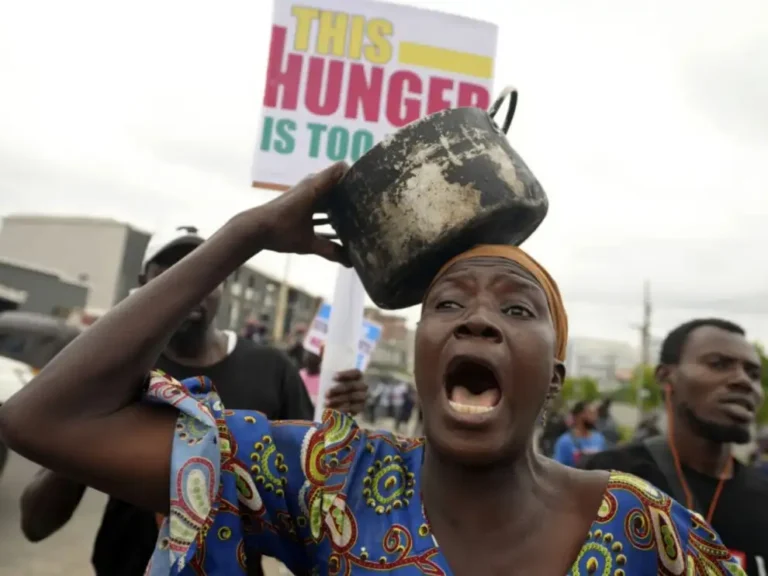
The United Nations World Food Programme (WFP) has warned that nearly 35 million people in Nigeria are going hungry and being forced to make heartbreaking choices just to survive, as growing instability and surging attacks across northern Nigeria drive hunger to levels never seen before, according to the latest Cadre Harmonisé regional food security analysis. It projects that the number of people facing severe food insecurity during the 2026 lean season is the highest ever recorded in the country, with children most at risk in Borno, Sokoto, Yobe and Zamfara states, where malnutrition rates remain critically high.

The warning was emphasised during an interview with CNBC Africa, where WFP Country Director and Representative in Nigeria, David Stevenson, said the food crisis has expanded beyond the northeast, where conflict-related hunger first prompted the agency’s intervention.

“The World Food Programme came to Nigeria in 2015, really at the request of the government, but also with the support of our member states because of the conflict, particularly in the northeast,” Stevenson said. “That conflict-related hunger has now spread towards the northwest and is even creeping into the middle belt due to increased attacks.”

Stevenson said there was a brief period of optimism when he arrived in Nigeria about three years ago, as attacks declined and communities began returning to farming. He noted that the situation has since reversed, with renewed violence undermining livelihoods and food production.

“I arrived in the country about three years ago when there was a dip in the attacks, when it looked like we could really step into a humanitarian solutions approach, moving people back onto their farms and having peace in production,” he said. “Sadly, the attacks have increased since, and we’re now at record rates of food insecurity.”

He explained that the Cadre Harmonisé shows rising food insecurity across multiple regions, with children bearing the brunt of the crisis. According to him, six million people are food insecure in the northeast, another six million in the northwest, while malnutrition among children remains alarmingly high.

“Nationwide, according to the Cadre Harmonisé, we’re looking at about 35 million Nigerians who are food insecure, up from 33 million a year ago,” Stevenson said. “Most alarming, six million children in the north are malnourished and in need of food assistance.”

The WFP representative also raised concerns about the agency’s ability to sustain emergency food and nutrition support, citing funding pressure caused by multiple humanitarian crises globally and reduced aid budgets.

“We have all heard about the competing demands across Africa and globally, with humanitarian crises in Ukraine, Sudan and Gaza, and the decisions of traditional donor countries to reduce humanitarian and global development assistance,” he said.

Stevenson disclosed that WFP faced a major funding emergency in August, when it was close to running out of food for displaced people living in camps who cannot return to their farms due to insecurity.

“We set out a real alarm in August because we were going to run completely out of food assistance,” he said. “This was for people in displaced camps who simply cannot go back to their farms because it’s not safe.”

He said the situation was stabilised after the United States provided $32 million in emergency funding, alongside other donor support, but warned that another shortfall is approaching.

“Fortunately, our appeal was met predominantly by the United States, which stepped up with $32 million,” Stevenson said. “But we’re about to send out another alarm because in January and February, we’re running out of funds again.”

He added that more than $100 million is needed to sustain operations through June, while WFP continues working with the Nigerian government and partners on longer-term solutions, including collaboration around initiatives such as World Bank AgriConnect, aimed at restoring food systems and self-reliance across affected communities nationwide under fragile security conditions. The agency said insecurity, displacement and funding gaps continue to threaten progress despite ongoing coordination with authorities and humanitarian partners nationwide across northern Nigeria.

Read Also: Apply: Mastercard Agrisiti TAGDev 2.0 Hybrid Digital Training Program

Apply for FCCPC 9th National Young Consumer Contest

The Federal Competition & Consumer Protection Commission (FCCPC) has announced the opening of entries for its 9th National Young Consumer Contest, inviting secondary school students across Nigeria to participate.

The annual contest is designed to encourage young people to think critically about consumer rights, sustainability, and national development. This year’s theme is “Is a Just Transition to Sustainable Lifestyles a Choice or a Necessity for Nigerian Consumers?” and it challenges students to share informed ideas on how Nigerians can adapt to more sustainable living practices.

Students in SS1 to SS3 are eligible to take part in the competition, which will be held in two categories. Category 1 is a written essay with a maximum of 350 words, while Category 2 focuses on an oral debate format. Through these categories, participants are expected to demonstrate originality, clarity of thought, and a good understanding of consumer issues.

Eligibility

  • Open to secondary schools nationwide
  • One entry per school is allowed

Shortlisted finalists will compete against one another in a live intellectual debate at the FCCPC Headquarters, offering students a chance to showcase their ideas on a national stage and engage directly with policymakers and stakeholders.

How to Apply

Submissions must be made in Microsoft Word format only, and multiple entries from the same school will not be accepted. The deadline for submission is 31 January 2026.

Students and schools interested in participating should submit their entries via the official portal.

For further information or enquiries, applicants can call or WhatsApp 0805 600 3030 or 0702 500 7920.

FAQs

Who can participate?

Students in SS1 to SS3 from secondary schools across Nigeria are eligible to participate.

How many entries are allowed per school?

Only one entry is permitted per secondary school. Multiple submissions are not allowed.

What are the contest categories?

There are two categories: a written essay of not more than 350 words and an oral debate for shortlisted finalists.

How do I submit an entry?

Entries must be submitted in Microsoft Word format only, on or before 31 January 2026.

Where will the final debate take place?

Shortlisted finalists will compete in a live intellectual debate at the Federal Competition & Consumer Protection Commission Headquarters.

Apply Here

PAP deploys 34 postgraduate scholars to UK universities for 2025-2026

The Presidential Amnesty Programme (PAP) on Thursday deployed 34 additional foreign postgraduate scholarship beneficiaries to universities in the United Kingdom for the 2025–2026 academic session, expanding its offshore education support for youths from the Niger Delta.

The scholars will pursue programmes in data science, fintech analytics, cyber security, international energy law and policy, construction project management, public health, agri-food technology, as well as electrical and petroleum engineering, among other fields.

According to PAP, more foreign postgraduate scholars are expected to be sent to universities in the United Kingdom during the current academic session as part of ongoing human capacity development efforts.

The programme recalled that in December 2025, nine students, the first set of offshore postgraduate scholarship beneficiaries under PAP Administrator Dr. Dennis Otuaro for the 2024–2025 academic year, graduated from their respective programmes in the UK.

It also disclosed that since Otuaro assumed office in March 2024, over 9,000 students have been deployed to universities within and outside Nigeria to study industry-relevant courses.

Speaking at a pre-departure orientation programme at the PAP headquarters in Abuja, Otuaro said the large-scale deployment was aimed at transforming the Niger Delta into a knowledge-driven region.

He said, “We are sending all of you for postgraduate studies in various universities in the United Kingdom. The PAP now has a new momentum and direction because of the repositioning and broad reforms carried out in line with the mandate of His Excellency, President Bola Ahmed Tinubu GCFR.

“The objective behind this scholarship deployment is to develop the human capital needed to transform the Niger Delta and generate knowledge-based wealth. You are expected to contribute your quota to national development after graduation.”

Represented by his Technical Assistant, Mr. Edgar Biu, Otuaro urged the scholars to study hard and achieve academic excellence, stressing the need to justify the Federal Government’s investment.

He warned beneficiaries not to take the opportunity for granted and thanked President Tinubu for his “enormous interest and support for the programme,” including approval to increase the budget from ₦65 billion to ₦150 billion.

Otuaro also expressed gratitude to the National Security Adviser, Mallam Nuhu Ribadu, for his guidance and supervision of PAP initiatives, and reminded the scholars to obey host country laws and institutional regulations as ambassadors of Nigeria and the Niger Delta.

The orientation programme ended with the presentation of laptops to the scholars to support their academic work.

FG, IFAD to Empower 14,800 Ondo Youths in Agriculture

The Federal Government, in partnership with the International Fund for Agricultural Development (IFAD) and the Ondo State Government, is set to empower 14,800 youths in agricultural production under the IFAD/FG Livelihood Improvement Family Enterprise-Niger Delta Project.

The programme is expected to be implemented in 100 communities across the 10 local government areas of Ondo State. Beneficiaries, also referred to as incubatees, will receive training and support in cocoa, cassava, fishery, and poultry production to improve livelihoods and expand youth participation in agriculture.

The Ondo State Project Coordinator of the programme, Mr Olawale Ademola, disclosed this during a roundtable meeting with media practitioners held in Akure, the state capital, on Thursday.

According to Ademola, the first phase of the project ended in April 2025, but the development partner approved an extension through what he described as additional financing, following the successful implementation of the programme in the state.

He recalled that no fewer than 4,182 incubatees were trained and empowered during the first phase of the project.

Ademola listed the local governments where the programme will take place as Akure North, Ondo East, Ile-Oluji/Oke Igbo, and Akoko South-West. Others include Owo, Irele, Ilaje, Idanre, Ese-Odo, and Akoko North-West.

He said, “The project has had a significant impact on the youths in the state. Because of this, it has been extended for another three years. This is additional financing. It was supposed to start last year, but we could not, so we now have an additional three years.

“In the next three years, we are targeting 14,800 youths as beneficiaries: 5,800 as regular incubatees and 9,000 for business development services.

“IFAD has done a lot in Nigeria, in collaboration with the Federal Government and the State Government. It is funding the project in six states of the Niger Delta—Ondo, Edo, Delta, Bayelsa, Abia, and Cross River.

“In the first phase of the project, 4,182 youths were trained in four major aspects of agriculture: cocoa, fishery, cassava, and poultry production, across 100 communities in 10 local governments.”

However, Ademola noted that the project is facing challenges, including insecurity, insincerity among some beneficiaries, inflation, and low levels of literacy. He added that measures have been put in place to address these challenges.

In his remarks, the state Agribusiness Promotion Officer, Mr Bodunwa Isaiah, said the objectives of the project include food sufficiency, youth employment generation, and revenue generation.

Also speaking, the State Rural Institute Gender and Youth Officer, Mrs Bolanle Akinyede, said the incubation training model involves trainers and trainees, stressing that the project targets youths with passion and interest in agriculture.

“We make sure that beneficiaries have interest and passion in agriculture because we see agriculture as a business,” she stated in Nigeria.

Jigawa Suspends School Feeding Contractors Over Fraud, Substandard Meals

The Jigawa State Government has dismissed and suspended several school feeding contractors over alleged fraud, supply of substandard food items and inflation of student figures in some boarding schools across the state.

The action followed complaints from parents and members of the public, as well as unannounced inspections carried out by officials of the Ministry of Humanitarian Affairs and Special Duties in schools within Dutse Local Government Area.

Speaking with journalists on Thursday, the state Commissioner for Humanitarian Affairs and Special Duties, Auwalu Sankara, said the measures were part of efforts to sanitise the state’s school feeding programme and protect pupils’ welfare.

“The inspections were meant to check the reality on the ground and ensure that our children are not being shortchanged,” he said.

Sankara revealed that at the Girls Model Boarding School, Kudai, Dutse metropolitan, “the monitoring team discovered a discrepancy of over 30% between reported student numbers and physical headcount, with only 681 students found instead of the reported 1,008.”

According to him, the soup served to students in the school was also found to be unfit for consumption, leading to the suspension of contractor Jibrin Maifata.

He added that at Government Commercial Secondary School, Dutse, the team rejected a supply of low-grade rice and subsequently terminated the contract of Alhaji Sule Zai, who also serves as chairman of the contractors.

In another development, the commissioner disclosed that “three contractors – Kamalu Sulaiman, Alhaji Abdullahi Abanderi, and Alhaji Umaru Chamo – were suspended for delivering incomplete supplies to the School for Arabic and Islamic Studies, Dutse.”

However, Sankara noted that at the School for the Visually Impaired, Limawa, the student headcount matched records, and the contractor, Adamu Khalid, was retained for satisfactory performance.

“While we are cracking down on errant contractors, we also acknowledge and appreciate those who are doing their job honestly,” Sankara said.

He warned that the state government would not tolerate any compromise in student welfare, stressing that anyone found diverting resources would face the law.

Attempts by our correspondent to obtain comments from affected contractors and school heads were unsuccessful, as they declined to speak on the development.

Meanwhile, some stakeholders praised the government’s action, with members of the Jigawa-Next Forum urging that suspended contractors refund funds for services not rendered and that credible replacements be appointed to avoid disruption of the feeding programme.

Kano SUBEB Releases Timetable for Teachers Aptitude Exam 2025

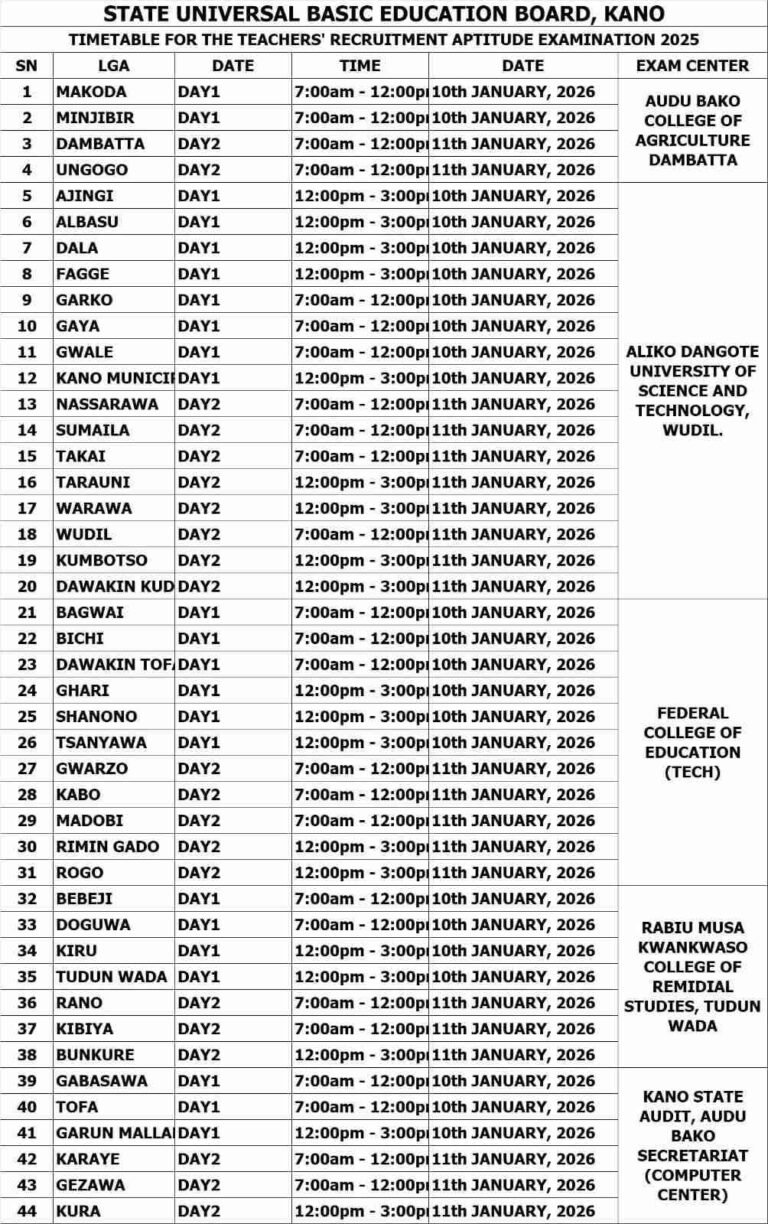
The Kano State Universal Basic Education Board (SUBEB) has released the official timetable for the Teachers’ Recruitment Aptitude Examination scheduled to hold in January 2026.

According to the timetable, the aptitude examination will take place over two days, Saturday, January 10, and Sunday, January 11, 2026, across designated centres within Kano State. The exercise is part of the ongoing recruitment process for teachers under the 2025 intake.

The timetable shows that candidates have been grouped based on their Local Government Areas (LGAs), with examinations conducted in two sessions daily. The morning session is scheduled to run from 7:00am to 12:00pm, while the afternoon session will hold from 12:00pm to 3:00pm.

For Day 1, which is Saturday, January 10, 2026, several LGAs including Makoda, Minjibir, Ajingi, Albasu, Dala, Fagge, Garko, Gaya, Gwale, Kano Municipal, Bagwai, Bichi, Dawakin Tofa, Ghari, Shanono, Tsanyawa, Bebeji, Doguwa, Kiru, Tudun Wada, Gabasawa, Tofa, and Garun Mallam are scheduled to sit for the examination at different times.

Day 2, scheduled for Sunday, January 11, 2026, will feature candidates from LGAs such as Dambatta, Ungogo, Nassarawa, Sumaila, Takai, Tarauni, Warawa, Wudil, Kumbotso, Dawakin Kudu, Gwarzo, Kabo, Madobi, Rimin Gado, Rogo, Rano, Kibiya, Bunkure, Karaye, Gezawa, and Kura.

The examination centres listed in the timetable include Audu Bako College of Agriculture, Dambatta; Aliko Dangote University of Science and Technology, Wudil; Federal College of Education (Technical); Rabiu Musa Kwankwaso College of Remedial Studies, Tudun Wada; and the Kano State Audit Office, Audu Bako Secretariat Computer Centre.

SUBEB advised all candidates to carefully check their assigned LGA, date, time, and examination centre to avoid confusion. Candidates are also expected to arrive early at their respective centres and comply with all examination guidelines as announced by the board.

Project I2M Opens Application for UNILAG and Partner Institutions

Project Innovation to Market (I2M), implemented by the Innovation and Technology Management Office (ITMO), is now accepting applications from eligible members of the University of Lagos (UNILAG) and other institutions under the Project I2M Research Consortium.

The initiative supports innovations emerging from research activities and non-procedural initiatives. It provides targeted resources to help move innovations from the proof-of-concept stage to market readiness. Project I2M is funded by UK International Development (UKAid) through the Research and Innovation Systems for Africa (RISA) program.

Benefits of Project I2M

  • Training on innovation
  • Prototype development funding
  • Intellectual Property (IP) support
  • Co-work and maker space within the University of Lagos
  • Opportunity to showcase innovations at investor forums

Who Can Apply

  • Undergraduate and postgraduate students
  • Academic staff, research fellows, and laboratory teams
  • University-affiliated early-stage spin-offs and research-based startups

Project I2M Research Consortium – Member Institutions
University of Lagos (UNILAG), University of Ibadan (UI), Obafemi Awolowo University (OAU), Olabisi Onabanjo University (OOU), Maranatha University (MUL), Imo State University (IMSU), Akwa Ibom State University (AKSU), University of Jos (UNIJOS), Michael Okpara University of Agriculture, Umudike (MOUAU), Ladoke Akintola University of Technology (LAUTECH), Lead City University, University of Nigeria Nsukka (UNN), University of Benin (UNIBEN), and Bayero University Kano (BUK).

How to Apply
Application Link: https://innovation2market.org/r2c
Application Deadline: Saturday, January 10, 2026

Nigeria Ranks 3rd in Africa by Number of Listed Companies in Stock Market

Nigeria’s stock market has been ranked as the third-highest in Africa by the number of listed companies, according to the Organisation of Economic Co-operation and Development (OECD).

The Nigerian Exchange (NGX) hosts 156 listed firms, trailing behind Egypt’s Egyptian Stock Exchange, which has 245, and South Africa’s Johannesburg Stock Exchange with 204. According to OECD’s Africa Markets Report 2025, NGX also has a market capitalisation of 33 billion dollars.

“South Africa has the most developed public equity market, accounting for 60% of the region’s market capitalisation. Its market capitalisation to GDP ratio (84%) is not only significantly higher than that of other African countries but also exceeds that of EMs, which stands at 61%,” OECD stated in the report.

“At the country level, only a few markets stand out in terms of size and activity. In addition, the median size of South African listed companies is markedly larger compared to the figure for EMs and globally, with a median market capitalisation of USD 195 million. Morocco, Egypt, and Nigeria also have relatively large markets, together accounting for 15% of the region’s market capitalisation. Together, these three markets represent almost half of all listed companies in Africa,” the Paris-based organisation added.

Other countries in the top ten include Mauritius with 94 listed companies, Tunisia with 79, Kenya with 61, Zimbabwe with 60, Cote d’Ivoire with 45, Ghana with 29, and Botswana with 23.

“In contrast, stock exchanges in Tanzania, Ghana, Botswana, Uganda, Zambia, and Namibia remain very small, each listing between 12 and 29 companies. Their market capitalisation is also modest, ranging from 5% to 20% of their respective GDPs,” OECD stated.

The data highlights the growing importance of the Nigerian Exchange as a regional investment hub. Home to sector giants such as banking, telecommunications, manufacturing, and energy, NGX provides a platform for blue-chip companies, including MTN Nigeria and BUA Foods, and has become a critical vehicle for domestic wealth creation and institutional investment.

As of early 2026, the market continues to show strong performance. Nigeria surpassed N100 trillion market capitalisation, closing at N101.8 trillion on January 5, 2026. Temi Popoola, group managing director and CEO of Nigerian Exchange Group (NGX), said the milestone “reflects the market’s growing depth, resilience, and capacity to respond positively to improving macroeconomic conditions and structural reforms.”

Popoola explained that the Group intends to sustain the current momentum by deepening market infrastructure, leveraging partnerships, and using technology to position Nigeria’s capital market as a leading destination for long-term investment in Africa.

Analysts also expect this momentum to continue. In a recent report, the Central Bank of Nigeria noted, “The capital market is expected to remain bullish in 2026, supported by recapitalisation exercise, rising investor confidence, and other policy measures aimed at fostering growth.”

The report further stated that several measures are expected to attract new entrants into the market. These include the technology strategy, collaborations between the NGX and the Federal Ministry of Industry, Trade & Investment, the zero per cent capital gains tax (CGT) for small businesses, and the N150 million exemption for retail investors. Increased trading activities have drawn more foreign portfolio inflows, reflecting growing confidence in the Nigerian market. Improved foreign exchange (FX) liquidity and regulatory clarity have also continued to strengthen foreign investor appetite.

Coronation Research analysts agreed with this outlook in their January 5 note to investors, saying, “We expect positive sentiment to persist in the near term as the new year opens, supported by portfolio rebalancing, bargain hunting in fundamentally strong names, and continued positioning ahead of full-year earnings releases and dividend announcements.”

United Capital research analysts, however, expect the market to be more selective in 2026. “The equity market is expected to remain positive but selective, supported by improving confidence and strong momentum in consumer goods, banking, and insurance stocks.” They added that gains are likely to be moderate as investors take profits after recent advances and await fresh catalysts.

AGILE Enrols 1567 Girls into Second Chance Centres in Bauchi

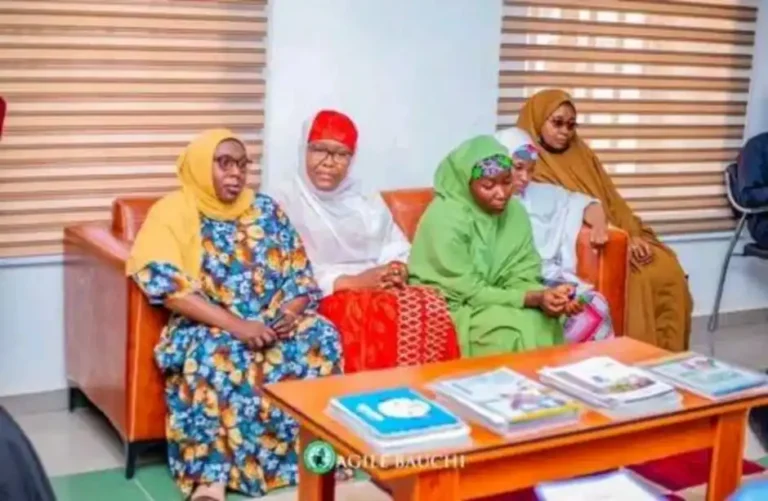
The Adolescent Girls Initiative for Learning and Empowerment (AGILE) has enrolled no fewer than 1,567 adolescent girls who dropped out of school in Bauchi State into its Second Chance centres.

The Bauchi State AGILE Project Coordinator, Hajiya Ladi Mohammed, disclosed this in an interview with newsmen in Bauchi on Thursday.

She explained that the girls were enrolled under the “Second Chance” initiative of AGILE, which is now referred to as Alternative Education. According to her, “already, we have established 21 centres across the 20 local government areas of the state, where we have a centre in each local government area, with two centres in Bauchi. All the enrolled girls have been placed across these centres and they have started learning two months ago.”

Hajiya Ladi added that the project has made progress in supporting girls’ education through various components designed to enhance learning opportunities and ensure inclusiveness.

She also revealed that AGILE has established a Grievance Redress Mechanism (GRM) where complaints are received from communities, parents, teachers, and the public concerning AGILE-related activities.

According to her, a grievance redress committee has been constituted and tasked with collecting complaints through GRM boxes across the 20 local government areas in all AGILE intervention schools.

“We also have a Digital Literacy Component where 100 schools have been selected and we have gone round the schools. We have mapped them but we are yet to start the digital literacy programme in the schools because we are still in the process of procuring devices like laptops and solar power materials,” she said.

AGILE is a World Bank-assisted intervention designed to improve secondary education opportunities among girls in targeted areas. The project also seeks to address the challenges facing adolescent girls’ education and empowerment across the participating states.