Home Blog Page 184

Concerns Over ₦13,000 Fee in Cross River Youth ₦5m Loan Scheme

Concerns have emerged over the Cross River State Youth Empowerment Scheme following a requirement for applicants to pay a ₦13,000 registration fee, a move critics say could generate hundreds of millions of naira from young people seeking access to loans of up to ₦5 million.

Criticising the move, citizen Agba Jalingo, in a Facebook post on Thursday, said the scheme was funded with public money and should not impose financial barriers on applicants it was meant to support.

“The Cross River State Youth Empowerment Scheme is a program funded with Cross River State money. It is meant to provide empowerment for young people in the State, devoid of the encumbrances that private and corporate business owners often lay out to militate the ambitions of young people,” Jalingo wrote.

Earlier, a statement from the Chairman of the scheme, Kalita Joe Aruku, had invited young people in the state with genuine businesses in need of scaling to apply for loans of up to ₦5 million. Interested applicants were asked to appear at designated venues in Calabar, Ikom and Ogoja on January 7, 2026. The scheme is being implemented in collaboration with Bank of Industry and Zenith Bank Plc.

Reacting to details in the statement, Jalingo said one requirement stood out. “What caught my attention in the statement that was sent out is the requirement number 6. Amongst others, applicants are asked to come with a N13,000 Registration Fee for ‘Search and Customized ATM,’” he stated.

He explained his concern by drawing from previous experiences handling government-supported intervention programmes. According to him, when he coordinated the #JariBurs initiative, which distributed bursary funds to students in Cross River North Senatorial District, the response was massive.

“When yours sincerely handled the #JariBurs initiative which distributed bursary funds to students in Cross River North Senatorial district, in the first 24 hours that we opened the application portal, we got over 11,000 applications and the number kept sky rocketing till the last day,” he said.

Jalingo added that some individuals involved in the process advised him to introduce paid forms. “Several persons working with Sen Jarigbe Agom who provided the funding, called yours sincerely on phone and tutored me on the need to sell forms for registration and make money off the scheme,” he wrote.

He disclosed that calculations were made on how much could be generated. “Their calculation was that if we sold forms at N5000 each to the 11,000 initial applicants, we would make 55million Naira and if we sold the forms for N2000, we would make N22million. But I politely declined and explained the kernel of the bursary initiative to them,” he said.

According to him, the same pressure surfaced during another intervention. “The same thing happened with the Senator Owan Enoh MSME Support Program, which I also handled. We had over 40 thousand applicants in the first phase,” Jalingo stated.

He said proposals were again made to charge applicants. “Their calculation was that if we sell forms to the 40 thousand applicants at N2000, we will get N80 million to share and if we sell the forms for N5000, we will have 200 million Naira, to share,” he wrote.

Jalingo said he refused on ethical grounds. “My position has always been that, since these funds are not from a business venture capital, I will not be party to exploiting the desperation of our people who are seeking assistance to enrich myself, regardless of the fact that I need money myself,” he added.

He warned that charging fees has become a pattern in public programmes. “I have followed carefully since the last administration up to this one, how several schemes and initiatives proposed by government are used to scam desperate citizens who are merely seeking help for survival, through purchase of forms and registration fees,” Jalingo wrote.

He added that in many cases, applicants receive nothing. “In most cases, none or most of those who pay are not given anything at the end and they usually have no case to make. The target is usually to amass the money and share it amongst those coordinating,” he said.

Questioning the current scheme, Jalingo asked, “If not, why will a scheme funded with Cross River State government money, ask applicants to pay N13,000 registration fee for ‘Search and Customized ATM?’ If after paying, the applicant is not able to get the loan, will the money be refunded?”

He further highlighted the possible scale of funds involved. “Imagine the tens of thousands of young people that will register and how much will be available to share. Even if only 20,000 youths register, the coordinators will have N260million to share amongst themselves,” he said.

Jalingo also challenged the justification for the amount. “Even if the partnering commercial bank makes that registration a requirement, the Scheme can and should take up that payment for the applicants,” he stated.

He noted that banks charge far less for similar services. “Almost all banks in Nigeria charge only N1000 for the issuance of Naira ATM cards. Even commercial banks do not collect loan processing fees upfront. That’s a red flag,” he said.

He added that credit checks are cheaper. “The major credit search bureau in the country, CRC Credit Bureau, offers individual credit scores at N400 and full reports at 5,000 for customers to search themselves, which banks also pay for. So what is the merit of the N13,000?”

Read also: Apply: Mastercard Agrisiti TAGDev 2.0 Hybrid Digital Training Program

Advertisement

How to Apply: Army Direct Short Service 29/2026 Recruitment

The Nigerian Army (NA) has announced the commencement of applications for the Direct Short Service Commission (DSSC) Course 29/2026, with the process beginning on Wednesday, January 7, and closing on February 4, 2026.

In a signed statement by the Military Secretary (Army), Department of Military Secretary, Mambilla Barracks, Asokoro, Abuja, the NA said the DSSC is open to eligible Nigerians, including civilians and serving military personnel.

According to the Army, successful applicants will be commissioned into five corps, including the Nigerian Army Engineers, Nigerian Army Signals, Nigerian Army Medical Corps, Nigerian Army Electrical and Mechanical Engineers, and Nigerian Army Education Corps.

The Army stressed that the application is free of charge and must be completed online within the stipulated period.

How to Apply:

Interested candidates are to visit the Nigerian Army recruitment portal at http://recruitment.army.mil.ng and select the DSSC option.

  • Read the qualification criteria for the DSSC course.
  • Click “Apply Now” and select the appropriate corps based on qualifications.
  • Indicate whether you are serving or have served in the Armed Forces of Nigeria.
  • Create an account or log in to complete the application.
  • Upload required documents, including a passport photograph, educational certificates, evidence of professional body membership (where applicable), state of origin certificate, birth certificate or age declaration, and NIN/BVN.

For further inquiries, applicants can call 08179269294 or 08109959294 between 8am and 6pm daily.

The Nigerian Army reiterated its commitment to a transparent and merit-based recruitment process.

FG to Use Measurable Data for Poverty Reduction

The Federal Government has announced that it will now rely on measurable data and clear benchmarks to drive poverty reduction programmes, as the Ministry of Humanitarian Affairs and Poverty Reduction moves away from interventions without tracked outcomes.

The Honourable Minister of Humanitarian Affairs and Poverty Reduction, Dr. Bernard M. Doro, made the remarks during a courtesy and familiarization visit by a delegation from the Humanities Welfare and Social Development Initiative (HUWESDI), led by its Executive Director, Felix Nnalue Attah. The visit took place on Tuesday, 6th January, 2026, at his office in the Federal Secretariat Complex, Phase 1, Abuja.

Welcoming the delegation, Dr. Doro reaffirmed the Ministry’s commitment to implementing policies and programmes that deliver measurable and sustainable impact on the lives of Nigerians. He said the current focus is on ensuring that humanitarian and poverty reduction efforts produce results that can be clearly tracked and evaluated.

According to the Minister, since his inauguration, efforts have been intensified to build a coordinated and inclusive humanitarian and poverty reduction ecosystem that ensures no Nigerian is left behind. He emphasized the importance of harmonized strategies, humanitarian prevention initiatives, and a central coordination framework to effectively address poverty, emergencies, and natural disasters across the country.

Dr. Doro noted that although many poverty reduction initiatives have been implemented over the years by government, development partners, and non-governmental organizations, the major challenge has been the absence of a robust system for measuring outcomes against national poverty indices. He explained that this gap has made it difficult to assess real impact and improve policy decisions.

He stated that the Ministry is now prioritizing data-driven interventions with clear entry and exit points to ensure measurable impact. According to him, such interventions can be integrated into a national database to support effective policy evaluation and long-term planning. He added that partnerships with credible Civil Society Organizations such as HUWESDI are critical to strengthening public engagement, transparency, and outreach.

The Honourable Minister assured the delegation that the Ministry would review HUWESDI’s proposal and explore areas of collaboration, while expressing readiness to work with the organization to advance the Ministry’s mandate.

Earlier, Mr. Attah congratulated the Minister on his appointment and praised his open-door policy, transparency, and commitment to accountability, describing them as key to rebuilding public confidence in governance. He provided background on HUWESDI as a registered Civil Society Organization focused on humanitarian welfare, social development, education, healthcare delivery, food security, and inclusive governance.

He expressed the group’s interest in partnering with the Ministry on programme implementation, advocacy, and capacity building. He also applauded the “One Humanitarian, One Poverty Reduction System” initiative, describing it as a system-led and results-oriented framework.

Lagos to Begin 2025 Ibile Youth Academy for 2026

0

The Lagos State Ministry of Youth and Social Development has announced the commencement of the 2025 Ibile Youth Academy. The Honourable Commissioner for Youth and Social Development, Mr Mobolaji Abubakre Ogunlende, made this known at the Secretariat, Alausa, where he revealed the lineup of activities for the programme.

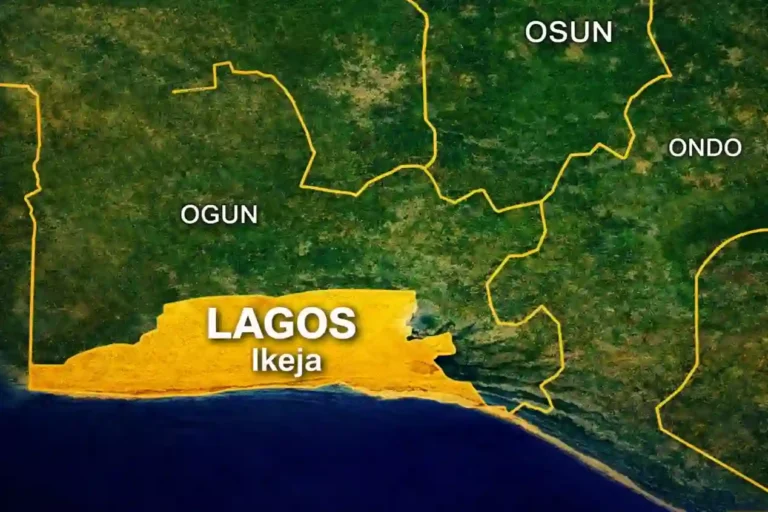
According to Mr Ogunlende, the physical screening of applicants will hold from January 5 to 9, 2026, while the main training is scheduled to take place from January 26 to 29, 2026. The activities will be held across the five divisions of the state, which are Ikorodu, Badagry, Ikeja, Lagos, and Epe. He further stated that the One Day Leadership Seminar will run from February 3 to 5, 2026, the Residential Bootcamp will take place from February 8 to 14, 2026, and the Closing Ceremony is expected to be held between February 24 and 26, 2026.

In her remarks, the Permanent Secretary of the Ministry, Pharm (Mrs) Toyin Oke-Osanyintolu, emphasized the significance of the Ibile Youth Academy as one of the Ministry’s flagship initiatives. She said, “The Ibile Youth Academy is one of the major programmes of the Ministry designed to inculcate in our youth the virtues of volunteerism, citizenship and leadership. It is aimed at equipping our youth who are supposed to take over the mantle of leadership from the adults with everything they need to perform even better than their predecessors in any walk of life they find themselves in.”

She added that the programme aligns perfectly with the Governor’s THEMES Plus Agenda for youth development and has produced outstanding young leaders who are excelling in various sectors.

Pharm (Mrs) Oke-Osanyintolu also disclosed that after the training and Residential Bootcamp, the overall best participant will be selected as the State Youth Ambassador, while the next five top performers will serve as Divisional Ambassadors for the five divisions, with the task of implementing community-based pet projects.

SayAMR Language Hackathon Opens to Translate AMR Into Nigerian Languages

The SayAMR Language Hackathon has been announced as a national innovation challenge aimed at simplifying Antimicrobial Resistance (AMR) concepts by translating them into widely spoken Nigerian languages. The hackathon is organised by DRASA Health Trust in collaboration with the Nigeria Centre for Disease Control and Prevention (NCDC), the Centre for Infection Control and Patient Safety (CICaPS), and the Committee of Vice Chancellors of Nigerian Universities (CVCNU).

According to the organisers, the initiative is designed to bring together students, linguists, researchers, and public health advocates to address gaps in public understanding of AMR. They explained that by translating technical health information into familiar languages, communities can better understand the risks of drug resistance and adopt safer health practices. The organisers said the project is focused on making AMR information accessible at the grassroots level, where language barriers often limit effective health communication.

Antimicrobial Resistance occurs when microorganisms such as bacteria, viruses, fungi, and parasites evolve and no longer respond to medicines designed to kill them. Health experts note that this resistance makes infections harder to treat and increases the risk of severe illness and death. The organisers stated that AMR is a growing public health threat that affects individuals, families, and health systems.

They warned that without urgent action, AMR could lead to as many as 10 million deaths annually by 2050. They added that prolonged illness, higher medical costs, and reduced productivity linked to resistant infections could push millions of people into poverty. Despite the seriousness of the issue, they said awareness remains low, with many people unaware of how misuse and overuse of medicines contribute to AMR.

The SayAMR Language Hackathon seeks to improve public understanding of AMR by developing accurate and culturally relevant terminologies in Hausa, Igbo, Yoruba, and Nigerian Pidgin. The organisers said breaking language barriers will support grassroots AMR awareness, improve health communication, and strengthen Nigeria’s national AMR response. They described the hackathon as a practical step toward community-focused public health education.

Eligibility for participation is open to teams of four to eight multidisciplinary students from accredited Nigerian universities, including federal, state, and private institutions. Each team must include at least one faculty member from a linguistics department or a closely related department where linguistics is not available. The organisers stated that at least 25 percent of each team must be students from language-focused disciplines such as linguistics, English, Nigerian languages, writing, or translation.

All student participants must be between 18 and 35 years old, and teams are required to obtain formal endorsement from their Vice Chancellor or a delegated authority. Submissions must be made in at least one of the approved languages, which are Hausa, Igbo, Yoruba, or Nigerian Pidgin.

Submission requirements include valid identification for all team members and faculty, proof of enrolment in a linguistic or related course, proof of faculty status, and a letter of endorsement from the Vice Chancellor or delegated authority. Teams must also submit a 300 to 400 word written statement demonstrating their understanding of AMR and summarising the research or desk review conducted.

Further requirements include video, audio, or pictorial evidence and a 250 to 400 word report documenting consultative sessions with experts. A database of consulted individuals, including names, designations, organisations, phone numbers, and email addresses, must be provided. Teams are also required to submit evidence and a 200 to 300 word report on community pilot testing, as well as a short video explaining the developed terminology using sentences in the chosen language.

The organisers stated that submissions must follow three development stages, which are research, consultation, and community pilot stages. While acknowledging the existence of multiple dialects, they noted that teams should focus on the most widely spoken dialect to ensure uniformity and usability.

Winning entries, according to the organisers, will be showcased and adopted through national AMR awareness campaigns, school programmes, and community engagement initiatives. They said these entries will contribute directly to Nigeria’s public health communication strategy.

Interested teams can apply through the official SayAMR submission portal on the DRASA Health Trust website at https://drasatrust.org/sayamr-hackathon/, with submissions accepted Here.

News update:

Deadline Extended. The SayAMR Language Hackathon deadline is now 27 February 2026.

Lagos Ranked Among Africa’s Top Start-Up Cities

Multipolitan, the world’s first platform for borderless living, has released new findings from its The Startup Friendly Cities Index 2026, offering a detailed comparison of how global cities support founders, investors and innovators. The research measures the everyday experience of building a start-up and links it to deeper systems such as infrastructure, regulation and urban liveability that sustain innovation over time.

According to the Index, Lagos stands out as one of Africa’s most dynamic centres of venture-backed innovation. The report notes that with focused improvements in infrastructure, clearer regulation and better urban living conditions, the city is positioned to convert its fast-growing entrepreneurial momentum into competitiveness comparable to leading global hubs.

Lagos is described as a defining symbol of Africa’s modern tech story. Thousands of early-stage companies, especially in fintech, now use the city as a launchpad for scalable solutions across the continent and beyond. The Index finds that Lagos performs strongly on founder density, market depth and sector diversity, and already operates like a high-potential global city that is still early in its scaling journey.

“Lagos has a scale, urgency and ingenuity that are very hard to replicate. It has the raw entrepreneurial energy to be Africa’s start-up capital, and that energy is increasingly being matched by ecosystem players who want to build around it,” said Chee Okebalama, Executive Partner at Multipolitan.

Multipolitan’s analysis highlights that founders in Lagos are building world-class solutions in finance, e-commerce and digital infrastructure, often while working around limited resources. Structural gaps in power supply, transport systems and broadband access mean many entrepreneurs must design products and operations that can function despite fragility in basic services.

“The next phase is not about whether Lagos can produce more unicorns. It is about whether the city can match its entrepreneurial firepower with the infrastructure, regulatory confidence and quality of life needed for sustained innovation,” said Nicholas Michael, Group Head of Market Development at Multipolitan.

The report notes that investor confidence in African technology remains resilient, even amid global uncertainty. However, regulatory volatility in areas such as foreign exchange management, fintech licensing and digital assets continues to influence how capital is allocated between Lagos, other African cities and global hubs. The Index suggests that Lagos and Nigeria can improve their standing by adopting more transparent regulatory roadmaps, consistent sector rulebooks and wider use of time-bound sandboxes instead of abrupt policy shifts.

It adds that simplifying capital movement for both local and international investors, alongside clearer and more predictable investment rules, would further strengthen Lagos’s ambition to compete globally. These steps are seen as critical to reducing uncertainty and improving long-term planning for founders and funders alike.

The Startup Friendly Cities Index 2026 also places strong emphasis on liveability as a strategic advantage. It notes that Lagos can deepen its appeal by investing in developer-friendly live-work districts, improving mobility, healthcare and housing systems, and creating targeted visa and residency pathways for founders and tech workers across Africa who want to build from Nigeria.

“The ambition of Lagosian entrepreneurs is unparalleled. What matters now is how quickly the city can reduce friction for talent, investors and operators. Lagos already behaves like a start-up capital. Full global recognition will come as its infrastructure and governance catch up with its ambition,” Okebalama added.

The Index concludes that Lagos’s entrepreneurial gravity is too strong to ignore. Its future position among the world’s leading innovation hubs will depend less on a single breakout success and more on its ability to align innovation, capital and policy at the same pace as its growing entrepreneurial class.

Dangote Group Opens Over 40 Job Vacancies for 2026

0

Dangote Group has opened recruitment for job opportunities across its food, cement, and corporate divisions, marking one of its largest hiring drives ahead of 2026. The company announced more than 40 job openings across its cement and foods business units, inviting qualified Nigerians to apply for roles spanning technical, professional, and management levels.

The recruitment exercise, announced in January, targets candidates interested in building long-term careers within the conglomerate’s expanding operations. According to the company, the openings reflect its continued investment in industrial growth, operational efficiency, and talent development across Nigeria and selected international locations.

Roles Available

The Dangote Group stated that the vacancies cut across a wide range of functions, including finance, engineering, mechanical operations, IT, supply chain management, and corporate administration. The company said the roles are designed to strengthen its cement production, food manufacturing, logistics, and corporate support systems.

Among the positions announced are roles in engineering, finance, operations, IT, and management, covering both plant-based and head office functions. These opportunities are open to candidates with diplomas, bachelor’s degrees, and relevant professional certifications, depending on the role.

Locations and Business Units Covered

According to the recruitment notice, the positions are spread across key operational locations. These include Ibese and Obajana cement plants, Okpella operations, DSR P-Apapa facilities, and corporate offices in Lagos. The company also disclosed that some roles are available within Dangote Cement’s Ivory Coast operations, offering international exposure for qualified candidates.

The wide geographic spread of the roles highlights the group’s extensive footprint in manufacturing, logistics, and corporate services, as well as its need for skilled professionals to support daily operations and future expansion plans.

List of Selected Available Positions

Some of the roles announced for 2026 include Financial Analyst, Mechanical Technician, Electrical Technician, Deputy Head of Finance, Technical Assistant, Planning and Market Intelligence Officer, Machinist, Customer Service and Shipping Manager, Mechanical Engineer for Kiln operations, Assistant Manager for Procurement, Finance Manager, Deputy Electrical Engineer for Power Plant, Economic Research Specialist, Fleet Head, Strategy Head, Lubrication Supervisor, Compensation and Benefit Manager, Instrumentation Technician, HVAC Senior Technician, Assistant General Manager for Mines, Deputy Manager for Packing Plant, Power Plant Operations Manager, IT Server Operations Analyst, Network Engineer, Business Analyst, Corporate Affairs Manager, Inventory Accountant, Efficiency Engineer, Internal Control Officer, and SAP Data Engineer.

Job Requirements

• Vacancies are open to Nigerians with diplomas, bachelor’s degrees, or relevant professional certifications
• Available positions include technical, engineering, corporate, and managerial roles
• The Financial Analyst role focuses on financial analysis, trend identification, and decision support
• Candidates for Financial Analyst must hold a bachelor’s degree in Finance or Accounting, relevant certification such as ACA or ACCA, at least five years’ experience, and strong quantitative skills
• Mechanical Rigger or Technician roles involve fabrication, repair, and maintenance of cement production equipment
• Applicants for mechanical roles must have a National Diploma or bachelor’s degree in Mechanical Engineering or equivalent, with up to ten years of relevant experience depending on level

How to Apply

Interested candidates are advised to visit the Dangote Group careers portal to review detailed job descriptions and submit applications for preferred positions. Applications are expected to be completed online, and candidates may apply for roles that match their qualifications and experience.

Apply Here

Apply: Mastercard Agrisiti TAGDev 2.0 Hybrid Digital Training Program

Mastercard Agrisiti has opened applications for the Hybrid Digital Training Program under TAGDev 2.0, giving young Africans an opportunity to gain practical skills in climate-smart agriculture and agribusiness. The programme is designed for youths who want to learn, earn, and build long-term careers in agriculture through a mix of digital learning and physical engagement. It is positioned as a free capacity-building opportunity for Nigerian youths and others across Africa who are interested in agriculture, agribusiness, and sustainable development.
About Mastercard Agrisiti Hybrid Digital Training Program

The Mastercard Agrisiti Hybrid Digital Training Program is a 12-week initiative delivered under TAGDev 2.0 in collaboration with RUFORUM and the Mastercard Foundation. The programme combines online learning with physical support systems to ensure participants gain both theoretical knowledge and practical experience.

The training focuses on regenerative agriculture, climate-smart practices, and agribusiness development that responds to Africa’s food security and employment challenges. It is targeted at young people in Nigeria and across Africa, regardless of location. Participants are exposed to practical approaches to farming, value addition, and agribusiness innovation, while also learning how to build income-generating activities within the agricultural value chain. The structure of the programme is designed to support youths who may not have access to formal agricultural education but are willing to learn and apply new skills.

Programme benefits:

  • Mobile-first learning approach that allows easy access through Telegram and the Agrisiti platform
  • Physical learning hubs in selected Nigerian states such as Ogun, Rivers, and Kano for hands-on activities
  • Training content aligned with Africa’s sustainable development and agricultural growth goals

Benefits:

Joining this free training programme comes with several advantages for young people looking to start or grow a career in agribusiness. The programme is built to support learning, mentorship, and real-world application.

  • Practical knowledge of modern agribusiness value chains and emerging opportunities
  • Hands-on training in regenerative and climate-smart agriculture practices
  • Access to mentorship from experienced professionals in agribusiness and startups
  • Opportunities to connect with peers, cooperatives, and potential funding networks
  • A recognised digital certificate that can improve employability and credibility
  • Exposure to cooperative models and startup support for real-life application

These benefits make the programme suitable for youths who want to build skills without paying training fees, while preparing for opportunities in Africa’s growing agricultural sector.

Eligibility requirements:

The programme is open to motivated young Africans, with specific attention to Nigerian youths seeking free vocational training in agriculture.

  • Applicants must be between 18 and 35 years old
  • Open to youths not currently enrolled in formal schooling
  • Open to students in technical or vocational training programmes
  • Must have interest in agribusiness and willingness to learn income-generating skills
  • No prior experience in agriculture is required

Required Documents:

The application process is simple and does not involve heavy documentation.

  • Basic personal information such as name, age, and contact details
  • Information about education or training background
  • Short statement of interest in agribusiness, where required

How to Apply:

  • Review eligibility to confirm you meet the age and background requirements
  • Complete the official application form provided by the programme
  • Fill in personal details and respond to required questions
  • Submit the application promptly to be considered

Contact for Enquiries:

  • Ogun: 08034229240
  • Rivers: 07010397069
  • Bayelsa: 08110363467
  • Kano: 08099704206
  • Niger: 07038242435
  • Enugu: 08130169161
  • Cross River: 08035990824

The application deadline has not been specified.

Apply Here.

NYSC Warns Institutions Over Data Integrity in 2026 Batch A Mobilisation

0

The National Youth Service Corps (NYSC) has called on Corps Producing Institutions across the country to improve their internal data validation systems in order to maintain the credibility of the mobilisation process.

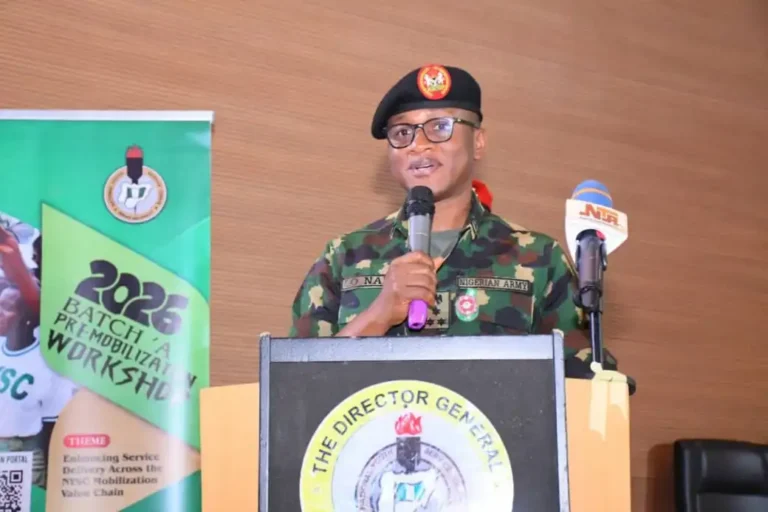
The Director General of NYSC, Brigadier General Olakunle Nafiu, made the call during the 2026 Batch ‘A’ Pre-Mobilisation Workshop held in Abuja. The event, themed “Enhancing Service Delivery Across the NYSC Mobilisation Value Chain,” brought together key stakeholders to discuss the integrity and efficiency of the mobilisation process.

Brigadier General Nafiu emphasized the importance of institutional oversight in the mobilisation process ahead of NYSC 2026 Batch A, Stream 1. He urged heads of Corps Producing Institutions to pay closer attention to activities related to mobilisation and called for Desk Officers to undergo regular training to stay updated on evolving standards and technologies.

He reaffirmed NYSC’s commitment to its Standard Operating Procedures and the continuous strengthening of collaboration across its Departments, Area Offices, and State Secretariats. He also highlighted the need for improved performance monitoring, evaluation, discipline, professionalism, and ethical behaviour within the Scheme.

Nafiu encouraged stronger inter-agency collaboration, regular stakeholder meetings, and greater use of data-driven decision-making with clearly defined timelines and responsibilities. He assured that NYSC Management would continue to uphold its duties with patriotism and integrity while working with stakeholders to achieve excellence.

“As we look ahead, the NYSC mobilisation process must be repositioned to be efficient, transparent, accountable, and people-focused,” the DG stated. “This involves delivering timely and accurate results, free from undue influence, with clear accountability for actions and inactions, while remaining responsive to the needs of Prospective Corps Members and other stakeholders. Improving service delivery throughout the mobilisation value chain is, therefore, not optional; it is both imperative and urgent.”

The DG described the mobilisation process as a complex system that involves production, validation, mobilisation, deployment, and management of Prospective Corps Members (PCMs). He acknowledged that although the Scheme had made progress in digital mobilisation, there were still challenges, such as poor data quality, inadequate technical skills, resistance to full automation, and weak feedback systems.

He noted that violations of established guidelines, uploading unqualified graduates, inconsistent academic records, data discrepancies, record manipulation, and poor internal verification were issues that continued to affect the integrity of the mobilisation process.

Brigadier General Nafiu warned institutions against fraudulent mobilisation of graduates for national service, stressing that sanctions would be applied to those found guilty of such misconduct.

Earlier, the Director of Corps Mobilisation Department, Mrs. Rachel Idaewor, in her welcome address, urged Student Affairs Officers (SAOs) to carry out their duties with diligence and integrity. She reminded them to ensure that the information they provide accurately reflects the true profiles of their Prospective Corps Members.

Idaewor commended the partnerships between NYSC and critical stakeholders such as the Federal Ministry of Education, Joint Admissions and Matriculation Board (JAMB), National Board for Technical Education, National Universities Commission (NUC), and SIDMACH Technologies. “We should all come together as a cohesive team, drawing inspiration from our past successes while embracing the challenges that lie ahead,” she said.

Participants at the workshop included Student Affairs Officers from various Corps Producing Institutions, representatives from the National Universities Commission, and other stakeholders in the education and mobilisation sectors.

Ogun Issues Posting Letters to 448 OgunTeach Interns

The Ogun State Government has formally engaged 448 OgunTeach interns and presented them with engagement and posting letters at a ceremony held at the Ogun State Universal Basic Education Board (SUBEB) Secretariat, Oke-Mosan, Abeokuta.

Speaking during the presentation, the Chairman of SUBEB, Evangelist Olalekan Ifede, said the recruitment exercise was designed to strengthen manpower in rural schools across the state. He urged the interns to take their postings seriously and serve with commitment and a sense of responsibility.

Ifede cautioned the new interns against seeking redeployment, warning that such requests would not be accepted. “The moment anyone calls me to seek a change of posting, we will remove the person’s name immediately. There are many others seeking this opportunity, and you should appreciate Governor Dapo Abiodun for making this engagement possible,” he stated.

He directed the interns to resume duties immediately, stressing that anyone who failed to report to their assigned school would be replaced. The chairman also reminded them of the importance of submitting their assumption-of-duty documents early to avoid salary delays.

“We do not want your payment to be delayed. Salary processing will only commence for those who submit their assumption-of-duty documents early,” he explained.

Ifede further advised the OgunTeach interns to maintain good working relationships with their headteachers and colleagues, describing the engagement as a service to the state and not a privilege. He added that only those who showed dedication, discipline, and strong performance would stand a chance of being considered for permanent employment.

“Basic education is the foundation of our system. We need teachers who are determined and committed to ensuring that pupils can read, write and communicate effectively,” he said.

Also speaking at the event, the Director of Administration and Supplies at SUBEB, Mr. Femi Fatade, said the selection process was based strictly on merit and that the deployment was done to address specific staffing needs in rural schools.

On behalf of the beneficiaries, Mr. Adedayo Taiwo expressed gratitude to Governor Dapo Abiodun and the Ogun State Government, promising that the interns would perform their duties diligently and uphold the trust placed in them.