Home Blog Page 188

Nigerian Navy shortlisted candidates list for Basic Training 38 interview

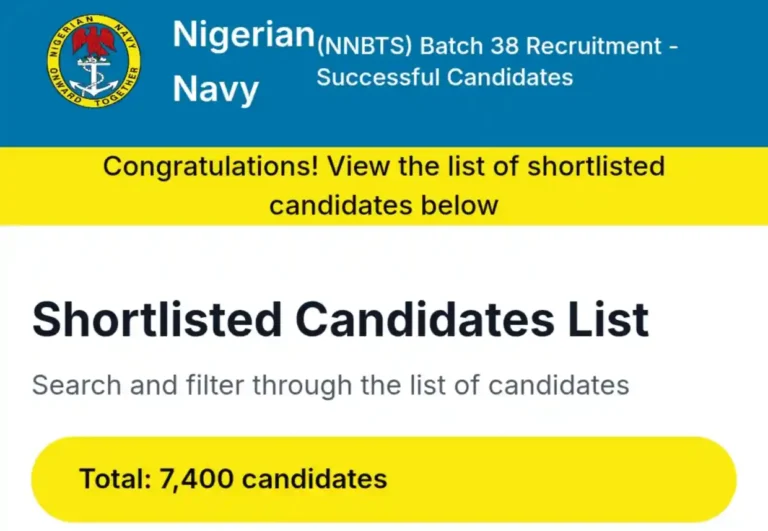
The Nigerian Navy released the shortlisted candidates list for Basic Training School Batch 38. However, only a total of 7,400 candidates across all 36 states and the FCT have been shortlisted for the interview.

The interview will be conducted concurrently at the centres from 10 January to 21 February 2025. The interview will include screening and verification of credentials and certificates, medical and physical evaluation, and a written test.

Shortlisted candidates are to come along with the following items: a printout of their duly signed application forms; originals and photocopies of their credentials; a valid Driver’s Licence (Category H only); State of Origin/LGA certificate; National Identity Card or Acknowledgment Slip; writing materials; two pairs of navy blue shorts and two white (unmarked) T-shirts; a pair of canvas or trainers and stockings; bed sheets and pillowcases; a set of cutlery; four recent 30 x 30mm passport-sized photographs on a white background; personal toiletries (bathing and washing soap, toothpaste and brush, etc.); and their BVN.

To check the shortlist, visit
www.joinnigeriannavy.navy.mil.ng/shortlisted-candidates and enter your registration number. It will also display your category, state of exam, and exam centre.

Congratulations to the shortlisted candidates.

Advertisement

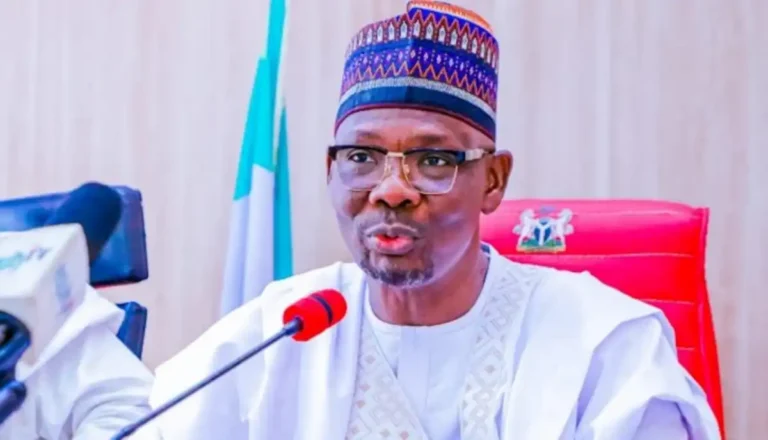
Nasarawa govt distributes 50 tricycles, 10 electric cars to beneficiaries

The Nasarawa State Government has distributed another tranche of 50 tricycles and 10 cars to cooperatives, youth groups, and institutions under its empowerment scheme aimed at improving livelihoods and encouraging clean energy use.

The exercise took place on Tuesday in Lafia, where the Secretary to the State Government, Labaran Magaji, presented the vehicles to beneficiaries on behalf of the Abdullahi Sule-led administration.

Speaking at the event, Mr Magaji said the programme was designed to improve the socio-economic status of citizens and urged beneficiaries to make effective use of the vehicles.

He explained that the electric vehicle empowerment scheme was a deliberate effort by the state government to adopt renewable energy.

“We are all aware of climate change and the need to sanitise our environment; it must start from somewhere, and that is why the call for renewable energy is very important,” he said.

Mr Magaji added that the governor had taken a leading role by introducing electric vehicles for commissioners and members of the state executive council.

“It is against this background that the governor has taken the front line by first introducing the electric vehicle for all commissioners and members of the state executive council. I think it is the first of its kind in this country,” he said.

The SSG charged beneficiaries to maintain the vehicles for optimal performance, noting that accessories such as charging plugs, charging points, and a maintenance office had been provided.

Speaking on behalf of the beneficiaries, Nghargbu Kitso, Deputy Vice Chancellor, Research, Innovation, and Linkages at Nasarawa State University, Keffi, thanked the government.

Mr Kitso assured the governor that beneficiaries would work to expand the impact of the scheme.

“As a learning institution focused on innovative funding, we find this empowerment programme timely,” he said.

Last year, the state government empowered youth and women’s groups with 100 electric cars and 50 tricycles.

NJFP 2.0 allows applicants to change video submission

0

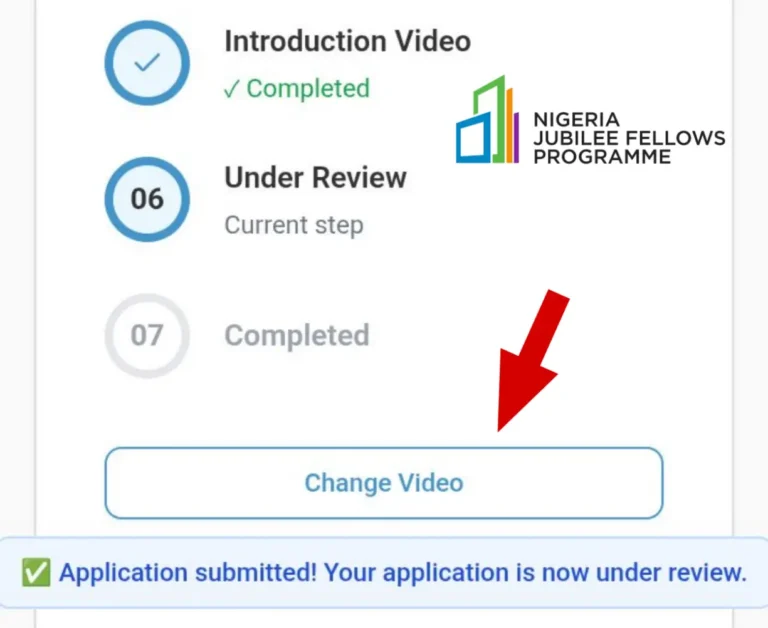
Nigeria Jubilee Fellows Programme (NJFP) 2.0 has now provided an option for candidates to change their video even while a submitted application is still under review.

Nigeria Startup News can confirm that this is a general option available on applicants’ dashboards.

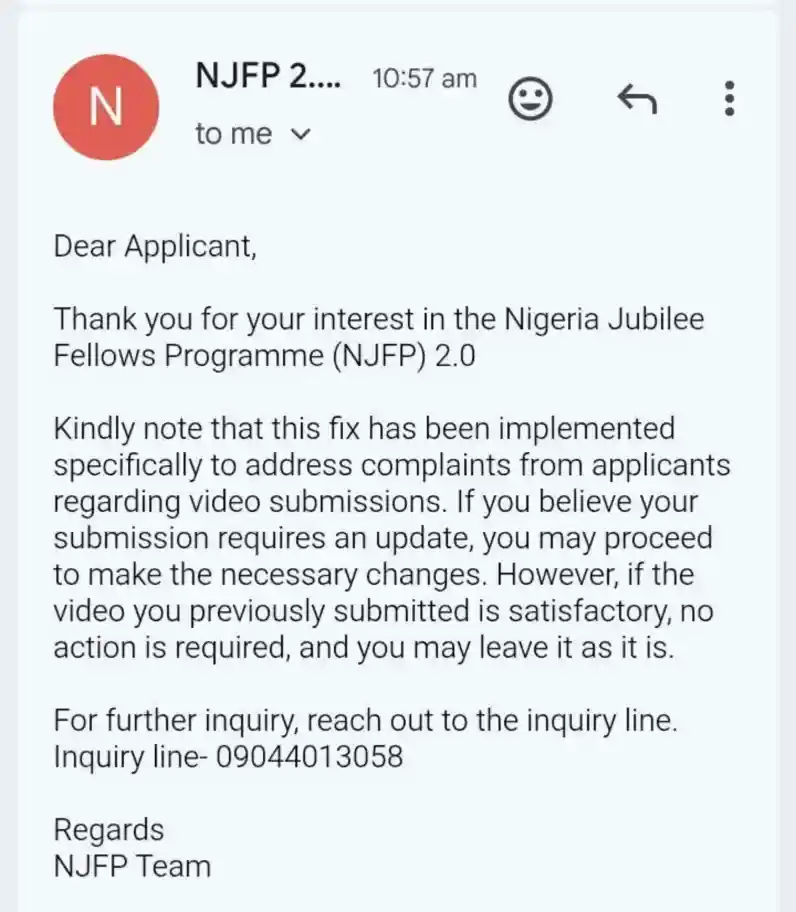
When contacted via email to ask whether it is mandatory to change a previously uploaded video, the NJFP Team replied,

“Dear Applicant,

Kindly note that this fix has been implemented specifically to address complaints from applicants regarding video submissions. If you believe your submission requires an update, you may proceed to make the necessary changes. However, if the video you previously submitted is satisfactory, no action is required, and you may leave it as it is.”

To change the NJFP 2.0 video, candidates should simply log in to their dashboard and click on “Change Video” to redo the video submission stage.

However, if you feel that the video you previously submitted is satisfactory, no action is required, and you may leave it as it is.

Cross River IRS directs taxpayers to stop cash payments from January 2026

The Cross River State Internal Revenue Service (CRIRS) has announced the commencement of new tax reforms from January 1, 2026, directing taxpayers to stop cash payments and adopt digital platforms and bank deposits as part of efforts to harmonise taxes, reduce multiple taxation, and improve accountability across the state.

This was disclosed on Tuesday in a signed statement by the Executive Chairman of CRIRS, Prince Edwin Okon, Ph.D, who said the reforms are designed to strengthen tax administration and improve service delivery to taxpayers.

“As part of our commitment to enhancing Tax Administration and improving service delivery, these changes will mark the end of cash collections for tax payments,” Okon said.

According to the statement, effective January 1, 2026, taxpayers are encouraged to only utilise digital platforms and bank deposits for the payment of their taxes and levies into government-designated revenue accounts. The Service also advised taxpayers to desist from making cash payments or paying monies into either personal or corporate accounts belonging to revenue agents, consultants, or tax officials.

The statement further noted that, in compliance with the provisions of the Nigerian Tax Administration Act, 2025, all revenue consultants in the state have been requested to put on hold the service of new tax assessments for the collection of any state levy until further notice. CRIRS explained that the directive is meant to ensure compliance with the Act on the engagement of tax agents and professionals, while also reducing revenue leakages in the state.

CRIRS also sought to address concerns about the reforms, stating that they are not intended to introduce a punitive tax regime. “We encourage our Taxpayers to approach the changes with unbiased minds for easier understanding and assimilation,” the statement said.

The Service added that it has established dedicated support channels to assist taxpayers in understanding the new laws, alongside workshops, webinars, seminars, and other informational resources to ensure a smooth transition.

Poverty and ethnic inequality driving terrorism in Nigeria – study

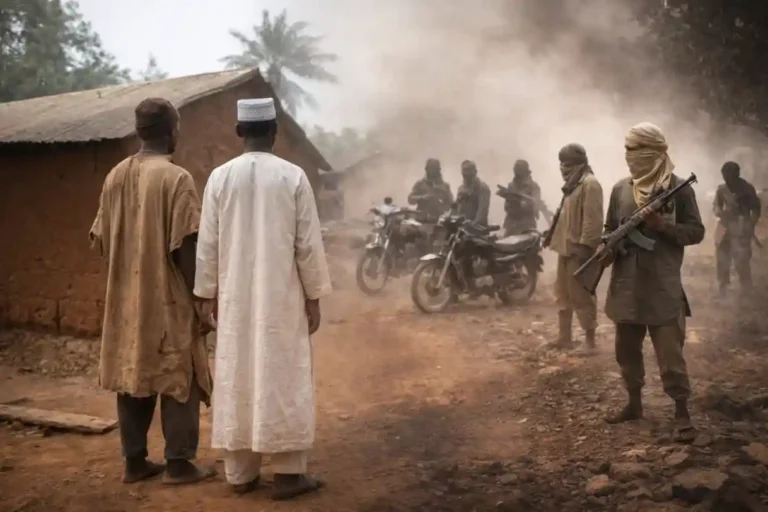
Nigeria’s long-running insecurity and terrorism challenges are closely linked to deep and uneven poverty across the country, with ethnic inequality, corruption and weak governance creating conditions that leave millions vulnerable to violence and displacement, according to new analysis.

Nigeria has endured decades of violent insurgencies and currently ranks 6th on the 2025 Global Terrorism Index, with numerous people killed and millions displaced across different regions. Data on casualties from terrorist attacks in 2025, captured by the Armed Conflict Location & Event Data and the Council on Foreign Relations’ Nigeria Security Tracker, show that most of the victims are from areas with high poverty levels, a trend also reflected in the Nigerian Poverty Map.

Tolu Olarewaju, a researcher who has studied ethnic poverty, explains that the overlap between violence and poverty in Nigeria is not accidental but rooted in long-standing structural problems. He notes that poverty in Nigeria takes many forms, including lack of income and productive resources, hunger and malnutrition, illness, early death, and limited access to education and basic services. It also includes poor housing, unsafe environments, and exclusion from decision-making and social life.

Nigeria’s population is currently estimated at about 237 million people, with more than 133 million Nigerians living in poverty. Poverty levels are significantly higher in rural areas, where about 72 per cent of people are poor, compared to 42 per cent in urban areas. According to Olarewaju, this widespread poverty is driven mainly by historical and governance-related factors.

He points to history, particularly the legacy of the slave trade and British colonial rule, which prioritised the economic interests of the British Empire over the development of local populations. He also highlights corruption and poor governance practices as key drivers of Nigeria’s current poverty crisis. “My work shows that when initiatives are introduced to reduce poverty in Nigeria, they are often hijacked by corrupt individuals,” Olarewaju said.

Successive governments have launched several programmes aimed at reducing poverty, but results have remained limited. In October 2023, the current administration introduced the “Renewed Hope Conditional Cash Transfer” programme to cushion the effects of fuel subsidy removal, which had raised the cost of living and contributed to inflation. Despite its intentions, the programme has not significantly reduced poverty levels across the country.

Analysts say the repeated failure of poverty reduction efforts in Nigeria stems from multiple issues, including corruption, poor targeting of beneficiaries, limited funding, weak legislative oversight, political interference, and the lack of a flexible, people-centred approach. These challenges have prevented programmes from reaching the most vulnerable populations.

Poverty is also described as a common thread linking areas affected by terrorism in Nigeria. Poor communities are more exposed to recruitment by terrorist groups, while attacks often target people who are already economically disadvantaged. This cycle, experts say, deepens insecurity and reinforces poverty.

Olarewaju’s research focuses on ethnic poverty, a situation where entire ethnic groups experience long-term, systemic deprivation. He explains that ethnic poverty arises when shared history, culture, religion or language intersects with persistent economic exclusion. His findings show that ethnic poverty can fuel conflicts that are often labelled as ethnic, religious or tribal.

He notes that ethnic poverty disparities, uneven development and the spread of radical ideologies make countries more vulnerable to violent insurgencies. Similar patterns have been observed in countries such as Rwanda, Sri Lanka, Bosnia and Herzegovina, and Ethiopia. While ethnic poverty can increase hatred and violence, Olarewaju argues that economic growth could offer a “win-win solution” if wealth is shared more equitably.

Nigeria is a multinational state with more than 250 ethnic groups and over 500 distinct languages. The three largest ethnic groups are the Hausa in the north, the Yoruba in the west, and the Igbo in the east. Olarewaju notes that Nigeria is particularly prone to violent insurgencies when armed groups affected by ethnic poverty attempt to challenge or overthrow the government.

Ethnicity and poverty are closely linked in Nigeria, with inequalities in wealth and education persisting across regions. About 65 per cent of the poor and less educated population live in the north, where the Hausa and Fulani ethnic groups are predominant. Poverty levels also vary widely by state, with multidimensional poverty rates ranging from about 27 per cent in Ondo State in the south to as high as 91 per cent in Sokoto State in the north.

Addressing ethnic poverty, Olarewaju says, requires multiple solutions that will take time to mature. He suggests that the government should hold transparent discussions and elections to determine whether a regional system of government focused on local problems would work better than the current centrally planned structure.

He also calls for a clear strategy to combat corruption while focusing resources on ethnic groups with higher poverty rates. Expanding education and vocational training, linked to local labour markets, is seen as key to promoting peace, tolerance and employable skills. Entrepreneurship training and financial literacy programmes could also support self-reliance and community-based economic growth.

Other proposed measures include incentives for responsible industrial development in high-poverty areas, policies that promote balanced urban and rural growth, and increased investment in transport, digital and communication infrastructure to improve access to education, security and markets. Olarewaju also stresses the importance of promoting inclusive national narratives that recognise and celebrate Nigeria’s ethnic diversity.

Together, these steps, he argues, could help build a more equitable social contract, rebuild trust in government, and gradually reduce the cycle of inter-generational ethnic poverty across Nigeria.

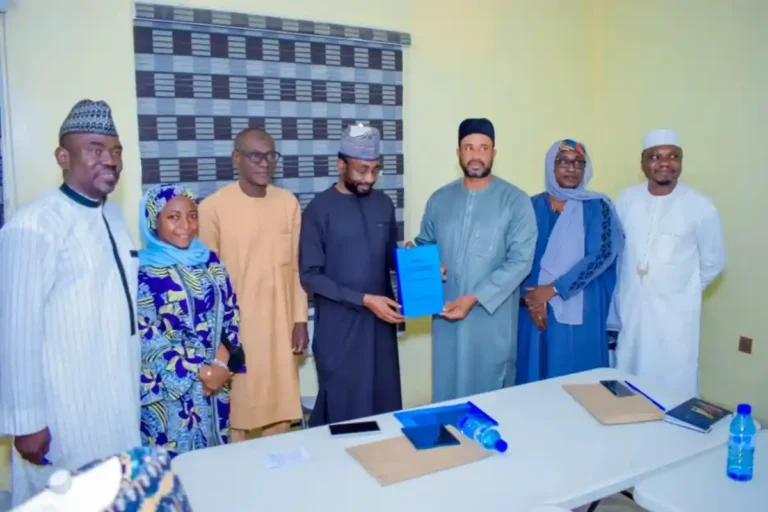
NCDMB partners firm to train Delta youths in welding, fabrication

0

The Nigerian Content Development and Monitoring Board (Nigerian Content Development and Monitoring Board) has partnered with Lucky Osanebi and Sons Nigeria Limited to launch a one-month welding and fabrication training programme for youths in Delta State.

The training, which commenced on Monday, is designed to equip participants with “specialised, industry-relevant skills” in welding and fabrication, aimed at improving employability and access to opportunities in the energy sector.

According to the organisers, the initiative reflects the NCDMB’s commitment to developing local capacity and strengthening indigenous technical capabilities needed in the oil and gas industry.

The programme focuses on hands-on training and practical exposure to help bridge existing skills gaps while supporting job creation for young people in the state.

It was stated that the training is structured in line with the NCDMB’s mandate of promoting Nigerian content by preparing skilled manpower that meets current industry standards and demands.

At the end of the one-month programme, participants will receive certificates recognising proficiency in welding and fabrication, improving career prospects across energy sector.

Enugu launches agroecology initiative targeting 75 youths

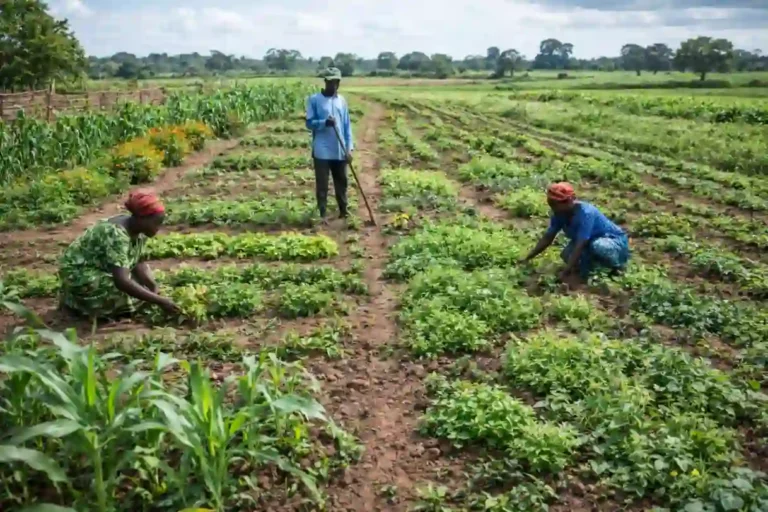
The Enugu State government has launched a new push to strengthen agroecology among young people by mobilising youths involved in agriculture into a more coordinated and collaborative framework. As part of this effort, 75 young people drawn from various agricultural organisations are set to lead government efforts to improve and promote agroecology among youths in the state.

The initiative was announced at a one-day capacity-building workshop organised by the state government in partnership with the South Saharan Social Development Organisation (SSDO) and ActionAid Nigeria. At the event, the government said it was focused on building strong networks that would promote collaboration among agricultural groups, with the aim of improving output and coordination across the sector.

SSDO’s Head of Programme, Udochukwu Egwim, said the initiative became necessary following the discovery that many agricultural groups operating in the state were “working in silos.”

According to him, bringing the groups together would strengthen collaboration and networks, enabling them to better access and benefit from available agricultural resources in the state.

“We are partnering with ActionAid Nigeria and the Enugu State government to carry out this activity, which is geared towards bringing together different agroecology groups in the state, civil society organisations, development partners, government agencies and ministries. The idea is that we have different organisations and programmes on agriculture, but they are working in silos.

“There is no harmony or coalition that brings them together, and this has resulted in programmes running in the state without young people being aware of them,” he said.

Egwim also cited a programme implemented by an international organisation last year to empower about 600 young fish farmers, noting that although the state had more than the required number of beneficiaries, it could not meet the demand due to the absence of a functional database or coordinated networks.

Borno Governor distributes digital tablets to students

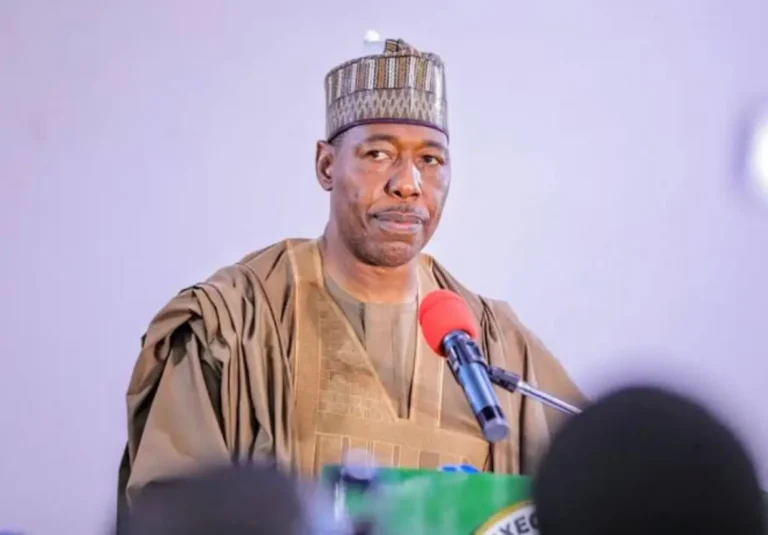
Governor Babagana Zulum of Borno State has distributed digital tablets to students for learning with the support of digital teachers.

This took place on Tuesday as the governor inaugurated new secondary schools in the rural communities of Fikiyel and Balbaya, encouraging students to learn using digital tablets in their classrooms. The projects include three blocks of 20 classrooms and four blocks of 20 classrooms at the Government Secondary Schools (GSSs) Fikiyel and Balbaya in Bayo Local Government Area of the state.

Zulum said his administration is committed to providing more digital equipment and tablets to newly constructed schools in rural communities and other parts of the state. Each student in the inaugurated schools received a tablet for digital learning with the support of digital teachers.

The teachers are expected to help students adapt to digital applications, e-textbooks, and other online learning tools for easier and more interactive classroom experiences. The governor also directed the Ministry of Education to ensure the digitalisation of all public secondary schools in Borno for the integration of digital tools, e-learning platforms, and smart classrooms.

Zulum commended the contractors and suppliers for delivering quality work, noting that the desks provided in the schools were designed to last for more than 20 years. Each of the schools, according to him, is equipped with modern classrooms, laboratories, libraries, sports facilities, and administrative complexes to enhance learning and comfort for both students and teachers.

During his visit, the governor also laid the foundation stone for the construction of Bayo High Islamic College in Fikayel. The new college will have 48 classrooms and is expected to accommodate 3,000 students.

Zulum explained that the High Islamic College was designed to integrate out-of-school children, especially Almajirai, into a formal and modern education system. He said the college would operate a hybrid curriculum under the National Board for Arabic and Islamic Studies (NBAIS), combining core Islamic education with science, technology, and humanities.

“It is our sincere hope that the people of Fikayel will benefit from this school because we are targeting the enrollment of out-of-school children into this school so that learners can learn Arabic,” Zulum said.

He added, “We are also targeting to streamline the non-formal educational Sangaya System into the formal educational system by introducing intensive literacy, numeracy, digital literacy, and vocational training.”

Read Also: FG launch plan to train one million Nigerians in digital skills

The state Commissioner for Education, Mr Lawan Wakilbe, said High Islamic Colleges have already been built in 20 local government areas across Borno State.

Ecobank Repays Over 80% of $300m Eurobond Ahead of Maturity

0

Ecobank Nigeria Limited has completed the repayment of bondholders who validly tendered their notes ahead of the February 2026 maturity date, following a successful tender offer on its $300 million Eurobond.

The bank had earlier issued the $300 million Eurobond with an original maturity date of February 16, 2026. The notes were originally issued by EBN Finance Company B.V., with limited recourse to the issuer, for the sole purpose of financing the purchase of the $300 million 7.125 per cent Senior Note due 2026 issued by Ecobank Nigeria Limited.

On November 27, 2025, Ecobank Nigeria launched a tender offer to eligible noteholders in respect of the outstanding $150 million on the bond. The move allowed investors the opportunity to redeem their holdings before maturity. The early and late tender participation deadlines were December 11, 2025, and December 29, 2025, respectively.

Investors showed strong interest in the offer, with about $245 million of the $300 million Eurobond, representing over 80 per cent of the total issuance, fully repaid. According to information obtained, holders of notes validly tendered and accepted received a cash consideration of $1,000 per $1,000 in principal amount. They also received accrued interest from the last interest payment date up to, but excluding, the final settlement date of December 31, 2025.

Following the completion of the offer, the outstanding principal amount of the notes has now been reduced to about $55.092 million. This reflects Ecobank’s proactive approach to liability management and prudent balance sheet optimisation.

The tender offer was conducted with Renaissance Capital Africa (Renaissance Securities Nigeria Limited) acting as the financial adviser and dealer manager, while Sodali & Co Limited served as the tender agent.

NITDA to partner Foundation on film studio, digital skills in Northern Nigeria

The National Information Technology Development Agency (NITDA) has announced plans to partner with Future Map Foundation to transform Northern Nigeria’s creative and digital industry through the establishment of a world-class film studio and specialized training in emerging technologies.

Director-General of NITDA, Kashifu Inuwa, made the announcement during a high-level roundtable with tech innovators and Kannywood stakeholders at the PRNigeria Centre for Research and Development in Kano. He stated that the intervention is part of an ongoing effort to accelerate Northern Nigeria’s digital transformation, following discussions at the Future Map Foundation roundtable in Kano.

According to Inuwa, the initiative aims to align the creative industry in the region with global best practices by leveraging the digital economy to support national development. Addressing Kannywood filmmakers, he said that filmmakers hold great influence in shaping public perception and encouraging positive change. “Filmmakers have more power in influencing public behavior than political actors,” he said. “We must move beyond creating content for profit alone and focus on inspiring the next generation of tech builders.”

The NITDA boss added that the agency will support the industry through modern infrastructure, including a state-of-the-art studio, incubation centers for emerging technologies, and training programs to improve content quality and technical capacity.

Reacting to the development, President of the Professional Film Directors Association of Nigeria, Nasiru B. Muhammad, described the initiative as timely, noting that the industry has long faced challenges. “We have been operating in an unfriendly environment,” he said. “We look forward to NITDA’s support, especially in developing AI-driven translation and subtitling software that will enable Kannywood films to reach global audiences.”

The event also highlighted local innovation, as digital creators presented software solutions developed in Northern Nigeria. Among the notable presentations were PRev, a human-augmented media intelligence software designed for news monitoring by Shuaib S. Agaka, and SchoolTra, an educational technology platform created by Abdullahi Sani Mahuta for managing student records.

Inuwa praised both developers for their creativity and urged them to collaborate with other innovators to enhance the visibility and scalability of their products. He emphasized that this initiative is part of a wider strategy to grow the digital economy by integrating technology into creative industries.

The roundtable also reflected the long-standing partnership between NITDA and the PRNigeria Centre. Chief Executive Officer of Image Merchants Promotion Limited (IMPR), Malam Yushau A. Shuaib, said the centre has trained over 2,500 people in digital skills since 2021, including journalists and students from universities, polytechnics, and secondary schools across Nigeria’s six geopolitical zones.

Shuaib further announced that as part of the 2026 roadmap, the centre will expand its training programs to include Artificial Intelligence (AI) applications, enabling participants to apply advanced technology in creative and media industries.

Meanwhile, at the previous Future Map Foundation event, stakeholders agreed on steps to boost innovation ecosystems, expand digital skills, support startups, and promote stronger partnerships between government, academia, and industry. The meeting concluded with a shared goal to position Northern Nigeria as a competitive hub for technology, creativity, and future-ready talent.

Read Also: FG launches plan to train one million Nigerians in digital skills