Home Blog Page 189

FG launch plan to train one million Nigerians in digital skills

The Federal Government, in collaboration with Clergywealth Cooperative Society Limited, has announced plans to train one million Nigerians in digital literacy skills, with free laptops provided to successful beneficiaries. Reports suggest the target is no fewer than 100 million Nigerians.

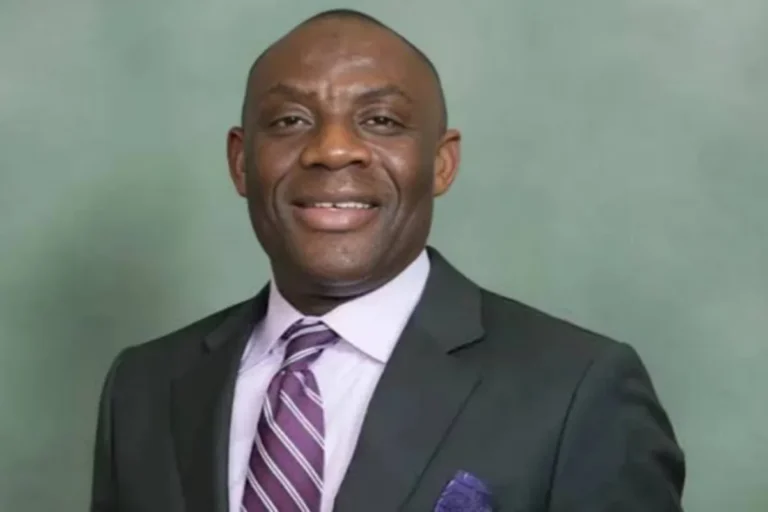
The initiative was disclosed on Tuesday in Abuja by the Secretary to the Government of the Federation, Senator George Akume, during the inauguration of the Joint Implementation Committee for the National Conference on Digital Literacy and the launch of the Clergywealth Digital Skills Nigeria Initiative.

Akume described the inauguration as a major step towards achieving the Federal Government’s target of 95 per cent digital literacy by 2030 and strengthening national workforce readiness. He spoke through the Permanent Secretary, General Services Office, Dr Ibrahim Kana, who represented him at the event.

According to Akume, the programme reflects a clear and strategic effort by the Federal Government to expand digital access and prepare Nigerians for the demands of a changing economy. He said, “This inauguration represents a significant milestone in the Federal Government’s deliberate and strategic commitment to deepening national digital literacy, strengthening human capital development, and promoting inclusive digital transformation in line with national development priorities.”

He further explained that the initiative aligns with key government policies and long-term plans. “This initiative aligns strongly with the Federal Government of Nigeria’s Digital Transformation Agenda, the National Digital Economy Policy and Strategy, the Renewed Hope Agenda of His Excellency, President Bola Tinubu, and Nigeria’s commitment to achieving not less than 95% digital literacy by the year 2030,” he said.

Akume noted that the programme would be implemented under the Future Proof Economy Model and would focus on training and certifying one million Nigerians in its first phase. He clarified that while the initiative enjoys government policy alignment and institutional backing, Clergywealth Cooperative Society Limited is solely responsible for funding and implementation. “The federal government bears no financial obligation, budgetary provision or funding responsibility for the programme,” Akume stated.

He added that the initiative was further strengthened by decisions taken at the 13th National Council on Communications, Innovation and Digital Economy meeting held in December 2025. According to him, the council adopted the Future Proof Economy Model as the official framework for national digital literacy implementation across the country.

Akume also explained that the Joint Implementation Committee would be responsible for planning the National Digital Literacy Conference and coordinating the nationwide rollout of digital literacy and emerging skills training. He said the ICT Department of the Office of the SGF would serve as the secretariat to the committee to ensure smooth coordination and implementation.

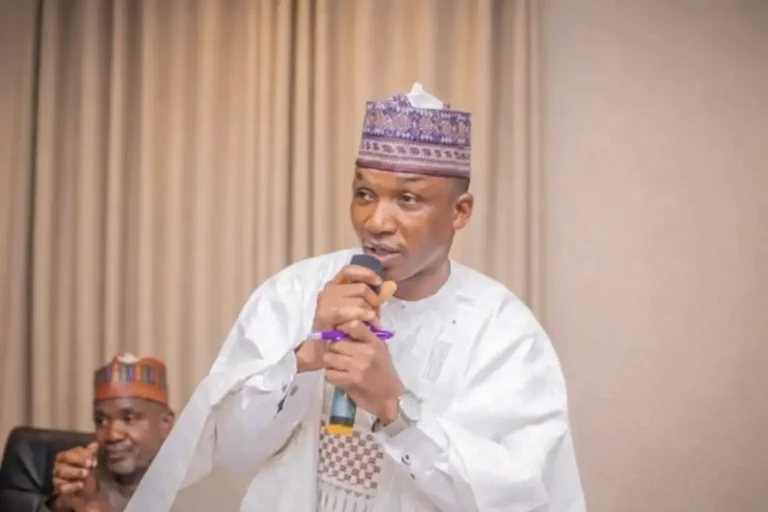
Speaking at the event, Mrs Rosemary Osikoya, Deputy National Coordinator, Admin and Public Communications at Clergywealth, said the conference was designed to create awareness about the importance of digital skills while also delivering practical and hands-on training to participants.

Osikoya explained that the programme would cover basic digital literacy, the use of digital tools, online safety, digital entrepreneurship, and emerging technologies such as artificial intelligence. She said each batch of training would run for six months and include several learning modules, adding that participants would receive international certifications after completing the programme.

She said, “Beneficiaries who successfully complete the programme and certification process will be provided with laptop computers to support their productivity.” She added that the initiative is expected to train more than one million youths and prepare them for remote work and global employment opportunities in the digital economy.

Osikoya also announced that the Digital Literacy Academy and the Artisan Development Project would be launched during the two-day National Digital Literacy Conference scheduled for January 28 and January 29. She explained that Clergywealth Cooperative Society Limited is a humanitarian and empowerment-driven organisation focused on improving the living conditions of members of the clergy, civil society leaders, and rural dwellers across Nigeria, regardless of faith.

She added that the organisation operates microcredit schemes, job portals, and cooperative platforms designed to support economic empowerment and contribute to national development efforts.

The Joint Implementation Committee is chaired by Dr Ibrahim Kana and includes members such as Zainab Abubakar, Dr Ebi, Mr Ifeanyi Okereke, Joe Odoh, Dr Mohammed Tambuwal, Rosemary Osikoya, and Dr Grace Amaefule. Other members are Dr Olobashola Kolawole, Bayo Onimode, Mercy Ohikhena, Dr Niran Oyekale, as well as representatives from the Ministry of Communications, Innovation and Digital Economy, the Federal Ministry of Education, the Federal Ministry of Youth Development, the Federal Ministry of Information and National Orientation, TETFund, NITDA, state representatives, ICT professionals, and civil society organisations.

(This report has been updated)
Advertisement

Claims CDCFIB inviting shortlisted candidates to select screening centre

There is a circular being shared online on Facebook claiming that the CDCFIB is inviting shortlisted candidates to visit the recruitment portal and select their screening centre from Monday across the 36 states and the FCT.

The false circular claims that “the Civil Defence, Correctional, Fire and Immigration Services Board (CDCFIB) wishes to inform the general public that plans are ongoing towards moving to the next stage of its recruitment exercise i.e. physical screening/documentation.”

A copy of the fake circular obtained by Nigeria Startup News, dated January 6, 2026, purportedly e-Signed by AM Jibril Mai Gen (Rtd), Secretary to the Board, with its numerous grammatical blunders, further states that “The (CDCFIB) also ‘apologies’ for the delayed as the board were working hard to make a transparent and reliable update.”

It also noted:
“Kindly note that official communication with respect to the next stage of the exercise shall be only through the board’s portal. Applicants are advised to disregard any communication via email or other channels.”

“Accordingly, applicants who perform well have been shortlisted on merit and are advised to visit the board’s official recruitment portal address at
recruitment.cdcfib.gov.ng to select their screening Centre, From Monday 12th to Wednesday 14th January 2026 across the 36 states and the FCT.”

This fake document is riddled with errors.

Concerned candidates should therefore note that the CDCFIB is yet to announce any screening for successful applicants. They are advised to ignore false claims circulating on social media and rely only on official announcements by the recruitment team.

₦900bn Renewed Hope ward programme lacks spending plan – CeFTPI

The Center for Fiscal Transparency and Public Integrity (CeFTPI) has raised serious concerns about the ₦900 billion Renewed Hope Ward Development Programme (RHWDP), warning that the lack of clear guidelines on how the funds will be implemented could lead to misuse and weak accountability.

In a statement on Tuesday, the Executive Director, Umar Yakubu, PhD, said the Center observed that while ₦900 billion has already been voted and disbursed in tranches between September and November 2025, the program is currently shrouded in opacity.

“At an average of ₦102.1 million per ward, the scale of this intervention is historic, yet the safeguards to prevent misappropriation are non-existent,” the statement noted.

The Center identified four major “Red Flags” that it said require urgent clarification from the Federal Government.

“The Ward Paradox” raises the first concern, as wards are not constitutional tiers of government. The Center asked how the funds will be disbursed and whether they will go to State Governments, Local Government Areas (LGAs), or directly to contractors.

The second issue is the “Implementation Agency.” According to the Center, it remains unclear which Ministry, Department, or Agency is responsible for executing the funds. “Is it the Ministry of Special Duties, the Ministry of Agriculture, or a newly formed committee?” it asked.

On “Project Specificity,” the Center said there is no publicly available “Project Menu.” Without a defined list of eligible projects such as healthcare, water, or education, the funds are at high risk of being used for political purposes instead of real development.

The last concern is “The Audit Trail.” The Center stated that with 8,809 distinct locations, the audit burden is immense. It warned that without a digital, geo-tagged monitoring system, the risk of “ghost projects” is extremely high.

To ensure the ₦900 billion serves the public interest, the Center recommended public disclosure of guidelines by the Federal Account Allocation Committee (FAAC). It also called for the launch of an open data portal where citizens can track allocations and monitor project status, as well as the involvement of civil society to verify project execution at the ward level.

The Center for Fiscal Transparency and Public Integrity is a non-governmental organization that promotes transparency, accountability, and integrity in public finance management.

Dangote Refinery Denies Shutdown as Fuel Production Ongoing

0

Dangote Petroleum Refinery has dismissed reports claiming it is shutting down, describing such claims as false and misleading.

In a statement by Management on Tuesday, the company said production remains ongoing, stable, and uninterrupted. It explained that the refinery continues to supply between 40 and 50 million litres of PMS daily through January and February, depending on market demand.

According to the statement, “On January 4, the refinery produced 50 million litres of PMS and evacuated 48 million litres, with current stocks covering over 20 days of national consumption.”

It added that routine maintenance on select units does not affect overall output, noting that PMS, Diesel, and Jet A-1 production continues through fully operational processing units.

“The refinery maintains an ex-gantry price of N699 per litre, available to all marketers and bulk consumers without discrimination,” the statement said. It urged stakeholders to patronise locally refined products and disregard false reports of a shutdown.

NYSC 2026 Batch A Stream 1 Orientation to Begin January 21

0

The 2026 Batch A Stream One Orientation Course of the National Youth Service Corps is scheduled to commence on Wednesday, January 21, 2026, across all the 37 NYSC Orientation Camps nationwide. This was disclosed on Tuesday by Management.

According to the announcement, camp registration for all corps members will run from Wednesday, January 21, to midnight of Friday, January 23, 2026. Management stated that “the swearing-in ceremony will hold on Friday, 23rd January, 2026.”

It also said the orientation exercise will officially end with a closing ceremony on Tuesday, February 10, 2026. The Director-General, Brigadier General Olakunle Nafiu, wished prospective corps members safe travels to their states of deployment and advised them “not to embark on night journeys” while travelling.

Nigerian Army Opens DSSC Applications for 2026

Applications have been opened for eligible Nigerians seeking commission into the Nigerian Army through the Direct Short Service Commission (DSSC), as the Army begins recruitment for officers into selected corps and services for the 2026 intake.

According to the announcement, the DSSC is open to both civilians and serving military personnel, but only serving personnel sponsored to civil institutions by any of the services of the Nigerian Armed Forces will be considered. The available corps include the Nigerian Army Engineers, Nigerian Army Signals, Nigerian Army Medical Corps, Nigerian Army Electrical and Mechanical Engineers, and the Nigerian Army Education Corps.

The Army stated that all applicants must be Nigerians by birth as defined in the Constitution of the Federal Republic of Nigeria and must be between 20 and 32 years of age by 30 March 2026. Medical consultants are exempted from this age range and may apply if they are between 25 and 40 years by the same date. Applicants must be medically, mentally, and physically fit in line with Nigerian Army standards.

Applicants are also required to present proof of good character, supported by at least two recognizable referees. These referees must be either a Local Government Chairman or Secretary, an officer of the Armed Forces not below the rank of Lieutenant Colonel or its equivalent, or an Assistant Commissioner of Police and above, all of whom must hail from the applicant’s state of origin. Passport photographs of referees must be attached to the attestation letters.

Other general requirements include a letter of attestation from former institutions, a minimum height of 1.68 metres for males and 1.65 metres for females, and a clean legal record. Serving military personnel must be free from disciplinary cases and must be endorsed by their Commanding Officer. Applicants must possess at least a first degree with a minimum of Second Class Upper Division or an HND with Upper Credit from a recognized institution.

The Army further stated that applicants must present valid birth certificates or age declarations, state of origin certificates, and NYSC discharge or exemption certificates where applicable. Graduates with professional qualifications are required to be registered with relevant regulatory bodies recognized by Nigerian law at the commencement of cadet training. Only post-secondary academic credentials obtained from 2011 to date will be accepted.

Candidates must also provide valid contact addresses and phone numbers of parents or guardians and next of kin. Bodily inscriptions or tattoos are not allowed, and all original educational certificates from primary to post-secondary level must be presented. Service personnel are expected to have served for a minimum of five years and must present valid military identity cards and letters of service sponsorship. Membership of any cult, society, or fraternity automatically disqualifies an applicant.

Specific academic and professional requirements apply to each corps. For the Nigerian Army Engineers, applicants must hold relevant degrees in fields such as Architecture, Quantity Survey, Building Engineering, and related disciplines, with registration from appropriate professional bodies. The Nigerian Army Signals requires qualifications in areas including Computer Science, Cyber Security, Telecommunications Engineering, and related specialties.

For the Nigerian Army Medical Corps, applicants must present proof of registration and current practicing licenses. Medical consultants must be fellows of recognized postgraduate medical colleges and hold valid Medical and Dental Council of Nigeria licenses. Other categories include medical doctors, nurses, pharmacists, and professionals allied to medicine, all of whom must be duly registered with their respective councils.

The Nigerian Army Electrical and Mechanical Engineers require degrees in engineering-related fields such as Mechanical, Electrical, Mechatronics, and Biomedical Engineering, while the Education Corps is open to applicants with education degrees in Mathematics, Computer Science, ICT, or Library and Information Science, alongside relevant professional registrations.

On conditions of service, the Army stated that “the DSSC will be granted for 15 years,” while officers who later convert to Direct Regular Commission may serve up to 35 years. DSSC officers will undergo a three-year probation period, and conversion to Direct Regular Commission is not automatic. Successful officer cadets will be commissioned as Lieutenants, except medical consultants who will be commissioned as Majors.

Applications are to be made online free of charge between 7 January and 4 February 2026 via the Nigerian Army recruitment portal. Applicants are required to complete the online form, upload all necessary documents, and print their application slips for signing by authorized officials. The Army emphasized that “all applications must be submitted online not later than 4 February 2026.”

Bauchi Lawmaker distributes N52m empowerment to constituents

Barrister Habibu Umar, a member of the Bauchi State House of Assembly representing Kirfi constituency, has unveiled an empowerment programme valued at N52 million for his constituents.

The lawmaker presented the empowerment items to beneficiaries on Thursday, describing the initiative as part of efforts to deliver dividends of democracy to the people of Kirfi Local Government Area.

Umar said the programme was designed to boost livelihoods and promote economic self-reliance among residents. He noted that beneficiaries received vehicles, 32 motorcycles, grinding machines, sewing machines, wood sawing machines, point-of-sale machines, mobile phones, a Hajj pilgrim seat, as well as cash grants of N100,000 to selected individuals.

According to him, the distribution of items was carried out with fairness in mind, ensuring representation across all wards and zones within the constituency.

While valuing the items at N52 million, he congratulated the beneficiaries and urged them to make judicious use of the items to improve their living standards and contribute to the overall development of the local government area.

The lawmaker also appealed to residents who did not benefit from the current phase of the programme to remain patient, assuring them that the empowerment initiative would be sustained and expanded in the future.

Also speaking, the District Head of Kirfi, the Wamban Bauchi, Muhammad Ladan, commended Umar over what he described as his “people-oriented leadership,” stressing that the programme reflected the lawmaker’s commitment to the welfare of his constituents.

Ladan urged residents to continue to support their representatives and praised the Bauchi State Governor, Bala Abdulkadir Mohammed, for his continued support for the area.

Speaking on behalf of the beneficiaries, Umar Waziri from the Bara zone of the constituency described the empowerment programme as unprecedented.

He called on other leaders to emulate the initiative and pledged to make effective use of the car he received to improve his livelihood.

More items distributed included four cars, 32 motorcycles, 15 sewing machines, 15 grinding machines, POS tools with N100,000 grant to 20 youths, and a modern wheelchair for the disabled.

FG to launch ITF SUPA Marketplace to link artisans with jobs

0

The Federal Government is set to launch ITF SUPA Marketplace, a job portal that will enable artisans trained under the Skill-Up Artisans programme to connect directly with jobs, clients, and service opportunities. The marketplace is already hosted on the official SUPA website and marked “Coming Soon,” signalling the next phase of the programme’s transition from skills training to employment and economic participation.

The development is tied to the broader objectives of the Industrial Training Fund, which has in recent years focused on repositioning the Skill-Up Artisans programme as a pathway from informal skills practice to structured economic engagement. SUPA was introduced to retrain, certify, and formally recognise artisans across different trades, with the aim of improving productivity, income, and access to opportunities within Nigeria and beyond.

The upcoming SUPA Marketplace on the ITF website indicates that the Fund is moving toward deploying digital tools to support those goals. Although the marketplace is not yet active, the “Coming Soon” notice suggests that development has advanced beyond the planning stage. Government platforms are typically published only after internal approvals, making the marketplace a planned component of the SUPA framework.

Comments made by the Director-General of the Industrial Training Fund, Dr Afiz Oluwatoyin Ogun, during earlier phases of the programme provide context for the marketplace initiative. While announcing the expansion of SUPA in 2025, Ogun said the programme aims to “aggregate existing and intending artisans in Nigeria by leveraging technology, ascertain their skill level, implement training to upskill these artisans, expose them to international certification examinations and ensure they are connected to the real economy either through direct employment or placement in foreign jobs.”

That statement highlighted technology and employment connection as core elements of SUPA, even before the marketplace became visible. In another engagement, Ogun explained that “the objective is not just to train artisans, but to make them employable and competitive within and outside the country.”

During the same period, ITF officials disclosed that the Fund was working with employer groups to improve job placement outcomes for SUPA graduates. Nigeria Startup News earlier reported that Ogun said ITF had “reached an advanced stage” in collaboration with the Nigerian Employers’ Consultative Association (NECA) to link trained artisans with industries for gainful employment. The partnership was described as part of efforts to reduce skills mismatch and improve workforce absorption.

The employment focus was further reflected in the conduct of national certification examinations for over 100,000 artisans under the SUPA programme. Explaining the importance of the exercise, Ogun said the certifications were designed to “improve employability, productivity, and global competitiveness of Nigerian artisans.” He noted that internationally recognised standards would allow artisans to access better job opportunities locally and abroad.

Beyond job placement, the ITF has also spoken about enterprise development and post-training support. Ogun said the Fund was strengthening business incubation structures to support artisans who wish to establish their own ventures, stressing that “skills must lead to sustainable livelihoods, not just certificates.” This approach positions SUPA as both an employment and entrepreneurship programme.

The ITF SUPA Marketplace is expected to serve as a digital extension of these policies by providing a structured platform for artisans to showcase their skills and access demand. Once launched, the job portal is expected to allow artisans to receive job leads, connect with clients, and engage businesses seeking verified skilled workers, reducing reliance on informal referrals.

The marketplace initiative also aligns with a wider Federal Government strategy to use digital platforms to bridge the gap between training and employment. Recently, the federal government announced plans to launch a job portal under TVET programme to link trainees and graduates with employers. While separate from SUPA, the Technical and Vocational Education and Training portal reflects the same policy direction of ensuring training outcomes translate into real jobs.

With the SUPA Marketplace now visible on an official platform, attention is turning to its launch timeline and operational details. For thousands of artisans who have completed SUPA training and certification, the portal represents a potential link between acquired skills and consistent income. As the programme evolves, the marketplace is expected to play a central role in connecting Nigeria’s skilled artisans to real economic opportunities.

FG unveils anti-malpractice measures for WAEC, NECO from 2026

0

The Federal Government has announced new strategies to curb examination malpractice in the West African Examinations Council (WAEC) and National Examinations Council (NECO) examinations beginning from 2026. The move is part of broader efforts to restore credibility and public trust in Nigeria’s education assessment system.

The measures were unveiled on Monday by the Minister of Education, Dr Maruf Alausa, alongside the Minister of State for Education, Professor Suwaiba Ahmed, in Abuja.

According to the ministers, the reforms are designed to strengthen transparency and tighten oversight across all stages of national examinations.

The announcement was contained in a statement signed by the Director of Press and Public Relations at the Federal Ministry of Education, Boriowo Folasade. The statement noted that the ministry was determined to address long-standing challenges associated with cheating and irregularities in public examinations.

It explained that the ministry would deploy technology-driven solutions and stricter administrative controls to safeguard the integrity of WAEC and NECO. One of the major steps outlined is the introduction of enhanced question randomisation and serialisation.

Although candidates will still answer the same questions, the order and structure of the questions will vary from one candidate to another. The ministry noted that this approach would ensure that “every student writes a unique version of the examination,” thereby reducing opportunities for collusion in examination halls.

The government also restated its position on student transfers at the senior secondary level, warning that existing rules would now be strictly enforced.

The ministry recalled that the transfer of candidates at Senior Secondary School Three had already been prohibited through an official circular and stressed that the policy was intended to curb last-minute school changes linked to examination malpractice.

In another move to improve accountability, new national guidelines for Continuous Assessment have been developed and approved for immediate implementation. Under the guidelines, all examination bodies are required to adhere to fixed submission timelines for assessment records.

The ministry stated, “All examination bodies (WAEC, NECO, NBAIS, etc.) must strictly follow the standardised submission deadlines for each academic period: Submission Windows (First Term CA: January; Second Term CA: April; Third Term CA: August).

“These timelines are mandatory and designed to ensure consistency, data integrity, and prompt processing of Continuous Assessment records across the country.”

To further strengthen monitoring, the ministry is introducing a unique Examination Learners’ Identity Number for all candidates.

Officials said, “This identifier will enable effective tracking of learners throughout the examination process, strengthen monitoring and accountability, and support long-term reforms in assessment, certification, and data management.”

The statement further noted that the ministers assured stakeholders that examination administration would be carried out under closer supervision and in collaboration with examination bodies to ensure compliance with ethical standards.

“They emphasised that these measures reflect the Federal Government’s resolve to conduct examinations that are credible, fair, and reflective of global best practices, while addressing Nigeria’s unique educational realities.

“The Federal Ministry of Education reaffirmed its commitment to working closely with all examination bodies, state governments, school administrators, parents, and candidates to ensure the successful implementation of these strategies and the smooth conduct of the 2026 examinations nationwide,” the statement concluded.

Sokoto Government Sets Up Scrap Dealing Monitoring Committee

0

The Sokoto State Government has approved the establishment of a Scrap Dealing Monitoring Committee to regulate scrap dealing, scavenging, and auto-recycling activities across the state. The approval was granted by His Excellency, the Executive Governor of Sokoto State, Ahmed Aliyu Sokoto, PhD, FCNA, as part of measures to strengthen oversight, public safety, and compliance within the sector.

According to the approval, the committee will be chaired by Senator Salihu Bakwai, with Yusha’u Ahmad Kebbe, Sani Musa, and Engr. Abubakar Yusuf serving as members. Other members include representatives of the Ministry of Environment, Ministry of Justice, Ministry of LGA, Ministry of Works, NPF, DSS, NSCDC, Sokoto State Marshal Agency, and the Registrar of Bus and Premises from the Ministry of Commerce. The appointment of the chairman and members takes immediate effect.

The government stated that the committee is mandated to monitor and regulate the activities of scrap dealers, scavengers, and auto-recyclers operating within the state. In outlining its responsibilities, the approval noted that the committee is expected to conduct regular inspections of record books, scrap markets, shops, stalls, loading docks, scavenging hubs, auto-recycling hubs or plants, and any other locations where scrap materials are stored or handled.

The terms of reference further direct the committee to monitor compliance with licensing and safety regulations, ensure adherence to laws, regulations, and guidelines issued by competent authorities, and promote consumer protection within the scrap and recycling trade. It is also required to ensure that operators take practical measures to prevent the sale of stolen, counterfeit, or hazardous materials and to comply with government policies and best trade practices.

In the approval document, the government stated that the committee is to “collaborate with industry groups to promote responsible scrap dealings, engage with communities and stakeholders to identify pervasive issues, encourage community engagement and reporting of non-compliance, investigate reports of unlawful scrap dealings, scavenging and auto-recycling activities, and enforce any regulation or order issued by competent authority pursuant to this Law.”

The committee is also tasked with conducting public awareness campaigns. According to the terms, these campaigns will “educate consumers on the risks and consequences of purchasing stolen scraps or hazardous scavenging materials, create awareness about the negative impact of unlawful and unauthorized scavenging activities on communities, educate buyers, sellers and the general public on the risks of purchasing stolen scrap or scavenged material, and promote waste reduction, recycling, and waste-to-wealth initiatives.”

Other responsibilities include encouraging the integration of scavengers and informal waste collectors into the formal scrap and recycling system, facilitating regular dialogue between registered operators and government agencies, creating a regulatory framework for tracking and recovery of stolen or unlawfully acquired scrap materials, and liaising with the Office of the State Attorney General to prosecute offenders.

The approval also provides that the Commissioner may make regulations for auto-salvage, scrap scavenging, and auto-recycling activities in the state. With the approval of the Commissioner, the committee may make standing orders to guide the conduct of its business and regulate its proceedings, while the provisions of the schedule to the law will apply to committee proceedings. The chairman and non ex-officio members are to be paid allowances as approved by the Governor.

Under Part III of the law on licensing and registration, the government stated that “not later than three months after the commencement of this Law, no person shall operate a business of scrap, salvage or auto-recycling in the State without registration and licensing by the Ministry.” It added that licenses must be renewed annually by January 1, are not transferable, and apply to all operators statewide.