Home Blog Page 190

Imo Lawmaker disburses over ₦120m empowerment to constituents

Hon. Chief Ozioma Bennett Worship Ebonine, the Member representing Njaba State Constituency at the Imo State House of Assembly, has disbursed empowerment items valued at over ₦120 million to his constituents as part of efforts to improve livelihoods and economic stability in the area.

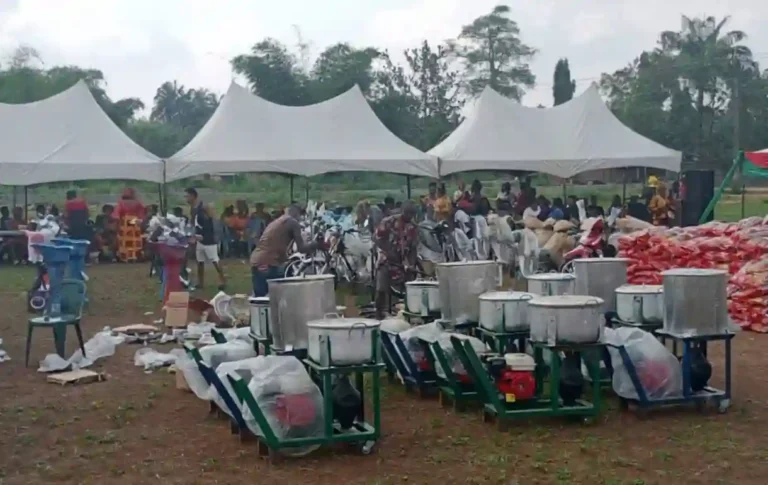
The Ezengwori “December” Empowerment Programme, held on Saturday, January 3, 2026, at Central School Umuaka, Njaba LGA, brought hope, opportunity, and visible excitement to residents from different communities within the constituency.

The programme attracted community leaders, party officials, youths, women groups, artisans, and other local stakeholders, reflecting broad community support and interest. Beneficiaries received a wide range of livelihood tools, including shuttle buses, motorcycles, sewing machines, grinding machines, power generators, and other essential equipment aimed at supporting small businesses and self-employment. Large quantities of rice were also distributed to help households meet basic food needs.

Speaking at the event, the Njaba-born lawmaker and oil entrepreneur said the empowerment programme was part of his commitment to fulfilling campaign promises and delivering practical benefits to the people. He explained that his legislative work is guided by a people-centered approach focused on improving welfare and creating opportunities.

Hon. Ebonine also outlined several achievements recorded since assuming office. According to him, scholarships have been provided for 63 students across primary and secondary schools in Njaba. He added that his office has helped residents secure employment opportunities abroad, with five beneficiaries already on their way to Kuwait. He further disclosed that support has been given to community projects, including borehole installations, healthcare assistance, and infrastructure improvements, alongside empowerment of youths, artisans, and party members.

“This is the third empowerment programme under my watch in just over two months, and my work is far from over. The next initiative will be during my upcoming constituency briefing, and I will continue to provide effective, people-focused representation,” he said.

The programme was attended by notable personalities, including Hon. Engr. Innocent Ikechukwu Ikpamezie, representing Mbaitoli, and Chief Ugochukwu Obi, Executive Council Chairman of Njaba LGA, who represented Governor Senator Hope Uzodimma. Their presence underscored the importance of the programme and shared commitment to development.

The turnout and feedback from participants showed the initiative was well received. Beneficiaries praised Hon. Ebonine for his vision, generosity, and dedication to ensuring residents benefit.

Advertisement

Delta sends first batch of 90th Nigerian Army recruits to Zaria for training

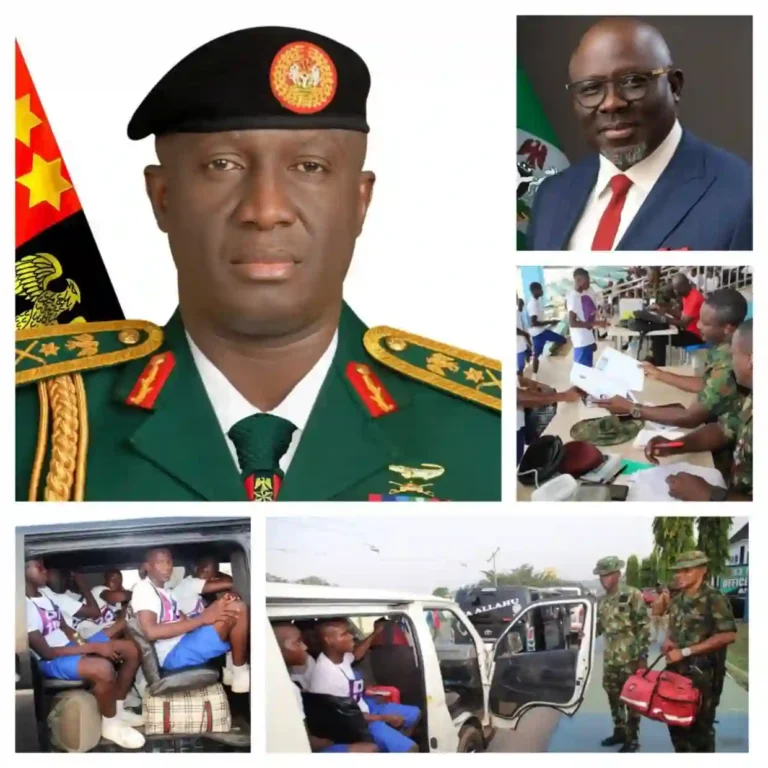
The first batch of the Nigerian Army 90th Regular Recruits from Delta State departed Asaba on Sunday, January 4, for the Nigerian Army Training Depot in Zaria, Kaduna State, to begin their mandatory military training. The contingent was led by the Nigerian Army Temporary Recruitment Officer for Delta State, Major P. S. Dati.

In a statement issued by the Director-General of the Delta State Orientation and Communications Bureau, Dr. Fred Latimore Oghenesivbe, a total of 135 candidates were confirmed successful in the recruitment exercise. He said the intake comprised 118 males and 17 females drawn from across the state.

Dr. Oghenesivbe disclosed that 50 of the successful recruits departed Asaba on Sunday for Zaria, while the remaining candidates will be deployed in two additional batches later in the week. According to him, the other batches are scheduled for the Nigerian Army Training Depots in Osogbo and Jaji, respectively.

The Delta State Government charged the recruits to serve as worthy ambassadors of the state and to conduct themselves with discipline, integrity, and responsibility throughout the six-month training period. “They are expected to uphold the values of service, commitment, and patriotism as they undergo training,” the statement said.

He further revealed that sustained sensitisation and awareness campaigns on military and paramilitary recruitment across Delta State over the past three years have produced measurable outcomes. “Over 3,000 Deltans have either been enlisted or commissioned through the Regular Recruitment Intake, Direct Short Service Commission, and admissions into the Nigerian Defence Academy,” Dr. Oghenesivbe said.

The Director-General attributed the achievements to the strong commitment and priority attention given to the recruitment process by the Delta State Governor, Rt. Hon. Sheriff Oborevwori, JP. He noted that the drive aligns with the job creation and wealth-building objectives of the Governor’s MORE Agenda.

He assured that the state government would continue to intensify statewide media publicity and sensitization campaigns. He added that collaboration with local government council chairmen, traditional rulers, and faith-based organisations would be sustained to ensure Delta State consistently meets its quota in military and paramilitary recruitments, as well as admissions into the Nigerian Defence Academy.

The state government appreciated the Commander, 63 Brigade, Asaba, and the Director of Recruitment for visiting the camp to encourage recruits and promote national service.

Kano SUBEB denies excluding persons with disabilities from teachers recruitment

The Kano State Government has refuted claims that persons with disabilities were excluded from the ongoing teachers’ recruitment exercise, describing the allegations as false and misleading.

The clarification was contained in a rejoinder issued on Monday by the Kano State Universal Basic Education Board (SUBEB), following a statement released on January 3, 2026, by the Kano State Initiative for Persons with Special Needs.

In the rejoinder signed by the Director of Corporate Communications, Balarabe Danlami Jazuli, SUBEB maintained that the inclusion of qualified persons with disabilities remained a standing policy of the board.

“SUBEB has never excluded persons with disabilities from any recruitment exercise. The inclusion of qualified persons with special needs is a standing policy of the board,” Jazuli said.

He explained that over the years, the board had employed qualified persons with disabilities and assigned them to appropriate positions, including special education schools across the state.

Jazuli admitted that in some special needs schools, the number of teachers currently exceeds pupil enrolment. However, he noted that such cases had never been used as a reason to deny employment to any qualified applicant with a disability.

On the issue of accessibility, he said the board made reasonable accommodations during the most recent recruitment examinations to ensure fairness and equal opportunity for all candidates. He stated that visually impaired candidates were allowed to attend the examination with assistants, a measure that clearly contradicted the claims of discrimination or informal screening.

The SUBEB spokesperson acknowledged the provisions of the Discrimination Against Persons with Disabilities (Prohibition) Act, 2018, and the Kano State Persons with Disabilities Law. He clarified, however, that the implementation of employment quotas was guided by available vacancies, job relevance, and operational realities.

According to him, the law does not prescribe automatic recruitment irrespective of workforce balance, role suitability, or existing staffing levels.

Jazuli further explained that recruitment across Ministries, Departments, and Agencies was decentralised, meaning that SUBEB could only recruit within its statutory mandate, while other MDAs handled their respective processes.

While reaffirming that the rights of persons with disabilities were protected by law, he stressed that such rights must be exercised responsibly. He warned that issues such as absenteeism and prolonged non-official engagements could undermine service delivery in the education sector.

He also urged persons with special needs to pursue their legitimate interests through unity and constructive engagement, saying that public division weakens advocacy efforts.

Prospective applicants were advised to submit their details through their respective Local Government Education Authorities or appropriate local government structures, in line with established guidelines.

“The board can only entertain recruitment requests that follow proper channels,” Jazuli said.

He reaffirmed that no qualified person with a disability had been deliberately excluded from the ongoing recruitment exercise, adding that accessibility measures were provided and legal provisions respected.

“Inclusive employment is not a favour but a legal obligation, and Kano State remains committed to upholding this principle,” he added.

FirstBank meets CBN N500bn capital requirement ahead of deadline

First HoldCo Plc has announced that First Bank of Nigeria Limited, FirstBank, has successfully met the Central Bank of Nigeria’s CBN minimum regulatory capital requirement of N500 billion, reinforcing the lender’s financial strength ahead of the March recapitalisation deadline.

The disclosure was contained in a statement by the Group Company Secretary, Abiola Baruwa, and filed on the Nigerian Exchange Limited, NGX, as Nigerian commercial banks intensify efforts to meet the apex bank’s new capital thresholds.

In the statement released on Monday, First HoldCo said the milestone was achieved through a combination of strategic funding actions designed to strengthen the bank’s balance sheet.

“First HoldCo Plc (‘FirstHoldCo’ or ‘the Group’) today announces that its commercial banking subsidiary, First Bank of Nigeria (FirstBank), has successfully met the Central Bank of Nigeria’s (CBN) minimum capital requirement of N500 billion,” the Group said.

According to the holding company, the capital raise was completed through a mix of market-based and balance sheet measures aimed at ensuring compliance within the regulatory timeline.

“This milestone was achieved following the completion of a series of strategic capital initiatives, including a Rights Issue, a Private Placement, and the injection of proceeds from the divestment of the Group’s merchant banking subsidiary,” the statement added.

First HoldCo noted that the successful recapitalisation has enhanced the Group’s financial resilience and positions it to support growth across its operations.

The Group explained that the strengthened capital base is expected to support earnings expansion through business growth, technology-driven innovation, and the pursuit of new opportunities across its core markets.

“The recapitalisation strengthens the Group’s overall financial resilience, providing a robust platform for earnings growth through business expansion, technological innovation, and the pursuit of new opportunities,” the statement said.

The development places FirstBank among lenders that have met the CBN’s new capital requirements, as the banking industry races to comply ahead of the regulatory deadline.

The CBN’s recapitalisation programme is aimed at strengthening banks’ balance sheets, improving their capacity to support the economy in Nigeria.

NGX equities market capitalisation crosses ₦100tn in early 2026 rally

The Nigerian Exchange (NGX) started the year on a strong note as equities market capitalisation crossed the ₦100 trillion mark, driven by renewed investor demand and widespread gains across listed stocks.

Market data showed that equities market capitalisation rose from ₦99.94 trillion on January 2 to ₦101.81 trillion by January 5, marking a ₦1.87 trillion increase within two trading sessions. The All-Share Index (ASI) also gained 1.74 percent in the latest trading session, lifting both month-to-date and year-to-date returns to 2.32 percent. The rally was supported by strong buying interest in stocks such as Cadbury Nigeria, Fidson Healthcare, and Champion Breweries, reflecting the “January Effect” that often influences early-year market activity.

Investor sentiment improved significantly as market breadth rose to 9.13x, with 73 equities recording gains against eight decliners, showing broad participation in the rally.

Temi Popoola, Group Managing Director and Chief Executive Officer of Nigerian Exchange Group, described the achievement as a reflection of growing confidence in the Nigerian capital market.

“The equities market capitalisation crossing the ₦100 trillion mark is a defining milestone for Nigeria’s capital market and a clear signal of renewed investor confidence as the year begins,” Popoola said. “It reflects the market’s growing depth, resilience, and ability to respond positively to improving macroeconomic conditions and structural reforms.”

He added that collaboration among market participants and regulators has strengthened the credibility of the exchange. “Over the past two years, closer alignment between market operators, policymakers, and the Securities and Exchange Commission (SEC) has enhanced transparency, liquidity, and investor protection, reinforcing the Exchange’s role in mobilising long-term capital for economic growth,” he said.

Jude Chiemeka, Chief Executive Officer of Nigerian Exchange Limited, explained that the rally was supported by improving participation and selective demand across key sectors.

“The breadth of the market tells a positive story,” Chiemeka said. “We are seeing strong participation across banking, industrial, and consumer stocks, alongside rising trading volumes, which suggests growing investor confidence and a more active market at the start of the year.”

Trading activity was mixed during the session, as total volume traded rose by 58.13 percent to 695.64 million shares, while the value of transactions declined by 25.57 percent to ₦18.57 billion across 56,606 deals. Year-to-date equities turnover increased to ₦43.52 billion.

To open the week, Zenith Bank led trading by value at ₦3.51 billion, followed by WAPCO with ₦2.56 billion and Aradel Holdings at ₦1.57 billion, while Access Holdings and GTCO also ranked among the most actively traded stocks.

Meanwhile, the fixed income market capitalisation remained stable at ₦51.48 trillion, while the exchange-traded funds segment recorded growth, with market capitalisation rising to ₦50.45 billion, showing increasing investor interest across asset classes.

PSC warns against paying ₦15,000 or any amount for police recruitment

The Police Service Commission has warned Nigerians against paying up to ₦15,000 or any amount to apply for recruitment into the Nigeria Police Force (NPF), following reports that some cyber cafes and agents are illegally collecting money from unsuspecting applicants under false claims that the fees are approved by the Commission.

This came after the attention of the Police Service Commission was drawn to reports of illegal charges of up to ₦15,000 or more being collected by some cyber cafes and their agents from applicants seeking to apply for recruitment into the NPF.

In a statement issued on Monday, Torty Njoku Kalu, Head of Protocol and Public Affairs at the PSC Headquarters, Abuja, said these unscrupulous elements falsely claim that part of the money is remitted to the Commission and other government authorities.

“The application process for recruitment into the Nigeria Police Force is absolutely free of charge, and no payment whatsoever is required from applicants at any stage of the process,” the statement said.

The Commission advised prospective applicants to personally visit the official recruitment portal at npfapplication.psc.gov.ng to submit their applications directly, without necessarily involving third parties or agents.

It warned that anyone found engaging in such fraudulent activities would face the full wrath of the law, and urged applicants to report any demand for payment to the nearest police station or directly to the Police Service Commission via 07054992071, available for SMS and WhatsApp only.

The PSC remains committed to transparency nationwide.

Flutterwave acquires Mono in $25m–$40m all-stock fintech deal

Africa’s largest fintech company, Flutterwave, has acquired Nigerian open banking startup Mono in an all-stock transaction valued between $25 million and $40 million, according to people familiar with the deal. The acquisition brings together two of Africa’s most prominent fintech infrastructure companies at a time when consolidation is increasing across the sector.

Flutterwave operates one of the continent’s widest payment networks, supporting local and cross-border transactions across more than 30 African countries. Mono, often described as the “Plaid for Africa,” provides application programming interfaces that allow businesses to access bank data, initiate payments, and verify customers with their consent.

Mono has raised about $17.5 million from investors including Tiger Global, General Catalyst, and Target Global. Sources close to the transaction said the acquisition allowed investors to at least recoup their capital, with some early backers seeing paper returns of up to 20x based on the implied valuation of the Flutterwave stock they received. The companies said Mono will continue to operate as an independent product following the deal.

Founded in 2020, Mono uses APIs that enable users to consent to sharing their bank information. This allows financial institutions and fintech companies to analyze income patterns, spending behavior, and repayment capacity. The company was built to address the lack of standardized access to bank data across many African markets, where credit bureaus remain limited and lenders often rely on customers’ transaction histories to assess creditworthiness.

According to Mono chief executive Abdulhamid Hassan, nearly all Nigerian digital lenders now depend on Mono’s infrastructure. The company claims it has powered more than 8 million bank account linkages, covering roughly 12 percent of Nigeria’s banked population. It also says it has delivered about 100 billion financial data points to lending companies and processed millions of dollars in direct bank payments. Its customers include Visa-backed Moniepoint and GIC-backed PalmPay.

For Flutterwave, the acquisition deepens its vertical integration beyond payments. By adding Mono’s data capabilities, Flutterwave can now offer onboarding and identity checks, bank account verification, data-driven risk assessment, and one-time or recurring bank payments within a single product stack for businesses operating across African markets.

Flutterwave chief executive Olugbenga ‘GB’ Agboola described the acquisition as a strategic move tied to the next phase of fintech growth on the continent. “Payments, data, and trust cannot exist in silos,” Agboola said. “Open banking provides the connective tissue, and Mono has built critical infrastructure in this space.”

Hassan said the deal comes as Africa enters what he described as a credit-driven phase, driven by government-backed financial inclusion initiatives that rely on lending to individuals and small businesses. He argued that this transition depends heavily on robust data infrastructure and regulatory confidence, particularly in markets such as Nigeria where open banking frameworks are still evolving.

“If the economy is going to be credit-driven, you need deep data intelligence to know how people earn and spend,” Hassan said. “But at the same time, for open banking to really work, regulators need to be confident that customer funds are safe.”

Against that backdrop, joining Flutterwave positions Mono to scale more quickly once regulatory barriers ease. Flutterwave already operates across dozens of African markets and has local licenses, enterprise customers, and compliance teams in place, which could help accelerate Mono’s regional expansion.

“This allows us to expand what’s possible for businesses operating across African markets while staying grounded in security, compliance, and local relevance,” Agboola said.

The transaction mirrors earlier attempts at consolidation in global fintech infrastructure, including Visa’s failed acquisition of Plaid in 2020, which was blocked by United States regulators. Hassan pointed to that deal as evidence that combining data infrastructure with payment rails can unlock scale, even though regulatory scrutiny remains a major factor.

Both companies are backed by Y Combinator and share Tiger Global as a common investor. Tiger Global led Flutterwave’s Series C round and Mono’s Series A round. Hassan said the investment firm did not facilitate the transaction, noting that the deal emerged from a longstanding working relationship between the two companies. Flutterwave and Mono had partnered on several bank payment products over the years before the acquisition.

That collaboration unfolded against an open banking landscape that has shifted significantly in the past five years. When Mono launched, it competed with firms such as Base10 Partners-backed Okra and Ribbit Capital-backed Stitch. Since then, Mono has emerged as a leading player in the space, following Okra’s shutdown and Stitch’s pivot toward a deeper payments-focused strategy that enabled it to raise more capital.

Addressing Mono’s financial position ahead of the acquisition, Hassan said the company was not forced into a sale. According to Pitchbook, Mono raised $15 million in a Series A round at a $50 million post-money valuation in 2021. Hassan said the company is on track toward profitability this year and holds significant cash reserves. He added that raising another funding round would have introduced new valuation pressures and growth expectations in a challenging funding environment.

Beyond the two companies involved, the deal highlights a broader inflection point for African fintech. Startups that once aimed to grow into standalone giants may increasingly find stronger outcomes by integrating into scaled platforms that already have distribution, regulatory coverage, and enterprise relationships across the continent.

FirstBank outlines inflation, FX and focus for Economic Outlook 2026

0

FirstBank has outlined key economic issues expected to shape Nigeria’s outlook in 2026, with discussions set to focus on inflation, exchange rate dynamics, fiscal and monetary policy direction, and investment risks facing businesses and the wider economy.

The bank will host its Nigeria Economic Outlook 2026 on Tuesday, January 6, 2026, bringing together policymakers, economists, corporate leaders and financial market participants to assess the macroeconomic environment, review developments from the previous year and outline expectations for 2026.

This year’s edition is themed “The Great Calibration: Mastering Resilience in an Era of Asynchronous Growth,” reflecting the uneven pace of global and domestic economic recovery and the need for adaptive strategies.

Nigeria Economic Outlook is one of FirstBank’s flagship customer-facing initiatives and has become a reference point for early-year economic positioning.

The forum is expected to examine fiscal and monetary policy direction, inflation and interest rate trends, exchange rate dynamics, capital flows and sectoral performance, while offering guidance on how businesses and individuals can navigate prevailing uncertainties.

According to the bank, the 2026 session will focus on the structural shifts shaping Nigeria’s economy, the impact of global economic realignments and the policy trade-offs expected to influence growth, investment and financial stability in the year ahead.

Commenting ahead of the event, Olayinka Ijabiyi, Acting Group Head, Marketing and Corporate Communications at FirstBank, said the outlook forum underscores the bank’s commitment to supporting informed decision-making across the economy.

She said the session is structured to help customers and stakeholders better understand Nigeria’s economic realities and apply expert insights to strategic planning in 2026.

The keynote address will be delivered by Yemi Kale, Group Chief Economist and Managing Director, Research and Trade Intelligence at African Export-Import Bank. A panel discussion will examine policy risks, investment opportunities and sector-specific outlooks across West Africa and Nigeria markets

Price Crash Pushes Jigawa Farmers to Abandon Wheat for Onion, Watermelon

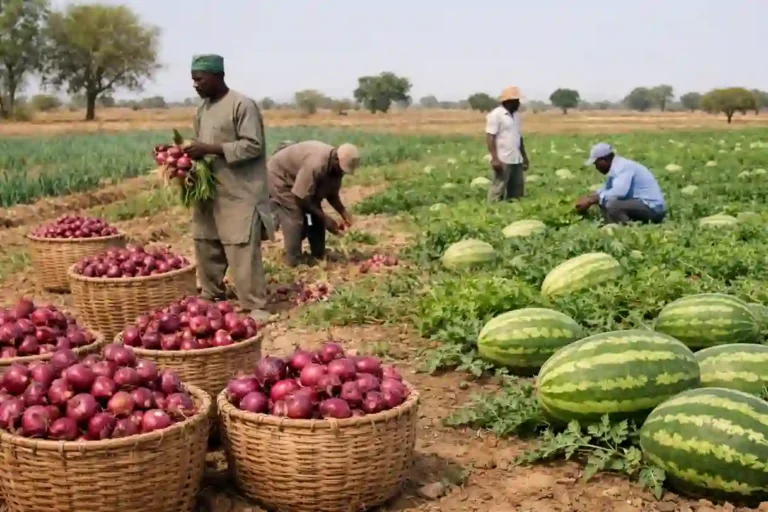
Wheat farmers in Jigawa State are abandoning wheat cultivation for onion and watermelon farming after a sharp collapse in market prices, raising concerns over Nigeria’s food security and the future of the National Wheat Development Programme.

Nigeria Startup News learned from TVC News that farmers say a 100kg bag of wheat, which sold for about ₦150,000 during the 2024–2025 harvest season, now goes for between ₦47,000 and ₦52,000, despite heavy government investment in the sector.

Speaking in Guri Local Government Area, onion farmer Maimai Musa Marma said the price crash has forced many wheat farmers in the area to change crops.

According to him, over 80 percent of wheat farmers in Jigawa have shifted to onion and watermelon farming, warning that the trend could undermine President Bola Tinubu’s National Wheat Development Programme and worsen food insecurity.

Another farmer, Malam Baffa from Hadejia, confirmed he has suspended wheat farming entirely, blaming the situation on poor market pricing.

Farmers said that while fertilizer, pesticides, seeds and labour costs remain high, wheat prices have dropped by about 60 percent, making the business unsustainable for producers across the state.

Agricultural experts warned that a continued decline in wheat production could trigger a wider food crisis, given wheat’s importance in Nigeria’s daily diet and its use in bread and other staple foods.

Jigawa State is one of Nigeria’s leading agrarian states and a major hub of the National Wheat Development Programme, which was officially flagged off in the state in 2023.

At the launch in Hadejia, the Minister of Agriculture and Food Security, Abubakar Kyari, announced plans to cultivate 100,000 hectares of wheat nationwide, while the Jigawa State Government committed 40,000 hectares to the programme.

Governor Umar Namadi said the initiative aligns with his administration’s 12-point agenda, aimed at food security, economic diversification and citizen empowerment.

Farmers acknowledged receiving substantial support, including tractors, improved seedlings, fertilizers and pest control chemicals at subsidized rates.

One beneficiary, Sabiu Ibrahim, said farming inputs worth over ₦300,000 were sold to farmers for just ₦80,000, describing the intervention as commendable.

However, farmers insisted that without a guaranteed and profitable market price, government support alone will not sustain wheat production, calling for urgent action to stabilize prices and protect farmers nationwide.

Sokoto Govt Disburses ₦30,000 to Army Recruitment Candidates

The Sokoto State Government has approved the disbursement of ₦30,000 as pocket money to each shortlisted indigene participating in the Nigerian Army recruitment exercise, as part of its support package for candidates heading to training camps across the country.

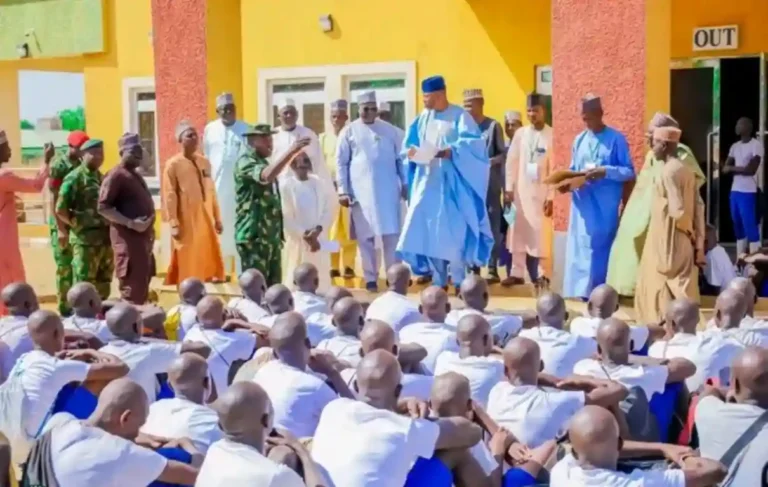
Sokoto State indigenes shortlisted for Army recruitment have been urged to remain disciplined and loyal throughout the training exercise. The call was made by Governor Ahmed Aliyu Sokoto while addressing the candidates at Giginya Barracks in Sokoto.

Speaking during the engagement, the governor said discipline and loyalty would enable the candidates to emerge victorious at the end of the recruitment process. He stressed that the military profession they voluntarily chose demands patriotism, commitment, and sacrifice in defending the territorial integrity of the country.

He commended President Bola Ahmed Tinubu for approving Army recruitment, describing the decision as timely. According to him, the recruitment would strengthen the Nigerian Army and help address security challenges in different parts of the country.

Represented by his deputy, Idris Mohammed Gobir, the governor announced that the Sokoto State Government had taken responsibility for transporting the shortlisted candidates to their training camps located in Zaria, Osogbo, Abakaliki, and Jaji.

Gobir further announced the donation of ₦30,000 to each candidate as pocket money to support needs during the training period.

The deputy governor was accompanied by the Secretary to the State Government, Alhaji Muhammad Bello Sifawa, the Special Adviser on Establishment Matters, Alhaji Garba Bello Kebbe, and the Permanent Secretary, Careers and Special Services, Alhaji Aminu Bello.