Home Blog Page 192

House Releases Tinubu-Signed Tax Reform Acts Amid Alteration Claims

The House of Representatives, led by the Speaker, Rt. Hon. Abbas Tajudeen, Ph.D., GCON, has released four tax reform Acts signed into law by His Excellency, Bola Ahmed Tinubu, GCFR, President and Commander-in-Chief of the Armed Forces, Federal Republic of Nigeria, to the Nigerian public for record, verification, and reference.

The release follows growing public concerns and allegations that altered and unauthorised versions of the tax laws were being circulated. In response, Speaker Abbas, working together with the Senate President, H.E. Senator Godswill Akpabio, GCON, directed the immediate release of the Certified True Copies of the Acts, including the endorsement and assent pages personally signed by the President.

The House explained that the decision was taken to address misinformation, clear doubts, and reinforce public confidence in the law-making process. According to the House, the intervention reflects Speaker Abbas’ long-standing commitment to transparency, legislative integrity, and accountability.

The issue came to light after a vigilant Honourable Member noticed inconsistencies in versions of the tax laws already in circulation. The Member raised the issue on a point of privilege during plenary and formally reported the matter to the House. Acting swiftly, the Speaker ordered an internal verification process and approved the public release of the certified Acts to restore clarity and protect the integrity of the legislative record.

From the early stages of the tax reform process, the House noted that Speaker Abbas provided consistent leadership through stakeholder engagements, committee reviews, clause-by-clause consideration, and detailed plenary debates before the bills were passed. The House said these steps ensured that the reforms were evidence-based, inclusive, and aligned with Nigeria’s fiscal realities and development priorities.

Throughout the process, the Speaker stressed that tax reform must be based on clarity, fairness, and strict compliance with constitutional and parliamentary procedures. The House said this approach guided every stage of the reforms until presidential assent was secured.

The four Acts released to the public are the Nigeria Tax Act, 2025; the Nigeria Tax Administration Act, 2025; the National Revenue Service (Establishment) Act, 2025; and the Joint Revenue Board (Establishment) Act, 2025.

According to the House, these legislations form the core of Nigeria’s current tax reform framework. They are designed to modernise revenue administration, improve tax compliance, reduce inefficiencies, eliminate duplication of functions, and strengthen fiscal coordination across federal and state levels.

In directing the release of the certified Acts, Speaker Abbas reassured Nigerians that the National Assembly operates as an institution of records with clear rules, archival systems, and verification processes that protect the authenticity of every law enacted.

He said, “The National Assembly is an institution built on records, procedure, and institutional memory. Every Bill, every amendment, and every Act follows a traceable constitutional and parliamentary pathway. Once a law is passed and assented to, its integrity is preserved through certification and custody by the legislature. There is no ambiguity about what constitutes the law.”

The Speaker further stated that the House would remain vigilant in defending the integrity of its legislative work. He clarified that the only authentic and authoritative versions of the four tax Acts are those certified and officially released by the National Assembly.

Members of the public, institutions, professionals, and other stakeholders were advised to disregard any documents or versions of the tax laws that are not certified by the National Assembly, noting that such materials do not form part of the official legislative record.

The House also disclosed that the Clerk to the National Assembly has completed the process of aligning the Acts, as passed, assented to, and certified, with the Federal Government Printing Press to ensure accuracy, conformity, and uniformity. Hard copies of the certified Acts have been produced and circulated to Honourable Members and Distinguished Senators, while also being made available to the public for reference.

In addition, the House confirmed that the Ad-Hoc Committee chaired by Rt. Hon. Muktar Aliyu Betara, OON, is continuing its assignment. The committee is mandated to determine how the unauthorised versions of the tax Acts entered circulation and to recommend measures to prevent future occurrences and protect the reliability of parliamentary records.

The House of Representatives reaffirmed its commitment to constitutionalism, the rule of law, transparency, and accountable governance, stating that it will continue to strengthen internal controls and institutional discipline to safeguard Nigeria’s legislative process.

The gazetted copies of the tax Acts have been made publicly accessible and can be viewed Here: https://drive.google.com/drive/folders/1Zeh1m33wgwcuZyzBJf-U6ExB7WqhaSHa
Advertisement

Adamawa CSC Issues Appointment Letters to Shortlisted Candidates

The Adamawa State Civil Service Commission has announced that offer of appointment letters have been issued to all successful candidates, following approval by His Excellency, the Executive Governor of Adamawa State.

The announcement was made on Saturday in a statement signed by Barr. Musa Kaibo, Chairman of the Commission. According to the statement, the issuance of the offer letters marks the completion of the recruitment process conducted by the Commission.

Successful candidates are to check their registered email addresses, as the offer of appointment letters have been sent electronically. SMS notifications will be sent to all successful candidates to alert them about the issuance of their letters.

A copy of an appointment letter received by Nigeria Startup News reads, “Dear Candidate, Congratulations! You have been selected for the position of Data Processing Officer at Bureau of Statistics. Please click the button below to view and download your appointment offer.”

Candidates who may not have received the email notification are to visit the Offer Check page to verify their status. They are to enter their email address on the portal to download their offer letters.

All successful candidates must accept their offer of appointment within two weeks from the date of receipt. Any offer not accepted within this period shall automatically lapse and become invalid.

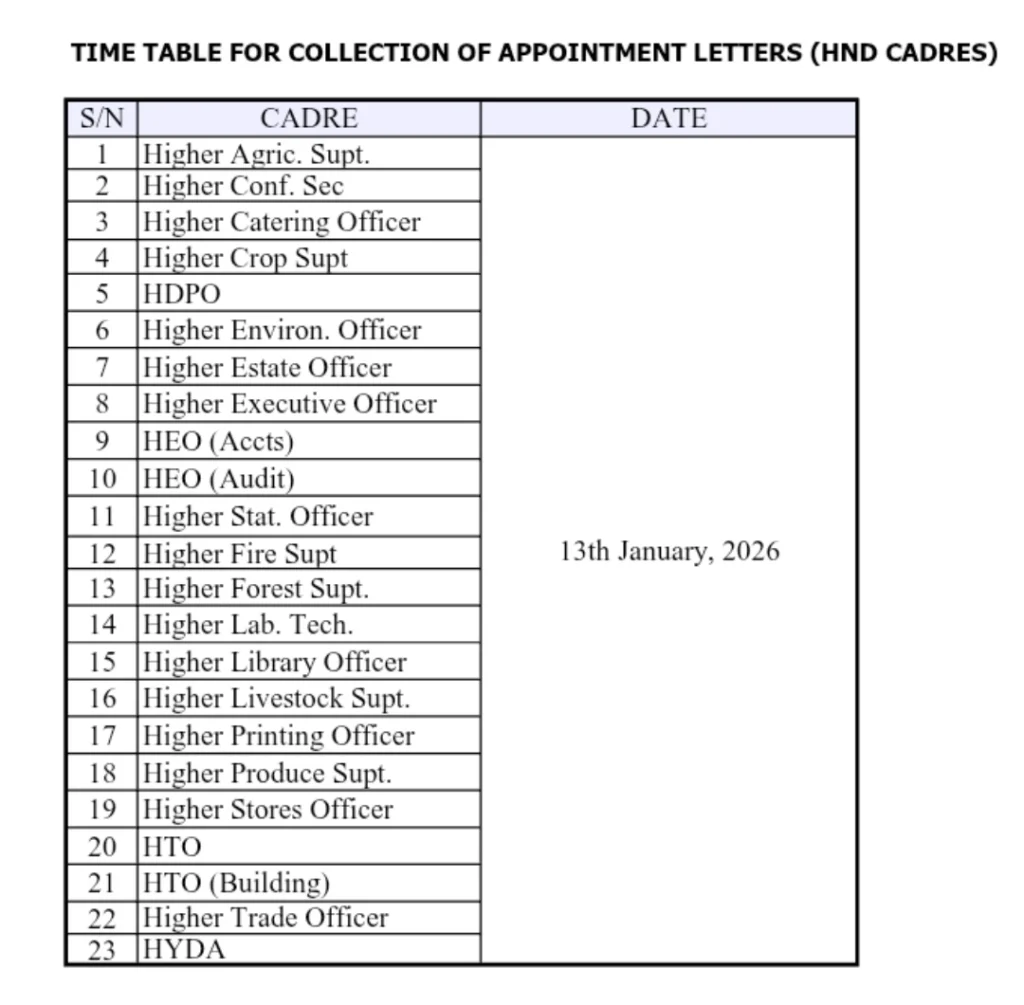
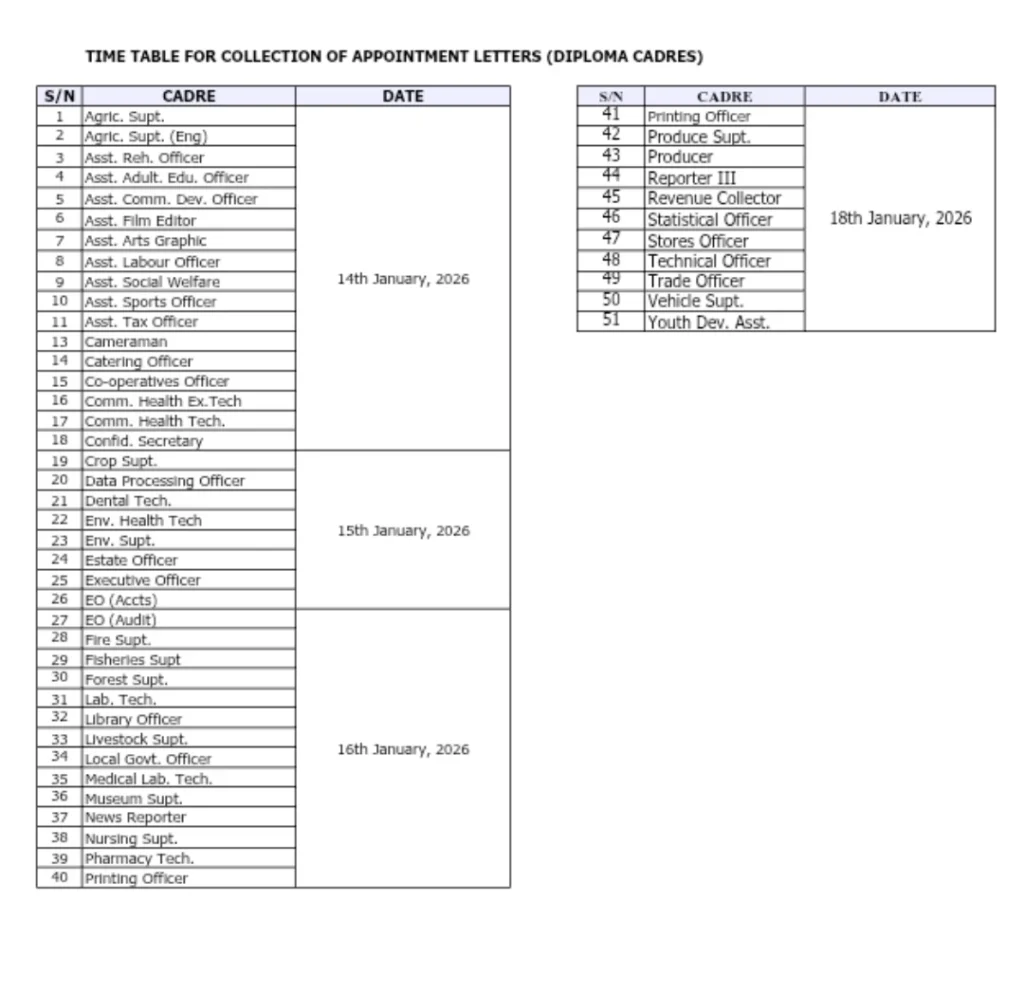
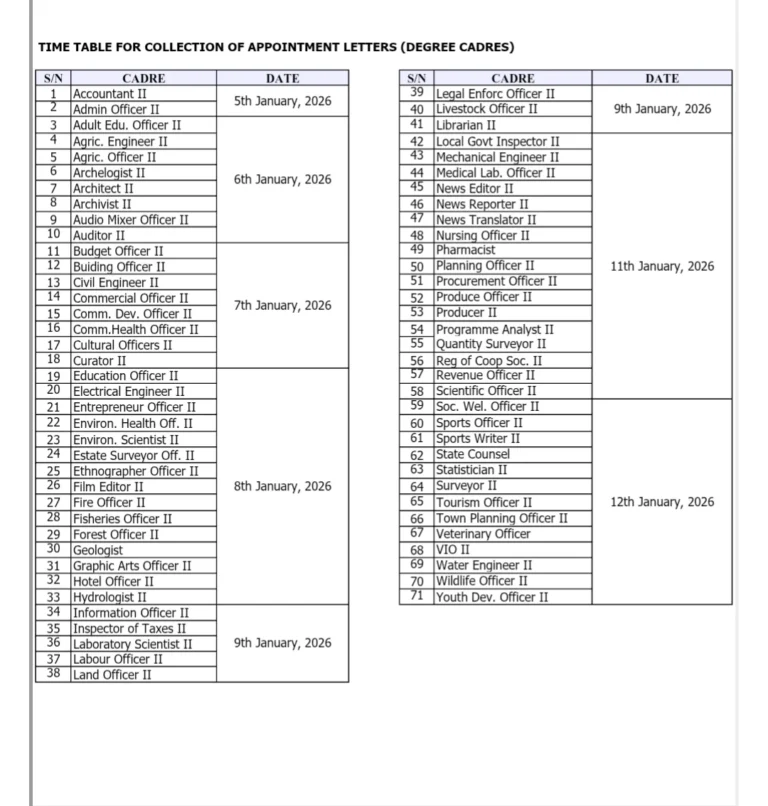
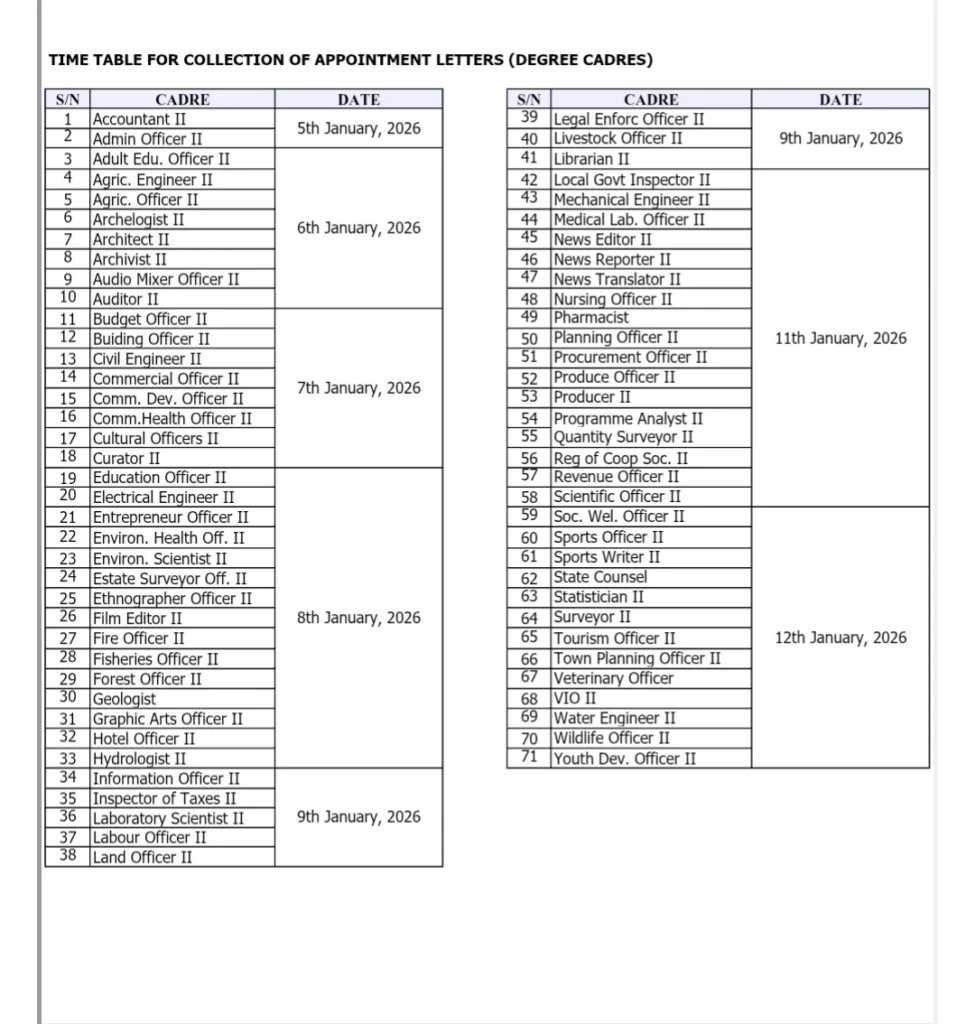
Further instructions have been provided on documentation and onboarding. Successful candidates are to check the documentation timetable attached to this report for information on when to report for documentation and onboarding formalities.

Adamawa Civil Service Commission also expressed appreciation to His Excellency, the Executive Governor of Adamawa State, for providing opportunities to young people through the recruitment exercise, and thanked the Secretary to the State Government for coordination.

Attached below is the official timetable for collection of appointment letters for HND, Degree and Diploma candidates.

VP Shettima Says Education Investment Is Never a Gamble

0

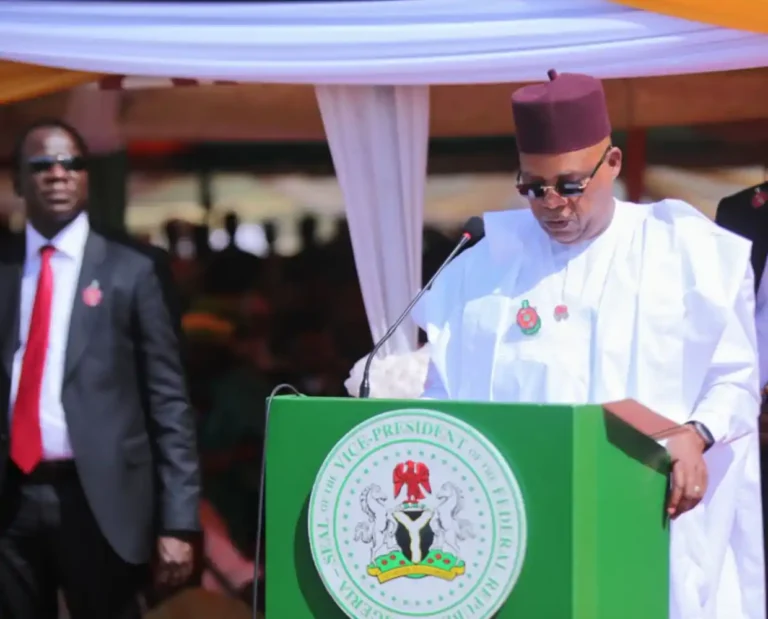
Vice President Kashim Shettima has said that no investment in education is a gamble, describing education as a deliberate commitment to securing a better future for Nigeria and a tool for development, economic empowerment, and societal liberation.

Speaking on Saturday at the combined convocation ceremonies of Kashim Ibrahim University in Borno State, the Vice President addressed graduands from three academic sessions, 2022/2023, 2023/2024 and 2024/2025, with a total of 2,294 students completing their studies.

According to him, “No investment in education is ever a gamble. It is a conscious plan for a better, more secure future,” as he urged governments, institutions, and families to continue prioritising learning as a national responsibility.

He called on the graduating students to see themselves as ambassadors of integrity, service, and excellence, stressing that their conduct would shape the public image of the institution long after the ceremony.

“Wherever life takes you, you carry the name and values of Kashim Ibrahim University. You must shun ethical shortcuts and moral compromise,” Shettima stated.

The Vice President said the experience of Borno State clearly shows the cost of neglecting education, noting that the state endured years of disruption due to insurgency that weakened access to learning.

“Borno has paid a heavy price for the years education was disrupted. Yet, the people chose resilience over despair and learning over loss,” he said.

Describing the graduands as pioneers, Shettima reminded them that they carry a unique responsibility as the first torchbearers of the university’s legacy.

“You are the first torchbearers of this institution. History will judge this university by what you become and how you conduct yourselves,” he added.

He praised the academic and administrative leadership of the university, including its pioneer Vice-Chancellor, current management, lecturers, and staff, for laying what he described as a solid foundation for learning in the North-East.

Shettima also commended Borno State Governor, Babagana Umara Zulum, describing him as “a leader whose vision turned an idea into an enduring institution.”

“This convocation is proof that true leadership measures power by the number of lives it enlightens,” the Vice President said, while also applauding the university’s Pro-Chancellor and Chairman of the Governing Council, Muhammadu Indimi, for standing by the state during the height of the Boko Haram insurgency.

“Alhaji Indimi’s wealth has consistently been deployed for the good of society, especially when Borno needed it most,” he added.

The Vice President further acknowledged the role of traditional institutions, particularly the Shehu of Borno, and noted the solidarity shown by North-East governors during the most difficult periods of the insurgency.

In a symbolic move, Shettima announced the donation of two electric vehicles to support the university’s shuttle services, saying “these vehicles are a modest contribution to ease mobility within the campus and support the learning environment.”

Earlier, Governor Zulum announced automatic employment for 81 best graduating students of the university, alongside immediate postgraduate sponsorships within and outside Nigeria.

“Excellence must be rewarded. These young men and women have earned the confidence of the Borno State Government,” Zulum said, urging the graduates to act as worthy ambassadors and agents of development.

The Chancellor of the university, the Ooni of Ife, Adeyeye Enitan Ogunwusi II, pledged to work for the accelerated growth of the institution.

“I accept this responsibility with humility and commitment. I will work tirelessly to advance the development of Kashim Ibrahim University,” the monarch said, while thanking the Vice President for initiating the university and Governor Zulum for the appointment.

The Vice-Chancellor, Babagana Gutti, disclosed that the university’s ultra-modern teaching hospital, nearing completion, would be the largest and most equipped in the country.

“When completed, our teaching hospital will stand as a national reference point for medical training and service delivery,” he said.

Gutti added that the institution, established during Shettima’s tenure as Governor of Borno State, has been ranked the fastest-growing university in Nigeria, with over 50 physical projects completed by the state government.

Highlights of the convocation included the installation of the Ooni of Ife as Chancellor, the conferment of honorary Doctor of Letters degrees on him and international businessman Alhaji Muhammadu Indimi, and the award of MSc and PhD scholarships to best graduating students by the Vice President. The ceremony attracted wide attention.

Uba Sani Support Group to Flag Off Empowerment for 30 Women

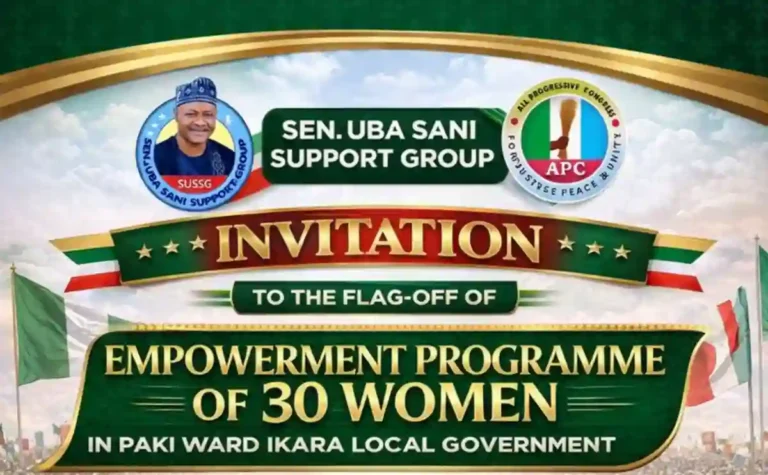
The Sen. Uba Sani Support Group has announced the flag-off of a women empowerment programme targeting 30 women in Paki Ward, Ikara Local Government Area of Kaduna State. The announcement was made through an official invitation issued under the All Progressives Congress, APC, with the slogan “For Justice Peace & Unity.”

The invitation reads, “Invitation to the flag-off of empowerment programme of 30 women in Paki Ward Ikara Local Government.” It stated that the programme is being organised on behalf of the Executive Governor of Kaduna State, “His Excellency Sen. Dr. Uba Sani,” with the support and approval of the Director, Sen. Uba Sani Support Group, Hon. Sadiq Mamman Lagos. According to the notice, the empowerment programme is scheduled to hold on Monday 5th January, 2025.

The venue is Paki Ward Ikara Local Government, while the time is stated as “10AM Prompt.” The invitation also listed Hon. Sadiq Mamman Lagos and Hafsat Yusuf Paki as contact persons.

Senator Empowers 750 Constituents in Zamfara

Senator Ikira Bilbis (PDP-Zamfara), in collaboration with the National Institute of Agricultural Research (NIAR), Ahmadu Bello University Zaria, has empowered 750 persons from his constituency under his 2025 Capital Project Empowerment Programme.

Mr Bilbis, who is the chairman of the Senate Committee on Communications, represents Zamfara Central Senatorial District.

The empowerment programme took place in Gusau on Saturday, where the lawmaker distributed 350 motorcycles, 250 tailoring machines and 150 freezers to selected beneficiaries.

He also distributed N100 million in cash support to various categories of beneficiaries, including men and women, to help them start or expand small businesses.

According to the senator, beneficiaries were drawn from the four local government areas of Zamfara Central Constituency, namely Bungudu, Gusau, Maru and Tsafe.

Governor Dauda Lawal, who inaugurated the distribution of the items, described the intervention as a welcome development for the people of the area.

The governor, who was represented by his deputy, Mani Mummuni, said the programme aligned with the rescue mission policy of his administration aimed at improving livelihoods.

“I personally welcome this initiative, I appreciate your kind gesture to your people, this indicates your good representation for your constituents,” the governor said.

Mr Lawal urged beneficiaries to make proper use of the items and cash support to build sustainable businesses that would contribute to development.

In his remarks, Mr Bilbis said the beneficiaries included local government chairmen of the Peoples Democratic Party (PDP), party elders, youths and women groups, aged persons, orphans and other less-privileged persons.

He explained that the N100 million cash assistance was designed to encourage beneficiaries to grow their businesses and improve household income.

The lawmaker promised to continue delivering quality representation and people-oriented projects to his constituents.

As part of his capital project plans, Mr Bilbis pledged to construct an additional 100 mosques and Islamic schools across the four local government areas.

He also said the programme would include the installation of 1,000 solar street lights across the senatorial district to improve security.

The representative of NIAR, ABU Zaria, Ibrahim Haruna, commended the senator for partnering with the university and pledged continued support successfully.

Club to Build ICT and Skills Development Centre

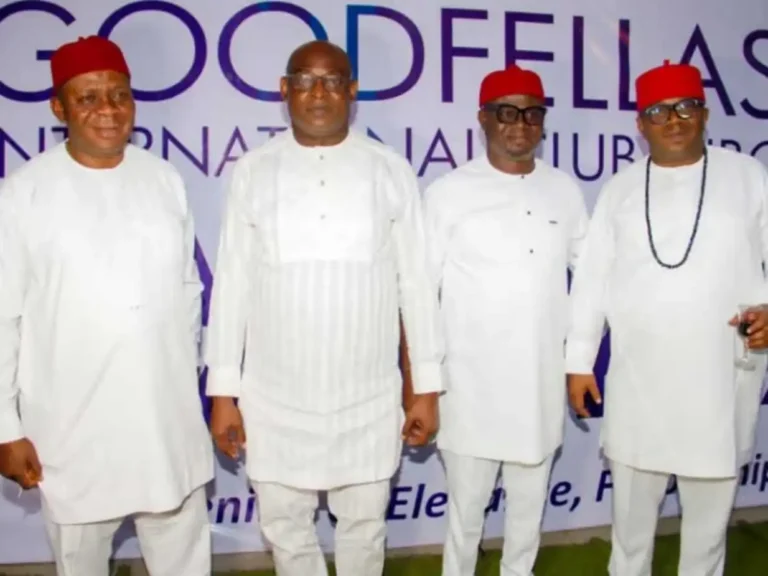
The GoodFellas International Club Nibo (GFI), a non-profit and non-political organisation based in Nibo, has announced plans to build a modern Information and Communication Technology (ICT) and Innovative Skills Development Centre to support community development and youth empowerment.

The plan was unveiled during the club’s annual Charity Ball and Gala Night held on December 29, 2025, at the Trigpoint Hotel in Awka South Local Government Area of Anambra State. The event details were obtained by Nigeria Startup News on Saturday.

The charity event attracted prominent personalities, club members, and invited guests who gathered to support a shared vision of empowering young people through education and innovative skills development within the community.

Speaking at the event, the President of the GoodFellas International Club Nibo, Chief (Dr) Uche Nnama (KSP), said the proposed ICT and skills centre aligns with the organisation’s youth development agenda and its commitment to the socio-cultural and economic growth of Nibo.

He explained that the vision behind the project is to transform learning opportunities and improve economic prospects for young people in the area. “The dreams and potential of our youth rest upon the shoulders of all of us in this room. Tonight, we gather not just as individuals, but as a family bound by love for our community and a shared hope for the future of our youth,” Nnama said.

According to him, the establishment of the centre would significantly strengthen youth empowerment, not only in Nibo but across the South-East and Nigeria as a whole. He said the facility is designed to offer innovative skills training, digital literacy, and access to global knowledge needed for young people to succeed in today’s digital economy.

“This project is far more than bricks and mortar; it is the legacy that the community will leave for generations to come,” he added. Nnama appealed to Nigerians of goodwill, governments at all levels, corporate organisations, and Anambra indigenes at home and in the diaspora to support the initiative.

The charity ball featured music, dining, and social interaction, reflecting the unity and generosity of participants while drawing attention to the intended beneficiaries, young boys and girls whose lives organisers said would be positively transformed by the centre.

Dignitaries present included Chief Emma Nwonu, Chief Kanayo Ughamadu, Ozo Chief Joshua Nnama, Ozo Chief Emeka Okonkwo, members of the Uzonwa Family (Otimgbodongmbo), and engineers Uche Igwebuike and Nnamdi Nnama.

Others were Hon. Dozie Anigbogu and Hon. Jerry Alocha, Senior Special Assistants to the Governor of Anambra State, as well as members of the Nibo Council of Chiefs and Ozo title holders.

In separate remarks, Chief Emma Nwonu and Chief Kanayo Ughamadu commended the club’s commitment to philanthropy and community development, pledging continued support. Participants described the event as a celebration of achievements and a renewed commitment to unity, compassion, and sustainable development.

Apply: Tony Elumelu Foundation 2026 entrepreneurship programme ($5,000 Seed Capital)

0

Tony Elumelu Foundation has opened applications for the 2026 Entrepreneurship Programme, offering a $5,000 seed capital grant. This is the largest African philanthropic initiative committed to empowering African entrepreneurs and entrepreneurship across the continent.

Applicants are required to register on the grant portal and complete the programme’s application form with valid and accurate information.

Programme participants who have successfully met all completion requirements for the investment readiness phase will be required to submit the necessary documents in order to receive their seed capital to launch or scale their business.

Eligibility criteria include:

Applicants must be 18 years and above.
Applicants must have a business idea or own a business that is not older than five years.
Applicants must reside in Africa and plan to establish their business in Africa.
Applicants must not have benefitted from any previous programmes.
Applicants must not have previously applied in the same application window of the same year.
All applicants are required to upload a valid, clear, and accessible government-issued ID that displays their date of birth and photo, along with a high-resolution headshot.

Successful applicants of the TEF Entrepreneurship Programme will be notified of their participation confirmation on 22 March 2026.

For the $5,000 non-refundable seed capital, each applicant must have the following available: a Business Registration Certificate, evidence of tax registration, a valid reference letter from the business’ bank, a duly completed Partner Consent Form (for participants who are co-owners of their business), and a valid medical report.

The application portal for the TEF Entrepreneurship Programme opened on 1 January 2026 and will close at midnight on 1 March 2026.

How to apply:

Interested applicants should visit and apply via www.TEFConnect.com. All applicants will be notified after the closing date, and shortlisted applicants who successfully pass the LSEG World-Check screening and physical verification exercise will be considered for the TEF Entrepreneurship Programme.

FG Confirms YEIDEP Batch B to Begin Around Mid-2026

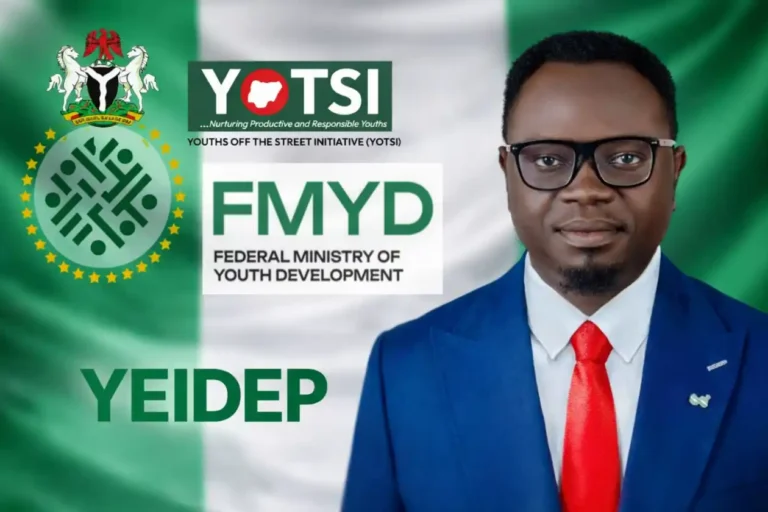
The Federal Government has disclosed that preparations for the second phase of the Youth Economic Intervention and De-Radicalisation Programme (YEIDEP), also known as Batch B, will commence around mid-2026, clarifying that fresh registration under the programme is not expected to begin until later in the year.

The disclosure was made during a recent stakeholders’ engagement where government officials explained that the phased structure of YEIDEP was designed to ensure accountability, effective monitoring, and long-term sustainability, rather than rushing multiple registration cycles at the same time.

The Minister of Youth Development, Ayodele Olawande, said the programme would be implemented carefully in phases, adding that “preparations for a second phase would commence around mid-year,” in line with the Federal Government’s implementation schedule.

Olawande also explained that the phased rollout was deliberate, noting that earlier stages of the programme focused on planning, coordination, and system development to avoid operational gaps when new beneficiaries are eventually brought on board.

According to the minister, this approach is meant to guide public expectations, especially amid claims on social media that the YEIDEP portal is currently open for Batch B registration, even though new applications are not being accepted at this time.

He said the government’s position remains that Phase Two activities will align with mid-2026 timelines, which broadly refer to the middle of the year, around June and July, rather than the early months when Phase One processes are still being completed.

The clarification, officials said, is important to prevent confusion among interested youths, many of whom have attempted to access the portal despite the absence of an official announcement opening Batch B registration.

Programme coordinators have maintained that the decision to separate registration phases allows implementing agencies and financial partners to review performance, address challenges, and strengthen systems before expanding the programme to a new set of beneficiaries.

They added that this structure also supports transparency and sustainability, ensuring that lessons from the initial rollout are incorporated into subsequent phases, rather than overwhelming the system with simultaneous intakes.

The minister reiterated that YEIDEP’s phased design remains central to its objectives, stressing that proper sequencing allows the programme to deliver impact while maintaining public trust and institutional credibility.

Olawande said the government would continue to communicate clearly as each phase approaches, noting that official updates will guide when new registrations open and how interested youths can participate at the appropriate time.

He added that patience from the public is necessary to allow ongoing processes to run their course, as the phased approach is intended to strengthen outcomes rather than delay opportunities.

Officials said this sequencing would help the programme expand responsibly when Batch B eventually begins and protect beneficiaries and public resources nationwide over time ahead.

Filmmaker Says YouTube Cannot Recover Big-Budget Cinema Films in Nigeria

As debates continue over whether Nigerian filmmakers should abandon cinemas and release their films on YouTube, filmmaker Benneth Nwankwo says the argument ignores a basic fact: cinema films and YouTube films are built on completely different business models.

He made this known in a Facebook post on Saturday, reacting to growing conversations around what many have described as the “cinema battle” in Nigeria and suggestions that filmmakers should simply move their films online instead of struggling with theatrical releases.

“Following the cinema battle in Nigeria, a lot of people are now saying filmmakers should put their films on YouTube instead of fighting the cinema battle in Nigeria,” Nwankwo said. He added that he was recently told that some filmmakers, including Omoni Oboli, are releasing films on YouTube, raising questions about why others cannot do the same.

Addressing that comparison, Nwankwo said YouTube remains a strong platform but warned that it is not suitable for filmmakers working with large production budgets. “First of all, YouTube is a great platform, but it is not exactly a great platform for filmmakers who work with high budgets,” he said, noting that films made specifically for YouTube follow a very different cost structure.

Drawing from personal experience, he explained that he understands YouTube economics because he has been active on the platform for years. According to him, his series, Class of Secrets, has recorded over one million views, giving him firsthand knowledge of how revenue is generated on the platform and what filmmakers can realistically earn from it.

Nwankwo explained that most films are developed with a specific platform in mind, and budgets are structured around that decision. He said a film produced for cinema cannot be compared financially to one produced for YouTube. “If you are making a movie for cinema, the budget is not the same as the budget for a YouTube film,” he said, adding that a cinema film that aims to compete properly would cost no less than ₦100 million.

He questioned the logic of taking such an investment straight to YouTube, saying, “So imagine spending 100 million naira to make a film and then putting it on YouTube. It will take a miracle to make back that money through YouTube alone.” He said this reality explains why filmmakers who operate at that level do not rush to release their films online.

According to him, the first plan after completing a cinema film is usually a theatrical release, with the hope of recovering at least part of the budget. However, he stressed that even cinema earnings are limited for filmmakers. He said filmmakers typically receive only between 30 and 35 percent of cinema revenue, while the rest goes to cinema operators and deductions, including taxes paid to the Federal Government of Nigeria.

“So when you see a film making billions in the cinema, do not think the filmmaker is counting all that money,” he said. Nwankwo explained that if a film performs well in cinemas, the next stage is distribution and licensing. He noted that global streaming platforms such as Netflix and Amazon Prime may offer licensing deals lasting between two and three years.

He explained that such deals can be exclusive or non-exclusive, with exclusive agreements limiting the film to one platform, while non-exclusive deals allow filmmakers to explore additional distribution channels. From these deals, he said filmmakers may earn between $10,000 and $50,000, depending on negotiation strength and film performance.

Nwankwo added that African-owned streaming platforms often offer smaller deals, typically ranging from $5,000 to $30,000. He said filmmakers may also explore other channels such as airlines, hotels, and television stations to recover more money before a film becomes less commercially valuable.

He explained that YouTube usually becomes an option only after all these distribution windows have closed, sometimes years later. As an example, he pointed to Kunle Afolayan, who released October 1 on YouTube more than ten years after its initial run. He said the film had already earned revenue through multiple channels before YouTube became the final window.

Nwankwo noted that this approach applies mainly to cinema films and cited Funke Akindele as another example. He said Akindele does not release her high-budget cinema films on YouTube, even though some of her projects, such as Jenifa’s Diary, were designed for platforms where the budget matched expected returns.

Explaining YouTube earnings further, Nwankwo said Nigerian-based views typically generate between $0.47 and $10 to $12 per 1,000 views, depending on factors such as viewer age, location, watch duration, retention rate, and ad engagement. He said skipping ads reduces revenue, while ad clicks increase it.

Using a basic calculation, he said a filmmaker who spends about ₦5 million on a YouTube film would need at least one million views to break even, assuming a reasonable RPM. “That is just to break even, not to profit,” he said, questioning how filmmakers could expect to recover ₦10 million, ₦50 million, or ₦100 million budgets through YouTube alone.

He concluded that YouTube and cinema operate under different economic rules, requiring different strategies, budgets, and expectations, warning that using cinema budgets to chase YouTube returns would not add up financially.

Akwa Ibom Begins ₦50,000 Transport Allowance Payment for CBT Applicants

The Ministry of Science and Digital Economy has announced that payment of the one time transport allowance of ₦50,000 for applicants who participated in the recently concluded Civil Service Recruitment Computer Based Test CBT has commenced. The announcement applies to all applicants who sat for the examination and members of the general public seeking clarification on the exercise.

The disclosure was made in a signed statement by the Honourable Commissioner for Science and Digital Economy, Dr. Frank Ekpenyong. According to the statement, the payment follows a directive by His Excellency, the Governor of Akwa Ibom State, that all applicants who took part in the CBT examination should be supported with a transport allowance to ease the cost of participation.

The statement explained that payments are being made directly to the bank account details already provided by applicants on the Employment Portal. Applicants were advised not to submit new bank details and to disregard any unofficial requests for such information, as the process is being handled strictly through the official portal.

Dr. Ekpenyong stated that applicants and members of the public can track payment progress in real time on the Akwa Ibom State Employment Portal. He said this aligns with the Governor’s commitment to transparency and accountability in public service delivery. The portal address provided for tracking is employment.akwaibomstate.gov.ng.

Providing an update on the exercise, the Ministry released official statistics for the CBT transport allowance. The data showed that a total of 33,459 candidates sat for the 2025 CBT examination. Out of this number, 5,651 payments are currently being processed, while 377 applicants have already been successfully paid. The report also indicated that there are zero failed payment transactions recorded so far.

The Ministry noted that the statistics were accurate as of 11:30 p.m. on 2 January 2026 and may change as payment processing continues. Applicants were informed that they can log in to their portal accounts to view payment confirmation, check payment status in real time, and download an official payment receipt under the Payments section once payment has been completed.

The statement further explained that the portal reflects updates as payments are processed in batches. Applicants who do not receive payment were advised to wait until Wednesday, 7 January 2026, before contacting support. Thereafter, enquiries should be directed only through the official email support@employment.akwaibomstate.gov.ng or the phone line 0201 229 1111. The Ministry reaffirmed its commitment to transparency, accountability, and effective digital service delivery under the ARISE Agenda of the Akwa Ibom State Government.