Home Blog Page 193

Oyedele faults claims new law will make poor Nigerians pay tax

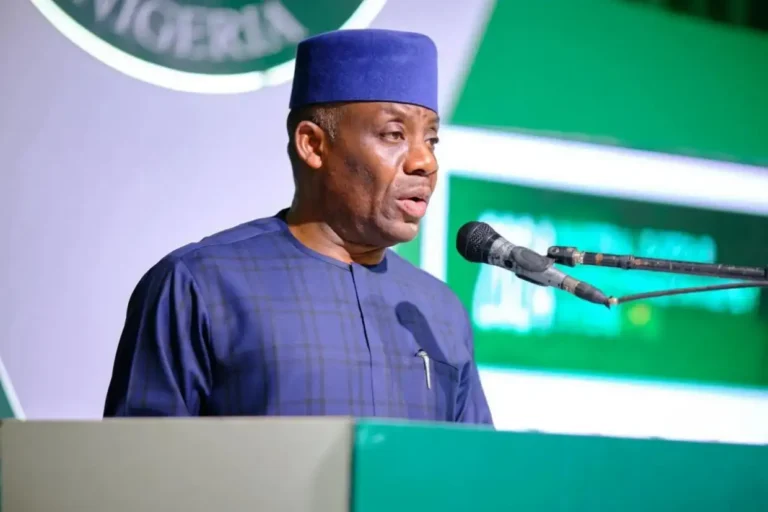
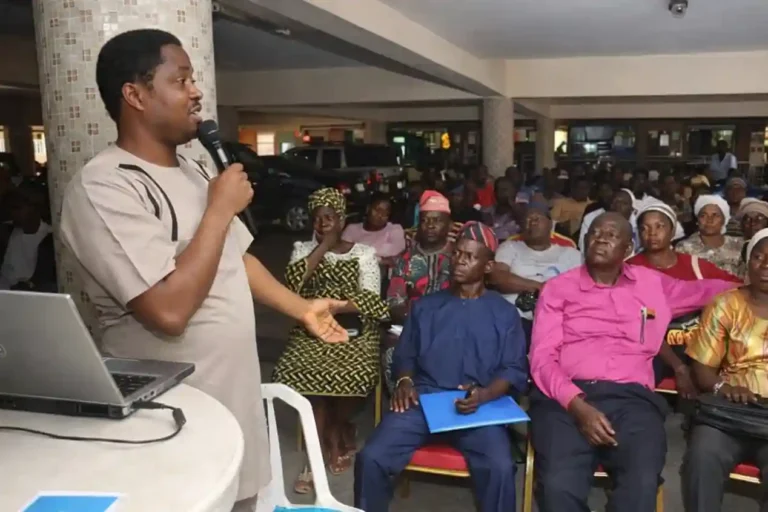
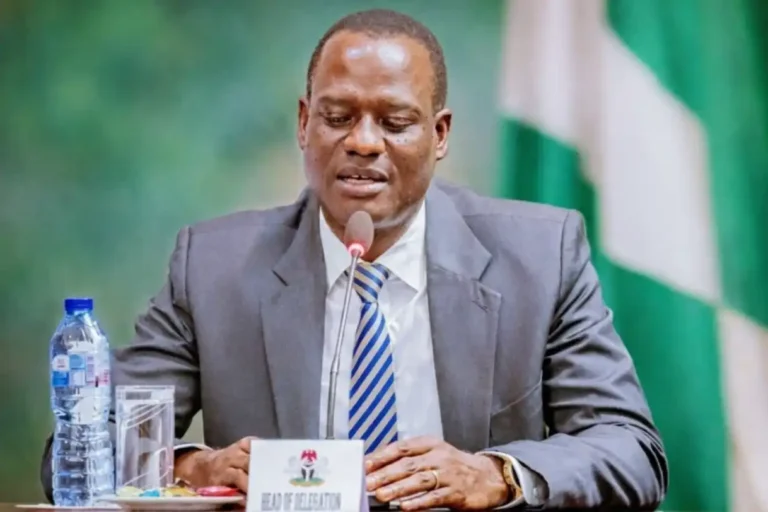
The Chairman of the Presidential Committee on Fiscal Policy and Tax Reforms, Taiwo Oyedele, has responded to claims that Nigeria’s new tax law will make poor people pay taxes, describing the analysis behind the claims as technically inaccurate and misleading.

In a detailed public response, Oyedele said some commentaries circulating online relied on incorrect assumptions and mixed up key concepts that guide tax policy design. He noted that this was why the committee had earlier invited content creators to a training session on the tax reforms, an invitation he said was declined by one of the critics.

“I have previously acknowledged your efforts to educate the public on tax reform. However, some of your contents, including this video, contain technical inaccuracies misleading your audience,” Oyedele said. He added, “This is precisely why we invited some content creators to a training session on the tax reforms to enhance their understanding for better context and informed public engagement.”

Oyedele also addressed allegations that the engagement session was meant to promote the new tax laws. “For the record, no participant was paid or asked to promote the tax laws. Hundreds of creators attended, including many with larger followings,” he said, insisting that the goal was education rather than publicity.

Responding directly to the substance of the claims made by Don Aza, Oyedele said the analysis confused household income with individual income. “Household income and individual income are not the same. You referenced my comment on household income but went ahead to do your entire analysis based on individual income,” he said, stressing that the distinction significantly affects how poverty and tax exposure are measured.

On the use of international poverty benchmarks, Oyedele said the figures cited were both outdated and incorrectly applied. “You assert that poverty must be determined based on the international poverty threshold of USD 3 per day and then you applied it incorrectly. First, the threshold was USD 2.15 per day until June 2025, same month the tax bills were signed into law. Second, you applied market exchange rate instead of purchasing power parity,” he explained.

He pointed to local data sources for better context, saying, “If you wish to understand the Nigeria context, you may find the Nigeria Living Standards Survey by the NBS in collaboration with the World Bank useful.”

Oyedele further challenged the treatment of the ₦800,000 threshold in the analysis, saying it was wrongly assumed to represent gross income. “Taxable income is not the same as gross income. Treating ₦800,000 taxable income as gross income is incorrect and materially alters your analysis,” he said.

Addressing concerns around minimum wage earners, he said the law clearly protects them. “The law expressly exempts the national minimum wage from personal income tax. Insisting that people who earn the national minimum wage will be taxed is incorrect,” Oyedele stated.

While defending the reforms, Oyedele said debate was welcome but must be grounded in accurate information. “Proper understanding is important for constructive public debate. If you’re concerned about the tax burden on low-income earners and small businesses, it would be helpful if you also inform your followers the taxes these people currently pay and whether the new tax law is better or not,” he said.

He warned that partial or incorrect information could hurt the very people being defended. “You may get the clicks and views by presenting incomplete or incorrect information fueling unnecessary discontent but ultimately you are harming the very audience you seek to inform,” Oyedele said.

He concluded his response by urging critics to separate opinion from fact. “Disagreement about public policy is healthy, but it must be grounded in knowledge, not sentiments. Present your opinion if you have a different perspective, rather than asserting that others are wrong or dishonest. You can do well while also doing good,” he said.
Advertisement

MDCN grants temporary surcharge waiver for 2026 licence renewal

0

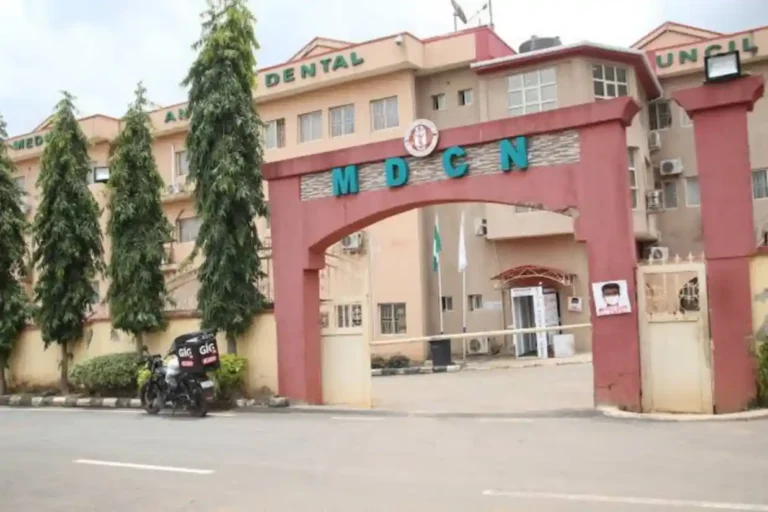
Medical and dental practitioners who missed the 31 December 2025 deadline can still renew their 2026 licences without penalty, following a temporary surcharge waiver approved by the Medical and Dental Council of Nigeria (MDCN).

In a notice dated 2 January 2026, the Council said it is granting a window for practitioners to complete payment of their 2026 Annual Practising Licence fees without attracting late charges.

“The MDCN wishes to inform practitioners who have not paid for their 2026 Annual Practising Licence of a temporary waiver of surcharge for the payment of the 2026 Practising Licence fees,” the notice stated.

“All affected practitioners are advised to take full advantage of this opportunity to update their personal records and complete payment of the required fees, the details of which will be duly reflected in the Master Register,” the Council said.

The MDCN warned that payments for the 2026 practising licence made from 6 January 2026 onwards will automatically attract the applicable surcharge for late renewal.

The waiver applies only to 2026 Annual Practising Licence fees.

Peter Obi says Nigeria is being “looted into poverty” by politicians

0

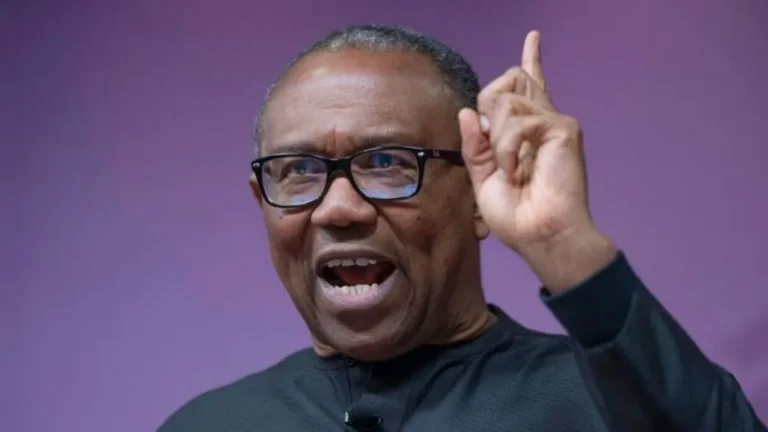
Former presidential aspirant, Peter Obi, has accused Nigeria’s political class of driving the country into poverty through corruption and mismanagement, saying the nation is not poor by nature but has been “looted into poverty” by those entrusted with public resources.

Speaking on Friday in Enugu at a nationwide political gathering attended by former governors, lawmakers, and civic leaders from across the country, Obi said Nigeria’s economic and social challenges are the result of deliberate actions by those in power rather than a lack of human or natural endowments.

“We came together to reaffirm the urgent need for leadership and a government that can truly appreciate Nigeria’s potential, unify our diversity, and drive rapid socio-economic transformation and inclusive development,” he said.

Obi stated that Nigeria’s difficulties stem from what he described as systemic sabotage by the political class. “Nigeria’s challenges do not arise from a lack of potential. We are abundantly endowed with human and natural resources. Our tragedy arises from the deliberate sabotage by a political class that exploits the country and its people,” he said.

He added that the consequences of this system are visible across all sectors. “We are not poor; we have been looted into poverty. The existing system rewards mediocrity, punishes merit, and recycles failure. Nigeria is suffocating under impunity and greed, with a government that rewards illegalities and corruption,” Obi said.

According to him, cosmetic reforms will not solve the country’s problems. “What we need is genuine, patriotic change, not mere cosmetic makeovers that leave the same structures of corruption and failure intact,” he said.

Obi said the current moment demands decisive action. “The time to act is now. The choice before us is between continuing the cycle of decay or embracing the courage to disrupt entrenched corruption and formalized criminality in governance,” he said.

He cited his visits across the country as evidence of widespread hardship. “I have visited every corner of Nigeria, including internally displaced persons camps neglected by the government. From North to South, East to West, Nigerians are feeling insecurity and despair, and this cannot define our legacy,” Obi said.

Looking ahead, he said Nigeria could achieve economic recovery through productive sectors. “With unity and effective leadership, agriculture and manufacturing can become the highest contributors to our GDP. We can move Nigeria from a nation of consumption to one of production while tackling insecurity, corruption, unemployment, inflation, and illiteracy,” he said.

Obi stressed that inclusive growth depends on trust in governance. “To build lasting unity and prosperity, we need honest, transparent, and responsive leadership. Our generation is tasked with creating a new framework for unity and progress, and many nations have succeeded, so Nigeria can excel,” he said.

He also announced plans for a broad political alliance. “This is a time for unity and national renewal. I call on my leaders, associates, supporters, the Obidient Movement, and members of opposition parties across the country to join a broad coalition under the African Democratic Congress, led by Senator David Mark,” Obi said.

He urged collective responsibility, saying, “Nigeria deserves leadership that unites, governs with empathy, and delivers real results. Let history record that Nigeria’s turning point begins here and now, and together, with courage, we can build an inclusive Nigeria,” he said.

FG Begins Pilot of Free Internet, Digital Teacher Training

0

The Federal Government says it is rolling out a digital teacher training programme supported by zero-rated internet data, starting with pilot states before nationwide expansion.

Speaking during an interview on Channels Television, the Minister of Education, Morufu Olatunji Alausa, said the programme is designed to remove cost barriers and make teacher professional development continuous and measurable.

Alausa said the government identified internet access as a major obstacle preventing teachers from improving their skills, especially in public schools. He explained that moving teacher training online without addressing data costs would have excluded many educators. According to him, “One of the biggest challenges we identified was internet access, because you cannot say training is digital and then leave teachers to struggle with data. That is why we are using zero-rated data so teachers can access these platforms freely without paying for internet.”

The minister said teacher professional development has now been redesigned as a structured digital process rather than occasional workshops. He explained that training is broken into modules that teachers complete online at their own pace. He said, “We have moved teacher professional development fully into a digital space. Teachers now go online, complete structured modules, and take short quizzes at the end. This allows us to track participation, measure learning outcomes, and ensure that training is not just theoretical.”

Alausa added that the programme is not being rolled out all at once, stressing that pilot phases are important to get it right. He said, “We are piloting this in a number of states because we want to be sure that the infrastructure works, that teachers can access the platforms easily, and that the system is stable before we expand it nationwide. This is a phased rollout, not something we are rushing.”

He said incentives are a core part of the digital training framework, noting that teachers are rewarded for completing modules successfully. According to him, “After a teacher completes a module and passes the required assessment, we pay or incentivise that teacher. This is deliberate. We want to recognise effort, encourage participation, and motivate teachers to continuously improve their skills.”

The minister explained that linking incentives to completion also improves accountability. He said, “In the past, training was done without proper tracking. Now, everything is digital. We know who completed a module, who passed, and who needs support. This helps us deploy resources better and improve the overall quality of teaching.”

Alausa said the federal government is building a central digital infrastructure under the Ministry of Education to host training content and reduce dependence on external platforms. He said, “We are building our own Federal Ministry of Education digital hub where all teacher training content will be hosted. This gives us control, sustainability, and the ability to scale without relying entirely on third-party platforms.”

He added that the digital hub will also support broader education delivery in the future. According to him, “This is not just about teachers today. It is about building a foundation where education content can be delivered efficiently, monitored properly, and expanded as our needs grow.”

The minister linked the digital teacher training programme to wider efforts to rebuild confidence in public schools. He said improving teacher quality was central to improving learning outcomes. He said, “You cannot talk about rebuilding trust in public schools without talking about teachers. When teachers are well trained, motivated, and supported, the quality of education improves, and parents begin to see the difference.”

Alausa said the use of technology also allows for better coordination between the federal and state governments. He explained that data from the training platforms helps education authorities identify gaps and respond more quickly. He said, “With digital systems, we can see where teachers need more support, which areas are lagging, and how to intervene. This is a more efficient way of managing education than guesswork.”

He maintained that the programme is part of a long-term reform agenda rather than a short-term intervention. According to him, “This is about sustainability. We are building systems that can run continuously, adapt over time, and improve teaching standards across the country. Education reform cannot succeed if it depends on one-off workshops or temporary measures.”

The minister said once the pilot phase is completed, the government will move to scale the programme across more states. He said, “As we stabilise the pilots, we will expand this nationwide. The goal is to ensure that every public school teacher has access to quality training without cost barriers, and that professional development becomes a normal part of teaching in Nigeria.”

Akwa Ibom disburses ₦2.82bn empowerment grants to 33,149 beneficiaries

The Akwa Ibom State Government says it disbursed about ₦2.82 billion in cash-based empowerment grants to 33,149 beneficiaries over the past 12 months under its ARISE Agenda.

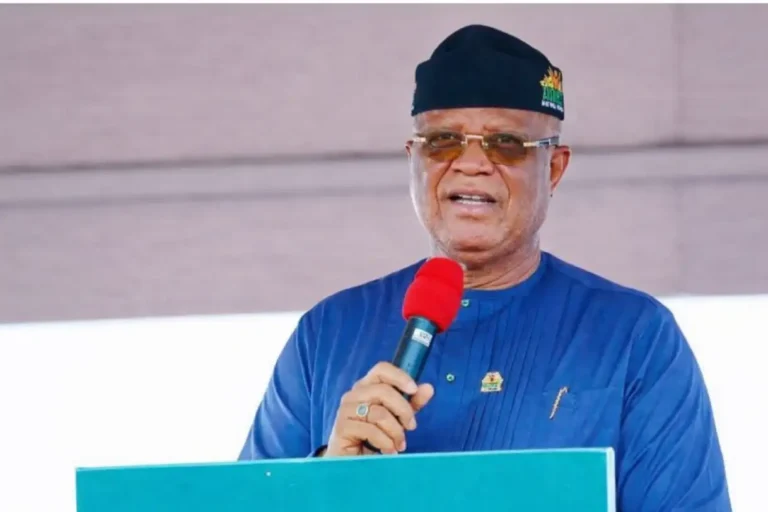
The disclosure was made on Friday by Governor Umo Eno, who said the empowerment programmes were designed to support farmers, traders, youths, and small business owners across the state.

According to figures released by the government, the support included multiple grant categories with fixed amounts and defined beneficiaries, alongside non-cash interventions such as equipment distribution and skills training.

Under the ARISE Agenda, Governor Eno said the administration was focused on balanced development, stating, “Under the ARISE Agenda, we are delivering life-changing projects and empowerment to every corner of Akwa Ibom. In the last year alone, we commissioned 32 key projects across healthcare, education, roads, security, tourism, and public infrastructure, and directly empowered thousands of our people.”

The empowerment component covered ₦5 million farmers’ grants for 43 beneficiaries, ₦1 million farmers’ grants for 60 beneficiaries, and ₦500,000 farmers’ grants for 696 beneficiaries. Traders received ₦250,000 grants for 464 beneficiaries, ₦1 million grants for 201 beneficiaries, and ₦450,000 grants for 696 beneficiaries. The programme also included ₦750,000 IBOM-LED grants for 121 beneficiaries and ₦50,000 youth grants for 29,618 beneficiaries.

In addition, 976 entrepreneurs received equipment support, while 274 youths benefited from training under the DASAC programme, according to the figures.

Beyond empowerment, the government reported the commissioning of 32 projects within the same 12-month period, spanning key sectors across the state.

In healthcare and emergency services, the projects included new and upgraded primary health centres in Eket, Nsit Ubium, Urue Offong Oruko, Uyo, Ika, and Udung Uko, the General Hospital in Ukanafun, the Akwa Ibom State Medical Oxygen Production Plant in Ituk Mbang, the State Emergency Operations Centre in Uyo, the Akwa Ibom State Emergency Medical Services and Ambulance System, Ibom International Hospital, the upgraded Ikot Ekpene General Hospital, and a Public Health Emergency Operations Centre.

Education and youth development projects included several model primary schools in Obot Akara, Etinan, Itu, Okobo, Abak, Oron, and Essien Udim, as well as the Ibom Sports Academy in Eket.

Road and infrastructure projects covered internal roads at the State Police Headquarters in Ikot Akpan Abia and Ikot Udom in Ika, major road links in Ika, Uyo, Abak, Nsit Ubium, Nsit Atai, and Oruk Anam, and over 1,000 kilometres of roads completed or ongoing across the state.

Tourism and public amenities projects included the remodelled Ibom Plaza in Uyo, the ARISE Palm Resort, the upgraded Ibom Hotel and Golf Resort, and the elevation of Victor Attah International Airport to full international status.

Governor Eno said the projects and programmes reflected the administration’s wider goals, adding, “These are not just projects. They are proof of our commitment to inclusive growth, human capacity development, and sustainable progress. To the great people of Akwa Ibom: Thank you for your trust. Together, we will continue to ARISE.”

The government said implementation would continue across all local government areas in the coming months ahead.

Adamawa to issue civil service appointment letters via email

The Adamawa State Government has announced plans to issue offer letters electronically via email to successful candidates of the recent civil service recruitment, following irregularities recorded during the manual issuance of appointment letters.

The Secretary to the Adamawa State Government (SSG), Barrister Awwal Tukur, disclosed this on Tuesday while briefing journalists at the Government House in Yola. He said all candidates listed on the original recruitment list released by the Adamawa State Civil Service Commission will receive their appointment letters through their registered email addresses.

Barrister Tukur expressed concern over challenges encountered in the recruitment exercise, including the omission of some qualified candidates and the duplication of names. According to him, the shift to electronic issuance was necessary to correct these issues and improve transparency. “The recruitment exercise was designed to be fully electronic and will remain so. Any form of manual interference will no longer be accepted,” he said.

The SSG announced that all appointment letters previously collected manually have been cancelled and rendered invalid. He advised affected candidates to check their email accounts for their authentic appointment letters and proceed with documentation. “Candidates should rely only on the letters sent to their registered email addresses,” he added.

He reaffirmed the commitment of the Fintiri-led administration to transparency, fairness, and accountability in public service recruitment.

Barrister Tukur was flanked during the briefing by the Chief of Staff, Government House Yola, Dr. Edgar Amos Sunday; the Senior Special Assistant to the Governor on ICT and E-Governance, Dr. Hammajam Ahmed; and members of the management team of the Adamawa State Civil Service Commission. He urged candidates to remain calm and begin checking their email accounts from Wednesday evening.

Nigerian Army denies unpaid allowances, extortion claims against 35 Artillery Brigade

0

The Nigerian Army’s 35 Artillery Brigade has denied claims that troops deployed under Operation MESA were unpaid and extorting motorists, describing the allegations as false and intended to discredit its leadership. The denial was contained in a press release signed on Friday by Major Idereghi Samuel Akari, Assistant Director, Army Public Relations, 35 Artillery Brigade.

According to the statement, the Headquarters, 35 Artillery Brigade, Abeokuta, reacted to a viral video circulating on social media and attributed to one Abdul. The video accused the Brigade Commander, Brigadier General Godwin Nwamba, the Commanding Officer, 351 Artillery Regiment, Lieutenant Colonel Innocent Matthew, and the Brigade Operations Officer, Major Isaac Ezechukwu, of denying soldiers their allowances and allowing routine extortion of motorists along border routes.

The Brigade said the claims were misleading and required clarification in the interest of the public. It explained that soldiers deployed on company duties are operating under Operation MESA, a state sponsored multi agency security operation. The release stated that before Brigadier General Nwamba assumed command in January 2025, personnel under Operation MESA received a monthly allowance of ₦45,000.

It added that after assuming command, the Brigade Commander approved an upward review of the allowance to ₦60,000 per soldier monthly, in line with the Chief of Army Staff Command Philosophy of Sound Administration. The statement noted that the allowance “is being duly paid by the state as at when due,” stressing that troop welfare remains a priority of the command.

On the allegation that soldiers extort motorists along border routes, the Brigade said troops deployed in such areas have never engaged in illegal or unethical conduct. It stated that the Nigerian Army maintains zero tolerance for indiscipline and extortion, and that no credible complaint has been recorded against the troops involved in Operation MESA duties.

The release further disclosed that in compliance with directives from Defence and Army Headquarters, all unnecessary checkpoints along border areas have been removed. According to the Brigade, only relevant security agencies are now allowed to conduct checks on the contents of vehicles commuting along the affected roads.

Describing the viral video as “malicious, unfounded and deliberately misleading,” the Brigade alleged that the individual behind it is a disgruntled retired airman. It claimed that during his service in the Nigerian Air Force, he engaged in actions aimed at discrediting senior officers through propaganda and false narratives, and that his current actions are designed to attract social media attention and mislead the public.

The Headquarters, 35 Artillery Brigade, reaffirmed its commitment to professionalism, transparency and the welfare of its personnel. It said the Brigade will continue to work closely with other security agencies and stakeholders in Ogun State to protect lives and property, while upholding military ethics and discipline. The Brigade emphasized responsibilities and lawful operations.

Oyo Govt denies secretly receiving, spending N30bn Bodija explosion fund

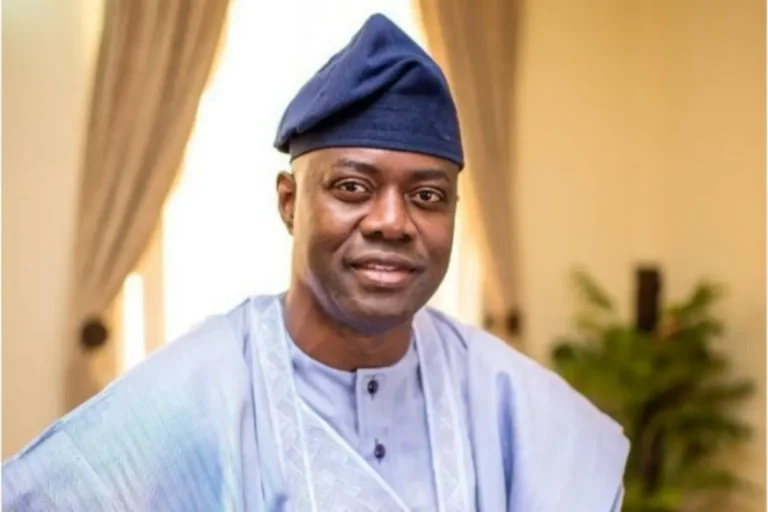
The Oyo State Government has denied claims that it secretly received and spent N30bn from the Federal Government after the January 2024 Bodija explosion, saying the fund remains untouched as it awaits the release of the outstanding N20bn balance, and that special intervention funds follow budgetary processes and do not require public announcement upon receipt.

The clarification followed public reactions to comments made by former Ekiti State governor, , who alleged that Governor received N50bn from the Federal Government to support victims of the Bodija explosion and failed to properly account for the funds.

The explosion occurred on January 16, 2024, when a powerful blast hit the Bodija area of Ibadan, killing two people and leaving 77 others injured. Several buildings were damaged, with properties worth billions of naira destroyed across the neighbourhood.

Speaking in an interview obtained by Nigeria Startup News on Friday, Fayose challenged Makinde to explain how a N50bn intervention fund allegedly released by the Federal Government was spent. He also presented what he described as documentary evidence showing approval for a N50bn intervention package for Oyo State.

In response, Makinde, through a statement issued by his media aide, Sulaimon Olanrewaju, stated that although N50bn was approved, only N30bn was actually released to the state by the Federal Government.

The state government reiterated this position in a separate statement issued on Thursday, stressing that it received only N30bn and not the full approved amount.

The position of the government was contained in a joint statement signed by the Commissioner for Budget and Economic Planning, Professor Musibau Babatunde, and the Commissioner for Information, Prince Dotun Oyelade.

According to the statement, the N30bn intervention fund has not been spent and remains domiciled in the Oyo State Government Infrastructure Support Account, number 2045199879, with First Bank of Nigeria since it was released in 2024.

“As of December 31, 2025, the N30 billion remains untouched in the Oyo State infrastructure account with First Bank. Interested members of the public may verify this information with the bank,” the statement said.

It added that the state deliberately refrained from using the funds because the remaining N20bn balance from the approved N50bn has not been released by relevant federal agencies, with no official explanation communicated to the state.

“The Oyo State Government has deliberately refrained from utilising the N30 billion already released in recognition of the fact that the remaining N20 billion has remained withheld by the relevant federal agencies for reasons that have not been communicated to the state,” the statement said.

The government said recent developments around the approval process further justified its decision to delay spending the funds. “Given the disgraceful drama of the last couple of days from the Federal Government on the approval, the Government of Oyo State is convinced of the wisdom of its decision to ‘wait and see’ before deciding what to do with the money,” it added.

On the outstanding balance, the government noted that nearly two years after the explosion, the Federal Government is yet to release the remaining N20bn from the approved intervention fund.

“The Oyo State Government remains committed to securing the balance of the approved funds to comprehensively address the damage caused by the explosion to both public and private properties,” the statement said, noting that many victims had already received support within the financial capacity of the state.

The government disclosed that it had spent N24.6bn from its own resources in response to the explosion. This included N20.141bn for reconstruction of infrastructure in Bodija and surrounding areas, and N4.085bn paid as support and compensation to affected residents.

“These expenditures were fully borne by the Oyo State Government,” the statement said.

The government insisted it had nothing to hide and would continue to engage the public transparently on the matter, adding that the governor remains committed to serving the people of Oyo State truthfully and responsibly.

Investing in Adolescent Girls Could Add $2.4tn to Africa’s Economy by 2040

The World Bank has urged African governments and partners to prioritize adolescent girls, saying the right investments could generate up to $2.4 trillion in economic gains for Africa by 2040. In a report on girls’ empowerment, the institution argues that current losses in education and work during adolescence are weighing heavily on future growth.

The report describes adolescence as a decisive stage when choices around schooling, work, marriage, and childbearing begin to shape long term economic outcomes. It states, “Adolescent girls’ empowerment is not just a matter of human rights; it is also a valuable investment. This report reveals that every dollar invested in adolescent girls’ empowerment can generate more than a tenfold return in economic impact. The net benefit of such investments amounts to approximately $2.4 trillion.”

According to the World Bank, the urgency comes from the scale of missed opportunity already visible across the continent. The report says, “Currently, 40 percent of 15- to 19-year-old girls in Africa are out of school and not working or are married or have children, compared with 12 percent of boys in the same age range, highlighting the urgent need for action.” It warns that these gaps reduce lifetime earnings and weaken productivity over time.

The report adds that gender gaps widen as girls move into later adolescence. It states, “In the older-adolescent group (ages 15 to 19), a significant number of girls in Africa (26 percent) are neither working nor in school, compared with about 9 percent of boys. Additionally, about 22 percent of these girls are married, compared with only 1 percent of boys.” The World Bank says early marriage and school exit often limit future participation in paid work.

While enrollment among younger adolescents has improved in many countries, the report notes that progress is not sustained without targeted support. It explains that many girls leave school, remain in unpaid household work, or enter childbearing just as they should be building skills and experience needed for economic independence.

The World Bank stresses that keeping girls in school is necessary but not sufficient. The report says, “To succeed, adolescent girls must obtain the skills, resources, and agency they need for autonomy and prosperity in adulthood,” adding that improving human capital fundamentals alone will not fully close gender gaps or unlock economic potential.

It argues that effective strategies must combine education with health services, skills training, access to financial resources, and support for decision making. The report also emphasizes the role of context, including laws, institutions, labor markets, and household dynamics, in shaping girls’ opportunities.

To guide action, the World Bank groups African countries into five categories based on patterns in girls’ schooling, work, marriage, and childbearing. These are Delayers, Educators, Generalists, Laborers, and Survivors. The report says these groups reflect how different legal and institutional environments influence outcomes for adolescent girls.

According to the report, countries classified as Delayers have been most successful in delaying marriage and childbearing, supported by laws that allow women to work, open bank accounts, and access identification documents in the same way as men. Educators show strong school enrollment linked to education focused policies, while other groups face mixed outcomes shaped by weaker systems or fragile conditions.

The World Bank says this typology is intended as a practical tool for policy makers. The report notes, “Adolescent girls’ experiences vary not only across countries, but also within them, partly reflecting countries’ cultural, social, legal, and economic environments. Understanding both subnational and regional patterns is necessary to optimize policy design.”

Despite highlighting what works, the report also points to evidence gaps. It says, “While evidence reveals effective strategies for empowering adolescent girls, substantial knowledge gaps remain, particularly regarding married adolescents and young mothers and the cost-effectiveness of scaling interventions.” It calls for better data, stronger monitoring, and sustained political commitment.

The World Bank links continued losses in girls’ education and employment to slower growth and persistent poverty, and says coordinated action across education, health, skills development, and legal reform can help African economies capture the benefits of investing in adolescent girls.

The report frames the choice as urgent, noting demographic trends mean delays today will narrow options tomorrow and make recovery harder for households, communities, and economies.

AFCO, SOAD launch volunteer farm workers recruitment initiative

0

The African Farmers and Cultural Organization (AFCO), in collaboration with the State of the African Diaspora (SOAD), has announced the launch of a Volunteer Farm Workers Recruitment initiative aimed at supporting farmers across Africa and the diaspora.

The programme is designed to address the agricultural labour gap by deploying trained volunteers to farms in different countries, states, and local government areas. AFCO and SOAD said the initiative comes as the farming season approaches and reflects a shared commitment to revitalising agriculture through community service.

According to the organisations, the volunteers will provide free support to farmers in need, while all logistics will be covered through public sponsorship donations and organisational funding. These costs include transportation, work materials, and feeding allowances for volunteers during deployment.

Speaking at the launch, Prince Chuks Esiole, President of AFCO, stressed the importance of youth participation and food self-sufficiency across the continent. “Our mission is to transform the landscape of African agriculture by empowering the hands that feed the nation. Through this partnership with SOAD, we are not just providing labour; we are cultivating a new generation of skilled agricultural entrepreneurs. We invite everyone, from those looking to start their farming journey to those wanting to serve their community, to join us in this movement toward food security and economic prosperity,” Esiole said.

The initiative is structured to support existing farmers while also lowering entry barriers for individuals interested in agriculture. Volunteers will undergo training in farming methods, enabling them to deliver technical support that can improve productivity on farms.

AFCO listed several benefits attached to the programme, including free accommodation, transportation, and daily feeding allowances for volunteers. Participants will also gain hands-on experience in farming practices, with opportunities to earn cash rewards for outstanding service. The programme also offers career pathways, such as national employment with competitive salaries or international placements that may include work permits, flight tickets, and secured housing.

To ensure smooth implementation, AFCO and SOAD are seeking coordinators at country, state, and local government levels. AFCO said these coordinators will manage volunteer distribution and support farmers.

On participation, Esiole said registration for both volunteers and coordinators will open soon. Interested individuals were advised to indicate interest by contacting AFCO via phone on +234 706 3020 149 or by email at info@afcoevents.org.