Home Blog Page 194

AfCFTA 2026: FG to identify one exportable product in each of 774 LGAs

The federal government will deepen its participation in the African Continental Free Trade Area AfCFTA in 2026 by working with state governors to identify at least one exportable product in each of the country’s 774 local governments in 2026.

This was disclosed by the Minister of Industry, Trade and Investment, Mrs Jumoke Oduwole while speaking on Nigeria’s AfCFTA Achievements Report 2025 under the Federal Ministry of Industry, Trade and Investment.

She said the move is aimed at scaling production, boosting non-oil exports, and strengthening competitiveness across Africa, adding that Nigeria’s AfCFTA agenda for 2026 will build on implementation milestones recorded in 2025.

According to the Minister, the plan is designed to position the country to better exploit opportunities available under the continent-wide trade pact.

Operationalised through the AfCFTA Central Coordination Committee CCC, the Ministry will collaborate with development partners across public and private sector institutions to mobilise production nationwide while also undertaking an awareness and sensitisation campaign.

“FMITI will work with the Nigerian Governors’ Forum and State Governments to identify a minimum of one product that each Local Government Area can export into the AfCFTA market,” the report stated.

Beyond local production, the 2026 agenda places a strong emphasis on creating an enabling policy and regulatory environment to support the full implementation of the AfCFTA Agreement and its protocols, with the Ministry of Industry, Trade, and Investment leading regulatory alignment efforts.

In addition, Nigeria plans to upgrade trade data systems to effectively track AfCFTA trade flows, including disaggregated data on goods, services, and participation by women and youth, while expanding global advocacy and hosting key continental trade events ahead of the Intra-African Trade Fair in 2027.

The report also outlines plans to demystify AfCFTA rules and compliance requirements through a series of targeted publications for businesses, alongside measures to strengthen institutional coordination and improve accountability among public sector agencies involved in trade facilitation.

On investment and industrial capacity, the document notes that: “Investment mobilisation efforts with foreign and domestic investors will prioritise the exponential increase of productive capacity in key sectors, to position Nigeria as the innovation, production and distribution hub of the AfCFTA market” in the coming trade cycle.

Advertisement

FG unveils blueprint to accelerate economy and create jobs

The Federal Government has unveiled a major fiscal blueprint aimed at accelerating economic growth, mobilising investments and creating more jobs in 2026, as part of a coordinated effort to stimulate rapid economic development and reposition Nigeria for long-term expansion.

The strategy document indicated that the government would focus on key policies and priorities as the administration of Bola Ahmed Tinubu advances into the second wave of reforms focused squarely on unleashing accelerated economic growth, productivity, and capital formation. The reforms are designed to move beyond short-term stabilization and lay the foundation for sustained expansion driven by private investment and higher domestic output.

Minister of State for Finance, Dr. Doris Uzoka-Anite, in a statement issued yesterday, said the Federal Ministry of Finance would serve as the anchor for the comprehensive Growth Acceleration and Investment Mobilization Strategy. According to her, the approach is intended to strengthen macroeconomic stability while positioning Nigeria as a premier destination for long-term foreign direct investment.

She explained that the government sees 2026 as a turning point for the economy. According to her, Nigeria will move from a period of economic stabilization into a phase of expansion driven by higher production, deeper value creation, and stronger investor confidence. She said the objective is to place the economy on a credible and measurable path toward a one trillion dollar Gross Domestic Product by 2036.

Uzoka-Anite said the one trillion dollar GDP target would be pursued through the creation of an open, export-oriented economy supported by strong domestic aggregate demand. She added that the strategy also places emphasis on domesticating key supply chains, ensuring that raw materials, labour, and intellectual property are sourced competitively from within the country in line with the Nigeria First Policy launched by President Tinubu.

“Our focus is to move decisively from stabilization to growth,” she said. “The reforms underway are designed to lower risk, unlock private capital, and ensure that Nigeria delivers sustainable returns for investors while expanding opportunity for our citizens.”

She outlined that the 2026 economic resurgence strategy is anchored on three core principles considered critical to building investor confidence. These principles include macroeconomic predictability, clear and well-defined sectoral investment pathways, and disciplined policy execution across government institutions.

According to her, the strategy prioritises the creation of a stable and transparent economic environment where inflation trends, exchange rates, and fiscal policies are consistent enough to reduce uncertainty for investors and businesses. She noted that clearly defined priority sectors will be supported by articulated strategies, incentives, and regulations that guide investors on where and how to deploy capital efficiently.

She added that policy credibility would depend heavily on consistent and timely implementation. According to her, policies will be implemented as designed, without abrupt reversals or weak enforcement, in order to build trust and confidence among domestic and foreign investors.

Uzoka-Anite explained that key policy and investment priorities for 2026 include stronger policy coordination to anchor stability and reduce risk premiums, a sector-led growth strategy to unlock private capital, accelerated capital formation, expanded access to finance and financial inclusion, and a more strategic role for Development Finance Institutions.

She said the Federal Ministry of Finance will maintain close and institutionalised coordination with the Central Bank of Nigeria to support disinflation, exchange rate stability, and orderly credit conditions. According to her, fiscal and monetary alignment will remain central to reducing macroeconomic volatility and restoring Nigeria’s investment-grade fundamentals over the medium term.

“Federal Ministry of Finance accepts as a baseline the macroeconomic forecast published by the Central Bank of Nigeria on December 30, 2025, regarding the Nigeria Economy Outlook,” she said.

She added that the government’s broader objective is to lower inflation expectations, compress sovereign risk premiums, and reduce the cost of capital for both public and private investment. According to her, the coordinated policy approach is captured in the Disinflation and Growth Acceleration Strategy document co-sponsored by the Central Bank of Nigeria, the Federal Ministry of Finance, and the Federal Inland Revenue Service, now known as the Nigeria Revenue Service.

“Nigeria will pursue a sector driven growth model that combines export expansion with rising domestic demand,” she said. “Our work will focus on dismantling various barriers to growth and infusing a willing buyer, willing seller philosophy in sectoral policy frameworks and regulations.”

She explained that price controls and restraints on volume or market access would be stripped away to enable the full potential of priority sectors to emerge and allow entrepreneurial capital to flourish. According to her, the identified priority sectors include energy and gas-based industrialisation and related infrastructure, agribusiness and food value chains, manufacturing and light industry, housing and urban infrastructure, healthcare and life sciences, digital services and technology-enabled trade, creative and tourism industries, logistics and distribution networks to support export trade, and solid minerals and critical metals.

Uzoka-Anite said federal ministries, state governments, and development partners will align around a common investment thesis built on policy clarity, bankable projects, and the rapid removal of regulatory barriers. She said sector-specific working groups will be established to fast-track reforms and build investment pipelines capable of absorbing large-scale domestic and foreign capital.

“For example, in partnership with key stakeholders, public and private, Nigeria will work to rebuild its cocoa growing, processing and export capabilities,” she said. “This will allow us to sharply boost non-oil commodity income while meeting end-market requirements such as European Union rules over the coming years.”

She said the Federal Government will advance targeted reforms to deepen Nigeria’s capital and insurance markets as engines of long-term investment and risk mitigation. According to her, priority actions include expanding long-tenor local currency instruments, improving market liquidity and transparency, and strengthening investor protections to support infrastructure, housing, and productive sector financing.

She added that emphasis will be placed on expanding retail capital mobilisation through the growth of investment accounts, both to attract capital and ensure that citizens participate in expected market gains. She said regulatory reforms will encourage greater participation by pension funds, insurance companies, and institutional investors in capital markets.

“In parallel, insurance market reforms will focus on recapitalisation, improved supervision, and expanded coverage to better manage economic and climate-related risks,” she said. “A stronger insurance sector will enhance creditworthiness, reduce project risk, and improve the overall investment climate by providing reliable risk transfer mechanisms for domestic and foreign investors.”

Uzoka-Anite described capital formation as central to Nigeria’s growth acceleration strategy and its ability to achieve the desired GDP growth in 2026. She said the government’s approach is focused on expanding the supply of long-term, patient capital, reducing investment risk, and ensuring efficient allocation of funds to productive sectors of the economy.

She said the government will deploy blended finance instruments, credit enhancements, and first-loss capital in partnership with bilateral and multilateral development finance institutions to lower project risk and improve bankability. According to her, these mechanisms are designed to crowd in domestic institutional investors and foreign direct investment by aligning public capital with private return expectations.

“To ensure that growth is broad-based and that capital reaches the last mile of the economy, the Federal Government will prioritise the expansion of consumer credit and financial inclusion as a core pillar of its growth strategy,” she said.

She explained that deeper access to affordable credit for households, microenterprises, and informal sector participants will support domestic demand, improve productivity, and translate macroeconomic reforms into tangible welfare gains.

“We will deepen product design, regulatory and go to market partnerships with the Central Bank of Nigeria, commercial banks, microfinance institutions, fintechs, and credit guarantee schemes,” she said. “That will enable the market to deploy innovative, targeted risk-sharing instruments, wholesale funding lines, and digital credit infrastructure to expand responsible consumer lending on an industrial scale.”

She added that emphasis will be placed on enabling and supporting responsible use of credit among first-time borrowers, women- and youth-led enterprises, and underserved communities. According to her, the objective is to build a non-inflationary, repayable expansion of credit that supports inclusive growth.

Uzoka-Anite said the Federal Ministry of Finance will take over the development finance quasi-fiscal responsibility of the Central Bank of Nigeria and will develop a comprehensive guideline for implementing a forward-looking development finance strategy. She said Development Finance Institutions will play a critical and catalytic role in executing the Growth Acceleration and Investment Mobilization Strategy.

“Given the scale of Nigeria’s growth ambition and the need to crowd in long-term, patient capital estimated at N246 trillion through 2036, the Federal Government recognises DFIs as essential partners in de-risking priority sectors, anchoring private sector investor confidence, and mobilising large volumes of private capital at scale,” she said.

She explained that DFIs bring long-tenor financing, concessional instruments, technical expertise, and risk-sharing capacity that are critical to unlocking investment in sectors where market failures persist despite strong fundamentals. According to her, these sectors include infrastructure, energy transition, agribusiness value chains, healthcare, climate-resilient industries, and digital public infrastructure.

“Strengthening Nigeria’s domestic development financial institutions will signal the country’s capacity and seriousness to investors,” she said. “Domestic DFIs, including the Bank of Industry and the Nigerian Export-Import Bank, will anchor financing and risk-sharing frameworks across priority sectors and act as policy execution tools.”

Uzoka-Anite said that to support fiscal sustainability without distorting growth, the government will strengthen non-oil revenue performance through improved compliance, digital revenue systems, and enhanced transparency across federal agencies. She said the Ministry of Finance will continue to review revenue generation efforts in 2026 using a mix of sources.

“We are optimistic that with the new Federal Tax Laws, effective as of January 1, 2026, royalties, taxes, tariffs, fees, and related line items will be vigorously collected and remitted to the Treasury Single Account,” she said.

She announced that the new federal Revenue Optimization Platform will be rolled out across the federation and MDAs starting January 1, 2026. According to her, the system integrates all revenue-generating mechanisms of the Federal Government.

“Integrated into the Revenue Optimization Platform are additional instruments such as the use of Electronic Receipts, which will now become the sole acceptable proof of payment for all federal services and products,” she said. “From railway tickets to birth certificates to customs duties, only the electronic receipt template is legal as of January 1, 2026.”

She added that the system is expected to provide sharper visibility on daily revenue collection, use of cash, and overall effectiveness in managing federal resources.

Uzoka-Anite said the government will deepen coordination with NNPC and oil and gas regulators to strengthen revenue mobilisation, transparency, and fiscal accountability across the value chain. According to her, the collaboration will respect the autonomy of NNPC Limited and the regulatory independence of sector regulators, while reinforcing the Ministry of Finance’s role in revenue assurance and remittance discipline.

“For better oil and gas revenue assurance and fiscal transparency, we will also work with line MDAs to review key constraints to further growth in oil and gas, including pricing and domestic supply obligations that are acting as restraints to capital expansion in gas supply,” she said. “The fundamental principle of willing buyer, willing seller will guide our deliberations and policy stance.”

She said that beginning in early 2026, the government will intensify engagement with domestic and international investors, Development Finance Institutions, and multilateral partners through structured investment dialogues, co-financing platforms, and sector-specific initiatives.

“The private sector, domestic and global, will be at the heart of our transformation; government’s role is to catalyse and solve problems,” she said.

She announced plans to establish a central investor desk housed within the Federal Ministry of Finance to serve as a single and coordinated interface between government and investors, DFIs, credit rating agencies, and market analysts.

“The core function will be to ensure consistent communication, timely disclosure, and proactive engagement around the country’s macroeconomic outlook, policy reforms, investment priorities, and execution progress,” she said.

She added that these engagements will focus on building robust investment pipelines, deploying blended finance solutions, and accelerating the execution of bankable projects across priority sectors.

“That desk will also coordinate closely with the DGAS team that is implementing our central investment thesis to build a private sector-led economy,” she said. “We will operationalise DGAS implementation and launch the development finance strategy with the Central Bank of Nigeria and other partners in the first quarter of 2026, to give greater clarity to the policy implementation pathways.”

Uzoka-Anite said the administration believes leadership is measured by the courage to reform and the capacity to deliver results. According to her, under the leadership of President Bola Ahmed Tinubu, Nigeria has chosen the path of difficult but necessary reforms to secure lasting economic stability and shared prosperity.

She said that in line with the Renewed Hope Agenda, the reforms are tools to expand opportunity, restore confidence, and improve the everyday lives of Nigerians. According to her, as investment is mobilised, jobs are created, and growth becomes more broad-based, the government remains accountable to the Nigerian people, stressing that consistent delivery, transparent governance, and inclusive progress are the true foundations of democratic trust and national renewal.


Banks Begin 10% Tax on Foreign Currency Deposit Interest

Nigerian banks have begun deducting a 10 percent withholding tax on interest earned from foreign currency deposits, effective January 1, 2026.

Access Bank, in a notification to customers on Wednesday, said the charge applies to qualifying transactions from the effective date.

The message reads:

“Dear Valued Customer, in line with the Nigeria Tax Act, please be informed that effective January 1, 2026, interest earned on foreign currency deposits will now be subject to a 10 percent withholding tax.”

It added, “Kindly be assured that all taxes will be duly remitted to the Federal Government in line with regulatory requirements. Thank you for trusting Access Bank.”

The bank said the deduction aligns with the Nigeria Tax Act, 2025, which came into force at the beginning of the year as part of a broader overhaul of Nigeria’s tax framework.

President Bola Ahmed Tinubu had earlier maintained that the implementation of the new tax laws would proceed as scheduled, describing the reforms as necessary to broaden the tax base and strengthen government revenue. Under the new framework, interest income is subject to withholding at source, with banks required to deduct and remit the tax on behalf of depositors.

The enforcement is being carried out under the restructured national revenue authority, the Nigeria Revenue Service, which replaced the Federal Inland Revenue Service following the enactment of the law.

UNIBEN concludes training of 200 artisans under ITF-SUPA programme

0

The University of Benin (UNIBEN) has concluded the first phase of the Industrial Training Fund (ITF) Skill-Up Artisan (SUPA) Training Programme, empowering 200 artisans with practical and industry-relevant skills as part of efforts to strengthen national human capital development.

The close-out ceremony, held on Tuesday, brought together the Vice-Chancellor, Prof. Edoba Omoregie, members of the university’s management team, programme coordinators, and beneficiaries of the initiative.

In a statement issued yesterday by the university’s spokesperson, Dr. Benedicta Ehanire, the programme was described as a key intervention under the Federal Government’s SUPA initiative, aimed at improving skills acquisition, vocational education, and employability across critical sectors of the economy.

According to the statement, the eight-week intensive training was offered free of charge and focused on diverse vocational and technical areas, including cybersecurity, tailoring, welding and fabrication, automobile maintenance, carpentry, electrical installation, plumbing, poultry and crop production, and animal husbandry.

Speaking at the event, Prof. Omoregie commended President Bola Ahmed Tinubu for initiating the ITF-SUPA programme, saying it represents “a strategic and timely investment in Nigeria’s human capital and workforce development, especially when practical skills are essential for economic growth.”

He reaffirmed UNIBEN’s commitment to complementing academic excellence with practical and entrepreneurial skills, noting that the university would continue to support initiatives that empower students, staff, and host communities to become self-reliant and productive.

The Vice-Chancellor added that the successful completion of the first phase of the programme “underscores the university’s resolve to contribute meaningfully to national development through capacity building and skills-driven education.”

Abia to Commit N5bn to Manpower Training, Other Reforms in 2026

The Abia State Government says it will commit N5 billion to manpower training and development in the 2026 fiscal year, describing the move as central to sustaining reforms across the public sector and improving service delivery. The commitment was announced by Governor Alex Otti during his New Year broadcast to the people of the state, where he outlined key priorities and expectations for the year ahead.

According to the governor, the investment in training is part of a broader effort to strengthen institutions and ensure that reforms translate into real outcomes for citizens. He explained that the administration will also adjust how workers are deployed across public institutions to ensure efficiency and accountability. “In 2026, we shall commit about N5bn to manpower training and development because, for us, the only guarantee of the sustainability of any public sector reform is the readiness of institutions to effectively interpret and execute their service mandates,” Otti said.

He added that the government would “take steps to redirect the system of deployment in various public institutions; individuals shall only be posted to offices where they can function, create value, and improve general service performance.” The governor said the approach would help eliminate inefficiencies and allow public servants to contribute meaningfully to governance outcomes.

The New Year address, titled Rising to the Opportunities and Challenges of the New Year, marked 31 months since the administration took office. Otti described the period as one of renewed opportunities and used the occasion to restate the government’s commitment to development. “A special day like this offers an excellent opportunity to reiterate our resolve to continue to place the rapid development of our state above every other consideration, because for us, it will always be Abia first,” he said.

Reflecting on past challenges, the governor noted that the new year offers a chance to build on progress already made. “Mistakes may have been made in times past, but the New Year is an invitation to begin again, this time on a clean slate. In the New Year, we shall consolidate the gains of the last 31 months to further expand our system of advantages,” he stated. He also disclosed that 2026 would bring “new levels of commitment to the development of critical transport infrastructure.”

Otti said the administration’s economic outlook for the year focuses on growth, jobs, and productivity. “The New Year holds a lot in store for millions of hardworking men and women, aimed at encouraging investment in productive assets, creating jobs, and increasing our GDP by consistently cutting out the bottlenecks that add to production costs,” he said. He expressed confidence that these measures would strengthen the state’s economic base.

On housing, the governor said residents would begin to see visible progress from January. “From this January, Abians shall begin to see the manifestations of our engagements with federal government institutions and leading private sector players in the real estate sector with respect to expanding housing supply for tens of thousands of families and businesses in the state,” he stated. He explained that the immediate priority is housing for low-income earners, which would help attract institutional investors into higher-end property development.

The governor also outlined plans for the education sector, noting that reforms would continue across primary and secondary schools. “In the New Year, we shall continue our broad governance efforts at transforming primary and secondary education into participatory hubs where pupils’ interactions and teacher-guided insights direct learning,” he said. Part of the 2026 agenda, according to him, is to “restore and upgrade our science and technical secondary schools into centres of excellence.”

Otti announced that the government would introduce stricter supervision in schools from January. “Indiscipline, truancy, and any form of negligence shall have no place in our schools,” he said. He added that, as in 2024 and 2025, the state has committed 20 per cent of its entire budgetary outlay to education in 2026. “Our objective is to consolidate the gains we have made in the last two and a half years in repositioning the education sector for relevance in the new age,” he noted.

Agriculture, the governor said, would also receive special attention. He disclosed that the state concluded the development of a farmers’ database in the past year using modern technology to link farmers with farm assets. He described the initiative as a foundation for targeted support and improved productivity across the sector.

Social investment was another focus of the address. “In the New Year, generous provisions have been made to provide social and economic support to our women and mothers through relevant organs of government,” Otti said. He added that youth-focused programmes would continue, noting, “We shall also continue to invest in programmes that enhance the competitive abilities of our youth, offering them the edge they need to function in today’s highly competitive environment.”

Looking ahead to national politics, Otti described 2026 as a crucial year as preparations begin for the next general elections. He urged eligible citizens to participate in the Continuous Voter Registration exercise by the Independent National Electoral Commission. He also addressed security, describing Abia as one of the safest states in the country. “Abia will remain off-limits to anyone or groups whose actions are inconsistent with the laws of the land,” he said, warning that “any reckless act will be met with the full weight of the law.”

The governor concluded by calling for cooperation from all economic actors, stressing the importance of civic responsibility. “Payment of taxes is therefore an investment in the growth of your business, because what you pay is applied to making the environment conducive for your continued growth and expansion,” he said.

Tony Elumelu Foundation Opens Application for Entrepreneurship Programme 2026 With $5,000 Seed Capital

0

Applications have opened for the Tony Elumelu Foundation Entrepreneurship Programme 2026, offering young African entrepreneurs access to training, mentorship, and seed capital of up to $5,000 to support new and existing businesses across the continent. The programme, widely known as TEEP, is open to entrepreneurs from all African countries and cuts across every business sector, targeting start-ups and young enterprises with strong growth potential.

According to the organisers, the 2026 edition continues the Foundation’s long-standing commitment to entrepreneurship as a driver of Africa’s economic transformation. The Tony Elumelu Foundation, which marked ten years of impact in 2020, says the programme is designed to empower a new generation of African entrepreneurs with the skills, knowledge, and financial support required to build sustainable businesses. Successful applicants will receive what the Foundation describes as “world-class business training, mentorship, non-refundable seed capital up to $5,000, and access to global networking opportunities.”

The programme is open to African entrepreneurs with either a business idea or an existing young business that has the potential to grow and create impact. Eligible applicants must be based in African countries, and the selection process focuses on identifying outstanding entrepreneurs whose ideas or enterprises can contribute to economic development and job creation. The Foundation notes that the programme supports both early-stage ideas and operating businesses, provided they demonstrate viability and scalability.

One of the key benefits highlighted is the structure of the training, which has been tailored to address the realities faced by entrepreneurs on the continent. The Foundation explains that the training is designed to “educate and capacitise participants in starting or growing their businesses to overcome the challenges faced by entrepreneurs across the African continent.” The curriculum focuses on practical and iterative learning, ensuring that participants gain skills that remain useful well beyond the training period.

The Entrepreneurship Programme follows a clearly defined cycle, starting with the application process. Applicants who complete the application form, meet the minimum score requirements, and are accepted into the programme are classified as successful applicants. These individuals will then be enrolled in the TEF Business Management Training Programme. Applicants who are not successful at this stage will be directed to take the TEF General Business Training available on TEFConnect and may reapply for other Tony Elumelu Foundation programmes in the future.

After selection, applicants move into the verification and onboarding stage. During this phase, participants are required to submit documents that allow the promoter to verify both the identity of the applicant and the status of the business or business idea. The Foundation states that successful applicants who fail to meet the verification requirements will be removed from the programme and notified of their removal by email. This stage is intended to ensure transparency and confirm that only eligible entrepreneurs proceed.

Programme participants are expected to personally take part in all aspects of the programme. The Foundation makes it clear that participants are not allowed to designate business partners to undertake any part of the training, tasks, or activities. However, participants may share lessons learned with their partners in order to strengthen the business and institutionalise the training for long-term success.

Once onboarded, participants gain access to the Foundation’s proprietary TEF Business Management Training Programme. During this period, participants’ progress is tracked and assessed. The training is delivered in multiple languages, including English, French, Portuguese, and Arabic, to ensure accessibility across the continent. At the end of the final week of training, participants are assessed, and top-scoring individuals are notified via email that they will proceed to the business plan preparation stage.

Participants who do not complete the training stage or fail to progress beyond it are removed from the programme and informed by email. Those who advance receive a business plan template, which they must use to develop and submit a detailed business plan. These plans are reviewed and assessed based on key metrics such as feasibility and sustainability. Submission by the required deadline is mandatory to remain eligible.

Top-scoring participants from the business plan stage move on to the pitching competition. At this stage, entrepreneurs are required to pitch their business ideas to a panel of judges or submit pitch videos to the promoter. The Foundation explains that selection at this stage is based on predetermined criteria, and only the strongest pitches qualify for seed capital support.

Participants who are not selected to receive seed capital after the pitching competition are notified by email and categorised as TEF Trainees. Those who fail to complete the pitching stage are removed from the programme and informed accordingly. Selected entrepreneurs are notified by email and proceed to the seed capital disbursement stage.

Seed capital is disbursed through electronic transfer into the selected entrepreneurs’ business bank accounts. The Foundation notes that banking and related charges may apply and will not be covered, meaning the final amount received may be less than the stated $5,000. Entrepreneurs funded by partner organisations will receive seed capital in line with specific partner commitments, which will be communicated separately.

The application deadline for the Tony Elumelu Foundation Entrepreneurship Programme 2026 is March 1, 2026. Interested applicants are advised to visit the official programme webpage on TEFConnect for more information and to submit their applications.

Read also: Apply: Tony Elumelu Foundation 2026 entrepreneurship programme ($5,000 Seed Capital)

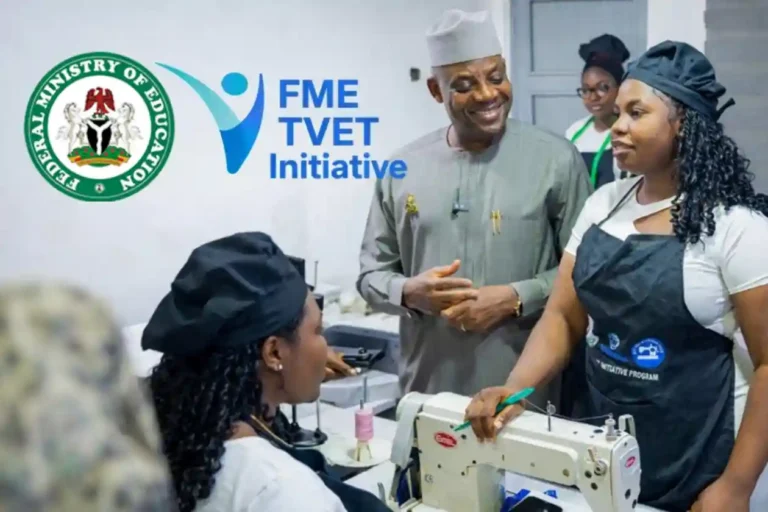
FG to Train One Million TVET Trainees in 28 Skills in 2 to 3 Years

0

The Federal Government has announced plans to train one million Nigerians in 28 vocational skills over the next two to three years as part of a renewed push to revive Technical and Vocational Education and Training (TVET) and reduce the country’s reliance on imported technical labour.

Speaking during an interview on Channels Television, the Minister of Education, Morufu Olatunji Alausa, said the programme was designed to address long-standing skills gaps that left Nigeria dependent on foreign technicians despite its large youth population.

He said, “It is very appalling that a country of over 200 million people, with more than 70 per cent of the population below the age of 30, still has to import technicians because we could not get enough skilled Nigerians, and that is why we had to move quickly to bring technical and vocational education back to the centre of our education system.”

Alausa said the government is targeting the training of one million Nigerians within two to three years, beginning with an initial batch of 250,000 trainees, explaining that the scale was intentional and necessary to close labour gaps across critical sectors of the economy.

He said, “We are targeting about one million Nigerians in the next two to three years, and we started with the first quarter of 250,000 youths because we needed to scale quickly to address the gaps we identified through proper labour analysis, not guesswork or assumptions.”

The minister said the selection of the 28 vocational skills was based on a detailed labour gap analysis, stressing that training would focus only on areas where there was clear demand from industry.

He said, “We did not just pick these skills by throwing darts in the dark. We carried out a proper gap analysis with professional consultants to identify where the shortages were, and that is why we are focusing on skills that matter to the economy.”

Alausa listed fashion and garment making, livestock and animal husbandry, computer repairs and networking, solar photovoltaic installation and maintenance, plumbing, electrical works, air conditioning and refrigeration repairs, and CNG retrofitting and maintenance as some of the priority skills under the programme.

He said trainees under the TVET programme are paid monthly stipends to support learning and remove financial barriers, while training centres are also funded per student to strengthen capacity and infrastructure.

He said, “Each trainee is getting about ₦22,500 every month while they are training, and the training centres are also being paid per student because we want to incentivise learning and make sure these centres can invest in better equipment and modern workshops.”

Alausa said technical education is now free in federal technical colleges, adding that students are not required to pay tuition or workshop fees as government has taken responsibility for funding facilities and equipment.

He said, “Today, if you are admitted into a federal technical college, the only thing you need to do is to show up to learn, because we have spent over ₦100 billion in the last two years rehabilitating workshops and upgrading facilities to modern standards.”

The minister said the renewed investment in TVET is already changing attitudes, with many young Nigerians, including university graduates, returning to acquire practical skills that match labour market needs.

He said, “What we are seeing now is that young people are coming back to learn skills, even those who already went to universities, because all they needed was access and opportunity to learn something practical that can change their lives.”

Alausa said the strategy is to deliberately train large numbers of skilled Nigerians to reduce reliance on foreign labour and strengthen productivity across key sectors of the economy.

He said, “We are deliberately saturating the system with skills because that is the fastest way to stop importing technicians, create opportunities for our youths, and ensure that the skills we train people in are the skills Nigeria truly needs going forward.”

The minister said the programme is funded under a structured framework to ensure sustainability, accountability, and continuity beyond short-term cycles.

He said, “This is a long-term national strategy built on structure, funding, and continuity, because skills development cannot succeed if it stops halfway or depends on short-term thinking or temporary programmes alone nationwide today only.”

Apply: Kwara Hospitals Board Recruitment for Doctors

The Kwara State Hospitals Management Board (KW-HMB) has invited applications for the recruitment of qualified Medical Doctors to fill vacancies across government hospitals in the state.

Openings are for Medical Officer positions requiring MBBS or MBChB qualifications, with postings to various General and Cottage Hospitals across Kwara State.

Kwara State Hospitals Management Board recruitment requires that applicants must have completed the NYSC programme or hold an exemption certificate and be fully registered with the Medical and Dental Council of Nigeria with a valid practising licence.

The requirements also include strong clinical, diagnostic and communication skills, as well as willingness to serve in any designated health facility within the state.

Resumption for candidates is immediate after recruitment.

Interested and qualified candidates are to submit an application letter addressed to the Executive Secretary, Kwara State Hospitals Management Board, Fate Road, Ilorin, with a Curriculum Vitae, copies of credentials including MDCN licence, and evidence of NYSC completion or exemption.

How to apply:

To apply, applications should be submitted in hard copy at the KW-HMB office or via Whatsapp: +2348057833718.

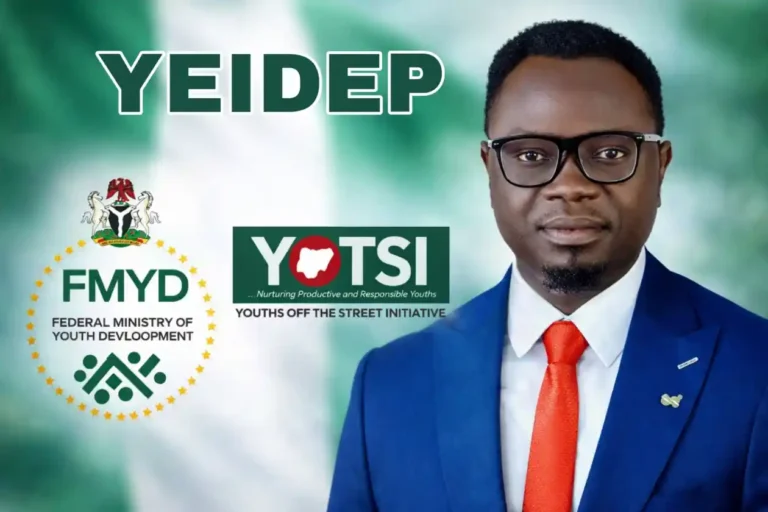
FG to begin YEIDEP Batch A training for beneficiaries by February 2026

0

The Federal Government is set to begin training and capacity-building programmes for YEIDEP Batch A beneficiaries by February 2026, following months of registration, verification, and system preparation ahead of disbursement.

The disclosure was made as officials outlined the next implementation steps of the Youth Economic Intervention and De-Radicalisation Programme, which is designed to prepare beneficiaries before any form of financial empowerment is released. The approach, according to programme officials, places emphasis on skills development, readiness, and proper structuring rather than immediate cash payouts.

Speaking on the sequencing of activities, the Minister of Youth Development, Ayodele Olawande, explained that the groundwork laid so far was intentional and necessary. He said “the past year had been deliberately devoted to planning, stakeholder coordination, and beneficiary onboarding, noting that effective preparation was critical to successful execution.” According to him, the focus has been on ensuring that beneficiaries are properly captured, verified, and positioned to make effective use of support provided under the programme.

Olawande also noted that YEIDEP is structured to move gradually from preparation to impact, stating that “2026 implementation phase is expected to mark a transition from planning to impact delivery.” This transition, officials say, begins with training and empowerment activities before any financial support is accessed.

Further details on the February timeline were provided by the Special Adviser to the Kano State Governor on Youth and Sports Development, Sani Musa Denja. He said “the first phase of the empowerment is expected to be completed by February 2026, with training and empowerment programs set to commence.” The statement places February as the period when beneficiaries will begin structured engagement under the programme.

Denja added that implementation is being handled in stages to ensure effectiveness and accountability. According to him, “everything is coming in stages, and the focus is now on empowering the youths through the banks that have already captured them.” He explained that banks are playing a central role in preparing beneficiaries for empowerment and eventual disbursement.

Highlighting the scale of financial inclusion already achieved, Denja disclosed that “some banks have already captured 300,000, over a million, 1.5 million, and almost half a million youths.” The figures reflect extensive private sector participation and indicate readiness for large-scale implementation once training phases are completed.

Officials explained that the involvement of banks is meant to strengthen transparency, ensure proper documentation, and support a smooth transition from training to empowerment. Training activities scheduled for February are expected to equip beneficiaries with the knowledge and capacity required to participate meaningfully in economic activities linked to the programme.

They stressed that while empowerment processes begin in February, financial disbursement will only follow after beneficiaries have undergone the required training and preparation stages. The programme’s phased structure, they noted, is intended to promote sustainability, accountability, and long-term impact for young Nigerians enrolled under YEIDEP.

African Startups Raise Over $3bn in 2025 to End 2-Year Decline

African startups raised over $3bn in 2025, ending the year with a funding rebound after two consecutive years of decline, according to data from Africa: The Big Deal. The figure marks a clear recovery from 2023 and 2024, when investment across the continent fell sharply. Funding had declined by 35 per cent in 2023 and a further 25 per cent in 2024, making the 2025 outcome a notable turnaround for the ecosystem.

Africa: The Big Deal, which monitors startup fundraising activity across the continent, said the performance in 2025 stood out not only because it surpassed the previous year, but also because it exceeded levels recorded two years earlier. “We’ve been monitoring the numbers closely, as always, and let’s be honest: the fact that the ecosystem has performed better in 2025 than in 2024 on startup fundraising would already be a good story in itself,” the platform said.

As of 9 December 2025, Africa: The Big Deal reported that startups had already raised more capital than they did in both 2023 and 2024, even before the year ended. “But the fact that start-ups on the continent have now raised more in 2025 than not only in 2024 but also in 2023 feels extra special,” the platform said. It added that funding in 2023 was “nearly $3bn”, while total funding in 2025 had crossed “over $3bn”.

Equity investment played a central role in the recovery. Africa: The Big Deal said that equity funding in 2025 had surpassed 2023 levels, showing that investors were increasingly willing to take longer-term positions in African startups. This shift suggested improving confidence in business fundamentals, following a period when funding activity had been more cautious and selective.

The rebound was already visible in the first half of the year. At the halfway point of 2025, African startups had raised more than $1.4bn through deals of $100,000 and above, excluding exits. This represented a 78 per cent increase compared with the first half of 2024, when about $800m was raised. June alone accounted for roughly $365m, pointing to stronger mid-year momentum.

Public market activity also returned during the year. Two fintech companies completed initial public offerings in November 2025, marking the first IPOs on the continent in more than six years. Africa: The Big Deal said the listings reflected growing maturity within the ecosystem. Exit activity also improved, including Walletdoc’s acquisition valued at more than $23m.

The data further showed that the recovery was driven by a rise in deal flow rather than a small number of unusually large transactions. Startups raised more than $1bn within the first five months of 2025, compared with about $750m during the same period in 2024, indicating broader investor participation.

Sector data pointed to fintech maintaining its lead in attracting capital. Africa: The Big Deal reported that fintech startups accounted for about 45 per cent of disclosed funding in the first half of the year. Country-level data showed that Nigeria, Egypt, Kenya, and South Africa were among the leading recipients of startup funding during the early part of 2025.