Home Blog Page 195

25000 Kano Farmers to Benefit from SAPZ Nutrition Programme

0

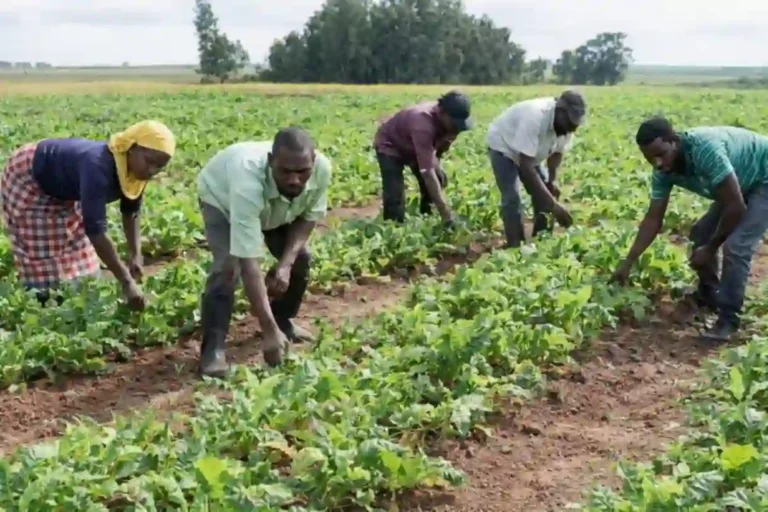
No fewer than 25,000 farmers across 16 local government areas of Kano State will benefit from nutrition-sensitive interventions under the Special Agro-Industrial Processing Zones (SAPZ) project, a programme supported by the Nigerian government and development partners.

The project is backed by the African Development Bank (AfDB), IFAD, the Islamic Development Bank, and other partners, and is focused on improving food systems and farmer livelihoods in the state.

The disclosure was made on Wednesday in Kano by the project’s Communication Specialist, Malam Shehu Babangida, during a one-day joint media sensitisation training on Behaviour Change Communication (BCC) for improved nutrition.

Babangida said SAPZ is designed to raise agricultural productivity while addressing nutrition gaps among rural households. He said the project promotes best farming practices, strengthens value chains, and encourages healthier dietary habits in farming communities.

According to him, data for about 16,000 farmers from eight local government areas have already been captured, while an additional 9,000 dry-season farmers are being targeted to benefit from the nutrition-focused component.

In her remarks, the Knowledge Manager and Communication Officer of the SAPZ Kano project, Hajiya Rabi Mustafa Sadiq, said the initiative prioritises the revitalisation of tomato, sesame, groundnut, and rice production, alongside improved processing and market access.

Also speaking, Dr. Auwalu Musa Umar, Senior Nutrition Officer at the Kano State Ministry of Health, said the government directed the Bureau of Statistics to generate updated farmer data for better planning state.

Advertisement

FG to Link TVET Trainees With Employers Via New Job Portal

7

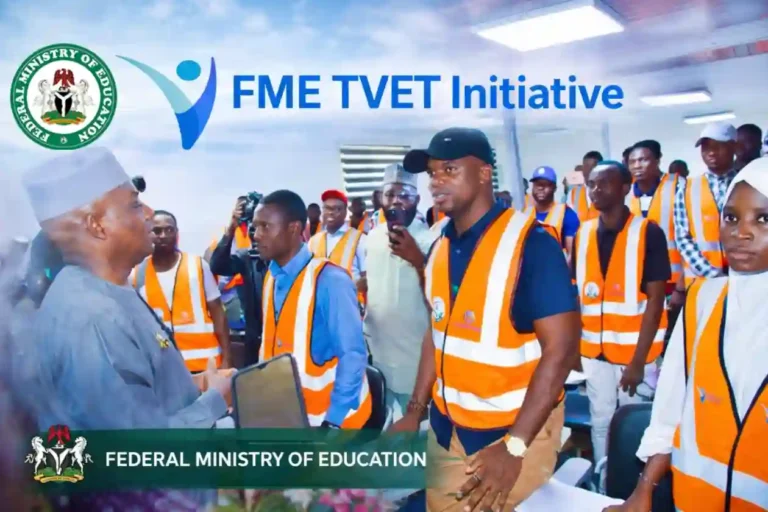
The Federal Government has announced plans to link trainees and graduates of Technical and Vocational Education and Training (TVET) programmes directly with employers through a new national job-market portal being developed with World Bank support.

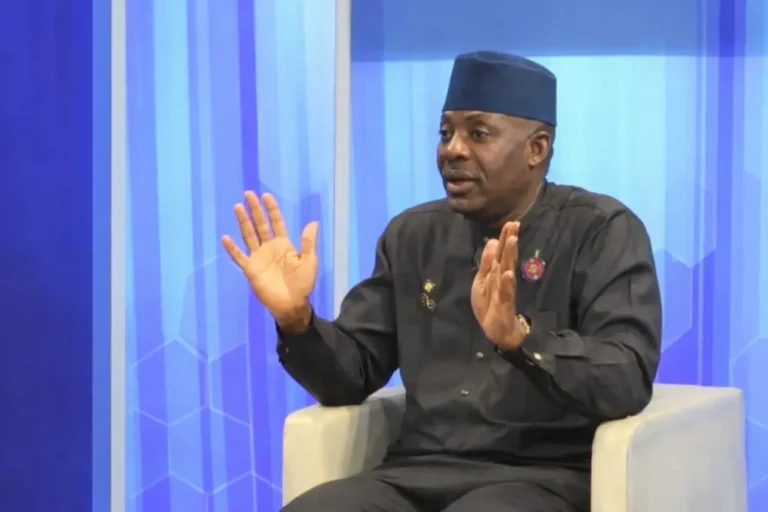
The Minister of Education, Morufu Olatunji Alausa, disclosed this during an interview on Channels Television, explaining that the initiative is designed to ensure that vocational skills training leads to actual employment rather than certificates without jobs.

Speaking during the interview, Alausa said the government deliberately built employment outcomes into the TVET reforms because training people without a clear pathway to work had failed in the past. He said, “We are not just training people and leaving them there. Beyond training these people in technical and vocational education, the second thing is that we need to get them employed. There is no point training people if they cannot get jobs, and that is why we are building a job marketplace platform.”

According to the minister, the planned portal will function as a national job marketplace specifically for Nigerians trained under TVET and related skills programmes. He said, “We are building a TVET job marketplace, an online platform, where as these trainees graduate, we will put them on that portal so that manufacturers, recruiters, and employers can go there and find skilled Nigerians who are ready to work.”

Alausa explained that the platform is not intended to operate as a general job website, but as a targeted system that directly connects skilled workers with industries that need them. He said, “It is a job market platform where labour recruiters and manufacturers can access trained Nigerians instead of importing technicians from outside the country. The whole idea is to connect skills to employment and make sure our people fill those gaps.”

The minister said the development of the portal is being done with international support to ensure credibility and sustainability. He disclosed that procurement processes are being finalised with World Bank involvement and that the platform will undergo testing before public deployment. According to him, “We are finalising the procurement with the World Bank for this platform, and we are building it properly. It will go through pilot testing and beta testing before it is opened, because we want it to work effectively.”

He added that the government is not rushing the rollout, noting that lessons from previous programmes informed the cautious approach. He said, “We are not rushing this. We want it to work, and that is why we are testing it properly before full deployment. This is about building something that will last.”

Alausa said preparations are already underway to populate the portal once it is launched, stressing that the government already has data on both trained youths and potential employers. He said, “We already have captive students who are being trained, and as they graduate, their information will be deployed onto the platform. We also have data on manufacturers and employers, and we are building a database of them so that when the portal opens, both sides are already connected.”

The minister linked the initiative to Nigeria’s long-standing reliance on foreign technical labour, describing it as a major gap the TVET reforms are meant to close. He said, “There have been situations where Nigeria had to import technicians because we could not get enough skilled Nigerians. That is not acceptable for a country of our size, and this platform is part of what will ensure that Nigerians fill those gaps.”

He further explained that the job-market portal complements the broader TVET programme, which targets training one million Nigerians in priority skills areas. According to him, “This is not just about training for training’s sake. We identified the gaps through proper analysis, and we are training people in areas where jobs actually exist, so that when they finish, there is demand for their skills.”

Alausa also addressed how information about the portal will reach the public, noting that previous TVET initiatives attracted strong interest when launched. He said, “When we open it, the information will be disseminated proactively, the same way we opened the training portal and over one million Nigerians applied within days. Nigerians are interested in opportunities that work.”

He maintained that the job-market portal reflects a shift in how government approaches skills development and youth employment. According to him, “This is about making sure that technical and vocational education delivers real value. Training must lead to jobs, and jobs must lead to dignity of work for our youths across the country.”

FG says school abductions political attempts to embarrass Tinubu

0

The Federal Government has said that the recent abductions of school children across parts of the country were politically motivated, describing the attacks as coordinated attempts to undermine and embarrass President Bola Tinubu’s administration.

The Minister of Education Morufu Olatunji Alausa stated this during an interview on , where he outlined a tougher security posture that includes treating school abductors as terrorists and deploying a technology-driven Safe School architecture nationwide.

Speaking during the interview, Alausa said the deliberate targeting of children and schools crossed a red line and required a decisive national response. He said, “When bad people in our society target the most vulnerable among us, our children and girls, they must be treated as terrorists. This should not be happening, and it will not be tolerated. Every one of these groups will be dealt with according to the rule of law and within our constitutional mandate.”

The minister said recent incidents showed signs of coordination and political intent, arguing that the attacks were designed to weaken public confidence in the government. He said, “What happened in the past few weeks had some political inclination to it. There were coordinated attacks on the sanctity of our country, and they wanted to embarrass this government. But people do not know this President. One thing he detests the most is blackmail, and he took charge.”

Alausa disclosed that intelligence existed ahead of some of the attacks, particularly in Kebbi State, and that security agencies were already engaged before the incidents occurred. He said, “Our intelligence agencies were working. I was speaking with the Director General of the DSS multiple times every day. Their intelligence gathering is very robust, and they knew what was happening. Security meetings were held at the state level, deployments were made, and information was shared.”

According to him, the government has since intensified coordinated security operations nationwide, leading to arrests and the recovery of weapons. He said, “You have seen renewed efforts across the country. People have been arrested, ammunition has been impounded, and coordinated interventions are ongoing. This response is not temporary. It will be sustained now and into the future.”

On school safety, the minister said the Federal Government has overhauled the Safe School Initiative by introducing a central command-and-control structure linked directly to security agencies. He explained, “We now have a central command and control centre for the Safe School strategy, working with the military, the police, the DSS, and other agencies. This allows us to respond faster and more effectively when there is a threat.”

Alausa said a major pillar of the new approach is the digital monitoring of schools nationwide. He said, “What we are doing now is moving all schools in the country, public and private, onto one platform. They are being geofenced so that we know what is happening in every school. We are aggregating all this data into a centralized dashboard that we can see and monitor in real time.”

He added that technology and space-based tools are being deployed to strengthen surveillance and early warning systems. According to him, “We are using robust technology, including geotagging and support from our space research agency, so that schools can be monitored and protected better. This is about prevention, not just response.”

The minister said school closures following abductions were taken strictly as precautionary security measures and were reversed as soon as conditions improved. He said, “When the children were abducted, we did the right thing by closing some schools. But within weeks, those schools were reopened. And even during that period, education did not stop. We deployed online schooling platforms, learning passports, and digital systems so there were no missed academic opportunities.”

He also said the government provided psychosocial and mental health support to affected schools. He noted, “Beyond security, we focused on counseling and psychosocial support for these children and their teachers. Protecting our children also means helping them recover from trauma.”

Alausa assured Nigerians that collaboration with state governments has been strengthened under the renewed security framework. He said, “We are working closely with subnational governments. We have written to the Inspector General of Police to identify officers responsible for Safe School initiatives at state and local government levels. These names are being integrated into a national database so everyone is connected.”

He maintained that the measures taken reflect a broader commitment to ensuring that schools remain safe spaces. According to him, “This was a wake-up call. But we are determined to do everything humanly possible to prevent the abduction of any child from school. Parents deserve confidence, and children deserve to learn in safety across Nigeria.”

Insight Award 2026 Opens ₦250,000 Grant for Pharmacy Students

0

Applications have opened for the Insight Award 2026, a national recognition and empowerment programme for undergraduate pharmacy students in Nigeria, offering a cash prize starting from ₦250,000 alongside mentorship and professional exposure.

The organisers said the annual award targets students who demonstrate academic excellence, leadership, innovation, and ethical conduct within the pharmaceutical sciences, with a focus on first-time applicants who reflect professionalism and service to humanity.

According to the programme outline, the Insight Award was created to identify and honour students who represent the next generation of pharmacists in Nigeria. Beyond financial support, beneficiaries will gain access to mentorship, networking opportunities, and national recognition aimed at supporting career growth and responsible practice.

Winners will be selected through a holistic assessment that combines academic performance, ethical behaviour, innovation, and community service. The evaluation process will be handled by an independent panel of assessors chaired by a Fellow of the West African Postgraduate College of Pharmacists.

Benefits attached to the award include a cash prize beginning at ₦250,000, recognition on a national platform, structured mentorship opportunities, professional networking, and exposure to leading experts and industry stakeholders in pharmacy education.

Eligibility requirements state that applicants must be first-time candidates for the Insight Award and must be enrolled as pharmacy students in Nigerian universities, preferably at 300 or 400 level. Applicants are also expected to show strong academic records, ethical conduct, involvement in community service, and evidence of innovation in pharmacy or related healthcare initiatives.

Assessment will be based on four pillars. These include excellence, which focuses on academic distinction at 300 and 400 levels; enriching, which covers contributions to innovation or improvement within the pharmacy field; exemplary, reflecting participation in community development or volunteer projects; and ethical, which assesses professional behaviour and conduct.

The application window opens on January 1, 2026, and will close on February 25, 2026. Applications are to be submitted online, and there is no application fee for interested students.

Organisers disclosed that the award will be conferred by Professor Azuka C. Oparah, with the presentation scheduled for the fourth quarter of 2025.

The Insight Award is organised by the Class of 2005, Faculty of Pharmaceutical Sciences, University of Nigeria Nsukka, with support from the Pharmaceutical Association of Nigeria Students National.

Students seeking more information on scholarships, career tips, and student opportunities have also been encouraged to follow IcanStudent on LinkedIn for updates.

Organisers noted that the initiative seeks to strengthen pharmacy education by rewarding integrity and innovation, while encouraging students to contribute positively to healthcare delivery and community wellbeing across Nigeria, using structured support, visibility, and peer inspiration to build confidence among future professionals within universities and training environments nationwide through inclusive recognition frameworks and transparent selection processes annually.

AA Zaura Empowers 5000 Persons with Disabilities in Kano

No fewer than five thousand persons living with disabilities (PWDs) from the 44 local government areas of Kano State have benefited from an empowerment initiative facilitated by AA Zaura. The beneficiaries gathered on Thursday at the Darul Tauhid Event Centre in Kano metropolis, where empowerment forms were officially distributed as part of efforts to promote inclusion and economic participation.

Speaking at the event on behalf of AA Zaura, Alhaji Ado Abdullahi Zaura said the initiative was aimed at discouraging street begging and encouraging self-reliance among PWDs across the state. He explained that the programme was part of a broader commitment to support vulnerable groups and ensure they are integrated into productive economic activities within their communities.

Alhaji Ado, a former Deputy Chairman of Ungoggo Local Government Area, noted that years of neglect and insufficient support from government and well-meaning individuals had forced many persons with disabilities into street begging. He stressed that the empowerment programme was designed to reverse that situation by providing sustainable means of livelihood that could help beneficiaries earn a decent living.

According to him, AA Zaura decided to intervene by offering different empowerment opportunities, including start up capital for small-scale businesses, sewing machines, scholarships, and other forms of assistance. He added that the support was structured to reflect individual needs, interests, and capacities, with attention also given to educational advancement for interested beneficiaries.

He further disclosed the introduction of a new initiative tagged the AA Zaura Aqidah Programme. Under the scheme, 27 participants will be selected from each ward across the state to benefit from additional empowerment support, with particular focus placed on youths and long-term capacity building.

Also speaking, Hon. Garba Nuhu Darki, former member of the Kano State House of Assembly representing Wudil Constituency and Director-General, Political Contact and Mobilization of the AA Zaura Movement, said the large turnout of PWDs reflected AA Zaura’s vision and leadership direction. “To me, the gathering I witnessed today reflects the direction of AA Zaura’s ambition, especially considering that this empowerment programme is exclusively for persons living with disabilities,” he said.

He urged beneficiaries to make proper use of the support provided and to continue supporting the movement to help achieve its broader political aspirations. Earlier, Chief Protocol of the movement, Abubakar Yawale, also known as Baba Yawale, said PWDs hold a special place in the heart of AA Zaura, noting that for over 20 years, AA Zaura has consistently supported persons with disabilities to improve their wellbeing and productivity.

In his remarks, Isa PA assured beneficiaries that empowerment programmes were being planned. He disclosed plans to procure hearing aids for persons with hearing impairments, walking sticks for the visually impaired, and electric wheelchairs for physically challenged persons.

Ogun Leads NFWP Scale-Up With 2,000 Women Affinity Groups

Ogun State has successfully registered a total of 2,000 Women Affinity Groups within six weeks of full project implementation, emerging as the top-performing state among those implementing the Nigeria for Women Project Scale-Up.

The milestone was disclosed in a statement issued on Thursday and signed by the State Project Coordinator, Mrs. Bolanle Fadairo. According to her, the achievement was captured on the national Project Management Information System platform, which tracks progress across participating states.

Mrs. Fadairo said the figures clearly show the strong institutional readiness of the Ogun State Government and its commitment to advancing women’s empowerment under the Scale-Up phase of the project. She noted that the pace and scale of implementation reflect deliberate planning and effective coordination across relevant institutions.

“This feat reflects the visionary leadership and unwavering support of the present administration, as well as the political will of key stakeholders involved in the project,” she said.

She commended the strategic collaboration among the Ministries of Finance, Women Affairs and Social Development, and Budget and Planning, as well as the dedication of the State Project Coordinating Unit. According to her, the synergy among these institutions has been critical to achieving rapid results at the grassroots level.

Providing a breakdown of Women Affinity Groups formation across the four implementing local government areas, Fadairo disclosed that Ijebu-Ode recorded 760 groups, representing 38 percent of the total. Ifo Local Government recorded 569 groups, accounting for 28.45 percent, while Sagamu Local Government formed 378 groups, amounting to 18.9 percent. Ado-Odo/Ota recorded 293 groups, representing 14.64 percent.

She explained that the spread of the groups shows effective community mobilisation and strong grassroots engagement across the project areas, adding that local structures were actively involved in encouraging women to participate.

The Project Coordinator reaffirmed the state’s resolve to sustain the momentum, deepen impact, and consolidate gains recorded under the NFWP-SU. She said no stone would be left unturned in positioning Ogun as a reference point for effective implementation and inclusive women-focused development across the country.

Speaking recently during a visit by nine states that came to understudy Ogun’s implementation of the NFWP-SU, the Commissioner for Women Affairs and Social Development, Adijat Adeleye, described Women Affinity Groups as the backbone of the programme.

According to her, the groups provide the primary platform through which women are mobilised, empowered, and reached at the grassroots. “They foster trust, collective savings, peer learning, and accountability, enabling women to access financial literacy, business support, and livelihood opportunities in an inclusive and sustainable way,” she said.

Adeleye added that by strengthening social capital and giving women a collective voice, affinity groups ensure effective programme delivery, ownership, and long-term impact of NFWP-SU interventions within implementing local government areas.

She noted that the present administration has consistently demonstrated confidence in women’s capacity to contribute meaningfully to economic and social development by providing policy support and institutional backing. “Although the Nigeria for Women Project commenced in 2018, the present administration not only sustained the initiative but strengthened it through the Scale-Up phase,” she said.

The Commissioner added, “I am glad to always describe Governor Dapo Abiodun’s approach as a practical demonstration of the ‘He for She’ principle. His support for women empowerment has been evident through concrete actions rather than mere declarations.”

Commissioner Empowers 300 Lagos Island Residents

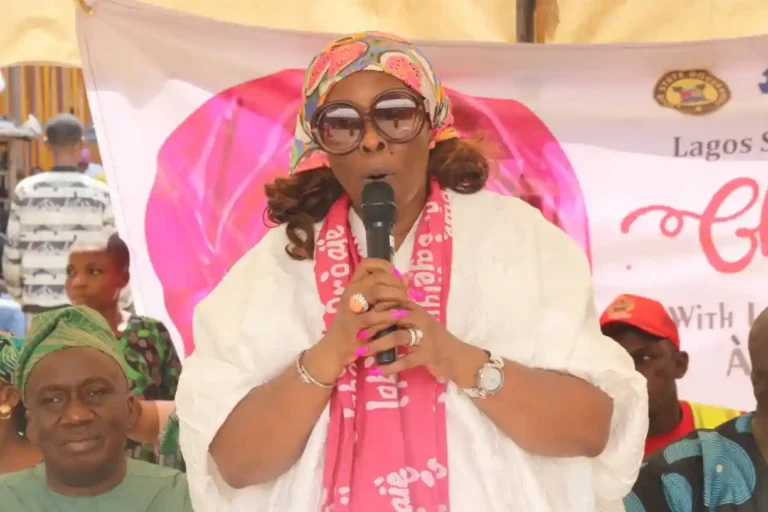
Lagos State Commissioner for Commerce, Cooperatives, Trade and Investment, Mrs Folashade Bada Ambrose, has empowered 300 residents through her HC 2.0 Community Outreach initiative, aimed at supporting small business owners, artisans, and traders across Lagos Island.

The annual outreach, held on Tuesday at Isale Eko, focused on helping residents navigate new economic realities, especially issues surrounding the recently introduced tax law. Speaking at the event, Mrs Bada Ambrose said the programme was created to equip constituents with both knowledge and practical resources needed to improve their livelihoods.

“As we prepare to step into 2026, one of the major topics of discussion has been the new tax law. We have brought a seasoned tax expert to take a session that focused on tax clarity, compliance, and trust, with practical explanations tailored for traders, artisans, and small business owners, followed by a questions and answers session,” she explained.

She noted that the session was part of broader efforts to strengthen household stability and promote female-led enterprises. “This is because women in business drive household stability and community prosperity, and opportunities such as this underscore Governor Babajide Sanwo-Olu administration’s resolve to connect policy with people at the grassroots, and reaffirm the commitment to support female-led enterprises across Lagos,” she added.

The Commissioner also used the outreach to distribute bags of foodstuffs and stipends to over 300 beneficiaries across the 10 wards of Lagos Island. She said the gesture was designed to ease the pressures of the festive season, reduce hunger, and promote community support.

Mrs Bada Ambrose further announced that Igbega Oroaje, Igbega Iteration 2.0, will commence in January 2026, noting that only members with valid voter’s cards will be registered to participate, as citizens must take their civic responsibilities seriously.

FG to Fully Roll Out Digital Economy Reforms in 2026

The Federal Government says 2026 will mark the full rollout of Nigeria’s digital economy reforms, with a shift from approvals and planning to large-scale deployment of connectivity, digital services, and skills development across the country.

This was contained in a statement issued on Thursday by Dr. ‘Bosun Tijani, Minister of Communications, Innovation and Digital Economy, as he reflected on Nigeria’s digital economy journey at the start of the year.

“As we start a new year, I want to briefly share where Nigeria stands in its digital economy journey. 2025 was an inflection year, focused on moving our digital economy from ambition to committed execution. Much of the work happened below the surface, centred on securing approvals, mobilising partners and ensuring our priorities are not only visionary, but deliverable at scale,” Tijani said.

According to him, Nigeria crossed several important thresholds in 2025 across a number of initiatives that will shape delivery in 2026.

He noted that Project Bridge, the national fibre backbone programme, progressed to World Bank Board approval, anchoring long-term investment in ubiquitous connectivity and laying the foundation for broadband expansion.

Tijani also disclosed that the NUCAP Towers Programme secured approval for the deployment of 3,700 towers to extend connectivity to unserved and underserved communities, including rural and riverine areas.

On the legal framework, he said the Digital Economy and E-Governance Bill advanced to its final stage of approval, strengthening the regulatory and policy environment required for a modern digital economy.

He added that the Federal Executive Council approved the exploration of a franchise-based transformation of Nipost, repositioning over 1,500 postal locations as a national platform for inclusive digital and government service delivery.

The minister further stated that government launched N-ATLAS, Nigeria’s national large language model initiative, as part of building sovereign artificial intelligence capability.

On skills development, Tijani said the 3MTT programme continued to expand national digital skills capacity, while the Digital Trade Desk was launched and activated through trade missions to the United States and Sierra Leone.

He said Nigeria also delivered its Digital Public Infrastructure Standards and Framework during the year, establishing a common reference for interoperable digital systems across government.

“In parallel, led from my office, we implemented the Devs in Government initiative to strengthen in-house digital delivery capability, while advancing the groundwork for a national data exchange system and initiating National Web Design Standards to improve the quality and consistency of public digital services,” he said.

Tijani explained that strengthening Nigeria’s global digital positioning was equally important, citing coordinated engagements at UNGA80, VivaTech in Paris, and the EU–Nigeria Digital Economy Open Day in Brussels.

“These efforts contributed to new partnerships and investments, including a €45 million EU–NG Digital Economy Package,” he said.

He also highlighted developments in the telecommunications sector, noting that through tariff rationalisation, tax harmonisation and protection of critical national digital infrastructure, government helped restore market sustainability and investor confidence.

“All of this work has been undertaken in alignment with the Renewed Hope Agenda of President Bola Ahmed Tinubu, whose leadership has provided the clarity and policy backing required to pursue long-term reforms,” Tijani said.

Looking ahead, he said 2026 will focus decisively on deployment and impact, adding that with key initiatives approved and partnerships mobilised, the next phase is about execution, expanding connectivity, activating service platforms, deepening talent pipelines, enabling interoperable digital public infrastructure, and translating digital capability into economic growth and improved public services.

He expressed gratitude for collaboration and said he looks forward to delivery, adding, “I remain grateful for the shared commitment that has brought us to this point and I look forward to working as we move into delivery. Happy New Year together.”

Akwa Ibom to Launch Tree Crop Revolution Across LGAs in 2026

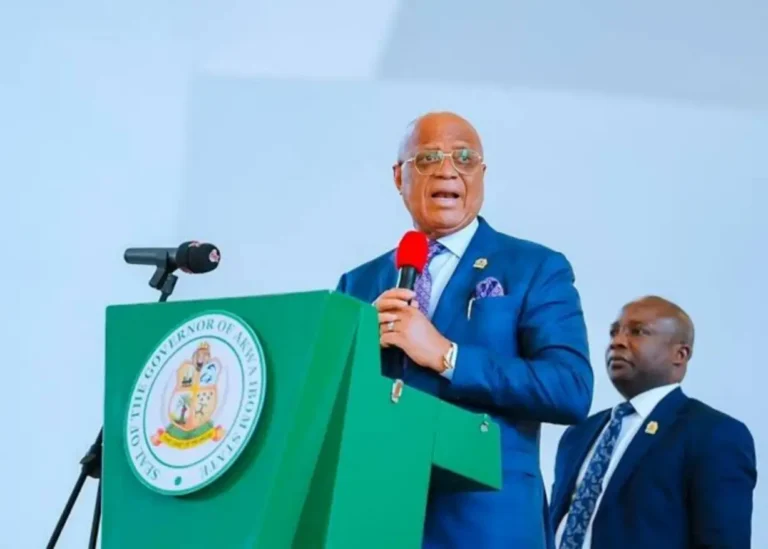
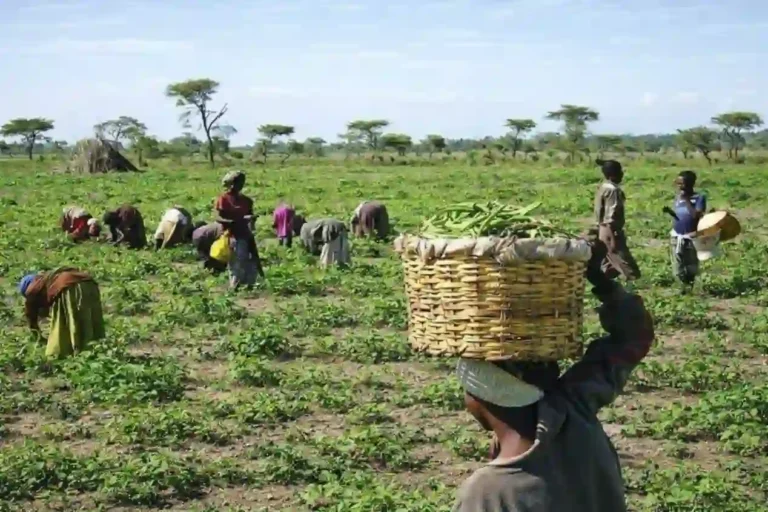
The Akwa Ibom State Government says it will in 2026 launch a Tree Crop Revolution aimed at empowering farmers across all local government areas, strengthening rural economies, and ensuring food security in the state.

The policy direction was outlined by the governor during his New Year address on January 1, where agriculture was identified as a core priority for the new year. He said the administration would continue to place strong emphasis on farming as part of efforts to protect livelihoods, stabilise food supply, and support economic activities in rural communities across the state.

According to the governor, the 2026 plan is to deepen investment in agriculture as a way of ensuring food security for residents. He stated, “We will continue to invest strongly in agriculture to ensure food security,” stressing that farming remains central to the state’s growth strategy.

The Tree Crop Revolution is expected to run across all local government areas, with a focus on empowering farmers through long-term agricultural activities. The governor explained that the initiative is designed to move beyond short-term interventions and instead help farmers build sustainable sources of income.

He said, “This year, we will launch our Tree Crop Revolution to empower farmers across all Local Government Areas to create generational wealth and strengthen our rural economy,” noting that rural development remains a key outcome of the programme.

The administration linked the Tree Crop Revolution to broader efforts aimed at strengthening rural economies, where farming remains a major source of employment. Officials say improved agricultural productivity is expected to support household incomes, reduce economic pressure on urban centres, and encourage residents to remain and invest in rural areas.

The governor also positioned agriculture as a stabilising factor for food supply in the state, especially as economic conditions continue to challenge households. By expanding tree crop farming, the government believes farmers will benefit from crops that mature over time and provide more consistent returns.

The agricultural focus outlined in the New Year address aligns with the administration’s wider rural development agenda for 2026. The government has repeatedly stated that peace, infrastructure, and agriculture are interconnected, with farming seen as a practical tool for grassroots economic inclusion.

Nasarawa Moves to Back VCDP Gains With New Agriculture Law

The Nasarawa State House of Assembly has reaffirmed its plan to create a law that will help sustain the gains of the Federal Government and International Fund for Agricultural Development–Value Chain Development Programme (VCDP) for smallholder farmers in the state.

Peter Akwe, chairman of the House Committee on Agriculture, gave the assurance on Thursday during a field visit by a VCDP team to the Barkin Abdullahi community in Lafia North administrative area.

The visit was led by Umar Tanko-Tunga, the commissioner for agriculture and chairman of the VCDP Steering Committee. Akwe said the proposed legislation would institutionalise the programme’s interventions and ensure continuity and sustainability beyond its lifespan.

He praised the VCDP for its impact on rice and cassava value chains in Nasarawa, adding that the House would “provide the necessary legal backing to protect the investments.”

Residents of Barkin Abdullahi came out in large numbers to welcome the team, which inspected ongoing projects including a bridge at the Takpa Road Rice Aggregation Centre, a cassava processing centre, and a solar-powered borehole in the community.

Speaking at the project sites, Tanko-Tunga said the visit was meant to assess the level of work done and expressed confidence that the completed projects would improve the livelihoods of smallholder farmers. He added that Governor Abdullahi Sule would continue to prioritise agriculture as “a key driver of economic development,” urging residents to take ownership of the projects and protect them from vandalism.

Also speaking, a member of the House representing Toto-Gadabuke constituency, Garba Isimbabi, restated the legislature’s commitment to passing a law that would secure the continuity of the programme.

The commissioner for women affairs and humanitarian services, Hauwa Jugbo, the administrator of Lafia North administrative area council, and the chairman of the All Farmers Association of Nigeria, Isaac Kigbu, said the interventions would help reduce poverty and raise farmers’ incomes. They urged beneficiaries to support government policies that promote agricultural productivity.

Eunice Adgidzi, the VCDP coordinator, said the visit reflected the programme’s commitment to improving the livelihoods of rice and cassava farmers. She explained that the projects align with both the Nasarawa and federal governments’ goals to enhance food security and reduce hunger and poverty.