Home Blog Page 197

Kogi First Lady’s Office Empowers Women in Agassa and Ateba Communities

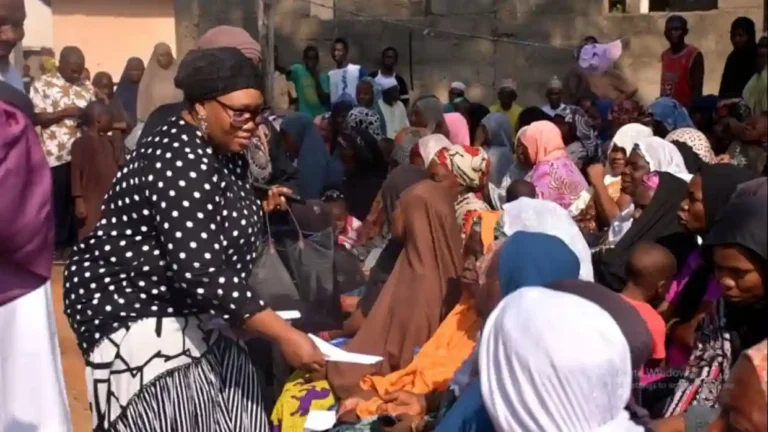
The Special Adviser to the Wife of the Kogi State Governor on Domestic Affairs, Aliyu Ohunene Nana, has carried out a women-focused empowerment programme for the Agassa and Ateba community, reaffirming the administration’s commitment to inclusive support and grassroots development as the year 2025 winds down and preparations begin for the New Year.

Speaking during the programme held in Agassa, Okene L.G.A., Hon. Nana noted that the empowerment initiative was done on behalf of the Wife of the Kogi State Governor, Hajia Sefinat Usman Ododo, as part of her end-of-year outreach and renewed hope message to citizens across the state.

She explained that the empowerment was a reflection of the First Lady’s compassion and her resolve to ensure that women and vulnerable groups are not left behind, especially as families prepare for New Year celebrations. According to her, “this support reflects Her Excellency’s concern for women and families as we approach a new year.”

The Special Adviser stated that the intervention was aimed at easing economic hardship, strengthening household resilience, and encouraging self-reliance among women, widows, petty traders, the elderly, and persons with special needs within the Agassa and Ateba community.

Items distributed during the exercise included foodstuff and cash gifts to beneficiaries, providing timely relief as the year draws to a close. Hon. Nana emphasised that the empowerment was not just a gesture of support, but a deliberate effort by the First Lady to stand with the people at a critical time and inspire hope for a prosperous 2026.

She encouraged beneficiaries to use the items and funds judiciously, noting that “true empowerment is achieved when support leads to better livelihoods and sustainable independence.” She further reassured the community that similar interventions would continue across other parts of Kogi State through her office and related initiatives.

Community leaders and beneficiaries expressed gratitude to the First Lady for the timely intervention, describing it as a source of encouragement and relief for many households. They offered prayers for God’s guidance, strength, and wisdom for her continued humanitarian work.

The event also featured special prayers for the Executive Governor of Kogi State, Ahmed Usman Ododo, former Governor Yahaya Bello, and the continued peace and development of the state as residents look forward to the New Year 2026.
Advertisement

Enugu to Open 260 Smart Green Schools with Free Meals in January 2026

The Enugu State Government will fully open all 260 Smart Green Schools across the state in January 2026, introducing digital classrooms, robotics labs, solar power, and a free daily meal for over 300,000 children.

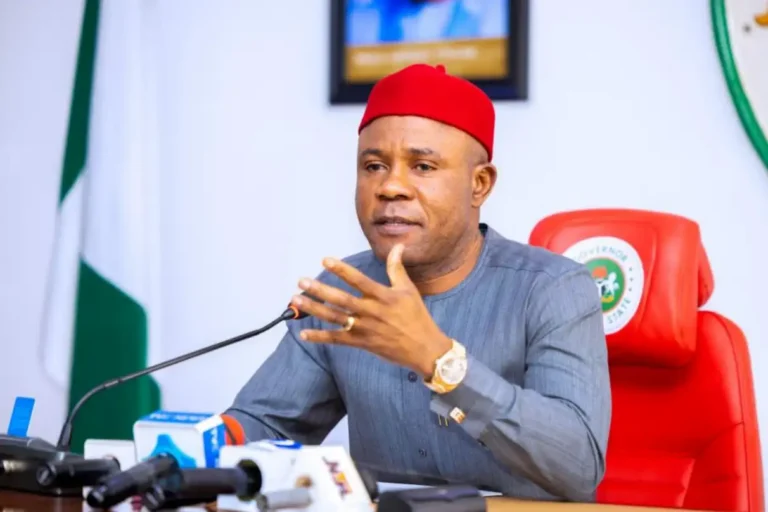
Governor Peter Mbah announced this during his 2026 New Year’s Day broadcast, where he highlighted the education sector as one of the key areas that will define the state’s development drive in the new year. He said the Smart Green Schools initiative was no longer an idea on paper but a completed reality that would begin operations across all wards in Enugu.

According to the Governor, “Today, across the 260 wards of our state, Smart Green Schools stand ready for January opening. Digital whiteboards, Robotics labs, solar power, dedicated teachers, and the largest school feeding programme in our history await the children.” He emphasized that the schools were designed to prepare Enugu’s young learners for the emerging world by integrating digital tools, science, and innovation into their daily education experience.

Governor Mbah explained that the Smart Schools represent a bold step towards ensuring every child in the state, irrespective of background, has access to quality and future-driven education. He noted that the project was a product of collective vision, patience, and partnership between the government and the people.

“These schools were once nothing more than a bold idea,” he recalled. “Three years ago, much of what we now take for granted existed only as hope in the hearts of a determined people. Yet we planted them, together. And because we stayed the course, the seed has grown into something that touches every life in this state today.”

The Governor said that beyond constructing classrooms, the goal was to transform learning outcomes through technology and practical exposure. Each Smart Green School is equipped with digital whiteboards to replace traditional chalkboards, robotics and science labs to foster innovation, and solar energy systems to guarantee constant power supply. Teachers are also being trained and redeployed to deliver modern teaching methods that reflect global standards.

Governor Mbah pointed out that the education reforms also include the largest school feeding programme in the state’s history. More than 300,000 children will benefit from free daily meals once the schools open. He described the feeding initiative as both a social and economic intervention that would support children’s nutrition, boost school attendance, and empower local food producers across the communities.

In his words, “Every urban road across our cities will be paved and upgraded, and all 260 Smart Schools will open fully, offering digital learning, science labs, renewable power and a free daily meal to more than 300,000 children.”

He said the administration’s commitment to education was driven by the understanding that human capital development is the foundation for long-term economic growth. The Smart Green Schools, he added, were part of a wider vision to make Enugu a knowledge-based economy where education and innovation lead development.

Governor Mbah further assured that the government would maintain high standards in the construction and operation of the schools, stressing that “every block of concrete and every public building must meet standards that honour our children’s children.” He urged the people to take pride in the progress made and continue to support the government in achieving inclusive development.

He also called for discipline and shared responsibility to protect and sustain the progress already made in the education sector and other areas. “We must protect what we have built, finish what we have started, and refuse complacency in any form. If we do that, the progress we see today will not fade. It will grow,” he said.

The Governor noted that 2026 would be a year of deeper work and consolidation, not a victory lap. He said the Smart Schools were just the beginning of an education revolution that would secure the future of Enugu’s children for generations. “This is the year where the work deepens, where the foundations we laid must be strengthened, where momentum must not only be sustained but accelerated,” he stated.

He urged parents, teachers, and community leaders to embrace the new system, describing education as the greatest equalizer and the most valuable inheritance any society can offer its children. Through the Smart Green Schools initiative, Enugu State aims to redefine the learning experience, close the digital divide, and empower the next generation with skills to thrive in a fast-changing world.

FG to Intensify Tax Reforms, Tackle Multiple Taxation in 2026

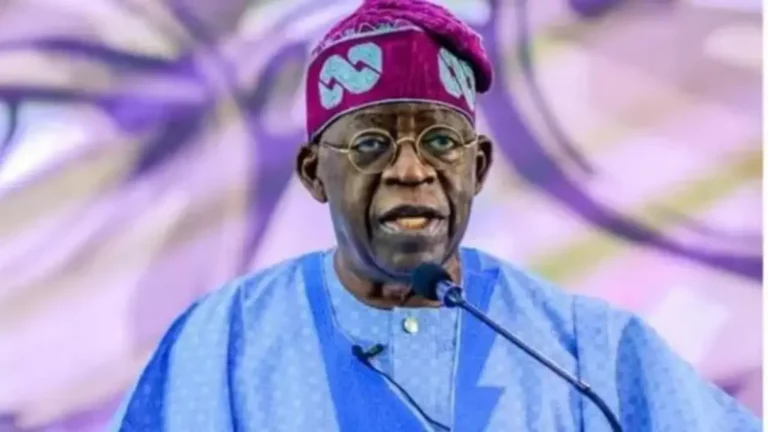
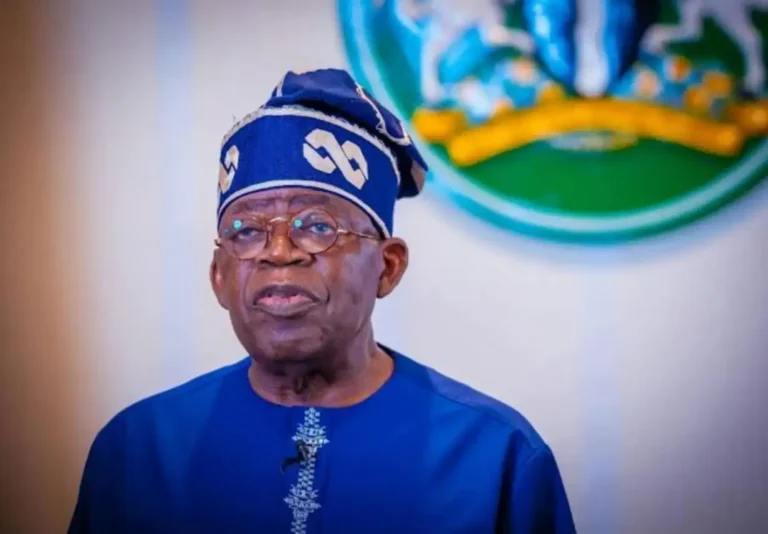
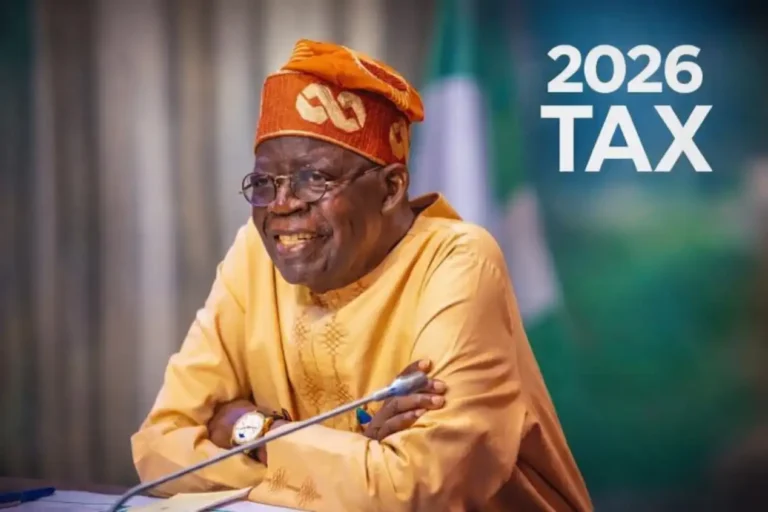
The Federal Government will in 2026 intensify the implementation of tax reforms to reduce multiple taxation and harmonise tax laws across all tiers of government, President Bola Ahmed Tinubu has said.

The President made this known in his New Year goodwill message to Nigerians, which he personally signed, as the country entered 2026. He said the government’s focus in the new year would be to deepen fiscal discipline, simplify the tax system, and ensure that the burden of taxation is fair and transparent.

Tinubu stated that the administration has already taken steps to align states and local governments with a national tax harmonisation framework, explaining that this is aimed at reducing the excessive taxes and levies imposed on citizens and businesses. According to him, the country can only achieve sustainable development if taxation becomes fair, predictable, and designed to encourage productivity.

In his words, “We are also confronting the challenge of multiple taxation across all tiers of government. I commend states that have aligned with the national tax harmonisation agenda by adopting harmonised tax laws to reduce the excessive burden of taxes, levies, and fees on our people and on basic consumption.”

The President said the new year marks an important stage in implementing tax reforms, which are designed to build a fair, competitive, and robust fiscal foundation for the country. He explained that the administration’s broader goal is to raise revenue sustainably, eliminate distortions, and strengthen the government’s capacity to finance key sectors of the economy.

“The new year marks a critical phase in implementing our tax reforms, designed to build a fair, competitive, and robust fiscal foundation for Nigeria,” Tinubu said. “By harmonising our tax system, we aim to raise revenue sustainably, address fiscal distortions, and strengthen our capacity to finance infrastructure and social investments that will deliver shared prosperity.”

The President said the government expects that as inflation and interest rates moderate, more fiscal space will open for productive investments in infrastructure, education, and healthcare. He noted that with continued discipline and effective coordination between federal and state governments, Nigeria can achieve a more efficient and people-focused tax system.

Tinubu reiterated that tax reforms are part of a broader fiscal reset meant to stabilise the economy and drive long-term growth, adding that unity of purpose and patience among Nigerians will be vital to sustaining the gains of the reforms.

Edo Philanthropist Disburses ₦100,000 Grants to Over 1,500 Women

0

A renowned Edo businessman and philanthropist, Mr. Godwin Okoduwa, has disbursed cash grants and food items to over 1,500 vulnerable women, including widows and the less-privileged, as part of his social welfare and women empowerment programme.

The empowerment programme, which took place at the Okajiesan Town Hall, Irrua, saw each beneficiary receive ₦100,000 in cash support and a bag of rice. The initiative was aimed at easing economic hardship and improving household stability among low-income families across Esan Central.

Speaking during the event, Okoduwa said, “This is Uwesan in Esan Central. What I am doing now is empowering our people; women especially. It’s a personal effort, I am not a politician. I am a businessman; in fact, a trader. I feel like giving back to the society. I have been doing it, this is not my first time.”

He explained that the initiative was created to enhance the social and economic welfare of the most vulnerable members of society, especially widows who continue to shoulder the responsibility of family survival under difficult circumstances.

His words, “The empowerment of widows and less privileged women is not just a moral duty, but a social responsibility that we take very seriously. We recognize the difficult circumstances many of these women face after losing their loved ones, including economic hardship and social exclusion,” he said.

According to him, the programme goes beyond temporary relief, as it is designed to restore dignity, hope, and opportunity for women to become self-reliant and contribute meaningfully to the development of Edo State.

“This empowerment is not just about providing financial resources, but about creating sustainable opportunities that will allow these women to support themselves and their families,” Okoduwa added.

Some of the beneficiaries described the intervention as timely and life-changing, noting that the support would help them expand their small businesses, meet family needs, and regain confidence.

Organisers, including Mrs. Okoduwa, explained that the initiative forms part of a multi-year empowerment plan, assuring that more phases will be launched to reach additional beneficiaries in the near future.

Community leaders and stakeholders at the event commended the programme for its organisation, transparency, and wide reach.

“The impact of this programme will not end today,” said Hon. Linda Omonzele. “Empowered women change the narrative of their families and communities. Today, more than 1,500 families have a stronger chance at stability.”

“For many of us, this is not just money or rice,” said one beneficiary. “This is hope. This is opportunity to build something better for our children.”

Recipients also said the rice donation provided immediate relief for families struggling with rising food prices, while the cash grant offered them flexibility to invest in petty trading, hairdressing, tailoring, farming inputs, transportation, or school fees.

Nigerian Stock Exchange Gains 48.12% as FDI Rises to $720m in 2025

Investor confidence in Nigeria improved significantly in 2025, with the Nigerian Stock Exchange posting a 48.12 percent gain and foreign direct investment rising to $720 million, according to President Bola Ahmed Tinubu.

The President disclosed this in his New Year goodwill message to Nigerians as the country entered 2026, noting that the positive market performance reflected growing confidence in Nigeria’s economic direction following reforms implemented by his administration.

In the message, Tinubu said, “In 2025, the Nigerian Stock Exchange outperformed its peers, posting a robust 48.12 per cent gain and consolidating its bullish run that began in the second half of 2023.” He explained that the performance showed renewed optimism among investors despite global economic uncertainties.

The President also highlighted a sharp rise in foreign direct investment, saying, “Foreign direct investment is also responding positively. In the third quarter of 2025, FDI rose to $720 million, up from $90 million in the preceding quarter, reflecting renewed investor confidence in Nigeria’s economic direction.”

According to Bola Ahmed Tinubu, the improved investment outlook was supported by sound monetary policy management and broader economic reforms aimed at stabilising key indicators and restoring confidence in the market.

He added that Nigeria’s foreign reserves stood at $45.4 billion as of December 29, 2025, saying this provided a substantial buffer against external shocks for the Naira and strengthened investor perception of the economy’s resilience.

Tinubu said global credit rating agencies had acknowledged Nigeria’s economic progress, noting that institutions such as Moody’s, Fitch, and Standard & Poor’s had consistently affirmed and applauded the country’s reform trajectory.

He said the government’s focus in 2026 would be to consolidate these gains and deepen reforms to attract more long-term investments. According to him, moderating inflation and interest rates would create more fiscal space and improve conditions for businesses and investors.

The President explained that stronger investor confidence would support job creation, business expansion, and access to capital for startups and SMEs, adding that the administration remained committed to policies that promote transparency, stability, and competitiveness.

Tinubu said the reforms undertaken were difficult but necessary, stressing that the positive response from investors showed Nigeria was moving in the right direction. He expressed confidence that sustained discipline and unity of purpose would help position the country for stronger investment inflows and continued market growth in 2026.

Nigeria Records Over 4% GDP Growth, Inflation Falls Below 15% in 2025

Nigeria’s economy recorded GDP growth above 4 percent in 2025, with inflation dropping below 15 percent and improved exchange rate stability, President Bola Ahmed Tinubu has said.

The President disclosed this in his New Year goodwill message to Nigerians as the country ushered in 2026, a message he personally signed and which was shared by his Special Adviser on Information and Strategy, Bayo Onanuga.

In the message, Tinubu said, “During 2025, we sustained the momentum on our major reforms. We had a fiscal reset and also recorded steady economic progress. Despite persistent global economic headwinds, we recorded tangible and measurable gains, particularly in the economy.”

He added that Nigeria closed the year on a strong note, saying, “Despite the policies to fight inflation, Nigeria recorded a robust GDP growth each quarter, with annualised growth expected to exceed 4 per cent for the year.”

The President also noted that inflation declined steadily and reached below 15 per cent, in line with government targets, while greater exchange rate stability was achieved through sound monetary policy management.

According to him, “Supported by sound monetary policy management, our foreign reserves stood at $45.4 billion as of December 29, 2025, providing a substantial buffer against external shocks for the Naira, and we expect this position to strengthen further in the new year.”

Tinubu said the improved macroeconomic indicators were part of a broader plan to build a resilient, sustainable, inclusive, and growth oriented economy as the government focuses on consolidating gains in 2026.

He said, “As we enter 2026, our focus is on consolidating these gains and continuing to build a resilient, sustainable, inclusive, and growth oriented economy that delivers tangible benefits to Nigerian households.”

The President added that maintaining trade surpluses and stronger buffers would help Nigeria withstand external pressures, while fiscal discipline and patience would remain central to economic management.

Tinubu said the progress recorded so far reinforced the belief that reforms were necessary, noting, “These achievements reaffirm our belief that the difficult but necessary reforms we embarked upon are moving us in the right direction, with more concrete results on the horizon for the ordinary Nigerian.” He said the government remains determined to deepen stability and ensure economic improvements are felt across households and businesses nationwide. In 2026, this focus will guide reform implementation across sectors nationwide.

He expressed confidence that the reforms already in place would position the country for sustained growth and stability, even as global economic uncertainties persist.

FG to Empower 10 Million Nigerians Across 8,809 Wards in 2026

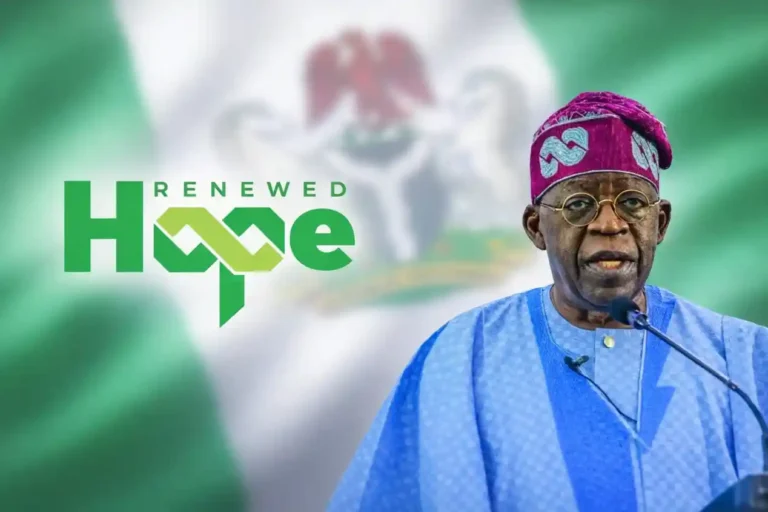
President Bola Ahmed Tinubu says the Federal Government will accelerate the implementation of the Renewed Hope Ward Development Programme in 2026, with plans to empower at least 1,000 people in each of Nigeria’s 8,809 wards and bring no fewer than 10 million Nigerians into productive economic activity.

The President disclosed this in his New Year goodwill message to Nigerians, which he personally signed and was shared by his Special Adviser on Information and Strategy, Bayo Onanuga, as citizens at home and abroad welcomed the New Year 2026. He described the year as the beginning of a more robust phase of economic growth anchored on reforms already implemented and a renewed push for inclusive development.

According to Bola Ahmed Tinubu, the ward-based programme is central to ensuring that economic growth delivers direct benefits at the grassroots. He said, “We will accelerate the implementation of the Renewed Hope Ward Development Programme, aiming to bring at least 10 million Nigerians into productive economic activity by empowering at least 1,000 people in each of the 8,809 wards across the country.”

The President explained that the programme is structured to stimulate local economies by supporting Nigerians to engage in productive work within their communities. He noted that empowering people at the ward level would help spread opportunities more evenly across the country and reduce overdependence on major urban centres for economic survival.

Tinubu said the initiative would focus on key sectors with strong potential for job creation and income generation. He stated, “Through agriculture, trade, food processing, and mining, we will stimulate local economies and expand grassroots opportunities,” adding that these sectors are critical to strengthening food security, boosting household earnings, and supporting small businesses nationwide.

The President also linked the success of the ward development programme to continued investment in infrastructure. He said the government would keep modernising roads, power, ports, railways, airports, pipelines, healthcare, education, and agricultural systems, stressing that all ongoing projects would continue without interruption to support productivity and access to markets.

He explained that the renewed focus on inclusive growth follows measurable economic progress recorded in 2025 despite global challenges. According to him, reforms implemented during the year, including a fiscal reset and improved monetary policy management, helped stabilise the economy and laid the foundation for expansion in 2026.

Tinubu further called on Nigerians to support the implementation of government programmes, noting that national development requires collective responsibility. He said citizens must stand together in unity and purpose, uphold patriotism, and serve the country with integrity to ensure that economic growth in 2026 translates into real improvements in livelihoods at the community level.

Ekiti Set to Commence Special Agro Processing Zone Operations in 2026

The Ekiti State Government has announced that operations of the Special Agro Processing Zone will commence very soon, as part of efforts to deepen agricultural industrialization and expand economic opportunities across the state in 2026.

Governor Biodun Oyebanji made this known during his 2026 New Year State Broadcast, where he said preparations for the zone are already in place and aligned with the administration’s broader development agenda in Ekiti State.

According to the governor, the Special Agro Processing Zone is designed to strengthen agricultural value chains by supporting the processing of farm produce within the state, rather than exporting raw materials outside Ekiti.

“Our vision for the actualization of Ekiti Knowledge Zone is already on track as infrastructural development has commenced. The Special Agro Processing Zone would also take off very soon,” Oyebanji said.

He explained that the zone is expected to support farmers, agro processors, and investors by providing an enabling environment for large scale processing, storage, and distribution of agricultural products.

Oyebanji noted that the project will complement existing agricultural programmes and infrastructure initiatives already underway across the state, especially those aimed at improving rural access and youth participation in agriculture.

The governor said the commencement of operations at the zone would help reduce post harvest losses, increase farmers’ earnings, and create jobs in processing, logistics, packaging, and allied services.

He added that the Special Agro Processing Zone is part of the government’s strategy to move Ekiti from subsistence farming to a more business driven agricultural system.

Oyebanji stressed that agriculture remains central to the state’s economic growth plan, adding that value addition and processing are key to sustaining food availability and stabilizing prices.

He assured residents that the government will continue to work with relevant partners to ensure the zone operates efficiently and delivers tangible benefits to the people.

The governor also reaffirmed his administration’s commitment to policies that encourage private sector participation, investment attraction, and inclusive economic growth.

He said the initiative aligns with long term development goals statewide.

Ekiti Govt to Expand Bring Back Youths in Agriculture Programme

The Ekiti State Government has announced plans to expand investments in the Bring-Back-the-Youths-in-Agriculture programme by increasing its scale and the number of beneficiaries in 2026, following what it described as strong economic and social outcomes from the initiative.

Governor Biodun Oyebanji disclosed this during his 2026 New Year State Broadcast, where he said the results recorded so far have encouraged the government to commit more resources to the programme in the new year.

According to the governor, the agriculture renewal policy, which focuses on bringing youths back into farming through structured projects and livestock hubs across several locations in Ekiti State, has continued to deliver positive outcomes in food production, employment and income generation.

“Our agriculture renewal policy of bringing back the youths in agriculture projects, including the various livestock hubs and the YSJ agriculture programmes, has continued to yield excellent result,” Oyebanji said.

He explained that the programme has contributed to massive food availability across the state, leading to what he described as an unprecedented reduction in headline inflation on food items, reversing Ekiti’s long-standing position as one of the states with high food prices in the South West.

The governor further disclosed that just about two weeks ago, the state government distributed N1.4 billion as profit for the year to participating youths under the Bring-Back-the-Youths-in-Agriculture project.

“I distributed N1.4 billion as profit for the year to the participating youths in the Bring-Back-the-Youths-in-Agriculture project. This is a significant micro-economic policy success for us as a state,” he said.

Oyebanji noted that the programme has already created new income earners and helped previously unemployed youths become financially independent through agriculture.

With the encouraging outcomes, the governor said his administration is determined to invest further in the project and expand its lines and cohorts in 2026.

“With the exciting result that we have received, I am more than encouraged to invest further in the project and to further expand the lines and cohorts in the new year,” he added.

He encouraged more youths across the state to key into the programme and take advantage of the opportunities it offers as part of the government’s broader economic empowerment strategy.

Ekiti to Begin RAAMP Phase Two, Expand Rural Road Projects in 2026

The Ekiti State Government has announced that the second phase of the Rural Access and Agricultural Marketing Project (RAAMP) will commence very soon, as part of its 2026 development agenda aimed at improving rural connectivity and boosting agricultural productivity across the state.

Governor Biodun Oyebanji disclosed this during his 2026 New Year State Broadcast, where he said the project has already delivered significant impact in its first phase, with rural roads currently under construction in different parts of Ekiti State, totaling about 100 kilometers.

According to the governor, some of the RAAMP roads have already been completed, while others are at various stages of completion, providing easier access for farmers, traders, and rural dwellers to markets, health facilities, and other essential services.

“The Rural Access and Agricultural Marketing Project (RAAMP) is currently constructing rural roads in different parts of Ekiti, totaling about 100 kilometers. Some of the roads have been completed, while some are at different levels of completion. The second phase of the project will commence very soon,” Oyebanji said.

He explained that the project aligns with his administration’s broader strategy to strengthen the rural economy, reduce post-harvest losses, and support food distribution by improving access roads linking farming communities to towns and markets.

Oyebanji noted that the state’s investment in rural infrastructure is designed to complement other agricultural initiatives, as reliable road networks remain critical to agricultural value chains and rural development.

The governor assured residents that the second phase of RAAMP would expand the scope of rural road construction to cover more communities across the state, ensuring that development is evenly spread.

He added that the government remains committed to delivering people-focused projects that directly impact livelihoods, particularly in rural areas where agriculture remains a major source of income.

Oyebanji stressed that his administration would continue to monitor the quality and pace of work on RAAMP projects to ensure value for money and timely delivery.

He also thanked Ekiti residents for their support and cooperation, stating that sustained collaboration between the government and the people has made it possible to implement large-scale infrastructure projects despite economic challenges.

The governor reaffirmed that rural development would remain a priority in 2026, as the state builds on achievements recorded in 2025. He said improved access would enhance incomes statewide impact.