Home Blog Page 199

Fidelis Ayebae Gains $4.2m as Fidson Shares Rally on NGX

0

Nigerian pharmaceutical entrepreneur Fidelis Ayebae has gained about $4.2 million from his investment in Fidson Healthcare Plc after a renewed rally in the company’s shares on the Nigerian Exchange (NGX), which has increased the market value of his stake in recent weeks.

Ayebae, founder and chairman of Fidson, owns a 33.1 percent stake in the company, equivalent to about 759.6 million shares. Since mid-December, the value of that holding has risen from N30.39 billion, estimated at $20.99 million, to N36.46 billion, or roughly $25.19 million, translating to a gain of N6.08 billion, valued at about $4.2 million.

The increase follows a sharp movement in Fidson’s share price on the NGX. The company’s shares have climbed by around 20 percent since December 15, moving from N40 to N48 per share. The rally has pushed Fidson’s market capitalisation above $70 million, placing it among the stronger performers in Nigeria’s pharmaceutical segment in 2025.

The recent gain builds on earlier growth recorded this year. Between January 1 and November 10, the value of Ayebae’s stake rose by about $12.95 million, increasing from N11.77 billion, valued at $8.2 million, to N30.39 billion, estimated at $21.15 million, as investor interest in the company strengthened.

Fidson was founded in 1995 by Ayebae as an importer of medicines for Nigerian hospitals and pharmacies. The company began local manufacturing in 2002, a move that shifted its operations from trading to domestic production. In 2005, Fidson became the first Nigerian pharmaceutical company to produce antiretroviral drugs, supporting national HIV treatment programmes.

In 2025, Fidson reported strong financial performance, with revenue rising sharply and profit after tax increasing significantly for the nine months ended September 30. The company also launched a N21 billion rights issue, offering 600 million new shares at N35 each to fund capacity expansion and support future growth. Year to date, Fidson shares have gained about 210 percent. The developments have continued to attract attention from investors.

Advertisement

NCDMB Opens 2025/2026 Technology Innovation Challenge for Oil and Gas

0

The in December 2025 commenced the Nigerian Content Research, Innovation and Technology Challenge 2025/2026 with a call for proposals from individuals, research institutions, academia, oil and gas industry suppliers, and members of the public with research innovations.

The Board said the initiative is aimed at identifying and developing new technologies that can solve specific challenges within the oil and gas industry and its linkage sectors, while also supporting local innovation and capacity development.

According to the NCDMB, submitted proposals must align with approved thematic areas and priority industry challenges. These include Geological and Geophysical Studies, Local Materials Substitution Studies, Technology Development Studies, Health, Safety and Environmental Studies, Engineering Studies, and Renewable Energy.

For Geological and Geophysical Studies, the Board stated that proposals should focus on solutions related to exploration, big data management, and real time logging data processing. Under Local Materials Substitution Studies, applicants are expected to present ideas on sustainable materials for environmental remediation, materials for cryogenic technology used in liquefied natural gas LNG and refinery operations, as well as local materials suitable for ultra high temperature pressure cementing.

The NCDMB further explained that Technology Development Studies should cover innovations in denationalisation technology, application of Internet of Things to exploration and production activities, and condensate refining technology. Proposals under HSE Studies are expected to address carbon capture utilisation and storage technology to reduce greenhouse gas emissions, depollution and produced water management systems, and hydrogen production techniques that enhance carbon dioxide capture.

In the area of Engineering Studies, proposals are required for technology solutions focused on enhanced oil recovery, refinery unit technologies to improve efficiency, laboratory analytical equipment for experiments and materials testing, and drilling technology, instrumentation, and control systems.

For Renewable Energy, the Board said proposals are expected in solar energy technologies, wind energy solutions, and energy storage systems such as battery technologies, hydrogen storage, thermal storage, and molten salts.

The Board stated that proposals should not exceed 1,500 words and must be submitted via email to info@tiic.com.ng not later than one month from the date of publication. It added that submissions should follow a specific format covering company or institution name, thematic area, title and description of innovation, objectives, vision and mission, team structure, funding model and budget estimate, marketing plan, and risk analysis.

At the first stage of the competition, the top 30 proposals will be selected and assigned mentors to guide the teams in developing demos and presentations. The number will be reduced to 10 at the second stage and further to five finalists on the final day.

According to the Board, “the innovators will present their business pitches/demos to corporate venture capitalists to invest, drive innovation, and expand market reach, while helping emerging business grow.”

It added that prizes will be awarded to the top five winners in the form of cash, mentorship, and media coverage, while the top 10 participants will be onboarded into the TIIC at the Nigerian Content Tower for further guidance toward commercialisation.

FG Revalidates Ondo Deep Sea Port Licence to Boost Trade and Investment

0

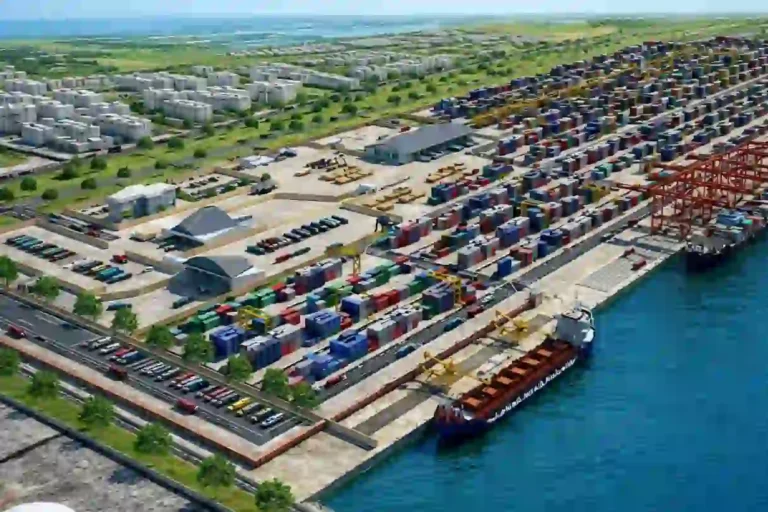
The federal government says it has taken a decisive step to unlock Ondo State’s maritime and industrial potential with the revalidation of the Ondo Deep Sea Port licence, signalling fresh momentum for trade, jobs, and investment in the South-West state.

The Minister of Marine and Blue Economy, Mr Adegboyega Oyetola, formally presented the revalidated certificate to Governor Lucky Aiyedatiwa of Ondo State at his office in Abuja, describing the move as a major milestone and a strategic federal intervention aimed at harnessing the state’s vast blue economy resources.

Mr Oyetola said the deep sea port would serve as a catalyst for trade expansion, industrialisation and regional economic integration, aligning with the Federal Government’s broader economic diversification agenda.

“The Ondo Deep Sea Port is not just a project for Ondo State; it is a national asset that will boost Nigeria’s competitiveness in global shipping, ease congestion at existing ports and create a new hub for exports, manufacturing and job creation,” he said.

He added that the port’s Atlantic corridor location would strengthen non-oil exports, improve the ease of doing business and attract foreign direct investment to the South-West region and the wider Nigerian economy.

According to the minister, the revalidated licence provides clarity and confidence for investors, reinforcing Nigeria’s readiness to support and sustain large-scale maritime investments.

Receiving the certificate, Governor Aiyedatiwa thanked President Bola Tinubu and the Federal Executive Council (FEC) for approving the revalidation, describing it as the outcome of years of sustained effort by the state.

He explained that the original licence faced delays due to a naming error in the initial business case, which made it necessary for the state to submit a fresh and comprehensive application.

“This revalidated certificate is a turning point for Ondo State, affirming our vision for industrial growth, job creation and sustainable development anchored on our coastline and maritime assets,” the governor said.

Mr Aiyedatiwa noted that his administration was prioritising key supporting infrastructure, including the dualisation of access roads to industrial zones and other modernisation projects.

He added that plans were underway for residential, educational and hospitality facilities to support the expected influx of investors, skilled workers and businesses.

The governor reaffirmed that the deep sea port and its ancillary projects would drive inclusive development across all local government areas of Ondo State.

Nigeria’s Solid Minerals Revenue Projected to Hit N70bn in 2025

0

The federal government has projected that revenue from Nigeria’s solid minerals sector will rise to N70 billion in 2025, up from N38 billion recorded in 2024. This was disclosed by Segun Tomori, special assistant on media to Dele Alake, the minister of solid minerals development.

In a statement on Tuesday, Tomori said the sharp increase in revenue from the solid minerals sector reflects the progress made under the administration of President Bola Tinubu.

“From a paltry N16bn generated from the sector in 2023, it moved to N38bn in 2024 and now set to cross the N70bn mark under the stellar stewardship of the Minister of Solid Minerals Development, Dr. Dele Alake,” he said.

Tomori explained that since assuming office, Alake has redirected global attention to Nigeria’s mining industry in a way that has not been seen before. He said the minister’s approach, guided by a 7-point agenda, has driven major reforms across the sector.

“Armed with the now famous 7-point agenda, he hit the ground running with reforms that included the revocation of 1,633 licenses for default in payment of annual service fees in late 2023, while another 924 dormant licenses were revoked early 2024 to free up space for serious investors,” he said.

He also noted that “Guidelines for Community Development Agreements (CDAs) were revised to make consent of host communities an integral part of license applications process whilst the elephant in the room – illegal mining, is being tackled with the establishment of the mining marshals in 2024.”

According to him, the ministry has made major progress in curbing illegal mining activities. “Over 300 illegal miners have been apprehended, 150 are undergoing prosecution, and 98 illegal mining sites have been recovered within just over a year,” he stated.

Tomori revealed that the ministry is preparing to deploy satellite surveillance technology to monitor mining operations across the country in 2026. The initiative, he said, would further enhance the efficiency of the mining marshals.

He also pointed out that despite mining being on the exclusive legislative list, the minister introduced a creative system that allows states to participate through cooperative federalism. “Though mining belongs to the exclusive legislative list, the minister creatively introduced the principle of cooperative federalism to encourage States to apply for mining licenses and operate as Limited Liability Companies,” he said.

“This has produced tremendous results as several states now have Joint Venture (JV) partnerships that has yielded several investments in Nasarawa, Kaduna, Abuja, Oyo amongst others,” he added.

Tomori stated that new investments are emerging as a result of these policies. “Today, Lithium factories are springing up, a $400m rare earth metals plant is in the offing and it is estimated that close to $1.5bn Foreign Direct Investment (FDI) has been attracted to the sector since 2023.”

He further said that the minister’s focus on local value addition for mineral exports has attracted attention across Africa. According to him, “The minister’s push for local value addition in mineral exports has gained continental traction, leading to the establishment of the Africa Minerals Strategy Group (AMSG) following sustained advocacy.”

Tomori also highlighted the ministry’s introduction of the Nigeria Minerals Decision Support System (NMRDSS), a web-based platform that provides interactive mapping, geological data, and infrastructure details to attract investment and improve the ease of doing business in the mining sector.

He said the ministry is confident that the solid minerals sector will surpass the N70 billion mark in 2025 and continue to strengthen reforms in 2026, aiming to make the sector a key contributor to Nigeria’s GDP, given its vast untapped potential.

NDDC Submits ₦1.75tn 2025 Budget to National Assembly

0

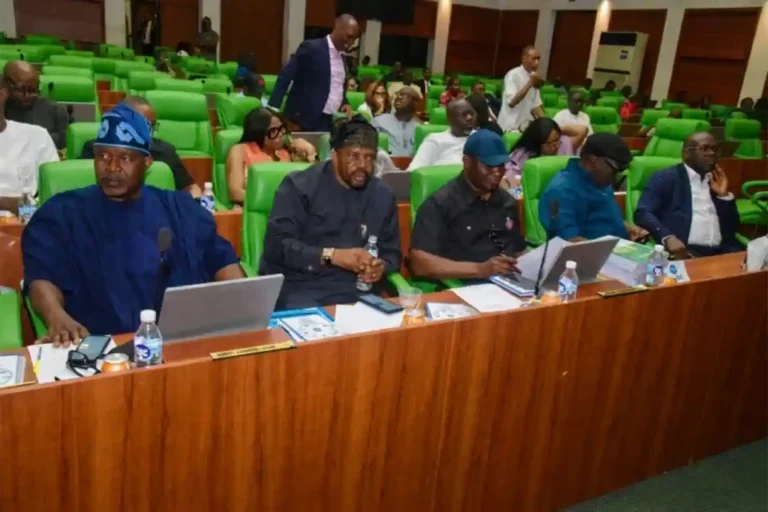
The Niger Delta Development Commission (NDDC) has presented a proposed ₦1.75 trillion budget for the 2025 fiscal year to the Senate and House of Representatives Committees on NDDC at the National Assembly complex in Abuja.

The proposal was submitted to the Senate Committee on NDDC, chaired by Senator Asuquo Ekpenyong, and the House Committee on NDDC, led by Hon. Ibori-Suenu Erhiatake.

Presenting the budget, NDDC Managing Director, Dr. Samuel Ogbuku, said the 2025 appropriation, themed “Budget of Consolidation,” builds on the achievements recorded under the 2024 Budget of Renewed Hope.

In a statement signed by the Director of Corporate Affairs, Seledi Thompson-Wakama, on Wednesday, Ogbuku explained that the new budget reflects the Commission’s deliberate shift from transactional interventions to transformational development, in line with President Bola Ahmed Tinubu’s Renewed Hope Agenda.

Ogbuku expressed appreciation to President Tinubu for the confidence reposed in the current NDDC management and acknowledged the Supervising Minister of Regional Development, Engr. Abubakar Momoh, for providing strategic direction to the Commission.

He said the improving credibility and public perception of the NDDC were the result of synergy among the Commission’s Board and Management, the Ministry of Regional Development, and the National Assembly, adding that legislative oversight remained a partnership rooted in accountability, transparency, and measurable impact.

Ogbuku noted that the proposed 2025 estimate represents a 9 per cent reduction from the ₦1.985 trillion proposed and appropriated for the 2024 fiscal year.

He informed the Senator Asuquo Ekpenyong-led committee that the ₦1.75 trillion budget is expected to be funded from several sources. These include ₦776.5 billion from the Federal Government, ₦752.8 billion from oil companies, ₦109.4 billion in revenue brought forward from 2024, ₦53.67 billion in recoveries from federal government agencies, and ₦8.35 billion from internally generated revenue.

A breakdown of the proposal showed that ₦1.631 trillion was earmarked for project execution across the Niger Delta region, while ₦223 billion was allocated to internal projects of the Commission.

Personnel cost was pegged at ₦47.56 billion, while ₦49.929 billion was set aside for overhead expenditure.

Speaking on the performance of the 2024 budget, Ogbuku told the committee that as of October 31, 2025, the Commission’s actual revenue stood at ₦1.985 trillion, surpassing the initial target of ₦1.911 trillion.

He attributed the improved revenue performance mainly to the extension of the 2024 budget implementation through December 31, 2025.

The Managing Director also disclosed that the Commission has discontinued line-item budgeting in favour of sector-based allocations, a move he said was designed to reduce project delays and improve operational efficiency.

Following the presentation, the committees held a closed-door session with NDDC management to scrutinise the budget proposal alongside reports on ongoing and completed projects across the Niger Delta.

Addressing journalists after the meeting, the Senate Committee Chairman, Senator Asuquo Ekpenyong, announced that the committee would conduct a comprehensive oversight tour of NDDC projects in the nine Niger Delta states in January 2026.

He said the committee, while critically reviewing project reports during the closed session, resolved to verify the claims through physical inspection of projects on the ground.

“At the closed-door session, critical looks were taken at ongoing and completed projects by the commission, and the committee resolved to carry out an extensive oversight tour across the nine Niger Delta states in January next year,” Ekpenyong said.

He added that although the NDDC recorded notable project delivery in the outgoing fiscal year, expectations remained high for improved performance in the coming year, particularly in ensuring value for money and timely project completion.

Similarly, the House of Representatives Committee on NDDC stated that the Commission’s proposed ₦1.75 trillion 2025 budget must translate into tangible development outcomes for communities across the Niger Delta.

The Chairman of the Committee, Hon. Erhiatake Ibori-Suenu, gave the assurance during the budget defence session, warning that lawmakers would not treat the proposal as a routine legislative exercise.

According to her, the budget represents renewed hope and opportunity for millions of people in the oil-producing region and must be people-centred, transparent, and aligned with national development priorities.

She added that while the committee commended the Commission’s ongoing reform efforts, legislative support would be tied strictly to performance and verifiable results on the ground.

NCDMB, Augoe and Sons Train 40 Youths in Welding Fabrication

0

The Nigerian Content Development and Monitoring Board (NCDMB), in collaboration with Augoe and Sons Company NIG Ltd, has successfully concluded a world-class training programme on Welding Fabrication and Qualification. The one-month programme was designed to equip 40 youths with specialized skills in welding fabrication.

During the training, participants received hands-on instruction and practical experience aimed at improving their technical competence and career readiness. The company representative of Augoe and Sons, Idi Presley, expressed appreciation to President Bola Tinubu for his continued support to the NCDMB, under the leadership of Engr. Felix Omatsola Ogbe.

At the end of the programme, certificates were issued to all participants, who expressed excitement about the knowledge and skills they gained. The initiative highlights NCDMB’s ongoing commitment to developing local capacity and empowering Nigerian youths to take up key roles in the oil and gas industry.

The NCDMB has consistently promoted Nigerian content through several empowerment initiatives, including the Oil and Gas Field Readiness Training Programme, which focuses on preparing young Nigerians with practical, industry-relevant skills in areas of high demand across the energy sector.

FG Confirms 38 Ministries, Depts Paperless in Federal Civil Service

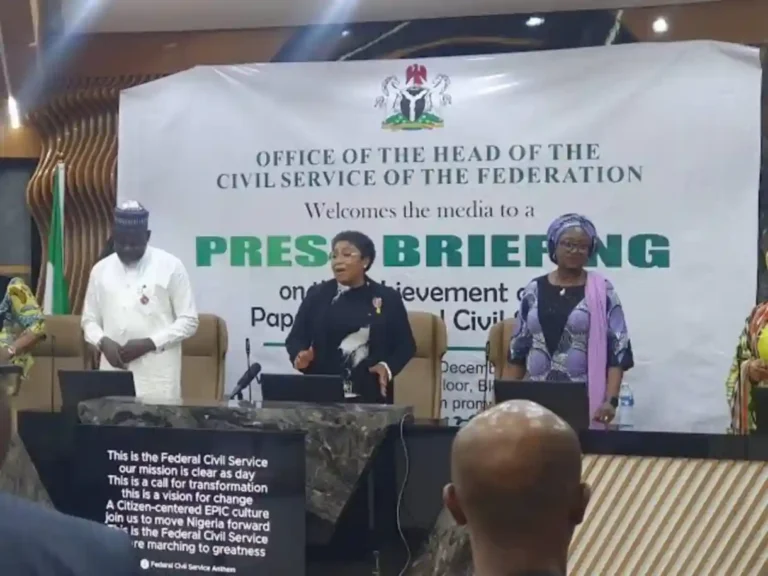
33 Ministries and five Extra-Ministerial Departments (MEMDs) have completed the implementation of presidential and administrative directives to operate a fully paperless system across the Federal Civil Service, according to an announcement by Mrs. Didi Walson-Jack, Head of the Civil Service of the Federation (HCSF).

Walson-Jack made the disclosure on Wednesday during a media briefing in Abuja, describing the achievement as a major turning point in the way government business is conducted and managed within the public service.

According to her, the development marks a decisive milestone in governance, noting that the era of missing, lost, or misplaced official files has come to an end, thereby improving efficiency, accountability, and service delivery across Ministries, Departments, and Agencies.

She said, “This milestone, therefore, marks a bold transition from a paper-based legacy bureaucracy to a modern, accountable, and digitally enabled public service. Simply put, all Ministries in the Federal Civil Service are now paperless.”

The Head of Service explained that the paperless initiative has now been implemented across thirty-eight MEMDs, comprising thirty-three Ministries and five Extra-Ministerial Departments. These include the State House, the Office of the Secretary to the Government of the Federation, the Office of the Head of the Civil Service of the Federation, the Federal Civil Service Commission, and the Office of the Accountant-General of the Federation.

As part of the policy’s core components, Walson-Jack highlighted a major breakthrough in official communication following the expansion of government email accounts for civil servants nationwide.

She stated, “As a key part of the paperless policy, the Federal Civil Service achieved a significant breakthrough in official communication by expanding Government Email accounts.”

Providing figures, she noted that in August 2024, fewer than 20,000 official email addresses existed for civil servants, but by Wednesday, December 31, 2025, more than 100,000 official email accounts had been created on the GovMail platform.

She said all civil servants now operate with official government email identities, which ensures secure, professional, and auditable communication across the service. According to her, this development strengthens government control over official correspondence, improves responsiveness among MDAs, and reduces dependence on unofficial communication channels.

Walson-Jack further disclosed that the adoption of GovMail is saving the Federal Government billions of naira annually by cutting down on fragmented, agency-specific external email subscriptions and licensing costs, while delivering better value for public funds.

To consolidate the gains of the paperless policy, she announced that the 38 Ministries and Extra-Ministerial Departments will no longer accept paper submissions through their physical registries.

She said, “All correspondence to the MEMDs should now be sent to the official registry email addresses, which can be found on the Office of the Head of the Civil Service of the Federation website.”

In addition, she revealed that citizens can now track correspondence submitted to individual MEMDs through the Federal Civil Service Paperless portal, a move aimed at improving transparency and public trust.

Following the completion of these milestones, Walson-Jack said her office would expand the implementation to all Departments and Agencies, while sustaining progress through post-implementation optimisation, compliance monitoring, cybersecurity enhancement, and further digitisation of workflows.

She also disclosed plans to build the capacity of civil servants in 2026 to ensure practical, hands-on, and sustainable adoption of the new digital systems across the service.

According to her, “There will be significant capacity-building to institutionalise the ECM process throughout the Service.”

She explained that with the support of the United Nations Development Programme (UNDP), the OHCSF will launch a service-wide Training-of-Trainers programme in January 2026. The programme will train 500 trainers, who will in turn train officers across Ministries and other MEMDs.

She said the training would promote effective use of digital tools such as Service-Wise GPT, the Online Compendium of Federal Circulars, GovMail, and other digital transformation systems, ensuring officers can confidently utilise them.

Reflecting on the journey so far, Walson-Jack said the move toward a paperless Federal Civil Service has been a deliberate reform effort led by successive Heads of Service.

She recalled that in 2017, under Mrs. Winifred Oyo-Ita, the Federal Civil Service Strategy and Implementation Plan 2017–2020 was launched, formally recognising digitalisation as a reform priority.

She added that the foundation was strengthened under Dr. Folasade Yemi-Esan through FCSSIP 2021–2025, which expanded the focus to broader digital content services.

On assuming office in August 2024, Walson-Jack said only three MEMDs had achieved partial paperless operations, underscoring the scale of progress now recorded.

FG, IFAD to Support Agribusiness Value Chains in Niger Delta from 2026

0

The Federal Government/International Fund for Agricultural Development (IFAD)-Livelihood Improvement Family Enterprises in Niger Delta (LIFE-ND) has announced plans to support end-to-end value chain development from production to processing, packaging, and export readiness beginning in 2026.

Dr Abiodun Sanni, National Project Coordinator for FG/NDDC/IFAD-LIFE-ND, disclosed this on Wednesday in Abuja during New Year commemorations, where he reaffirmed the project’s commitment to rural economic transformation and inclusive agripreneurship across the Niger Delta.

“Our vision for 2026 is to transform the rural economy in the Niger Delta, ensuring prosperity and equitable benefits for the rural population through sustainable agribusiness and value addition across commodity lines,” Sanni said.

He explained that the project would focus on creating an enabling environment for innovative beneficiaries and agripreneurs, supporting initiatives that strengthened food security while promoting inclusive economic growth and improved livelihoods for rural communities.

According to him, key priorities for 2026 include scaling up the incubation model, strengthening business development services, and improving access to finance, warehouse facilities, warm and cold chain logistics, as well as collective marketing opportunities for beneficiaries.

“The project will promote sustainable and climate-resilient agricultural practices by encouraging agroecology, water-use efficiency, soil health, and reduced post-harvest losses, ensuring that production is environmentally sound and economically beneficial for smallholder farmers,” he said.

Sanni added that LIFE-ND would foster the adoption of climate-smart technologies, digital decision-support tools, and stronger inclusion of youth, women, and marginalised groups in leadership roles, to ensure equitable access to agribusiness opportunities across the Niger Delta.

He further explained that expanded hands-on training programmes would be rolled out to provide incubatees, incubators, and mentorship networks with practical, market-driven curricula covering business planning, financial literacy, packaging, branding, and digital marketing to boost productivity and commercial viability.

The coordinator also emphasised the promotion of community-led cooperatives and farmer-led enterprises, noting that stronger partnerships with government agencies, NGOs, industry players, and financial institutions would enhance accountability, resource mobilisation, and long-term sustainability of the project.

Sanni said digital transformation would remain central to LIFE-ND activities, with plans to expand online marketplaces, e-extension services, and data-driven advisory systems aimed at improving market access, traceability, product quality, and consumer confidence across the region.

Reflecting on achievements recorded in 2025, he said the project expanded training and mentorship opportunities for emerging agri-entrepreneurs, with special focus on youth, women, and Persons with Disabilities, to build capacity for sustainable income generation and enterprise growth.

He noted that scalable value chain initiatives implemented in 2025 improved production levels, enhanced product quality, widened market access, strengthened financial inclusion, and created income stability for unemployed and underemployed youths, women, and smallholder farmers across the Niger Delta.

Sanni explained that sustainable farming practices, gender-sensitive agripreneurship, climate-resilient farming methods, and adoption of smart agronomy tools were accelerated during the year, helping rural enterprises become more resilient, productive, and competitive.

He also highlighted strengthened partnerships with public institutions, private sector actors, and development partners, which supported knowledge sharing, resource mobilisation, and collaboration to improve programme outcomes and advance policy-driven rural development.

Looking ahead, Sanni said expectations for 2026 include regional showcases and market linkages that will connect producers with national and international buyers, improve commercial exposure, and drive competitiveness for agripreneurs across different value chains.

He assured stakeholders that additional incubatee training hubs and processing centres would be established to accelerate value addition across commodities, supported by an enhanced monitoring and evaluation framework to track progress and inform policymaking.

Sanni expressed appreciation to incubatees, incubators, producers, processors, marketers, extension agents, financial partners, and policy advocates for their contributions to LIFE-ND’s achievements in 2025, describing their efforts as vital to the project’s success.

“To our implementing agencies, Federal Ministry of Agriculture, NDDC, IFAD, partner institutions, and resilient incubatees, your work is the heartbeat of this project, and we must carry forward momentum toward sustainable growth in 2026,” he said.

He urged all stakeholders to remain collaborative and committed to inclusive opportunities that would continue transforming agribusiness prospects for rural populations, particularly youth and women, across the Niger Delta.

Sanni concluded by extending New Year wishes to all stakeholders, partners, incubators, incubatees, communities, government agencies, and LIFE-ND team members at state and national levels, expressing hope for prosperity, productivity, sustainability, and inclusive growth in the year ahead.

FG Approves $100m AfDB Youth Investment Fund for MSMEs

The Federal Government, through the Federal Executive Council (FEC), on Wednesday approved a $100 million African Development Bank (AfDB) loan for the Youth Investment Fund, a programme designed to support young Nigerian entrepreneurs aged 18 to 35 across micro, small and medium enterprises (MSMEs).

The approval was announced after the council’s 10th meeting in 2025, presided over by Bola Tinubu at the State House, Abuja.

Minister of Finance and Coordinating Minister of the Economy, Wale Edun, said the Youth Investment Fund will provide a mix of equity, debt, grants and other forms of financial support targeted at empowering young people, especially at the grassroots level.

According to Edun, the initiative is aimed at unlocking the productive capacity of Nigeria’s youth population by improving access to finance, reducing barriers faced by startups, and supporting sustainable enterprise growth across sectors.

He further disclosed that FEC also approved financing from the Islamic Development Bank for the UBAS Integrated Agricultural Development Project, describing it as long-term concessional funding from multilateral development partners intended to promote inclusive economic growth.

Edun explained that a major highlight of the meeting was the presentation of the 2026–2028 Medium-Term Expenditure Framework (MTEF) and Fiscal Strategy Paper, which sets the tone for government spending priorities over the next three years.

According to him, President Tinubu commended ministers for their commitment to the Renewed Hope agenda and emphasised the need for strict prioritisation in public spending, given current fiscal constraints.

The President, Edun noted, directed ministries, departments and agencies to channel capital expenditure toward growth-enhancing projects, strategic legacy infrastructure and programmes with the highest possible economic impact.

Providing an overview of recent economic performance, Edun cited data from the National Bureau of Statistics indicating that Nigeria’s economy grew by 3.89 per cent year-on-year in the third quarter of 2025.

He said the growth was supported by expansion in agriculture and industry, alongside easing inflationary pressures, although overall performance remains below the administration’s annual growth target of seven per cent.

“The emphasis is on improving expenditure efficiency and ensuring maximum value for every naira,” Edun said, adding that the economic management team is currently collating sectoral priorities for the President’s final approval.

He also noted that the 2024 capital budget, which was extended for nearly one year by the National Assembly, has been largely fulfilled, reflecting progress in capital project execution.

On the 2025 fiscal year, Edun said capital releases are ongoing, with warrants already issued and ministries expected to conclude utilisation by December 30.

He added that while the Ministry of Budget and Economic Planning will lead the preparation of the 2026 proposals, the finance ministry remains available to provide necessary support throughout the process.

Edun also highlighted the approval of a new $50 million Islamic Development Bank-financed agricultural development project for Bauchi State, describing it as part of efforts to strengthen capital budgeting and restore the January–December budget cycle.

Shedding more light on the fiscal framework, Minister of Budget and Economic Planning, Atiku Bagudu, said FEC adopted the 2026–2028 MTEF developed in collaboration with the Economic Management Team, private sector stakeholders, civil society and development partners.

Bagudu explained that the framework reflects national priorities and aligns fiscal planning with the administration’s broader economic reform agenda.

He listed key assumptions underlying the framework, including a benchmark oil price of $64.85 per barrel, an oil production benchmark of 1.8 million barrels per day, and an exchange rate of N1,512 to the dollar for the 2026 budget.

According to him, total federal government revenue for 2026 is projected at N34.33 trillion, representing a 16 per cent decline compared to the 2025 estimate.

He said statutory transfers are expected to amount to N3 trillion, while debt servicing is projected at N10.91 trillion and personnel costs at N15.27 trillion.

The projected fiscal deficit, Bagudu said, stands at N20.1 trillion, equivalent to 3.61 per cent of Gross Domestic Product.

He added that President Tinubu has directed stronger coordination between fiscal and monetary authorities, increased investment in security and training institutions, and tighter measures to block revenue leakages in the oil, gas and solid minerals sectors.

Bagudu stressed that priority will also be given to transformative infrastructure projects capable of driving long-term economic growth and improving national competitiveness.

“The President believes that with a stabilised macroeconomy and diligent implementation of the MTEF, Nigeria will achieve higher growth and deepen reforms under the Renewed Hope agenda,” he said.

The approval of the MTEF by FEC, according to Bagudu, provides a firmer basis for concluding work on the 2026 Appropriation Bill, even as government manages capital rollovers and addresses the persistent gap between revenue and expenditure.

Answering questions from reporters, he said the next steps in the budget process would follow established institutional procedures.

Bagudu said President Tinubu, whom he described as “a strong believer in institutional order,” will transmit the budget to the National Assembly once it has been finalised and forwarded to him after FEC’s consideration.

“The National Assembly determines when they are ready to receive the budget,” he said, noting that the approved MTEF, now headed to the legislature, offers clearer guidance for completing the 2026 budget document.

He disclosed that a substantial portion of the 2025 capital expenditure is expected to be rolled over into 2026, acknowledging the multi-year nature of many government projects.

According to him, once the National Assembly grants approval, ministries will utilise the carried-over funds in line with agreed priorities.

“Distinguishing what must be completed within one fiscal period and what naturally spills into another can be complex,” Bagudu said, adding that ongoing engagement between the Executive and lawmakers is helping to ensure alignment.

On the challenge of revenue and expenditure mismatch, he said the issue is common to many budgets, whether national or corporate.

He pointed to fluctuating interest rates and their impact on debt servicing obligations as key pressures on public finances.

Despite revenue shortfalls, estimated at 16 per cent below last year’s projections, and the use of deliberately conservative oil assumptions, Bagudu said the government has continued to meet debt obligations and sustain capital spending, particularly on priority infrastructure projects under the Renewed Hope Agenda.

Providing further context on the oil benchmark, he said the 2026 projections were intentionally conservative to reduce fiscal volatility.

While the 2025 budget was based on $75 per barrel and production of 2.06 million barrels per day, the 2026 framework assumes $64.85 per barrel and production of 1.84 million barrels per day.

Emphasising the administration’s focus on human capital development, Minister of State for Health, Ishaq Salako, said sustained funding under the 2024–2028 Medium-Term Fiscal Framework would continue to support the revitalisation of primary healthcare facilities nationwide.

He said work has been completed on more than 4,000 primary health centres, with an additional 8,000 scheduled for upgrade across the country.

Salako highlighted progress in immunisation, noting that the HPV vaccine has protected over 14 million Nigerian children against cervical cancer.

He also said the combined rubella-measles vaccine reached nearly 30 million children within one year.

“These achievements demonstrate President Tinubu’s commitment to social welfare and improved health outcomes for Nigerians,” Salako said.

The approvals and fiscal directives taken at the meeting, officials said, signal a continued push for inclusive, job-rich growth, stronger security infrastructure and enhanced human capital development.

FEC also approved the establishment of service centres for agricultural mechanisation across Nigeria’s six geopolitical zones, alongside the deployment of 4,000 communication towers to underserved communities.

Minister of Information and National Orientation, Mohammed Idris, disclosed this at a post-council briefing.

He said the new agricultural mechanisation centres are expected to enhance year-round farming activities, support local communities and boost national food production.

The minister also outlined plans to expand digital connectivity, noting that about 23 million Nigerians currently lack adequate communication infrastructure.

“To address this, the Ministry of Communications and Digital Economy will deploy 4,000 towers to underserved areas, improving connectivity, economic activity, and security in these communities,” Idris said.

He noted that the initiatives complement the recently approved 2026–2028 MTEF and Fiscal Strategy Paper, which prioritise growth-oriented projects and social welfare programmes across sectors.

“These decisions reflect the government’s commitment to inclusive development, ensuring that all Nigerians benefit from economic and technological advancements,” Idris added.

Earlier, before the commencement of the FEC meeting, President Tinubu administered the oath of office to five newly appointed Permanent Secretaries.

Those sworn in were Alhaji Abdulkarim Ozi Ibrahim from the North Central region; Dr John Chidiebere Ezeamama; Dr Abdul Sule Usman Garba from the North West; Dr Ishiyaku Musa Mohammed representing the North East; and Dr Ukaire Binyerem Chigbowu from Abia State, representing the South East.

The President also administered the oath of office to the Chairman of the National Population Commission, Aminu Yusuf, as well as two other commissioners.

During the meeting, the Council observed a minute of silence in honour of former Minister of Foreign Affairs and Nigeria’s Permanent Representative to the United Nations, Ambassador Joy Uche Ogwu.

Ogwu, who died at the age of 79, served under former President Olusegun Obasanjo.

FG Set for Large-Scale YEIDEP Rollout in 2026 – Coordinator

0

The Federal Government, through the coordinator of the Youth Economic Intervention and De-Radicalisation Programme (YEIDEP), Comrade Kennedy Iyere, has confirmed plans to roll out the programme on a large scale in 2026, following the completion of its planning and system-development phase ahead of nationwide implementation.

The commitment was reaffirmed at YEIDEP’s end-of-year stakeholders’ meeting held in Lagos, which brought together key financial partners, ministries, departments and agencies, as well as service vendors supporting the initiative. The gathering focused on reviewing progress made since the programme commenced in 2024 and aligning stakeholders on priorities for the next phase.

Speaking at the meeting, Iyere said YEIDEP had successfully concluded its planning and system-development stage and was now positioned for full implementation aimed at delivering measurable outcomes for young Nigerians. He explained that the programme was designed to address unemployment and social vulnerability through structured economic empowerment and de-radicalisation interventions.

According to him, YEIDEP is being implemented by the Federal Ministry of Youth Development in collaboration with the Youths Off The Street Initiative (YOTSI), with a strong emphasis on building sustainable livelihoods for young people. He noted that the past year had been used to strengthen partnerships, coordinate funding arrangements, and put in place the structures required for effective delivery.

Presenting a progress report, Iyere highlighted key milestones recorded in 2025, including expanded partnerships with financial institutions, improved funding coordination, and strengthened implementation frameworks. He said the engagement provided an opportunity to account for progress made so far, assess challenges encountered, and fine-tune plans for the coming year.

The Minister of Youth Development, Ayodele Olawande, who was represented at the event by his chief of staff, Muhammed Abdullahi, commended partners for their continued support and reaffirmed the Federal Government’s commitment to youth-focused economic and social interventions. He stressed that collaboration with the private sector and development partners remained critical to achieving long-term impact.

Olawande explained that the previous year was deliberately devoted to planning, stakeholder engagement, and beneficiary onboarding, adding that adequate preparation was essential for successful execution. He disclosed that YEIDEP would be implemented in phases, beginning with an initial target of 20 million beneficiaries nationwide.

Of this number, the minister said about 12 million young Nigerians had already been registered and onboarded, with their account details verified. He added that the remaining eight million beneficiaries would be onboarded within the first quarter of 2026, completing the first phase of the programme, while preparations for a second phase would commence around the middle of the year.

He further explained that YEIDEP is structured to support youth participation across the agricultural value chain, noting that beneficiaries would not be limited to primary farming activities alone. According to him, young people would be able to participate in farming, marketing, processing, and trading of agricultural products, depending on their interests and capacities.

The minister said this approach was intended to strengthen food systems, boost productivity, and create sustainable livelihoods for young Nigerians. He clarified that financial support under the programme would be provided as grants rather than loans, with a minimum of N500,000 earmarked as start-up capital for each beneficiary.

He emphasised that the funds were not subject to repayment and were designed to help participants establish viable agri-based enterprises. He described the initiative as a strategic investment in youth productivity rather than a welfare scheme, adding that the 2026 implementation phase would mark a transition from planning to impact delivery.

Also speaking at the meeting, a director at the Federal Ministry of Youth Development, Augusta Warrens, underscored the importance of transparency, accountability, and effective financial management in executing youth programmes. She expressed appreciation to stakeholders and financial partners for supporting efforts to reduce hunger, insecurity, and unemployment through food production and job creation.

Warrens stated that the programme had already brought a significant number of Nigerian youths on board, with a long-term vision of building a youth-driven conglomerate over the next ten years. As chairperson of the YEIDEP finance committee, she said the next stage would focus on implementing the 2026 Action Plan using the structures and processes already established.

She added that the ministry was preparing for a donor drive to mobilise additional funding aimed at ensuring young Nigerians are gainfully employed and able to create jobs. On his part, the special adviser to the Kano State governor on youth and sports development, Sani Musa Denja, said the programme was designed to steer youths away from drugs and other social vices and encourage self-reliance.

Denja disclosed that several banks had already captured large numbers of youths, including figures of 300,000, over one million, 1.5 million, and nearly 500,000 beneficiaries. He said the next step was to empower these youths through the participating banks, adding that the first phase of empowerment was expected to be completed by February 2026, with training and empowerment activities set to commence.