

Home Blog Page 205

Engineering for Industry opens N1m Nigerian Genius Campus Engineering Competition

0

Engineering for Industry has opened applications for the 2026 Nigerian Genius Competition, Campus Edition, with N1 million prize, a national engineering innovation programme designed to identify and reward outstanding undergraduate engineering students across Nigeria.

The organisers said the competition brings together some of Nigeria’s brightest young minds to develop practical solutions to the country’s most complex engineering and manufacturing challenges. The campus edition specifically targets engineering students from universities and polytechnics, encouraging them to apply advanced technical skills to real national problems.

According to Engineering for Industry, the programme is structured as a team-based challenge that promotes collaboration, creativity and hands-on problem solving. Selected teams will participate in an intensive one-week engineering programme focused on applied design, fabrication and prototyping.

In a statement announcing the opening of applications, the organisers said the Nigerian Genius Competition “is designed to bridge the gap between classroom learning and real-world engineering practice by exposing students to industry-aligned problem solving.”

They explained that participating teams are expected to work on engineering solutions that address pressing issues in Nigeria, particularly in manufacturing, product development and applied technology. The programme places strong emphasis on practical output rather than theoretical concepts.

The organisers disclosed that the winning team of the 2026 Nigerian Genius Campus Edition will receive a cash prize of ₦1 million to further develop their engineering solution. Other participants will benefit from technical training, professional exposure and networking opportunities.

The competition is open to teams of three engineering students drawn from any Nigerian university or polytechnic. Team members are encouraged to come from different engineering departments in order to promote interdisciplinary collaboration. Teams with female participants are also strongly encouraged to apply.

Engineering for Industry noted that while individual team members are not required to possess all technical skills, each team should demonstrate a strong combined capacity across key engineering areas. These include computer-aided design, embedded systems, applied mechanical and electrical engineering, fabrication and prototyping.

The organisers confirmed that the programme will take place at the Advanced Engineering Centre in Aba, where accommodation and feeding will be fully provided for all selected participants throughout the one-week duration.

They described the centre as a controlled engineering environment that allows participants to focus entirely on innovation, teamwork and skills development without logistical distractions.

Application for the 2026 Nigerian Genius Competition closes on 11 January 2026. Interested teams are expected to complete the official application process through the designated application portal.

Engineering for Industry advised applicants to apply early due to the competitive nature of the programme and the limited number of available slots.

Speaking on the value of the initiative, the organisers said the competition equips students with industry-relevant experience that strengthens their prospects for internships, graduate employment, innovation grants and future engineering opportunities.

They added that participation in the Nigerian Genius Competition also enhances students’ academic and professional profiles by demonstrating problem-solving ability, teamwork and innovation capacity.

The organisers reiterated that the programme is a competition and skills development initiative, not a traditional academic scholarship, and is aimed at preparing young engineers to contribute meaningfully to Nigeria’s industrial and technological growth.

Advertisement

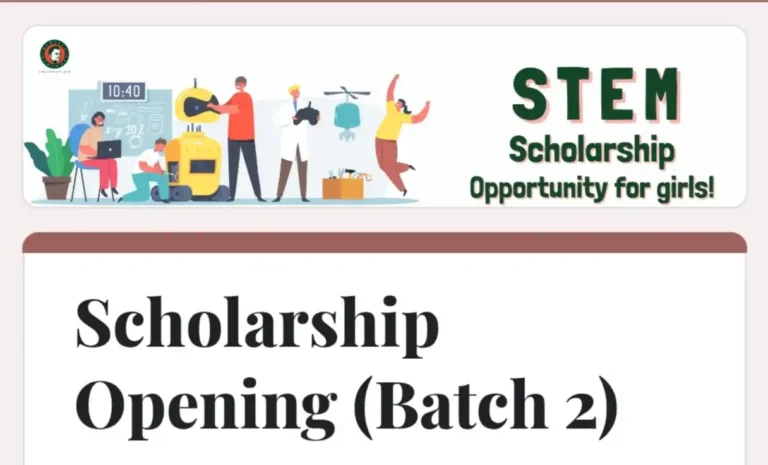
Murtala Muhammed Foundation opens 2025 STEM for African Gifted Academy

The has opened applications for the 2025 second batch of the African Gifted Academy x Murtala Muhammed Foundation School Program, targeting young Nigerian girls with strong interest in science, technology, engineering and mathematics.

The Foundation announced that the programme is designed to support talented girls from low-income backgrounds by offering them a full scholarship to study at the in Ghana, a leading institution focused on STEM education for young Africans.

According to the organisers, the school programme is part of ongoing efforts to reduce gender gaps in STEM and expand access to quality science education for girls who may not otherwise afford it. The programme is being implemented in collaboration with the .

In a statement announcing the opening of Batch 2, the organisers said the initiative is aimed at “supporting young Nigerian girls from low-income backgrounds who have a clear passion for S.T.E.M. by providing them with a full scholarship to African Science Academy in Ghana.”

They explained that the scholarship covers tuition, accommodation, feeding and academic support throughout the programme period. Beneficiaries will also receive structured mentoring, leadership development and exposure to a STEM-focused learning environment designed to prepare them for future careers in science and technology.

The Foundation noted that the programme is strictly for secondary school–level education and is not an undergraduate or university scholarship. Selected students will be enrolled into the African Science Academy, which offers an intensive science-based curriculum.

Eligibility for the programme is limited to Nigerian girls who demonstrate academic ability and strong interest in STEM subjects. Applicants are also expected to come from low-income households and show commitment to learning and personal development.

The organisers stated that candidates will be assessed based on academic potential, interest in STEM and overall suitability for the programme. They added that the selection process is competitive due to the limited number of available slots.

Speaking on the initiative, the organisers said the programme reflects the Foundation’s broader mission of investing in education, leadership and human development across Africa, with special focus on empowering young women.

They further explained that the African Gifted Academy x Murtala Muhammed Foundation School Program has already recorded positive outcomes from earlier intakes, with students gaining strong academic foundations and increased confidence in STEM fields.

Interested applicants have been advised to carefully follow the application guidelines and submit all required information within the stated timeframe. The Foundation stressed that only applications submitted through the official channel will be considered.

The organisers encouraged parents and guardians to support eligible candidates, noting that the programme represents an opportunity for young Nigerian girls to access world-class STEM education and broaden their future prospects.

The application for Batch 2 forms part of the 2025 intake cycle, and the Foundation urged qualified candidates to apply early to avoid missing the opportunity.

NIRSAL unlocks over N290bn in agricultural financing across Nigeria

0

NIRSAL has helped unlock over N290 billion in agricultural financing between 2013 and 2025, reshaping access to credit across Nigeria’s food production, agro-processing, export, and rural development value chains.

According to performance records released by the Nigeria Incentive-Based Risk Sharing System for Agricultural Lending, the institution facilitated more than N290 billion in finance covering primary production, processing, logistics, market development, and exports. It said the intervention addressed long-standing financing gaps in agriculture through structured risk-sharing, insurance advocacy, incentive mechanisms, and technical assistance.

The records show that N298.49 billion in credit was facilitated through the Risk Sharing Facility during the period, with 949 guarantees issued to support 251 agribusinesses nationwide. The portfolio recorded a non-performing loan ratio of less than 0.8 percent, a performance the institution said strengthened lender confidence and encouraged banks to increase lending to agriculture.

In a statement on Sunday, NIRSAL said access to finance enabled farmers to expand production, supported agro-processors to scale operations, and improved storage, warehousing, and logistics across value chains. It noted that increased financing preserved value, reduced post-harvest losses, and supported commodity exports to regional and international markets.

Closing 2025 with its highest annual performance, the institution announced that approved credit guarantees for the year exceeded N100 billion in loans and investments in agriculture and agribusiness nationwide. It said the milestone allowed partner banks and lending institutions to finance activities that would otherwise be considered too risky for on-balance sheet exposure.

Speaking at the 2nd Edition of the MSME Finance & CEO Awards held in Lagos State, the Managing Director and Chief Executive Officer of NIRSAL, Sa’ad Hamidu, said the performance reflects the impact of deliberate risk management structures. He said the recognition received by the institution “speaks to the power of structured risk-sharing models, strong partnerships with financial institutions, and the resilience of Nigeria’s agribusiness entrepreneurs.”

Hamidu, who was represented by Akinola Baiyewu, NIRSAL’s Regional Head, South, Business Development Group, explained that NIRSAL operates strictly as a facilitator rather than a lending institution. He said while substantial financial capital exists within the system, inherent risks along agricultural value chains often discourage banks from lending.

According to him, the N100 billion milestone recorded in 2025 represents a clear shift in bank behaviour from caution to stronger confidence, driven by NIRSAL’s credit risk guarantees and risk management frameworks that assure lenders of viable portfolio performance. He said financial institutions are increasingly relying on NIRSAL’s tools to grow agricultural portfolios, optimise capital deployment, and pursue both commercial and development outcomes.

The institution also said its partnerships with commercial banks and other lenders supported commodity exports, agro-processing, input supply, primary production, storage, warehousing, and logistics. Through technical assistance programmes, field monitoring, and project mapping protocols, NIRSAL said it continues to unlock financing opportunities that support food security, export growth, and rural economic development across Nigeria.

NIRSAL creates over 520,000 agriculture jobs nationwide

0

The creation of more than 520,000 jobs by Nigeria Incentive-Based Risk Sharing System for Agricultural Lending (NIRSAL) between 2013 and 2025 has emerged as one of the most visible outcomes of its interventions across Nigeria’s agricultural value chains, with the impact cutting across farming, processing, aggregation, storage, logistics, and market access.

According to performance records released by the institution, the jobs created directly and indirectly supported livelihoods in both rural and urban communities, while more than 3 million lives were impacted through expanded economic activities linked to agriculture and agribusiness. The institution said access to finance played a central role in unlocking these employment opportunities.

In a statement on Sunday, NIRSAL explained that its risk-sharing, insurance advocacy, incentive mechanisms, and technical assistance helped farmers and agribusinesses expand operations, which in turn increased demand for labour across value chains. These included primary production, agro-processing, warehousing, transportation, and export-related activities.

The records show that over 449,000 agricultural value chain actors were trained during the period, strengthening their skills and capacity to operate sustainable enterprises. Through these interventions, more than 159,000 jobs were directly supported, while wider programme activities extended benefits to hundreds of thousands of workers and dependants linked to agricultural enterprises nationwide.

Speaking at the 2nd Edition of the MSME Finance & CEO Awards held in Lagos State, the Managing Director and Chief Executive Officer of NIRSAL, Sa’ad Hamidu, said the scale of job creation reflects the effect of structured support for agribusinesses. He said the recognition received by the institution “speaks to the power of structured risk-sharing models, strong partnerships with financial institutions, and the resilience of Nigeria’s agribusiness entrepreneurs.”

Hamidu, who was represented by Akinola Baiyewu, NIRSAL’s Regional Head, South, Business Development Group, noted that the institution’s work was not focused on awards, but on improving outcomes for people whose livelihoods depend on agriculture. He said the goal is to attract more partners who can support safe and sustainable investments that create jobs.

NIRSAL said its partnerships with commercial banks and other lenders enabled credit flow to sectors that traditionally struggle to access financing due to perceived risks. These partnerships supported commodity exports, agro-processing, input supply, storage, warehousing, and logistics, all of which are labour-intensive activities.

The institution also highlighted its role in programme management for state governments, private investors, and cooperative-led production clusters, noting that improved farmer onboarding, geo-mapping, soil testing, mechanisation support, and field monitoring helped boost productivity and employment outcomes.

On its role as a facilitator rather than a lending institution, Hamidu explained that financial capital already exists within the system, but risks across value chains often limit lending. He said the shift recorded in 2025, when approved credit guarantees exceeded N100 billion, shows growing confidence among lenders, translating into more jobs and stronger livelihoods for Nigerians involved in agriculture and agribusiness activities nationwide.

1000 Widows Receive Christmas Palliatives in Rivers State Councils

About 1,000 widows across three local councils in Rivers State have benefited from Christmas palliatives distributed by the Tekena ThankGod Ikpaki Foundation.

The distribution covered the nine clans of the Kirikese nation in Ogu/Bolo, Okrika, and parts of Port Harcourt City local councils.

Speaking during the outreach, the Executive Director of the foundation, Tekena ThankGod Ikpaki, who is also the chairman of the Independent Petroleum Marketers Association of Nigeria (IPMAN), said the three-day programme was designed to address the urgent needs of widows and other vulnerable persons, particularly at a time when many were struggling to survive.

Ikpaki said his passion for charity, especially supporting widows, motivated the initiative, adding that his actions were guided by biblical principles.

“It’s my love for people that has encouraged me to do what I’m doing here today. What I’m doing today is my heartbeat and I do it every day. Empowerment of widows is what I do always. But today we are expanding to ensure that every clan ranging from Ogu, Bolo, Isaka, Ele, Ibaka, Ogbogbo, Abuloma and all of the nine clans of Okrika is represented,” he said.

He noted that the foundation has been carrying out similar charitable activities for over 20 years and urged well-meaning individuals to show love and kindness in whatever measure they are able, stressing that Christmas celebrations are incomplete without genuine care for others.

“Every time you give, you have simply opened a channel to receive,” he added.

One of the beneficiaries, Tamunoboma Aberemieka, thanked the foundation for sponsoring the cataract surgery that restored her sight after years of blindness, saying she was identified during a previous widows’ outreach by Ikpaki.

Another beneficiary, Mrs. Gladys Miebaka from Isaka community, described the gesture as a major relief during the Christmas season.

“I’m so grateful for him putting smiles on the faces of widows with these gift items. I know he has been doing this, and this time around he made it bigger. My prayer is that God keeps providing for him to reach out to more widows,” she said.

Items distributed during the outreach included rice, beans, cooking oil, chicken, onions, wrappers, and other foodstuffs.

Over 500 Enugu youths graduate from UNESCO AI, digital skills training

Over 500 youths from Enugu North Senatorial District and beyond have successfully graduated from a 10-day digital skills training programme designed to equip them with the knowledge and capacity to compete globally in the fast-growing digital economy.

The training focused on ethical artificial intelligence skills, including AI applications, AI content development, robotics, and chatbot development. It was organised by the Igbo Eze South Local Government Area in collaboration with the UNESCO Country Office, Abuja, and the University of Nigeria, Nsukka, through its Directorate of International Collaboration and the Faculty of Vocational and Technical Education.

Declaring the programme closed, the Governor of Enugu State, Dr Peter Mbah, represented by the Secretary to the State Government, Professor Chidiebere Onyia, described the event as “a celebration of transformation through vision, capacity building, and inquisitive learning.”

Professor Onyia commended the beneficiaries for their dedication and zeal, noting that their readiness to move from traditional methods to digital innovation shows a new level of confidence and global readiness. “Their willingness to transition from the old ways of doing things to the digital frontier will strengthen their confidence and prepare them for emerging global opportunities,” he said.

He also praised the leadership of the Chairman of Igbo Eze South Local Government Area, Hon. Ferdinand Ukwueze, whom he described as “a leading voice within the ALGON community whose vision aligns with Governor Mbah’s administration.”

According to him, the digital skills gained by the participants would allow them to compete favourably on the global stage without having to leave Enugu State. He added that Governor Mbah’s visionary leadership has shifted the state from conventional learning models to technology-driven and globally competitive thinking.

In her remarks, the representative of the Head of Office, UNESCO Country Office, Abuja, Dr Nneka Okafor, who represented Dr Jean-Paul Abiaga, said the initiative had gone beyond basic skill acquisition. She commended the Igbo Eze South Council Chairman for his dedication to empowering youths with sustainable and relevant digital skills.

The Vice-Chancellor of the University of Nigeria, Nsukka, Professor Simon Otuanya, represented by the Deputy Vice-Chancellor, Professor Josaphat Onwumere, appreciated the organisers for choosing the university as the host institution, noting that the collaboration promotes learning and innovation among young people.

The Chairman of Igbo Eze South Local Government Area, Hon. Ferdinand Ukwueze, said the platform provides an opportunity for young people to interact with the global community and compete effectively in the digital economy. He also highlighted several developmental achievements recorded by his administration within a few months in office and urged the beneficiaries to make the local government and the state proud.

During the ceremony, some outstanding participants received laptops as awards for excellence, while the wife of the governor, Mrs Nkechinyere Mbah, through the wife of the council chairman, also presented laptops to physically challenged participants.

The event ended with the presentation of certificates to all beneficiaries and a special award to Hon. Ukwueze in recognition of his dedication to youth development and investment in skill acquisition programmes.

Yuletide: Lawmaker distributes ₦200m cash to Ebonyi Constituents

0

The Member representing Ikwo/Ezza-South Federal Constituency in the House of Representatives, Comrade Chinedu Ogah, over the weekend distributed ₦200 million in cash and 12 trailers of rice to his constituents as part of the annual Yuletide empowerment programme of his foundation, Chinedu Ogah Foundation.

Speaking during the distribution held at his country home, Ogah said the gesture was aimed at supporting his people during the festive season. He explained that leadership should reflect the will and yearning of the people rather than personal ambition.

“The people you see here are those who elected me, and they deserve the best,” he said.

The Chinedu Ogah Foundation Yuletide programme has over the years grown into a unifying event that blends charity, culture, and community service. It continues to reinforce Ogah’s reputation for grassroots empowerment and impactful representation in Ebonyi State.

The lawmaker, who is also the Chairman of the House Committee on Reformatory Institutions, said the exercise was purely humanitarian and not politically motivated. He noted that the humanitarian outreach coincided with the 26th anniversary and annual Foundation Day celebration of the Chinedu Ogah Foundation.

“The beneficiaries were drawn from all the 31 wards of the federal constituency to ensure equitable distribution across communities. This gathering is not about politics but about caring for humanity, and the people you see here are those who elected us, and we believe in giving back to society in practical ways,” Ogah stated.

He further noted that the Foundation, which has existed for 26 years, has continued to focus on grassroots development through house construction, scholarships, job facilitation, and other economic support programmes for the less privileged.

Ogah also disclosed that a more comprehensive empowerment programme is scheduled to hold between March and early April 2026, adding that the initiative will be people-driven.

The federal lawmaker commended President Bola Ahmed Tinubu’s Renewed Hope Agenda, noting that its impact is visible in Ebonyi State through the policies and programmes of Governor Francis Ogbonna Nwifuru.

He said, “Today, you can see the roads, water projects, scholarships, and job opportunities facilitated by this administration. Many Ebonyi youths are studying abroad on state scholarships, and security has greatly improved.”

Ogah praised Governor Nwifuru’s achievements in areas such as security, education, infrastructure, and human capital development, describing Ebonyi as one of the safest states for investment in the South-East.

Chairman of the occasion, Comrade Emmanuel Chukwu, a Director with the Nigerian Aviation Authority, Lagos Branch, commended Ogah for consistently translating government policies into tangible benefits for the people at the grassroots.

Other speakers, including the State Commissioner for Education, Dr Donatus Ilang, and Chief Humphrey Nwuruku, former Chief Whip of the Ebonyi State House of Assembly, hailed Ogah for remaining focused on the welfare of his constituents despite criticism from some quarters.

Nigeria Startup News gathered that the event attracted dignitaries such as the Deputy Speaker of the Ebonyi State House of Assembly, Rt. Hon. Chinedu Onah, members of the State Assembly, commissioners, APC leaders, youth groups, women associations, and cultural organisations who all joined in celebrating the Foundation’s 26th anniversary and the annual Yuletide empowerment programme.

Uniben concludes ITF artisan training for 200 participants

0

The University of Benin has concluded the first phase of the Industrial Training Fund (ITF) artisan training programme for 200 artisans after an intensive eight-week period, reinforcing its commitment to skills acquisition, vocational education, and national development.

In a statement on Sunday, the university’s spokesperson, Benedicta Ehanire, said the close-out ceremony, held on Tuesday, brought together the vice-chancellor, Edoba Omoregie, members of the university management, programme coordinators, and beneficiaries.

Implemented under the federal government’s Skill-Up Artisan initiative, Ehanire noted that the programme provided free, industry-relevant training to 200 artisans. The participants received hands-on instruction in areas such as cybersecurity, tailoring, welding and fabrication, automobile maintenance, carpentry, electrical installation, plumbing, poultry and crop production, and animal husbandry.

In his address, Vice-Chancellor Edoba Omoregie commended President Bola Tinubu for initiating the ITF-SUPA programme, describing it as a strategic investment in human capital development. He reaffirmed the university’s resolve to go beyond degree awards by equipping students, staff, and host communities with practical and entrepreneurial skills.

“Our responsibility as a university goes beyond awarding degrees. We are deliberately building technical skills, entrepreneurial capacity, and practical competence that can translate into real economic value,” Omoregie said.

He explained that the initiative was in line with his five-point agenda. The vice-chancellor congratulated the trainees on successfully completing the first phase and urged them to make productive use of their newly acquired skills as they prepare for the next stage.

Omoregie also assured that the University of Benin would continue to champion skill-based and entrepreneurship-driven education.

The coordinator of the Vocational and Technical Training Programme, Andrew Amenaghawon, commended the vice-chancellor for positioning the university to take advantage of the ITF-SUPA initiative.

Explainer: Nigerian Forest Guard Recruitment, How It Works and How to Apply

The Nigerian Forest Guard recruitment is part of a federal security initiative designed to protect forests, curb illegal activities such as banditry and illegal logging, and improve safety in rural communities. The programme operates under the Presidential Forest Guards Initiative, which was launched in May 2025 as part of wider national security reforms.

Interest in the recruitment increased significantly following the recent graduation of about 7,000 forest guards after an intensive three-month training programme. The development triggered nationwide attention, with many Nigerians searching for information on how to apply and whether a recruitment portal is currently available. Authorities have also confirmed plans to expand the programme to all 36 states and the Federal Capital Territory (FCT).

How the First 7,000 Forest Guards Were Recruited

The first batch of forest guards did not emerge from an open nationwide online application process. Instead, recruitment was coordinated through the Office of the National Security Adviser (ONSA) in collaboration with the Federal Ministry of Environment and selected state governments.

The recruits were drawn mainly from seven frontline states facing significant security challenges. Selection was handled through state-level structures, community screening, and security vetting. Candidates who met the requirements were enrolled in a structured training programme before their graduation and deployment.

This recruitment method explains why there was little public awareness of an online application portal during the first phase.

Is There an Official Portal to Apply Right Now?

As of now, there is no officially announced national portal for Nigerian Forest Guard recruitment. Despite various claims circulating online, the federal government has not released any verified website or application link for the next phase of recruitment.

Members of the public are advised to be cautious of websites or individuals claiming that applications are open or requesting payment for forms. Legitimate government recruitment exercises are announced through official channels and do not involve payment to apply.

Requirements for Nigerian Forest Guard Recruitment

Although an official nationwide requirement list has not been published, information from similar security recruitments provides insight into what applicants should expect. Applicants are expected to be Nigerian citizens and usually fall within an active working-age bracket, commonly reported as between 18 and 35 years.

A minimum educational qualification of SSCE, NECO, or its equivalent is typically required, while higher qualifications are also accepted. Physical and medical fitness is important due to the nature of forest security duties.

Applicants are also expected to have good character and no criminal record.

Required documents include National Identification Number (NIN), educational certificates, birth certificate or age declaration, and passport photographs.

How to Apply for Nigerian Forest Guard Recruitment

At the moment, there is no open national application process. However, based on how the first batch was recruited, interested applicants should prepare to apply through official government channels once recruitment resumes.

Future applications are expected to be announced through federal authorities or handled initially at the state level, particularly through state Ministries of Environment, Forestry departments, or security coordination offices.

Applicants will be required to submit documents physically or through an officially designated portal when announced.

Prospective candidates are advised to regularly monitor government statements, trusted news platforms, and official state notices. Any genuine recruitment process will clearly outline application steps and will not require payment at any stage.

What Interested Applicants Should Do Now

Interested Nigerians should stay alert for official announcements from relevant authorities and avoid unverified recruitment links. Preparing required documents, maintaining physical fitness, and following credible news sources will help applicants stay ready. Until an official application process is announced, all legitimate updates will come directly from government channels.

GRIP Initiative Launched to Engage Diaspora, Young Professionals

0

Woodhall Capital International Foundation’s Global Generations Rising in Purpose (GRIP) initiative has been launched in Lagos to empower Nigerian diaspora members and young professionals to support economic growth.

The launch was announced at the GRIP Diaspora Series meeting held in Lagos last Monday by the President of Woodhall Capital Group, Mrs. Mojisola Hunponu-Wusu. She said the GRIP initiative was created to give young professionals and diaspora Nigerians a platform to build skills, understand their value, and engage responsibly and profitably with Nigeria’s economy.

According to her, “GRIP is designed to replace uncertainty with clarity, hesitation with information, and distance with trust.” She stressed that credibility and discipline in governance and business remain critical to sustainable development.

Mrs. Hunponu-Wusu highlighted Woodhall Capital’s legitimacy, noting that the organisation operates under a Memorandum of Understanding with the Nigeria Governors’ Forum and the Forum of State Investment Promotion Agencies of Nigeria. She said these partnerships strengthen confidence for diaspora engagement and long term investment.

She explained that the GRIP initiative aligns with Woodhall Capital’s social impact focus on feeding, good health and wellbeing, and education across Africa and the United Kingdom.

She urged members of the diaspora community to engage constructively with Nigeria’s economy.