
Home Blog Page 206

UN Young Leaders Online Programme Opens June 2026 Registration

0

The United Nations Young Leaders Online Training Programme scheduled for June 2026 has opened registration for young people interested in global affairs, diplomacy and sustainable development. The programme will run from June 8 to July 3, 2026, and will be delivered fully online.

According to information released by the United Nations Institute for Training and Research (UNITAR), the four-week course is designed to equip participants with practical knowledge of the United Nations system and the skills required to engage in international cooperation. UNITAR said the initiative targets the growing global youth population and recognises young people as key drivers of innovation, social progress and policy action.

The programme is not free. The participation fee is set at 750 dollars. However, UNITAR noted that scholarships may be available for eligible applicants. Interested participants are advised to make inquiries by sending an email to multilateralism@unitar.org.

The training is open to applicants from all countries, including Nigeria. There are no nationality restrictions, and Nigerians can apply as long as they meet the basic requirements. The course is conducted in English and delivered through UNITAR’s e-learning platform.

UNITAR explained that the programme will combine self-paced learning with live interactive sessions. Participants are expected to dedicate between four and six hours per week to the course. The content is divided into four modules covering the United Nations, Conference Diplomacy, the Sustainable Development Goals (SDGs), and Cosmopolitan Communication.

In addition to the modules, participants will attend live webinars led by UN experts. These include sessions titled “The United Nations System,” “Multilateral Conferences and Diplomacy,” “The Sustainable Development Goals (SDGs),” and “Cosmopolitan Communication.” There will also be weekly leadership-focused e-workshops lasting three and a half hours.

UNITAR stated that live sessions will be held in the afternoon Geneva time to accommodate participants across different time zones. All live activities will be recorded and made available afterward on the learning platform.

The programme is open to high school students, university students, young professionals, and other aspiring leaders interested in international affairs. To maintain quality, registration will be limited to 30 participants, with slots allocated on a first-come, first-served basis.

At the end of the programme, participants who complete the training will receive a UNITAR certificate. Registration is currently open, with a deadline of June 4, 2026, and applications can be submitted through the UNITAR event portal.

Advertisement

Jigawa LG Chairman unveils ₦250m empowerment programme

0

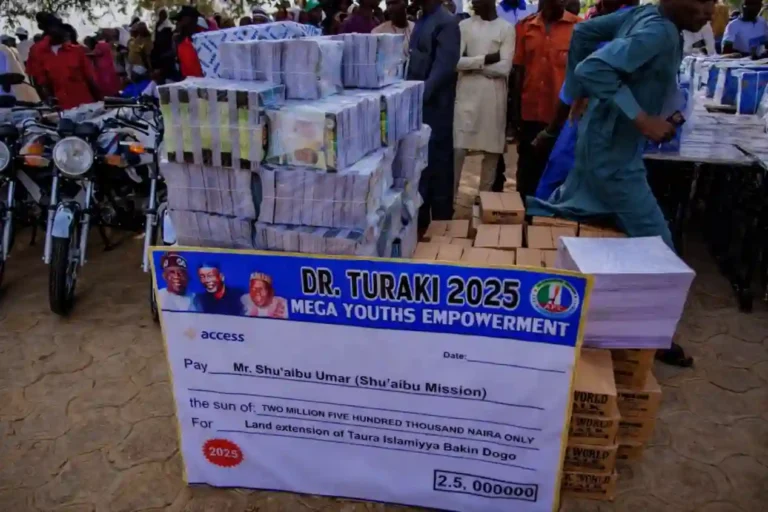
The Chairman of Taura Local Government Council in Jigawa State, Hon. Shuaibu Hambali, has unveiled a wide-ranging empowerment programme valued at over ₦250 million, aimed at improving livelihoods, enhancing skills acquisition and strengthening social welfare across the local government area. The initiative is regarded as one of the most comprehensive grassroots empowerment drives implemented in the area in recent times.

The programme aligns with President Bola Ahmed Tinubu’s Renewed Hope Agenda and the 12-Point Development Agenda of Jigawa State Governor, Malam Umar Namadi. It cuts across key sectors including economic empowerment, education, healthcare, housing, safety and human capital development, with interventions targeted at youths, women, farmers, artisans, vulnerable groups and students.

Speaking during the distribution exercise, Hon. Hambali said the intervention was designed to translate policy promises into real benefits for residents. He explained that the programme was structured to complement the state government’s people-centred policies on poverty reduction, inclusive growth and sustainable development. According to him, “this empowerment programme is our way of bringing the Renewed Hope Agenda to the grassroots and ensuring that ordinary people feel the impact of government.”

Under the economic empowerment component, the council distributed 43 motorcycles to beneficiaries, alongside 190 sewing machines for youths trained in tailoring. A total of 180 pasta-making machines were also provided, with each beneficiary receiving a 10kg bag of flour as start-up support. The programme further included the distribution of 50 grinding machines, 31 welding machines, 20 water pumps for farmers and 20 generators for phone-charging businesses.

Women empowerment featured prominently in the initiative. Frying equipment for akara, also known as bean cake or kosai, was distributed to 60 women to support small-scale food businesses. In addition, 15 wheelchairs were presented to persons living with disabilities to enhance mobility and social inclusion.

Cash grants were also disbursed to stimulate micro and small businesses. Beneficiaries of vocational skills training received ₦100,000 each to support business start-up. One hundred Fulani women engaged in milk trading were supported with ₦10,000 each, while motorcycle riders’ associations in the 10 wards of the local government received ₦30,000 per ward.

In the area of human capital development, 40 residents were trained in electrical installation and maintenance, while 10 others underwent training in welding and fabrication. Hon. Hambali said the focus on skills acquisition was meant to improve employability and reduce unemployment among youths.

The chairman further disclosed that the council constructed four houses for vulnerable persons, two houses for new converts and two houses for vulnerable political actors. He also announced the donation of a plot of land to an Islamiyya school in Taura, reinforcing the council’s support for faith-based and community education.

To improve safety in riverine communities, 200 life jackets were distributed as part of accident prevention and emergency response efforts. In the education sector, the council distributed 8,000 exercise books to primary school pupils and 15,000 lesson plan books to teachers under the Taura Local Government Education Authority. Another 15,000 Primary School Leaving Certificate booklets and 1,000 cartons of chalk were supplied, while 191 temporary teachers under the T-Teach programme were registered.

The council also awarded scholarships to 78 students fully sponsored at tertiary institutions, including Schools of Nursing and Midwifery in Kazaure and Nguru, Aminatu College and the Police College. In healthcare, free hernia surgeries were sponsored for 50 patients, free eye surgeries for 60 patients, and 25,000 diagnostic cards were distributed, with ₦7.45 million spent on medical bills for 21 critically ill patients referred to Rasheed Shekoni Teaching Hospital.

PalmPay to charge ₦50 Stamp Duties on transfers of ₦10,000 and above

0

PalmPay has announced that starting from January 1, 2026, customers who send ₦10,000 or more to another beneficiary will be charged ₦50 as Stamp Duties. The company explained that the charge is required by law and applies to the sender of the transfer, not the receiver.

This statement was made public on Saturday through PalmPay’s official social media handle, where it clarified that the development follows the new Nigeria Tax Act (NTA) 2025.

“In accordance with the Nigeria Tax Act (NTA) 2025, the Electronic Money Transfer Levy (EMTL) has been renamed Stamp Duties effective January 1, 2026. N50 Stamp Duties will be charged on your account when you transfer N10,000 or more to another beneficiary as mandated by the Federal Inland Revenue Service (FIRS),” the company stated.

According to PalmPay, “The sender will be charged Stamp Duties and not the receiver.”

The company further explained that, “These Stamp Duties do not apply to transfers between your own PalmPay accounts where the names and BVN/NIN match.”

“Please note that PalmPay does not benefit from this Stamp Duties. It is remitted directly to the Federal Government. The Stamp Duties replaces the Electronic Money Transfer Levy (EMTL).”

PalmPay added that it will continue to offer “unlimited free transfers to any bank account” while maintaining its commitment to “affordable and accessible financial services” for customers.

First Lady Donates 1,000 Bags of Rice to Christians in Bauchi

0

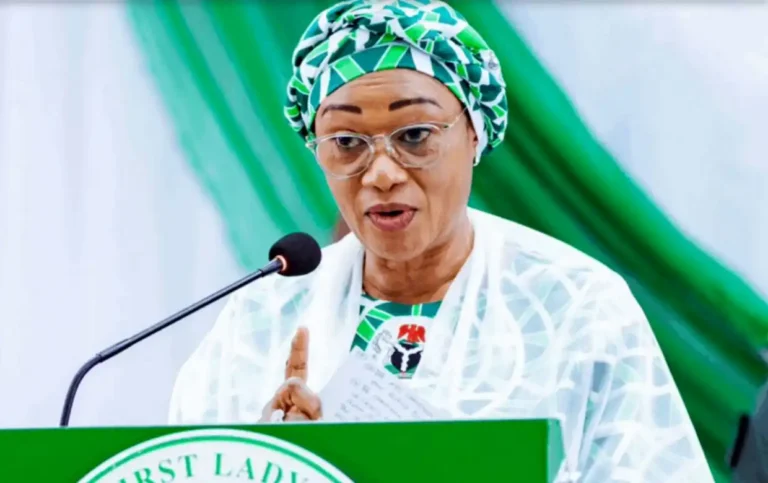
The First Lady, Oluremi Tinubu, has donated 1,000 bags of 25kg rice to the Christian Northern Nigeria Political Forum in Bauchi State to support Christians during the Christmas and New Year celebrations.

The State Coordinator of the Forum, Mr Ayuba Dogara, disclosed this on Saturday during the distribution of the items across Bauchi. He said the rice would be equitably shared across all 20 local government areas of the state.

Dogara explained that beneficiaries would include members of the All Progressives Congress, women and youth groups, associations, and other vulnerable persons. He described the intervention as timely and thoughtful amid preparations for the festive season.

According to him, the gesture reflected solidarity and appreciation for CNNPF members who have supported the nation’s leadership even before the inception of the current administration, showing empathy and recognition of their contributions.

He linked the initiative to President Bola Tinubu’s Renewed Hope Agenda, highlighting its focus on inclusion, compassion, and opportunity for all Nigerians, regardless of background or social status, especially during the festive season.

“The distribution of Christmas packages to Christian families across Northern Nigeria is a testament to the First Lady’s deep sense of empathy, commitment to national service, and moral leadership,” Dogara said.

He urged citizens to continue living in peace and harmony, noting that meaningful nation-building thrived in an atmosphere of mutual understanding, unity, and cooperation among communities across the country.

Dogara also called on local government coordinators to ensure fair and transparent distribution of the items, stressing the need to deliver the donation to intended beneficiaries without discrimination or bias.

In his remarks, APC Chairman of Bogoro Local Government Area, Mr Istifanus Manasseh, commended President Tinubu’s leadership style, noting its emphasis on inclusiveness, citizen support, and programmes that address the needs of ordinary Nigerians.

A beneficiary, Mr Bage Maitandu, expressed gratitude for the gesture, pledging continued support for the Tinubu administration and describing the donation as a symbol of care, encouragement, and shared hope during the festive season.

FG to scale up Nigeria for Women Program in all States

The Federal Government has inaugurated a Steering Committee to scale up a women’s empowerment project across the 36 states and the Federal Capital Territory, marking a major step in strengthening social protection and women’s economic participation nationwide.

The inauguration of the Federal Steering Committee took place at the Transcorp Hilton Hotel, Abuja, and signals the full national expansion of the Nigeria for Women Program Scale-Up Project, known as NFWP-SU, which is designed to deepen women’s economic empowerment and improve livelihoods across communities.

In her keynote address, the Minister of Women Affairs and Social Development, , described the project as the most significant platform for advancing women’s economic empowerment in the country. She said the initiative goes beyond routine government programmes and should be seen as a central pillar of national development.

“Women’s economic empowerment is not an Any Other Business agenda but the engine room of peace, development, and human progress,” the Minister stated, stressing that empowering women has direct impacts on households, communities, and the wider economy.

The NFWP-SU represents a strategic evolution from its parent project, which ran from 2018 to 2024. Under the scale-up, the programme is expanding to all 36 states and the FCT, introducing a unified and systemic model that replaces fragmented interventions previously implemented across different locations.

According to the Minister, the scale-up consolidates financial inclusion, livelihood support, and social protection under one national delivery platform, which also includes the FG NFWP grant. This approach will transform Women Affinity Groups into permanent economic institutions that are better linked to formal financial systems, markets, and public services.

She explained that the initiative is designed to build a resilient economic base by creating a national network of micro-entrepreneurs, savers, and borrowers. “It is a resilient economic base model that builds a national network of micro-entrepreneurs, savers, and borrowers who form the bedrock of a stable economy,” she said.

Despite starting about 18 months behind schedule, the project has recorded steady progress. It has been successfully launched in 18 states and was recently rated satisfactory by an Implementation Support Mission, reflecting improvements in delivery and coordination.

The Minister noted that the success of the programme has also created new challenges. She disclosed that the project was initially designed to cover a maximum of 23 states, but due to strong demand and results, resources are now being stretched to support activities in 32 states. As a result, she indicated interest in securing additional financing to sustain and expand the intervention.

The newly inaugurated Steering Committee is a multi-sectoral body drawing expertise from various Ministries, Departments, and Agencies. Its responsibilities include setting overall policy guidelines, endorsing annual work plans and budgets, monitoring progress, and facilitating coordination among all implementing institutions involved in the project.

“Let us remember: when we empower a woman, we empower a household, and when we empower millions of women, we recalibrate an entire economy. For us in Nigeria, we are demonstrating that women’s economic empowerment is not charity; it is nation-building, peace-building, and climate action rolled into one,” the Minister said.

She urged key partner ministries, including Agriculture, Environment, Health, Water Resources and Sanitation, Finance, Budget and Economic Planning, and Communications and Digital Economy, to provide strong oversight and technical input. “Your ministries provide the essential expertise we cannot do without. We will rely on you for strategic oversight and to ensure our efforts are perfectly synchronized,” she added.

The Country Director of the , represented by Senior Social Welfare Development Specialist, Mr. Michael Ilesami, explained that the project was designed to adopt a holistic and multi-sectoral approach. “Any program aimed at women’s empowerment requires a multi-dimensional, multi-sectoral and holistic approach. This is what informed the design and implementation of the Nigeria for Women Program Scale Up Project,” he said.

He outlined the core objectives of the project, noting that through Women Affinity Groups, women are supported to access credit, savings, and insurance services, improve their social status, promote social capital, reduce poverty, and engage in advocacy and collective action. He added that the project’s success in Nigeria has made it a global flagship, influencing similar programmes in countries such as Tanzania, South Sudan, Liberia, Uganda, and Afghanistan.

Earlier, the Permanent Secretary of the Ministry, Dr. Maryam Ismaila Keshinro, described the inauguration as a milestone in the collective resolve to improve women’s lives. She said the responsibility before the committee was not only technical but moral, as the hopes of millions of Nigerian women are tied to its work.

She expressed gratitude to the Minister for her support and thanked partners and stakeholders for their commitment. The committee was also presented with an eight-month action plan for immediate endorsement, marking the formal start of the national scale-up phase.

Nigeria Customs yet to release CBT results one year after recruitment

Saturday marks exactly one year since the Nigeria Customs Service recruitment exercise officially commenced, following the opening of its application portal on December 27, 2024. The recruitment window, which attracted massive attention nationwide, was closed on January 2, 2025, after one week of online submissions.

Immediately after the portal closed, the Nigeria Customs Service began collating and reviewing applications submitted by Nigerians seeking employment across different cadres. Reports later showed that more than 573,000 applications were received for the exercise.

Applicants were invited to apply for positions under three cadres: the Superintendent Cadre, the Inspectorate Cadre, and the Customs Assistant Cadre.

The Superintendent Cadre targeted candidates with university degrees or higher qualifications, while the Inspectorate Cadre accommodated applicants with HND, ND, or NCE certificates. The Customs Assistant Cadre was open to candidates with O’Level qualifications. In total, 3,927 vacancies were declared across the three cadres.

Following the screening of applications, the Service proceeded with shortlisting. By September 2025, the Nigeria Customs Service announced that about 286,697 applicants had been shortlisted to advance to the next stage of the recruitment process. Shortlisted candidates were advised to regularly check their registered email addresses, as official communication was to be sent strictly through verified channels.

The recruitment process later moved into the Computer-Based Test phase. The main CBT for the Inspectorate and Customs Assistant cadres was scheduled and conducted nationwide between September 14 and September 21, 2025. The Service clarified that the CBT was held as planned, despite widespread speculation on social media about a possible postponement.

After the CBT was conducted as scheduled, the NCS dismissed claims circulating online that shortlisted candidates had been announced. It also denied reports that appointment letters were being issued to any candidates.

The Service explained that no official CBT result or shortlist had been released and advised applicants to rely only on information communicated through official channels and registered email addresses.

Presently, the NCS recruitment exercise is still ongoing, and it is exactly one year since the process started. Applicants are urged to remain patient while the recruitment process continues, as the next stage is expected to be the release of CBT results and physical screening for qualified candidates.

Lagos hosts first LGA AI workshop led by UK-based tech expert

0

Over 450 participants gathered at the Agege Local Government Secretariat on Saturday for an Artificial Intelligence (AI) workshop led by UK-based technology expert and Senior Business Analyst, Babajide Sofeso. The three-hour workshop was themed “AI for Capacity Development and Productivity in Local Government” and was organised by Avanguard Consulting in collaboration with the Agege Local Government Council.

Participants at the event included civil servants, educators, entrepreneurs, students, market traders and tech enthusiasts drawn from across Lagos State as well as neighbouring Ogun, Oyo and Ekiti states. The gathering marked a historic moment for Agege, as it became the first local government area in Lagos State to host a globally recognised business and technology strategist with extensive experience in digital transformation within the United Kingdom’s National Health Service (NHS).

Speaking at the workshop, Sofeso highlighted the importance of taking artificial intelligence beyond corporate spaces and into local communities. “AI is no longer a luxury; it is a necessity. With the right mindset and access, communities like Agege can lead innovation,” he said. He urged participants to see technology as a practical tool for solving everyday challenges in governance, education and business.

During interactive sessions, attendees were introduced to practical applications of AI, including automating repetitive business processes for small and medium-sized enterprises, data-driven budgeting and urban planning, AI-powered chatbots for resident services, and digital learning platforms for youth upskilling and civil service retraining. These sessions were designed to show how AI can improve productivity even in environments with limited digital infrastructure.

Live demonstrations featured Sofeso’s digital tools, BIautomation.io and BPMNgenerator.com. BIautomation.io was presented as a solution that automatically detects data issues such as duplication and missing fields while recommending real-time solutions, making it suitable for organisations with low digital maturity. BPMNgenerator.com, a no-code platform, enables users to create business process diagrams by completing simple forms, removing the need for technical expertise.

Participants engaged in hands-on practice using mobile devices and laptops. Many expressed surprise at how complex concepts like data analysis and process mapping could be simplified. A secondary school teacher, Adesuwa Olalekan, described the session as eye-opening and said she plans to apply AI tools to classroom analytics and lesson planning.

Chairman of Agege Local Government, Alhaji Kareem Adeola, described the workshop as a turning point in the council’s digital journey. He announced the establishment of a Digital Empowerment Fund to support advanced training for 200 selected participants, who will serve as digital ambassadors in their communities.

Feedback from participants showed strong approval, with 97 per cent rating the workshop as extremely or very useful. Organisers also revealed plans for a follow-up initiative, “AI for Agege: The Next 100,” scheduled for the second quarter of 2026, alongside long-term plans to establish a tech incubator within the local government area. Observers described the workshop as a model for how Nigerian local governments can leverage diaspora expertise to drive grassroots digital transformation nationwide.

Cross River SAPZ Targets 20,000 Direct and 80,000 Indirect Jobs

0

Cross River State has announced plans to engage about 20,000 direct and 80,000 indirect beneficiaries under the Special Agro-Industrial Processing Zone (SAPZ) programme, with 60 per cent of the opportunities reserved for youths.

The beneficiaries, mainly cocoa, rice, and cassava farmers, will be trained and supported on climate-smart agriculture, modern agribusiness practices, and improved production techniques. The initiative aims to boost productivity, strengthen farmers’ resilience to climate change, and improve value addition across the cocoa value chain.

The Gender and Social Safeguard Officer, Dr. Gloria Onete-Ogban, disclosed this in Calabar during a one-day stakeholders’ sensitisation programme organised by the Cross River State SAPZ. She said the indirect beneficiaries would be engaged during the construction, processing, and installation phases of the project.

Dr. Onete-Ogban added that the programme is designed to be inclusive, noting that “the remaining opportunities will be shared equally between women and men to promote sustainable development.”

The sensitisation event brought together stakeholders from the state government, agribusiness and private sectors, development agencies, and farmer groups to harmonise strategies aimed at strengthening cocoa production and expanding agricultural value chains in Cross River State.

Welcoming participants, the State Coordinator of the SAPZ programme, Victor Edet, described the initiative as “a platform designed to address critical infrastructure gaps and stimulate business growth.”

He explained that the programme would help tackle major challenges affecting agribusinesses, including poor electricity supply, which raises the cost of doing business. “The SAPZ is structured to create a conducive environment for agro-industrial development in the state,” he said.

The State Chairman of the Cocoa Farmers Association of Nigeria, Dr. Ramsey Ebamdeb, said the project would help rejuvenate old cocoa plantations, enhance productivity, and generate employment through value addition. He explained that “improved inputs and new cocoa varieties will replace ageing farms, while industrial hubs will improve pricing and strengthen the cocoa value chain.”

The President of the Calabar Chamber of Commerce, Industry, Mines and Agriculture, Kelly Ayamba, called on residents and investors to take advantage of the SAPZ project, describing it as “a major boost to the state’s economy.” Ayamba said the chamber would continue to sensitise its members and advocate for an enabling business environment to support the programme’s success.

FG Confirms New Tax Reform Laws Will Take Effect January 1, 2026

0

The Federal Government has confirmed that there will be no reversal in the planned implementation of Nigeria’s new tax reform laws, which are scheduled to take effect on January 1, 2026.

Chairman of the Presidential Committee on Fiscal Policy and Tax Reforms, Taiwo Oyedele, made this known on Friday after a meeting with President Bola Tinubu in Lagos, where he briefed him on the progress of the ongoing reforms.

Oyedele explained that four tax-related laws were signed into law as part of the reform programme. He noted that two of them, the Nigeria Revenue Service (Establishment) Act and the Joint Revenue Board of Nigeria (Establishment) Act, have already commenced since June 26, 2025.

He stated that the remaining two laws, the Nigeria Tax Act and the Nigeria Tax Administration Act, would take effect as planned on January 1, 2026, despite ongoing reviews by the National Assembly concerning the gazetting of the Acts.

According to him, the committee welcomed the decision of the House of Representatives to investigate the matter, adding that the Federal Government is ready to cooperate with the National Assembly if any action becomes necessary. However, he stressed that “the reform timeline remains unchanged.”

Oyedele said the reforms are not primarily about raising revenue but about easing the tax burden on Nigerians and supporting economic growth. He explained that “about 98 per cent of workers will either pay no personal income tax or pay less,” while “97 per cent of small businesses will be exempted from corporate income tax and VAT withholding tax.”

He added that large businesses would also enjoy lower effective tax rates, saying that the reforms were designed to promote inclusivity, shared prosperity, and improved tax compliance.

The committee chairman also noted that preparations for the reforms began in October 2024 when the bills were submitted to the National Assembly and have continued through capacity building, system upgrades, and stakeholder sensitisation since the laws were signed in June 2025.

Earlier on Friday, the National Assembly directed the re-gazetting of the tax laws to ensure clarity and accuracy of legislative records, stating that the exercise is purely administrative and does not affect the validity or authority of the Acts passed by both chambers.

Nigerian Army Denies DSSC 29 Recruitment Claims

0

The Nigerian Army has denied claims circulating online that the Direct Short Service Commission (DSSC) recruitment exercise has commenced or that any commission has been given to begin the process.

This was made known by Colonel Anele Appolonia, Acting Director, Directorate of Army Public Relations, in a statement released on Friday.

According to the statement, “The attention of the Nigerian Army has been drawn to a recruitment advertisement circulating on social media and other online platforms, falsely informing the public that the ‘Nigerian Army Direct Short Service Course (DSSC) 29 Application Form 2026’ is available. This is fake, false and misleading as no such advertisement was authorized by the Nigerian Army.”

The Force further clarified that it has not commenced any recruitment or commissioning exercise for either the Direct Short Service Commission (DSSC) or Short Service Commission (SSC) at this time. “Members of the public are therefore strongly advised to disregard the said advertisement, as it did not emanate from the Nigerian Army or any of its authorized channels,” the statement added.

The Army assured that whenever recruitment exercises are approved, the public will be duly informed through official platforms such as the Nigerian Army website, verified social media accounts, and national newspapers with proper publicity.

It also warned Nigerians to stay vigilant and not fall victim to scammers who post fake recruitment notices to defraud unsuspecting individuals. The Army emphasized that it does not charge any fee for recruitment into its ranks.

The statement further urged, “Anyone with information regarding such fraudulent activities or individuals involved is encouraged to promptly report to the nearest security agency or appropriate authorities for necessary action.”