
Home Blog Page 207

Imo Governor empowers 10,000 artisans with skills and start-up kits

Imo State Governor, Hope Uzodimma, has empowered 10,000 artisans with skills and start-up kits as a rare Christmas and New Year gift to help them achieve economic independence and prosperity.

Speaking at the graduation ceremony held at the Ndubuisi Kanu Square, New Owerri, on Tuesday, Governor Uzodimma emphasized the importance of the Renewed Hope Empowerment Programme in driving human capital development. He commended the beneficiaries for successfully completing their training and becoming part of a new phase of economic empowerment in the state.

“You are among the first set of people to cross the finishing line to the economic breakthrough that will start next year,” the governor stated.

He explained that the programme was designed to address the critical shortage of competent local artisans in Nigeria, especially in the construction sector, which has long been dominated by foreign workers. According to him, the 10,000 beneficiaries were trained in different trades, including tilling, baking, shoemaking, carpentry, welding, food processing, mechanics, vulcanizing, fashion design, make-up, electrical works, plumbing, and other related fields.

Governor Uzodimma stressed the importance of excellence and competitiveness among Nigerian artisans, saying, “The goal is not simply to displace our neighbours, but to establish a standard of excellence so high that you become the undisputed first choice for every client and developer.”

He also used the occasion to highlight the broader economic strategy of his administration, which he recently presented to the Imo State House of Assembly. The plan, he said, is aimed at stimulating growth in multiple sectors beginning January 2026. The governor urged the graduands to focus on quality and innovation as they begin their professional journey.

“This is the best Christmas, a New Year gift you can get for yourselves,” Uzodimma remarked, encouraging the beneficiaries to use their new skills and equipment to contribute meaningfully to the state’s economy.

The governor expressed appreciation to the Renewed Hope Initiative of President Bola Tinubu and his wife, Oluremi Tinubu, for their support in promoting empowerment and self-reliance among Nigerians. He reaffirmed his administration’s commitment to sustaining similar empowerment programmes that focus on improving livelihoods and fostering sustainable growth.

Earlier in his remarks, the Commissioner for Humanitarian Affairs, Disaster Management, and Social Development, Chief Kenneth Okafor, said the empowerment initiative was created to uplift artisans across different trades and enhance self-reliance. He noted that the programme is part of the government’s broader vision of promoting inclusive growth and developing individual potential.

“The programme focuses on providing not just tools and equipment, but also unlocking opportunities and fostering individual potential,” Okafor said.

He commended Governor Uzodimma’s leadership and dedication to human capital development, describing the initiative as a strategic move toward economic transformation in Imo State. He urged the beneficiaries to make good use of the tools and training provided, explaining that they represent gateways to financial independence and community advancement.

Okafor also noted that the programme aligns with the state’s collective vision of fostering unity, resilience, and shared prosperity. He said the empowerment drive reaffirms the administration’s commitment to a brighter and more sustainable future for Imo residents.

The Special Assistant to the Governor on Artisans, Hon. Ethelbert Ukonu, also highlighted the importance of the skill-up programme, describing it as a major step toward improving the state’s economy and expanding employment opportunities.

Speaking on behalf of other beneficiaries, Mr. Caleb Akunna, an electrician from Orlu Local Government Area, expressed gratitude to the governor for the opportunity. He assured that they would put their training into practical use and remain committed to contributing to the state’s economic growth.

“We will not disappoint the expectations of the governor and Imo people,” Akunna said.

The event ended with the symbolic presentation of start-up kits to the beneficiaries by Governor Uzodimma amid applause from participants and guests.

Advertisement

ITF, NECA Graduate 62 Trainees in Lagos Technical Skills Programme

0

The Industrial Training Fund, in collaboration with the Nigerian Employers’ Consultative Association, has graduated 62 trainees of Batch XIV of the ITF-NECA Technical Skills Development Project at the Industrial Skills Training Centre, Ikeja, Lagos, marking another step in ongoing efforts to strengthen technical manpower for the Nigerian economy.

The graduation ceremony brought together officials of ITF, representatives of NECA, instructors, trainees and their families, as the latest batch completed months of structured technical training and industrial exposure designed to prepare young Nigerians for skilled employment and entrepreneurship.

Speaking at the event, the Director-General and Chief Executive of ITF, Dr Afiz Ogun, described the graduation as “another milestone towards generating a pool of indigenous human capital for the Nigerian economy.” He said the occasion reflected the statutory mandate of the Fund to support skills development and workforce readiness.

“This occasion marks another milestone in our efforts towards generating indigenous manpower for the Nigerian economy, as mandated by the Act which established ITF,” Ogun said. He explained that the ITF-NECA Technical Skills Development Project was created to equip Nigerian youths with employable and industry-relevant skills capable of addressing the country’s manpower deficit.

According to him, the project is structured to respond directly to real industry needs, ensuring that participants graduate with practical competence rather than just theoretical knowledge. “The ITF-NECA Technical Skills Development Project is a collaborative initiative aimed at equipping Nigerian youths with employable skills to address the country’s manpower needs,” he said.

Ogun commended NECA for sustaining the programme over the years, noting that the partnership showed the value of public-private collaboration in skills development. He said the continued involvement of employers ensured that training standards remained relevant and aligned with productivity goals.

“This collaboration stands as a powerful testament to what is possible when the public and private sectors unite with a shared vision. NECA’s understanding of industry needs, commitment to standards and drive for productivity have been indispensable in shaping this programme to be relevant, rigorous and result-orientated,” Ogun said.

Addressing the graduands, the ITF boss urged them to see themselves as agents of change and contributors to national development, despite the uncertainties they may face after training. “As you graduate today and anticipate confronting a world of uncertainties, I want you to create the country you want to be part of. Do the best you can and get involved in national development to move Nigeria forward,” he said.

He added that the graduates now carried the responsibility of representing the values of the programme in the workplace. “As ITF-NECA TSDP graduands and ambassadors, it befits you to bring into industry new ideas, innovations and inventions that would transform the nation,” Ogun said.

The ITF Director-General also highlighted other intervention programmes of the Fund, particularly the Skills-Up Artisans Programme, which he described as a flagship initiative aligned with the Federal Government’s National Talent Export Programme. He said the programme aimed to expand Nigeria’s skilled workforce for both local and international opportunities.

“The target of the SUPA programme is to train 10 million Nigerians in two years across major sectors of the economy. I encourage today’s graduands to key into the programme when the portal is reopened,” Ogun said, while urging them to continue upgrading their skills.

In his welcome address, the Training Manager of the Industrial Skills Training Centre, Ikeja, Mr Akeem Salimonu, said the ceremony was not only a celebration of achievement but also “a testament to the power of collaboration, resilience and vision.” He noted that the project was designed to address the gap between youth skills and modern industry demands.

“Through the foresight of ITF and NECA, this project was created to address one of the most pressing challenges of our nation, the gap between the skills of our young people and the demands of modern industries,” Salimonu said. He added that the partnership had empowered thousands of youths while supporting industrial growth.

“The impact is evident: thousands of young Nigerians have been empowered with employable skills, industries have gained access to competent manpower, and our nation has taken significant strides toward industrial development,” he stated.

Salimonu disclosed that ISTC-Ikeja had participated in the programme since its inception over 15 years ago and was recently commended by NECA for its leadership role in the 2025 implementation of the project. He also provided details of the selection process for the current batch.

“Eight hundred and four entries were received, 350 qualified for the examination, and 130 were invited for the final interview, from which 70 trainees were selected,” he said. According to him, 62 trainees met the criteria for graduation and received the ITF-NECA Certificate of Competence.

“I stand proudly here to announce that this year, we are graduating 62 trainees who have met our criteria in skill and character to build the future of our country,” Salimonu said. He listed the areas of training to include Automobile Mechanic Maintenance, mechanical maintenance and machining, electrical installation maintenance, welding and fabrication, instrumentation and process control, refrigeration and air conditioning, and information and communication technology.

Salimonu also highlighted female participation, saying, “Among the graduands, we have women who have proved that technical skills acquisition is not for men alone.”

Delivering the valedictory speech on behalf of the graduands, the Batch XIV representative, Mr Henry Okwonkwo, said the programme equipped participants with sustainable skills and real-world experience. Okwonkwo, who emerged as the best trainee in the welding and fabrication section, said the training combined theory with practice.

“Today officially marks the grand finale of our six months’ intensive classroom tutoring and hands-on training programme, which has sharpened us to become competent technicians in our various trades,” he said. He added that the three-month industrial attachment bridged theory and practice.

“The industrial attachment helped us translate classroom and workshop knowledge into real-life experience and imbibed in us the spirit of independence in job creation,” Okwonkwo said. He expressed gratitude to ITF and NECA, noting that trainees benefited from free tuition, lunch, monthly stipends, and support for industrial attachment and job placement.

“We enjoyed free tuition, lunch and monthly stipends to support our transportation, as well as assistance in securing industrial attachment and job placement,” he said, while also thanking families for their support. “Without your unflinching support and belief in us, we would not be among the celebrants today,” Okwonkwo added.

The ceremony ended with the presentation of certificates to the graduands and a call on them to serve as worthy ambassadors of the ITF-NECA Technical Skills Development Project in their various industries and communities.

PFN supports 115 inmate families at Angel Tree Christmas outreach

0

The Lagos State chapter of Prison Fellowship Nigeria on Saturday extended support to 115 families of incarcerated persons and other vulnerable households by distributing food items, clothing, and relief materials during an outreach held in the Ikeja area of Lagos.

The support was part of the organisation’s annual Angel Tree Christmas party, which celebrated over 400 vulnerable children. The event, hosted by the Citadel Global Community Church, brought together families of inmates from correctional centres across Lagos, Ogun, and Oyo states, along with beneficiaries from rehabilitation and remand homes under the Lagos State Ministry of Youth and Social Development.

Speaking during the event, the Local Organising Chairman of the Angel Tree programme, Fabulous Orji, explained that the initiative was created to ensure that children of inmates do not feel neglected during the festive period. “At every Christmas, we gather families of inmates and bring them together to celebrate,” Orji said. “What their parents would have done for them if they were free, we stand in the gap to do.”

He said the beneficiaries were selected from different parts of Lagos and nearby communities such as Badagry, Ikorodu, Epe, Abule Egba, and Sango, noting that participation in the event was voluntary. “This year, we have 115 families, and when you consider the number of children per family, we are catering for between 400 and 450 children,” he added.

Orji further noted that the initiative was inclusive and open to everyone regardless of religion or ethnicity. “We involve everybody—Muslims, Christians, and traditionalists. As long as you are an inmate and you submitted your name, your family is welcome,” he said.

Also speaking, the Chairman of Prison Fellowship Nigeria, Lagos State Chapter, Adeyemo Michael, stated that the organisation had been operating for over three decades, while the Angel Tree programme had run for more than 20 years. “Angel Tree is a programme adapted from Prison Fellowship International and customised to meet our local needs,” he explained.

Michael added that the group’s activities go beyond the annual Christmas outreach. “Apart from Angel Tree, we are also involved in rehabilitation, education, and welfare support for inmates within correctional facilities. Currently, about 62 churches partner with us across Lagos State,” he said.

Representing the partner churches, the Welfare Director of the Apostolic Church of Nigeria, Fumilayo Ajayi, said her church had been a consistent supporter of the Angel Tree programme for four consecutive years. “If churches come together, these children will feel loved, and it will help to reduce crime in society,” she said.

Ajayi disclosed that her church provided clothes and gift packs for about 400 children this year and had previously helped secure the release of 27 inmates by paying fines and supporting their welfare.

The Lagos State Government also commended the initiative, describing it as a valuable support to families of inmates and vulnerable persons. Representing the Commissioner for Youth and Social Development, Titi Omole said the state welcomed partnerships that align with its social support goals. “The Lagos State Government appreciates organisations that reach out to the vulnerable,” she said, urging more Nigerians to collaborate with government initiatives to improve lives.

Some beneficiaries at the event expressed appreciation for the support. A beneficiary from the Ikorodu Rehabilitation Centre, Monisola Ayodele, said the programme gave her renewed hope. “They gave us food, clothes and encouragement, and made us know that God has not forgotten us,” she said.

Another beneficiary, Bisi Eshient, who has benefited from the programme for 13 years, said Prison Fellowship Nigeria had been a steady source of support for her family. “Even when there was nobody for me, they stood by me and my children. They have given us hope,” she said.

The Angel Tree initiative remains part of Prison Fellowship Nigeria’s long-term intervention to support inmates, their families, and vulnerable children, especially during festive seasons.

FG Intensifies School Safety, Digital Learning Support in Reopened States

0

The Federal Ministry of Education has intensified coordinated interventions to facilitate safe schooling and ensure learning continuity in states where schools have reopened after temporary closures caused by security-related challenges. This was disclosed by the Honourable Minister of Education, Dr Maruf Tunji Alausa, CON.

He explained that as part of these renewed efforts, the Ministry is supporting state governments and affected communities through a comprehensive action plan designed to stabilize learning environments, restore public confidence in the education system, and ensure that no learner is left behind.

According to Dr Alausa, key parts of the plan include the development of improved and updated learner-support flyers with step-by-step guidance and QR code links. He added that the Ministry is also enhancing the deployment of digital learning platforms such as the Learning Passport, FME Inspire, and Ignite online learning portals. These platforms, he noted, are all aligned with the NERDC curriculum, with support from development partners including UNICEF, UNESCO, and UNDP.

A digital learner guidance pamphlet has also been produced to help learners and teachers access and navigate approved online learning platforms effectively.

To strengthen learning continuity, upcoming activities will focus on improved coordination and planning. These will include strategic engagements with Subnational Governments through State Commissioners of Education, SUBEB Chairmen, and principals of Unity Colleges.

The Federal Government has also acknowledged the vital role of United Nations partners UNICEF, UNESCO, and UNDP in supporting Nigeria’s school safety and learning continuity efforts across impacted states. The Honourable Minister of Education, Dr Tunji Alausa, CON, and the Honourable Minister of State for Education, Prof Suwaiba Said Ahmad, commended the UN agencies for their consistent support.

Medical and mental health services, including psychosocial support and counseling, are being provided to learners and teachers in affected schools to ensure a smooth transition to a healthier environment.

The Federal Government has also strengthened early-warning frameworks to safeguard learners and educators, reinforcing nationwide school safety.

In addition, the Federal Ministry of Education is conducting advocacy and sensitisation visits, activating and supporting State Technical Working Groups, and fast-tracking targeted interventions in priority states. These actions, the Ministry said, reaffirm the government’s commitment to ensuring safe and uninterrupted education while protecting schools as secure spaces for learning and national development.

Apply: FG GEEP Loan Programme (up to N300,000)

The Federal Government has opened applications for the Government Enterprise and Empowerment Programme (GEEP) loan, a national scheme designed to support small businesses and farmers across Nigeria. The programme is implemented under the National Social Investment Programme Agency (NSIPA) and provides zero-interest, collateral-free loans to vulnerable Nigerians operating at the grassroots level.

The programme aims to reduce poverty, improve livelihoods, and strengthen local enterprises that contribute to national economic growth.

The loan scheme operates through three main windows, namely TraderMoni, MarketMoni, and FarmerMoni. TraderMoni supports petty traders and artisans with small starter loans, while MarketMoni focuses on market women and small-scale business owners. FarmerMoni is structured to assist smallholder farmers with funding for agricultural inputs such as seeds, fertilizers, and equipment. Each programme is tailored to the needs of its beneficiaries and follows flexible repayment terms.

Under FG GEEP, FarmerMoni provides interest-free loans of up to ₦300,000 to eligible smallholder farmers. Beneficiaries enjoy a three-month moratorium before repayment begins, giving them time to invest the funds into productive activities. All GEEP loans attract zero interest and require no collateral.

The programme has nationwide coverage across the six geopolitical zones and has so far empowered over 2.5 million Nigerians through more than three million processed transactions.

Eligibility Requirements

Applicants must be Nigerian citizens.

GEEP targets smallholder farmers, petty traders, artisans, and market women.

Basic requirements include valid identification such as BVN and NIN, an active mobile phone number, and evidence of an existing business or farm.

Priority consideration is given to women, youth, and vulnerable individuals.

How to Apply for GEEP Loan

Applications are submitted online through the official portal. Interested applicants are required to register on the platform, select the appropriate GEEP programme, and complete the application form with accurate personal and business details. The application process is free.

To apply, interested applicants should visit geep.nsipa.gov.ng.

Sokoto State, UNDP Launch Data and Technology Capacity Training

0

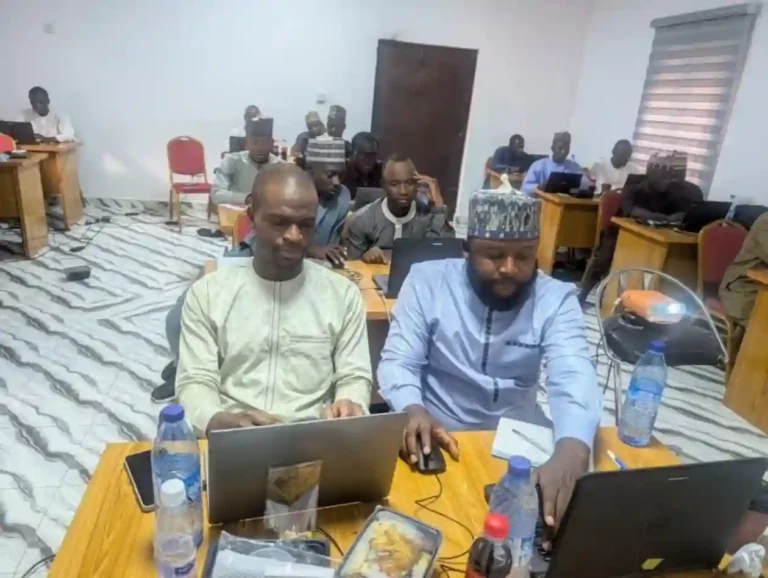
The Sokoto State Bureau of Statistics (SSBS), in collaboration with the United Nations Development Programme (UNDP) and NATVIEW Technology, has launched a comprehensive capacity-building programme to enhance data and technology skills across the state.

The training focuses on strengthening technical competencies and promoting the effective use of data to support evidence-based planning and policy formulation. Key areas covered include Data Collection and Consumer Price Index (CPI) Computation, Data Analysis and Visualisation, and Application Development for digital solutions.

According to the Bureau, “this initiative aligns with our institutional mandate to enhance data quality, deepen analytical capacity, and facilitate informed decision-making within government structures.” The programme will provide participants with hands-on experience aimed at improving socio-economic planning, driving technological innovation, and supporting digital transformation in Sokoto State.

Fully funded through a partnership between SSBS, UNDP, and NATVIEW Technology, the initiative demonstrates a collective commitment to institutional growth, sustainable development, and long-term economic progress for the state. Officials noted that it also supports Nigeria’s wider national development goals.

Reaffirming its dedication to building a modern and reliable data system, the Sokoto State Bureau of Statistics stated that it will “continue to champion initiatives that promote transparency, accountability, and inclusive growth for the benefit of citizens.”

2025 UNIUYO Recruitment Screening Portal Opened

The University of Uyo recruitment screening portal is now open for candidates who applied for various positions earlier advertised in national dailies.

Recruitment Screening Timeline

Screening Exercise Opens
Thursday, December 25th, 2025
Online application portal becomes accessible

Screening Exercise Closes
Saturday, December 27th, 2025 at 6:00 AM
Portal closes automatically at 6:00 AM

Virtual Interview (Zoom)
December 29th – 30th, 2025
Candidates will be communicated with an interview link.

Applicants are required to visit the screening portal at
https://recruitment.uniuyo.edu.ng to update and complete their information.

NUC approves FCE Yola to run degree programmes without affiliation

0

The National Universities Commission has approved the Federal College of Education, Yola to run degree programmes under the dual mandate arrangement, marking a major change in the institution’s academic operations.

The provost, Mohammed Dagereji, disclosed this at a news conference in Yola on Wednesday, explaining that the approval allows the college to award degrees independently.

Dagereji said FCE Yola was among 15 federal colleges of education mandated by the federal government to run full degree programmes without affiliation. He said the college will run 14 degree programmes out of the 38 approved by the NUC.

According to him, the 2026/2027 academic session will be the first admission cycle the college will conduct without affiliation. He added that the institution has been running degree programmes since 2014 in affiliation with the University of Maiduguri.

The provost appealed to the federal government to harmonise the Nigeria Certificate in Education and degree programmes so both can run as a single continuous programme.

He also said the college is on the Joint Admissions and Matriculation Board portal and urged prospective candidates to apply at this time. He added that candidates seeking transfer should visit https://fceyoladegree.com.ng/portal/application.

“Accordingly, candidates who wish to apply for FCE Yola degree programmes are advised to strictly choose from the 14 approved courses, and to change their course(s) at any JAMB-accredited centre.

“Applications outside these listed programmes will not be considered at this stage,” he said.

Apply for INCiTiS-FOOD Call 2 for Independent Innovators

0

The INCiTiS-FOOD project has opened Open Call 2, inviting applications from independent innovators who are developing solutions to food system challenges in African cities and towns. This call is specifically designed to support individuals, start-ups, and small and medium-sized enterprises (SMEs) working within city regions where INCiTiS-FOOD Living Labs are located.

The Open Call focuses on innovations that can improve how food is produced, processed, distributed, or accessed in urban and peri-urban areas. The project is interested in practical ideas that promote sustainable, inclusive, and circular food systems, especially solutions that can work in places where land, water, and other resources are limited.

A total of 24 innovators will be selected under Open Call 2. The selection will be done at the Living Lab level, with three winners chosen per Living Lab location. This structure ensures that innovation support is spread across all participating regions and reflects local food system needs.

Who can apply

This call is open only to independent innovators, including individual innovators, registered start-ups, and SMEs.

Applicants must be residents of African city regions that host INCiTiS-FOOD Living Labs.

Applications from outside these locations will not be considered, even if the idea itself is strong.

All applications must be submitted in English. Submissions in any other language will be automatically disqualified, regardless of content or quality.

The deadline for submission is February 9, 2026, at exactly 17:00 CET. This deadline is extremely strict. Eligibility is determined only by the system timestamp generated at the time of submission. Any application submitted at 17:01 CET or later will be automatically rejected by the system, even if the form still appears open.

Applicants are strongly advised to submit well before the deadline to avoid last-minute technical issues.

How to apply

Applications must be submitted online through the official form provided by INCiTiS-FOOD Open Call 2. Innovators are expected to clearly explain their solution, its relevance to urban food systems, and how it can create impact within their local Living Lab region.

To apply, interested applicants should complete the application form Here.

Nigerian graduates unemployable because degrees are mere paper – NBTE

0

Many Nigerian graduates with degrees are leaving school unemployable because they lack practical skills and only possess academic certificates that do not translate into real work competence, according to the Executive Secretary of the National Board for Technical Education, Prof. Idris Muhammad Bugaje.

Bugaje made this statement while responding to questions on the Nigerian Skills Qualifications Framework, NSQF, during a live radio interview on Correct FM, where he spoke extensively on the disconnect between academic qualifications and employability in Nigeria.

According to him, the country’s education system has focused too heavily on certificates while neglecting skills, leaving many degree holders without the competencies required by employers.

“But NSQ is actually supposed to complement. We are supposed to train even the degree holders to apply skills,” Bugaje said.

He stated that possessing a university degree without hands-on skills offers little value in today’s labour market, arguing that employers are more interested in what graduates can do than the certificates they present.

“Because if you have a skill and you don’t have a degree, you can get a job today anywhere. But if you come with a degree without skills, nobody will employ you. Nobody will be interested in you. You are just carrying a paper around. You will not get any job,” he said.

Bugaje explained that the popular phrase “skills, not degrees” was not intended to dismiss education but to redirect attention to the importance of practical competence alongside academic learning.

He said the goal of the NSQF is to ensure that both skilled workers and degree holders are assessed based on what they can practically demonstrate, rather than relying solely on classroom-based qualifications.

The NBTE executive secretary stressed that Nigeria must move towards what he described as functional education, noting that the absence of skills training has contributed to rising graduate unemployment across the country.

“We are supposed to produce what we call functional education,” Bugaje said.

He explained further that functional education is defined by two critical elements.

“What makes education functional? Skills and entrepreneurship. These are the two items that make an educational system functional,” he said.

According to him, graduates who acquire practical skills alongside their academic studies are less likely to remain unemployed, as they can either secure jobs or create their own sources of income.

“Skills because when they come out they will not start roaming around looking for a job. They can set up on their own,” Bugaje added.

He said the NBTE has introduced measures to integrate skills certification into tertiary education, including making skills qualifications mandatory for diploma graduates under the Mandatory Skills Qualification, MSQ.

Bugaje expressed hope that similar requirements would be adopted across universities to ensure that graduates leave school with both theoretical knowledge and practical abilities.

He noted that industries continue to complain about the lack of employable graduates despite the growing number of degree holders produced annually.

According to him, aligning education with practical skills through the NSQF would help bridge the gap between schools and the labour market, improve graduate employability, and restore confidence in Nigeria’s education outcomes.