Home Blog Page 209

N-HYPPADEC Denies Recruitment Screening Invitation

0

The National Hydroelectric Power Producing Areas Development Commission (N-HYPPADEC) has raised alarm over a purported invitation for a technical and practical screening exercise for recruitment into the Commission, allegedly scheduled to hold at Kainji Hydro Power Station, New Bussa, Niger State. The Commission described the information as “false, misleading, and baseless,” noting that it was designed to defraud unsuspecting members of the public.

N-HYPPADEC stated that “the said invitation did not emanate from the Commission,” adding that there is currently no recruitment exercise ongoing.

It urged the general public to disregard the invitation and to “always verify information through official N-HYPPADEC channels” to avoid falling victim to fraudsters. The Commission advised vigilance across all communities.

Advertisement

FG Begins $500m World Bank HOPE-GOV Programme Implementation

0

The federal government has commenced the implementation of the World Bank-assisted Human Capital Opportunities for Prosperity and Equity–Governance (HOPE-GOV) Program, a $500 million credit facility aimed at improving financial and human resource management in basic education and primary healthcare across the country.

The National Coordinator of the HOPE-Governance Program, Dr. Assad Hassan, disclosed this in Abuja while briefing the Permanent Secretary of the Federal Ministry of Budget and Economic Planning, Dr. Deborah O. N. Odoh, where the HOPE-Governance Program is domiciled.

In a statement, the Communication Officer, John Mutah, quoted Hassan as saying, “In terms of programme financing and scope, it’s a World Bank-assisted credit of $500 million, which is split into two components. One is the Program for Result while the second is Investment Project Financing.

“$480 million is earmarked to incentivize the States to achieve the Disbursement Linked Results in the two sectors while $20 million Investment Project Financing component has three key areas for implementation.

“One is programme coordination, second is verification of results at the state level as well as monitoring and evaluation and third is technical assistance for implementing agencies i.e. the states, UBEC, Ministerial Oversight Committee of the Basic Health Care Provision Fund at the Federal Ministry of Health and Social Welfare, and the Federal Ministry of Budget and Economic Planning.”

Hassan identified the programme’s key focus areas as increasing financing for the two sectors, enhancing transparency and accountability in budgeting and audit for basic education and primary healthcare, and supporting the recruitment of teachers and primary healthcare workers to address manpower gaps in both sectors.

“For HOPE-Governance, our primary objective is to see how we improve financial and human resource management in these two sectors by focusing on three key areas: the first is increase in funding for the two sectors. In this regard, we are working with the Universal Basic Education Commission as well as the Ministerial Oversight Committee, Basic Health Care Provision Fund in the Federal Ministry of Health and their counterparts at the states level.

“Then the second key area is enhance transparency and accountability in budget for both sectors, audit report, citizens format budget. Basically is about public financial management in the two sectors.

“Then the third and final area. We want to see improved recruitment and retention of teachers as well as primary health workers,” he added.

According to Hassan, the states have six Disbursement Linked Indicators, which would be tracked by the HOPE-Governance Program and appraised by Independent Verification Agents before funds are released to the states.

Providing the historical background of the programme, the National Coordinator explained that the World Bank approved the HOPE-GOV Program on September 26, 2024, following the successful negotiation of the financing agreement in August 2024.

He said the Federal Executive Council granted approval in February 2025, adding that the Financing Agreement was countersigned by the federal government in April 2025, with the programme subsequently declared effective in September 2025.

He stated that, to date, all 36 states of the Federation and the Federal Capital Territory had expressed interest in participating in the programme, culminating in the dispatch of the Subsidiary Agreements to the states for signing.

Hassan clarified that under the Program for Result, PfoR, the state governments are expected to invest in the Disbursement Linked Indicators and get incentivised by the Program.

“The way the programme is designed, you achieve something this year and you get incentivised so that you put that money back to work on the second year results,” he said.

He said the Programme will soon hire Interim verification agents who would verify the first year results by the state governments.

In her response, the Permanent Secretary of the Federal Ministry of Budget and Economic Planning, Dr. Deborah O. N. Odoh, expressed her readiness to support the Program to attain its objectives.

The briefing attracted senior officials.

She also commended the Programme for the achievements recorded within its short period of implementation.

32000 apply for 4000 Abia teaching jobs in second recruitment batch

0

Abia State Governor, His Excellency, Dr. Alex Otti OFR, has disclosed that about 32,000 people have applied in the second batch of the ongoing recruitment of an additional 4,000 teachers in the state, showing strong interest in the teaching profession.

The Governor said his administration has restored the dignity of teaching in Abia State, making teaching jobs more attractive than Civil Service positions. He explained that deliberate policies have been put in place to improve welfare, working conditions, and the general image of teachers in public schools.

Governor Otti recalled that earlier in the year, the state government recruited 5,394 teachers in the first batch of the exercise, all of whom have since resumed work from September. According to him, the recruitment has helped to strengthen learning in public schools but more teachers are still needed.

The Governor made these remarks during the funeral service of the late Chief Emmanuel Enyidedeya Emeaso, also known as Olu Eji Eje MBA 1, who was laid to rest in his country home of Umuekegbe in Isiala Ngwa South Local Government Area of Abia State. The funeral service was conducted by the Eziama-Nvosi District, Aba North Conference of the Seventh-Day Adventist Church.

While addressing the gathering, Governor Otti drew attention to the ongoing construction of new school buildings and the renovation of existing ones at the burial venue. He informed the people that similar projects are taking place in many schools across different parts of the state and are at various stages of completion.

He said the idea behind the massive school renewal is to return public schools to what they used to be in the past. He noted that teaching was once a highly respected profession during the era of the late Chief Emeaso and his father.

“Teaching profession was a dignified profession long time ago when Late Chief Emeaso and the likes of his father were teachers,” the Governor said.

“We have returned dignity to the teaching profession. You know that we recruited 5,394 teachers who resumed work in September. We saw that the number was not enough based on the massive increase in enrolment because of the free and compulsory education that we declared,” he added.

Governor Otti stated that the government deliberately made teaching more attractive than Civil Service jobs in order to encourage qualified people to join the profession and improve learning outcomes in public schools.

He further disclosed that two weeks earlier, when he checked the recruitment portal for the additional 4,000 teachers, more than 32,000 applications had already been submitted. He assured applicants that the process would be transparent and merit based.

“All the applicants will go through the processes involved in the recruitment, as everything would be on merit, as was done during the previous recruitment,” the Governor said.

Speaking on the life of the late Chief Emeaso, Governor Otti described him as a contemporary of his late father, Pastor Lazarus N. Otti, who passed on over 30 years ago. He said there was no need for excessive mourning, as Chief Emeaso lived a full life and passed away at the ripe age of 97.

In his condolence message to the family, addressed to Elder Obinna Emeaso, the Governor described the death of Chief Emeaso, who died on June 8, 2025, as a huge loss to the family, the church, and the entire Isiala Ngwa South area.

“Chief Emeaso was a respected elder statesman, seasoned administrator, and visionary leader who learned early the virtues of discipline, hard work, and responsibility. Despite the limitations of his time, he embraced education with uncommon zeal,” Governor Otti said.

He noted that the late Chief distinguished himself as a man of principle, adding that his leadership roles in the National Party of Nigeria, the National Republican Convention, and later the All People’s Party reflected loyalty, wisdom, and courage.

Governor Otti added that Chief Emeaso, who was honoured as Olu Eji Eje Mba 1 and served as Chairman of the Isiala-Nvosi Council of Chiefs, brought dignity and fairness to leadership. He urged the family to take comfort in the fact that he lived a fulfilled life and contributed greatly to his community.

The Governor was accompanied to the burial by the National Secretary of the Labour Party, Senator Darlington Nwokocha, the member representing Ikwuano, Umuahia North and South Federal Constituency, Hon. Obi Aguocha, the member representing Isiala Ngwa South State Constituency, Hon. Roland Chinwendu, the Commissioner representing Abia State in the Federal Character Commission, High Chief Victor Ikeji Ph.D, the Commissioner for Power and Public Utilities, Engineer Ikechukwu Monday, and the Mayor of Isiala Ngwa South, Hon. Nnadozie Nwaogwugwu, among others.


WASSMAS Agricultural Grant Batch A application closes January

0

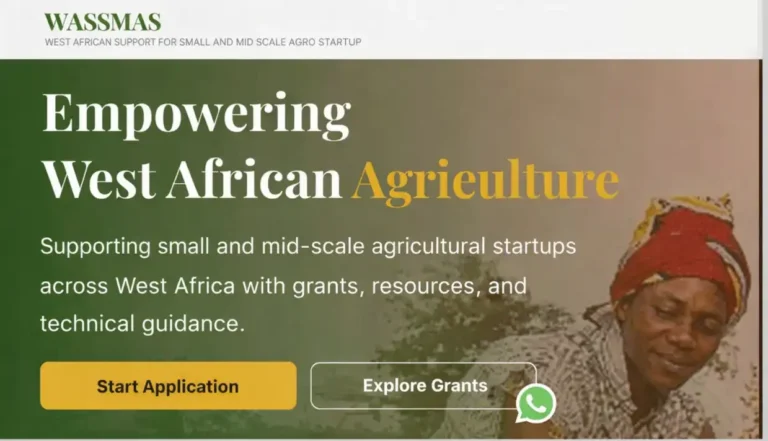
The WASSMAS Agricultural Grant Programme has issued an important application notice for Batch A, announcing that registration will officially close on January 2, 2026. The programme advised applicants to complete and submit their applications within the next 10 days, warning that late submissions will not be accepted.

According to the notice, applicants who have created a profile but have not submitted their grant application form are “strongly urged to do so immediately” to avoid disqualification. It stressed that failure to submit an application before the deadline will automatically disqualify affected applicants from Batch A.

The programme further clarified that applicants who miss the Batch A deadline “will not be eligible to apply for Batch B,” which is scheduled to commence only after the closure of the current batch. This means incomplete applications will lead to loss of opportunity under both phases.

WASSMAS also reminded applicants that creating an account does not mean an application has been submitted. “To be considered for the WASSMAS Agricultural Grant Programme, you must fully complete and submit your application form,” the notice stated.

Applicants were advised to confirm successful submission by logging into their dashboard and checking the Active Applications section. If the dashboard shows “1 Active Application,” the submission is successful, but if it shows “0 Active Applications,” the application has not been submitted.

If you are yet to apply, visit the WASSMAS grant portal to apply.

Oshimili South Council Pays N100,000 to 1000 Small Business Owners

0

Oshimili South Local Government Council in Delta State has commenced the empowerment of one thousand small-scale business owners with the payment of one hundred thousand naira to each beneficiary, as part of efforts to support grassroots growth.

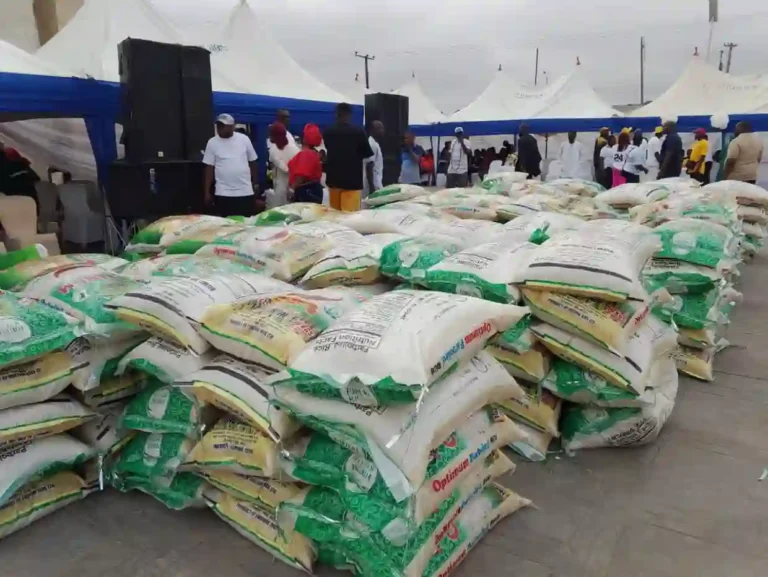
Apart from the cash support, 50kg bags of rice were also presented to the wards in Oshimili South Local Government Area for onward distribution to residents and registered members of the wards.

The empowerment programme, tagged EKO Empowerment for Sheriff’s M.O.R.E. Agenda, took place at the Secretariat of Oshimili South Local Government Council and attracted a large crowd of traders, physically challenged persons, indigent residents, and community members.

Delta State Governor, Elder Sheriff Oborevwori, restated his administration’s commitment to a people-welfare-centered government, declaring that the vision for a prosperous Delta State remains a shared responsibility between the government and the people.

The Governor, represented by the Deputy Governor, Sir Monday Onyeme, commended the Chairman of Oshimili South Local Government Council, Dr. Kelvin Ezenyili, for his foresight and consistency in aligning local initiatives with the state’s M.O.R.E. Agenda.

He noted that the empowerment programme serves as a direct catalyst for grassroots development, ensuring that the dividends of democracy reach every nook and cranny of the state.

“As we approach the end of the year, there is no better way to celebrate the spirit of the season than by lifting our people and providing them with the tools they need to build a sustainable future. Today’s exercise is a practical extension of our administration’s M.O.R.E. Agenda,” he said.

The Governor also sued for peaceful coexistence among residents of the local government area, stressing that peace remains critical to socio-economic development.

Speaking at the event, the Chairman of Oshimili South Local Government Council, High Chief Obi Kelvin Ezenyili, said his administration remains committed to empowering youths, women, and men through skills development and the promotion of small-scale businesses.

He explained that the programme, especially during the festive period, was designed to support small business owners who need about N50,000 to purchase equipment or as much as N100,000 to restock their shops.

Beneficiaries expressed gratitude to the council chairman, assuring that the intervention reflects good governance at the grassroots and will positively impact their livelihoods across communities.

Adamawa Targets 20% Poverty Reduction With N7bn Fintiri Business Wallet

0

The Adamawa State Government has projected an additional 20 percent reduction in the poverty rate following the injection of seven billion naira into the Fintiri Business Wallet initiative in 2025. Governor Ahmadu Umaru Fintiri made this known while flagging off the 2025 third quarter disbursement of 50,000 naira to 100,000 beneficiaries under the Fintiri Business Wallet.

The event, which took place at the Banquet Hall of the Government House, Yola, marked the official launch of the 2025 last quarter disbursement of N50,000 to 100,000 small-scale business owners across the state.

The empowerment initiative by the Ahmadu Umaru Fintiri administration aims to stimulate business growth and expand economic opportunities for citizens in Adamawa. Represented by his Deputy, Professor Kaletapwa Farauta, the governor said the Fintiri Wallet is one of the key programmes designed to impact lives positively.

According to him, “This initiative is to ensure that the economy of the state continues to thrive and that the living standard of our people improves.”

Governor Fintiri stated that 240,000 small-scale businesses have so far been empowered through the Fintiri Business Wallet in the last two years. He explained that previous interventions contributed to a 14 percent poverty reduction in Adamawa, moving from 74 percent to 60 percent.

The Commissioner for Entrepreneurship Development, Hammajumba Gatugel, said the N50,000 transfer to 100,000 beneficiaries marks another milestone in the economic history of the state. He commended the leadership of Governor Ahmadu Umaru Fintiri, noting that his administration continues to transform the state’s economy and other key sectors.

FG earmarks N195bn for Presidential Amnesty Programme from 2026 to 2028

The Federal Government has set aside a total of N195 billion for the Presidential Amnesty Programme (PAP) between 2026 and 2028, according to the latest review of Nigeria’s Medium-Term Expenditure Framework (MTEF).

An analysis of the MTEF for the 2026–2028 period shows that N65 billion has been allocated to the programme for each of the three years—2026, 2027, and 2028—bringing the total planned spending to N195 billion. The Amnesty Programme was originally established to rehabilitate and reintegrate former militants from the Niger Delta region.

According to previous budget reports, the Federal Government spent N65 billion on the programme in the 2024 fiscal year, as revealed in the Budget Performance Document for the fourth quarter of 2024. The same amount was also disbursed in 2023, meaning a total of N130 billion was spent on the programme within those two fiscal years alone.

However, concerns have been raised about how funds under the programme are being managed. In November 2024, a report by the Auditor-General of the Federation revealed that more than N6 billion was withdrawn without proper auditing procedures.

The audit report stated that tuition fees were paid to several universities for PAP beneficiaries without adequate documentation to verify the identities of the students. It specifically noted that N1.53 billion was paid as tuition fees without supporting documents such as receipts, admission letters, or proof of payment.

According to the Auditor-General, “The sum of N1,529,669,500 was paid to various universities as tuition fees for students under PAP without attaching relevant supporting documents.” The report added that the action violated Paragraph 708 of the Financial Regulations, 2009, which prohibits payments for services not yet rendered or goods not yet supplied.

The report also cited breaches of Paragraph 603(i) of the same regulations, which requires payment vouchers to include full details of services rendered. It further highlighted that the irregularities were linked to weaknesses in the internal control system at the PAP office in Abuja.

The management of the programme reportedly failed to respond to requests for clarification on the issues raised.

Further findings indicated that N3.62 billion was raised without undergoing internal audit checks. Additionally, N29 million was issued as cash advances to officers for procurement purposes, far exceeding the approved limit of N200,000.

The report noted that some officials received multiple advances without retiring previous ones, which also breached existing financial regulations. It revealed that N87.7 million was spent on the purchase of store items, but there was no evidence that the items were properly recorded in store ledgers.

Despite these findings, the Federal Government continues to allocate significant funds to the Amnesty Programme for the coming years.

Nasarawa approves recruitment of 1000 teachers for basic schools

The Nasarawa State Government has approved the recruitment of 1,000 new teachers to strengthen basic education and improve learning outcomes for pupils across the 13 Local Government Areas of the state.

The approval was disclosed by the Executive Chairman of the State Universal Basic Education Board, Kassim Mohammed-Kassim, in Lafia on Tuesday, shortly after he received a letter of commendation from Governor Abdullahi Sule. The letter was presented to him by the Secretary to the State Government, Labaran Magaji, in recognition of the achievements recorded under his leadership of the Board.

Mohammed-Kassim attributed the progress recorded so far to the collective efforts of staff of the Board and highlighted key reforms introduced within six months of assuming office. According to him, these reforms include the redeployment of teachers from offices back to classrooms and improved monitoring of school projects across the state.

He said, “The governor has approved the recruitment of 1,000 additional teachers, largely to serve rural communities where shortages are most acute.”

He further explained that an internal review revealed that a large number of qualified teachers were previously assigned to office duties rather than teaching in schools. “We had discovered about 4,000 qualified teachers posted to offices, but we have so far redeployed 1,009 back to classrooms, and plans are underway to redeploy another 1,000,” he stated.

Mohammed-Kassim noted that the newly recruited and redeployed teachers are expected to focus mainly on rural areas where schools face serious shortages of teaching staff. He added, “We see these as rural teachers, and we are appealing for special allowances to motivate those willing to serve in hard-to-reach areas.”

He expressed appreciation to Governor Sule for the letter of recognition, describing it as encouraging and motivating. He pledged to intensify efforts to ensure that children in public primary schools across the state receive quality education. He also reaffirmed the commitment of the Nasarawa SUBEB to revitalising basic education, stressing that long-term development must start with a solid educational foundation.

While presenting the commendation letter, the Secretary to the State Government said the decision followed deliberations and approval by the State Executive Council. According to him, the gesture was meant to acknowledge the performance of the NSUBEB Executive Chairman since assuming office.

Magaji said the administration of Governor Sule places high priority on basic education as the foundation for human capital development. He noted that visible improvements had been recorded under Mohammed-Kassim’s leadership.

He said, “Since the assumption of office of our dear friend, the Executive Chairman of SUBEB, Dr. Kassim Mohammed-Kassim, we have witnessed a clear transformation in the way primary education is being handled in Nasarawa State.”

Magaji added that records showed many staff who were previously redundant in offices had been redeployed to classrooms, helping to address the shortage of teachers in public schools. He also pointed to improvements in the execution of school projects, saying closer supervision had led to better quality delivery.

“Unlike before, when school projects were handled with little seriousness, we now see quality delivery through close monitoring by the chairman and his team. There is a visible improvement in our primary school system,” he said.

He explained that the governor’s commendation was part of a reward system designed to promote transparency, diligence, and effective service delivery in public office. He also noted improvements in school infrastructure, including classrooms and toilets, due to stricter supervision.

Our correspondent reports that Magaji also commended Mohammed-Kassim for leading the organisation of the first-ever Basic Education Summit in Nasarawa State, aimed at addressing challenges affecting basic education across the 13 local government areas.

Adamawa begins gratuity payment for retirees with timetable

0

Adamawa State has commenced the payment of gratuity to retirees. The government also stated that death benefits and local government gratuities will follow suit after this phase. Below is the payment timetable, arranged clearly according to day, date, and the months and years covered.

Day 1 takes place on Wednesday, 24/12/2025. It covers retirees processed in November 2015, December 2015, and January 2016. Permanent Secretaries and High Court Judges are also included on this day.

Day 2 is scheduled for Saturday, 27/12/2025, and covers February 2016, March 2016, and April 2016.

Day 3 will be held on Monday, 29/12/2025, for May 2016, June 2016, and July 2016.

Day 4 comes up on Tuesday, 30/12/2025, covering August 2016, September 2016, and October 2016.

Day 5 is on Wednesday, 31/12/2025, for November 2016, December 2016, and January 2017.

Day 6 holds on Friday, 02/01/2026, covering February 2017, March 2017, April 2017, and June 2017.

Day 7 is Saturday, 03/01/2026, for July 2017, August 2017, and September 2017.

Day 8 is Monday, 05/01/2026, covering October 2017, November 2017, and December 2017.

Day 9 falls on Tuesday, 06/01/2026, for January 2018, February 2018, and March 2018.

Day 10 is Wednesday, 07/01/2026, covering April 2018, May 2018, and June 2018.

Day 11 ends the schedule on Thursday, 08/01/2026, covering July 2018, August 2018, and September 2018.

Concerned citizens can also refer to the attached schedule.

PAWECA data capture to resume after Christmas break

0

Dr. Michael Zira, Director General of PAWECA, has announced that data capture for individuals who filled PAWECA forms will resume after the Christmas break. He said the exercise will take place at the PAWECA office and all 21 Local Government Area secretariats.

According to him, residents in far-off areas should report to their local government desk officers on December 29th for name documentation. “PAWECA officials will visit all 21 LGAs on December 30th for a data capture mop-up,” Zira said.

He added that payments will commence after the exercise. Zira reassured the public that “everyone will be attended to in due course.” The update was shared to guide pending beneficiaries