Home Blog Page 213

Lagos graduates 250 entrepreneurs, awards grants at Startright programme

0

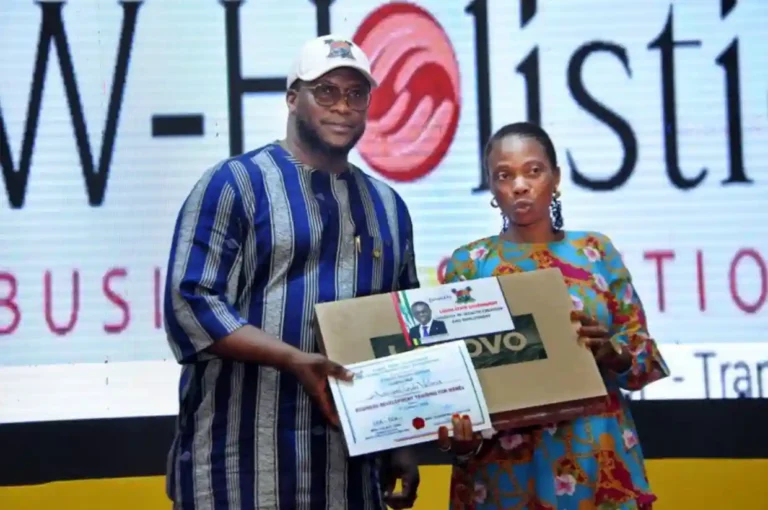
The Lagos State Government has reaffirmed its commitment to economic inclusion, wealth creation, and job sustainability as beneficiaries of the Startright Lagos Entrepreneurship Programme graduated and pitched innovative business ideas at a Graduation and Business Pitching Ceremony held on Thursday at the Adeyemi-Bero Auditorium, Alausa, Ikeja.

The programme, which commenced with 250 aspiring entrepreneurs and MSME owners drawn from across the state, was designed to equip participants with practical skills, the right entrepreneurial mindset, and strong business foundations required to build viable enterprises capable of creating jobs and contributing meaningfully to Lagos’ growing economy.

Delivering a goodwill message, the Chairman of the House Committee on Wealth Creation and Employment, Hon. Foluke Osafile, described the programme as a timely and strategic intervention that empowers young people to build financially sustainable businesses. She commended Governor Babajide Olusola Sanwo-Olu and the Ministry of Wealth Creation and Employment for their sustained commitment to youth empowerment and economic development, noting that the programme clearly reflects a Lagos that is working.

Earlier, in his welcome address, the Honourable Commissioner for Wealth Creation and Employment, Hon. Akinyemi Ajigbotafe, described Startright Lagos as a deliberate, results-driven initiative designed to move Lagosians from ideas to execution and from survival to sustainability. According to him, the programme goes beyond conventional training, focusing on building confidence, discipline, and capacity.

He stressed that “Startright Lagos is about helping our people start right, grow right, and build businesses that will stand the test of time,” while reaffirming the State Government’s commitment to empowering citizens to become wealth creators and employers of labour in the state.

Implemented in partnership with W-Holistic Business Solutions, the programme featured weeks of intensive training in financial literacy, record keeping, brand development, digital skills, and business growth strategies. Participants underwent a blend of physical and virtual bootcamps supported by hands-on mentorship and exposure to real-world business tools.

Speaking at the event, the Permanent Secretary, Ministry of Wealth Creation and Employment, Mrs Lolade Aina, emphasised that StartRight Lagos was designed to help entrepreneurs build strong foundations from the outset. She noted that many businesses fail not because ideas lack potential but because they are built on weak structures, adding that the quality of ideas presented reflected the effectiveness of the training.

Also addressing the gathering, the Permanent Secretary of the Ministry of Youth and Social Development, Pharm. Mrs. Oluwatoyin Oke-Osanyintolu, highlighted Lagos’ youth population, estimated at 60 per cent, as a major asset for economic growth. She stressed the need for targeted skills development and strategic collaboration to fully harness the potential of young people across the state.

In her keynote address, Mrs. Oluyemisi Obe, Managing Director of Prothrive Astute Heights Ltd., emphasised the importance of intentional foundations, resilience, and continuous learning in building sustainable businesses, urging participants to remain adaptable in a changing economic environment.

Providing an overview of the programme, the founder and Chief Executive Officer of W-Holistic Business Solutions, Mrs. Lanre Oniyitan, outlined the structure and outcomes of the initiative, while the Ministry commended facilitators, mentors, and members of the panel of judges for their professionalism and dedication throughout the programme.

The high point of the ceremony was the final pitching session, where Ms. Oluwakemi Olajiyan of Nutraboom Nutrition emerged overall winner and received ₦2 million. Ms. Olamide Olajide of Shoniverse Leathers emerged second with ₦1.5 million, while Ms. Deborah Fadunsanya of The De Savour Shop emerged third with ₦1 million.

In addition, 30 existing business owners received laptops, while 170 participants were supported with financial grants to strengthen their enterprises and expand operations. The event concluded with certificate presentations and moments of celebration, with the cutting of the graduation cake reflecting the Ministry’s core values of purpose, excellence, and growth.

Startright Lagos is a flagship initiative under the THEMES Plus Agenda of Governor Babajide Olusola Sanwo-Olu, aligned with the administration’s vision for economic inclusion, skills development, wealth creation, and sustainable employment across the state.
Advertisement

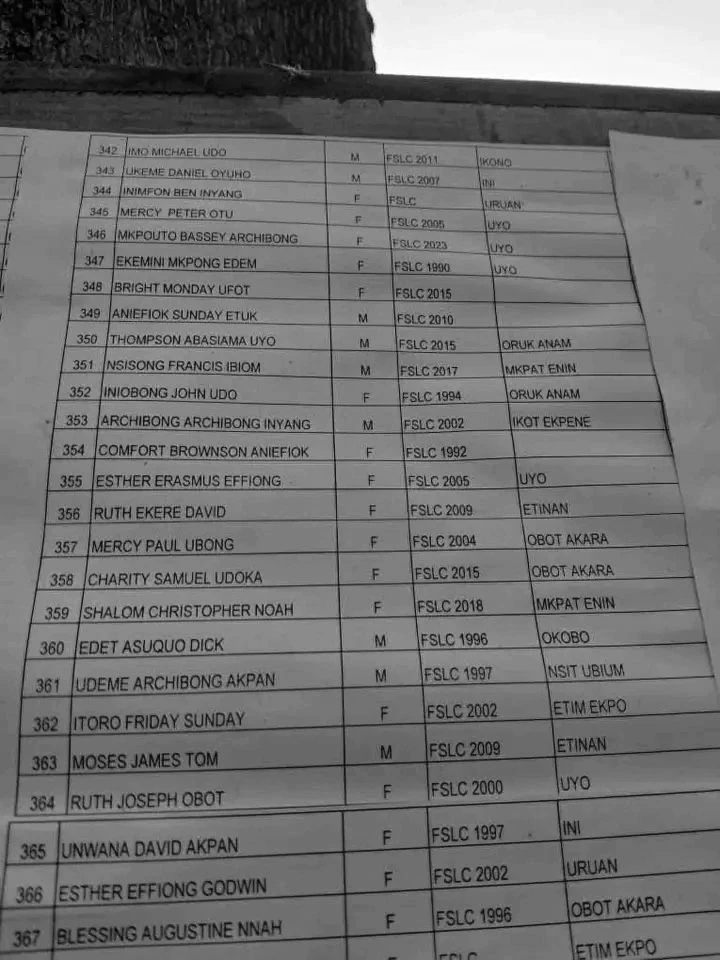
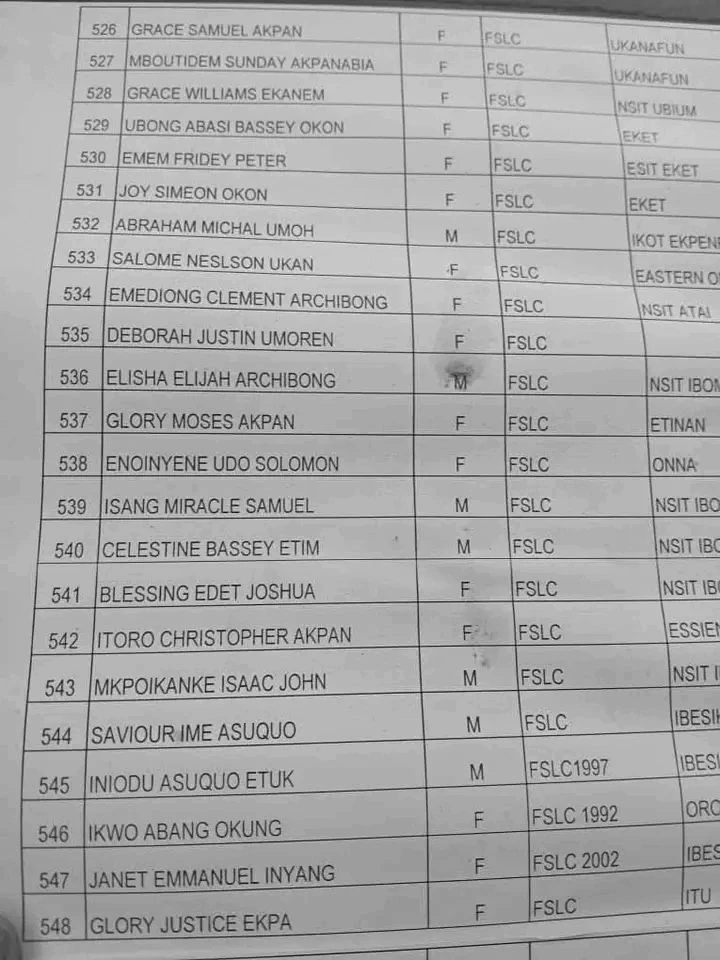
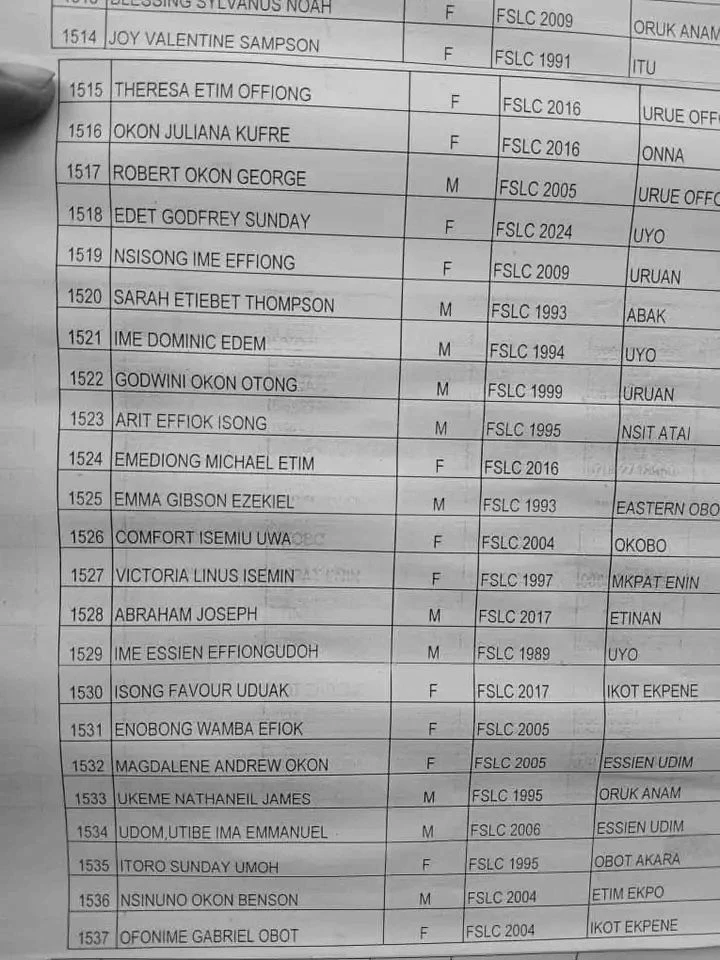
Akwa Ibom Health Ministry Releases Shortlisted Candidates for Interview

The Akwa Ibom State Ministry of Health has released the list of shortlisted candidates for its recruitment interview exercise. In a notice titled Shortlisting and Invitation for Recruitment Interview, the ministry said candidates should check notice boards at the Ministry of Health, Idongesit Nkanga Secretariat, for the complete list.

“I am directed to inform the underlisted applicants to appear for the Junior Staff Recruitment Interview,” the notice stated.

The interview for Junior Community Health Extension Workers (JCHEW) and Mortuary Attendant is scheduled for Monday, 22nd December 2025, 8:00 am, at the Conference Room, Ministry of Health, Uyo.

Health Attendant interviews will hold on Tuesday, 23rd December 2025, 8:00 am, at the venue.

Applicants must bring original credentials for verification. The notice was signed by Atakpa James Atakpa for Permanent Secretary.

Heirs Energy secures $750m Afreximbank facility to scale oil and gas production

0

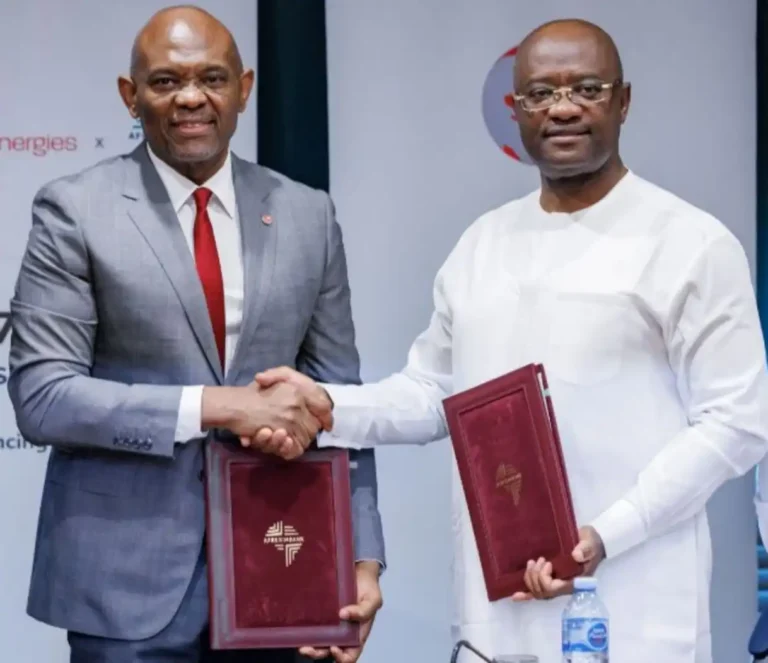
Nigeria’s indigenous energy firm, Heirs Energy, has secured a $750 million financing facility from the African Export-Import Bank to expand its oil and gas operations, with expectations that the deal will significantly raise production levels.

The facility is projected to increase crude oil output to about 100,000 barrels per day and gas production to roughly 250 million cubic metres. The agreement was signed on Saturday in Abuja and is structured to strengthen Heirs Energy’s upstream operations while supporting Nigeria’s drive for energy sufficiency and industrial growth.

Speaking at the signing ceremony, the Chairman of Heirs Holdings, Tony Elumelu, described the transaction as a strong vote of confidence in African enterprises and financial institutions. He praised Afreximbank for its willingness to back large-scale indigenous projects.

“The most impactful and catalytic finance institution in Africa is Afreximbank. They have grown the capacity and the boldness to support African businesses,” Elumelu said.

He noted that the bank had played a key role in Heirs Energy’s growth journey, adding that the latest financing showed African capital working for African businesses. According to him, Afreximbank’s readiness to restructure existing arrangements and provide room for expansion reflected confidence in the company’s long-term prospects.

“For Afreximbank and others to come together and say, okay, we can restructure this and give you room to scale, it again shows Afreximbank’s belief in us. They started this journey and are now helping us move to the next level,” he said.

Elumelu added that financial support also comes with responsibility, stressing that performance was central to sustaining trust. He disclosed that despite severe challenges linked to oil theft, the company had never defaulted on its financial obligations.

Recounting the acquisition of Oil Mining Lease 17, Elumelu said the transaction faced prolonged delays under the administration of former President Muhammadu Buhari. He explained that the delay was partly due to concerns that the asset was considered too large for private sector ownership.

“Our government at the time refused to approve it because it was considered too big for the private sector, forgetting that Shell itself was a private sector entity,” he said. He added that the delay imposed significant financial costs on the company before the acquisition was eventually concluded.

The President of Afreximbank, Dr George Elombi, said the bank’s support for Heirs Energy aligned with its wider commitment to strengthening Africa’s energy sector, which he described as critical to economic stability across the continent.

“If we did not support the energy sector, about 23 African countries would be in serious trouble,” Elombi said. He disclosed that the bank was preparing additional billion-dollar interventions aimed at stabilising the sector and supporting long-term growth.

Elombi added that Afreximbank’s African ownership strengthened its resolve to remain a dependable partner to businesses during both favourable and challenging periods.

Providing details of the facility, the Executive Director and Chief Financial Officer of Heirs Energy, Samuel Nwanze, said the financing was designed to consolidate recent gains and unlock the next phase of growth for the company.

“Currently, we are producing over 50,000 barrels of oil per day and about 120 million cubic metres of gas. This funding is designed to help us scale to about 100,000 barrels per day and 250 million cubic metres of gas,” Nwanze said.

He disclosed that when the company acquired OML 17 from Shell, Total and Eni, it raised about $1.1 billion, most of which had been repaid after nearly four years of operations.

According to him, the new facility, structured under a five-year reserve-based lending framework, includes refinancing of existing debt as well as fresh capital for expansion.

“One leg is refinancing of existing debt. We are also structuring what we call a reserve-based lending facility. Because we have grown the capacity of the assets, we are getting additional money. The additional money will be used to pursue growth, while part of it will go towards refinancing our existing debt,” he said.

Nwanze said increased gas production from OML 17 had already boosted power generation across Nigeria’s eastern domestic gas network, improving capacity utilisation at plants such as Geometric and Transcorp.

“If we continue growing the business, we believe we can make an even greater impact on energy supply and sufficiency, not just for Nigeria but across the continent,” he said.

EU Conflict Prevention Project Targets 95000 People in Zamfara and Katsina

The Head of Programmes Centre for Democracy and Development (CDD West Africa), Mary Okpe, has disclosed that the recently launched European Union (EU) project on conflict prevention, crisis response and resilience (CPCRR) in Zamfara and Katsina states targeted over 95,000 people.

Speaking in an interview shortly after the formal launching in Gusau, CDD head of the Programs, Mary Okpe, explained that the project on CPCRR, funded by the EU, with support from partners, was established in Katsina and Zamfara states, aiming at peace building, and added that in Zamfara state, they would work in two local government areas for now.

“Centre for Democracy and Development (CDD), International Organisation for Migration (IOM) and Mercy Corps, with support from the European Union (EU), have launched the program in Katsina and Zamfara states, in Zamfara, we are going to work in two LGAs for now,” she stated.

She maintained that the project was on conflict mitigation and resilience, working with different segments of the community, media, CSOs, traditional rulers, youth groups and stakeholders.

“In this project on peace building, the media are the first target who would pass the message, help the community to understand the actual content rather than sensational reportage,” she said.

The CDD head of the program further said that the programme is about turning resilience into lasting peace and stability, targeting over 95,000 people, in Katsina and Zamfara States.

Recently, the IOM chief of mission, Sharon Dimanche, emphasised that conflict response is very critical to society and the community.

“Peace can not be imported; it must be built from the community. IOM would continue to partner with organisations for the development of peace building,” she stated.

Also, the EU Ambassador in Nigeria, Gautier Mignot while in Zamfara state disclosed that conflict prevention, crisis response and resilience is one of the first rapid response project, called for special attention to most vulnerable people that includes women, children and disabled persons in the community nationwide efforts.

Zulum launches 2025 free transport scheme for 1050 persons in Borno

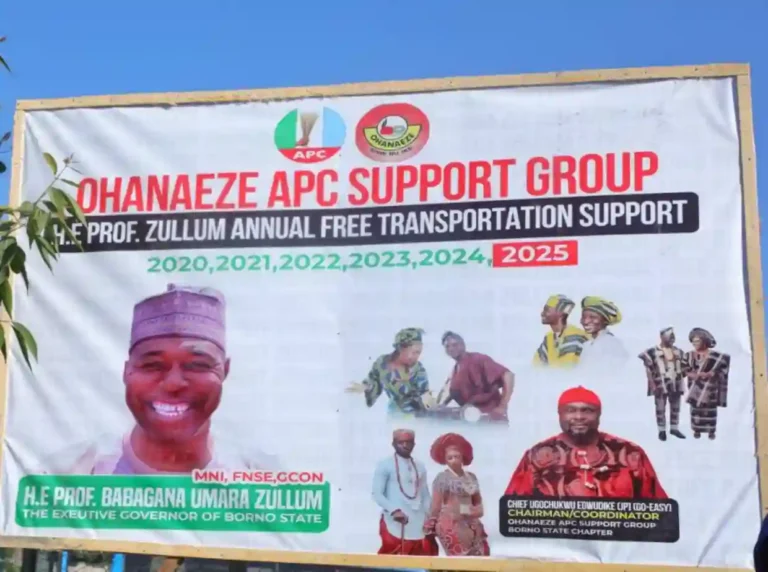
Borno State Governor, Babagana Umara Zulum, on Sunday launched the 2025 Free Annual Transportation Programme for 1,050 non-indigenes and support to vulnerable people across the state.

The initiative, according to the state government, reaffirms the administration’s commitment to compassion, inclusivity and people-centred governance for residents and other inhabitants of Borno State.

The Free Annual Transportation Programme, which began in 2020, has continued to provide mobility support to thousands of Nigerians, helping them travel safely across states during the festive season, regardless of ethnicity, religion or social background.

Governor Zulum was represented at the launch by the Chairman of the Implementation Committee, Chief Ugochukwu Egwudike, who explained that the programme was designed to reduce hardship faced by low-income earners and vulnerable groups, especially during Christmas and New Year celebrations.

Egwudike said the initiative goes beyond transportation, noting that it also aims to promote social cohesion and national unity by reconnecting families separated by economic and security challenges.

He recalled that “over the years, the scheme has reunited families who had been unable to travel home for three to five years, enabling them to celebrate Christmas with their loved ones”.

Egwudike further disclosed that “during the previous exercise, beneficiaries also received ₦30,000 each, paid directly into their bank accounts to cushion financial pressures and ensure transparency in disbursement”.

Giving details of the 2025 exercise, the committee chairman said the programme covers all six geopolitical zones of the country.

He stated that a total of 320 passengers would be transported safely on day one, 280 passengers on day two, and 150 passengers on day three, while arrangements were made to ensure all travellers reach their destinations without difficulty.

“A total of 750 people are expected to travel in batches between today, Monday and Tuesday, while 300 widows, orphans and other vulnerable groups will receive palliatives on the 4th day of the exercise being 24th December,” Egwudike said.

The Secretary of the Christian Association of Nigeria, CAN, Borno State Chapter, Apostle Joshua Akeredolu, described the initiative as timely and impactful, particularly for Christian faithful travelling to celebrate Christmas.

Akeredolu praised Governor Zulum’s inclusive leadership and offered prayers for his continued success and greater service to humanity.

The Chief of Idoma Community in Borno State, Jonah Odo, also described the programme as a practical demonstration of the governor’s humane and responsive leadership.

Odo said the initiative has had a positive impact on social welfare, interfaith harmony and national integration in the state.

He added that the Idoma community in Borno State appreciates the governor for the support extended to non-indigenes and urged other state governors to emulate the gesture for national unity.

The Free Annual Transportation Programme remains one of the flagship social intervention initiatives of Governor Zulum’s administration, providing annual relief and mobility support to Nigerians nationwide.

FG to Launch N150bn End-of-Life Vehicle Programme

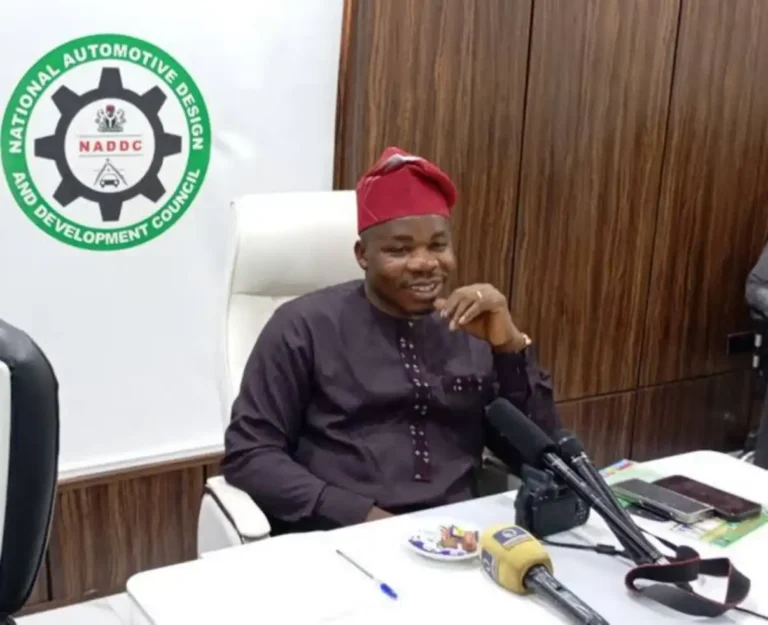
The federal government through the National Automotive Design and Development Council, NADDC, has expressed readiness to introduce a comprehensive End-of-Life Vehicle programme estimated to be worth over N150 billion annually, alongside stricter checks on all imported used cars starting from 2026.

Director General of NADDC, Mr. Oluwemimo Osanipin, made this known at a Media Parley with the Commerce and Industry Correspondents’ Association of Nigeria, CICAN, on Friday in Abuja, where he outlined reforms expected to reshape Nigeria’s automotive industry.

Osanipin described the planned measures as necessary for environmental protection, public safety, and economic growth, while admitting they would face initial public “pushback” due to changes in long-standing practices.

According to him, the End-of-Life Vehicle policy, already approved for implementation, will be modeled after systems used in developed countries. It will require a fee at the point of new vehicle registration to fund environmentally safe disposal when the vehicle reaches the end of its usable life.

“When you get to end-of-life, you can’t see all those abandoned vehicles by the road. It means somebody has to be responsible for the disposal,” Osanipin said.

He explained that the programme would operate as a scrap-to-cash system, allowing vehicle owners to benefit financially when they turn in old vehicles instead of abandoning them. He added that the circular economy linked to vehicle recycling could generate over N150 billion every year.

“It means when a vehicle gets to that end-of-life, the owner turns them in,” he said.

“And when they turn them in, the people that are going to, the recycling firms, we separate them, pull out all those second-hand parts that can still be used, and develop what they call second-hand markets. So internally, we also can develop our own second-hand markets through this.”

Osanipin further noted that more than 85 percent of vehicle parts remain useful at end-of-life and can be recycled, creating jobs across collection, dismantling, resale, and manufacturing value chains.

“It means if someone has a vehicle, you can turn it in. Instead of abandoning those vehicles by the roadside, you can turn it in and still make something out of it. And the circular economy associated to that is going to be billions of Naira,” he said.

On vehicle imports, the NADDC boss disclosed that the council will begin enforcing mandatory pre-export certification for all used vehicles brought into Nigeria. He said this standard practice exists in several African countries but is currently missing locally.

Osanipin said the policy will curb the dumping of unsafe, rusted, and end-of-life vehicles into Nigeria. He recalled a meeting with a foreign exporter who admitted sending eight containers of end-of-life vehicles to Nigeria because “that’s where we can make the highest profit.”

“We will ensure that we hold this importer responsible so that whatever you are buying, you know what you are buying,” he said, adding that exporters, not Nigerian buyers, would bear certification costs.

Looking ahead, Osanipin said the council is preparing for a future dominated by electric vehicles, EVs. He confirmed that National Occupational Standards for EV technician training and certification have been released to build local maintenance capacity.

He cited recent Chinese policies phasing out internal combustion engines as an urgent signal for Nigeria to adapt and protect its automotive market from being left behind.

On local manufacturing, Osanipin said progress has been made in producing components such as tires, brake pads, and batteries, with plans to support local firms against cheaper but often inferior imports.

He also announced upcoming prototypes, including a Nigerian-designed tricycle, a locally developed bus, and a university-led electric campus bus project.

Osanipin revealed plans to convert the Nigerian Automotive Industry Development Plan, NAIDP, from a policy framework into law.

“Investment in auto is huge. They will need an act,” he said, confirming that a draft Auto Industry Bill will be submitted to the National Assembly soon.

Appealing for media support, he compared the reforms to a painful but necessary injection.

“When the pushback comes, we need you to explain to Nigerians what we are trying to do and the purpose why we are doing that,” Osanipin said, stressing that 2026 would mark a turning point for Nigeria’s automotive industry.

Ihifix Trains Over 15000 Entrepreneurs in Nigeria and Diaspora

0

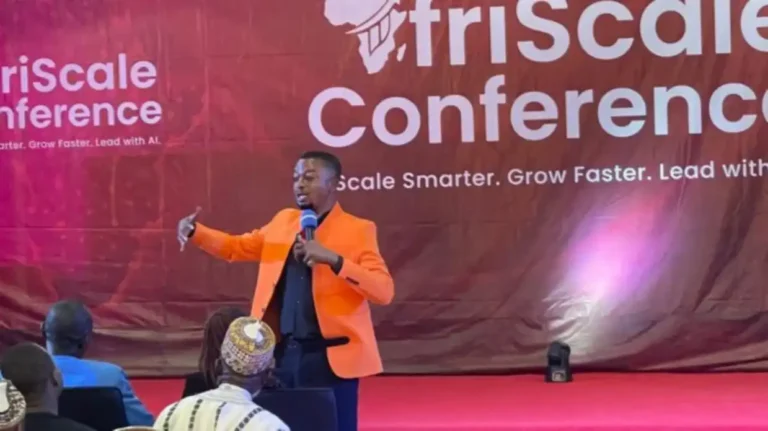
Ihifix Digital Technologies has intensified its drive to build what it describes as Africa’s biggest business movement after training more than 15,000 entrepreneurs across Nigeria and the diaspora in 2025 alone.

The renewed push was announced at the Afriscale 2025 Conference in Kaduna, which brought together business owners, investors, tech leaders and policymakers under the theme “Scaling with Intelligence: How AI Is Powering Africa’s Next-Generation Businesses.”

Convener of the conference, Emmanuel Odeh Adikpe, said Afriscale was designed to equip entrepreneurs with tools, structures and networks needed to scale faster without increasing overhead costs.

According to him, Ihifix’s work has expanded beyond Nigeria, with participants from the United States, the United Kingdom and several African countries joining both physically and online.

“We have trained more than 15,000 entrepreneurs this year alone, and that is because businesses in Africa already have what it takes to serve global markets,” he said. “They only need the right structure, tools and community to scale. What we are doing here is connecting those dots.”

Adikpe explained that the conference targets existing business owners rather than beginners, with sessions focused on strengthening current products and services.

“Everyone coming here is already in business. We are helping them optimise what they do, tweak it and point them to systems that can help them sell better, market better and build sustainable structures,” he said.

On artificial intelligence, Adikpe said the programme prioritises practical and business-ready applications that can be deployed immediately.

“A lot of things business owners do manually can be automated. We’ve been training them for months on using AI for customer targeting, ads, automation, chatbots and segmentation. Understanding where your customer is every time gives you leverage,” he added.

He disclosed that selected participants would receive seed funding, while others would benefit from branding support, websites, e-commerce setups and digital advertising packages to help accelerate growth.

Speaking at the event, the Special Assistant on IT to the Kaduna State Governor, Musa Bello, advised entrepreneurs to see AI as an opportunity rather than a threat.

“Artificial intelligence is not here to take away people’s jobs but to make work easier,” he said, urging participants to collaborate and adopt smarter methods in running their businesses.

A lecturer and entrepreneur at the conference, Eugenia Ndukwe, stressed the importance of strong internal structures for businesses hoping to benefit from AI.

“We are here because we want to scale our businesses. But the foundation must be solid. Confidence, structure and problem-solving must come before the tools,” she said.

Ndukwe also called on government to reduce taxes and expand access to funding for scalable ideas, noting that such support could significantly impact the economy.

One of the participants, Aisha Raji, who runs a refreshments business, said the training exposed her to new possibilities.

“I got many business strategy tips here and it’s a game changer for me,” she said.

Organisers said Afriscale is positioned to become one of Africa’s largest business-support movements, with a mission to help entrepreneurs scale faster through AI-powered tools, structured mentorship, funding support and cross-continental networking in Africa today.

Nigeria Renewable Energy Investment Jumps to $250m

0

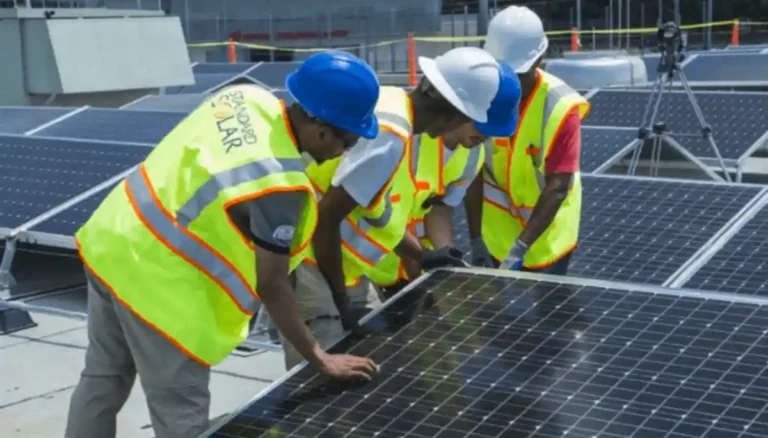
An impact evaluation report released by has revealed that investment in Nigeria’s renewable energy sector has grown significantly, rising from $90 million to $250 million between 2018 and 2025.

The report also showed that sustained investment across the renewable energy ecosystem has helped transform the lives of over one million Nigerians through improved access to clean and reliable energy solutions.

The disclosures were made during the presentation of All On’s Impact Evaluation Report 2025 at a special session held on Tuesday in Lagos, where stakeholders reviewed the company’s contributions to Nigeria’s evolving energy landscape.

Speaking at the event, All On Chief Executive Officer, Caroline Eboumbou, said the findings of the report confirmed that the organisation’s strategy is delivering results in communities that remain unserved and underserved.

“This report confirms that our approach is working. By combining patient capital, technical assistance, and ecosystem support, we have unlocked scalable and sustainable energy solutions for Nigeria’s unserved and underserved communities,” Eboumbou said.

She explained that when All On entered Nigeria’s energy market in 2016, nearly half of the country’s population lacked access to electricity, while the sector was facing an estimated 92 percent annual funding gap that limited growth and innovation.

According to her, All On responded by adopting a risk-tolerant approach built around catalytic investments, innovative financing mechanisms, and ecosystem-building strategies designed to accelerate progress toward universal energy access.

The report noted that between 2018 and 2024, All On invested in more than 50 businesses operating within the energy space and supported over 80 enterprises through grants and technical assistance.

These efforts enabled the connection of more than 230,000 households, businesses, and public facilities to energy solutions, improving daily activities, productivity, and service delivery across multiple sectors.

All On further disclosed that since 2018, the number of players operating in Nigeria’s energy sector has doubled, while overall sector investment has nearly tripled, increasing from $90 million to over $250 million within the period under review.

The Impact Evaluation Report 2025 highlighted that All On’s sustained interventions have reshaped Nigeria’s energy ecosystem, contributing to measurable improvements in affordability, reliability, and access for end users nationwide.

It also restated that at the time of All On’s market entry in 2016, almost half of Nigeria’s population lacked electricity access, underscoring the scale of the challenge the organisation set out to address.

Against this backdrop, the company implemented a strategy combining catalytic investments, innovative financing options, and ecosystem-building initiatives to drive faster progress toward closing the energy access gap.

Between 2018 and 2024, investments and enterprise support provided by All On strengthened the operational capacity of energy providers while reducing costs and improving service delivery for consumers.

The report added that cleaner energy solutions delivered notable social and environmental benefits, with about half of beneficiary households reporting improved air quality, better safety conditions, and reduced noise pollution.

These improvements were linked to better health outcomes for families and increased environmental sustainability within beneficiary communities.

It further highlighted the effectiveness of All On’s holistic support model, which integrates tailored due diligence, deep sector expertise, and long-term ecosystem engagement to drive both commercial success and social impact.

Innovative tools such as the Demand Aggregation for Renewable Technology, DART, programme were cited for helping developers cut procurement costs by up to 50 percent, allowing them to scale operations more efficiently and pass savings on to consumers.

Beyond individual projects, the report revealed that All On’s interventions have contributed to broader market transformation, reflected in increased investor confidence and a more diversified funding environment.

Several investee companies reported that All On’s backing improved their visibility and credibility, helping them unlock additional financing from local and international sources.

Commenting further on the findings, Eboumbou said that while the progress recorded is encouraging, significant work remains.

“As we look toward 2030, we remain committed to deepening our impact by creating even more meaningful connections in unserved and underserved communities across Nigeria,” she said.

Looking ahead, All On reaffirmed its commitment to scaling proven models, strengthening local capacity, and expanding access to underserved regions, with particular focus on the Niger Delta.

The organisation stated that it remains well positioned to drive the next phase of Nigeria’s clean energy transition, leveraging its track record and a clearly defined roadmap.

All On Partnerships for Energy Access, an independent impact investing company seeded by Shell, provides debt, equity, and non-financial support to Nigerian energy companies aligned with its mission of closing Nigeria’s access-to-energy gap through renewable solutions.

NICRAT launches nationwide AI training programme to strengthen cancer care

0

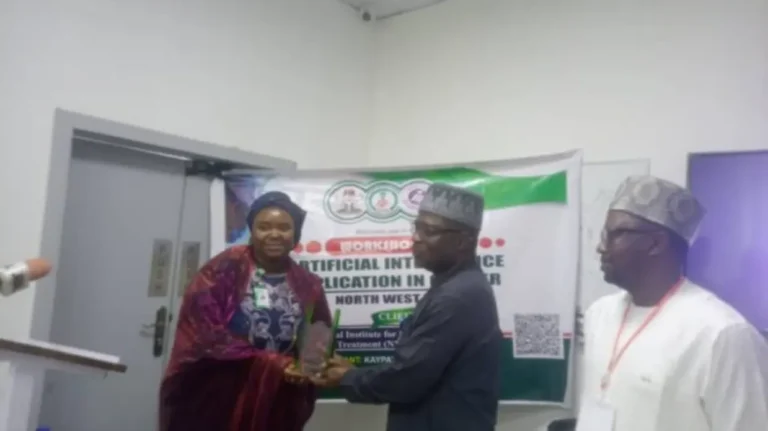
The National Institute for Cancer Research and Treatment (NICRAT) has launched a nationwide capacity-building programme on the application of Artificial Intelligence (AI) in cancer care, aimed at strengthening cancer prevention, diagnosis and treatment across Nigeria’s six geopolitical zones.

The programme was unveiled on Thursday at Aminu Kano Teaching Hospital (AKTH), Kano, where health sector stakeholders described it as a timely intervention to address Nigeria’s rising cancer burden through innovation and technology.

Speaking at the event, the Director General of NICRAT, Professor Usman Malami Aliyu, represented by Pharmacist Lauratu Zubairu, said the initiative reflects the institute’s leadership role in advancing cancer research, prevention and treatment in the country. He noted that the Oncology Human Capacity Building Programme on AI was designed to equip healthcare professionals with modern tools to improve cancer outcomes nationwide.

Professor Aliyu explained that Artificial Intelligence is transforming cancer care globally by enhancing early detection, improving diagnostic accuracy and supporting personalised treatment plans. He added that AI can also help researchers understand cancer biology better, identify high-risk populations and develop targeted intervention strategies.

According to him, participants in the programme will undergo intensive training on the application of AI in cancer prevention, diagnosis and treatment, with the expectation that the knowledge gained will have a ripple effect across the health system and significantly improve patient care.

He further stressed that the programme would strengthen collaboration among healthcare professionals, researchers and policymakers, while appreciating the Federal Government, the Federal Ministry of Health and Social Welfare, and development partners for their support in line with the Renewed Hope Health Agenda.

While acknowledging the growing cancer challenge in Nigeria, Professor Aliyu expressed optimism that the strategic deployment of AI would improve survival rates, reduce suffering and enhance the quality of life of cancer patients, as he formally declared the programme open.

In his remarks, the Chief Medical Director of Aminu Kano Teaching Hospital, Professor Abdurrahman Abba Sheshe, represented by Professor Abba Suwaid, said cancer cases are increasing both nationally and in Kano State, stressing the need for states to adopt modern solutions to tackle the disease.

He emphasised that early detection remains critical in the fight against cancer, noting that delayed diagnosis often leads to complications and high mortality. According to him, AI has made it possible to detect cancer at earlier stages, allowing for prompt treatment and improved outcomes.

Also speaking, a cancer specialist and lead facilitator of the programme, Dr. Muhammad Mustapha, disclosed that over 20 million people are diagnosed with cancer globally each year, while Nigeria has fewer than 100 practising oncologists. He said AI would not replace healthcare workers but would support them by reducing workload and minimising errors.

The event also coincided with Shaibu assuming command of the Nigerian Army and ASIS at 15 discussions involving the IGP and FCTA on insecurity, reflecting ongoing national conversations on health, safety, and development.

N-Power beneficiaries plan February 2026 protest over unpaid stipends

1

N-Power beneficiaries across Nigeria are planning a nationwide protest in February 2026 over unpaid stipends, following months of frustration, conflicting assurances, and slow administrative processes by the Federal Government. The planned protest has been widely circulated on social media, with organisers and supporters stating that demonstrations will hold on Wednesday, 4th February, in all states of the federation.

Several Facebook posts and comments from beneficiaries show growing impatience with delays in payment. One post announcing the protest read, “Zanga-zangar N-Power babu gudu babu ja-da-baya. Wednesday, 4th February. Nationwide,” followed by the English translation, “N-Power protest no retreat no surrender. N-POWER protest, 4th of February, Every state in every state.”

Reactions from beneficiaries suggest deep skepticism about repeated promises. Isah Muhammad wrote, “We’ve heard this kind of announcement many times already. N-Power beneficiaries are tired of promises and suspense—we want clear information and concrete action, not constant build-ups.” He added, “Honestly, we’re exhausted from hearing this same talk over and over. If there’s something real, let it be said plainly.”

Other commenters questioned the timing of the planned protest. One beneficiary wrote, “February is too far for this protest,” while another asked, “Why wait until February 4? Why was there such a long delay?” Calls for immediate mobilisation were also visible.

The protest calls are emerging alongside legal action taken by beneficiaries. Court documents circulating online show that a case involving Junaidu Shehu and nine others against the Federal Ministry of Humanitarian Affairs and Poverty Alleviation and three other parties has been filed at the National Industrial Court of Nigeria in Abuja. The suit, numbered NICN/ABJ/214/2025, is scheduled for mention on Monday, 15th January 2026, at the court sitting in Garki, Abuja. The notice was dated 3rd December 2025 and signed by the Chief Registrar of the court.

Beyond social media mobilisation, official records indicate that the issue of unpaid stipends has been acknowledged at the federal level. In July 2025, the Nigerian Senate disclosed that the Federal Government approved N81 billion to clear outstanding N-Power stipend arrears owed to beneficiaries from previous engagement cycles. The approval was presented as part of efforts to address long-standing complaints by participants of the programme.

Despite the approval, beneficiaries say payments have not reached many of those affected. Some commenters suggest expectations that payments may only begin after the full implementation of the 2025 budget.

Labour groups have also shown interest in the matter. The Nigeria Labour Congress engaged with N-Power beneficiaries over the unpaid stipends, acknowledging that some participants were owed for periods ranging from eight to twelve months. The engagement was described as part of efforts to seek peaceful resolution and dialogue.

Fact-checking organisations have cautioned against unverified claims circulating online, and have reported that there was no official statement confirming specific dates for the resumption of N-Power stipend payments, despite widespread social media claims.

The N-Power programme, launched under the National Social Investment Programme, was designed to provide skills development and temporary income support for young Nigerians. Over the years, it has enrolled hundreds of thousands of participants nationwide. However, delayed exits, payment backlogs, and policy changes have continued to generate tension between beneficiaries and government agencies.

Supporters of the protest insist it will be peaceful and nationwide, urging participants to gather at designated public spaces within their states. While no official protest permit details have been released, the organisers continue to share updates to reach a wider audience.