Home Blog Page 215

FG IFAD Programme Benefits Over 7000 Smallholder Farmers in Nasarawa

0

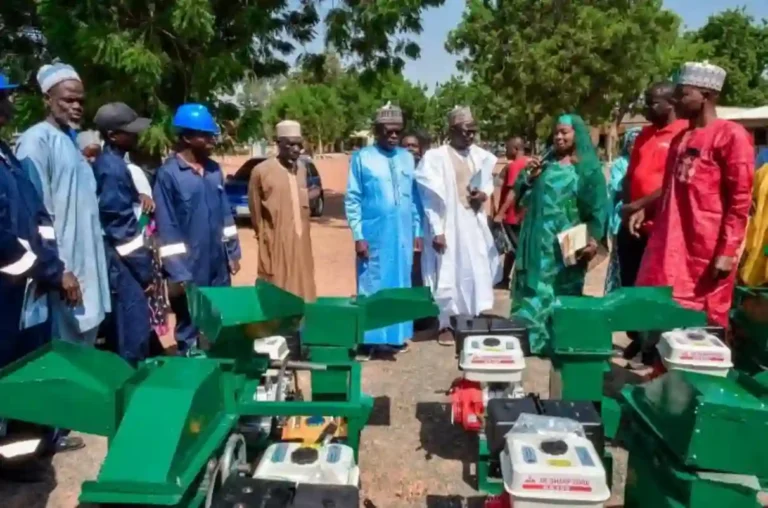
More than 7,000 smallholder farmers across five local government areas of Nasarawa State have benefited from a Federal Government agricultural intervention supported by the International Fund for Agricultural Development under the Value Chain Development Programme.

The Nasarawa State Programme Coordinator of the VCDP, Dr Eunice Adigidzi, disclosed this at a one day stakeholders meeting held in Lafia, where participants reviewed progress made since the programme began in 2021.

She explained that the programme is being implemented in five local government areas with a focus on rice and cassava value chains, adding that as the project approaches completion in December 2026, stakeholders are pushing for the institutionalisation of its model.

According to Adigidzi, traditional rulers, community leaders and smallholder farmers were brought together to assess achievements and advocate for sustained food production beyond the lifespan of the intervention.

She said participating farmers have increasingly adopted modern farming practices, particularly in rice and cassava cultivation, which has led to improved yields since the programme’s inception.

She added that rural farmers, largely women and youths, have received extensive training across key programme components aimed at boosting productivity, expanding market access and promoting better nutrition.

“Given the significant impact recorded so far, especially the bumper harvests being achieved, sustained commitment and adequate resource allocation by stakeholders and the state government are critical to guaranteeing sustainability,” she said.

Speaking on behalf of beneficiaries, Mallam Mohammed Osungbwo said farmers have acquired new skills in rice and cassava production and gained access to improved seeds and farm equipment through the programme.

He called on the Nasarawa State Government to adopt the VCDP model, saying it would help promote sustainable economic empowerment for smallholder farmers across rural communities.

In separate remarks, the State Chairman of the Steering Committee on the Value Chain Development Programme and Commissioner for Agriculture, Tanko Tunga, reaffirmed the government’s readiness to institutionalise the programme beyond 2026.

Also speaking, Assembly Agriculture Committee Chairman Dr Peter Akwe said backing would ensure continuity across the state wide.

Advertisement

Imo announces free Christmas and New Year transport for Imolites in Lagos

0

The Imo State Government has unveiled its 2025 Christmas and New Year free transportation programme for Imo indigenes living in Lagos, aimed at easing travel costs and encouraging family reunions during the festive season.

Governor approved the initiative under his Shared Prosperity Initiative to support Ndi Imo returning to Owerri, Orlu, and Okigwe for the holidays. The government said the scheme is part of efforts to strengthen community bonds and ensure safe travel.

“This programme reflects our concern for the welfare of Ndi Imo during the Yuletide period,” the government said.

The free transport service covers return trips on designated dates and routes. Departures from Lagos are scheduled for December 23, 24, and 25, 2025, while return trips to Lagos will take place on January 5 and 6, 2026. Daily departure time is fixed at 8:15am.

Take-off points in Lagos are Awo-Omamma and Awo-Idemili. The government emphasised that the service is strictly free and warned travellers not to make payments. “No payment is required from beneficiaries,” it said.

The programme is open only to accredited Imo indigenes residing in Lagos, with participants advised to travel with light luggage. Accreditation will be carried out via WhatsApp using approved phone numbers.

Applicants must submit their full name, town union, destination, phone number, valid ID, and contact details of their town union chairman or president. Those without a valid ID may visit the Imo State Liaison Office at Plot 1221B, Bishop Oluwole Street, Victoria Island, Lagos.

For accreditation and inquiries, the following numbers were provided: 08033255565, 08092362966, and 08115341420. For general guidance, Imolites may also contact 08063344158. The government urged eligible residents to plan ahead and comply fully with accreditation guidelines.

PayPal Coming Back as Nigerians Can Send, Receive and Withdraw Money

When news began circulating that PayPal was once again expanding its engagement with Nigeria, the reaction was not uniform excitement. Instead, it came with hesitation, memory, and unresolved frustration. For many Nigerians, especially young people who built careers online over the past decade, PayPal’s renewed activity does not feel like a comeback. It feels like a reminder.

For years, Nigerians lived with a strange contradiction. They could use PayPal to send money abroad, pay for services, and shop online, but they could not easily receive payments or withdraw earnings locally. In effect, Nigerians were allowed to participate in the global digital economy as consumers, but not as earners. That imbalance shaped an entire generation of freelancers, developers, creators, designers, and small business owners.

This is why the conversation today is not simply about features being restored. It is about history.

A Long Period of Silent Restriction

PayPal never issued a clear, Nigeria-specific public explanation from its management detailing why receiving and withdrawal were restricted for so long. What exists instead are years of platform limitations, help-center explanations about “regional availability,” and industry analysis pointing to risk management, fraud concerns, and regulatory complexity.

From the user’s point of view, the impact was immediate and practical. International clients preferred PayPal. Global freelance platforms defaulted to PayPal. Many foreign companies would not onboard contractors without it. Nigerians were left to explain, negotiate, or quietly walk away from opportunities they had the skills to execute.

That reality created a quiet but powerful exclusion. Opportunities were not loudly denied. They simply disappeared, one contract and one rejected onboarding form at a time.

How Nigerians Responded When PayPal Failed Them

Nigerians did not wait indefinitely. They adapted.

Young people searched for alternatives, shared workarounds online, and gradually migrated to other platforms that could do what PayPal would not. International services like Payoneer became common among freelancers because they allowed users to receive foreign earnings and withdraw locally. Wise gained popularity because it offered transparent exchange rates closer to the global mid-market rate, a stark contrast to opaque conversions many Nigerians were used to.

At the same time, African and Nigerian fintech startups began to fill parts of the gap. Platforms offering virtual foreign accounts, dollar wallets, and cross-border payment tools started to emerge. For many users, these services were not luxuries or conveniences. They were survival tools, built to bypass a system that had already sidelined them.

On the business side, Nigerian payment companies expanded rapidly. Paystack enabled local businesses to accept online payments and connect with global card networks. Flutterwave positioned itself as a bridge between African merchants and international customers. Others followed, building infrastructure that allowed digital commerce to continue even without PayPal’s full participation.

In that sense, PayPal’s absence indirectly fueled Nigeria’s fintech boom. The ecosystem did not grow because PayPal returned. It grew because PayPal stayed away.

Did These Alternatives Truly Replace PayPal?

Not entirely.

While alternatives existed, none perfectly replicated PayPal’s global acceptance and simplicity. Some freelance platforms still insisted on PayPal payouts only. Some international clients refused to use unfamiliar services or sign up to regional platforms they did not understand. For many Nigerians, explaining an alternative payment method became a negotiation that cost time, credibility, and sometimes the job itself.

There were also trade-offs. Exchange rates became a major pain point. Some platforms converted foreign earnings at unfriendly rates, quietly shaving value off already modest incomes. Others charged layered fees for withdrawals, transfers, or card usage. In the early years, third-party exchangers filled gaps but often operated with little transparency, leaving users exposed to poor rates or outright losses.

So while Nigerians adapted, adaptation came at a cost. Earning money was possible, but rarely smooth. Every workaround added friction to an already difficult process, turning global work into a test of endurance.

Why PayPal Is Interested Again

PayPal’s renewed interest in Nigeria and Africa more broadly does not appear to be driven by sentiment or remorse. It is strategic.

Africa’s digital economy is larger, more organized, and more visible than it was a decade ago. Identity systems have improved. Mobile money adoption has expanded. Local fintechs have proven that Africans can transact digitally at scale. From a business perspective, the market is no longer theoretical.

Crucially, PayPal is not attempting a simple return to its old model. The company has publicly signalled a partnership-led strategy for Africa, centred on wallet interoperability and collaboration with local fintechs, with a broader rollout expected in 2026. Rather than forcing African users into legacy structures, PayPal appears to be positioning itself as a global bridge that connects existing local wallets to international payments.

That shift suggests PayPal remains cautious about the same risks that once informed its restrictions, but believes those risks can now be managed differently.

What has not happened, however, is a public reckoning with the past. There has been no formal acknowledgment of how the long restriction affected Nigerian users. No apology. No explanation directed at the people who built careers around global platforms and paid the price for exclusion.

Why the Return Reopens Old Wounds

For many Nigerians, PayPal’s renewed engagement feels late.

It arrives after years when people were forced to explain their country’s limitations to clients. After careers were delayed or redirected. After entire businesses were structured around alternatives that existed only because PayPal did not.

This is why the reaction is complicated. On one hand, expanded access, whether now or through future wallet integration, is objectively useful. On the other, it reminds users of years spent navigating obstacles that should never have existed.

The wound is not just about money. It is about trust, dignity, and lost time.

Do Nigerians Really Have a Choice?

This is where the editorial reality becomes uncomfortable.

Despite the growth of alternatives, PayPal still holds a unique position in global digital commerce. Many international platforms, donors, marketplaces, and clients continue to default to PayPal. Its brand recognition remains unmatched. In certain contexts, not having PayPal still means being excluded.

So Nigerians may criticize, question, and resent the platform’s history, but many will still sign up, reconnect accounts, and test whatever new access becomes available. Not because they have forgotten, but because the global economy often leaves little room for principle.

This is not forgiveness. It is pragmatism.

What This Moment Really Represents

PayPal’s return, partial or planned, does not erase the past. It does not undo lost income or missed opportunities. What it does is force a collective reflection on how global platforms engage emerging markets.

Nigeria’s experience shows that when access is restricted for long enough, people innovate around it. But innovation born of exclusion carries scars. It creates resilience, but also skepticism.

For PayPal, the challenge now is not technical. It is reputational. Nigerians will use the platform if it works. But trust will be conditional, monitored, and easily withdrawn.

For Nigerians, the moment is bittersweet. It validates what many already knew: the market was always valuable. The people were always capable. The delay was never about potential.

A Return Without Closure

PayPal may be re-engaging with Nigeria and Africa, but the story is unfinished.

The years of restriction shaped careers, redirected ambitions, and built an alternative fintech ecosystem that might not have existed otherwise. Nigerians learned to survive without PayPal, even as they paid a price for doing so.

That is why this moment feels less like a reunion and more like reopening a conversation that was never properly addressed. The tools may change. The strategies may evolve. But the memory remains.

And until global platforms learn that access delayed is opportunity denied, these wounds will keep reopening, every time a long-closed door quietly swings open again.

This editorial is based on publicly available information and observed user experiences around PayPal’s services in Nigeria and the broader African market.

Katsina Governor Donates ₦20m to Support Qur’anic Reciters

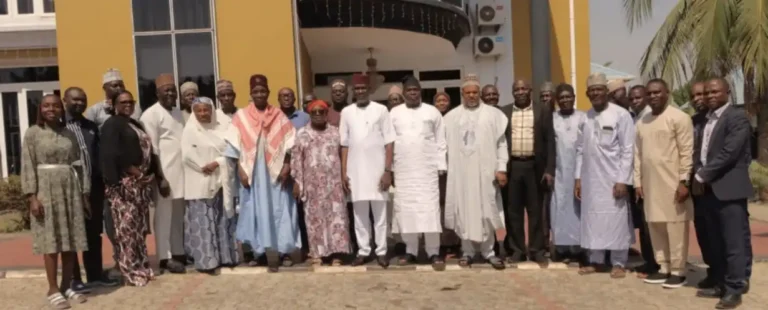
Katsina State Governor, Malam Dikko Umaru Radda, has announced a ₦20 million donation to support Qur’anic reciters and promote Islamic education in Nigeria during the grand finale of the 40th National Qur’anic Recitation Competition, Borno 2025.

Governor Radda made the announcement while attending the week-long competition hosted by the Borno State Government, which featured 296 contestants drawn from 30 states of the federation. The participants competed across eight categories designed to test different levels of Qur’anic memorisation and recitation.

The competition categories included the 5th Category for male and female contestants involving 10 Hizbs with Tangim, the 4th Category for male and female contestants covering 30 Hizbs, the 3rd Category for male and female contestants involving 60 Hizbs, and the 1st Category for male and female contestants focused on Qira’at.

At the end of the event, Borno State emerged overall winner in the male category, with Musa Ahmed Musa taking first place. In the female category, Hafsat Muhammad Sada of Kano State emerged as the overall winner.

Speaking after the announcement of results, Governor Radda congratulated the organisers and participating states, praising the Borno State Government under the leadership of Governor Babagana Umara Zulum for successfully hosting the national competition.

“The successful organisation of this competition is a clear testament to Borno State’s resilience, growing stability, and effective leadership,” Governor Radda said.

He noted that the smooth conduct of the competition and the wide participation of states reflected Borno State’s steady return to normalcy and renewed commitment to education, spirituality, and national unity.

“Events like this strengthen our shared values, promote unity, and reaffirm the central role of faith in building disciplined and responsible citizens,” he added.

Governor Radda reaffirmed Katsina State’s commitment to the promotion of Qur’anic education and moral development, stressing that sustained investment in religious education remains vital to building peaceful communities.

Announcing his ₦20 million donation to Qur’anic reciters nationwide, the governor described the gesture as a long-term investment in the future.

“This support is an investment in knowledge, faith, and the future of our young people, whose grounding in the Qur’an will help shape a more peaceful and morally upright society,” he said.

He also commended Islamic scholars, teachers, and traditional institutions for their role in promoting discipline and moral values through religious education.

Earlier, Borno State Governor, Professor Babagana Umara Zulum, described the hosting of the 40th edition of the competition as a strong indication of the return of peace and stability to the state.

“Hosting this landmark edition affirms our commitment to peace, education, and the noble pursuit of knowledge rooted in the Holy Qur’an,” Governor Zulum said.

He congratulated the winners and participants, noting that every contestant was a winner for standing to recite the Holy Qur’an with dedication and courage.

The event attracted dignitaries from across the country, including the Wife of the Vice President, Hajiya Nana Kashim Shettima, the Deputy Governor of Sokoto State, and the Shehu of Borno, Alhaji Abubakar Ibn Umar Garbai El-Kanemi, during the well attended ceremony.

Governor Radda was accompanied by Hon. Abdullah Aliyu, Justice Musa Abubakar Danladi, Alhaji Abdulkadir Mamman Nasir, Hon. Shehu Dabai, and APC stalwart Alhaji Baba Jinjiri.

FG Empowers 70 Lagos Youths With Skills and Starter Packs

0

The federal government, through the (NCDMB), has sponsored vocational training and provided business starter packs for 70 young people in Lagos, as part of a youth empowerment and skills acquisition programme.

The beneficiaries were trained in two areas, eco-packaging and paper bag making, as well as fashion designing. The programme was sponsored by the NCDMB, an agency of the federal government, and focused on equipping participants with practical skills that can generate income and support local content development.

Speaking at the certificate and starter pack presentation ceremony held yesterday in Surulere, Lagos, the Project Coordinator for the programme, Mr. Musa Rasaq, said the initiative was designed to help young Nigerians become self-reliant and economically productive.

According to Rasaq, the eco-packaging and paper bag making segment was a two-week intensive training that equipped 20 participants with hands-on knowledge in paper bag design and production. He added that the fashion design programme lasted eight weeks and trained 50 participants in sewing and garment production.

Rasaq explained that participants were selected through community-based channels, including local publications, churches and community leaders, to ensure inclusiveness and grassroots participation.

He said the NCDMB had put structures in place to ensure post-training support and long-term impact, noting that beneficiaries would be connected to digital platforms and social media channels where they can showcase their products.

“The main sponsor of this programme is the Nigerian Content Development and Monitoring Board. The goal is to promote local content. At the end of the training, whatever a delegates produce can be uploaded on designated platforms to attract patronage and business opportunities,” Rasaq said.

He disclosed that the programme, which began last year, was currently in its second edition and forms part of ongoing efforts by the NCDMB to tackle youth unemployment through vocational skills development.

Nigeria Startup News gathered that some of the beneficiaries expressed appreciation to the organisers, describing the training as impactful.

One of the beneficiaries from the fashion designing programme, Mr. Tijani Yusuf, said participants were taught both theoretical and practical aspects of sewing, including the use of different sewing machines, fabrics and design techniques.

“For those of us who had no prior knowledge of sewing, we were taught from scratch. The clothe I am wearing today was sewn by me as part of our project assignment,” Yusuf said.

Another beneficiary, Miss Odukoya Omotoyosi, a recent graduate of the University of Lagos, said the programme gave her the confidence and skills needed to start a business.

“Within two months of the programme, I gained the knowledge of making dresses, corporate outfits and caps. Instead of looking for a job, I now have the opportunity to start my own business,” she said, adding that participants also received transportation stipends and meals.

Similarly, a participant in the eco-packaging programme, Mr. Akindeji Olakunle, said the training exposed him to new opportunities and practical skills that would help him earn a living.

Beneficiaries called on the federal government and the NCDMB to expand the programme to accommodate more youths, noting that many young Nigerians were eager to acquire vocational skills if given the opportunity.

Lagos Lawmaker launches 50% discount food market for Eti-Osa residents

0

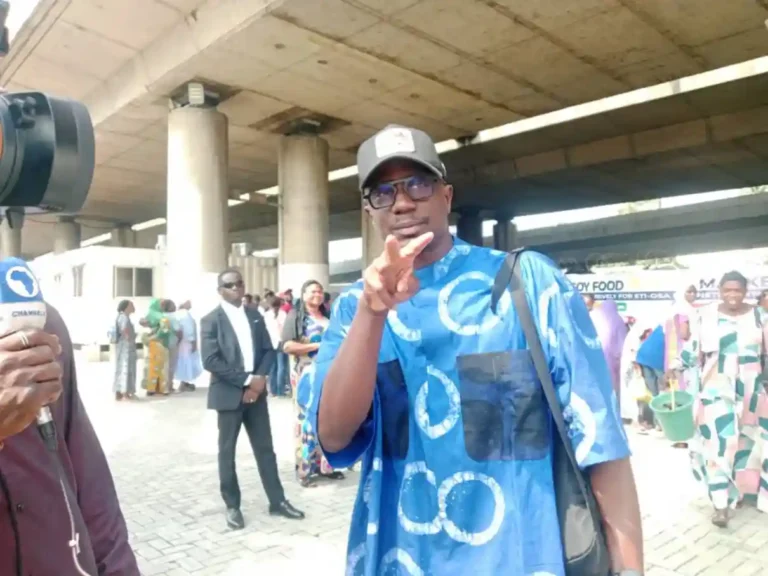
Hon. Gbolahan Olusegun Yishawu, popularly known as GOY, a member of the Lagos State House of Assembly representing Eti-Osa Constituency II, has launched a 50 per cent discount food market to support residents during the Christmas and New Year festivities.

The initiative, held on Saturday in the constituency, featured the sale of essential food items at heavily subsidised rates, with some products discounted by more than 50 per cent. Items sold included rice, beans, gari, yam, palm oil, eggs, bread, meat, chicken, fish and Indomie noodles, while buyers also received free pepper mixes to support household meal preparation.

Speaking at the event, Yishawu said the discount market was part of his ongoing social intervention programmes designed to ease economic pressure on residents, especially during the festive season.

“We run several programmes in our constituency, ranging from education and digital training to entrepreneurship. Considering the festive season, we decided to reach out to our people by bringing down the prices of staple food items they really need,” he said.

According to the lawmaker, over 10,000 food items were made available, with each buyer allowed to purchase up to five items to promote fairness and wider access. He explained that residents were free to combine different food categories based on their household needs.

Yishawu said although the initiative was being implemented for the first time, plans were already in place to make it a regular feature during festive periods. He referenced the sustainability of earlier programmes, including a free school bus scheme that has been operating for more than five years, as proof of his commitment to continuity.

On participation, he emphasised that the programme was non-partisan and open to all residents of the constituency. “Nobody was asked for a party card. We represent everybody in this constituency. We reached out through SMS, billboards, flyers and social media over several weeks,” he said.

He added that voter registration cards were used strictly for resident identification within the constituency, while encouraging eligible citizens to see voter registration as part of their civic responsibility.

The initiative received commendation from local government officials and political leaders present at the event. Chairman of Ikoyi-Obalende LCDA, Bola Oladunjoye, described the programme as timely and impactful, stating that “every saving counts” for families coping with rising food prices.

In the same vein, the Executive Chairman of Iru/Victoria Island LCDA, Mrs Aminat, praised Yishawu for consistently delivering relief initiatives, noting that the discount market would allow residents access cheaper food items during the festive period.

Residents who benefited from the programme also shared positive feedback. One beneficiary described the prices as “amazingly low” and said the initiative would help less-privileged families enjoy the Christmas and New Year celebrations.

With crowds still arriving hours after the programme began, Yishawu assured residents that supplies were sufficient.

LAP Launches ₦36m Annual Scholarship for 36 Indigent Students in Anambra

0

The League of Anambra Professionals (LAP) has unveiled its maiden Future Forward Scholarship Programme, awarding a total of ₦36 million annually to 36 indigent but brilliant students drawn from across Anambra State, which the group described as a strategic intervention to strengthen human capital development.

The official unveiling took place on Friday at the Secretariat Complex of the Nigeria Union of Journalists (NUJ), Anambra State Council, Awka, and attracted education stakeholders, professionals, journalists, parents and beneficiaries.

Under the programme, each beneficiary selected from the three senatorial zones of the state will receive ₦1 million every year, covering tuition, accommodation and monthly stipends. LAP said the scholarship is aimed at reducing financial barriers that often limit access to quality education for talented students from indigent backgrounds.

Speaking at the event, the President of the League of Anambra Professionals and Managing Director of Odenigbo FM, Sir Nnamdi Obi, said the programme was designed to support and empower students with strong academic potential, regardless of their background or location. He noted that while the Anambra State Government has made investments in education, collective efforts were still required to bridge gaps.

Sir Obi was represented by the Deputy President of LAP and Chairman of the Education Committee, Dr. Elizabeth Ifeyinwa Jibunoh, who traced the inspiration for the scholarship to a visit by the League to the Chairman of MTN Nigeria, Dr. Ernest Ndukwe, where the need for structured educational support was highlighted.

Dr. Jibunoh disclosed that over 300 applications were received from different parts of the state, out of which 12 students were selected from each senatorial zone, making 36 beneficiaries for the first edition. She emphasized that the programme is fully funded by members of LAP without support from government or private sector sponsors.

According to her, the scholarship is being implemented in partnership with Fidelity Bank, which will manage beneficiaries’ stipends through dedicated bank accounts to promote financial discipline and literacy.

She further revealed that the initiative goes beyond financial assistance, as it includes mentorship and mindset development programmes. “We want to expose these students to leadership training, skills acquisition, internships, innovation and enterprise, with the goal of producing graduates who can compete globally,” she said.

Commending the initiative, the Chairman of the Nigeria Union of Journalists, Anambra State Council, Comrade Odogwu Emeka Odogwu, PhD, said the Union offered its hall free of charge because of the credibility and changing potential of the programme.

Delivering a charge to the beneficiaries, the Assistant Publicity Secretary of LAP and member of the Education Committee, Kasie Abone, warned that the scholarship would be withdrawn from any beneficiary involved in poor academic performance, misconduct, cultism or actions capable of bringing disrepute to the League.

Also speaking, Dr. Ngozi Achike, who joined the event from the United States, praised the transparent selection process and urged beneficiaries to build confidence, character and clarity of purpose, noting that intellectual brilliance must be complemented by strong values.

Some beneficiaries, including Victory Ndibuisi and Chioma Ekwueme, described the scholarship as changing, while parents expressed gratitude to LAP for remembering indigent families. The event ended with the presentation of dummy cheques to the beneficiaries, marking the formal take off of the LAP Future Forward Scholarship Programme, which the League said would be expanded in subsequent years.

Adamawa Trains 100 Cooperative Members on Briquette Charcoal Production

The Adamawa State Commissioner for Entrepreneurship Development, Hon. Hammanjuba Gatugel, has called on beneficiaries of the briquette charcoal production training to put the skills they acquired to effective use and share the knowledge in their respective rural communities to boost impact and sustainability.

Hon. Gatugel made the appeal during the closing ceremony of a five-day training and empowerment programme on Conversion of Waste to Wealth through Briquette Charcoal Production. The event, which took place at the Ministry’s Conference Hall on Friday, brought together 100 members of cooperative societies drawn from the five cooperative zones of Adamawa State.

The Commissioner expressed satisfaction with the success of the training and attributed its achievement to the commitment of Governor Ahmadu Umaru Fintiri’s administration. He noted that the state government is determined to ensure inclusive development and leave no segment of the state behind.

“As the theme implies, conversion of waste to wealth, I urge you, the beneficiaries, to return to your communities and step down this training. Knowledge acquired should not be in vain,” Gatugel said.

He explained that the initiative is in line with the vision of Governor Fintiri’s administration to promote inclusive growth across all sectors, especially in rural communities. The Commissioner highlighted that the training is particularly important following the state government’s ban on indiscriminate tree felling due to its environmental effects. He added that briquette charcoal production presents a cleaner, more environmentally friendly, and sustainable alternative source of energy while also turning waste materials into economic value.

Gatugel further stated that the Ministry would monitor beneficiaries to ensure that the skills and equipment provided are properly utilized. He appreciated Governor Fintiri for his support toward the programme and announced that all participants would go home with start-up kits to begin production immediately.

Earlier, the Permanent Secretary of the Ministry, Mr. Kwaji Duguri, congratulated the beneficiaries and commended the Fintiri-led administration for its continued support. He described the training as part of a series of empowerment programmes designed to improve livelihoods and raise the standard of living across Adamawa State.

According to Duguri, the Ministry remains dedicated to implementing programmes that make a positive difference in the lives of citizens, adding that entrepreneurship continues to play a vital role in driving economic growth within the state.

In her remarks, the Director of Cooperatives, Hajiya Zainab Idi Bode, applauded the state government for organizing the training and encouraged the beneficiaries to pass on the knowledge to other cooperative members at the local government level.

She cautioned that the equipment provided to participants must not be sold and warned that the Ministry would not tolerate any form of misuse or violation of the directive. Hajiya Zainab emphasized that the main aim of the programme is to equip 100 cooperative members with the skills, tools, and knowledge required to produce, use, and market biomass briquette charcoal from waste materials, thereby creating wealth and job opportunities, particularly in rural areas.

The resource person, Mr. Ezra Sini, CEO of Ziki Ecoglobal Concept, appreciated the Ministry and the Adamawa State Government for supporting waste-to-wealth initiatives using locally available agricultural waste. He thanked the Ministry for the opportunity to serve as a facilitator and urged the participants to apply the knowledge gained and share it widely in their communities.

Speaking on behalf of the graduating participants, Dr. Rakiya Mohammed Inuwa of ACADA Multipurpose Cooperative Society, Modibbo Adama University, expressed appreciation to the Ministry and Governor Fintiri for organizing the training. She explained that the programme exposed participants to practical methods of converting waste into wealth and pledged, on behalf of all beneficiaries, to make good use of the skills acquired for productive purposes.

FCMB, Foundation Launch Food Bank and Women Business Grant Initiative

First City Monument Bank (FCMB) has partnered with Tender Hearts Foundation to launch a food bank and business empowerment initiative aimed at tackling hunger, poverty and women’s economic vulnerability across Nigeria.

The programme, organised by Tender Hearts Foundation with strategic support from FCMB, combines food assistance with business grants and access to financial services, targeting women who run micro-enterprises. Organisers said the approach is designed to provide immediate relief while supporting long-term financial independence in communities.

Speaking at the launch, the founder of Tender Hearts Foundation, Dr Sally Otihiwa, said the initiative was deliberately structured to move beyond charity and focus on sustainable livelihoods for women already engaged in small-scale businesses.

“This is a business grant for women who already have micro businesses, to increase the capacity of what they are doing,” she said. “We are not just giving food; we are empowering them to stand on their feet and continue to put food on their table.”

Otihiwa explained that the food bank initiative aligns with the United Nations Sustainable Development Goal 2 on zero hunger, while also addressing poverty through skills development, access to capital and business support. She noted that while food assistance meets urgent needs, economic empowerment is critical to lasting impact.

She said the foundation initially planned to support 350 women, but participation exceeded expectations due to the scale of need identified in the communities reached.

Beneficiaries receive business grants ranging from ₦50,000 to ₦300,000, with opportunities to access higher funding as they demonstrate repayment capacity and responsible business management.

Otihiwa said women who successfully repay their initial grants are referred to microfinance banks, where they can access loans of between ₦400,000 and ₦3 million, depending on their business performance.

“So long as they can pay back, they continue to grow,” she said. “At a point, we refer them to the banks so they can access bigger funding and expand their businesses.”

She added that the initiative is being implemented in multiple locations across the country, reflecting the widespread nature of food insecurity and poverty.

“The percentage of people who are comfortable enough to eat well is very minimal,” Otihiwa said. “Many people do not even have the basic right to food. With the little we are doing, we ensure they have food on their table and also empower them to continue providing for themselves.”

Representing FCMB, Iyanda Omoniyi, who oversees the bank’s social responsibility and sustainability reporting, said the partnership reflects FCMB’s focus on poverty alleviation, empowerment and inclusive growth.

“At FCMB, we run our corporate social responsibility agenda through the lens of poverty alleviation, empowerment and environmental sustainability,” Omoniyi said. “We are here to support households and empower women because once you empower a woman, you are multiplying the nation.”

He said the food bank initiative is open to both FCMB customers and members of the public who do not yet bank with the institution, while also serving as a pathway to formal financial services for women-owned businesses.

“We are a bank that cares about the needs of the people,” he said. “That is why we create strategic programmes that speak directly to community needs.”

Omoniyi added that the partnership aligns with the United Nations Sustainable Development Goals, particularly those focused on poverty reduction and gender equality across Nigeria

Airtel Starlink satellite service will not replace 4G and 5G in Nigeria

Airtel Africa has clarified that its planned Starlink Direct-to-Cell satellite service will not replace existing 4G or future 5G mobile networks in Nigeria, but will instead extend basic connectivity to locations where no terrestrial network exists.

The clarification was made by Dinesh Balsingh, Chief Executive Officer of Airtel Nigeria, during a press conference held on Thursday, December 18, 2025, following questions about the scope of the satellite partnership with SpaceX.

Despite about 88 percent of Nigeria’s population being covered by terrestrial networks, large gaps remain across deserts, mountains, highways, and sparsely populated rural areas. Airtel said the satellite service is designed specifically to address these coverage gaps rather than compete with ground-based infrastructure.

“This provides satellite connectivity across all our 14 markets of Airtel Africa, serving about 174 million customers. Airtel Nigeria will launch this service in 2026, providing data for select applications, text messaging, and USSD services,” Balsingh said.

He explained that the service is not positioned as a high-speed alternative to 4G or 5G in cities, but as a way to ensure phones do not completely lose service when users move outside coverage zones.

“Some areas are deserts, mountains, or simply too remote for fibre. Satellite connectivity ensures reliable access wherever you go, irrespective of geography,” Balsingh said.

According to Airtel, challenges such as fibre vandalism, inaccessible terrain, and low population density have made traditional network expansion expensive and slow. The satellite option is meant to complement existing infrastructure and act as a fallback when terrestrial networks are unavailable.

Starlink’s first-generation and next-generation satellites will deliver mobile connectivity directly to smartphones, allowing access to services such as messaging platforms, mobile money, and essential applications even where there is no existing mobile mast.

Airtel Nigeria said it will be the first mobile operator in the country to introduce Direct-to-Cell satellite connectivity, supported by about 650 satellites for wide coverage.

Addressing concerns about who stands to benefit, Balsingh said the service is intended for both rural residents and people travelling through remote areas.

“It will be a combination of both. While deep rural areas have lower smartphone penetration, there is still a significant population. Connectivity will serve local communities and travellers alike,” he said.

He added that farmers, traders, and seasonal workers who regularly move between towns and villages would be able to stay connected during such movements.

Balsingh also noted that improvements in technology have made satellite mobile connectivity more realistic than in the past. “Technology moves forward. Today, around 50–55 percent of our customers use smartphones, up from single digits a decade ago. SpaceX’s innovations make satellite mobile connectivity realistic and scalable,” he said.

Alongside the satellite rollout, Airtel Africa said it continues to invest in terrestrial infrastructure. Over the past six months, 700 new sites have been deployed, with 99 percent ready for 4G, while preparations for 5G continue. Home broadband solutions, including Smart Connect outdoor units, are also being expanded.

Beyond coverage, Airtel said resilience is a key focus. “This is a big boon for rural markets. We have to ensure the service is well deployed and people don’t feel a difference as they switch seamlessly between these technologies,” Balsingh said.

Airtel Africa said the Starlink Direct-to-Cell service is scheduled for launch in Nigeria in 2026, pending regulatory approvals.