Home Blog Page 217

Ogun Records 1,613 Women Affinity Groups Under NFWP-SU

Ogun State has recorded a major milestone in women empowerment with the formation of 1,613 Women Affinity Groups under the Nigeria for Women Project Scale-Up (NFWP-SU), positioning the state as a national reference point for inclusive grassroots development.

Following this achievement, delegations from nine other states of the federation are currently on a study visit to Ogun State to understudy its implementation model and learn from its approach to women-focused interventions.

The State Commissioner for Women Affairs and Social Development, Motunrayo Adijat Adeleye, disclosed this while addressing officials from the visiting states during the Implementation Support Mission for Southern States held in Abeokuta.

Adeleye attributed the success of the project to the sustained commitment of the Ogun State Government under the leadership of Governor Dapo Abiodun, as well as the wide acceptance of the project’s vision by community leaders, traditional rulers, and market groups. She also highlighted the ingenuity of the project team through effective planning and execution.

She said, “Women Affinity Groups are the backbone of the Nigeria for Women Project Scale-Up Project (NFWP-SU) because they provide the primary platform through which women are mobilised, empowered, and reached at the grassroots.

“They foster trust, collective savings, peer learning, and accountability, enabling women to access financial literacy, business support, and livelihood opportunities in an inclusive and sustainable way.

“By strengthening social capital and giving women a collective voice, affinity groups ensure effective programme delivery, ownership, and long-term impact of NFWP-SU interventions within implementing Local Government Areas.”

The commissioner noted that the present administration has consistently shown strong belief in women’s ability to contribute meaningfully to economic and social development, providing the necessary policy support and institutional backing for women-focused initiatives to succeed.

According to her, “Although the Nigeria for Women Project commenced in 2018, the present administration not only sustained the initiative but strengthened it through the Scale-Up phase.

“I am glad to always describe the Governor’s approach as a practical demonstration of the ‘He for She’ principle. His support for women empowerment has been evident through concrete actions rather than mere declarations.”

Adeleye disclosed that Ogun State has exceeded benchmarks at the Scale-Up stage, becoming the only participating state to surpass the formation of 1,000 Women Affinity Groups, with the figure now approaching 1,700.

She said, “Our feat in Ogun NFWP-SU reflects both effective programme execution and the growing confidence of women across communities in the initiative, so I commended the Nigeria for Women Project Scale-Up team in Ogun State, led by the State Project Coordinator, Mrs. Bolanle Fadairo, for their dedication and professionalism.

“It explained that the team’s efforts from the pilot phase through scale-up have been central to mobilising women, strengthening group cohesion, and sustaining grassroots engagement.”

The commissioner added that the willingness of women to form additional groups beyond the prescribed limits underscores their strong buy-in and belief in the impact of the project.

She explained that the experience in Ogun State reinforces the principle that investing in women leads to broader societal progress, noting that the state is already witnessing developmental gains from empowering women at scale.

In her remarks, the State Project Coordinator, Mrs. Fadairo Bolanle, described the engagement with the visiting states as a moment of active interaction for the project team with delegations of officials from the Federal Government, Ekiti, Abia, Kwara, Kogi, Delta, Bayelsa, Ebonyi, Anambra, and Ondo States.

She added that the project has recorded a total of 1,613 Women Affinity Groups for the Scale-Up Project, which commenced in September 2025.

Fadairo noted that the understudy mission would further motivate the project team to intensify its activities, with the aim of surpassing the expectations of implementing partners while ensuring a more responsive and inclusive women empowerment model across communities.

Advertisement

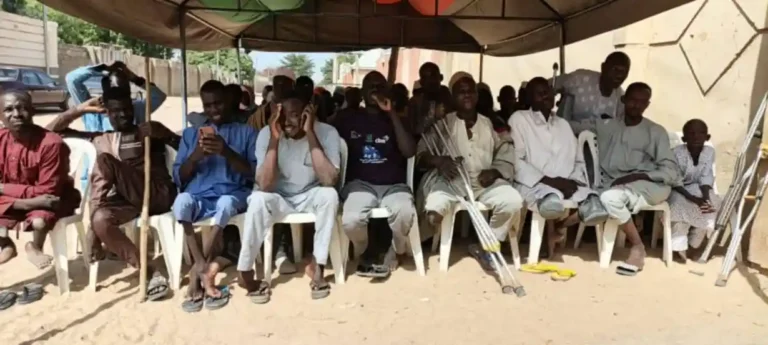
LETSAI Empowers 240 Borno PWDs, Vulnerable Persons With Skills

Learning Through Skills Acquisition Initiative (LETSAI) has empowered 160 persons with disabilities (PWDs) and 80 vulnerable persons in Borno State with livelihood skills, mobility aids, and business startup support. The programme was carried out in partnership with Christoffel Blinden Mission (CBM) and aimed at improving self-reliance among participants.

Beneficiaries, including women, were trained in traditional cap knotting, shoemaking, and tailoring. Participants were drawn from Maiduguri metropolis and various local government areas across the state.

Speaking during the graduation ceremony for participants trained on livelihood skills and the distribution of assistive devices, the Programme Officer of LETSAI, Noah John, who represented the Executive Director, Mariam Aliyu, said the intervention was designed using a community-based approach to meet the real needs of beneficiaries.

“The reason we are here is to distribute startup kits to persons with disabilities and other vulnerable persons through our community-based approach,” he said. “We identified their needs and are supporting them with livelihood skills and assistive devices to enhance their mobility and self-reliance.”

As part of the empowerment package, LETSAI distributed sewing machines, tricycles for persons with physical and intellectual impairments, as well as 28 medicated eyeglasses. John added that more than 1,600 persons would benefit from assistive devices, while 80 beneficiaries directly received skills acquisition training.

The initiative was welcomed by disability advocacy groups and community leaders. The Chairman of the Joint National Association of Persons with Disabilities (JONAPWD), Borno State chapter, Ahmadu Umar, said the intervention would help reduce street begging, particularly in Maiduguri.

He commended LETSAI and its partners for the support and urged other organisations to emulate the gesture. Also speaking, a community leader, Wakil Barma, advised beneficiaries not to sell or dispose of their starter kits, noting that the support would ease their hardship.

He described the programme as timely, especially in the aftermath of years of Boko Haram insurgency that affected livelihoods across Borno State.

Moneda Invest launches Africa Funds Africa to mobilize capital for SMEs

0

Moneda Invest, a pan-African alternative credit provider, has marked its 10th anniversary with the launch of Africa Funds Africa (AFA), a new initiative aimed at mobilizing African capital to finance the continent’s real economy. The announcement was made at the company’s 10 Over 10 anniversary event, which reflected on a decade of financing, empowering, and scaling small and medium-sized enterprises across Africa.

The Africa Funds Africa initiative focuses on a long-standing structural challenge facing the continent. Despite Africa holding significant private and institutional wealth, large volumes of capital continue to flow offshore, while local productive sectors remain underfunded. This imbalance has limited the growth of SMEs that play a key role in job creation and value chain development.

Data from the Africa Finance Corporation shows that domestic institutional capital across pension funds, sovereign wealth funds, insurance assets, and public development banks already exceeds $1.1 trillion. Pension funds alone manage about $455 billion in assets under management, yet less than 3 percent of these assets are allocated to SMEs. In Nigeria, pension assets stand at ₦22.51 trillion, with more than 62 percent invested in government securities and only 0.66 percent directed into private equity.

Alongside institutional capital, Africa’s diaspora continues to contribute significant financial inflows. In 2024, diaspora remittances to Africa reached approximately $56 billion, making them the continent’s largest external source of non-debt capital. However, the African Development Bank estimates Africa’s SME financing gap at $421 billion, the largest in the world. This contrast highlights what experts describe as a failure of capital mobilisation rather than a lack of available funds.

Speaking at the anniversary event, Group CEO of Moneda Invest Africa, Ejike Egbuagu, stressed the urgency of redirecting African wealth. “Africa does not lack capital. What we lack is intentional allocation. Africa Funds Africa is a call to redirect African wealth that is currently flowing offshore into systems that finance our SMEs, create jobs, strengthen value chains, and build lasting economic impact,” he said.

Moneda Invest was founded in 2015 during Nigeria’s foreign exchange crisis, with a focus on closing financing gaps for critical SMEs in sectors such as energy, agriculture, minerals, and infrastructure. Over the past ten years, the company has facilitated more than $200 million in structured credit to over 130 critical SMEs across seven African countries. It has also received funding requests valued at more than $350 million and recorded zero defaults through its execution-backed, collateral-free financing model.

Egbuagu further explained the thinking behind the new initiative, saying, “The real question is not whether Africa has capital, it does. The question is whether that capital is deliberately deployed to build our real economy. The real economy that drives real continental impact. Africa Funds Africa initiative ensures that African wealth circulates where it matters most: in African businesses, driving jobs, growth, and sustainable impact.”

The initiative builds on Moneda Invest’s existing structure and technology. It leverages the Mauritius-licensed Moneda Capital Credit Fund, along with related businesses including Domena Commodities and Afrisand Logistics. It also relies on MUSA, a digital-first financing platform that supports transparent credit origination, automated risk assessment, real-time transaction monitoring, and seamless local and cross-border payments. This approach enables collateral-free financing to scale across sectors and markets.

As Moneda Invest enters its second decade, the company says it remains focused on scaling critical SMEs, strengthening execution capacity, and working with investors and policymakers to build African-owned, resilient, and long-term economic systems. Africa Funds Africa is presented as a call to action to remobilize capital for the continent’s real economy in a deliberate and sustainable way.

Moneda Invest operates as a pan-African alternative capital provider offering liquidity and execution support to SMEs within critical natural resource value chains such as energy, minerals, agriculture, and infrastructure. Established to address restrictive collateral demands, slow loan approvals, and limited working capital, the company provides zero-interest capital, no traditional collateral requirements, and hands-on technical support to ensure viable businesses can grow and execute contracts successfully.

This report is based on a media release issued by Moneda Invest.

Foundation Empowers 350 Women with Disabilities in Kano

0

The Kanawa Educational Foundation for the Disabled has empowered 350 women with disabilities in Kano State with startup kits and financial support, marking a major milestone in the SABI-WOMAN Project implemented by Kanawa with support from UNICEF through Sightsavers.

The empowerment event, which coincided with the International Day of Persons with Disabilities, was held at the Sani Abacha Youth Centre in Kano. It gathered women with disabilities from across the state, emphasizing the broad reach and inclusiveness of the programme.

In his welcome address, the Chief Executive Officer of the Kanawa Educational Foundation for the Disabled, Ibrahim Garba Madu, said the project had moved from education to economic empowerment after six days of intensive business training provided by the Industrial Training Fund (ITF).

“We are proud to share a major milestone from the SABI–WOMAN Project. After successfully completing six days of intensive business education, we have now moved to the most exciting phase of the project — economic empowerment,” Madu said.

Each participant received startup kits worth N120,000, logistics support of N10,000 to transport their products, and a cash grant of N104,526 to help grow their small and medium enterprises. They were also provided with daily breakfast and lunch throughout the programme.

Madu added that the beneficiaries would continue to receive structured mentorship and business development support to sustain and expand their ventures. “This is more than empowerment — it is dignity, inclusion, and opportunity in action,” he said.

Also speaking at the event, Nasir Yakubu Rishi, PhD, a member of the Kanawa Educational Board of Advisory, urged the beneficiaries to make good use of their new skills and called on other groups and philanthropists to back similar initiatives.

“The SABI-WOMAN Project is not charity; it is an investment in ability, dignity, and economic inclusion. By empowering 350 women with disabilities with skills and startup support, we are proving that disability is not inability, and that inclusive development delivers real, sustainable results,” Rishi said.

Madu reaffirmed the foundation’s commitment to creating opportunities for women with disabilities to thrive and contribute to their communities. “This project demonstrates our determination to create opportunities that empower women with disabilities and promote inclusive economic growth in Kano State and beyond,” he added.

FG, IFAD distribute agro equipment to youths, women in Anambra

0

The Federal Government, in collaboration with the International Fund for Agricultural Development (IFAD), has distributed agro-produce processing equipment worth millions of naira to youths and women cooperatives in Anambra State.

The distribution, which took place in Awka, the Anambra State capital, was carried out at a ceremony on Thursday under the Value Chain Development Programme.

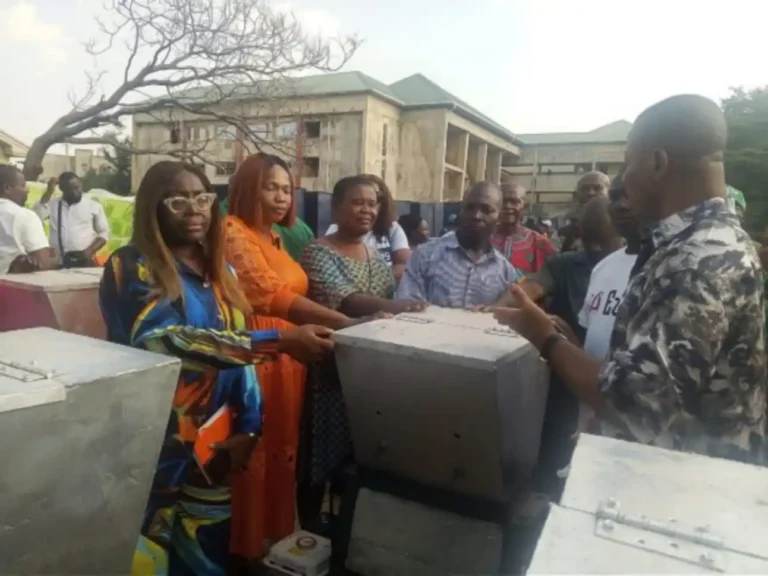
The equipment was presented to 20 newly trained fabricators and cooperatives by the Anambra State Project Coordinator of the FGN/IFAD-VCDP, Mrs Deborah Onyefulu.

Onyefulu said the distribution represented the second tranche of the programme’s empowerment initiative in the state.

She said the initiative was aimed at strengthening agricultural value chains and enhancing livelihoods across participating communities.

According to her, the start-up packs for the trained youths in welding and fabrication included standby generators, starter and welding machines, inverter welding machines, filing and drilling machines, container bodies, angle machines, tool sets and grinding machines.

She added that complete sets of cassava processing equipment were also distributed to women cooperatives under a 70 per cent to 30 per cent cost-sharing arrangement.

Onyefulu explained that creche materials were provided to support nursing mothers during processing activities.

She disclosed that the 20 youth beneficiaries, made up of 18 males and two females, were selected from the nine local government areas where the FGN/IFAD-VCDP is currently being implemented in Anambra.

Commending the trainees for their dedication, Onyefulu urged them to deploy the skills and equipment acquired to improve their livelihoods and contribute to community development.

The project coordinator also revealed that a monitoring and mentorship team had been constituted to ensure optimal utilisation of the equipment and sustained impact of the intervention.

She appreciated the Anambra State Government for providing an enabling environment for the effective implementation of the programme.

Inaugurating the distribution, the Anambra State Commissioner for Agriculture, Dr Foster Ihejiofor, commended the VCDP for supporting farmers, youths and women in the state.

Ihejiofor said the intervention aligned with the agricultural transformation agenda of the Soludo administration, adding that the processing equipment for garri, rice and vegetables would help reduce post-harvest losses and contribute to a reduction in food prices.

He urged the beneficiaries to apply their improved skills and modern equipment to boost productivity, stimulate healthy competition and make food more affordable.

One of the beneficiaries, Ms Rose Machi from Ayamelum Council area, expressed gratitude to VCDP and the Anambra State Government for the intervention and pledged to make judicious use of the training and equipment.

Similarly, Mr Chinecherem Ibe from Orumba South Local Council said the support would enable him to practise acquired skills and train others.

ADC launches One Nigerian, One Skill empowerment programme

0

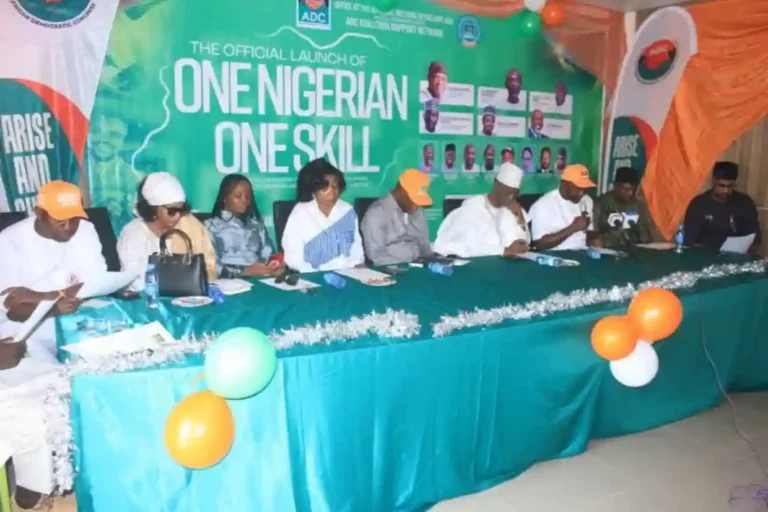
The African Democratic Congress (ADC) has officially launched its One Nigerian, One Skill initiative, an empowerment programme designed to create jobs and lift young Nigerians out of poverty.

The programme was flagged off at a ceremony in Abuja, where the immediate past National Chairman of the party, Dr. Ralphs Okey Nwosu, said the initiative reflects ADC’s core philosophy of prioritising the welfare and empowerment of Nigerians.

Nwosu said that while some political parties deploy resources mainly to influence votes during elections, ADC is committed to using its structures and resources to directly improve the lives of citizens.

“Our goal is to touch lives, not merely distribute money. While some focus on internal welfare and personal gains, ADC leaders are more concerned about the wellbeing of Nigerians,” Nwosu stated.

He stressed that sustainable empowerment lies in knowledge transfer and skill acquisition, noting that Nigeria’s youth can thrive when equipped with practical skills that support income generation.

Also speaking, former Minister of Police Affairs, Alhaji Adamu Maina Waziri, described the initiative as similar to the National Poverty Eradication Programme (NAPEP) introduced under former President Olusegun Obasanjo.

Waziri recalled that over 330,000 youths benefited from NAPEP’s skill acquisition schemes before the programme was abandoned by successive governments.

The ADC National Welfare Secretary, Mr. Nkem Ukandu, whose office is spearheading the programme, explained that One Nigerian, One Skill is aimed at empowering youths, restoring the dignity of labour, and freeing Nigerians from dependency through sustainable skill development.

“This programme is open to both party members and non-partisans. It is designed to equip participants with practical, market-relevant skills that promote self-reliance in today’s challenging economy,” Ukandu said.

He disclosed that the pilot phase will be implemented in two states from each of the six geo-political zones, adding that participants will receive structured training in skills and starter tools upon completion.

Ukandu expressed confidence that every Nigerian has untapped potential, noting that the initiative will help transform these abilities into productivity.

The One Nigerian, One Skill initiative is a flagship programme of the Office of the ADC National Welfare Secretary, implemented in partnership with the ADC Coalition Support Network, with impact.

Plateau, UNDP Sign ₦10bn MoU to Drive Investment and Development

0

The Plateau State Government has signed a Memorandum of Understanding (MoU) with the United Nations Development Programme (UNDP) that will commit an estimated ₦10 billion to a new partnership aimed at strengthening institutional capacity, attracting investment, and accelerating development across critical sectors of the state’s economy.

The MoU was signed on Friday, December 19, 2025, at the Old Government House, Jos, between Plateau State Governor, His Excellency Barr. Caleb Manasseh Mutfwang, and the UNDP, in the presence of members of the Plateau State Executive Council, development partners, private sector stakeholders, and the media.

Speaking at the event, Governor Mutfwang described the partnership as a deliberate and structured approach to repositioning Plateau State for sustainable development driven by data, sound policies, and effective planning. He emphasized that while Plateau is richly endowed with natural and human resources, these potentials must be properly packaged to become attractive to investors.

The Governor noted that key sectors such as tourism, agriculture, livestock, health, and information and communication technology (ICT) have suffered from years of uncoordinated planning, stressing that the state can no longer afford haphazard governance if it is to compete favorably for national and global investments.

He disclosed that the Plateau State Government would commit an estimated ₦10 billion to the partnership, adding that UNDP’s global credibility and technical expertise would help unlock additional international development financing far beyond the state’s direct contribution.

According to Governor Mutfwang, the administration’s priority is to build strong and resilient institutions, enhance agricultural productivity, create meaningful opportunities for young people, and deliver a functional and responsive health system.

In her remarks, the UNDP Country Director, Ms. Elsie Attafuah, described the MoU as a strategic shift from traditional aid to a co-investment model that integrates Plateau State into UNDP’s Integrated Smart and Sustainable Programme (ISSP).

She explained that the partnership is designed to move beyond isolated projects towards a “whole-of-state” development architecture that translates political priorities into investment-ready portfolios.

By leveraging state resources as anchor capital, the initiative aims to attract private investors and Development Finance Institutions (DFIs) to systematically unlock Plateau State’s potential in agriculture, tourism, solid minerals, and digital transformation.

Ms. Attafuah further disclosed that UNDP would deploy a dedicated core team of professionals to Jos by January 2026 to finalize a Joint Action Plan and align development priorities with budget commitments.

She said the collaboration would support implementation in critical areas including agriculture, youth development, digital transformation, tourism planning, sustainable energy, and investment promotion.

She stressed that the strategy focuses on systemic activation, particularly targeting youth enterprise through the establishment of a “maker space,” sustainable energy solutions, and strengthened data systems for results-based execution, positioning Plateau State alongside other reform-forward subnational governments in Nigeria with a focus on job creation, inclusive growth, and long-term economic resilience across the entire state.

GFF Urges Govt-NGO Partnership as 600 Families Receive Food

A Non-Governmental Organisation under the auspices of the Gbenga Fawehinmi Foundation (GFF) has called on all levels of government to partner with non-governmental organisations to support vulnerable families and reduce the impact of economic hardship across the country.

The foundation said collaboration with credible grassroots groups would help government interventions reach people faster and more effectively, especially at the community level where hardship is being felt the most.

The call was made on Friday in Ondo Town, the headquarters of Ondo West Local Government Area of Ondo State, during the distribution of food items to hundreds of local families by the foundation.

Speaking at the event, the Director of Programmes of GFF, Mr. Joshua Aremu, decried the level of hardship faced by many Nigerians and urged governments to work closely with civil society organisations that already have strong ties with vulnerable communities.

Aremu said civil society groups have deeper connections and better understanding of the needs of people at the grassroots, making them reliable partners for targeted social interventions.

He said, “Governments should partner with civil society organisations like ours. We’ve been doing this independently for the past five years, and we’re not tired. If government partners with us, we can do much more even beyond our current capacity.

“We are a grassroots organisation. We relate directly with the people and understand their needs; if government partners with us, the society will be better for it.”

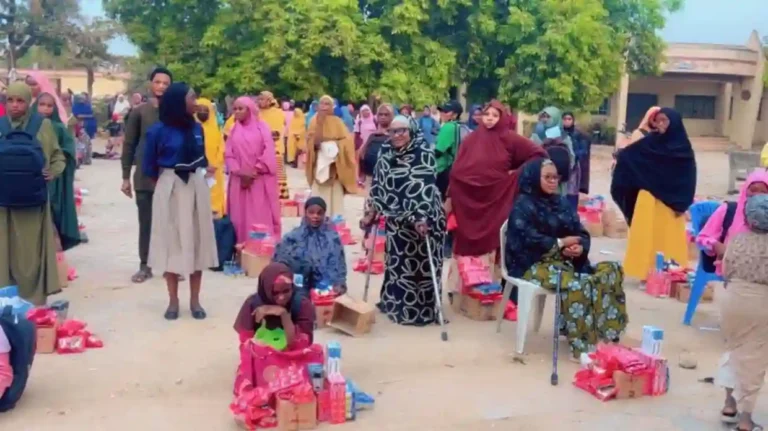
On the outreach programme, Aremu disclosed that the foundation distributed food items to 600 vulnerable families, noting that the exercise is part of its annual yuletide outreach programmes aimed at supporting the less privileged in society.

According to him, the initiative is one of the foundation’s major corporate social responsibility projects, designed to ease the economic burden on low-income households during the festive season every December.

He said, “The essence of this initiative is to give back to society. It’s one of our major corporate social responsibilities, and it’s an annual event. Every December, we try to cushion the effect of the harsh economy and relieve people during this festive season.

“This is the fourth year consecutively. We started in 2022, then 2023, 2024, and now 2025. In 2022, it was for 200 beneficiaries; in 2023, 500; in 2024, 750; and this year, 2025, for 600 beneficiaries.

“We planned for 2,000 beneficiaries this year, but education took a huge part of the budget. At a point, we even considered cancelling the event, but when people kept coming to ask for tickets, we had to agree and settle for 600 people.

“Our beneficiaries are mainly vulnerable people. Most of the people here are poor single mothers, while many of the children you see are representing their parents. No matter how little the food is, it helps the family.”

The director stressed that the foundation’s primary mission remains educational development for indigent children, stating that access to education should be treated as a fundamental right rather than a privilege.

One of the beneficiaries, Nicholas Otufulure, appreciated the foundation for its continued support and called on other NGOs to adopt similar initiatives to support vulnerable members of society.

He said, “I’ve been a beneficiary for three years. This gesture puts smiles on faces in community; others should emulate it.”

Abbas Urges FG to Prioritise Jobs and Realistic Budgeting in 2026

0

The Speaker of the House of Representatives, Tajudeen Abbas, has urged the Federal Government to prioritise job creation and expand opportunities for Nigerians to achieve their aspirations in 2026, as the country prepares for the next fiscal year.

Abbas made the call on Friday in his closing remarks at the Joint Session of the National Assembly during the presentation of the 2026 budget proposal by President Bola Tinubu. He described 2025 as a year marked by “challenging global conditions and fiscal headwinds,” and stressed the need for more realistic revenue projections and stronger project execution in future budget cycles.

Reflecting on the outgoing year, the Speaker said Nigeria recorded stability, renewed confidence, and steady progress, despite undergoing a period of economic adjustment. According to him, the economy has now been repositioned for sustained expansion, creating expectations for better outcomes in 2026.

He said, “If 2025 was a year of adjustment and learning, 2026 must be a year of fulfilment. Growth must increasingly translate into jobs, higher incomes, and expanded opportunity.”

Abbas emphasised that fiscal discipline must continue to deliver fairness, efficiency, and visible impact on the lives of citizens. He added that the 2026 budget must be built on credible targets, realistic assumptions, and disciplined implementation to ensure it delivers tangible results.

“This is why there is strong optimism across this chamber that 2026 will be different, not only in intent but in outcomes. The National Assembly receives the 2026 Appropriation Bill with confidence that the lessons of 2025 have been fully internalised, and that this budget is designed to translate reform into tangible progress for Nigerians,” he said.

He reiterated that growth must translate into jobs, higher incomes, and expanded opportunities, while national policy must remain anchored in coherence, predictability, and institutional order. The Speaker called for sober reflection on what went wrong in 2025, urging the government to draw lessons to guide resource management and project execution in 2026.

Abbas noted that some of the challenges faced in 2025 were linked to external factors and overly optimistic assumptions. He said, “2025 also offered important lessons. The year unfolded against the backdrop of challenging global conditions and fiscal headwinds. Some budget assumptions, particularly regarding crude oil prices and exchange rates, proved overly optimistic amid volatility in the international oil market.”

According to him, sharp fluctuations in crude oil prices and external shocks tested projections and exposed the vulnerability of Nigeria’s oil-dependent revenue structure. However, he said these challenges did not weaken the reform agenda.

“Mr President. Rather than weakening the reform agenda, these challenges strengthened it. They reinforced the urgency of realism in budgeting, discipline in execution, and diversification in revenue planning,” Abbas said.

He added that the experience of 2025 sharpened collective understanding that credible budgets must be built on prudent assumptions and resilient frameworks. The Speaker stressed that the gains recorded in 2025 should serve as a foundation for a more deliberate, realistic, and results-oriented 2026 budget.

Citing data from the National Bureau of Statistics, Abbas said Nigeria recorded positive economic growth throughout the year, with real GDP growth approaching 4 percent. He noted that this performance placed Nigeria among the stronger-performing large economies in Sub-Saharan Africa.

The Speaker commended President Tinubu for implementing bold economic policies, noting that visible gains have been recorded in recent months. He also praised the President’s decision to end the practice of running multiple budgets concurrently, describing it as a sign of reform maturity.

“Over recent months, inflationary pressures have significantly eased. Following the rebasing of the Consumer Price Index, headline inflation has trended downwards, while food inflation has decreased due to improved agricultural output, targeted interventions, and more stable supply chains,” he said.

Abbas added that external indicators have also improved, with Central Bank of Nigeria data confirming stronger foreign exchange reserves, resilient remittance inflows, rising export receipts, and greater coherence in the foreign exchange market. He said the World Bank and the International Monetary Fund have recognised these developments as signs of restored macroeconomic credibility and stronger foundations for medium-term growth.

“One of the most reassuring signals of reform maturity in your approach to the 2026 budget is your clear directive that Nigeria must operate with one budget and one fiscal framework,” he said, adding that there should be no parallel budgets or fragmented fiscal authorities.

According to him, the N58.18tn 2026 budget proposal is anchored on sustainable revenue rather than deferred obligations. “It finances progress responsibly. A fair and efficient tax system underpins security funding, sustains social services, and guarantees the timely delivery of constituency projects,” Abbas said.

He pledged the readiness of the National Assembly to consider the Appropriation Bill urgently, stating, “We will support reform that strengthens the national interest, scrutinise spending to ensure accountability, and insist that every naira budgeted by Mr President delivers value to the Nigerian people.”

Osun Targets 1000 Youths, Women for Waste-to-Wealth Training

The Osun State Government has begun a push to empower youths and women by targeting 1,000 beneficiaries for skills training in the conversion of waste to wealth, as part of efforts to address climate change and create income opportunities.

The disclosure was made by the Director General and Special Envoy to the Osun State Governor on Climate Change and Renewable Energy, Prof. Chinwe Obuaku-Igwe, during a training programme organised for selected women and youths drawn from local government areas. The programme was held on Friday in Osogbo.

Obuaku-Igwe said the training was conceived to empower youths and women by equipping them with practical knowledge to earn money through the conversion of waste to useful materials and items.

According to her, “Youth and woman are the most vulnerable and populations in every given polity. They always bring different set of capacity or capabilities to a community. Like I said over there, the youth bring ideas, women bring innovation and communality.”

She explained that youths and women are mostly affected by climate change, which informed the state’s decision to prioritise them. “They are the ones mostly impacted by effect of climate change. In Osun State, we have decided to prioritise them, not just to, with regards to adaptation and mitigation, but with regards to revenue generation amd green entrepreneurship, which we are introducing into the state,” she said.

Obuaku-Igwe disclosed that the state is targeting 1,000 youths and women, adding that the current programme represents the second batch of the inaugural training held in August. She said the first training focused on waste to wealth, while the second batch is centred on waste to energy.

“We are targeting 1,000 youths and women. Today’s training is the second batch of the inaugural one we had in August this year. The first one was on waste to wealth and this second one is on waste to energy and the goal is to target green entrepreneurship,” she stated.

She said participants are being taught how to move away from a linear economy to secularity and to understand that waste is a resources and an opportunity to generate income.

“If you look at the nature of waste, the goal is also to teach them to understand that the benefits of waste is multi-faceted and complex. Today’s training focuses on the complexity of generating energy from waste as different from the first set of training whose was basically to introduce the basic of waste to wealth,” she said.

She urged residents to cooperate with the government on climate action initiatives, noting that the projects can generate carbon revenue and improve compliance with climate change standards.

Osun State Governor, Ademola Adeleke, had in September announced the appointment of Obuaku-Igwe as Director-General and Special Envoy on Climate Change and Renewable Energy. The announcement was contained in a statement signed by the Governor’s spokesperson, Olawale Rasheed.

Rasheed said the appointment was aimed at strengthening the state’s climate action and renewable energy agenda. “Professor Obuaku-Igwe will operate directly under the Governor, with a mandate to drive high-level partnerships with multilateral agencies, investors, and global climate networks,” he said.

He added that her role includes coordinating the implementation of Osun’s Climate Action Plan. Before the appointment, she had served as a consultant to the state government on Climate Change and Renewable Energy.