Home Blog Page 219

NJFP Delists and Blacklists Fellows Over Alleged Rule Violations

0

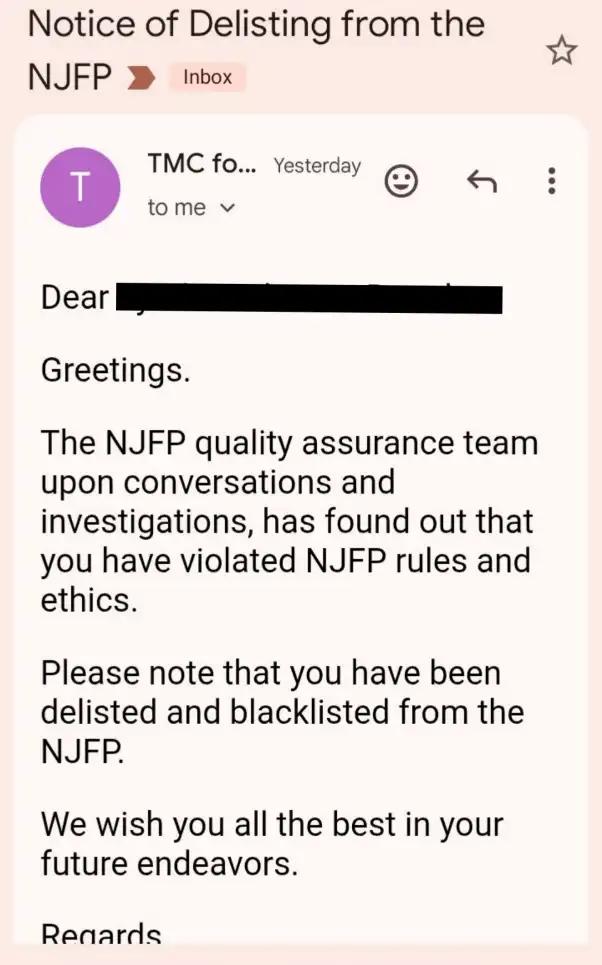
Nigeria Jubilee Fellows Programme (NJFP) has issued delisting notices via email to candidates it accused of violating programme rules and ethics.

In the notice sent to affected fellows, NJFP stated, “The NJFP quality assurance team upon conversations and investigations, has found out that you have violated NJFP rules and ethics. Please note that you have been delisted and blacklisted from the NJFP.” The programme also wished the candidates well in their future endeavours.

Information reaching Nigeria Startup News indicates that NJFP officials did not clearly explain the specific offence to at least one affected fellow. When contacted by the fellow, NJFP officials reportedly said the fellow was posted to Sterling Bank but failed to resume duties, which informed the delisting decision.

However, one affected fellow, Tyodio Solomon Bemdoo, who was shortlisted in 2022 but not matched to any host organisation, disputed the claim. Bemdoo said he neither received communication from Sterling Bank nor NJFP officials about being matched. “They didn’t post me to anywhere, they just used that excuse to delist me,” he said.

Following the development, fellows awaiting placement have been advised to regularly check their email, including spam folders, to avoid missing important NJFP communication updates.

Advertisement

CDCFIB circular links staff allowance to 2024/25 physical screening

0

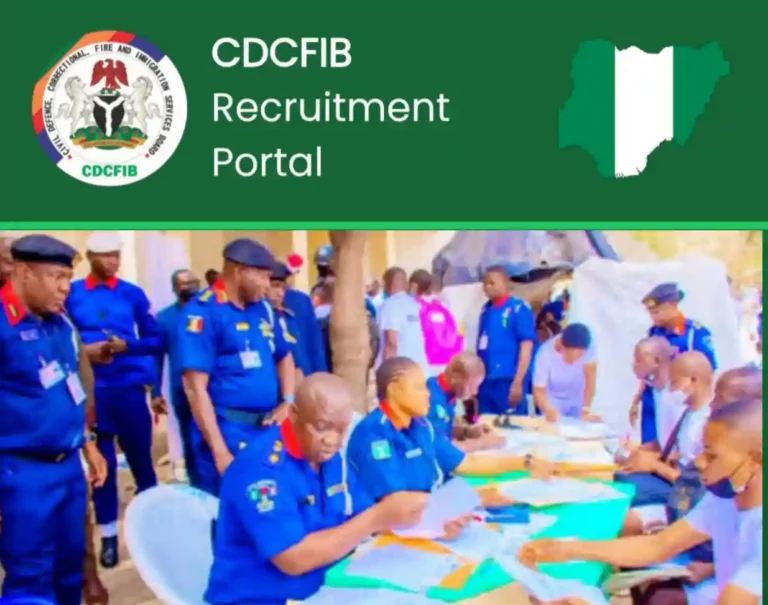
An internal circular currently circulating online has indicated preparations for the physical screening exercise of the Civil Defence, Correctional, Fire and Immigration Services Board, CDCFIB, though the document has not been independently verified.

The circular, dated 18th December, 2025, with reference number CDCFIB/ADM/998/TI/28, was issued by the HRM department and addressed to all staff.

It stated, “I am directed to inform all staff of the Board Secretariat that the allowance recently paid is for the forthcoming Physical Screening/Document Verification Exercise.”

The notice further warned staff to manage the funds carefully, saying, “ALL STAFF are to apply caution by not spending the fund during this festive period.”

It also noted that “the date for the aforementioned exercise would be communicated in due course,” and advised staff to “take note and ensure compliance.”

The circular was signed by Emmanuel-Iheke L. (Mrs.), Ag. Director (HRM), for Secretary to the Board in Abuja Nigeria.

Adamawa Lawmaker Empowers Over 900 Constituents with N100m

0

The Member representing Numan in the Adamawa State House of Assembly, Mr. Pwamwakaino Mackondo, has injected N100 million to empower constituents. Out of the amount, about N57 million was used to procure farm inputs, while N43 million was distributed as cash to over 900 beneficiaries across the constituency. Ten individuals also received a Point of Sale POS machine each, alongside the distribution of 10 local boats, water pump generators, agrochemicals, and knapsack sprayers.

Mackondo pledged to sustain the empowerment programme and thanked Governor Ahmadu Umaru Fintiri for giving Assembly members the opportunity to support their people. He urged residents to trust the administration’s commitment to human empowerment and sustainable growth.

PAWECA Director General, Dr. Michael Zira, represented by Mallam Sani Abdulkadir, warned beneficiaries against selling the items, while praising Mackondo’s efforts. PAWECA Procurement Director, Mr. Indi Thomas, hailed Mackondo as a “man of his words” and urged support for Governor Fintiri.

Ekiti to Engage 50,000 Youths for N50bn Food Production by 2030

0

The Ekiti State Government has set a target of engaging over 50,000 youths to produce N50 billion worth of food under its Bring Back Our Youths to Agriculture (BBYA) programme by the year 2030.

The State Commissioner for Agriculture and Food Security, Mr. Ebenezer Boluwade, disclosed this while featuring on an audience participatory simulcast in Ado Ekiti, where he explained that the BBYA programme, conceived by the administration of Governor Biodun Oyebanji and launched in 2024, is focused on empowering young people through sustainable wealth creation, job opportunities and improved food security.

Boluwade said the initiative was designed to transform agriculture into a profitable and attractive business venture for youths, with the goal of positioning Ekiti State as a leading hub for youth driven and commercially viable agribusiness in Nigeria.

According to him, the programme aligns with Governor Oyebanji’s Shared Prosperity Agenda, which guides strategic investments in agricultural infrastructure, training, financing and market access across the entire value chain.

The Commissioner reaffirmed the commitment of the state government to working with key financial institutions, including the Bank of Agriculture (BoA), to provide accessible funding and credit support for young farmers, noting that such collaborations are critical to sustaining the programme and expanding participation.

“These partnerships are designed to help participants expand their operations, reinvest profits and transition from supported farming to independent agribusiness ownership, while reducing the financial barriers that often discourage youth participation in agriculture,” he said.

Urging farmers to embrace dry season farming, Boluwade described year round agricultural production as essential to increasing yields, stabilising food supply and boosting farmers’ income, stressing that Ekiti farmers are well positioned to produce beyond the rainy season through irrigation facilities, mechanisation and technical support provided by the government.

He highlighted the recent disbursement of ₦1 billion in profits to 4,567 BBYA participants as a major milestone, describing it as a significant improvement over the ₦145 million paid to 911 youths under the scheme in the previous year, and noted that the development underscores the growing success of the programme.

Boluwade further revealed that the state has constructed ultra modern dormitories at five strategic farm clusters located in Ikere, Eporo Emure, Iyemero, Aramoko and Ado Ekiti, with each facility equipped with solar powered hostels, boreholes, storage facilities, round the clock security and modular solar powered irrigation systems to enhance productivity, comfort and safety.

He added that the number of farm cluster centres has increased from five to twelve, spread across Eporo, Ose, Ikere, Ogotun, Omuo, Egbe, Aramoko, Oke Ako, Iyemero, Gede, Isan Ayede and Ise.

“Over 5,000 hectares of land have been cleared for farming, with five centres already equipped with fully functional dormitories. The cluster farming model covers crops such as maize, yam, soya beans, cassava, vegetables, rice and cowpea,” he said.

Looking ahead, the Commissioner said the state plans to expand available farmlands, recruit more committed participants through a structured selection process and strengthen public private partnerships to improve market access and value addition.

He also disclosed that a major processing plant in Ikere is set to be commissioned by Governor Oyebanji, a development expected to reduce post harvest losses, deepen agro processing and create additional employment opportunities.

Boluwade advised Ekiti youths to take full advantage of the government’s policies and programmes to improve their overall wellbeing and economic prospects.

Some beneficiaries of the ₦1 billion profit disbursement who called in during the radio programme shared testimonies, describing the initiative as life changing and transformative for their livelihoods.

Olusola Elizabeth, a participant from the Aramoko farm cluster, expressed gratitude to Governor Oyebanji for providing opportunities beyond farming, including training, accommodation, feeding, seed capital and logistical support, which she said helped participants grow their businesses with dignity and confidence.

Similarly, Michael Omobolanle from the Iyemero cluster commended the provision of dormitories, farm inputs and mechanised tools, noting that the enabling environment has made agriculture more productive and attractive to young people.

From the Igede farm cluster, Idowu Remilekun praised the administration for transforming idle youths into productive contributors to the state’s economy and called for sustained support for the programme.

FG asks producers to rename A Very Dirty Christmas after CAN concerns

The Federal Government, through the National Film and Video Censors Board (NFVCB), has asked the producers of the Nollywood film A Very Dirty Christmas to modify the title of the movie following concerns raised by the Christian Association of Nigeria (CAN) and members of the public over its perceived religious implications.

The film, produced by actress Ini Edo and directed by Akay Mason, recently attracted public criticism after its cinema release, with CAN describing the title as offensive to Christian values and the sacred meaning of Christmas. The development sparked widespread debate across media platforms, prompting regulatory attention.

In a statement, the NFVCB said it had taken note of the concerns expressed in the media regarding the film, even though it had not received any formal communication from CAN. The Board said it wished to acknowledge the reactions and reassure the Christian community and the general public that “religious sensitivity, mutual respect and peaceful coexistence” remain core considerations in the discharge of its statutory responsibilities.

The Board noted that Nigeria’s strength lies in its diversity and stressed the importance of ensuring that films exhibited in the country do not undermine religious harmony or offend deeply held beliefs. It clarified that A Very Dirty Christmas was approved and classified only after undergoing the established censorship and classification process.

According to the NFVCB, the Film Censorship Committee examined the work within its narrative and thematic context before granting approval. The Board said the approval of the title “was not intended to disparage or trivialize the Christian faith or the significance of Christmas,” but was considered part of a fictional and creative expression.

However, the NFVCB acknowledged that public perception and reception are critical elements of effective regulation. It stated that reactions from CAN and other concerned Nigerians showed the need for continuous engagement between regulators, filmmakers and faith-based groups.

“In light of the concerns raised by CAN, and in the spirit of responsiveness and dialogue,” the Board said it has formally engaged the producers of the film and requested a modification of the title to avoid interpretations that may be considered offensive to Christian sensibilities and to prevent unnecessary religious tension.

The Board further assured the public that it remains guided by the provisions of the National Film and Video Censors Board Act. It cited Section 39(1) of the Act, which empowers the Film Censorship Committee to order the withdrawal of a film from exhibition for further review when such action is considered necessary in the interest of the public.

The NFVCB said it remains open to continued engagement with CAN, faith-based organisations, industry stakeholders and the general public. It added that it will continue to take appropriate steps to ensure that films exhibited in Nigeria promote understanding, respect for religious diversity and national unity, while supporting responsible creativity and artistic expression.

The Board also appreciated the patience, understanding and cooperation of all stakeholders as it works to uphold its mandate in the overall interest of the Nigerian public.

Yobe to Expand Empowerment Programmes for Mobile Phone Traders

The Yobe State Government has reaffirmed its commitment to expanding economic empowerment initiatives for small and medium-scale traders, with fresh capacity building programmes and tools distribution underway for mobile phone dealers across the state.

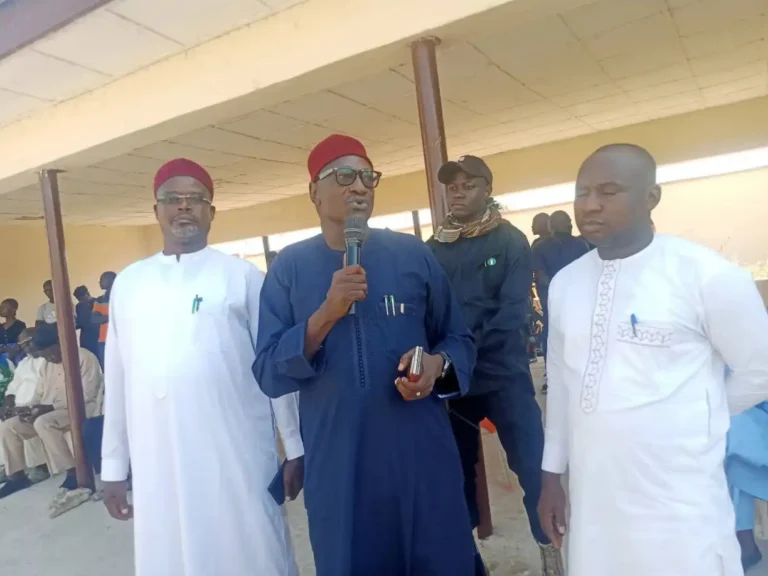
The assurance was given by the Honourable Commissioner for Wealth Creation, Empowerment and Employment Generation, Alh Aji Yerima Bularafa, also known as Mal Terab of Gujba, while receiving members of the Association of Mobile Phone and Allied Products Traders of Nigeria on a courtesy and appreciation visit at the Ministry.

Responding to the delegation led by the Association’s State Chairman, Alhaji Malami Ali, the Commissioner commended the traders for their cooperation and constructive engagement with government, assuring them that inclusiveness remains a guiding principle of the Ministry’s empowerment drive.

He disclosed that the Ministry is already making concrete preparations to roll out additional capacity building programmes and distribute working tools specifically targeted at members of the Association, in line with the administration’s agenda of job creation, entrepreneurship development and sustainable wealth creation.

“These interventions are part of the broader vision of His Excellency, Hon. (Dr.) Mai Mala Buni, CON, COMN (Chiroman Gujba), Executive Governor of Yobe State, to strengthen small businesses and improve livelihoods across the state,” Bularafa said.

Earlier, the Association’s State Chairman, Alhaji Malami Ali, expressed profound appreciation to the Commissioner and the Yobe State Government for sustained support to traders, noting that members of the Association have benefitted immensely from empowerment initiatives.

He said the interventions include capacity building programmes, provision of working tools, free financial support and access to soft loan schemes designed to support business stability and expansion for traders in the mobile phone sector.

According to him, under the soft loan arrangements, beneficiaries repay only part of the funds, while the state government absorbs and gifts 60 percent of the loan amount, significantly easing the financial burden on traders and enabling steady business growth.

While commending the Ministry for its impactful interventions, Malami appealed for broader coverage to ensure that more members of the Association across the state benefit from ongoing and future empowerment programmes.

In his closing remarks, Permanent Secretary Esv. Inuwa Usman Yaroro reaffirmed the Ministry’s commitment to partnering with professional associations, noting that the attendance of all Directors reflected a shared resolve for inclusive wealth creation statewide.

Katsina skills and training centres to operate under Youth Craft Village

Katsina State Governor, Malam Dikko Umaru Radda, has approved the merger and transfer of six Community Skills Development Centres (COSDEC) and Business Apprenticeship Training Centres (BATC) to operate under the coordination framework of the Katsina Youth Craft Village (KYCV).

The approval affects centres located in Katsina, Mani, Daura, Dutsinma, Malumfashi, and Funtua, and is part of the governor’s ongoing commitment to strengthening skills acquisition, entrepreneurship development, and youth empowerment across the state.

Governor Radda described the decision as a strategic intervention aimed at deepening practical skills development and ensuring that young people in Katsina State are better prepared for employment, self-reliance, and innovation in a competitive economy.

He explained that the merger and transfer of control are designed to consolidate existing skills training initiatives, promote uniform standards, and improve efficiency in the delivery of vocational and technical skills programmes across Katsina State.

“With this development, skills acquisition and apprenticeship training will now be coordinated under a unified framework that promotes consistency in curriculum delivery, certification, monitoring, and measurable outcomes across Katsina State,” the governor said.

According to him, the policy direction reinforces his administration’s vision of positioning Katsina State as a hub for practical skills, innovation, and self-reliance, in line with global best practices where skills acquisition and entrepreneurship are recognised as key drivers of economic growth and job creation.

Governor Radda noted that integrating COSDEC and the Business Apprenticeship Training Centres under the Katsina Youth Craft Village would significantly improve access to quality, market-driven skills training for youths across the three senatorial zones of the state.

“This initiative offers renewed hope and expanded opportunities for our young people. By equipping them with relevant and practical skills, we are enhancing employability, promoting self-employment, and laying a strong foundation for sustainable livelihoods,” he stated.

The governor reaffirmed his administration’s commitment to youth-focused policies, stressing that sustained investment in skills development remains central to building a resilient and inclusive economy for Katsina State.

He also commended the management of the Katsina Youth Craft Village for its role in advancing skills training and assured that the state government would continue to provide the necessary policy and institutional support to ensure the success of the unified framework.

“This approval is another testament to our people-centred approach to governance. We are determined to build an inclusive Katsina State where our youths are prepared to compete and succeed in a changing world today,” Governor Radda concluded.

Association Distributes ₦7m Food Palliatives to 600 Lagos Island Residents

0

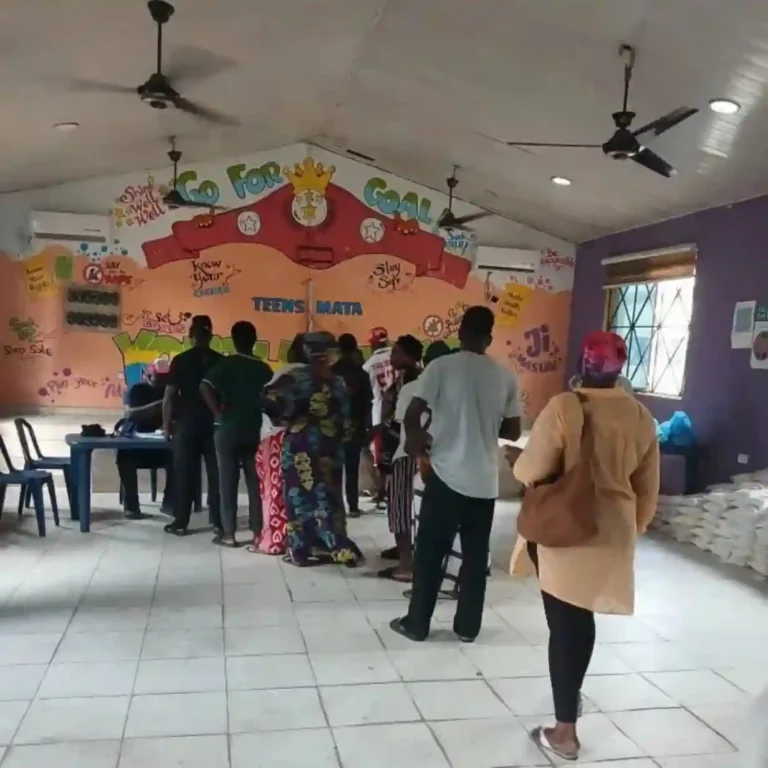
The Lafiaji Development Association (LDA) at the weekend distributed food palliatives worth over ₦7 million to vulnerable residents across the Lafiaji community on Lagos Island, demonstrating commitment to grassroots welfare.

Speaking at the event, President of the Association, Mr. Adekunle Solomon Gonzalo, said the initiative was driven by compassion and a clear understanding of the realities facing residents who continue to struggle with rising living costs.

“This is my seventh year as President of the Lafiaji Development Association,” Gonzalo said. “The only major challenge we have faced as an organisation, and indeed as a nation, was during the COVID-19 lockdown. We were able to pull through.”

He explained that the decision to introduce the palliative programme came from observing worsening conditions within the community and the need to provide immediate relief to households.

“Last year, we saw the writing on the wall because of the economic situation in the country. We felt the need to feed our family—the Lafiaji community,” he said. “It cost us about ₦6 million last year, but this year we went the extra mile, spending over ₦7 million to ensure more people had food on their tables.”

Also speaking at the event, the Asiwaju of Lafiaji and Immediate Past President of LDA, Mr. Babatunde Abozo, highlighted key programmes executed during his tenure, noting that welfare and public health remained central priorities.

“We organised health walks for the elderly and youths and collaborated with the Lagos State Ministry of Health for medical check-ups,” Abozo said. “Those who required treatment had their medical bills covered. We also carried out environmental sanitation exercises and distributed palliatives to elderly members of the community.”

Project Coordinator of the initiative, Mr. Bernard Sanya, said careful planning helped ensure a smooth exercise.

“We catered for over 600 people, and everything was well coordinated,” Sanya said. “From logistics and security to crowd movement, we put structures in place, including access cards with QR codes, to ensure order and transparency.”

According to him, extensive groundwork was carried out to identify and reach vulnerable residents across the five zones of Lafiaji, including Simpson, Oke Suna, Obalende, Araromi, and Ije.

“We moved through churches, mosques, and traditional homes,” he explained. “Lagos is home to different religions, and our aim was to cover everybody and ensure no one was left out. The QR code system helped us maintain due protocol.”

Sanya noted that LDA, founded in 1982, is a non-governmental organisation focused on community development and social intervention.

“Despite massive immigration into Lagos, we do not forget the indigenous people who still live here,” he said. “This programme targets those citizens who truly need support, especially in the post-COVID and post-recession era.”

He added that the palliative distribution, which was previously organised once a year, will now be expanded.

“Going forward, we intend to organise it twice yearly,” Sanya said. “Donations from members—sometimes as much as ₦500,000—make these projects possible.”

One of the trustees, Mr. Florentino Olatunji Kolajo Sanyo, traced the roots of LDA to a shared sense of responsibility among professionals from the community.

“We came together because we felt the need to return to our roots and assist our community,” Sanyo said. “LDA is made up of professionals—lawyers, doctors, accountants, journalists—people committed to giving back.”

He recalled that the Association pioneered several social interventions in the area.

“We were among the first to provide free medical check-ups, free medicines, and free glasses,” he said. “We support education, sponsor GCE exams, organise youth programmes, and empower young people in the community.”

To ensure fairness, Sanyo explained that beneficiaries are selected through a zonal structure.

“The Lafiaji community is divided into five zones, and priority is shared among them,” he said. “We issue identity tickets to ensure order and reach as many people as possible.”

The Lafiaji Development Association said it remains committed to easing the burden there.

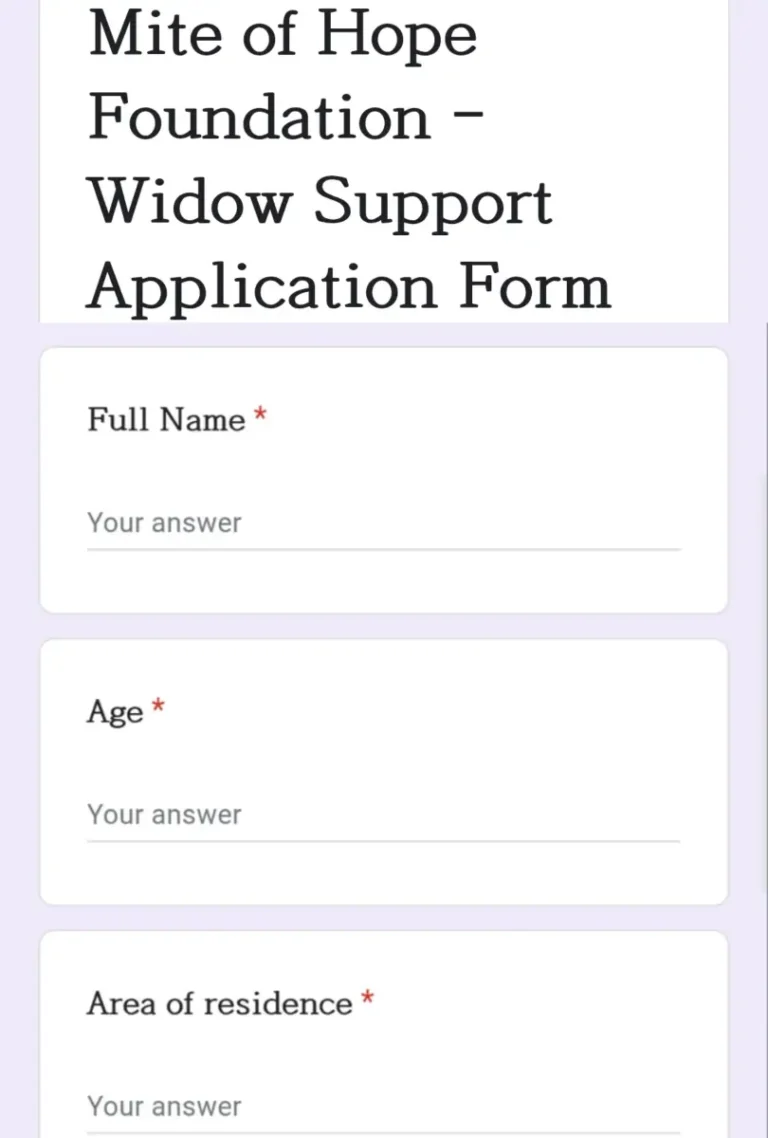
Apply: Mite of Hope Foundation ₦100,000 Relief Support for Widows

The Mite of Hope Foundation has opened applications for its ₦100,000 Widows Relief Support initiative, aimed at providing financial assistance to widows facing economic hardship across the country.

The initiative is designed to support widows who are caring for their children, supporting dependents, or running small businesses under difficult economic conditions. The programme seeks to ease immediate financial pressure and help beneficiaries regain household stability.

Mite of Hope Foundation stated that the support can be used to meet urgent needs such as food, school fees, healthcare, or to strengthen small business activities. The intervention targets widows who are working hard to provide for their families despite ongoing challenges.

The 200k widows initiative focuses on restoring confidence nationwide initiative.

Eligibility for the programme requires applicants to be widows in need of financial assistance, with responsibility for children or dependents, or those operating small businesses. Applicants must also have a valid email address.

Required documents include proof of widowhood, personal and household information, and a valid email address.

The deadline for applications is December 25, 2025.

To apply, interested widows should complete the application form forms.gle/tUgxbJeAy1FhWsgr6.

Lagos Targets Nigeria’s $250bn Green Economy at 6th Waste Forum

The Lagos State Government, alongside several key stakeholders, has reaffirmed its commitment to environmental initiatives aimed at unlocking Nigeria’s $250 billion green economy potential. This was the focus at the 6th Lagos Waste Forum held in Lagos, where leaders from both the public and private sectors discussed how waste can serve as a driver of economic growth and resilience.

According to a statement, the event was organised by SWEEP Foundation NG with support from UNIDO, the European Union, and Coca-Cola Nigeria. The theme of the forum was “The Power of Nigeria’s Waste Economy,” and it brought together government officials, industry experts, and development partners to explore strategies for sustainable waste management.

The Special Adviser on the Environment, Olakunle Rotimi-Akodu, who represented Governor Babajide Sanwo-Olu, highlighted the state’s pivotal role in advancing Nigeria’s circular economy. He said Lagos generates a large volume of waste but also presents vast opportunities for economic transformation.

“Lagos generates vast quantities of waste, but within this challenge lies a significant opportunity, one realised through structure, innovation, and entrepreneurial intelligence,” the Governor’s representative stated.

Rotimi-Akodu noted that agencies such as the Lagos Waste Management Authority, under the leadership of its Managing Director, Dr Muyiwa Gbadegesin, are working to establish an integrated waste management framework. He said the framework “positions Lagos as a hub of circular economy innovation.”

A representative of the Food and Beverage Recycling Alliance (FBRA) provided insights into the economic potential of the sector, referencing the Federal Government and UNDP’s Imagine Nigeria report. The report estimates that Nigeria’s green economy could yield up to $250 billion.

“Circularity is not just an ecological necessity but a strategic pathway to jobs, innovation, and environmental protection,” the FBRA official noted. The alliance revealed that Nigeria produces 32 million tonnes of waste each year, while Lagos alone generated about N18 billion in recycling value in 2021.

The President and CEO of SWEEP Foundation NG, Obuesi Phillips, described dumpsites as emerging “waste mines.” He proposed the establishment of a Ministry of Waste Resources and the creation of a Green Bank that would provide single-digit interest loans to waste-to-wealth entrepreneurs.

The Ogun State Commissioner for the Environment, Dr Ola Oresanya, delivered the forum’s lecture, urging governments to adopt evidence-based approaches to environmental management. “Solutions must be guided by research, innovation, and evidence-based interventions tailored to Nigeria’s local contexts,” he said. Oresanya also emphasized the need for a technically skilled environmental workforce at all government levels.

Other key attendees included the Special Adviser on Climate Change and Circular Economy, Titi Oshodi; the Executive Director of Circular Economy Innovation Partnership, Natalie Beinisch; and UNIDO Field Coordination and Gender Expert, Emem Umana. The forum ended with participants pledging to prioritise financing, technology adoption, and community engagement as core strategies for accelerating Nigeria’s shift to a resource-efficient and climate-smart waste ecosystem.