Home Blog Page 22

CIPM seeks NYSC partnership on Corps Members empowerment

0

The Chartered Institute of Personnel Management (CIPM) has expressed interest in supporting the National Youth Service Corps (NYSC) to strengthen youth mentorship, Corps empowerment and national integration across Nigeria.

This was made known during a visit to the NYSC Headquarters in Abuja by the Registrar and Chief Executive of the CIPM, Ms Oluwatoyin Naiwo. She explained that the institute remains the only statutory regulator of human resource management practice in Nigeria, having been established by an Act of Parliament in 2004.

“As at today, we have over 20,000 certified members including senior public officials, and we operate 5 Zonal Offices nationwide with our headquarters in Lagos,” Naiwo said.

She commended the NYSC for its efforts in mentoring young people for leadership roles and equipping them with entrepreneurial skills for job creation. Naiwo also called for stronger collaboration between both organisations to improve opportunities for Corps Members.

“We commend your visionary reform which is focused on skills development, digital innovation and employability, which are repositioning the Scheme as a powerful engine for national workforce readiness,” she added.

The Registrar stressed the importance of exposing Corps Members to the activities of the CIPM and guiding them towards post-service career opportunities. She proposed that the institute be allowed to make presentations during NYSC Orientation Courses to equip Corps Members with ideas on workplace experience and structured career planning.

Responding, the NYSC Director-General, Brigadier General Olakunle Nafiu, expressed the Scheme’s readiness to partner with organisations committed to youth development and national integration. He said Corps Members are always interested in opportunities that add value to their future.

The DG highlighted the importance of manpower development and stated that the NYSC was favourably disposed to deepening collaboration with the CIPM. He added that both agencies would set up a joint technical team to work out practical steps for implementing the proposed partnership.

Advertisement

ASUBEB Announces AI Training Workshop for Teachers in Anambra

0

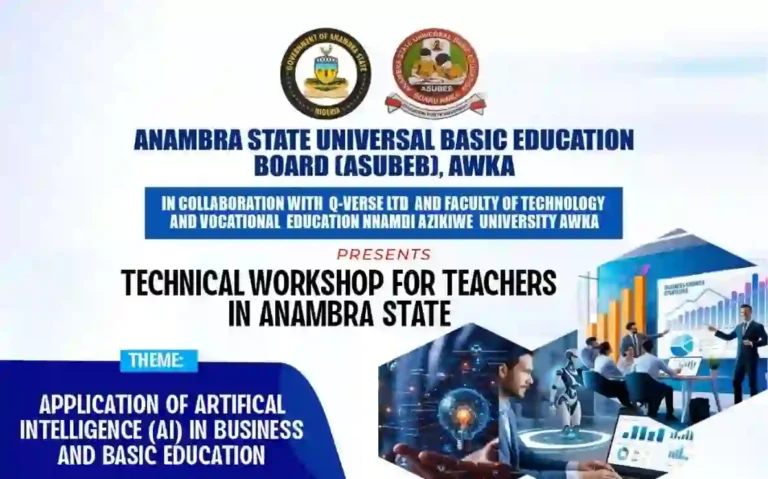
The Government of Anambra State will host a Technical Workshop for Teachers in Anambra State focused on building digital capacity in the education sector.

The programme is organised by the Anambra State Universal Basic Education Board (ASUBEB), Awka, in collaboration with Q-VERSE Ltd and the Faculty of Technology and Vocational Education, Nnamdi Azikiwe University Awka.

The theme of the workshop is “Application of Artificial Intelligence (AI) in Business and Basic Education.” The training will explore how AI can be used to improve teaching, learning, research productivity, and decision-making in schools and businesses.

The workshop will hold on 24th February, 2026, at 10am. The venue is the ASUU Secretariat, NAU.

The event will be held under the Distinguished Chairmanship of Engr. Agu Onwuamaeze of Q-VERSE, USA. Chief Dr. Emeka Ezekwe, Ebubeagu Anaocha and MD/CEO of Arrowconn group, will serve as Special Guest of Honour.

Prof. Ugochukwu Bond Anyaehie, Vice Chancellor of Nnamdi Azikiwe University, is listed among the key dignitaries for the event. The Chief Host is Dr. Vera Nkiru Nwadinobi, Executive Chairman ASUBEB.

Other hosts include Prof. C.C Okolocha, Dean, Faculty of Technology and Vocational Education, and Mrs. Offiah Ifeyinwa, Director Teacher’s Development.

The workshop is designed to “Bridge AI skills gap in business and education.” Participants will also learn to “Apply AI tools in teaching, learning & research productivity.” The programme will further show how to “Apply AI tools for innovation and decision-making” and how to “Align with global digital transformation trends in business and education.”

The training is expected to equip teachers with practical knowledge on the application of Artificial Intelligence in both business and basic education, while strengthening collaboration between ASUBEB, Q-VERSE Ltd, and Nnamdi Azikiwe University Awka.

NIPC Ends PSI Applications Ahead of EDTI Rollout

0

The Nigerian Investment Promotion Commission (NIPC) has announced the cessation of applications for the Pioneer Status Incentive (PSI), effective November 10, 2025.

According to the commission, the move is part of preparations for the transition to the Economic Development Tax Incentive (EDTI) scheme, which officially took effect on January 1, 2026. The transition marks a shift in Nigeria’s tax incentive framework as the government introduces the new EDTI scheme to replace PSI.

In a notice issued by the commission, NIPC stated that the closure of PSI applications was necessary to ensure a smooth transition to the new structure. The commission explained that the decision aligns with the implementation timeline of the EDTI scheme.

NIPC also addressed applicants with pending PSI applications. The commission advised them to expedite the completion of their application process on or before 27 February 2026. It warned that failure to meet the deadline will result in the nullification of the application.

“Applicants with pending applications are advised to expedite the completion of their application process on or before 27 February 2026. Failure to comply will result in the nullification of the application,” the commission stated.

The commission emphasized that the cessation of PSI applications took effect from November 10, 2025, ahead of the full transition to EDTI, which began on January 1, 2026.

Mastercard Foundation FAST program 2026 opens with up to $15,000 Funding

0

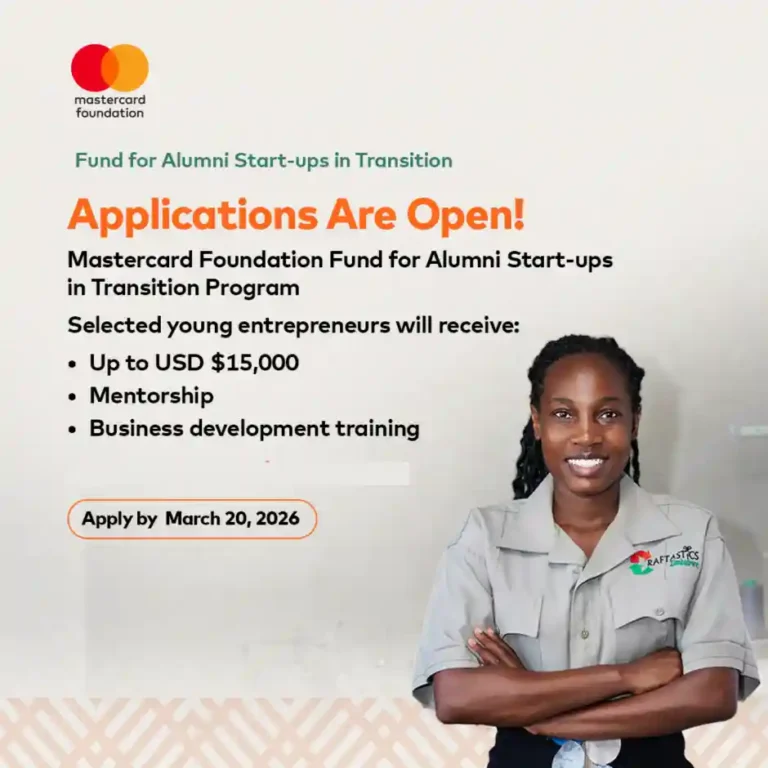
Applications are now open for the third cohort of the Mastercard Foundation Fund for Alumni Start-ups in Transition (FAST) Program, offering eligible young entrepreneurs access to up to USD $15,000 in funding. The program is designed to help alumni move from ideas to action by supporting early-stage businesses with funding, training, and mentorship.

The FAST Program is open to alumni of the Young African Leaders Initiative (YALI), African Leadership Academy (ALA), Anzisha Prize, and the Mastercard Foundation Scholars Program. It targets aspiring entrepreneurs and founders who are still in the early stages of building their ventures. The goal is to strengthen their capacity, improve their business models, and help them grow sustainable enterprises.

Through FAST, selected participants will receive up to USD $15,000 in funding to support their business activities. In addition to financial support, they will benefit from structured business development training and mentorship from experienced professionals. The program also connects founders to a supportive network of like-minded entrepreneurs and ecosystem partners who can provide guidance and collaboration opportunities.

FAST is implemented through a partnership between the Mastercard Foundation and leading organizations across Africa, including CCHub Nigeria, MDF Global, Concree, Scale Up, Savannah Innovations Lab, the Center for Enterprising Organizations, Inkomoko, and the Africa Leadership Academy. These partners work together to deliver enterprise support and practical training tailored to the needs of early-stage founders.

The program is open to eligible alumni who are either aspiring entrepreneurs or already running young businesses. Applicants who are nearing graduation may receive a provisional acceptance letter and, after completing their studies, join the next cohort.

To ensure broad access, the application and program are available in English, French, Portuguese, and Arabic. This allows alumni from different regions to participate fully in the opportunity.

Interested applicants are encouraged to apply before the deadline of March 20, 2026. To apply, aplications can be submitted through the official link: https://asu.co1.qualtrics.com/jfe/form/SV_dhuR0OKBq5ooCN0

NPF Releases 2026 Screening Date for Police Constable Candidates

The Police Service Commission (PSC) has released the dates for physical and credential screening in the ongoing Nigeria Police Force (NPF) recruitment of 50,000 applicants seeking enlistment as Police Constables. Applicants are required to confirm their status and print mandatory documents from the official portal ahead of the exercise.

Nigeria Startup News reports that Torty Njoku Kalu, Spokesman of the Commission, disclosed this in a statement issued on Tuesday at the PSC Headquarters in Abuja. NPF screening will run from March 9 to April 18, 2026, at designated centres across all states of the federation and the Federal Capital Territory.

Applicants must present printed copies of the following documents at their screening venues: Guarantors Form, Application Submission Slip, Invitation Slip, Credential Screening Form, and Physical Screening Form.

Additional requirements include the presentation of an original National Identity Number (NIN) printout or card issued by NIMC, O’ Level (GCE/SSCE) certificate, birth certificate or declaration of age, and Local Government or State of Origin certificate. Candidates applying as specialists are also expected to provide relevant trade test certificates.

Applicants are to neatly package original and duplicate copies of their credentials in two separate white flat files, with recent passport photographs attached. A duly completed and signed Guarantors Form, alongside photocopies and passport photographs of referees, must also be submitted.

In line with the screening guidelines, candidates are required to appear at their respective venues dressed in white canvas shoes, white T-shirts, white shorts, and white stockings.

Chairman of the Police Service Commission, DIG Hashimu Salihu Argungu (rtd), mni, reiterated that the recruitment exercise is entirely free of charge and carries no financial obligation. Online impostors and criminal elements attempting to exploit the recruitment drive would be identified, arrested, and prosecuted.

The process will be conducted in strict adherence to transparency and accountability. The Commission reaffirmed its commitment to ensuring a fair and credible recruitment process as part of efforts to strengthen the manpower and operational effectiveness of the Nigeria Police Force.

All candidates who successfully completed the online registration process are required to log on to the official recruitment portal at https://npfapplication.psc.gov.ng/print-slip with their NIN to confirm their status and print mandatory documents ahead of their scheduled screening date and venue as indicated on their invitation slips.

International Refugee Law Young Talent Program Internship 2026 (Remote)

0

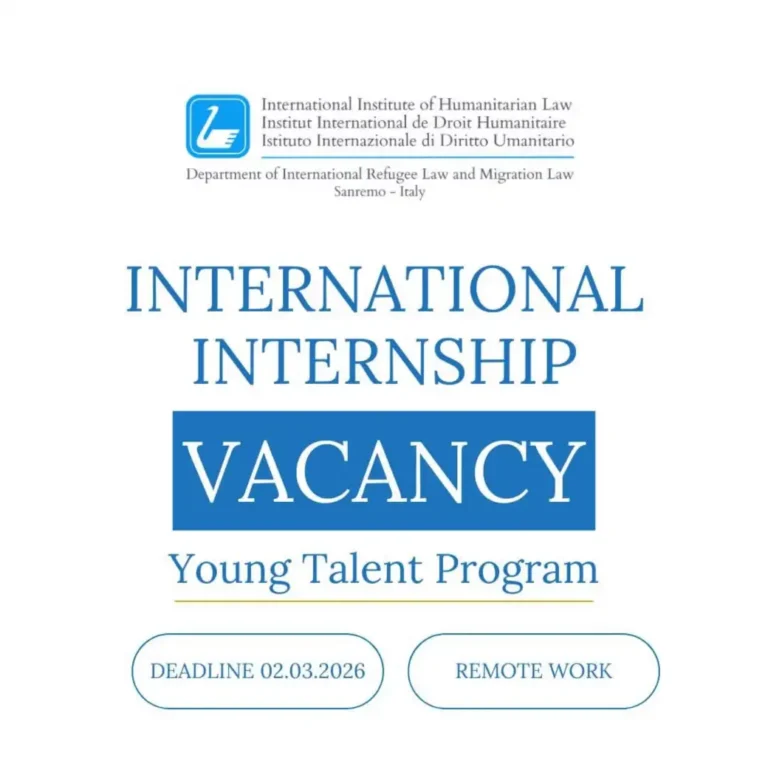
Applications are now open for the International Internship under the Young Talent Program offered by the International Refugee Law and Migration Law Department. This remote opportunity is designed for motivated students who want to gain hands-on experience in international refugee law, humanitarian affairs, and institutional engagement while contributing to meaningful global conversations.

The internship is fully remote, allowing selected candidates to work from any location. Interested applicants are encouraged to apply through the official link provided by the institution.

Interns will monitor global and regional news, as well as reports from international organizations, to prepare concise daily briefings on refugee protection and forced displacement. This includes tracking developments linked to armed conflicts, humanitarian crises, and disasters. Interns will also provide ad-hoc political and situational briefings on specific countries or regions when required.

Additional responsibilities include presenting summaries of states’ and organizations’ positions at relevant international and regional forums. Interns will track newly released reports and official documents from international organizations for use in the Department’s online courses. They will also monitor and map grant and funding opportunities from institutional and private donors that align with the Department’s mandate. Furthermore, selected candidates will contribute to drafting the Department’s newsletter and support the coordination of alumni and lecturer events.

The program is open to students currently enrolled in a Bachelor’s or Master’s degree in Social Sciences, International Relations, Political Science, Communications, or related fields. Applicants must be fluent in English and demonstrate strong professional writing, editing, and proofreading skills. They should be able to monitor developments at global, regional, and local levels and synthesize information into clear executive briefings.

Candidates must also show the ability to manage multiple tasks under tight deadlines while maintaining accuracy and attention to detail. The role requires working effectively within a multicultural, international team and adapting to a fast-paced environment.

The application deadline is 2 March 2026. Interested candidates can apply at https://iihl.org/.

ECOWAS gives $700,000 solar grant to REA for 15 public facilities

The ECOWAS Commission has awarded a $700,000 grant to the Rural Electrification Agency (REA) to provide electricity in 15 public health and education institutions across Nigeria using solar photovoltaic systems.

The funding followed the signing of a Memorandum of Understanding (MoU) between the agency and the ECOWAS Commission on Monday under the Regional Off-Grid Electricity Access Project. According to a statement by the agency, the agreement provides grant funding from ECOWAS for the electrification of public health and education facilities located in the Federal Capital Territory, Niger State, and Nasarawa State.

Following the signing of the MoU with ECOWAS, the REA also entered into a separate agreement with the Niger State Government to facilitate state-level collaboration and co-financing for selected project sites within the state.

The ECOWAS partnership marked the formal commencement of Nigeria’s pilot implementation phase under the Regional Off-Grid Electricity Access Project, a regional initiative supported by the World Bank to expand off-grid electricity access across West Africa and the Sahel.

Under the agreement, ECOWAS will provide a grant of $700,000 to support the installation of solar photovoltaic systems in rural health centres and schools. The project will be implemented by the REA as the technical and financial implementing agency.

Speaking at the signing ceremony, the Managing Director and Chief Executive Officer of the REA, Dr Abba Aliyu, described the agreement as a demonstration of regional collaboration driving national development.

“This partnership with ECOWAS reinforces Nigeria’s commitment to expanding reliable electricity access to critical public institutions. Electrifying health centres and schools means improving healthcare delivery, enhancing learning conditions, and strengthening community development,” he said.

Reflecting on the regional significance of the project, the President of the ECOWAS Commission, Omar Touray, said the initiative is central to the region’s energy goals.

“This pilot phase in Nigeria is a cornerstone of our regional strategy to eliminate energy poverty. By providing sustainable solar solutions to schools and clinics, we are not just lighting up buildings; we are powering the future of West Africa. This collaboration with the REA demonstrates how regional grants can be effectively localised to touch the lives of the most vulnerable citizens,” Touray stated.

To ensure effective implementation, a dedicated Project Implementation Unit will be established within the REA. The unit will work closely with the ROGEAP Project Implementation Unit and an established Steering Committee to oversee execution and coordination.

In alignment with the ECOWAS agreement, the REA also signed a Memorandum of Understanding with the Niger State Government to enable access to ECOWAS funding and provide counterpart support for project sites within the state.

The Niger State Government will collaborate with the REA on coordination, co-financing and monitoring of installations in selected facilities. Expressing support for the subnational partnership, the Governor of Niger State, Hon. Mohammed Bago, said the initiative aligns with the state’s development priorities.

“Our partnership with the REA is a testament to our administration’s ‘New Niger’ agenda, which prioritises sustainable infrastructure. By implementing these solar projects, Niger State is ensuring that our rural health and educational facilities have the reliable power they need to serve our people effectively. We remain committed to providing the necessary counterpart support to make this initiative a lasting success,” Bago said.

The agency explained that the dual-level partnership structure with ECOWAS and the subnational cooperation with the Niger State Government are designed to strengthen institutional coordination and ensure efficient delivery of the pilot project.

It added that the project is expected to improve energy reliability in rural public facilities, reduce dependence on diesel generators, lower operating costs, and promote clean energy adoption in line with Nigeria’s national energy policies.

The REA, an implementing agency of the Federal Government under the Federal Ministry of Power, is tasked with the electrification of unserved and underserved communities to catalyse economic growth and improve the quality of life for Nigerians. The agency was established under Section 127 of the Electricity Act 2023.

The Regional Off-Grid Electricity Access Project is a World Bank-supported regional initiative implemented by ECOWAS to promote the development of off-grid solar markets and increase access to clean energy solutions across West Africa and the Sahel.

EU, Nigeria Open Science and Technology Cooperation Agreement Talks

0

The European Union and the Federal Government of Nigeria have formally opened negotiations for a bilateral Science and Technology Cooperation Agreement, marking a major step toward stronger research collaboration, faster innovation, and deeper strategic cooperation under the EU’s Global Gateway strategy.

The inception meeting took place at the Federal Ministry of Innovation, Science and Technology in Abuja. It signals a decisive move to build stronger innovation ecosystems, expand Nigerian participation in Horizon Europe, and align scientific cooperation with shared priorities for sustainable growth and economic transformation. The negotiations are coming ahead of the second EU–Nigeria Science and Innovation Day scheduled for 24 February 2026 in Lagos.

The proposed agreement reflects commitments made during the 2023 EU–Nigeria Strategic Dialogue and the 2024 EU–Nigeria Summit. It will also align with the AU–EU Innovation Agenda (2023–2033). The framework is expected to provide a long-term political and legal structure to assess past cooperation, strengthen institutional partnerships, and jointly define future actions.

EU Ambassador to Nigeria and ECOWAS, Gautier Mignot, described the launch of negotiations as both historic and strategic.

“We are not starting from scratch. Our researchers already cooperate actively, particularly under Horizon Europe, the largest research and innovation programme in the world,” he said. “This agreement will provide the legal and political framework to accelerate and scale up our collaboration. It sends a strong signal that the European Union is committed to deepening its partnership with Nigeria in science, technology and innovation.”

Mignot added that the initiative reflects the Global Gateway approach of building sustainable and mutually beneficial partnerships that support local capacity, strengthen knowledge systems, and deliver long-term development impact.

Nienke Buisman, Head of Cooperation for Asia, the Pacific, Africa and the Middle East at the European Commission and EU Chief Negotiator, explained that the framework is designed to be flexible and future-oriented.

“This is an overarching framework agreement between the European Union and Nigeria. It sets out the purpose, principles and forms of cooperation, while allowing priorities to evolve over time,” she said. “The framework distinguishes between direct cooperation, such as joint workshops, exchanges and studies, and indirect cooperation through participation in each other’s programmes. Predictability and trust are essential for long-term collaboration, particularly where knowledge creation and intellectual property are shared.”

Nigeria’s Minister of Innovation, Science and Technology, Kingsley Tochukwu Udeh, described the negotiations as a defining moment for Nigeria’s research ecosystem.

“The historic significance of this agreement is clear. Nigeria is entering into a science and technology framework with the European Union at a time when innovation is central to our national development agenda,” he said. “This agreement will not gather dust. Its implementation will include a joint science and technical cooperation committee, and our commitment will be reflected in measurable outcomes and concrete actions.”

Nigeria’s Chief Negotiator, Tope Toogun, said the country would use the process to align international scientific cooperation with national development priorities and presidential reform objectives.

“In the coming weeks, we will refine the priority areas we wish to present, focusing on sectors that drive economic growth and national competitiveness,” he said.

Proposed areas of cooperation include agriculture and food security, public health, environmental sustainability and climate resilience, digital transformation, and space applications. Nigeria has also proposed joint activities to increase national participation in Horizon Europe, strengthen its research funding architecture, improve science and innovation indicators, and enhance technology foresight capacity.

EU–Nigeria cooperation in research and innovation has expanded steadily in recent years. Under Horizon Europe, 55 projects involving Nigerian entities have received approximately €20 million in funding across sectors such as health, agriculture, food systems, and the environment. Nigeria also participates in 12 projects under the Global Health EDCTP3 programme, attracting around €75 million in total investment. Fifteen Nigerian organisations are currently involved in these initiatives.

For Nigeria, the new agreement is expected to improve access to European research networks, strengthen institutional capacity, enhance the competitiveness of universities and innovators, and attract greater investment into science-driven solutions.

For the European Union, the partnership deepens engagement with Africa’s largest economy and one of its most dynamic innovation ecosystems. Nigeria’s youthful population, expanding research base, and rapidly growing technology sector provide strong potential for joint solutions to shared global challenges, including climate change, food security, health resilience, and digital inclusion.

The negotiations also support the Global Gateway objective of investing in knowledge, innovation, and human capital as critical infrastructure for sustainable development and economic opportunity.

Both sides have set an ambitious timeline to conclude discussions by the end of 2026 or early 2027. An action plan will be developed alongside the talks to enable early implementation in priority areas once the framework is signed.

With strong political backing and technical teams beginning detailed work, the negotiations place science, technology, and innovation at the centre of the broader EU–Nigeria partnership. The process marks the start of a strategic and long-term collaboration built on shared ambition, mutual benefit, and a common vision for innovation-led growth.


Women Techsters LaunchPad 3.0 Opens Free Tech Training for Students

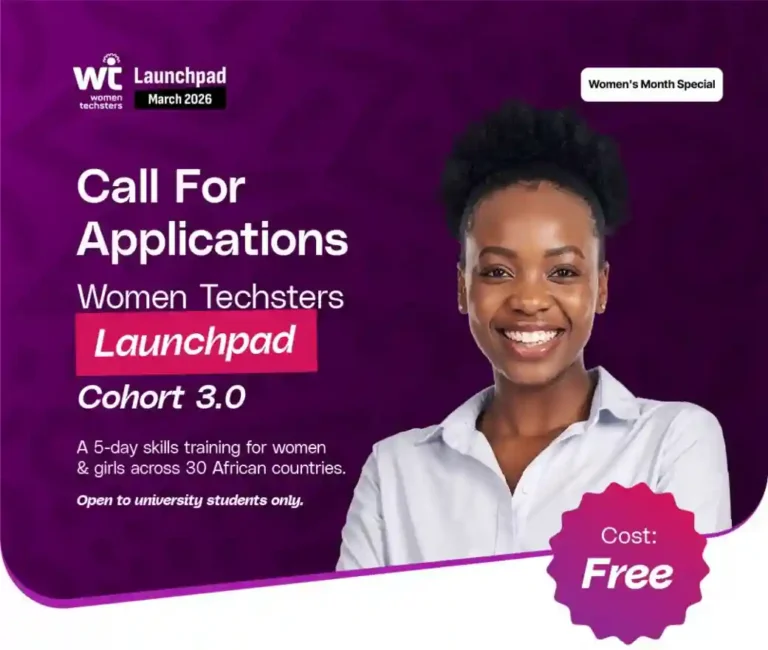
Women Techsters LaunchPad 3.0 is now open for applications, offering a free five-day intensive skills training for university students across 30 African countries. The programme focuses on Vibe Coding and Internet Safety Essentials, giving young women practical exposure to technology in a supportive and engaging environment.

This one-week training is designed to help bridge the gender gap in technology. Participants will gain hands-on experience, receive industry insights, and connect with experienced mentors. The goal is to create clear pathways for more women to explore careers in tech, strengthen their digital skills, and build the confidence needed to thrive in today’s technology ecosystem.

The training is completely free. During the programme, participants will learn Prompt Engineering and Vibe Coding, including how to build with AI tools. They will also gain insight into how tech teams collaborate across different roles, understand Internet safety and responsible AI use, and develop essential skills required for growth in the tech industry. Each participant will build a mini portfolio project, providing a strong foundation for future opportunities.

Please note that applications are only open to students who attend the Women Techsters Open Day scheduled for Thursday, February 27th. The programme is strictly for university students.

Women Techsters LaunchPad 3.0 will run from March 24th to March 27th, 2026. This is an opportunity to build your first tech portfolio and connect with a vibrant pan-African community of women in technology.

Interested applicants can apply through the official form link https://forms.office.com/pages/responsepage.aspx?id=2wYhaHuaNUu5oIhHM4XWzzBWziWig1JHpPIxdEJwENZUQUJLM1dGMDNOWENURDU1RFpRQ1paSklSWi4u

Fidelity Bank launches HerFidelity Apprenticeship Programme 2.0 for women

Fidelity Bank Plc has launched the second edition of its flagship women-empowerment initiative, the HerFidelity Apprenticeship Programme 2.0, designed to equip women with practical, income-generating skills and structured pathways to entrepreneurship.

The lender said on Monday that HAP 2.0 builds on the success of its inaugural edition held in 2023, with improvements aimed at delivering greater impact.

Speaking with journalists at a media chat ahead of the launch, the Divisional Head, Product Development, Fidelity Bank Plc, Osita Ede, explained that the initiative has been strengthened after reviewing feedback from the first edition.

“HerFidelity Apprenticeship Programme 2.0 reflects our commitment to continuous improvement. Having evaluated feedback from the first edition, we have returned with stronger partnerships and deeper mentorship programmes to ensure that women acquire not just skills, but sustainable economic opportunities.

“At the heart of the programme is guided, real-world learning. Participants will undergo intensive apprenticeship training under reputable institutions and industry experts across select fields such as hair styling, shoemaking, auto mechatronics, and interior decoration,” Ede said.

He noted that HerFidelity Apprenticeship Programme 2.0 goes beyond skills acquisition by offering a wide range of business advisory services. These include business and financial literacy training, mentorship support throughout the apprenticeship journey, access to Fidelity Bank’s women-focused and SME financial solutions, as well as guidance on business formalisation and growth strategies.

Further emphasising the bank’s vision, Ede said, “By integrating structured mentorship with entrepreneurial development, Fidelity Bank is positioning women not just as trainees, but as future employers, innovators, and economic contributors within their communities. This aligns with our mandate to help individuals grow, businesses thrive, and economies prosper.”

Fidelity Bank Plc is a full-fledged commercial deposit money bank serving over 10 million customers through digital banking channels, its 255 business offices in Nigeria and its United Kingdom subsidiary, FidBank UK Limited.