
Home Blog Page 223

Ekiti Govt disburses ₦1bn agriculture profit to 4,657 youths

0

Ekiti State Governor, Mr Biodun Oyebanji, has presented profit cheques to youths who participated in the Bring Back the Youth in Agriculture programme for the 2025 harvest season. About 4,657 young farmers received cheques ranging from N500,000 to N1,500,000 at the event held at Osuntokun Pavilion, Government House, Ado Ekiti. The cheques represented profits totaling one billion naira generated from farming activities carried out across the state during a public ceremony attended by government officials and development partners present there.

Speaking at the presentation, Governor Oyebanji said his administration would continue to support youth driven agricultural initiatives through access to land, improved inputs, extension services, mechanization, market linkages and partnerships with the private sector. He explained that the support is meant to help young farmers grow profitable agribusinesses while strengthening food production and income opportunities in rural communities across Ekiti State according to him, the programme remains a key pillar of the state’s economic development strategy, especially for youths seeking sustainable livelihoods through modern agriculture value chains statewide today operations.

The Governor stated that the programme aligns with his administration’s shared prosperity agenda because it leads to job creation and contributes significantly to food sufficiency, poverty alleviation and the general well-being of Ekiti residents. He stressed that agriculture, when properly supported, can absorb thousands of young people and reduce dependence on government employment while improving household income levels in the state through inclusive policies, structured training, access to finance, and clear market opportunities that encourage long-term participation and responsible business practices among beneficiaries statewide over time and seasons, officials said during recent reviews of programme outcomes and youth engagement levels.

Governor Oyebanji, who was represented at the event by the Chief of Staff, Mr Niyi Adebayo, described the gathering as a reward for months of dedication, resilience and adherence to best agricultural practices by the participants. He said the event sends a strong message to young people in Ekiti and beyond that agriculture is no longer a vocation of last resort but a business that can be proudly and profitably pursued on a sustainable basis with clear returns, structured support, and opportunities for growth, innovation, and expansion across value chains including crop production, processing, storage, and distribution networks statewide, officials explained during the ceremony in Ado Ekiti on Tuesday afternoon.

While expressing appreciation to the youths for their resilience and cooperation throughout the project period, the Governor said he was proud of their achievements, noting that the results showed what young people can accomplish with the right support, training and commitment. He added that the participants have proven they can drive economic growth and become employers of labour rather than job seekers according to him, this shift is essential for reducing youth unemployment, strengthening local economies, and building confidence in agriculture as a reliable source of income, dignity, and long-term stability for families and communities across Ekiti State, especially among rural populations participating actively in the programme this season alone, officials said at the event held at the pavilion venue.

He urged the beneficiaries to utilize the proceeds wisely by reinvesting in their farms, expanding operations, adopting modern technologies and applying best practices to build sustainable agribusinesses. The Governor said the success recorded should mark the beginning of bigger achievements rather than the end of their journey, advising them to remain focused and disciplined. “Today’s gathering is not just about the presentation of cheques, it is about celebrating the triumph of our youth, an event that tells a powerful story of hard work, discipline, vision, and success,” he said, noting that it also validates the belief in agriculture as a viable economic pathway while reaffirming the administration’s commitment to inclusion and sustainable development across the state. He described the occasion as evidence of policy consistency and measurable outcomes for youths.

He recalled that when the Bring Back Youth into Agriculture programme was launched in 2024, the goal was to deliberately re-engage young people in agriculture as a profitable business capable of providing sustainable livelihoods and strengthening food security in Ekiti State. “I’m proud to announce today that this vision has yielded tangible and measurable results,” the Governor said. He cited data from the National Bureau of Statistics showing that Ekiti State ranks among states with the lowest month-on-month food inflation movement, attributing the outcome partly to increased local production and improved supply from programme participants during the 2025 harvest season, according to officials familiar with the figures released recently by the bureau nationwide this year alone, he added publicly there.

It was noted that the programme has grown from 911 participants one year ago to about 5,000 this year, representing over 500 percent growth in headcount. The Governor said the current cohort generated a total profit of N1 billion, a 700 percent increase over the N145 million recorded in 2024, urging beneficiaries to reinvest for greater returns. “What I am saying is that reinvest in your business so you can grow, if you’re taking home one million naira this year, reinvest,” he said, explaining that consistent reinvestment could lead to four or five million naira earnings in subsequent seasons through expansion, scale, and efficiency, cautioning against complacency at early stages.

Earlier, the Commissioner for Agriculture and Food Security, Mr Ebenezer Boluwade, thanked the Governor for his commitment, citing interventions including twelve farm hubs, free land clearing of up to 5,000 hectares, security, dormitories and buses. Other officials and beneficiaries also expressed appreciation for facilities and support that improved productivity and living conditions. “This is the second edition of the presentation of cheques, with the first held in November 2024,” he said, adding that close to 5,000 youths received N1 billion today, while EKDIPA Director General Mrs Lolade Olutola and Youth Commissioner Mr Gold Adedayo praised impacts on IGR as participants Johnson Owoeye and Mayowa Michael thanked government and YSJ Farms
Advertisement

Kaduna, NBTI strengthen innovation partnership

0

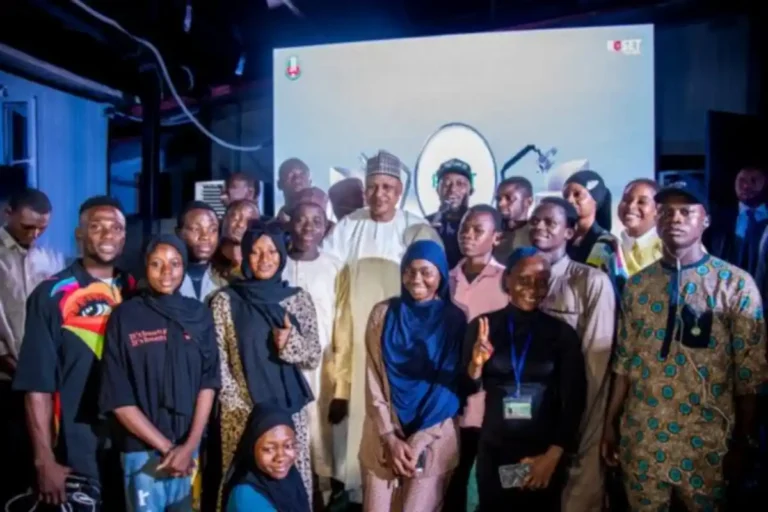
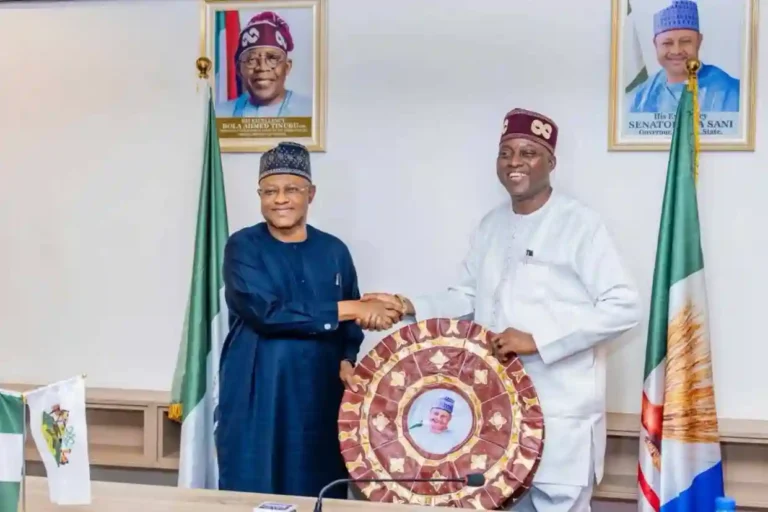
The Honourable Commissioner of the Ministry of Business Innovation and Technology joined His Excellency, Senator Uba Sani, CON, Governor of Kaduna State, in receiving the senior management team of the National Board for Technology Incubation (NBTI), led by its Director-General, Dr. Kazeem Kolawole Raji, during a engagement focused on deepening collaboration on innovation, enterprise development, and technology-driven governance.

The meeting underscored the Governor’s “clear vision and purposeful leadership” in positioning Kaduna State as a leading hub for innovation, skills development, and youth empowerment. Participants highlighted that His Excellency’s deliberate investment in data-driven governance, technology-enabled security solutions, and innovation-supporting institutions continues to place Kaduna State at the forefront of inclusive development.

Speaking during the engagement, the Director-General of NBTI commended the Governor for his forward-thinking approach and commitment to creating an enabling environment where ideas are nurtured and innovation is translated into measurable socio-economic impact.

A major highlight of the meeting was the celebration of the global achievement of Malam Al-Amin Muhammed Idris, winner of the NextGen Innovation Challenge 2025. His innovative project, Interface Africa, emerged victorious from a competitive pool of over 3,000 participants in London, United Kingdom, securing a £1.5 million investment commitment to scale clean energy solutions across the African continent.

The Kaduna State Government’s prompt approval of travel sponsorship by His Excellency was acknowledged as instrumental in enabling the State’s participation and success at the international competition, reflecting the administration’s practical support for innovation.

The Ministry praised the Governor’s people-centred leadership, noting that he consistently backs innovation with tangible support. Officials said his inclusive governance philosophy, which empowers young people and recognises excellence irrespective of background, aligns with the “Renewed Hope Agenda” of President Bola Ahmed Tinubu.

The Ministry of Business Innovation and Technology reaffirmed its commitment to advancing His Excellency’s vision by strengthening partnerships with NBTI and other strategic stakeholders to expand technology incubation, accelerate enterprise growth, and support the commercialisation of high-impact innovations. It added that initiatives such as establishing and equipping Institutes of Vocational Training and Skills Development across the three senatorial zones of Kaduna State remain critical pillars in a resilient, innovation-led economy.

Sokoto disburses ₦60m grants, tools to 600 trained youths

0

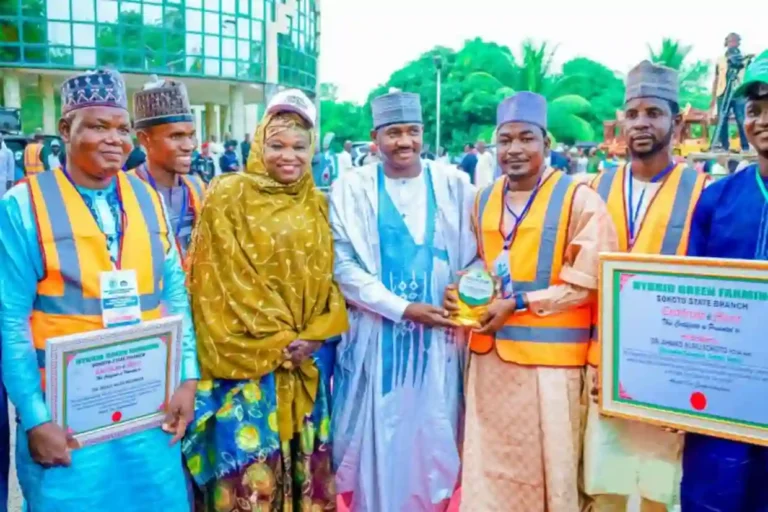
The Sokoto State Governor, Dr. Ahmed Aliyu, has flagged off the disbursement of ₦60 million to 600 youths trained in different skills under the Sokoto State Micro, Small and Medium Enterprises Development Agency, SOSMEDA, and the Department of Community Development.

The flag off ceremony marked the distribution of ₦100,000 each and working tools to beneficiaries who completed various skills acquisition programmes aimed at supporting entrepreneurship and self reliance among young people in the state.

According to the breakdown, 350 youths were trained by the Department of Community Development in tailoring, rice processing, and hybrid farming, while 250 unemployed graduates received training in solar installation and maintenance through SOSMEDA.

Speaking at the event, Governor Aliyu said the programmes were designed to empower youths to become productive and contribute meaningfully to the economic development of Sokoto State.

He said, “Our goal is to make our youths self-reliant and useful to themselves and the society. With the right skills and support, they can reduce unemployment and drive economic growth.”

The governor disclosed that his administration has so far trained over 3,750 young men and women in various skills across the state, adding that youth empowerment remains a top priority of his government.

He urged the beneficiaries to use the grants and tools wisely, assuring them of continued government support through skills acquisition programmes and other initiatives aimed at reducing poverty and social challenges.

Governor Aliyu added that the establishment of the Ministry for Skills Acquisition and Entrepreneurship further reflects the government’s commitment to equipping more youths with relevant skills for sustainable development.

The Special Adviser to the Governor on Community Development, Alhaji Garba Maitumbi Kebbi, commended the governor for his consistent support for youth empowerment programmes.

Maitumbi said the initiative has made a significant difference in the lives of many young people and expressed confidence that the beneficiaries would apply the skills acquired to become self-reliant and support the state’s economy.

He urged them to take advantage of the conducive environment being provided by the government to establish businesses, create jobs, and serve as good ambassadors of the programme.

The Secretary of SOSMEDAN, Hajiya Binta Usman, thanked the governor for his vision and leadership, noting that his commitment has contributed to the success of the training programmes.

She praised the beneficiaries for their dedication and encouraged them to continue using their skills to improve their livelihoods and contribute to economic growth.

Also speaking, the Representative of the Sultan of Sokoto, the District Head of Wurno, Alhaji Kabiru Chigari Alhassan, described the initiative as consistent with Islamic teachings and the values of the Sokoto Caliphate.

He prayed for the success of the governor and urged the beneficiaries to use their skills for the benefit of their families and communities.

Idris says Tinubu youth programmes are inclusive, not partisan

0

The Minister of Information and National Orientation, Mohammed Idris, has said that President Bola Ahmed Tinubu’s youth empowerment initiatives are driven by a genuine desire to expand opportunities for young Nigerians and not by partisan political interests.

Idris made the statement on Tuesday night in Abuja during an interactive session with youths drawn from the APC Youth Wing and tertiary institutions across the Federal Capital Territory. The event took place at The Nest Resource Centre, Abuja, and featured open and candid conversations between government officials and young people. The session was moderated by the APC National Youth Leader, Dr. Dayo Israel.

According to the Minister, programmes targeted at young Nigerians under the Tinubu administration are designed to be inclusive, accessible, and impactful, regardless of political background or affiliation. He stressed that the focus of government initiatives is national development and youth advancement.

“NELFUND is for Nigerians; it is not for APC. The 3MTT is for Nigerians; it is not for APC,” Idris said. “Everything the President is doing is about restoring prosperity, dignity, and renewing hope, so that young people can fulfil their potential and believe again in their country.”

He disclosed that recent data shows that more than 788,000 students are currently benefiting from the Nigerian Education Loan Fund (NELFUND). He added that over ₦250 billion has been committed to tuition support and student upkeep across tertiary institutions nationwide, making education more accessible to young people from different backgrounds.

The Minister also spoke about the Three Million Technical Talent (3MTT) Programme, describing it as a major digital skills initiative of the administration. The programme, launched by the Minister of Communications, Innovation and Digital Economy on behalf of President Tinubu, is aimed at training three million Nigerians in high-demand technical and digital skills to improve employability and global competitiveness.

“What excites me most is that even those who say these programmes are not real are enrolling, including people from other political parties,” he noted. “That tells you these initiatives are working and reaching Nigerians as intended.”

Idris described the Tinubu administration as one that would be remembered as the most youth-friendly in Nigeria’s history. He pointed to the scale of empowerment programmes and the deliberate appointment of young Nigerians into strategic leadership positions across government.

“Young people must begin by trusting this administration,” he said. “This is a government that has invested heavily in your future and continues to listen, engage, and create opportunities.”

Speaking on the economy, the Minister said the President’s reforms are beginning to show positive results. He noted that food prices are gradually reducing and that inflation is on a downward trend.

“Inflation is coming down,” Idris said. “The President projected a drop to 15 per cent, and today we are already at 14.45 percent. These are not coincidences; they are results of deliberate policy choices.”

He also highlighted Nigeria’s recent exit from the Financial Action Task Force (FATF) grey list, describing it as a milestone that will strengthen the financial system, boost investor confidence, and improve access to global financial markets.

Idris urged young Nigerians to continue supporting the administration and to use social media responsibly by sharing verified information and countering misinformation.

“Social media is a powerful tool for development, but it can also be used to harm society,” he said. “If you are not sure a piece of information is accurate, please don’t share it. Verify first.”

He reaffirmed that the Renewed Hope Agenda remains focused on youth empowerment, inclusion, and national renewal, adding that the future being built by the administration belongs to all Nigerians.

FAO, Lagos partner on investment in red meat and coconut value chains

0

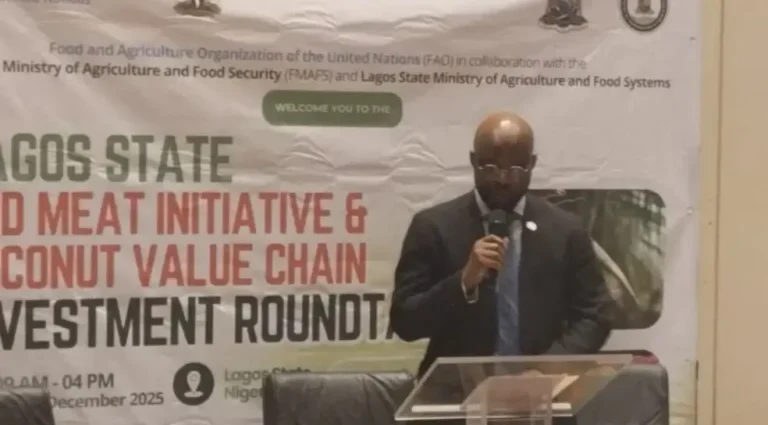
The Food and Agriculture Organisation (FAO) of the United Nations and the Lagos State Ministry of Agriculture and Food Systems have partnered to drive increased investment in the red meat and coconut value chains, as part of efforts to strengthen food systems and attract private sector participation in Lagos State.

The partnership was highlighted at a two-day Investment Roundtable held on Tuesday at Eko Hotels and Suites, Victoria Island, Lagos. The roundtable focused on discussing investment strategies for both value chains and validating key proposals under the Lagos State Red Meat Initiative and the Coconut Value Chain Programme.

The event followed extensive technical support provided through the FAO Technical Cooperation Project titled “Technical Support for Feasibility and Value Chain Analysis of Lagos State Cattle Feedlot Farm Estate,” as well as the FAO–UNIDO-supported Coconut Value Chain Programme. According to organisers, both initiatives have produced detailed economic and financial analyses and investment notes that now require strong stakeholder backing for resource mobilisation and implementation.

Speaking at the roundtable, the Lagos State Commissioner for Agriculture and Food Systems, Ms Abisola Olusanya, appreciated the role of FAO in supporting the growth of both value chains. Olusanya, who was represented by the Permanent Secretary of the ministry, Mr Emmanuel Audu, commended FAO for its continued technical partnership and shared vision of building a modern, competitive and investment-ready agri-food economy in Lagos.

“Today’s gathering is not just another meeting, it is a deliberate matchmaking platform to translate value chain analysis into bankable investments,” Olusanya said. “And to connect financiers with viable projects, and to unlock new levels of productivity, jobs, industrialisation, and food security.”

She noted that Lagos State is facing growing pressure from rapid population growth and rising consumption demand, making it necessary for the food economy to expand in line with these realities. According to her, Lagos remains one of Nigeria’s largest consumer markets for beef.

“The FAO-supported assessment highlights the scale of demand: Lagos State is estimated to require about 1,873,667 heads of cattle annually,” she said. “While local production is far below this need, supply is still largely dependent on inflows from outside Lagos.”

On the coconut value chain, Olusanya said Lagos State holds a strong comparative advantage, producing about 60 per cent of Nigeria’s domestic coconut output. She explained that this amounted to about 135,000 metric tonnes out of a national total of 225,500 metric tonnes in 2020, measured in whole nut equivalent.

“At the same time, Nigeria still imports large volumes, nearly 400,000 MT (whole nut equivalent) and much of that import flow enters through Badagry,” she said. “This tells us something important: demand is massive, and the opportunity for import substitution and value addition is real, especially if we improve productivity and mature nut availability for processors.”

The commissioner added that Lagos offers key factors that investors look for, including a large market, an active private sector, improving infrastructure, and strong government commitment to reforms. She stressed that evidence from both value chains shows that profitability is achievable when systems are efficient and standards are properly strengthened.

“Our role as government is clear: to set the rules, enable investments, coordinate stakeholders, protect consumers, and ensure sustainability, so that the private sector can scale,” she said.

Also speaking at the event, the FAO Representative in Nigeria and ECOWAS, Dr Hussein Gadain, who was represented by Mr Tofiq Braimah, FAO Programme Officer, described Lagos as strategic to Nigeria’s food security goals.

“This gathering is not just an event; it is a defining moment in our shared commitment to transform agriculture and food systems in Lagos State and Nigeria at large,” Gadain said. “Lagos is more than the economic nerve centre of Nigeria—it is a gateway to regional and global markets, a hub of innovation, and a melting pot of opportunities.”

He noted that Lagos occupies a unique position in the national food value chain, influencing consumption patterns, driving technological adoption, and setting benchmarks for agricultural modernisation. According to him, this role gives the state the potential to accelerate Nigeria’s agricultural transformation.

Gadain added that through the Ministry of Agriculture and Food Systems, Lagos has shown strong leadership and commitment to building a sustainable agri-food system. He said FAO is proud to support Lagos as a trusted partner, with the collaboration anchored on strategic investment analysis across key value chains.

“These value chains include coconut, livestock, and feedlot systems—to attract private sector and multilateral investments,” he said. “These analyses provide evidence-based insights that guide strategic decisions, ensuring investments are impactful, sustainable, and inclusive.”

He explained that the initiative goes beyond farming, aiming to build an integrated economic ecosystem that links production, processing, logistics, and trade. According to him, leveraging Lagos’ industrial strength and commercial networks will help unlock new opportunities, create decent jobs, and empower the youth population.

“This approach positions Lagos to fully exploit AfCFTA opportunities, making it a model for agricultural transformation across Africa,” Gadain said.

On his part, the Permanent Secretary of the Lagos State Ministry of Agriculture and Food Systems, Mr Emmanuel Audu, represented by the Director of Veterinary Services, Dr Rasheed Macaulay, said the state is prepared to receive investments in the identified value chains. He said FAO’s collaboration reflects a shared resolve to move beyond policy discussions to practical, investment-driven solutions for food systems transformation.

Kyari Reaffirms FG Support for EYiA Youth Agriculture Programme

0

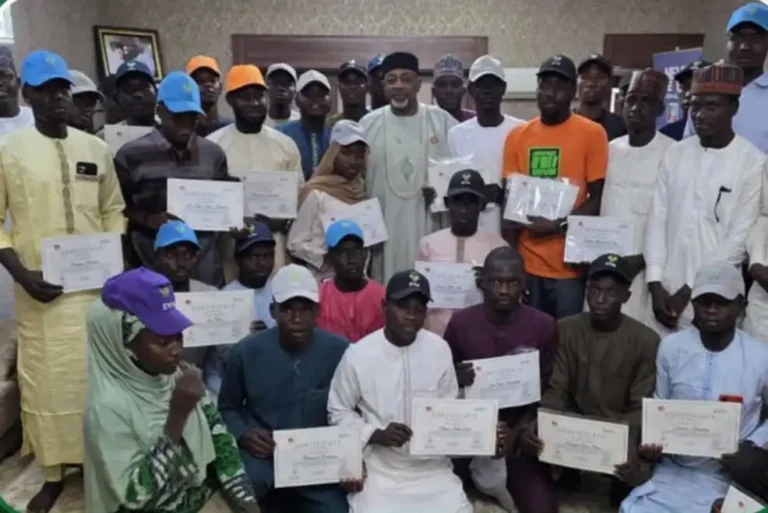
Senator Abubakar Kyari, Minister of Agriculture and Food Security, has reaffirmed the Federal Government’s commitment to youth empowerment and agricultural development after meeting beneficiaries of the Enterprise for Youth in Agriculture (EYiA) programme.

Kyari said he was pleased to receive the beneficiaries of the programme, which is implemented by Soilless Farm Lab, noting that the initiative aligns with ongoing efforts to support young Nigerians through agriculture. “I was pleased to receive beneficiaries of the Enterprise for Youth in Agriculture (EYiA) programme implemented by Soilless Farm Lab, as the Federal Government continues to reaffirm its strong commitment to youth empowerment and inclusive agricultural development,” he said.

The EYiA programme is funded by the Mastercard Foundation in collaboration with Soilless Farm Lab and runs as a 12-week intensive training. According to Kyari, the programme equips participants with practical, market-ready skills in soilless farming, greenhouse production techniques, and greenhouse fabrication. He added that these skills are important for building a modern, resilient, and climate-smart agricultural sector in Nigeria.

In a related engagement, the minister later received some of the Borno State graduates in Maiduguri, where they formally presented their certificates. He assured them that the empowerment and support of the Federal Government extend to all Soilless Farm Lab graduates nationwide.

Kyari said the programme aligns with the food security and youth inclusion agenda under the leadership of President Bola Ahmed Tinubu, GCFR. He noted that the government remains committed to creating opportunities for young people to contribute to Nigeria’s food systems and economic growth.

One of the beneficiaries, Muhammad Jillambu, expressed appreciation for the opportunity. “It is my pleasure to be one of the beneficiaries. Thank you, sir, for giving us this opportunity to be an enterprise in agriculture, may we grow Nigeria as you continue to empower youths in Nigeria,” he said.

FATE Foundation, AIMS partner Google.org on $4m AI upskilling programme

0

FATE Foundation has announced that it has sealed a multi-country partnership with the African Institute of Mathematical Sciences (AIMS), supported by Google.org with $4 million in funding. The organisation disclosed this in a statement issued yesterday, describing the partnership as a step toward strengthening artificial intelligence capacity across Africa.

According to the statement, the funding aligns with Google.org’s focus on knowledge, skills and learning and will support the launch of the Advanced Artificial Intelligence (AI) Upskilling Programme. FATE Foundation said the initiative is designed to build a sustainable and scalable ecosystem for advanced AI education across higher educational institutions in four countries: Nigeria, Ghana, Kenya and South Africa.

It said that over the next three years, the Advanced AI Upskilling Programme aims to equip more than 30,900 students with advanced AI skills, enabling them to contribute to technological innovation across the continent. The foundation explained that this will be achieved by supporting higher educational institutions through sub-grants and by adopting a train-the-trainer model.

The programme is expected to directly impact at least 30 higher educational institutions across the four target countries. It will empower 292 lecturers and teaching assistants, referred to as AI Champions, with the knowledge, skills and tools needed to train the next generation of AI talents. These trainees will mainly be penultimate and final year STEAM students, the statement said.

FATE Foundation noted that the core curriculum is built around the Google DeepMind AI Research Foundations Curriculum. The curriculum comprises eight specialised courses, including Build Your Own Small Language Model, Represent your Language Data, Design and Train Neural Networks, Discover your Transformer Architecture, Finetune your Model, Align Your Model, Accelerate Your Model and a Capstone focused on real-world impact.

“These courses will be thoughtfully localized for each country’s context, providing a rigorous and locally mentored educational experience,” the statement said.

Head of Google.org EMEA, Liza Ateh, said: “At Google, we are committed to building a safe, inclusive digital future. This commitment starts with investing in the talent of our next generation of leaders across Africa. This funding will empower local non-profit organizations and academic partners to deliver critical skilling programs.”

The partners said the programme will strengthen collaboration between universities, researchers and industry players, while improving access to AI training within African academic systems over time.

Executive Director of FATE Foundation, Adenike Adeyemi, said: “We are proud to partner with the African Institute of Management Sciences on the Advanced AI UpSkilling Project, with support from Google.org. This initiative responds to the need for deep AI competencies in Africa, empowering tertiary institutions, lecturers, and students in Nigeria, Ghana, Kenya, and South Africa globally.”

250 Elderly Persons Receive ₦200,000 Each in Delta State

0

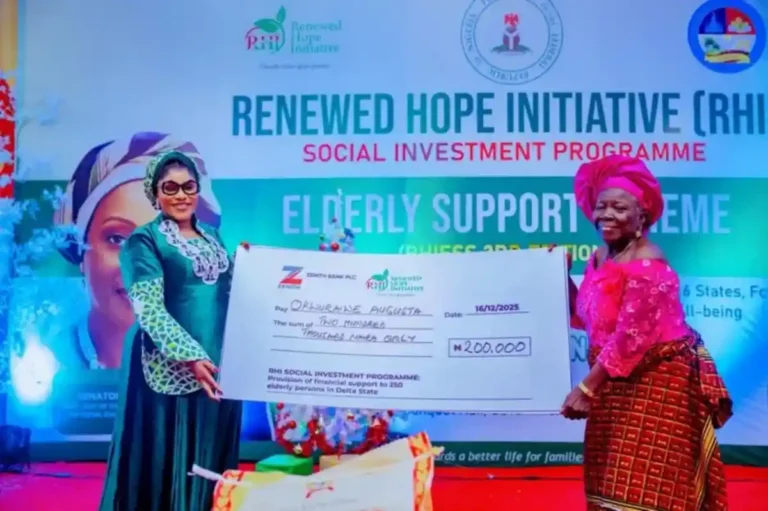
A total of 250 elderly persons in Delta State have benefited from the Renewed Hope Initiative Elderly Support Scheme (RHIESS), receiving ₦200,000 each, a 50kg bag of rice, and free medical care provided by the Delta State Government through the Office of the Wife of the Governor.

The support was delivered during the third edition of the Renewed Hope Initiative Elderly Support Scheme, held on Tuesday at the Banquet Hall, Government House, Asaba. The event was themed “Finding Joy in Old Age” and formed part of efforts to recognise and support senior citizens across the country.

The Wife of the President of the Federal Republic of Nigeria, Senator Oluremi Tinubu, CON, was represented at the event by the Wife of the Governor of Delta State, Her Excellency Deaconess Tobore Oborevwori, while Mrs. Josephine Emu spoke on behalf of the Delta First Lady during the programme.

In a speech delivered at the event, Senator Oluremi Tinubu described the Renewed Hope Initiative Elderly Support Scheme as a vital social investment programme designed to ensure that elderly Nigerians live with dignity, joy, and a sense of belonging within their communities and the nation.

“This social investment programme embodies our ongoing effort to ensure that our elderly citizens live with dignity and joy, in a nation that genuinely cares for its own,” the First Lady said, while addressing participants and invited guests at the ceremony.

She explained that since the inception of the current administration in 2023, the Renewed Hope Initiative has made it a tradition to celebrate senior citizens every December, in recognition of their sacrifices and immense contributions to national growth and development.

According to her, the scheme supports 250 vulnerable elderly citizens aged 65 years and above in each of the 36 states of the federation, the Federal Capital Territory, and veterans from the Defence and Police Officers’ Wives Association (DEPOWA), bringing the total number of beneficiaries nationwide to 9,500.

She stated that each beneficiary receives ₦200,000, with a total of ₦1.9 billion approved for disbursement by the Governing Board of the Renewed Hope Initiative. She added that ₦50 million was allocated to each state, including the FCT and DEPOWA.

The First Lady emphasised that prioritising elderly citizens, especially during the festive season, is both a moral responsibility and a shared source of happiness for society as a whole.

“They have walked difficult paths so that younger generations may have smoother roads to travel. It is our duty to ensure they live their twilight years in comfort, good health, and dignity,” she stated.

She also encouraged senior citizens to remain active, healthy, and involved in community and charitable activities, stressing that ageing gracefully goes beyond long life to include care, love, and respect.

Speaking through her representative, Mrs. Josephine Emu, the Wife of the Governor of Delta State, Deaconess Tobore Oborevwori, expressed appreciation to the First Lady of Nigeria for the compassionate intervention extended to elderly citizens in the state.

She reaffirmed the commitment of the Oborevwori administration to the welfare of senior citizens, noting that the Delta State Government has approved ₦50 billion to offset outstanding pension liabilities at both state and local government levels.

Mrs. Emu announced additional support for beneficiaries through the Office of the Wife of the Governor and the You Matter Charity Foundation, including free medical care, free medications, and a 50kg bag of rice for each elderly person.

Several beneficiaries who spoke with journalists described the intervention as timely and impactful, thanking the First Lady of Nigeria, the Delta State Government, and the Office of the Wife of the Governor for remembering the elderly, while offering prayers for peace, good governance, and development.

Delta Begins Second Cycle of Tertiary Entrepreneurship Programme

0

Delta State has begun the Second Cycle of the Tertiary Entrepreneurship Programme (TEP), following approval by the state government, as part of efforts to empower students in tertiary institutions.

The Honourable Commissioner for Youth Development, Barr. Harry ThankGod Trakiriowei, announced this during a sensitization meeting with students of the University of Delta (UNIDEL), Agbor, and Dennis Osadebe University, Awai.

He described TEP as “a strategic initiative designed to empower students in tertiary institutions with entrepreneurial skills and funding support,” noting that it aligns with the state’s youth development agenda.

The commissioner expressed gratitude to Governor Rt. Hon. (Elder) Sheriff Oborevwori for what he called “his continued commitment to youth development through sustainable empowerment programmes.”

Trakiriowei disclosed that the Ministry of Youth Development is fully prepared to commence implementation immediately and assured students that the process would be transparent and impactful.

According to him, “all required structures, operational frameworks, and partnerships have been strengthened,” adding that the ministry expects the current cycle to record greater success than the previous one successfully.

FG Pushes Raw Material Export Ban to Boost Nigeria’s STI Ecosystem

0

The Federal Government has expressed strong expectations that a proposed ban on the export of raw materials will help reposition Nigeria’s economy, even as experts have warned that persistent weaknesses in the country’s science, technology and innovation (STI) ecosystem could undermine its success.

The position was outlined at a policy dialogue in Abuja themed ‘Re-shaping Nigeria’s Potential in Science, Technology and Innovation (STI)’, where the Minister of Innovation, Science and Technology, Dr Kingsley Udeh, said Nigeria’s long dependence on exporting raw materials had stalled industrial development and limited the country’s capacity to create jobs and add value locally.

Speaking at the event organised by the Centre for the Study of the Economies of Africa (CSEA), Udeh said one of the biggest challenges facing Nigeria’s progress in STI was the fragmentation of the ecosystem, with government agencies, private sector players and research institutions working largely in isolation.

According to him, this lack of coordination had weakened Nigeria’s ability to translate research outputs into manufacturing and commercial outcomes.

“One of the factors that has undermined our advancement is the fragmentation of the STI ecosystem. Different players act in silos, with little synergy or coordination, and this has reduced overall impact,” he said.

Udeh explained that under President Bola Tinubu, the government “is working to reposition STI as an interconnected ecosystem”, where institutions are deliberately linked to support innovation, production and commercialisation. He disclosed that a national STI roadmap was being developed to address structural gaps and align efforts across agencies.

As part of the reforms, the minister said the mandate of the National Office for Technology Acquisition and Promotion (NOTAP) had been expanded. While the agency had previously focused mainly on processing patents for innovators, it now plays a broader role in connecting inventors with institutions that can help convert patented ideas into prototypes and market-ready products.

“Patents were being issued, but many ended up on shelves. We are now ensuring that innovators are supported beyond certification, through to prototyping and commercialisation,” he said.

A key element of the government’s industrial strategy is a bill recently passed by the National Assembly, which mandates that no raw material can be exported from Nigeria without at least 30 per cent value addition. The bill has been transmitted to the President for assent and includes a transition period.

Udeh said the legislation followed extensive consultations with exporters and industry stakeholders, adding that it would help expand industrial capacity and reposition Nigeria from being a supplier of raw materials to an exporter of value-added goods and services.

The Executive Director of CSEA, Dr Chukwuka Onyekwena, said Nigeria possessed the human capital and entrepreneurial energy needed to compete in a technology-driven global economy but had struggled to turn potential into productivity.

“Our youthful population and growing tech ecosystem provide a solid foundation. But without strategic investment, clear policy direction and sustained collaboration across government, academia and industry, this potential will remain largely untapped,” Onyekwena said.

Delivering the keynote address, the President of the African University of Science and Technology and former Director General of the Raw Materials Research and Development Council, Prof. Azikiwe Peter Onwualu, described Nigeria’s development challenge as a paradox of abundance and underperformance.

He said weak infrastructure, limited research funding, fragile links between universities and industry and poor commercialisation pathways had prevented scientific breakthroughs from driving economic growth.

“Talent alone is not enough,” Onwualu warned across key sectors nationwide.