Home Blog Page 229

IFAD to Reach 450,000 Rural Households in Nigeria by 2029

0

The International Fund for Agricultural Development, IFAD, has announced its commitment to supporting Nigeria to reach at least 450,000 rural households by 2029, as the Federal Government of Nigeria and IFAD opened the 2025 Second Annual Review of the Country Strategic Opportunities Programme, COSOP. The review brought together development partners, government ministries, private sector actors and farmer organisations, with calls for faster and more coordinated action to strengthen Nigeria’s agrifood systems.

The COSOP is a five-year cooperation framework covering 2024 to 2029. It was jointly developed by IFAD, the Federal Ministry of Agriculture and Food Security, the Federal Ministry of Finance, and key development partners. Now in its second year of implementation, the annual review is designed to assess progress made so far and to realign strategies toward meeting agreed targets by 2029.

In her opening remarks, IFAD Country Director, Mrs. Dede Ekoue, said the programme had recorded important achievements across several areas. She noted that progress had been strong in the development of processing and storage facilities, support to rural producers, and improved access to finance for farmers and agribusinesses.

“The portfolio is demonstrating strong overall progress toward achieving the 2029 COSOP targets. We have overachieved in the development of processing and storage facilities, and we continue to strengthen rural producers’ organizations and their participation in markets,” Ekoue stated.

However, she cautioned that some areas were still lagging behind expectations. According to her, water infrastructure and land brought under climate resilience remain major challenges that need urgent attention. “With regards to water infrastructure and land brought under climate resilience, these two are still a challenge, so we need to scale up and accelerate implementation,” she warned.

Ekoue explained that the annual review was an opportunity for all partners to take stock of what was working and what needed to change. She said the discussions would help stakeholders “identify ways to enhance these results in 2026,” while adding that Nigeria’s digital agriculture agenda and youth inclusion strategy remain critical to driving long-term transformation in the agrifood sector.

Speaking further on the purpose of the review, Ekoue stressed the need for honesty and collective effort. “It is important to review what progress was made, what challenges we need to address, and how to accelerate impact. We cannot just say everything is fine. The challenges in the agrifood system require that we mobilize everyone to scale up the impact of our cooperation,” she said.

She also reaffirmed IFAD’s long-term commitment to Nigeria, stating clearly that the organisation remains focused on supporting the country to reach at least 450,000 rural households by the end of the COSOP period in 2029.

Representing the Federal Ministry of Finance, the Assistant Director, International Economic Relations, IER, Department, Mrs. Munet Sadiku, said the Federal Government remains fully committed to its partnership with IFAD. She noted that efforts had been made over the past year to improve funding predictability for IFAD-supported projects across the country.

“Over the past year, the Ministry of Finance has worked diligently to improve the predictability and timeliness of Federal counterpart funding. We remain fully committed to ensuring that financing mechanisms support, do not hinder, the achievement of project results,” Sadiku said.

She emphasized the importance of accountability and strong financial practices, describing them as central to successful development outcomes. “Effective stewardship of public resources is not only a requirement, it is a collective responsibility that underpins the credibility of our development efforts,” she added.

Sadiku also outlined key priorities for 2026 from the Ministry’s perspective. These include digital financial reporting, climate-smart investments, gender-responsive budgeting, and stronger coordination with States and Ministries, Departments and Agencies, MDAs, to ensure better delivery of results.

Delivering remarks on behalf of the Federal Ministry of Agriculture and Food Security, Mrs. Adebola Iruromi, Director of the Department of Development Partners Projects, commended the progress recorded under the COSOP so far. She, however, called for the scaling up of successful innovations across more states to deepen impact.

“This review is more than a technical exercise. It is a strategic moment to reflect on our joint progress and strengthen the pathways that will shape Nigeria’s agrifood system transformation,” Iruromi said.

She highlighted several models that have shown promise, including the Gender Action Learning System, the Commodity Alliance Forum, youth agripreneur networks, climate-resilience initiatives, and ICT4D solutions. According to her, “These models are essential to achieving national targets under the National Food Systems Transformation pathways.”

Despite these gains, Iruromi pointed out that issues such as inflation, insecurity, climate shocks, and uneven implementation at the state level continue to slow progress. She said these challenges require stronger monitoring systems, better use of digital tools, and deeper accountability among stakeholders.

Discussions at the review also focused on the growing role of digital innovation in agriculture. The Country Lead of Digital Green Nigeria, Mr. David Edimu, said technology is helping to close the extension service gap faced by farmers.

“As the name implies, we digitize extension, we want to put extension in the hands of every farmer. Because even when we have extension agents, it’s about one to eight thousand farmers. This is why we must leverage digital solutions,” Edimu explained.

He said the AI-supported platform enables farmers to ask questions in their local languages, diagnose crop problems using images, and receive timely agronomic advice. “We are digitizing extension in Africa,” he added.

The Microcredit Manager for Development Exchange Centre, Emily Stephen, said digital finance initiatives are also improving access to credit for farmers, even though challenges still exist. “Even rural farmers are doing well in accessing their credit through digital forms, but many farmers do not have phones. So, as an institution, we have developed a phone-loan product so that they can communicate with financial institutions for seamless operations,” she said.

Also speaking, the National Coordinator of the National Committee for Family Farming, Mr. Raymond Enoch, described the COSOP as critical to strengthening Nigeria’s food system. “The COSOP is intended to sustainably improve the capacities of rural farmers. Family farmers expect continued opportunities and policies that improve the food system in the country,” he said.

Enoch added that stakeholders are expected to agree on clear action points to address implementation gaps, expand successful models, and ensure that the COSOP delivers stronger and more visible impact in 2026 and beyond.
Advertisement

Enugu Proposes N68bn for 10 TVET Schools in 2026 Budget

0

The Enugu State Government has proposed N68 billion for the construction of 10 Technical and Vocational Education and Training (TVET) schools as part of its N1.62 trillion 2026 budget presented to the Enugu State House of Assembly.

The allocation was disclosed by the Commissioner for Budget and Planning, Barrister Chris-Roberts Ozongwu, while giving a detailed breakdown of the proposed budget to lawmakers.

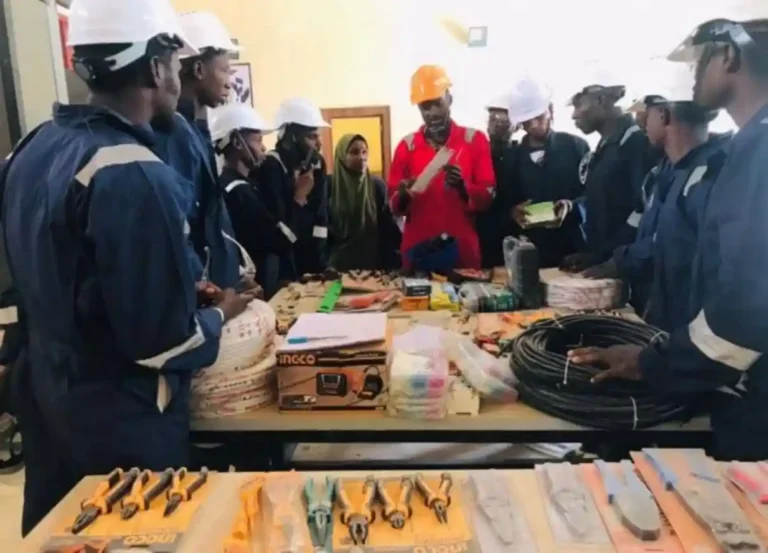
Ozongwu said the TVET schools would be built across the state and each facility would be fitted with workshops, science laboratories, modern classrooms, hostels and industry-grade equipment to support practical skills development.

According to him, the investment is designed to strengthen technical education and prepare young people with skills needed for employment, entrepreneurship and industrial growth.

He revealed that 32.27 per cent of the total budget has been allocated to the education sector, reflecting the administration’s commitment to human capital development and long-term economic growth.

Ozongwu described education as “the most effective pathway out of poverty” and said it remains central to Governor Peter Mbah’s plan to position Enugu for a knowledge-driven future.

In addition to the TVET schools, the budget proposes N158 billion for the construction of 16 Smart Senior Secondary Schools equipped with modern, technology-enhanced learning facilities.

The state government also earmarked N30 billion for the equipping and furnishing of existing technical colleges to strengthen the technical education pipeline across the state.

The 2026 budget further includes N15 billion for upgrading 106 public secondary schools into Model Senior Secondary Schools, beginning with two schools in each of the six education zones.

Beyond infrastructure, Ozongwu disclosed that N30 billion has been set aside to provide daily meals for about 260,000 pupils in the 260 Smart Green Schools built across the state.

He said the school feeding programme would ensure that every child receives one balanced meal each school day, describing it as a strategy to reduce malnourishment.

Apply for $10,000 WASSMAS Agriculture Grant for Farmers

2

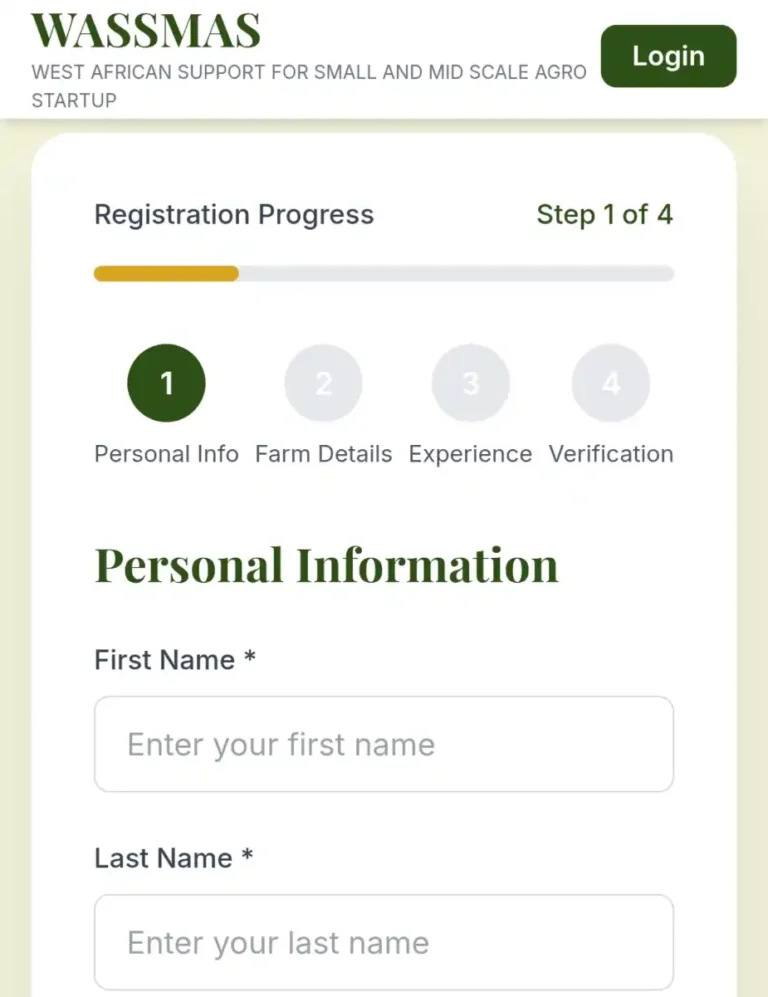
The West African Support for Small and Mid Scale Agro Startup (WASSMAS) has opened applications for an agricultural grant targeting farmers and agro-entrepreneurs across West Africa. WASSMAS is a non-governmental initiative, and the programme focuses on livestock farming, crop cultivation, fish farming, and agro-processing, while also supporting integrated farming and small ruminants.

The aim is to empower West African agriculture by supporting small and mid-scale agricultural startups with grants, resources, and technical guidance. The initiative equips farmers and agro startups with essential skills in modern farming techniques, agribusiness management, sustainability practices, and digital agriculture, and connects farms and agro-businesses to buyers, distributors, industry experts, and regional trade opportunities.

Supported African countries include Nigeria, Ghana, among others. Available grant programmes come with processing timelines. Livestock farming and small ruminants have processing times of 30 to 45 days. Crop cultivation takes 25 to 40 days, fish farming takes 35 to 50 days, agro-processing takes 45 to 60 days, while integrated farming takes 50 to 70 days. All grant programmes offer a funding range of $5,000 to $10,000.

Eligibility requirements include business location verification to confirm infrastructure and feasibility, a five-minute quiz to confirm basic criteria for the selected grant, a business plan, budget breakdown, and proof of land ownership or lease.

Upon approval, funds are disbursed in tranches based on project milestones.

To apply, interested applicants should visit https://www.wassmas.org, select a grant and apply.

Update (January 12, 2026):

Nigeria Startup News has identified WASSMAS farmers grant as a scam. Read our findings Here.

Apply for PSC Nigeria Police Recruitment for 50,000 Constables

The Police Service Commission (PSC), in conjunction with the Nigeria Police Force (NPF), has opened application for suitably qualified Nigerians to enlist as Police Constables, with a target of recruiting 50,000 personnel nationwide. The application covers General Duty and Specialist categories within the Force.

Under Category A, General Duty Recruits are invited to apply for the Police Constables cadre. Category B focuses on Specialist Recruits, including Medical Assistants, Drivers, Mechanics, Auto-Electricians, Dispatch and Escort Riders, Forensic Assistants/Robotics and Drones specialists, General EOD–CBRN Operatives, Admin/Analytical and Welfare Support officers, K9 Dog Handlers, Horse Riders, Deckhands (Able Seamen), Launch Quartermasters, Underwater Welders, Electrical/Electronic Technicians, Lathe Machine Operators, Divers, Marine Engineer Assistants, Boat Mechanics, and artisans as Electricians including Security Door Experts, Plumbers, Refrigeration and Air Conditioning Technicians, Generator Repairers, Welders, Tailors, Technicians, Operators, IT Operators and Technicians, and Musical Equipment Specialists.

Eligibility requirements include that applicants must be Nigerian citizens by birth and holders of GCE Ordinary Level, SSCE or NECO, or equivalent, with at least five credits including English Language and Mathematics in not more than two sittings. Specialist applicants must also present a minimum of three years’ experience and relevant Trade Tests.

All applicants must be physically and mentally fit, of good character, free from financial embarrassment, and must not have any criminal convictions. Candidates are required to present two character referees.

Age limit is 18 to 25 years for General Duty applicants and not more than 28 years for Specialists. Female applicants must not be pregnant during entry and training. Applicants must be free from specified physical conditions, meet height requirements of 1.67m for males and 1.64m for females, and General Duty males must have an expanded chest measurement of at least 86cm.

The portal opens from 15 December 2025 and closes on 25 January 2026, spanning six weeks.

To apply, interested applicants should visit PSC recruitment portal https://npfapplication.psc.gov.ng and apply with their correct details and NIN.

NEE-HUB, Cooperative partner on ₦2.4bn grant for 6000 North-East farmers

The North-East Entrepreneurship and Innovation Hub (NEE-HUB) has announced a strategic partnership with the Youth Farmers Cooperative Scheme – North East Zone (YFCS-NEZ) on a landmark international agricultural grant valued at about ₦2.4 billion, aimed at boosting youth-led farming across the region.

According to the announcement, YFCS-NEZ has successfully secured an international grant of ₦2,395,980,000 to empower 6,000 young agricultural entrepreneurs across the North-East. The programme will cover modern farming activities on 6,000 hectares of land, with a focus on sustainable agriculture, ICT integration, youth empowerment, and food security.

NEE-HUB stated that it will work closely with YFCS-NEZ to deploy innovation-driven solutions, modern resource management practices, and ICT-enabled farming systems to ensure effective and transparent implementation of the programme. “This partnership reinforces our commitment to sustainable economic development across the North-East,” NEE-HUB said.

Key dates for the initiative include an official programme presentation scheduled for December 17–18, 2025, while disbursement of funds is proposed for the end of December 2025.

NEE-HUB noted that it remains committed to building innovation ecosystem where youth-led initiatives transform investments into economic growth. The organisation also expressed appreciation to Amb. Ahmed Shamsuddeen Dan-Adalan Gona, National Chairman, describing his role as “visionary leadership and unwavering support.”

FG to Enrol Additional 150,000 Trainees in TVET in 2 to 3 Months

0

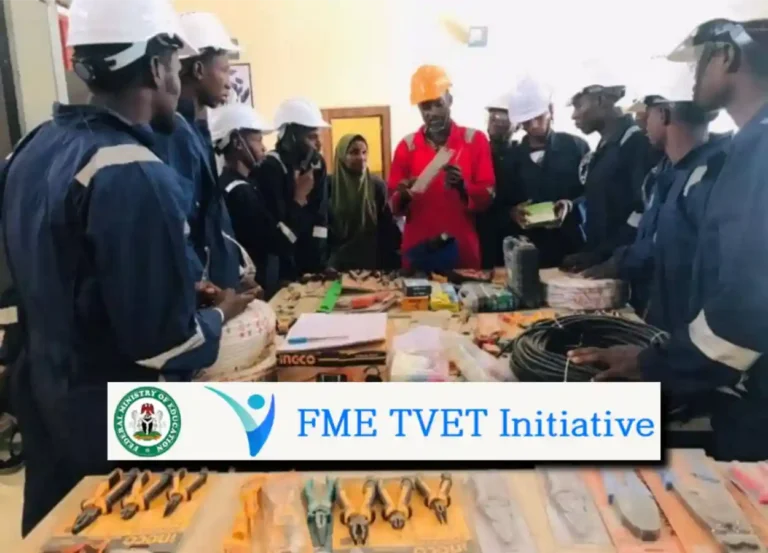
The Federal Government, through the Federal Ministry of Education, has announced plans to enroll an additional 150,000 trainees under the Technical and Vocational Education and Training (TVET) Initiative within the next two to three months. This figure is part of the initial batch of 250,000 participants, with a broader goal to train over one million young Nigerians in the next two years.

The Ministry made this known while responding to a recent publication circulating across media platforms that analyzed skills deficits in Nigeria and Africa. The publication examined the use of foreign technical expertise in large-scale industrial projects as a case study for local capacity challenges.

In a statement, the Federal Ministry of Education said it welcomes the renewed public discussion on technical skills development, capacity building, and workforce readiness. It explained that the issues raised in the report highlight the urgency of the ongoing reforms being implemented by the Federal Government under the leadership of President Bola Ahmed Tinubu, GCFR, particularly in the area of TVET.

According to the Ministry, “Recognising that sustainable development is driven by skilled human capital, the Federal Ministry of Education has positioned TVET as a national priority in line with the Renewed Hope Agenda.” It further stated that the Ministry launched the TVET Initiative to reposition technical education as a central pillar of Nigeria’s economic transformation.

The Ministry added that through the TVET Initiative, it has reawakened the interest of Nigerian youth in technical and vocational education. “Currently, over 100,000 students are being trained and equipped with industry-relevant skills in over 1,600 technical and vocational training programmes across Federal and State Technical Colleges, Skills Training Centres, and accredited Vocational Enterprise Institutions nationwide,” it said.

It explained that the first batch of 100,000 trainees forms part of the first cohort of 250,000 Nigerians to be fully enrolled in the next two to three months. “We have plans to train over one million young Nigerians within the next two years with industry-relevant skills to meet both local, regional and global demands for technical-based jobs. We are delighted to announce that the TVET Initiative roll-out has been a phenomenal success so far,” the Ministry stated.

The programmes are focused on priority skills aligned with national development goals and current labour market demands. The TVET Initiative aims at producing large-scale skilled workers in fields such as industrial mechanics, electrical installation, welding and fabrication, mechatronics, solar photovoltaic installation, compressed natural gas (CNG) conversion and maintenance, refrigeration and HVAC, and ICT.

It added that all training programmes are designed in collaboration with industry partners to ensure that graduates are not only certified but also employable and job-ready. In line with this, technical institutions across the country are being revitalised through curriculum updates, provision of modern training equipment, development of instructor capacity, and improved quality assurance systems.

FME also confirmed that trained Quality Assurance Assessors and Internal Quality Assurance Managers have been deployed nationwide to ensure that training outcomes meet both national occupational standards and international benchmarks.

To support trainees’ access and completion, the Federal Government approved structured stipends for participants. “The first tranche of payments has been released to training centres, alongside stipend disbursements to beneficiaries, reinforcing accountability and programme sustainability,” it noted.

The Ministry further revealed that it is leveraging international partnerships to support curriculum modernisation, instructor training, and institutional development. It clarified that these collaborations are focused on long-term capacity building and knowledge transfer, not the replacement of Nigerian labour.

“The TVET Initiative constitutes Nigeria’s structured and sustainable response to this challenge,” the statement read. “The Federal Ministry of Education remains committed to building a skills-driven economy where Nigerians are equipped to operate, maintain, and expand the nation’s industries, ensuring that they are active participants and leaders in Nigeria’s development.”

Applicants whose TVET dashboard is showing ‘Pending’ should expect to be ‘Approved’ from February 2026, when FME will approve the new trainees.

FG launches NADF onion intervention for flood-hit farmers in Kebbi

0

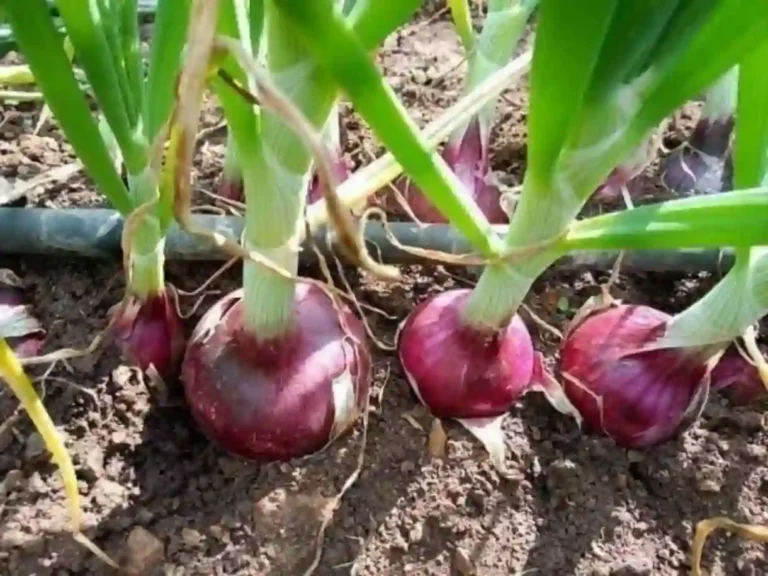
Relief came on Thursday for onion farmers in Kebbi State as the Federal Government, through the National Agricultural Development Fund (NADF), launched the first phase of its Onion Intervention Programme in Birnin Kebbi to support farmers hit by floods and climate-related shocks.

The programme targets farmers whose farms and incomes were badly affected by flooding and pest outbreaks, which disrupted onion production across key producing states. The intervention was officially flagged off at the Produce Office in Birnin Kebbi.

Speaking at the event, the Executive Secretary and Chief Executive Officer of NADF, Muhammad Abu, represented by the Director of Emergency Response, Professor Maryam Abubakar, said the initiative was designed as an urgent recovery measure for vulnerable farmers. She noted that onion farming remains a critical value chain for food security, income generation and rural development in Nigeria.

According to her, farmers in Kebbi, Sokoto, Yobe and Borno states suffered heavy losses that affected household incomes and local markets. “This intervention is aimed at helping farmers recover quickly and return to production,” she said, adding that the programme aligns with President Bola Ahmed Tinubu’s Renewed Hope Agenda, which prioritises targeted support for vulnerable farmers.

In Kebbi State alone, 520 onion farmers are benefiting from the emergency distribution of farm inputs under the first phase of the programme. NADF also disclosed that plans are already in place to scale up support during the 2025/2026 dry season farming cycle.

The Fund further revealed that no fewer than 5,000 onion farmers affected by last year’s flooding and pest invasion would be identified to benefit in subsequent phases of the intervention. It assured dramatic transparency in the distribution process, stating that the exercise would be equitable and closely monitored in collaboration with the Kebbi State Government.

Earlier, the Chairman of the occasion and Chairman, House Committee on Agricultural Production and Services, Rt. Hon. Bello Kaoje, who represents Bagudu/Suru Federal Constituency, commended the resilience of onion farmers despite repeated climate shocks. He pledged continued legislative support to attract more agricultural interventions to the sector.

Representing the Kebbi Governor, the Commissioner for Agriculture and Resources, Alhaji Shehu Muazu, urged beneficiaries and the Onion Farmers’ Association to ensure genuine farmers receive the inputs. He stressed that the support was meant to restore production and not be diverted locally.

Ebonyi Governor Approves ₦150,000 Christmas Bonus for Civil Servants

0

Ebonyi State Governor, Francis Nwifuru, has approved a Christmas bonus of ₦150,000 for every civil servant in the state for the 2025 festive season.

The governor made the announcement on Sunday during a church service at the Government House Chapel in Abakaliki, according to a statement signed by his Chief Press Secretary, Monday Uzor.

“Governor Francis Ogbonna Nwifuru of Ebonyi State has announced a hundred and fifty thousand naira Christmas bonus to every civil servant in the state,” the statement read.

Uzor quoted Nwifuru as saying the decision reflects his administration’s commitment to improving the welfare of workers despite dwindling state revenue over the past year.

While addressing the congregation, the governor dismissed rumours suggesting delays in the construction of the Vincent Agwu Nwankwo Flyover, described as a landmark infrastructural project in the state.

“You cannot find any state in Nigeria that is doing such a flyover currently,” Nwifuru said.

He explained that the scale of the project makes the construction process demanding and noted that it would transform the state’s landscape and improve its aesthetic appeal when completed. The governor criticised misconceptions circulated by social media commentators.

“We are doing it not because we have money. We are doing it because we want to sign our signature in the annals of history,” he said, adding that Ebonyi State aims to be recognised globally for good governance and modern infrastructure.

In August, the governor approved an increase in the state’s minimum wage by ₦20,000, raising the pay for civil servants to ₦90,000.

The state government said the increase took immediate effect and is part of Nwifuru’s People’s Charter of Needs Agenda.

At the federal level, President Bola Tinubu signed the national minimum wage bill into law in July 2024 following passage by the National Assembly.

The law raised the minimum wage from ₦30,000 to ₦70,000 after months of negotiations among labour unions, the private sector, and government authorities.

However, some states are yet to implement the new wage structure nationwide.

C’ River, Presco Sign MoU to Revive Boki and Nsadop Oil Palm Estates

0

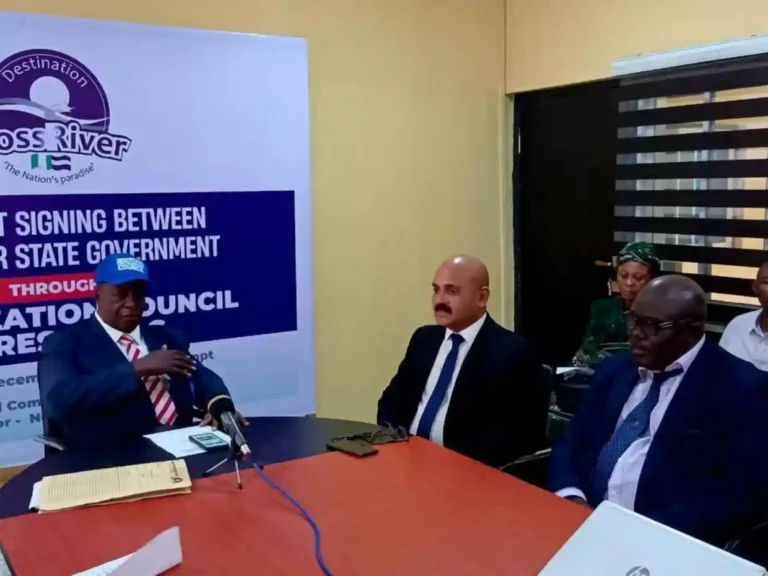
The Cross River State Government and Presco PLC have signed a Memorandum of Understanding (MoU) to formalise a strategic partnership aimed at revitalising the Boki and Nsadop Oil Palm Estates and repositioning the state as a major player in Nigeria’s oil palm value chain.

The MoU signing ceremony, which held at the Cross River State Privatization Council office in Calabar over the weekend, marked a significant milestone in the state’s agricultural and economic reform agenda under the leadership of Governor Bassey Otu.

Speaking at the ceremony, the Chairman of the State Privatization Council, Chief Bassey Okon, recalled the historic roots of oil palm development in the former Eastern Region under the visionary leadership of Dr. Michael Okpara, assisted by renowned businessman Sir Odumegwu Ojukwu. He noted that Cross River State inherited a large number of oil palm estates following state creation in 1967 due to its vast landmass and forest resources.

He explained that successive administrations had pursued reforms to rescue the estates from decades of neglect, beginning with the privatization framework introduced during the administration of former Governor Donald Duke and sustained under Governor Liyel Imoke. According to him, the current administration of Senator Bassey Otu is consolidating on those reforms by opening up the Boki and Nsadop estates to private-sector efficiency, guided by the principle of maximum social gains.

The council chairman said Presco PLC was selected based on its proven track record across Edo, Delta and Rivers States, stressing that the company’s investment would unlock massive employment opportunities, stimulate rural development and generate revenues through taxes, produce fees and ancillary economic activities. He added that the project is expected to create thousands of direct and indirect jobs, reduce rural–urban migration and enhance security in host communities.

In his remarks, the Managing Director and Chief Executive Officer of Presco PLC, Mr. Reji George, described the MoU signing as “a milestone for both the company and Cross River State.” He thanked Governor Bassey Otu, the Privatization Council and other stakeholders for the trust reposed in Presco.

Mr. George said Cross River’s favourable soil quality, rainfall and long history of oil palm cultivation align with Presco’s long-term strategy of expanding sustainable palm oil production to meet domestic demand. He assured that Presco would immediately commence environmental and social impact assessments, nursery development and plantation establishment, in line with global best practices.

He further reaffirmed the company’s commitment to sustainable agriculture, environmental protection and strong community partnerships, noting that Presco’s operations would deliver shared value to host communities, employees, government and investors.

The event was witnessed by notable government officials including the Commissioner for Commerce, Dr. (Mrs.) Abigail Orok, Chairman of the State Civil Service Commission, Sir Maurice Effiwatt, and representatives of the Ministry of Justice.

FG, IFAD Flag Off 2025 Dry Season Farming Inputs in Ebonyi

0

The Federal Government on Tuesday inaugurated the FGN/IFAD-Ebonyi State Value Chain Development Programme and flagged off the 2025 dry season farming inputs and equipment distribution exercise in Ebonyi State, marking a renewed push toward mechanised agriculture.

Speaking at the event, the National Programme Coordinator of International Funds for Agriculture Development, IFAD, Fatima Aliyu, said the government was “committed to transforming old farming practices to mechanised and technology driven systems for both subsistent and commercial farmers” to ensure food security in Nigeria.

Aliyu explained that the Federal Government’s IFAD Value Chain Development Programme is targeting the transformation of agricultural practices in eight of the thirteen council areas of Ebonyi State in South East Nigeria into mechanical and technology driven farming systems.

She noted that Ebonyi State is predominantly known for large scale cultivation of rice, cassava and yam, among other crops, making it strategic for the programme’s implementation and impact.

At the flag-off of the 2025 distribution of dry season farming inputs and equipment, Aliyu and other officials observed that over thirty three thousand farmers in Ebonyi State have already benefitted from the Value Chain Development Programme.

They said farming has gone beyond subsistence practice to commercial production, “hence the need for mechanised practice,” while reassuring farmers of continued IFAD and other institutional support.

Food security experts described the commencement of this year’s dry season farming exercise as a catalyst to economic growth, saying it would lift families out of poverty and increase efficiency in food production across the state.

Some beneficiaries told AIT that mechanised farm equipment would help eliminate manual cultivation, encourage dry season farming, and improve productivity, while the inputs would boost yield and economic benefits for farmers.

IFAD and Ebonyi State government officials formally inaugurated the Value Chain Development Programme and flagged off the distribution of dry season farming equipment and inputs, including high yield rice seedlings, fertilisers, cassava processing machines, dryers, slashers, among others, for beneficiaries.