Home Blog Page 234

FG to Recruit 94,000 Security Personnel Across Nigeria

0

The Federal Government has announced plans to recruit more than 94,000 new personnel into Nigeria’s security services as part of a major effort to tackle rising insecurity across the country. The move follows President Bola Tinubu’s recent declaration of a nationwide security emergency and his directive to expand the manpower of the Nigeria Police Force, the Armed Forces and the paramilitary services to respond more effectively to growing security threats. According to officials, this large-scale recruitment drive will cut across the police, military and paramilitary agencies, marking one of the biggest expansions of Nigeria’s security workforce in recent years.

Under the new recruitment plan, the Police Service Commission and the Nigeria Police Force will jointly recruit 50,000 police constables. The recruitment portal will open to eligible Nigerians from December 15, 2025, to January 25, 2026. The Commission confirmed the timeline in a statement released on Thursday by its Head of Protocol and Public Affairs, Torty Kalu.

The statement said the process follows a presidential directive meant to strengthen community policing, enhance internal security and expand the manpower base of the Nigeria Police Force. The announcement explained that the Commission has approved the opening of the police recruitment portal to allow qualified applicants to submit their applications.

The statement partly read, “The PSC, in collaboration with the NPF, is pleased to announce the commencement of recruitment of 50,000 Police Constables into the Nigeria Police Force, as directed by President Bola Tinubu. Following this Presidential directive aimed at strengthening community policing, enhancing internal security and expanding the manpower base of the Nigeria Police Force, the Commission has approved the opening of the recruitment portal for applications from eligible Nigerians.”

The Commission also explained the academic requirements for applicants, separating them into two categories. For the General Duty cadre, applicants must possess GCE Ordinary Level, SSCE/NECO or an equivalent qualification with at least five credits, including English Language and Mathematics, obtained in no more than two sittings.

For the Specialists cadre, applicants must have at least four credits, including English and Mathematics, also in no more than two sittings, along with three years of relevant experience and appropriate trade test certifications. According to the Commission, all applicants must be Nigerian citizens by birth.

Beyond the police recruitment, the Nigerian Army is also preparing to increase its personnel strength. An Army official, who spoke off the record because he was not authorised to address the press, said the service may recruit about 14,000 new soldiers. He stated, “You know the President recently gave an order; based on that we might probably recruit 14,000.”

While the Nigerian Navy and the Nigerian Air Force have not given exact numbers, sources within both services confirmed that they will increase their intake as part of the nationwide push to strengthen security capacity. In June, the Ministry of Interior announced a nationwide recruitment of 30,000 personnel into the four paramilitary agencies under its supervision. Ministry officials told our correspondent that the recruitment process was being expedited to ensure the new personnel are injected into the system quickly.

The aggressive recruitment drive aligns with President Tinubu’s November 26, 2025 declaration of a national security emergency, in which he directed the Nigeria Police and the Armed Forces to recruit more personnel to confront escalating violence. The directive followed a surge in attacks and insecurity across many parts of the country. With insecurity affecting rural communities, highways and even urban areas, federal authorities believe a major boost in manpower will help reinforce security operations nationwide.

Among those welcoming the new security strategy is Plateau State Governor, Caleb Mutfwang. He said the massive recruitment initiative is timely and necessary for the country’s current security challenges. Mutfwang made his remarks during a visit to the Minister of Defence, Gen. Christopher Musa (retd.), in Abuja where he discussed ongoing insecurity in Plateau State. According to Mutfwang, the intervention comes at a time when security concerns are mounting across the country, placing intense pressure on existing officers. His comments were shared in a statement issued by his Director of Press and Public Affairs, Gyang Bere.

The governor praised the appointment of Musa as Defence Minister, describing it as a strategic decision given the country’s evolving security problems. Mutfwang expressed confidence that the minister’s experience and professionalism would help strengthen national security interventions. He restated his support for state police, a topic he has long championed. Mutfwang said, “The decision is timely, and I believe that overtaxed security personnel will be having a sigh of relief very soon. One thing that is very important is that states have serious areas that are really threatened and require attention. So, we just need to expand and give more impetus.” He added that Plateau State is ready to benefit from the recruitment if given the opportunity. He emphasized that with the right manpower, equipment and motivation, the country’s security problems could be significantly reduced.

Mutfwang also highlighted the need for Nigeria to meet global policing standards. He said the country must aim to meet the United Nations ratio of one police officer to 500 citizens. Beyond that, he argued that every village with more than 100 people should have at least one police officer. Achieving this would mean recruiting more than one million police personnel nationwide. He explained, “Where we are going is that even if we have 100 people in a village, let at least one policeman be posted there. But to achieve that, we need one million police personnel or more. But at least let us begin with what we have and see what we can do. Once we do that, we can move forward.” On the issue of state police, the governor warned that while the idea is promising, it must be implemented carefully with strong legislative safeguards to prevent misuse. He said that with a clear operational model, state policing could be an effective solution.

Security experts have also reacted to the Federal Government’s plan. Brig. Gen. Peter Aro (retd.) described the proposal as an important acknowledgment of Nigeria’s security crisis but cautioned that simply increasing numbers will not solve the problem. Aro said, “The Federal Government’s plan to inject over 94,000 new personnel into the security architecture is a welcome signal. This shows that the country finally recognises the scale of our internal security crisis. But numbers alone do not guarantee security; what matters is who we recruit, how we train them, and the doctrine that guides their deployment.” He argued that although 50,000 police recruits appear substantial, Nigeria is still under-policed by almost 120,000 officers when compared to the UN benchmark. He stressed the need for thorough vetting to avoid multiplying existing problems such as corruption, poor discipline and weak community relations. According to him, the country must focus on improving the quality of officers rather than simply increasing numbers.

On the paramilitary recruitment of 30,000 personnel, Aro said the plan could strengthen border protection, immigration control, civil defence and correctional services. He, however, warned that the agencies must not become avenues for political favours. He insisted that professional training, proper equipment and clearly defined roles are necessary for the paramilitary sector to add value. On the Army’s potential recruitment of 14,000 soldiers, Aro argued that the number is insufficient considering Nigeria’s size, population and multi-layered conflicts. He said a larger and more strategic expansion is required to restore national defence capacity. He explained that attrition in the military often reduces numbers faster than recruitment increases them, and a more ambitious plan would be necessary over the next five years.

Brig. Gen. Bashir Adewinbi (retd.) also reacted to the development, saying the manpower boost is necessary given Nigeria’s large population and many ungoverned spaces. He warned that recruitment must be rigorous to ensure the right people are selected. Adewinbi said, “The increase in manpower is a welcome development given the size of the population and the number of ungoverned spaces. I think it is a decision taken to address the shortage of security personnel. But most importantly, they must ensure they employ the right people—those who are committed, not politically selected. They should look for individuals who are genuinely dedicated and whose aim is to serve the nation. The recruitment must be very thorough. If we get it right at this stage, everything else will follow.”

Legal experts have also shared their views. Adebanjo Ebhoade, Chairman of the Committee of Chairmen of the Nigerian Bar Association, Benin Zone, said politicians must not be allowed to influence the recruitment process. He emphasized the need for merit-based selection. Ebhoade said the process should be handled by an independent committee made up of retired officers and relevant agencies. He said, “The recruitment process should be carried out by an independent committee drawn from retired men of the armed forces and other relevant agencies. There should not be political influence. Let the best candidates be recruited. We need to have the best hands recruited so that we can have a sufficient workforce to deal with the issues affecting this country.”

A member of the Oyo State Community Policing Advisory Committee, Segun Ebenezer, also warned against the mistakes of the past where some agencies were flooded with unvetted personnel. He welcomed the initiative but urged the Federal Government to ensure transparency.

Ebenezer said, “It is a great initiative and will help the supply side of personnel deployment in combating insecurity. However, recruitment needs to be on merit, and the quality of personnel taken in should be thoroughly gauged. When recruitment is massive, the temptation for nepotism and political compensation is high. The process must be transparent and fair. After recruitment, what becomes important is training. It should not only be a normal onboarding programme, but a real and thorough training exercise that equips them mentally, physically and psychologically.”
Advertisement

Governor Eno sponsors 200 Dakkada trainees to Ibom-LED for training

0

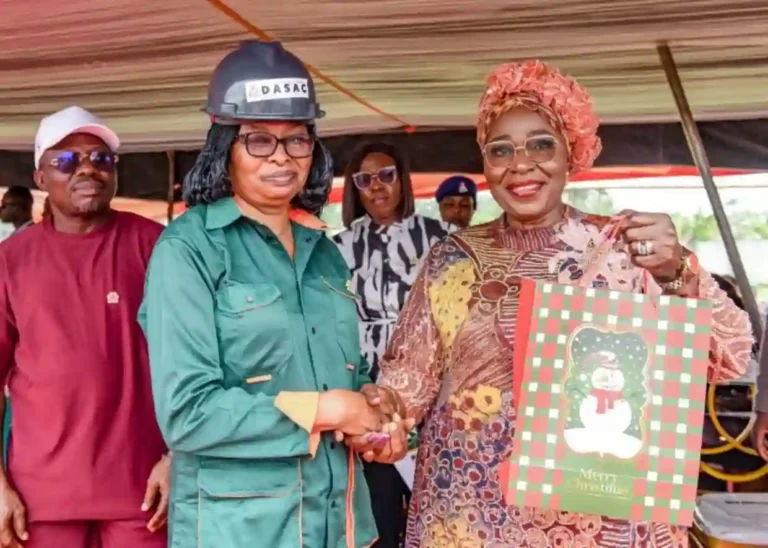
Governor Umo Eno has approved the sponsorship of another batch of trainees from the Dakkada Skills Acquisition Centre DASAC to the Ibom Leadership and Entrepreneurial Development Centre Ibom-LED for advanced training. The Governor, represented by his deputy, Senator Akon Eyakenyi, made this announcement on Thursday during the graduation ceremony of DASAC’s second cohort at Ikot Ada Edem.

He reaffirmed his administration’s commitment to producing job creators and noted that human capital development remains a central part of the ARISE Agenda. He explained that the 200 government-sponsored trainees in the second cohort would continue their learning journey at Ibom-LED.

According to him, “After your training here, we are not leaving you alone. Ibom-LED will take you through branding, finishing and the finesse needed to excel,” adding that the initiative aligns with the state’s growing focus on ICT, the blue economy and entrepreneurship.

In his address, the Rector of DASAC, Prof. Enoidem Usoro, thanked the Governor for what he described as unwavering support. He noted that the administration’s investment in education and vocational skills remains remarkable and continues to open opportunities for young people.

During their separate goodwill messages, the deputy Registrar of the College of Education Afaha Nsit, Mrs Emediong William, and the representative of the Vice Chancellor of the University of Lagos, Prof Sunday Adebisi, commended the state government for prioritizing skills development. They said the effort shows a strong commitment to preparing young people for a changing economy.

In his valedictory remarks, the best graduating trainee, Mr Uyanga Idongesit, expressed gratitude to the Governor and the school management. He promised to remain a worthy ambassador of the institution.

Meanwhile, the ALGON Chairman, Dr Uwemedimo Udoh, told journalists that he was impressed with the Governor’s focus on youth empowerment. He revealed that council chairmen sponsored 208 of the 428 graduands and said he is optimistic that all 31 Local Government chairmen would sponsor indigenes in the next cohort. The event also featured an exhibition of trainees’ projects, awards for outstanding graduands and special gifts made by the students for the Governor.

Cross River Launches World Bank Marine Skills Programme

0

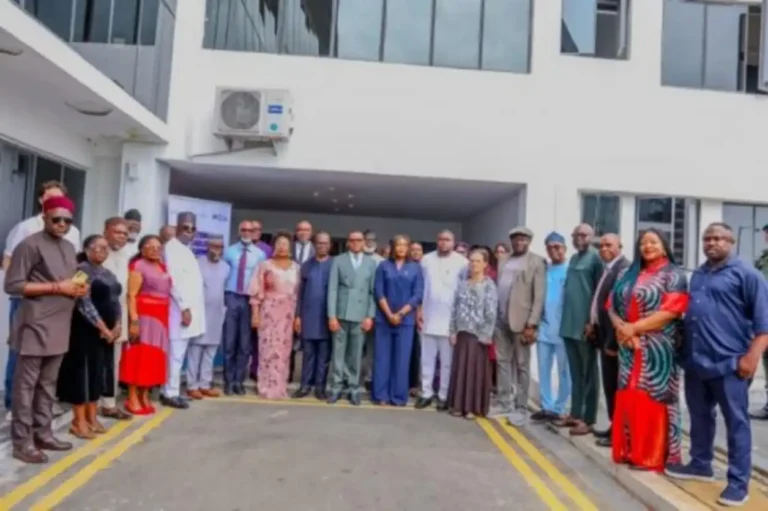
Cross River State Governor Bassey Edet Otu has restated his administration’s plan to position the state as a key player in Nigeria’s growing blue economy. He made this known during the official launch of a World Bank–supported upskilling programme aimed at helping residents gain modern skills needed in the maritime sector. The opening ceremony, held at the State Library Complex in Calabar, drew participants from across the maritime value chain.

Governor Otu, represented by his deputy, Dr. Peter Odey, described the initiative as “a landmark opportunity for our young people to acquire the advanced technical skills needed to unlock the vast marine resources of Cross River State.” He explained that Cross River, which has one of the longest coastlines in the country, is well positioned to benefit from the national shift toward developing the blue economy. According to him, “this initiative reflects our administration’s unyielding commitment to transforming our water-based assets into engines of economic growth, job creation and sustainable development. The time has come for Cross River to take its rightful place in the maritime sector.”

The Governor pointed to the growing contributions of Nigeria’s maritime and marine economy, saying the sector added ₦113.5 trillion to the country’s GDP in the third quarter of 2025. He also referenced projections from the Nigerian Maritime Administration and Safety Agency NIMASA predicting that the nation’s blue economy potential could surpass $296 billion. “With figures like these,” he said, “we cannot afford to stand on the sidelines. Cross River must lead from the front.”

Otu reaffirmed the state government’s commitment to completing major maritime infrastructure, especially the Bakassi Deep Seaport. He revealed that a $3.5 billion investment has already been secured and that the project is awaiting presidential approval for the groundbreaking. “We are ready,” he assured partners, adding that the state will keep working with the World Bank and the Federal Ministry of Marine and Blue Economy to ensure that waterways, ports, fisheries and logistics platforms deliver strong economic benefits.

The launch event highlighted cooperation among government institutions, development partners and academic stakeholders. Representatives from the Federal Ministry of Marine and Blue Economy, the World Bank and the University of Calabar took part, reflecting a joint effort to build capacity within the sector.

Senior Special Adviser to the President on Marine and Blue Economy, Prof. Busayo Fakinlede, praised Cross River State for consistently supporting national goals for a sustainable blue economy. “Cross River has always been a strategic leader,” he said. “Its rich biodiversity and coastal heritage place it at the heart of Nigeria’s blue economy ambitions.” He added that the programme aligns with President Bola Tinubu’s focus on food security, youth empowerment, economic diversification and responsible use of marine resources. With humour, he suggested that Cross River State “should be regarded as the fish basket of the nation,” citing its strong fisheries production.

The World Bank Team Lead, Morales Yolanda, stressed the importance of the blue economy in expanding economic opportunities across coastal areas. She assured stakeholders that the World Bank is committed to working closely with all levels of government. “The World Bank stands ready to collaborate closely with federal and state governments,” she said. “We will mobilise funding, technical expertise and strategic partnerships to ensure the success of this programme.”

A technical presentation delivered by Prof. Francis Nwosu, Dean of the Faculty of Oceanography at the University of Calabar, gave participants a detailed look at the state’s economic and ecological strengths. His paper, titled “Unlocking the Potential of a Sustainable Blue Economy for Nigeria: Cross River State in Focus,” explained how the state can benefit from global shifts toward sustainable marine practices.

Speaking after the workshop session, the Special Adviser to the Governor on Blue Economy, Miss Melodie Lebo, said the training is designed to equip participants with 21st-century skills that meet international standards. She defined the blue economy as “the sustainable use of our marine and water resources for the development of our people,” noting that it covers shipping, port operations, marine logistics, fisheries, aquaculture, climate change and coastal tourism.

According to her, participants will form the skilled workforce needed in the maritime sector. “The archaic way of doing things is gone; we are aligning with global standards. After the training, they will be fully equipped with modern competencies.”

Lebo added that the programme provides pathways to jobs, internships and collaborations with the World Bank. She mentioned that this is just the first phase of a broader plan to build capacity across the state.

She also confirmed that certificates issued at the end of the programme will be internationally recognised. “This is a globally benchmarked programme,” she said. “Our partnership with the World Bank and the Federal Ministry of Marine and Blue Economy guarantees that participants will receive credentials accepted anywhere in the world.”

She further highlighted the strong involvement of the Federal Government, noting the presence of senior officials at the launch. “The Federal Government is fully involved,” she said. “This programme signals the beginning of a more coordinated and transformative pathway for marine and blue economy development in Cross River State.”

Yuletide: Akwa Ibom Community Unveils Ibom Bowl in Abuja

0

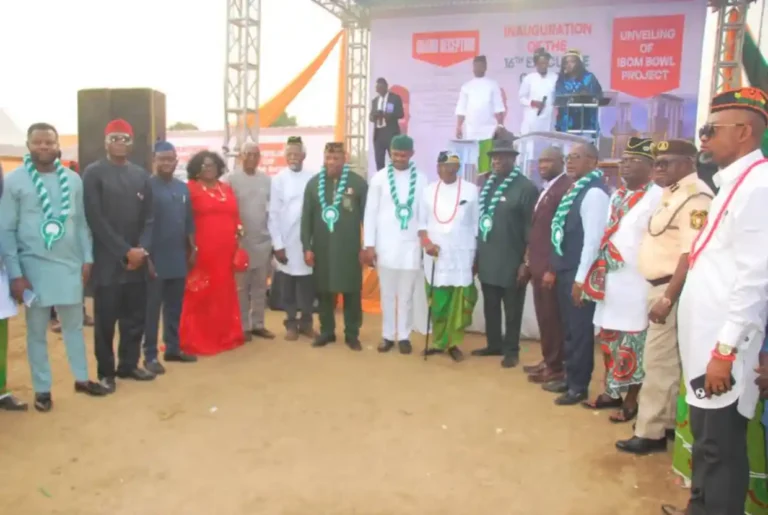
The Akwa Ibom community in the Federal Capital Territory, Abuja, has hosted a grand yuletide reception in honour of prominent indigenes, including the Senate President, Senator Godswill Akpabio, the Governor of Akwa Ibom State, Pastor Umo Eno, National Assembly members, and federal appointees from the state. The well-attended gathering brought together political leaders, traditional rulers, technocrats, and residents, creating a vibrant atmosphere of celebration and cultural pride.

The event also featured two major activities: the unveiling of the Ibom Bowl Project and the inauguration of the 16th Executive Council of the Akwa Ibom Community in Abuja. Both activities were described as important steps toward strengthening unity and development among Akwa Ibom people living in the FCT.

Speaking at the ceremony, the President of the Akwa Ibom Community in Abuja, Mkpisong (Barr.) Gabriel Fan, said the association remains the most structured community organisation in the nation’s capital. He explained that the group is focused on empowering youths through skills and mentorship, supporting women and elders, and promoting projects that improve the welfare of Akwa Ibom indigenes.

According to him, the community fully aligns itself with the ARISE agenda of the state government. He said, “As a community, we strive to empower our youth, provide service to our wonderful women, honour our elders, and promote development projects. We accept the ARISE agenda of His Excellency wholeheartedly and will support all related programmes.”

Fan also thanked the Senate President, the Governor, lawmakers, and appointees for gracing the occasion, noting that their presence boosts the morale of the community and strengthens its long-term development goals.

The traditional leader of Akwa Ibom residents in Abuja, Chief Jackson Ndueso, told journalists that the ceremony reflects the true nature of Akwa Ibom people, which he described as peace, progress, and generosity. He highlighted the significance of the Ibom Bowl Project, explaining that the land, measuring about 5,000 square metres, was secured during his tenure as president of the community.

According to him, the Ibom Bowl will serve as a cultural landmark, a technology and industrial hub, and a home for all Akwa Ibom indigenes living in the FCT, including youth corps members. He said, “We are showcasing the rich culture of Akwa Ibom people. The Ibom Bowl will tell the world who we are — industrious, honest, and kind. It will be a place to export Akwa Ibom to the world.”

A major highlight of the event was the empowerment exhibition, where beneficiaries of the community’s skill acquisition programme displayed a range of products, including fashion items, leatherworks, food craft, and digital services. The exhibition was presented as proof of the community’s efforts to equip its members with practical skills.

The Public Relations Officer of the community, Mr. Francis UdoAkpan, said the Ibom Bowl would operate as a central hub for administrative, cultural, and economic activities. He added that private investors would be involved in funding and developing the project, with discussions on leasing and cost already ongoing.

Representing the Akwa Ibom State Governor, the Permanent Secretary of the Akwa Ibom Liaison Office in Abuja, TPL Aniekan Ubong Akpan, praised the community for its unity and strong support for the state government. He encouraged members to continue being good ambassadors and called on the newly inaugurated executive council to embrace transparency, innovation, and inclusiveness. He said, “This council must reflect the values of Akwa Ibom. Your role remains crucial in advancing the welfare of our people in Abuja.”

The Senate President was represented by Hon. Patrick Umoh, Member Representing Ikot Ekpene/Obot Akara/Essien Udim Federal Constituency. He emphasised the need for unity among community members and noted that the office he occupies belongs to all Akwa Ibom people. He said, “I thank the executive of this community for making this reception a reality and for uniting Akwa Ibom people across the FCT. I ask for continuous prayers for the Governor of Akwa Ibom State and President Bola Ahmed Tinubu. I will also mobilise support for the Ibom Bowl Project.”

The ceremony, colourful and carnival-like, showcased Akwa Ibom cuisine and cultural displays, highlighting the community’s strong and growing presence in the Federal Capital Territory.

Ogun, Hello International Launch Feeding Programme for 1,200 Pupils

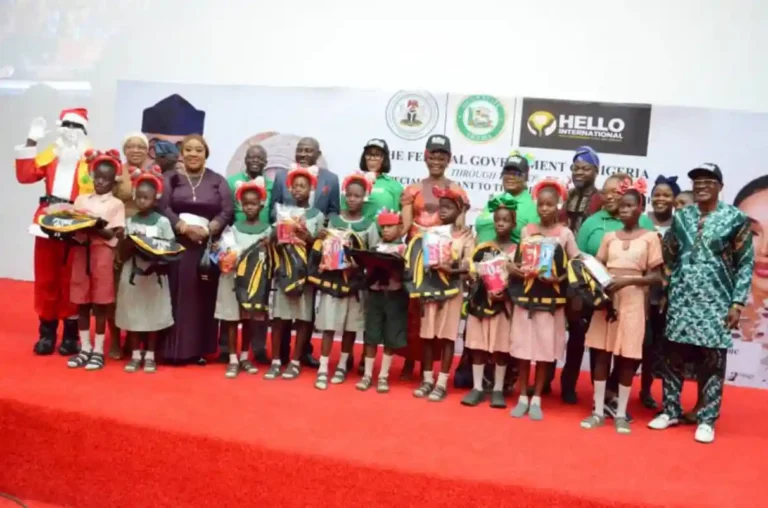
The Ogun State Government has recorded another boost in its Renewed Hope agenda with the launch of a Home-Grown School Feeding programme targeted at 1,200 pupils across the three senatorial districts. The initiative, introduced on Monday in partnership with the non-governmental organisation Hello International, aims to improve nutrition, support learning and reduce hunger-related absenteeism among public primary school pupils. It is being implemented through the state’s expanding Public Private Partnership framework under Governor Dapo Abiodun.

At the launch event held at the June 12 Cultural Centre, Kuto, Abeokuta, the Ogun State First Lady and founder of the Ajose Foundation, Mrs. Bamidele Abiodun, described the feeding scheme as one of the most impactful interventions for children, women and vulnerable households. She explained that the programme has consistently helped to boost enrolment, sustain attendance and support better cognitive development in young learners. Mrs. Abiodun commended Hello International for aligning with the state’s education and welfare priorities. She also encouraged other private actors to support the Renewed Hope empowerment programmes and avoid actions that could undermine government efforts.

Representing the Senior Special Assistant to the President on School Feeding, Dr. Yetunde Adeniji, the Presidency’s Consultant on Partnership, Mr. Adekunle Ade-Onajobi, expressed the Federal Government’s readiness to back Ogun State’s model. He described the initiative as a stand-out template for reducing poverty and supporting childhood development, adding that the Presidency would support credible partnerships focused on strengthening households and securing the future of Nigerian children.

The Chairman of the State Universal Basic Education Board, Evang. Olamilekan Ifede, urged food vendors and cooks engaged under the programme to maintain strict hygiene standards and provide meals that meet nutritional needs. He said their role is essential to ensuring the success of the feeding intervention.

Earlier, the Commissioner for Special Duties and Intergovernmental Affairs, Hon. Funmi Efuwape, praised the initiative as a practical example of corporate social responsibility. She encouraged more individuals and organisations to follow Hello International’s lead by contributing to child-focused interventions in the state.

The Founder and President of Hello International, Dr. Nkiruka Agbazue, stressed that the organisation is non-political and driven purely by a commitment to child development and household empowerment. She explained that children in Primary 1 to 3 were selected because they are at the foundation of intelligence. According to her, when a child arrives at school hungry, the brain is forced to choose between learning and survival, and survival will always come first. She said this is why the organisation stepped in and is ready to fund the programme independently.

State Programme Manager, Mrs. Olayinka Akinlade, announced that 400 pupils will benefit from each senatorial district, bringing the total number of beneficiaries to 1,200 for the entire school session.

Adegbonmire Launches Mega Empowerment Programme in Ondo Central

0

Senator Adeniyi Adegbonmire, who represents Ondo Central Senatorial District, has launched a major empowerment drive known as the Adegbonmire Renewed Hope Mega Empowerment Programme. The initiative brought together hundreds of residents as the senator distributed a wide range of economic tools and educational materials designed to support livelihoods and strengthen communities within the district.

Items handed out at the event included tricycles, motorcycles, generators, sewing machines, industrial machines, freezers, hair dryers, wheelchairs, books and several other materials aimed at helping people build sustainable income. Schools across the district also received educational resources to improve teaching and learning, a move many local stakeholders described as timely.

Governor Lucky Aiyedatiwa was represented at the event by the Special Adviser on Legislative Matters, Kolawole Babatunde. He praised Senator Adegbonmire for what he called a practical demonstration of the Renewed Hope Agenda of President Bola Ahmed Tinubu. Babatunde stated that the programme shows the state government’s belief that good governance should be felt in real and meaningful ways by everyday citizens. He added that programmes that support self-reliance, create livelihood opportunities and prepare people to compete in a fast-changing world are in line with the administration’s goals.

He encouraged beneficiaries to use the items responsibly, saying empowerment requires perseverance, collaboration and confidence in what communities can achieve when they work together.

Senator Adegbonmire expressed gratitude to attendees and explained that the initiative came from a genuine desire to give back to the people who have consistently trusted his capacity and character. He also paid tribute to his late father, High Chief Wunmi Adegbonmire, who once served as Secretary to the State Government during the tenure of Governor Adebayo Adefarati.

The event attracted political leaders, traditional rulers, community representatives and many enthusiastic residents from across the senatorial district.

No Tax ID Needed If You Don’t Earn Income – Oyedele

0

The Federal Government has issued fresh clarification on whether Nigerians must obtain a Tax Identification Number before operating or maintaining a bank account, following rising public concern about the implementation of the Nigeria Tax Administration Act NTAA. Taiwo Oyedele, Chairman, Presidential Committee on Fiscal Policy and Tax Reforms, explained that the requirement depends on whether an individual qualifies as a taxable person under the law.

Oyedele stated that a Tax ID is required only for people who earn income through trade, business, or other economic activities. Citing Section 4 of the NTAA, he said, “Individuals who do not earn income and are not taxable persons are not required to obtain a Tax ID.” According to him, banks and other financial institutions are mandated to request a Tax ID from taxable persons when opening or maintaining accounts. This means students, dependents, and people without income can continue using their bank accounts without needing a Tax ID.

He emphasised that the rule is not new, noting that the requirement dates back to the Finance Act of 2019, which amended Section 49 of the Personal Income Tax Act. Since January 2020, individuals opening business accounts have typically had to provide a TIN. “This is not a brand-new law,” Oyedele said. “The NTAA simply harmonises and strengthens existing provisions.”

Part of the reform includes replacing multiple identification numbers previously issued by agencies such as FIRS, JTB, and State IRS offices with a unified Tax ID. Under the updated framework, an individual’s NIN or a company’s CAC registration number automatically becomes their Tax ID. Oyedele explained that this move aims to reduce duplication and make compliance easier by linking tax records to national identity systems.

For people who already have a TIN, Oyedele confirmed that no new registration is required. Their existing TIN automatically becomes their Tax ID. He also stressed that Nigerians do not need a physical card to obtain a Tax ID. “A Tax ID is simply a unique number,” he said, adding that it can be checked or obtained online through the JTB portal. He warned citizens, “Do not pay touts or unofficial agents for Tax ID services.”

Businesses are also covered under the reforms. Unregistered small businesses may use a personal Tax ID, while registered companies, NGOs, and incorporated trustees receive a Tax ID automatically when they register with the CAC. Older businesses that were registered before TIN usage became standard were advised to update their records or apply online using their CAC documents.

Addressing Nigerians in the diaspora, Oyedele noted that the requirement applies only to accounts tied to income or business activity in Nigeria. Such individuals can obtain a Tax ID using their NIN through the JTB portal. He added that foreign companies supplying goods or services in Nigeria must obtain a Tax ID, while those earning only passive income such as dividends or rent may not need to register unless other tax obligations arise.

Oyedele also stated that government agencies at the federal, state, and local levels are not exempt. Section 5 of the NTAA requires all ministries, departments, agencies, and government-owned enterprises to register for and obtain a Tax ID.

Speaking on concerns about enforcement from January 1, 2026, he explained that most taxable persons already possess TINs or Tax IDs. While those without may face difficulties operating bank, pension, insurance, or investment accounts, he assured Nigerians that access to accounts will not suddenly be blocked. The harmonisation with NIN and CAC numbers is designed to support smooth compliance.

On rumours claiming the government plans to withdraw money from private accounts, Oyedele dismissed the speculation. “No such plan exists,” he said. He explained that although tax authorities may enforce payment of established tax debts through legal processes, including court orders, this applies only in confirmed cases of unpaid liabilities and is rarely used.

According to Oyedele, the reforms aim to build a fair and transparent tax system that protects low-income Nigerians while ensuring that everyone who earns taxable income contributes fairly. By using NIN and CAC numbers as Tax IDs, he said, “we are simplifying the system and closing loopholes without placing unnecessary burdens on citizens.”

For official guidance and updates, he encouraged Nigerians to visit the JTB portal at tin.jtb.gov.ng or follow announcements from the Presidential Fiscal Policy and Tax Reforms Committee.

LACORPS Summit: Lagos to Equip Youth with Practical Skills, Innovation

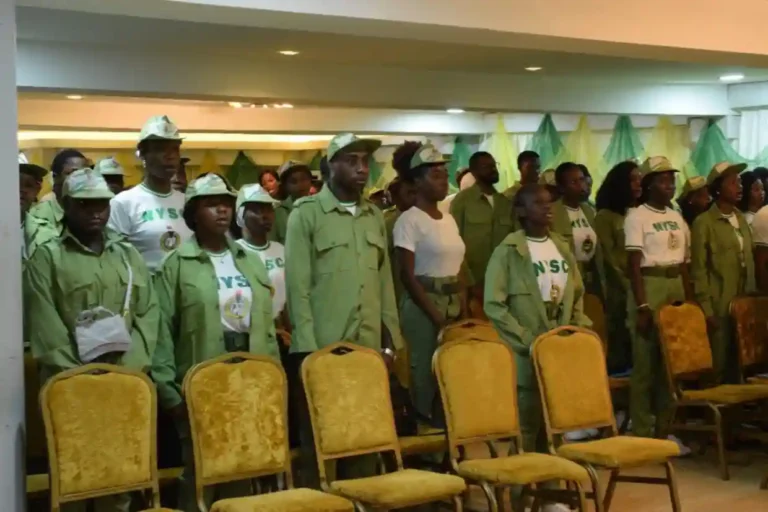
The Lagos State Government has restated its commitment to strengthening the capacity of young people through practical skills and new opportunities that encourage innovation and entrepreneurship. This assurance was given by the Honourable Commissioner for Youth and Social Development, Mr Mobolaji Abubakre Ogunlende, at the maiden edition of the Lagos Corps Members Summit 2025, held at the Assbifi Event Centre for Corps Members residing in the State.

Mr Ogunlende explained that the goal is to build youth who can create solutions across different sectors rather than rely solely on white collar jobs after graduation. He stated, “We want to build youth who will be able to provide solutions to problems wherever they find themselves, thereby becoming job creators instead of seeking white collar jobs after graduation. Every problem is an opportunity for us to look inward and bring out the creativity and innovation in us and change our environment for a better place.”

The Commissioner, represented by Mr Ibukun Dosunmu, Director of General Services in MYSD, noted that the Ministry has introduced several programmes over the years to help young people acquire relevant skills, improve their global competitiveness, and participate actively in socioeconomic development, policymaking, and political processes in Lagos State. He explained that the LACORPS Summit supports this vision by offering hands-on training in production, agro-enterprise, and digital media skills, including video editing with mobile phones, alongside access to production tools and techniques. He added, “By empowering young people with practical knowledge, we are preparing them not just to seek jobs but to create jobs and become economic drivers within their communities.”

He also highlighted that the Summit would introduce participants to emerging opportunities such as MYPROGIG, a forward-looking concept designed to push young people to think beyond traditional boundaries, explore new possibilities, use modern tools, and embrace creativity as a pathway to economic independence.

In her welcome address, the Permanent Secretary, Pharm (Mrs) Toyin Oke-Osanyintolu, described the event as a celebration of possibility, creativity, and the extraordinary potential of Lagos youth. Represented by Mr Hameed Lukman Adeyemi, Director of the Youth Department, she said the summit aligns with the THEMES Plus Agenda of Governor Babajide Olusola Sanwo-Olu. She noted that the programme is aimed at equipping Corps Members with skills and competence needed to address rising youth unemployment and underemployment in Lagos, particularly for those seeking careers in the creative industry and agriculture.

According to her, the Summit would equip Corps Members with practical market-ready skills in creative production, agro-enterprise, digital content development, and technological innovation; foster entrepreneurship and self-reliance; promote collaboration and mentorship; and inspire bold thinking and problem solving to prepare young people to become contributors to national development rather than job seekers.

Lagos Unveils Safety and CNG Support Programme for Truck Operators

0

Lagos State Governor, Mr. Babajide Olusola Sanwo-Olu, has introduced a set of interventions aimed at improving the health, safety, and overall sustainability of truck operators across the state. The initiatives include free eye screening, substance abuse sensitisation, drug testing programmes, and access to CNG trucks through a new partnership with the United Bank for Africa. These measures were announced at the maiden edition of the stakeholders’ engagement held in Agidingbi, Ikeja.

The Governor, represented by the Special Adviser on Transportation, Hon. Sola Giwa, said the engagement was created to promote safety, welfare, and sustainability within the haulage and freight ecosystem. According to him, the forum offers an important platform for government, regulators, unions, and private operators to discuss challenges, strengthen compliance, and shape the future of maritime logistics. He encouraged truck operators to use the partnership with UBA to acquire brand new CNG trucks through well-structured credit facilities, stressing the importance of safety and environmental responsibility.

Delivering his goodwill message, the Commissioner for Transportation, Mr. Oluwaseun Osiyemi, said the initiatives show the administration’s commitment to improving the welfare of truck operators and reducing avoidable accidents. He described the shift to CNG as “a bold step toward a greener future,” adding that it reinforces the State Government’s dedication to sustainability and environmental responsibility.

The Permanent Secretary of the Ministry of Transportation, Mr. Olawale Musa, outlined the focus areas of the engagement, which include safety, sustainability, partnership, collaboration, and truckers’ welfare. He acknowledged the challenges truck drivers face and noted that the state is working to support them.

The Managing Director of the Nigerian Railway Corporation, Dr. Kayode Opeifa, urged stakeholders to fully embrace the intervention. He warned that failure to adapt could leave their businesses facing obsolescence, while adding that the initiative will help correct long-standing deficiencies in the maritime logistics industry.

In his message, the National President of the National Association of Road Transport Owners, Alhaji Yusuf Lawal Othman, praised the Lagos State Government for introducing the programme. He assured that operators are ready to make use of the opportunities provided to strengthen their economic contributions and support the transition to CNG for a cleaner environment.

The Regional Manager of UBA, Mr. Ernest Omoreghe, reaffirmed the bank’s readiness to partner with the State Government and NARTO through a ₦150 billion financing window. The funds, to be released in three phases, will support operators in renewing their fleets with modern, safer, and more climate-friendly vehicles.

Other key stakeholders at the event, initiated by the Office of the Senior Special Assistant to the Governor on Transport and Logistics, Hon. Hassan Adekoya, included the representative of the Chairman of the National Drug Law Enforcement Agency, Gen. Mohammed Buba Marwa (rtd), representatives of the Lagos State Commissioner of Police, members of the Association of Maritime and Truck Owners, the Senior Special Assistant to the Governor on Transport Education and Innovation, Mr. Tobi Idowu, and representatives of Sinotruk.

EU Signs €45m Digital Programme with Nigeria

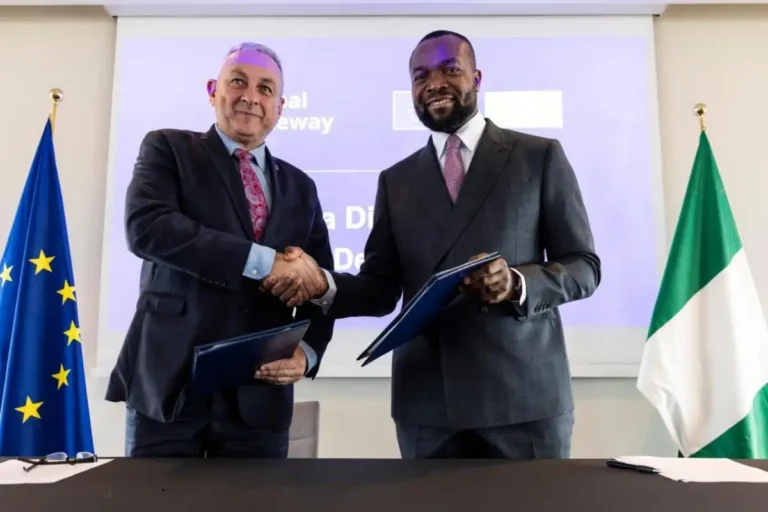
A new €45 million programme completing the EU Digital Economy Package for Nigeria has been signed at the EU-Nigeria Digital Open Day in Brussels. The agreement was finalized between Nigeria’s Minister of Communications, Innovation and Digital Economy, Bosun Tijani, and the European Commissioner for International Partnerships, Jozef Síkela. The investment is expected to deepen cooperation between both sides in the digital sector and strengthen Nigeria’s long-term digital transformation goals.

Speaking at the signing, Jozef Síkela said the partnership represents a major step in creating new opportunities. He explained that the EU’s focus is on a digital approach built around skills-transfer, open standards, data protection, privacy and security. According to him, “Global Gateway is about delivering new opportunities, and the EU-Nigerian cooperation in the digital area has a very strong potential to do exactly that. Our approach to digitalisation is based on skills-transfer, open standards, data protection, privacy and security. This way, we make sure that technologies truly enrich human lives. The new package will take our efforts even further by supporting modern e-public services and investing in the skills that will prepare Nigeria’s youth for the digital future.”

Minister Bosun Tijani said the cooperation aligns with Nigeria’s push for a technology-driven economy. He noted that digital transformation should help improve productivity and create new economic opportunities. He said, “The EU–Nigeria digital economy cooperation reflects our shared belief that digital transformation must provide a platform for growth in productivity driven by technology. As part of this, Project Bridge provides a commercially sustainable entry point for European investors and suppliers to participate in deploying an open-access fibre network at scale. Combined with our leadership in Artificial Intelligence, Digital Public Infrastructure and programmes such as 3 million Technical Talents, Nigeria offers European businesses a market where talent, demand and policy alignment converge to support long-term investment and expansion.”

The programme signed includes a major Global Gateway support to Project Bridge, which aims to deploy 90,000 km of fibre-optic backbone across Nigeria. This rollout is described as the country’s most ambitious digital infrastructure investment and is backed by loans from the European Bank for Reconstruction and Development, the World Bank and the African Development Bank. The newly signed €45 million grant will support the preparation of the project by providing technical assistance, equipment and support for network design, local skills development and supply chain deployment involving the EU private sector.

Part of the programme will help modernise Nigeria’s public administration by improving secure and user-friendly digital services. It will also support Nigeria’s efforts to expand digital-skills training nationwide. This includes training technicians, engineers and IT specialists who can maintain and operate the new infrastructure. Officials noted that large-scale digital projects can only succeed when the local workforce has the right capacity to innovate and manage new technologies.

The EU-Nigeria Open Digital Day was organised to give European investors and suppliers a clearer understanding of opportunities within Nigeria’s digital sector. Project Bridge was a major highlight, presented as a promising area for collaboration between EU tech companies and Nigeria. With a total value of €1.7 billion, the flagship project is expected to extend Nigeria’s fibre network to 125,000 km, which represents a 70 percent increase. When completed, it would become the third-longest terrestrial fibre-optic system in Africa, behind Egypt and South Africa.

Digitalisation is already a key part of the partnership between Nigeria and the EU. In 2022, the EU launched an €820 million Digital Economy Package under the Global Gateway strategy. This cooperation covers connectivity, digital skills, entrepreneurship, governance and public service development. Nigeria’s growing digital economy has been highlighted as one of the most promising in Africa, with Lagos standing out as a major hub for innovation. The country also has the continent’s largest e-commerce market, with 87 platforms that employ around 2.9 million people. Nigeria leads the African start-up space as well, with six of the continent’s eight unicorns.

The Global Gateway strategy aims to reduce global investment gaps by supporting clean, secure and smart connections in digital, energy and transport sectors, as well as stronger health, education and research systems. The strategy brings together the EU, its Member States and European development finance institutions under the Team Europe approach with a goal to mobilise up to €300 billion in public and private investments between 2021 and 2027.