Home Blog Page 236

FG Targets EV Rollout as PI-CNG Records 100,000 CNG Conversions

0

Nigeria’s clean mobility transition is moving faster than ever, with the Presidential Compressed Natural Gas Initiative reporting major milestones in investment, vehicle conversion, and national rollout. The Executive Chairman of the Presidential Compressed Natural Gas Initiative (PI-CNG), Ismael Ahmed, announced in Abuja on Thursday that the country has secured over $2 billion in investment commitments and has already converted more than 100,000 vehicles nationwide to compressed natural gas. He spoke during a press conference to launch PI-CNG 2.0, describing the progress as evidence of the initiative’s credibility and long-term viability.

According to Ahmed, the Federal Government is now shifting more attention toward the mass rollout of electric vehicles, building on the momentum of the CNG programme. He explained that the PI-CNG has deployed 58 CNG refuelling stations across 28 states in partnership with major operators, helping widen access to cleaner and more affordable transport energy.

The Pi-CNG, created in 2023 as a flagship Federal Government programme, was designed to support the widespread adoption of compressed natural gas and electric vehicles, especially for mass transit systems. The programme aims to drive cost savings, job opportunities, energy security, and environmental benefits.

Ahmed stated that the initiative has already onboarded over 300 automotive conversion partners and trained more than 6,000 Nigerians. The training beneficiaries include 150 armed forces personnel and 220 women in Kano State. He emphasised that PI-CNG 2.0 will deepen local content development, noting that a 10-hectare industrial park is being set up in Ajaokuta for domestic manufacturing of CNG equipment. This facility is expected to cut import dependence, lower asset costs, and strengthen the local supply chain.

Sharing the programme’s journey, Ahmed said, “PI-CNG 1.0 has achieved remarkable progress, moving from virtually nothing in October 2023 when there were only one or two conversion centres and perhaps a single feeding station into about 58 refuelling stations today, with 100,000 vehicles converted to CNG in less than two years.”

He described Nigeria’s pace as unmatched, adding, “The speed of adoption is unprecedented. For comparison, it took India 18 years to develop into a CNG nation, while Iran required 15 to 20 years, investing about $5.5 billion for a population of about 20 million. Nigeria, by contrast, is achieving this transformation for a population of over 200 million in a fraction of the time.”

He credited the President’s commitment for the rapid progress, saying, “The President ensured that the initiative was taken seriously, recognizing the need for rapid action. From its setup in October 2023 to today, PI-CNG has successfully converted 100,000 vehicles, demonstrating the scale and urgency of Nigeria’s clean mobility transition.”

Ahmed also revealed that starting January 2026, five new liquefied CNG and daughter stations will be commissioned in Kano, with further expansions planned in Kaduna, Gombe, Maiduguri, and Katsina. He said the Northern Corridor expansion will help anchor a reliable gas supply for underserved regions and ensure that availability keeps pace with rising demand.

While acknowledging the programme’s achievements, Ahmed explained that PI-CNG remains aware of challenges linked to large-scale energy transitions. He said, “Changing energy habits takes time, and logistical complexities in gas delivery, limited infrastructure in certain regions, and the need to strengthen local technical capacity are ongoing considerations.” He added that the initiative views these challenges as opportunities to refine its strategy and improve supply reliability.

He stated, “Rather than viewing these as obstacles, PI-CNG sees them as opportunities to refine strategy, expand access, enhance supply reliability, and accelerate the adoption of both CNG and electric mobility solutions nationwide.”

Ahmed stressed that the mandate of PI-CNG covers both compressed natural gas and electric mobility, saying, “It is important to note that PI-CNG’s mandate extends beyond CNG to also include electric mobility, a dual focus entrusted by the President. The initiative aims to incentivise the adoption of both CNG and electric vehicles.”

He said the launch of PI-CNG 2.0 signals a new era focused on scaling operations, deepening market integration, and increasing local manufacturing, with electric mobility now receiving greater emphasis alongside ongoing CNG deployment.

Advertisement

FG secures N6.45bn to expand 3MTT training nationwide

The Federal Government has secured more than N6.45 billion in private sector backing to expand the 3 Million Technical Talent programme nationwide. The Minister of Communications, Innovation and Digital Economy, Dr. Bosun Tijani, announced the development on Thursday at the 3MTT National Impact Summit held at the State House Banquet Hall in Abuja. He said the commitments from IHS, MTN, and Airtel would help strengthen training infrastructure, deepen community engagement, and widen access for young Nigerians preparing for careers in technology.

According to a presentation obtained by The PUNCH, IHS pledged N2.5 billion, MTN committed N2.95 billion, and Airtel supported the initiative with N1 billion. Tijani linked the programme’s rapid progress to strong national demand and ongoing reforms led by President Bola Tinubu in the digital economy sector. He said, “Every agenda of his administration and all the reforms that he’s made are solely for the average Nigerian,” noting that the summit also served to acknowledge the President’s contribution to the country’s digital economy.

Highlighting interventions that restored investor confidence, Tijani referenced the National Data Protection Commission Act, the 2023 launch of 3MTT, the approval of a $2 billion, 90,000-kilometre fibre project, the designation of telecom infrastructure as critical national assets, and tariff adjustments for operators. He also detailed earlier private-sector support, explaining that IHS was the first to back the programme with N1 billion at its launch and later invested N1.5 billion to rehabilitate a damaged tech park in Kano. MTN contributed N3 billion for training, devices, and data, while Airtel supported the 3MTT NextGen stream with N1 billion.

“These gave us the foundation to produce what you’re seeing in the room today,” Tijani said. He added that non-cash support from global technology firms, including AWS, Google, Huawei, and Microsoft, further strengthened the programme. The minister said the overwhelming public response showed that 3MTT was addressing a real national need, with more than 1.8 million Nigerians applying within the first month from all states and local government areas. Applicants registered using NIN or BVN to ensure unique identification.

Tijani explained that the programme is being carried out in phases. The first phase trained 30,000 learners starting in December 2023, the second expanded to one million trainees by July 2024, and the final phase aimed at training three million Nigerians is scheduled to begin next year. He reported that direct employment from the first phase already exceeds 15,000, with many fellows earning above N250,000. The government has activated 201 applied learning centres across the country and engaged 583 learning partners and 37 community managers to support implementation.

He also highlighted job placement efforts, noting that the European Union and UNDP, through the Jubilee Fellows Programme, provided funding for internship placements, helping fellows move into employment at no cost to host organisations. President Tinubu, represented by the Secretary to the Government of the Federation, George Akume, said Nigeria’s goal of becoming a $1 trillion economy depends on sustained investment in digital skills and the productivity of its youth. He said, “The countries that lead the world today are those that invest purposefully in the skills of their young population,” stressing that digital skills now matter across agriculture, healthcare, finance, manufacturing, education, and public service.

Launched in October 2023 by the Federal Ministry of Communications, Innovation and Digital Economy, the 3MTT programme aims to train three million Nigerians in digital and technical skills by 2027, focusing on software development, artificial intelligence, cybersecurity, and data science through both online and in-person learning in all 36 states and the Federal Capital Territory.

FG IFAD-VCDP Trains 105 Rice Farmers on Agronomic Skills

0

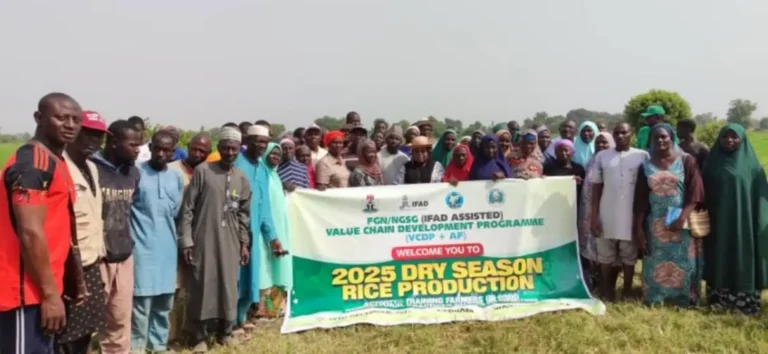
Federal Government and International Fund for Agricultural Development-Value Chain Development Programme (FG/IFAD-VCDP) has trained 105 rice farmers in Niger State on improved agronomic practices to help boost production and strengthen food security. The one-day training took place on Thursday in Washi community, Lavun Local Government Area of the state.

The programme is part of the Federal Government and Niger State Government IFAD-assisted VCDP-Additional Financing, which aims to expand Good Agricultural Practices (GAP) to new LGAs that recently joined the platform. According to Nigeria Startup News, the intervention is designed to support farmers with updated knowledge and techniques that have already improved rice yields in other participating areas.

Hajiya Hadizat Isah, State Programme Coordinator of the VCDP, said the initiative was created to equip farmers in Lavun with modern skills that are already making a difference in locations like Wushishi, Katcha, Mokwa and Edati. She explained that the VCDP had been carrying out similar trainings across the state for more than three weeks, and Lavun was added because it is a newly admitted LGA under the programme.

“We are here to train farmers, and although the exercise started over three weeks ago, we extended it to this community because Lavun is a new Local Government that joined the VCDP platform. Our farmers in Wushishi, Katcha, Mokwa and Edati are now doing three to four cycles of production per year because of our intervention, and we want these farmers to replicate same,” she said.

Isah said the training covered key areas of dry-season rice farming such as site selection, land preparation, seed selection, nursery establishment, transplanting and water and soil management. She added that trained extension agents would continue to guide farmers through their production cycle. Inputs and equipment would also be provided to participants at subsidised rates.

She also said that VCDP had started constructing aggregation centres and market stores in Lavun to strengthen storage and marketing systems. The communities involved are expected to contribute 10 per cent in-kind through land or labour.

Prof. Abigael Girji, the lead consultant for the training from the Federal University of Technology, Minna, said her team had visited four LGAs, including Edati, Katcha, Lavun and Mokwa, to deliver dry-season GAP instruction and follow up on field activities. She highlighted the importance of proper site selection and the use of improved seed varieties.

“We advised them to choose sites close to water sources because dry-season farming relies heavily on irrigation and use of viable seeds, and apply fertiliser, herbicides and water at the right time,” she said.

Girji said farmers were also encouraged to keep accurate farm records and approach agriculture as a business enterprise. Some participating farmers, Mallam Mohammed Shaba and Mallam Suleiman Idris, expressed appreciation, saying the training exposed them to new methods capable of improving their yield.

FG hails World Bank’s $500m approval for NG-CARES phase two

0

The Federal Government has expressed appreciation to the World Bank following its approval of an additional 500 million dollars for the second phase of the Nigerian Community Action for Resilience and Economic Stimulus programme known as NG-CARES. The programme previously received 750 million dollars for its first phase, which ended earlier this year. Due to its success and the impact it made in supporting vulnerable Nigerians across the 36 states and the FCT, the Federal Government sought more support from the global lender.

Available records show that NG-CARES 1.0 directly reached more than 17 million Nigerians. It also helped communities build schools and health centres, revived small businesses and offered support to smallholder farmers. The first phase further attracted strong commitment from states and the FCT, with a combined investment of over 2.2 billion dollars toward programme implementation.

NG-CARES operates through a performance for result model known as P4R, where states first implement programme activities and are later reimbursed after independent verification agents confirm the results. National Coordinator of NG-CARES, Dr Abdulkarim Obaje, described the World Bank’s approval of the additional financing as a major step in expanding social protection efforts for poor and vulnerable Nigerians.

He said, “This additional financing will spur governments at all levels to deepen and strengthen economic resilience among poor and vulnerable households, smallholder farmers and small businesses affected by economic shocks.”

Speaking on the sidelines of a fraud and corruption prevention workshop organised for NG-CARES personnel in Abuja, he explained that the new funds mean states and the FCT can begin full implementation through their delivery platforms and coordination units, with reimbursement expected after verifications by Independent Verification Agents.

Obaje thanked the World Bank for its continuous partnership and support for Nigeria’s pro-poor development and economic inclusion programmes. At the workshop, he reminded participants of the need for discipline, saying, “Because of the unique job we are doing to help vulnerable Nigerians, it would be scandalous for any of us to be associated with anything corrupt or fraudulent.”

Director of Economic Growth at the Federal Ministry of Budget and Economic Planning, Auwal Muhammad, described the training as timely. He said it reflects NG-CARES’s commitment to zero tolerance for corruption as the programme prepares for the additional financing phase. According to him, “As we prepare for NG-CARES additional financing, the expectations for transparency and accountability are even higher,” adding that the programme’s credibility depends on the integrity of its processes.

He said, “Fraud, corruption and misuse of programme funds undermine not only our collective work but also the trust of citizens who rely on NG-CARES for their survival and economic resilience.” He noted that training the teams to prevent, detect and report fraud is essential as the programme enters its next operational cycle.

Trump Unveils $1m Gold Card Visa for Fast-Track US Residency

0

President Donald Trump on Wednesday announced a new immigration option called the Gold Card visa, which allows foreign nationals to fast-track their U.S. residency by paying $1 million. Companies can also sponsor a foreign worker for $2 million. Trump introduced the programme during a White House roundtable, describing it as “very exciting, for me and for the country” and adding that it would offer “U.S. residency in record time.”

The official application website, trumpcard.gov, became active on Wednesday afternoon. According to the site, applicants must pay a $15,000 Department of Homeland Security processing fee in addition to the $1 million contribution. After passing background checks, eligible individuals may receive lawful permanent resident status through the EB-1 or EB-2 categories, which are employment-based visas meant for people with what the government defines as extraordinary or exceptional abilities.

The site explains that the approval process will take only “weeks” and includes an interview. Applicants must also provide additional documents when requested. The notice adds that some State Department fees may apply depending on each applicant’s situation.

In addition to the Gold Card visa, the website also introduces a coming option called the Trump Platinum Card. This programme, expected to launch soon, would allow qualifying foreign nationals to spend as many as 270 days in the United States without being taxed on non-U.S. income. The contribution for this option is $5 million, along with a $15,000 DHS processing fee.

“Foreign nationals can sign up now and secure their places on the waiting list for the Trump Platinum Card. When launched, and upon receipt of a $15,000 DHS processing fee and $5 million contribution, they will have the ability to spend up to 270 days in the United States without being subject to U.S. taxes on non-U.S. income,” the website reads.

Ekiti to create 26,000 Jobs annually through Knowledge Zone Initiative

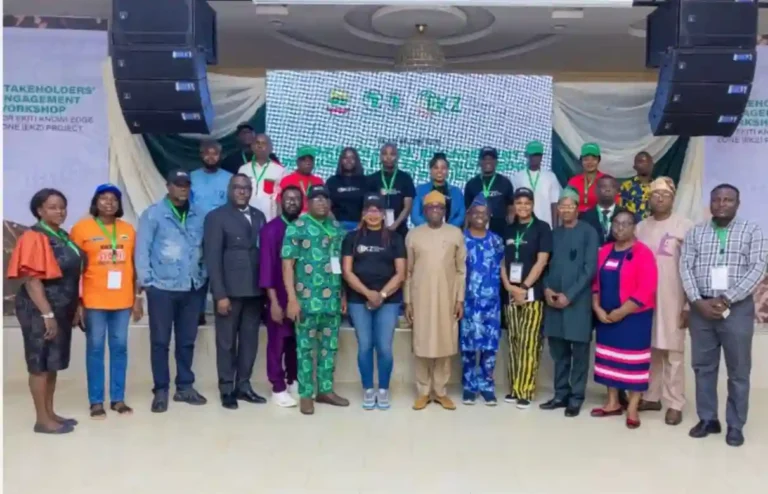
Ekiti State Governor, Mr. Biodun Oyebanji, has restated his commitment to generating over 26,000 direct and indirect jobs and injecting more than $14 million into the State’s economy every year through the ongoing Ekiti Knowledge Zone (EKZ) project. He made this known at the Ikogosi Resort during a Stakeholders’ Engagement Workshop on the EKZ initiative, where he was represented by his Chief of Staff, Mr. Niyi Adebayo.

Governor Oyebanji said the EKZ project was created to position Ekiti State to fully benefit from the global technological shift. He described the stakeholders’ engagement as a proactive step that would ensure strong collaboration among all participants. He noted that the programme would help build trust, promote innovation, and support long-term success by bringing together different perspectives and preventing avoidable conflicts.

He urged participants to take the workshop seriously and engage actively, stressing that every stakeholder must understand and play their role in achieving the project’s overall goals. According to him, every institution involved must align with the collective vision, especially as technology continues to change the world rapidly through data, artificial intelligence, advanced research, and digital innovation.

The Governor said, “My government firmly believes that the prosperity of Ekiti State will be built on the strength of its people on their talents, creativity, resilience, and intelligence. That is why this initiative was conceived as a hub where government, academia, innovators, and the private sector can work together to solve real problems, accelerate public-sector transformation, and create new economic opportunities for our young people.”

He added, “My vision for the State is one where many young Ekiti people can work for global companies without leaving their communities. We will continue to provide an enabling environment not only to make the Knowledge Zone a success, but to make the entire State a model of progress and achievement.”

Speaking at the event, the Special Adviser to the Governor on Transformation and Service Delivery (OTSD), Dr. Moyo Ekundayo, highlighted the need for software and applications that solve real problems and add value to society. He urged stakeholders to look beyond academic certificates and focus more on how they can contribute to meaningful development. He also encouraged parents and guardians to allow their children to study courses they are passionate about so they can build long-term satisfaction and fulfillment.

The Project Coordinator of EKZ, Ms. Lolade Olutola, said the workshop represented a major step in positioning Ekiti as a top destination for innovation, technology, research, enterprise development, and competitive talent.

She explained that the engagement gathered a wide range of stakeholders, including MDAs, higher institutions, and cluster hubs. She described Governor Oyebanji as a visionary leader whose strong support for the Knowledge Zone continues to inspire all partners involved.

Chairman of the EKZ Steering Committee, Dr. Emmanuel Akinwumi, said the knowledge zone model has proven successful in many regions across the world. He pointed to California in the United States as a popular example, noting that such zones often attract clusters of industries and businesses wherever they are established.

He called on Ekiti indigenes in the diaspora to invest back home, explaining that everyone has the potential to drive positive change and that it is often easier to succeed and make meaningful impact at home than in other places.

Nigeria Signs Digital Tax Modernisation Agreement with France

The Federal Inland Revenue Service has entered a landmark cooperation agreement with France to modernise Nigeria’s tax administration through digital transformation, capacity development and stronger cross-border enforcement. The pact was announced weeks ahead of the agency’s formal transition into the Nigeria Revenue Service in January 2026.

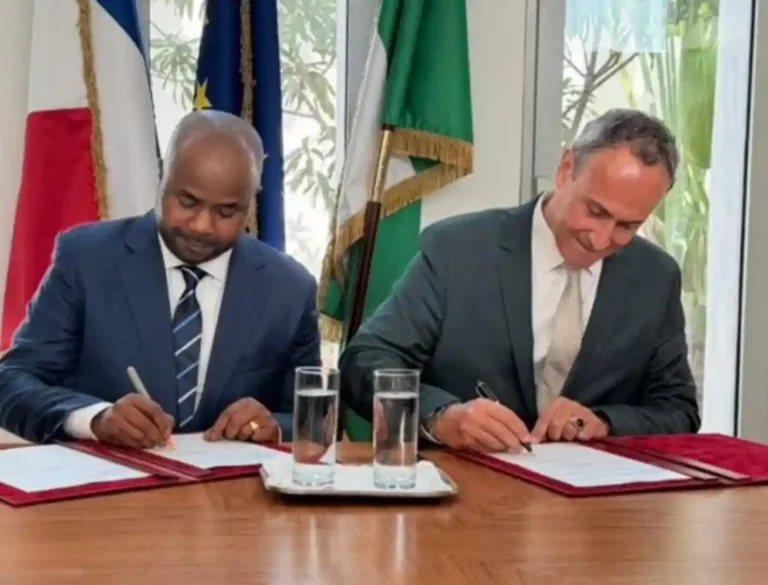
FIRS Chairman Zacch Adedeji and the French Ambassador to Nigeria, Marc Fonbaustier, signed the memorandum of understanding at the French Embassy in Abuja. The disclosure was made in a statement issued on Wednesday by Adedeji’s Special Adviser on Media, Dare Adekanmbi. The agreement brings FIRS into a formal working partnership with France’s tax authority, Direction Générale des Finances Publiques, regarded as one of Europe’s most technologically advanced revenue institutions.

Adedeji said the partnership reflects a shared ambition to build, in his words, “stronger, more resilient and forward-looking” tax systems at a time when global public finance is being reshaped by technology, artificial intelligence and cross-border digital commerce. He identified digital transformation as one of the central pillars of the pact, explaining that Nigeria aims to tap into France’s expertise in automated compliance systems, data-driven audits and advanced taxpayer service platforms.

According to him, France also stands to gain from Nigeria’s rapid digital expansion, youthful population and emerging homegrown innovations in Africa’s largest market. He said, “This two-way exchange is essential as both countries adapt to emerging challenges such as artificial intelligence deployment, cybersecurity and cross-border taxation.” Adedeji added that FIRS will continue strengthening engagement with other global partners as the agency prepares for its evolution into the NRS under the new Fiscal Responsibility and Revenue Administration reforms.

He highlighted workforce development as another major point of collaboration. Nigeria, he noted, hopes to learn from France’s structured human capital systems, professional standards and strong culture of continuous learning. At the same time, he said Nigeria’s experience managing a young, diverse and fast-paced workforce would give DGFiP fresh insights into building modern tax and public finance institutions.

“Another important aspect is workforce development. While we look forward to learning from France’s well-structured human capital systems, particularly in professional standards, continuous learning, and organisational discipline, we also believe that our experience in managing a young, dynamic and diverse workforce will offer valuable insights to DGFIP. Together, we can develop models that strengthen institutional culture, build global competencies, and prepare our respective institutions for the future of public finance administration,” he said.

The MoU further covers cooperation on international taxation, exchange of information, transfer pricing and Base Erosion and Profit Shifting, a growing global concern as businesses increasingly operate without borders. Adedeji noted, “As economic activities become increasingly borderless, the ability of both our institutions to collaborate, share intelligence and harmonise approaches will be crucial.”

Nigeria has faced persistent challenges with low tax-to-GDP ratios, averaging between 6 and 10 per cent in the last decade, far below the African average of 15 per cent. The Federal Government is relying on enhanced digital systems, unified tax administration and stronger international partnerships to boost revenue without creating new taxes.

The ongoing Tax Act reforms aim to expand the tax base, simplify compliance, improve transparency and align Nigeria’s tax policies with global standards. These reforms have grown in importance due to the rise of the digital economy, increased cross-border business activities and emerging modern financial instruments.

France is widely recognised as a global leader in digital tax administration, having implemented advanced e-filing platforms, algorithm-driven compliance tools and real-time data analytics across its revenue systems. Adedeji said the pact will become one of the foundations of Nigeria’s transition into a more transparent and technology-driven revenue service capable of keeping pace with global taxation trends.

He added, “As Nigeria moves into the era of the Nigerian Revenue Service, we see this partnership as a foundation for building a modern, trusted, innovative and globally connected revenue administration,” the statement concluded.

IFAD, IITA to Scale Up AgriHub Programme for 30,000 Rural Youths

0

The International Institute of Tropical Agriculture, the International Fund for Agricultural Development, and other development partners announced plans on Thursday to expand support for at least 30,000 rural youths through the AgriHub programme. The announcement was made in Abuja during a roundtable meeting themed “Creating Rural Youth Employment Opportunities/Support to Agribusiness Hubs in Nigeria”.

The meeting brought together government agencies, embassies, financiers, private sector players and several development partners who are working to unlock fresh opportunities for young Nigerians across key value chains such as rice, cassava, soybean, tomato, groundnut and sesame. The partners said the programme is designed to boost skills, improve job access and support youth-led agribusinesses.

Speaking to journalists, IFAD Country Director, Dede Ekoue, explained that the programme exceeded expectations during the first phase, both in employability and entrepreneurship. She said, “In the first phase, it surpassed its targets on two tracks. One track is about youth employability, and it achieved more than 100 per cent of the target that was set. The other track, entrepreneurship, which helps youths to set up their business, went beyond the target, up to 150 per cent.”

Ekoue said the pilot phase drew more than 7,000 youths, encouraging partners to plan a wider rollout. She listed the Niger Delta’s nine states, Benue, Enugu and Anambra among the locations to be covered, with plans to further extend the support to the North-East and North-West regions.

AgriHub Nigeria Project Coordinator at IITA, Adesanya Omotomiwa, said lessons from the first phase will help guide the expansion, especially as the next stage is expected to pay more attention to fragile and conflict-affected communities.

He said, “Looking at how we have impacted about 7,200 youths in the first phase, we are hoping to leverage those lessons learnt, place more people in jobs and support about 30 per cent of our beneficiaries to start their own businesses.” He also noted that job placement and follow-up monitoring remain major parts of the programme.

The Minister of Agriculture and Food Security, Senator Abubakar Kyari, represented by a Director in the ministry, Mrs Iluromi Adebola, said the initiative aligns with President Bola Tinubu’s Renewed Hope Agenda. He stated, “Government’s presence at this event speaks to a shared commitment in unlocking the tremendous potential of rural youth and transforming Nigeria’s food systems through innovation, skills and enterprise.”

Participants said over 7,000 jobs have already been created through agribusiness hubs in rural and semi-urban areas in the past five years. They described AgriHub, piloted by IFAD and implemented by IITA with additional support from Germany’s Federal Ministry for Economic Cooperation and the Visa Foundation, as one of the most promising youth-focused agricultural interventions due to its strong results in employability, enterprise creation and market access.

Lagos Empowers 18,963 Residents Through MESI Programme

0

The Lagos State Government has announced that 18,963 residents, mostly women, have been empowered through the Micro-Enterprise Support Initiative, known as MESI, since the programme started. This update was shared during an event organised by the Ministry of Women Affairs and Poverty Alleviation, WAPA, on Wednesday in Ikeja. Governor Babajide Sanwo-Olu, represented by the Secretary to the State Government, Barr. Bimbola Salu-Hundeyin, said the state remains committed to supporting small businesses and helping residents become more financially independent.

Sanwo-Olu explained that MESI continues to align with the state’s THEMES Plus Agenda, which focuses on social inclusion, human development, and protecting vulnerable groups. He said, “This initiative is a practical demonstration of our THEMES Plus Agenda, which places strong emphasis on social inclusion, human development, and the protection of vulnerable citizens.” He added that the state aims to build a Lagos where every resident, regardless of gender, age, ability, or social status, can progress. He noted that empowerment is a long-term strategy for building a resilient and inclusive economy.

The governor also said the tools distributed at the event are more than physical items, describing them as “enablers of growth, ladders of opportunity, and platforms for financial independence.” He encouraged beneficiaries to use the equipment to improve their livelihoods. “To our beneficiaries, today is the beginning of a new journey, the tools you receive are seeds. Plant them with discipline, nurture them with hard work, and grow them with integrity,” he said. Sanwo-Olu also praised WAPA’s leadership for their continuous commitment to programmes that support Lagos residents.

Earlier, the Commissioner for Women Affairs and Poverty Alleviation, Mrs Bolaji Dada, said MESI was created to offer practical training, startup support, and essential tools to disadvantaged women, youths, artisans, and graduates from WAPA skill centres. She explained that the initiative has held several editions providing working tools and financial help to micro, small, and medium businesses.

According to her, “This initiative is a practical expression of the social inclusion and economic empowerment pillars of THEMES Plus, which remain central to Gov. Sanwo-Olu’s commitment to leave no one behind.” She said WAPA’s mandate is to create opportunities for vulnerable persons, including widows, persons with disabilities, and unemployed graduates.

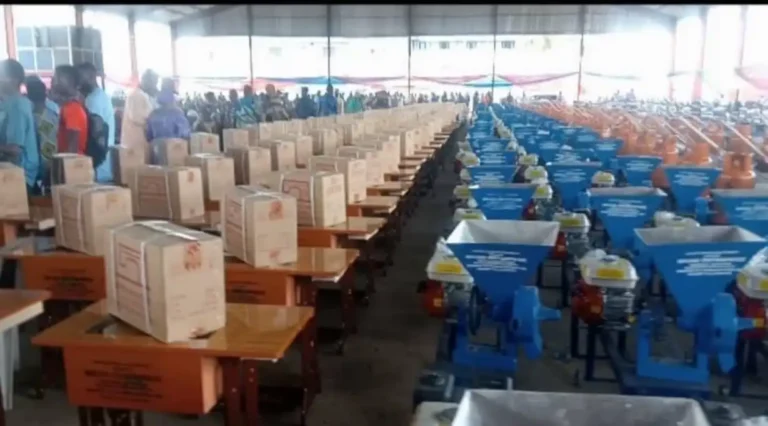
For the third edition this year, Dada said the ministry is expanding its reach by presenting empowerment tools across the state. She said the intervention reflects the government’s resolve to reduce poverty, promote self-reliance, and support micro-enterprises at community level. Equipment distributed at the event included sewing machines, stoning machines, hairdressing kits, baking ovens, confectionery starter kits, barbing kits, sterilisers, generators, cassava processing machines, and other food processing machines. The commissioner also thanked the governor for his continued support for women’s empowerment.

Princess Lara Oyekan-Olumegbon, Chairman of the House Committee on Women Affairs and Poverty Alleviation and Job Creation, said the House would keep making laws that support the well-being of women. She noted that MESI and other empowerment programmes were introduced to prioritise and uplift women in Lagos State.

Some of the beneficiaries expressed gratitude to the government. Mrs Ganiat Danni, who received a stoning machine, and Mrs Comfort Olanipekun, who received a grinding machine, both praised WAPA for positively impacting their livelihoods.

Nigeria for Women Project to Engage 90,000 Kebbi Beneficiaries

The Nigeria for Women Project Scale-Up NFWP-SU is set to engage about 90,000 women across three local government areas in Kebbi State. The State Project Coordinator, Alhaji Yakubu Muhammad Yauri, confirmed this during an inspection of the recruitment exercise for ward facilitators in Birnin Kebbi Local Government Area.

According to him, the ward facilitators play a key role in mobilising women for the intervention. He stated that the NFWP-SU is a federal government initiative carried out through the federal and state ministries of women’s affairs, designed to address financial exclusion by improving women’s access to credit, markets, financial literacy, and sustainable livelihoods. He explained that the scale-up will focus on Birnin Kebbi, Dandi, and Zuru LGAs.

Yauri said that 360 ward facilitators will be engaged for the programme, and each facilitator will be responsible for mobilising between 180 and 250 women in the three benefiting LGAs. He noted that this structure is aimed at helping the project reach its target of supporting thousands of women in the state.

He also praised the Kebbi State Governor, Dr. Nasir Idris, for what he described as a fair and supportive operating environment. He said the governor’s commitment is important in making Kebbi one of the top implementing states in Nigeria.

Yauri further acknowledged the Commissioner for Women Affairs and Social Development for ensuring the project follows all standard operating procedures.