Home Blog Page 237

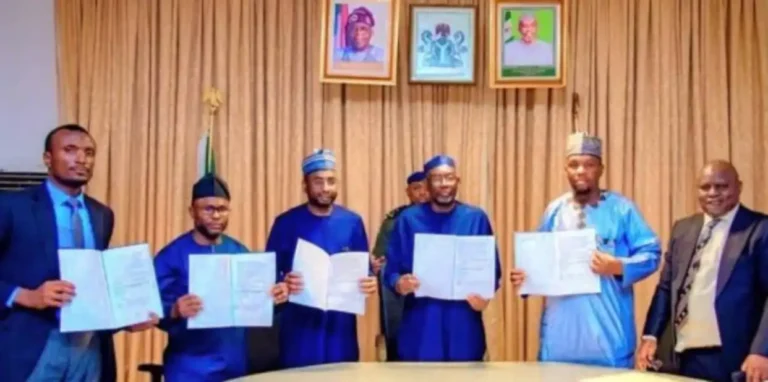
Jigawa, El-Meena Sign $540m Alfalfa Export Corridor Deal

0

The Jigawa State Government has entered a major partnership with El-Meena Farms Ltd to establish what is described as Nigeria’s largest fodder export corridor under the Jigawa Alfalfa Value Chain Development Project. The new Memorandum of Understanding outlines a plan to cultivate 100,000 hectares of premium Alfalfa, with expected annual export earnings estimated between $440 million and $540 million. Saudi Arabia’s Alkhorayef Group has been selected as the technical partner responsible for delivering irrigation infrastructure.

The agreement is structured around the NEXIM Bank–Saudi EXIM Bank export financing window, with an initial $5 million capital expenditure set aside for the purchase of advanced Center Pivot Irrigation Systems for the first 1,000-hectare pilot phase. Through Capemano Consulting, its representative in Nigeria, Alkhorayef Group will deploy modern irrigation technology to support continuous, high-yield Alfalfa production for markets in GCC countries such as Saudi Arabia, UAE, and Qatar, where demand for water-efficient, high-protein livestock feed continues to grow.

Governor Umar Namadi described the project as a major pillar of his administration’s long-term economic plan and a symbol of strengthened cooperation between Nigeria and the Middle East. “By combining Jigawa’s vast land resources with El-Meena’s operational expertise and Saudi Arabia’s superior irrigation technology, we are building a secure, high-value export corridor that aligns with President Tinubu’s Renewed Hope Agenda,” he said during the signing ceremony in Dutse.

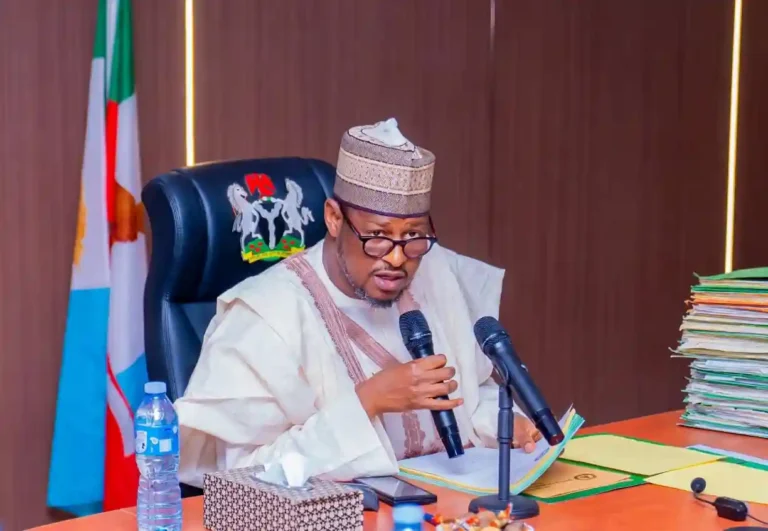
Director-General of the National Information Technology Development Agency, Kashifu Inuwa, noted that the project fits into the President’s focus on boosting agricultural output. “Priority number two of the President’s agenda focuses on boosting agriculture to achieve food security. The investment-friendly climate in Jigawa is one of the key reasons we are bringing this project here,” he explained, adding that work would begin immediately.

Commissioner for Livestock Development, Professor Salim Mohammed, highlighted Alfalfa as a high-protein forage crop capable of improving livestock performance, creating large-scale jobs, and increasing export income for the state and the country.

The signing ceremony was attended by Mr. Abubakar Abba Bello of NEXIM Bank, Mr. Haruna Musa of Jaiz Bank, Dr. Armstrong Takang of Ministry of Finance Incorporated, and representatives from Nigeria Sovereign Investment Authority and other institutions.

Advertisement

VP Shettima Launches Dangote ₦100bn Scholarship Programme

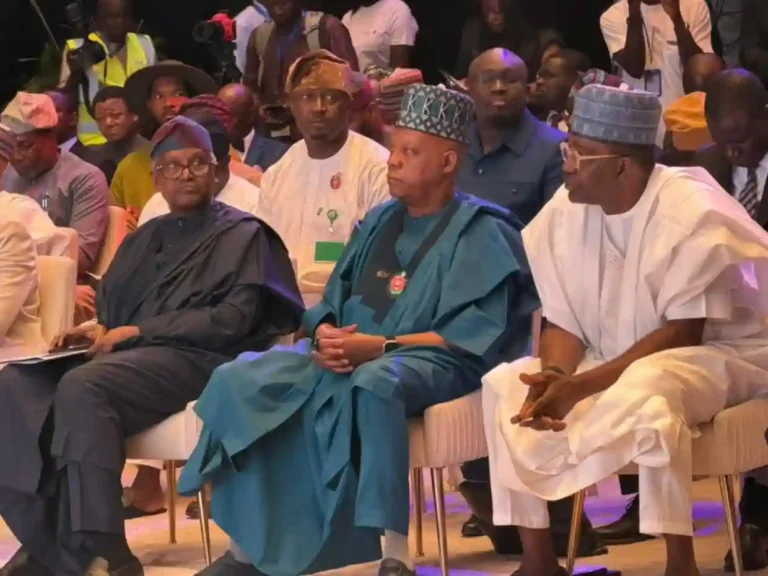
The Vice President, Senator Kashim Shettima, has launched the Aliko Dangote Foundation Education Scholarship Initiative with a call for Nigerians to recommit to building a future where every child has the opportunity to become the best version of themselves. The launch, held on Thursday in Lagos, also featured the unveiling of a ₦100 billion annual education support programme by the President of the Foundation, Alhaji Aliko Dangote. The programme is designed to strengthen Nigeria’s educational sector and widen access to quality learning for young people across the country.

According to the foundation, the initiative is projected to cost ₦1 trillion over the next ten years and will support students at multiple levels through different targeted schemes aimed at improving learning standards. Speaking at the ceremony, the Vice President praised Dangote’s commitment to philanthropy, noting that education requires those who understand its power to push for change.

Senator Shettima said, “Now is the time to recommit to building a future in which every Nigerian child has a fair shot at becoming the best version of themselves. Let us live our lives so that posterity will remember us not for the offices we held or the titles we bore. Posterity must remember us for the doors we opened and the lives we transformed.”

He called on the private sector and corporate organisations to see themselves as major stakeholders in sustaining Nigeria’s education system. He explained that the country must urgently confront what he described as the consequences of demographic acceleration. The Vice President added, “A youthful population is a global asset only when it is educated. Without education, it becomes a threat to itself and to the nation that houses it.”

Reflecting on Nigeria’s history, the Vice President said formal education was once viewed with suspicion and treated as something that disconnected children from their cultural heritage. He explained that the negative effects of that resistance still influence the country’s development today. He said that instead of waiting for miracles or depending on rhetoric, deliberate actions were needed to break what he called a needless cycle of failure.

Shettima stated that this was why President Bola Ahmed Tinubu introduced reforms such as the Nigerian Education Loan Fund, NELFUND, designed to promote equitable access to education. He also highlighted other steps taken by the administration. He said, “We strengthened UBEC to deepen basic education infrastructure and accountability. We expanded TETFund intervention footprint to revitalise tertiary institutions. We accelerated our Technical and Vocational Education and Training programmes to reflect the needs of a new economy. We also mainstreamed digital learning as a core national priority.”

He expressed concern about the state of education in West Africa, noting that the region now has the lowest Human Capital Index in the world. He said Nigeria must place more value on education if the country hopes to reverse the situation. “We must treat education as a survival strategy. This is why our administration treats the National Human Capital Development Programme as a national emergency. We are bringing states, development partners, the private sector and civil society together to reclaim our destiny,” he added.

Shettima described Alhaji Aliko Dangote as an extraordinary figure. He said, “In a nation that has produced giants, he remains a colossus.” He added that Dangote’s philanthropy is structural, generational and visionary. He stressed that the businessman is not only the largest private employer of labour in Nigeria, but also one of the most important private investors in rescuing the education sector.

Earlier in his remarks, Dangote said the foundation’s ₦100 billion annual education support programme would help expand access to quality learning for young Nigerians. He assured the public that the selection of beneficiaries would follow a transparent and merit-based process. Dangote also announced partnerships with NELFUND, NECO, WAEC and other government agencies to guarantee accountability. He revealed that he has dedicated 25 percent of his personal wealth to the foundation, a commitment that will continue beyond his lifetime.

The Minister of Education, Dr. Tunji Alausa, described the programme as one of the most comprehensive human capital development efforts in Nigeria’s history. He said it aligns with the Federal Government’s education reform agenda. According to him, 25 percent of the scholarship slots will be reserved for persons living with disabilities, a gesture he described as a humane and inclusive approach.

The United Nations Deputy Secretary-General, Amina Mohammed, also delivered a goodwill message. She commended the foundation’s investments in education, noting that expanding opportunities, especially in Technical and Vocational Education and Training (TVET), would create new pathways for Nigerian children. She emphasised that investing in girls’ education remains one of the strongest drivers of progress for any society.

Speaking on behalf of state governors, Lagos State Governor Babajide Sanwo-Olu praised Dangote’s dedication to the future of Nigerian youth. He noted that the Dangote Foundation has redefined philanthropy in the country. Sanwo-Olu stated that state governments would support the success of the initiative, starting with Lagos State, which has allocated 10 percent of its annual budget to education.

The Ooni of Ife, Oba Adeyeye Enitan Ogunwusi, Ojaja II, also commended Dangote for his efforts and encouraged him to continue supporting causes that benefit Nigerians. In the same spirit, the Emir of Lafia and Chairman of the Steering Committee of the Aliko Dangote Foundation, Justice Sidi Bage (rtd), pledged the committee’s full dedication to ensuring the success of the initiative. He said the long-term impact of the foundation’s education projects would significantly strengthen Nigeria’s human capital over the next decade and beyond.

The event ended with the unveiling of the vision 2030 $100 billion logo of the Dangote Foundation, a symbol of the organisation’s long-term commitment to education and national development.

Katsina Approves N90,000 Rural Teachers Allowance Per Session

0

Katsina State Government has approved a rural teachers’ allowance of N90,000 per academic session, which is N30,000 per term, as part of new measures aimed at strengthening education and boosting service delivery across communities. This update was introduced alongside several strategic projects approved during the 18th regular council meeting held on Wednesday at the General Muhammadu Buhari House, Katsina, chaired by Governor Malam Dikko Umaru Radda.

Speaking after the meeting, Commissioner for Information and Culture, Dr. Bala Salisu Zango, said the council approved construction of a small-town water scheme at Tsagero town in Rimi Local Government Area. He explained that the project is designed to support residents with consistent clean water. According to him, This project will ensure steady provision of clean, potable drinking water for Tsagero and surrounding communities.

The council equally approved the construction of the Dr. Dikko Radda Cassava/Gari Processing Centre in Batsari Local Government Area to promote cassava farming and strengthen agro-processing activities. Zango added that the initiative will support farmers and improve economic activities around the area.

On youth empowerment, the commissioner said the council approved the supply and installation of equipment, machines, and tools for 28 departments at the Katsina Youth Craft Village. He stated, This investment will enhance skills development, improve employability, and support career growth among our youth.

To address housing needs in the state metropolis, the council granted approval for construction of 150 completed housing units and 350 serviced plots that will come with basic facilities.

Commissioner for Basic and Secondary Education, Hon. Yusuf Suleiman Jibia, confirmed the introduction of the rural teachers’ allowance aimed at encouraging teachers to serve and stay in remote communities. He explained that, This incentive is meant to encourage teachers to accept rural postings, remain in those locations, and improve their commitment to teaching. He also announced the creation of three Teacher Development Centres in Katsina, Daura, and Funtua. Jibia noted, These centres will provide regular training programmes to upgrade classroom practices and enhance instructional delivery across the state. Trainers will come from Umaru Musa Yar’adua University, Isah Kaita College of Education, and experienced retired teachers.

Special Adviser on Tertiary Health Institutions, Umar Mammada, said the council approved recommendations of the Interministerial Task Force to oversee private health institutions. He explained, This measure will sanitize healthcare delivery, strengthen regulatory compliance, and ensure private hospitals operate at acceptable standards.

Commissioner for Lands and Physical Planning, Dr. Faisal Kaita, announced the immediate implementation of reviewed master plans for Katsina, Funtua, and Daura. He said, This underscores the administration’s push for orderly development, modern infrastructure, and transformation of the state’s major urban centres.

The council further approved the 2026 Business Enabling Reform Action Plan to support ease of doing business and encourage investors, aligning with Governor Radda’s Building Your Future agenda.

CREDICORP Set to Launch 10,000 Women in Mobility Programme

CREDICORP has confirmed that the 10,000 Women in Mobility initiative will officially launch on 12th December 2025 at 10:00am in Eagle Square, Abuja. The Nigerian Consumer Credit Corporation said the programme is designed to support women working in mobility-based livelihoods while improving their access to sustainable finance.

According to CREDICORP, the event is being held in collaboration with gamma Mobility, Letshego, ACCION Microfinance Bank, TVS and DAC.

CREDICORP noted that the initiative aims to empower women across the transport and mobility sector, adding that “10,000 Women in Mobility” represents a major step towards expanding opportunities for female workers in Nigeria.

Lagos Students Shine at WRO 2025 with Top African Rankings

0

The Lagos State Ministry of Basic and Secondary Education has praised the impressive performance of its students at the World Robot Olympiad WRO 2025 International Final held at Marina Bay Sands Expo and Convention Centre, Singapore, from November 26 to 28, 2025. The event took place in the birthplace of the WRO Initiative and gathered some of the brightest young minds in global robotics.

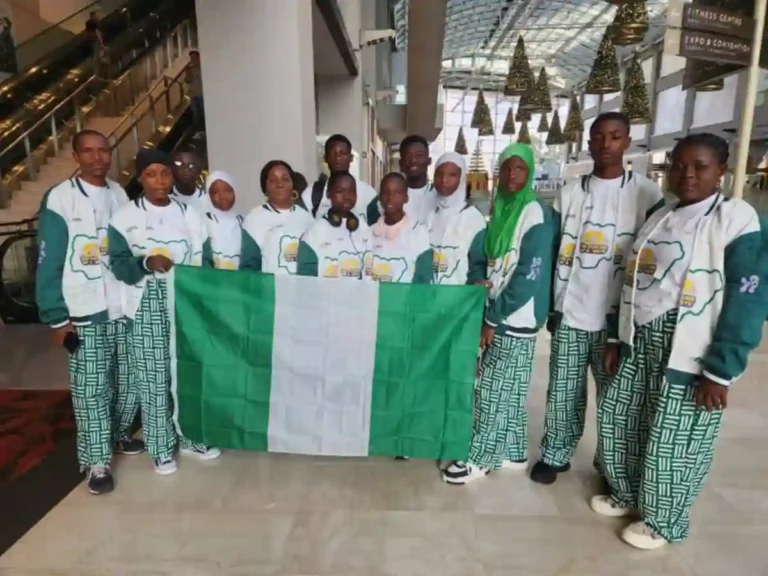
The Lagos State 17-man team, led by the Honourable Commissioner for Basic and Secondary Education, Jamiu Alli-Balogun, represented Nigeria in several competition categories. The delegation included officials and coaching staff who worked with the students to showcase their skills in robotics and STEM education on an international stage.

The 2025 edition of the competition, themed The Future of Robots, recorded the highest participation in WRO history. According to organisers, the event brought together 3,300 young innovators from 112 countries and featured 600 competing teams. WRO aims to give young people a platform to explore how robotics and intelligent machines can shape the future of cities, agriculture, sustainability, healthcare, accessibility, and even space exploration.

The three-day programme included an opening ceremony, practice sessions, competition rounds, project judging, an international friendship night, and the closing award ceremony. Nigeria also received recognition as one of the highest users of WRO Learning Platforms for robotics training.

Among the standout projects was the SMART GUARD BOT developed by Okesuna Junior Secondary School, Lagos Island, which competed in the Future Innovation Junior Category and emerged 2nd in Africa. The team created an AI-powered robot designed for electrical fault detection in Lagos Island and other areas. The students behind the project are Taiwo Oluwasemilore Elizabeth, aged 13, and Adegboye Esther Idunnu, aged 15, with their teacher and coach, Mrs Ogundipe Dorcas Oluwafemi.

Government Technical College, Ikotun, secured 3rd place in Africa in the Future Innovation Senior Category. The school presented the Spaar and Lego-Based Assistant Robot Future Innovation, a solar-powered AI agricultural robot designed for precision farming. Team members include Izahben Goodluck Chukwuka, 15, and Olawoye Solomon Moyinoluwa, 15, guided by their coach, Mr Olasupo Kolawole Olalekan. Their dual-robot innovation aligns with SDGs 2, 7, 9, and 13, supporting sustainable agriculture and climate-smart practices.

New Era Senior High School, Surulere, came first in Africa in the senior Robo Mission category. The team is made up of Adigun Mariam Ideraoluwa, 15, Saliu Ameerat Odunola, 15, and their coach, Mr Akingbade Olalekan Joseph. Officials noted that the group’s performance showed strong understanding of engineering concepts, teamwork, and mission execution.

In the junior Robo Mission category, New Era Girls Junior Secondary School, Surulere, finished 2nd in Africa. The Robo Era Team includes Ishaq Habeebat Tejumola, 12, and Adigun Khadijat Oluwademilade, 13, coached by Mr Ogundeyi Adewale Oluwabusayo. The team demonstrated solid technical skills and effective teamwork.

The Ministry stated that these achievements highlight Lagos State’s commitment to strengthening STEM education and supporting robotics development. It added that the teams’ innovations addressed real challenges such as electrical safety, agriculture, and sustainability, showing Nigeria’s growing capacity in global robotics education and the impact of continued investment in STEM.

WRO remains a global robotics competition designed to promote STEM learning and encourage young innovators to create solutions for real-world problems.

FG Launches LPG Outreach in South-East to Boost Decade of Gas Programme

0

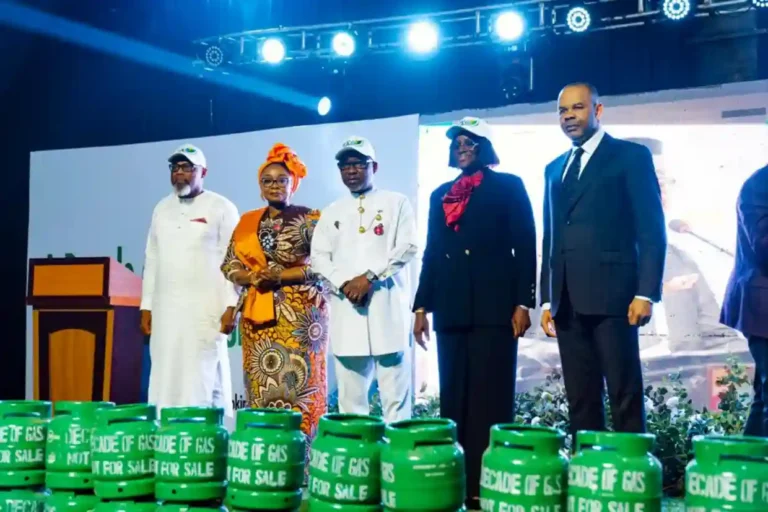
The Federal Government has announced a new push to expand the Decade of Gas programme by increasing Liquefied Petroleum Gas (LPG) penetration across all six geo-political zones. This move became more visible in the South-East as the government launched a cooking gas outreach targeting one million homes per year. The Minister of State, Petroleum Resources (Gas), Ekperikpe Ekpo, made the announcement in Owerri, the Imo State capital, during the Flag-Off of the LPG Penetration Programme and the distribution of LPG cylinders in the region.

Speaking at the event, the Minister said he was pleased to be in the South-East to officially begin the programme in partnership with the Imo State Government. He described the launch as another milestone in the Federal Government’s Decade of Gas Initiative led by President Bola Tinubu. Ekpo explained that clean cooking is more than an energy decision, stressing that it is a life-changing intervention for families across the country.

He noted that for many years, Nigerian households have depended on firewood, charcoal, and kerosene, which he described as fuel sources that harm health, damage the environment, and create extra burdens for women and children. With the shift to LPG, he said the Federal Government aims to eliminate exposure to dangerous smoke that leads to respiratory diseases, reduce the hours women and girls spend gathering firewood, and free up time for education and economic activities.

The Minister added that the transition supports forest conservation and biodiversity by reducing the need for firewood. He said it will also increase household savings by providing a more efficient and reliable cooking energy source while improving safety with modern, regulated fuel options. According to him, clean cooking improves health, protects the environment, and allows families to live with greater dignity and convenience.

Ekpo highlighted that the project aligns with the United Nations Clean Cooking Agenda and directly contributes to global Sustainable Development Goals, including SDG 7 on clean energy, SDG 5 on gender equality, and SDG 13 on climate action. He explained that over 17 million Nigerian households still rely on biomass for cooking, calling it one of the largest drivers of deforestation and greenhouse gas emissions. He said, “By transitioning these households to LPG, we significantly reduce carbon emissions while safeguarding our forests and the climate.”

The Minister noted that in recent months, the programme has been launched across several geopolitical zones, starting from the North-Central and extending to the South-South, South-West, North-East, North-West, before arriving in the South-East. He reminded the public that the Federal Government’s goal under the Decade of Gas is to transition 5,000,000 Nigerian homes to clean cooking gas by 2030.

Ekpo emphasised that strong partnerships have been key to the progress achieved so far. He recognised the Imo State Government for its enthusiasm and support, and also appreciated the Coordinator of the Decade of Gas Programme and private sector partners for their technical and logistical contributions. Addressing women and youth beneficiaries, he said, “The cylinders you receive today are tools of empowerment. Clean cooking creates opportunities across the value chain, from cylinder distribution and maintenance to retail supply and safety training.”

According to him, expanding LPG use will create jobs, boost local enterprise, and build a safer and more economically vibrant region. He added that the South-East, known for its strong entrepreneurial spirit, stands to benefit greatly from new opportunities in the gas sector.

The Minister encouraged the region to move forward with a shared commitment to health, safety, environmental protection, and national development. He assured the public that the Federal Government, through the Nigerian Midstream and Downstream Petroleum Regulatory Authority (NMDPRA), will continue to strengthen LPG safety awareness and expand distribution networks.

He stated that “together, we are building a Nigeria where no child grows up inhaling harmful smoke, where women cook with dignity and safety, where forests are preserved, and where gas truly becomes a catalyst for national prosperity.”

Lagos Distributes Tools, Grants to 2,000 Farmers Under NPFS

0

The Lagos State Government has distributed farm inputs, mechanised equipment, and cash grants to farmers across nine sites under the National Programme for Food Security. In a statement released by the Ministry of Agriculture on Wednesday, the distribution took place during the 2025 Farmers’ Field Day/ Appreciation held last Thursday with the theme Transitioning from Simple Tools to Mechanised Equipment.

The ministry explained that the Commissioner for Agriculture and Food Systems, Abisola Olusanya, who was represented by the Permanent Secretary, Emmanuel Aoudu, stressed that Lagos could no longer rely on manual farming methods if it must feed its population of over 20 million people. She said the government was committed to transforming the sector through mechanisation and increasing youth participation in agriculture.

Aoudu said, “This programme is about showing the shift from hand-held tools to mechanised equipment, which is the future of agricultural productivity in Lagos.” Farmers across the NPFS sites received mini-tractors, power tillers, solar-powered sprayers, fish-smoking kilns, poultry and fish feed, deep freezers for artisanal fish processors, and other essential tools meant to support their work.

Beneficiaries also received cash grants to purchase agrochemicals and important inputs. Olusanya noted that about 2,000 farmers would benefit from the intervention, adding that the initiative aligns with Governor Babajide Sanwo-Olu’s agenda to boost food production and improve livelihoods in farming communities. She encouraged farmers to make proper use of the items, stating that the distribution marked the start of continuous government support.

The Secretary to the Lagos State House Committee on Agriculture, Babatunde Olajide, who represented the chairman, said the committee was ready to give legislative backing to programmes that promote food security. He emphasised the importance of supporting efforts that strengthen the agricultural sector.

The National Coordinator of the NPFS, Suleman Salisu, praised Lagos for expanding its programme sites and implementing the scheme effectively. He said, “Honestly, what Lagos has done is marvellous.” The Head of Operations, Idris Sewu, added that Lagos continued to set the pace in agricultural development as the NPFS recorded strong results through its grassroots-based Agricultural Development Programmes.

The Coordinating Director of the Lagos State Agricultural Development Authority, Adironke Toju-Tubi, explained that the NPFS, which was launched in 2002 and adopted by Lagos in 2011, was designed to support poor farmers and improve food security. She said the programme had grown from three to 10 sites due to its success and advised beneficiaries to avoid selling the equipment cheaply.

She warned, “My advice is that they should use the equipment well. Some people dispose of government inputs for peanuts. This is meant to improve their lives.”

Lagos launches N150bn CNG truck scheme to replace ageing vehicles

0

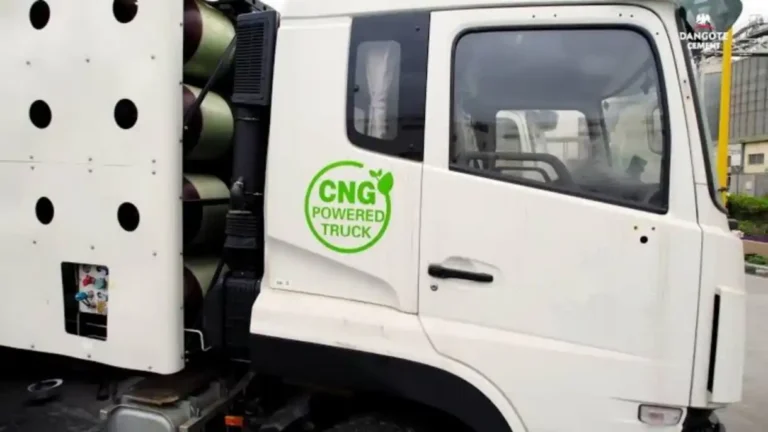
The Lagos State Government has introduced a N150bn Compressed Natural Gas Trucks Scheme aimed at supporting truck operators with structured financing to acquire brand-new CNG-powered trucks. The initiative, designed as a Public-Private Partnership, was officially launched on Wednesday during a stakeholders’ engagement with maritime and logistics practitioners.

Governor Babajide Sanwo-Olu, represented at the event by his Special Adviser on Transportation, Sola Giwa, said the scheme was created to address growing concerns about the condition of trucks operating across the state’s major logistics corridors. He explained that many of the vehicles currently in use have gone beyond their operational lifespan and now pose serious safety risks.

“One of the most pressing concerns raised over the years is the prevalence of ageing, poorly maintained, and sometimes unsafe trucks plying our major logistics corridors. Many of these trucks have exceeded their operational lifespan. Some have compromised braking systems, weakened frames, damaged tyres, and faulty lighting. They pose a danger to operators, other road users, and the goods being transported,” he said.

The state government has in recent months intensified its clampdown on rickety trucks and vehicles, noting that such ageing assets contribute significantly to road crashes across Lagos.

Speaking on the funding structure, the Regional Manager of United Bank for Africa, Ernest Omorege, explained that the N150bn investment was structured to be disbursed in three phases. He confirmed that the first tranche has already been released.

“We are working with the government and with you, stakeholders sitting here today. The N150bn financing will be released in three tranches. We already released the first tranche, the reason for which we celebrate here today. The second will also be released, and the same for the last tranche.”

Giwa noted that Lagos cannot achieve its goal of becoming a competitive logistics hub while relying on outdated heavy-duty vehicles. He stated that the government is committed to supporting operators through affordable and accessible funding. “We must move away from the era in which heavy-duty transportation is conducted with rickety assets. Our government has therefore initiated a programme that will support truck owners to acquire brand-new vehicles through affordable and well-structured credit facilities.”

He added that the state is collaborating with financial institutions and development partners to develop flexible loan products that will make fleet renewal achievable for truck owners at different levels.

The programme is expected to help operators modernise their fleets, reduce the frequency of highway breakdowns, improve turnaround time, and align their operations with international haulage standards.

Giwa also highlighted the importance of cooperation within the maritime and logistics ecosystem, stressing that progress relies on shared responsibility between government and industry stakeholders. He announced that Lagos will continue to expand digital systems for logistics management, especially around the Lekki corridor. “The sector does not thrive through government efforts alone. It thrives through collaboration between the public and private sectors, between regulators and operators, between unions and enforcement agencies, and ultimately between truck owners and the truckers who operate these vehicles daily.

“The electronic call-up system on the Lekki corridor will continue to evolve with improved transparency and accountability. The intention is to eliminate disorder, lower operational costs, reduce journey times, and build a predictable flow for goods,” he said.

Earlier at the event, the Commissioner for Transport, Oluwaseun Osiyemi, announced that the new programme will provide 2,000 CNG-powered trucks to operators across Lagos. He described the launch as a major milestone in repositioning the logistics sector for improved safety, sustainability, and environmental responsibility. “It gives me great pleasure to extend my goodwill and appreciation to all distinguished stakeholders, industry leaders, unions, regulatory agencies, and partners present at this maiden Stakeholders’ Engagement with Maritime and Logistics Practitioners,” he said.

Osiyemi noted that the initiative reflects a commitment to creating a cleaner and more efficient logistics ecosystem. He highlighted additional government efforts, including free eye screening for truck operators, sensitisation on substance abuse, and drug testing programmes, all aimed at reducing avoidable accidents. “Our intentional investment in free eye screening for truck operators, substance abuse sensitisation, and drug testing initiatives reflects the government’s firm stance on protecting lives, improving truck operator welfare, and reducing avoidable road accidents,” he said.

Announcing the rollout of the CNG-powered trucks, he added that the initiative strongly supports Lagos State’s wider sustainability agenda. “The facilitation of access to 2,000 CNG-powered trucks through our strategic partnership with the bank is a bold step toward a greener future. It underscores our dedication to sustainability, environmental responsibility, and modernizing freight movement across Lagos.”

SUSTAIN Launches Programme Linking Nigerians to Jobs in Europe

SUSTAIN has launched a new skilled labour mobility programme designed to connect young Nigerian professionals in Science, Technology, Engineering, and Mathematics fields with career opportunities in Europe. The programme is implemented by Seefar and co-funded by the European Union through ICMPD’s Migration Partnership Facility. According to a statement on Wednesday, the initiative aims to strengthen talent and knowledge exchange between Nigeria, Germany, and Ireland.

Under the project, up to 240 participants will be selected and matched with STEM jobs across Germany and Ireland. Those chosen will receive full preparatory training to help them transition smoothly into their new roles. The training package includes soft skills development, cultural orientation, and career guidance to support their integration. Registrations have opened, and eligible applicants can now apply through the SUSTAIN website.

SUSTAIN Manager in Abuja, Emeka Anene, highlighted the wider impact the programme is expected to have in Nigeria. He said, “SUSTAIN gives talented Nigerian STEM professionals a unique opportunity to gain valuable international experience in Europe, while ensuring their skills ultimately benefit Nigeria. Through this initiative, we are not only opening doors for young Nigerian STEM professionals but also driving long-term knowledge transfer and economic growth back home.”

Head of Global Initiatives and Deputy Head of ICMPD Brussels Mission, Mr Oleg Chirita, explained the importance of building meaningful cooperation between regions. He said, “ICMPD is committed to building partnerships that create opportunities for young professionals while addressing real labour market needs in Europe. Programmes like SUSTAIN show how global talent mobility can deliver mutual benefits for all – empowering individuals, strengthening economies, and deepening cooperation between regions.”

A Nigerian candidate shortlisted for the programme, Peter Iroagbalachi, described the opportunity as a major milestone in his STEM journey. He said, “Being shortlisted for SUSTAIN is an exciting opportunity to deepen my expertise in science, technology, and innovation. If selected, I will use the experience in Europe to promote technology-driven solutions for inclusive growth in Nigeria and Africa, and inspire other young professionals to pursue global opportunities.”

SUSTAIN is being launched in response to Europe’s rising demand for STEM experts. Nearly half of European businesses struggle to recruit workers with the skills they need, and the European Commission estimates that the EU requires an additional two million science and engineering professionals.

By linking Nigerian talent with European labour needs, the programme creates what organisers describe as a triple-win partnership. Europe gains access to skilled workers, Nigeria benefits from knowledge transfer, remittances, and stronger economic links, while participants gain global exposure that can support their careers when they return home.

SUSTAIN is implemented by Seefar, a social enterprise that has worked on migration and reintegration efforts in Nigeria for more than 10 years for partners including the European Union, United Kingdom, Netherlands, and Germany. The programme aims to support sustainable economic growth and promote mutually beneficial talent partnerships between the EU and Nigeria.

IMS programme expands across three states, reaches over 13800 students

0

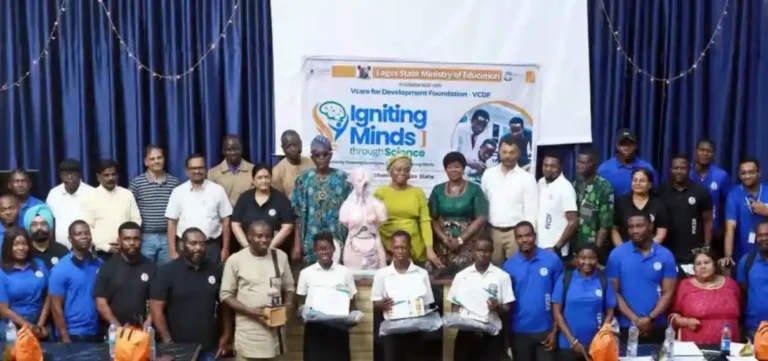
Vcare for Development Foundation (VCDF), in partnership with the Lagos State Ministry of Basic and Secondary Education, launched the Igniting Minds through Science (IMS) programme on November 27, 2023. Three years after the launch, the programme has expanded to Lagos, Akwa Ibom and Delta, with a targeted reach of 13,836 students across 334 senior secondary schools in Lagos State, 51 schools in seven LGAs in Akwa Ibom State and 49 schools in two LGAs in Delta State.

The programme is supported by Sterling Oil Exploration and Energy Production Co. Ltd. (SEEPCO) and focuses on helping students design solutions to issues affecting their communities. The 2025 edition began with orientation sessions for principals and teachers to prepare them to guide students in developing projects under the theme “Future Frontiers: STEM Innovations for Nation Building.” Submitted proposals were reviewed by experts, including government representatives.

In Akwa Ibom State, VCDF orientated science teachers and principals from 47 schools, reached 2,900 students and funded 37 projects for the qualifier round. Ten schools competed in the finale on November 22, 2025.

Afang Inang Secondary School won first place, Excellence College took second and Eket Modern High School came third. A student participant, Ekemini-Abasi Idorenyin, said, “What I learnt is that younger children can invent things. Previously, I thought we needed to graduate and grow up.”

In Delta State, the foundation trained science teachers and principals from 34 schools, reached 300 students and supported 11 schools that competed on November 28, 2025. Utagba-Ogbe Technical College won first place, followed by Abbi Girls’ Comprehensive Secondary School and Girls’ Secondary School, Utagba-Ogbe. Speaking during the event, Hope Gumbor, who represented the Commissioner for Education, stated, “Since becoming a director in 2022, I have not seen anything like this in the state. It aligns with the Delta State government’s MORE agenda.”

Teachers across the states noted that students were pushed to step outside their comfort zones. They said the programme created a space for developing teamwork, communication and problem-solving skills, not just science knowledge.

In Lagos State, VCDF invited 334 schools to participate, and 244 schools completed the orientation session. A total of 4622 science students were reached. Out of 122 project proposals, 86 were funded, and 83 schools presented their work during the qualifiers.

Twelve finalists advanced to the final stage on December 6, 2025, at the Lagos Education Resource Centre, Ojodu. Government Technical College, Agidingbi won first place with the AquaRenew project, Kosofe Senior College, Ketu came second with the Smart Energy Control project, and Gaskiya Senior College placed third with its Motorised Wheelchair project.

Grace Akinfoyewa, Director of Lagos State Science and Technology, said, “The exhibition strongly supports the state’s STEM goals and encourages students to collaborate effectively.”

SEEPCO stated that it remains committed to supporting education and other CSR efforts. VCDF said the continued partnership will help strengthen STEM education across Nigeria and open more opportunities for young innovators.