
Home Blog Page 244

Thinkation to Train 1500 Akwa Ibom Youths in 2026

0

An organisation focused on youth empowerment and skill development across Africa has announced plans to train 1500 young people in Akwa Ibom State in 2026 through the “Thinkation” programme. The event is scheduled to hold in Uyo, the state capital, on 31 January 2026.

Speaking at a press conference in Uyo, the co-founder of the “Thinkation” philosophy, Mrs Unyime Ivy Ubong King, said the upcoming edition, tagged “home-coming,” was designed to encourage young people to think outside the box and reinvent their future. She explained that the name “Thinkation” reflects the idea of getting youths to rethink how they approach life while building skills that can help them grow.

She said the “Home Coming” marks the ninth edition of “Thinkation,” an annual capacity-building and motivational conference pioneered by her late husband, Ubong King. According to her, the programme has, since its launch in 2018, aimed at reshaping the mindset of young people by merging critical thinking with practical education. She described it as a global platform created to stimulate creative and critical thinking among youths while equipping them with skills needed to address emerging societal challenges.

Mrs King noted that this is the first time the programme will be hosted in her home state, adding that it is expected to motivate many young people across Akwa Ibom. She said the event will “trigger young people’s creative abilities for a radical paradigm shift that will advance educational and human capacity development within their communities.”

She explained that “Thinkation” was built on the vision of her late husband, who wanted to instill leadership values from the family unit to the wider African society and contribute to poverty eradication across the continent. She added that past editions have recorded significant impact, especially in mindset transformation and entrepreneurial growth among participants worldwide.

She revealed that next year’s edition will feature a young Ghanaian entrepreneur who first encountered Ubong King on social media and later received mentorship through the Thinkation platform, eventually building a successful business in Ghana. “Beyond him, we are bringing in seasoned professionals with proven track records who will share how they built their businesses from scratch,” she said. “We believe every young person is creative; our work is to mentor, ignite that creativity, and guide them toward a successful future.”

Reflecting on her husband’s legacy, she described him as a man lifted “from the dunghill of life” and empowered by God to inspire others. She expressed confidence that the foundation will continue to promote his mission of awakening leadership and entrepreneurial skills in youths.

The Head of Strategic Communication for “Thinkation,” Mr Ekerete Ikpe, announced that the 2026 event will take place at Flairmore Event Centre, Edet Akpan Avenue, Uyo, starting at 9 a.m. He said it will feature a mix of conference sessions and entertainment, including music, spoken word, comedy, and cultural displays. He added that the Uyo edition will equip young Nigerians with practical skills, entrepreneurial insights, and a mindset geared toward building a more innovative and prosperous future.
Advertisement

Ngeil Foundation Trains 200 Bauchi Women in Cosmetology Skills

0

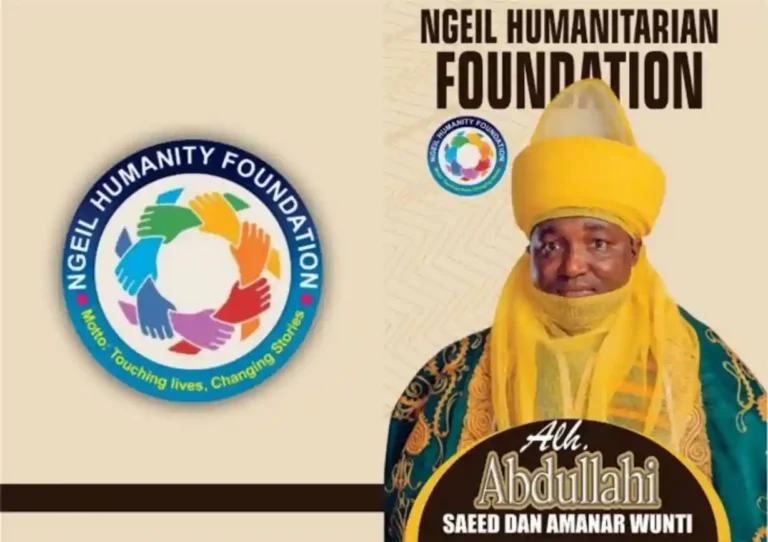
The Ngeil Humanity Foundation has empowered 200 women in Toro Local Government Area, Bauchi State, with new cosmetology skills under its Batch B empowerment programme, targeted at improving livelihoods and reducing poverty at the grassroots. Speaking during the event, the founder of the Foundation, Engineer Abdullahi Sa’idu Gumau, reaffirmed the organisation’s commitment to community development through continuous empowerment efforts for elders and youths in the area. He said the initiative is part of his ongoing commitment to support women, promote self-reliance and boost economic growth in local communities.

He explained that the Batch B training was introduced to expand the number of beneficiaries after the success of the first batch. Engineer Abdullahi Sa’idu Gumau added that the Foundation will keep widening its reach to ensure more women acquire sustainable skills that can help them build stable incomes.

He encouraged the beneficiaries to use the funds and starter packs given to them responsibly to achieve self-reliance. Some of the women expressed appreciation to the Foundation for the opportunity, describing the training as timely and impactful. They said the skills gained would help them start small businesses and support their families financially.

They also pledged to support him in achieving his future political ambition. The beneficiaries, drawn from different communities across the LGA, received practical cosmetology training in soap making, body cream production, perfume formulation, disinfectant production and other income-generating activities.

Lawmaker Awards N300m Scholarships to 300 Kwara Central Students

Senator Saliu Mustapha, who represents Kwara Central Senatorial District, has awarded a N300 million scholarship to 300 indigent but academically outstanding students from the district. The announcement was made in Ilorin, the Kwara State capital, where the Senator explained that the initiative is an improvement on last year’s programme, during which he facilitated N200 million worth of scholarships for students in the area. He said the goal is to reduce illiteracy and strengthen the capacity of young people in Western Education.

Mustapha noted that investing in human development will remain one of his major legacies as a lawmaker, adding that an educated society is less likely to experience banditry and other forms of social menace affecting national peace. He said, “this initiative by me and to my knowledge is the first of its kind in the state. Some of my aims is to use it to break the financial barrier bedeviling our society and to promote smooth access to quality higher education among brilliant but less privileged children in my District and beyond.”

Speaking further, he explained that the annual programme has grown beyond the pilot phase. “The annual scholarship programme we launched last year with 200 beneficiaries, has now expanded its reach, under my unrelenting commitment to human capital development and youth empowerment,” he said.

The Chairman of the Scholarship Committee, Prof. Binta Sulyman, confirmed that tuition fees for all selected students would be paid immediately in line with the guidelines of their respective higher institutions. She stressed that the selection was strictly merit-based, stating that every beneficiary scored 250 and above in the JAMB UTME. She also highlighted that the scholars were drawn from the four LGAs of Kwara Central: Ilorin-West, Ilorin-East, Ilorin-South and Asa.

Prof. Sulyman said the scholarship will cover tuition fees from the first year to the final year of each student, but only for tertiary institutions located in Kwara State. She stated, “The goal is to create equal opportunities. These students have shown academic excellence, and we are determined to ensure that dearth of finances do not hinder their dreams.” She encouraged the beneficiaries to stay focused and justify the investment placed on their future.

The Secretary of the Committee, Comrade Yakub Ishowo, revealed that the beneficiaries are currently enrolled in institutions such as the University of Ilorin, Kwara State University in Malete, Kwara State University of Education in Ilorin, and the University of Offa. He added that a monitoring system has been set up to track the academic performance of each student throughout their studies.

Parents who attended the event praised Senator Mustapha for what they described as a life-changing intervention, saying it would significantly reduce their financial burden in the face of the global economic recession. Speaking on behalf of the parents, Sheikh Usman AbdulRahman Yasin said many families would not have been able to afford university tuition without this support. He said, “We pray for divine guidance and blessings upon Senator Mustapha for remembering the less privileged. This scholarship has brought relief to our homes.” He also applauded the merit-based process, noting that it encouraged hard work and renewed hope in the community.

Representing the beneficiaries, Amirah Suleiman and AbdulAzeem Muhammed expressed their gratitude to the Senator, promising to make the most of the opportunity and not disappoint their families or the district. They said the scholarship would greatly shape their future.

WFP Needs $116m as 6 Million Northern Nigerians Face Hunger in 2026

The World Food Programme says it needs US$116 million up to May 2026 to reach 900,000 people with life-saving food and nutrition assistance in northern Nigeria, where hunger levels are rising at an alarming rate. Recent projections show that 6 million people in the region are expected to experience acute or worse food insecurity in 2026. WFP warns that despite the worsening situation, it can currently support only 900,000 people in northeastern Nigeria, and that number may drop to half by the end of December if new funding does not arrive.

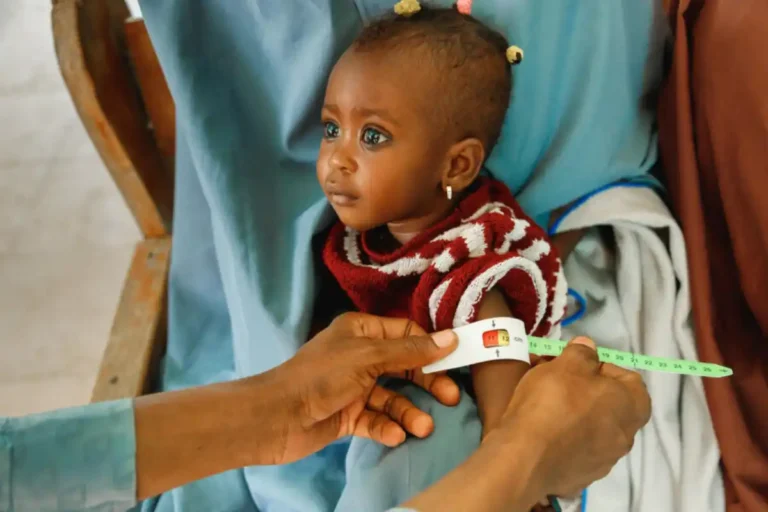
In the northeastern town of Dikwa, the reality of this crisis is visible outside a health centre where women and children sit on wooden benches, waiting for treatment. A health worker wraps a MUAC nutrition band around the arm of one-year-old Zara, and the indicator moves straight into the red zone. The little girl is severely malnourished. Her mother, Maryam, 20, explains the struggle her family faces each day. “Even when we get food, it is always the same thing,” she says, describing their diet of maize and sorghum. “That is why there is no improvement to her health.”

Zara receives a nutrient-rich food supplement at the WFP-supported clinic, designed to give her the vitamins and energy she needs to survive. But this support could soon end, even as hunger continues to escalate. According to the latest Cadre Harmonise assessment, nearly 35 million people across Nigeria may face severe food insecurity during next year’s June to August lean season. This is the highest figure ever recorded for Nigeria and the highest in Africa.

A rise in violence, especially in north-central parts of the country, is a major driver of this surge. But reduced funding also means humanitarian organisations may not be able to provide the essential aid people depend on. In Borno State alone, where conflict and kidnappings remain widespread, 15,000 people could face catastrophic food insecurity next year, representing the most severe level on the global food insecurity scale.

“Communities are under severe pressure from repeated attacks and economic stress,” says David Stevenson, WFP Country Director in Nigeria. He warns that if support declines, the consequences could spread beyond hunger. “If we can’t keep families fed and food insecurity at bay, growing desperation could fuel increased instability with insurgent groups exploiting hunger to expand their influence.”

Families already feel that desperation. Maryam, her husband and their two children live in a displacement camp, sharing a small shelter made of straw, sticks and tarp. She sews clothes to help feed her family, and they try to farm on borrowed land. But it is dangerous. If insurgents attack, they lose everything. “We live in fear,” she says.

In July, WFP was forced to scale down nutrition support due to limited funding, shutting down dozens of clinics in the northeast and putting the health of 300,000 children like Zara at risk. “Hunger is now reaching levels we have not seen in years,” says Emmanuel Bigenimana, WFP area office head. He describes a dangerous cycle where rising hunger increases vulnerability, and armed groups exploit that vulnerability. “Armed groups can use that desperation to tighten their grip, putting the wider region at even greater risk.”

In another clinic near Maiduguri, WFP support is helping two-year-old Modu Modu recover from malnutrition. His mother, Bintu, says they were displaced after bandits attacked their village of Isanari. “I was very scared that my child might die, but now I am relieved he is getting care,” she says. She remembers when her family used to grow corn, sorghum and millet before violence forced them to flee. “We had nothing. We had to start all over again,” she says. With limited means, “we just eat small amounts.”

Others share similar stories of trauma. In Dikwa, 30-year-old Hadiza recalls being kidnapped and held in a forest camp for eight years before she was freed. Now living in a displacement camp with her family, she survives by selling fried yams, potatoes and soybean cakes, along with the food assistance she receives from WFP. “Honestly, we would like to see peace to return to our lives, with everyone returning to their farms,” she says. “Just like before.”

Fatima, 20, shares a similar hope. Her family once farmed enough food to avoid hunger, but they were also uprooted by unrest and now live in the Dikwa camp. They rely entirely on WFP electronic cash transfers, worth about US$31 per person each month. She uses the money to buy maize, rice, vegetable oil and spaghetti. At the start of each month, her family eats three times a day, but by the end, meals become fewer as supplies run out. “We’re living on food assistance alone,” Fatima says. “It is everything to us.”

WFP says its life-saving activities in Nigeria rely on support from several partners, including the African Development Bank Group, Canada, the European Commission, France, Germany, private donors, the Republic of Korea, Saudi Arabia, Sweden, UNCERF, the United Kingdom and the United States. But with hunger rising and needs expanding faster than resources, the agency says it urgently requires US$116 million to continue reaching vulnerable people up to May 2026.

Abiru launches N480m cooperatives, empowers 14000 in Lagos East

0

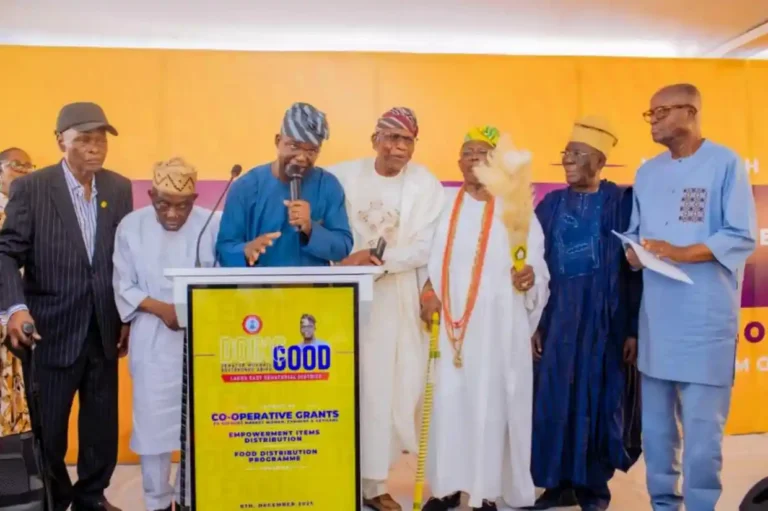
Senator Mukhail Adetokunbo Abiru, FCA, representing Lagos East Senatorial District, has launched 48 cooperative societies with N480 million in take-off grants, while distributing empowerment kits to 2,000 constituents and food packs to more than 12,000 households across 98 wards in the 16 LGAs and LCDAs of the district. The event was described as one of the largest constituency empowerment programs in the history of Lagos East, reflecting a model of governance rooted in inclusion, compassion, and measurable impact. It showcased efforts aimed at sustainable economic support, social intervention, and leadership that places people at the center.

Speaking to traditional rulers, political leaders, women’s groups, youth organisations, artisans, and party faithful, the Senator, who chairs the Senate Committee on Banking, Insurance, and Other Financial Institutions, said the initiative was part of his ongoing commitment to achieve real change for as many constituents as possible. “Your presence today underscores our shared belief that governance must be responsive, compassionate, and focused on the real needs and aspirations of the people,” he stated. He explained that since his election to the National Assembly, his leadership style has remained focused on converting public office into benefits for ordinary citizens.

The Senator noted that the cooperative initiative was structured to provide flexible and accessible capital to women, farmers, artisans, and traders, enabling wealth creation and economic empowerment. He added that “True empowerment goes beyond handouts. It is about equipping people to unlock their potential, generate wealth, and contribute meaningfully to national development.” The announcement detailed that each of the 48 cooperatives, covering market associations, youth groups, farmer unions, and artisan bodies, received N10 million, totalling N480 million.

Senator Abiru emphasized that cooperatives are vital tools for financial inclusion because they enable members to pool resources, access financing, and expand their ventures in safe and sustainable ways. Beyond the grants, 2,000 constituents received empowerment tools such as freezers, generators, grinding machines, industrial sewing machines, and hair dryers. According to him, “This distribution is intended to provide our youth, women, farmers, artisans, and traders with the tools needed for self-reliance, productivity, and sustainable livelihoods.”

As part of his seasonal intervention programme, food packs were also delivered to 12,000 households. He noted that this support initiative had been sustained for three years to assist the elderly, unemployed youth, women, and persons with disabilities, especially during festive periods. Senator Abiru also reviewed his wider achievements under the pillars of legislation, empowerment, and endowment, listing bills that promote financial stability, governance reforms, and economic inclusion, alongside investments in education, healthcare, road infrastructure, and digital technology training through the SAIL Innovation Lab.

He remarked that the initiatives align with the Renewed Hope Agenda of President Bola Ahmed Tinubu, stressing that federal policies encouraging inclusion and innovation have helped support his district interventions. Reaffirming his commitment to representation, Abiru advised beneficiaries to make responsible use of the grants and tools, adding that growth will only be sustained through accountability, discipline, and strong community partnerships.

The Ayangbure of Ikorodu, HRM Oba Kabir Adewale Shotobi, praised the initiative as exceptional, saying he was proud of the Senator’s achievements. Lagos State APC Chairman, Pastor Cornelius Ojelabi, also commended Abiru for programmes that advance both governance and party ideals. Former Deputy Governor of Lagos State, Prince Abiodun Ogunleye, applauded the Senator’s progressive leadership and encouraged other public officials to adopt his approach to representation.

Market leader Deaconess Busola Isikalu expressed appreciation for the economic opportunities created for traders, artisans and youth, promising that the grants and tools would be used responsibly to improve livelihoods. Dignitaries at the event included Governance Advisory Council members Asiwaju Reuben Olorunfunmi Basorun, Alhaji Shakiri Seriki, and Senator Adeseye Ogunlewe. Traditional rulers present included HRM Oba Barrister Semiudeen Orimadegun Kasali, the Adeboruwa of Igbogbo Kingdom, and HRM Oba Richard Ogunsanya, the Olubeshe of Ibeshe Kingdom. Others were local government chairmen led by Hon. Sesan Abdullahi Olowa alongside political, religious, and community leaders.

The ceremony, filled with celebration and optimism, highlighted an emerging era of inclusive governance and grassroots development in Lagos East as Senator Abiru reiterated his pledge to continue policies designed to uplift constituents and expand opportunities across the district.

Heineken Foundation Invests N4bn to Train 14,000 Bauchi Farmers

0

The Heineken Africa Foundation, in partnership with Nigerian Breweries Plc, has announced a N4bn commitment to train 14,000 smallholder farmers in Bauchi State over the next three years. The project, unveiled on Thursday in Bauchi, is titled “Empowerment of Smallholder Farmers to Thrive and Build Climate Resilience through Regenerative Agriculture.”

The Head of Public, External and Government Affairs at Nigerian Breweries Plc, Chukwuemeka Aniukwu, said the programme was developed in collaboration with the Foundation for Sustainable Smallholder Solutions. He explained that it builds on the Foundation’s long-standing investment in healthcare, water, sanitation, and hygiene across Africa.

“Our decision to invest in Bauchi is both deliberate and strategic. Bauchi is home to resilient, resourceful, and industrious smallholder farmers whose contributions are essential to Nigeria’s food security,” he said.

Aniukwu stated that the initiative will strengthen farmer livelihoods, especially women and young people, by improving their capacity to earn sustainable income. He noted that support will include access to training, quality inputs, better market linkages, and opportunities across the agricultural value chain.

The Executive Director of the Foundation for Sustainable Smallholder Solutions, Dr Isaiah Gabriel, said the farmers would be trained through Farmer Field Schools and demonstration plots. He added that out of the 14,000 beneficiaries, 60 per cent are women and 40 per cent are youth.

Gabriel explained that the training would focus on regenerative and climate-smart agriculture, soil and water conservation, pest and disease management, crop diversification, and post-harvest handling. “The project supports the restoration and protection of natural resources by promoting regenerative farming that rebuilds soil fertility, efficient water management, and adoption of drought-tolerant crop varieties,” he said.

He noted that the programme aims to raise farmers’ income by at least 30 per cent and will cover seven LGAs including Katagum, Shira, Jama’are, Giade, Itas-Gadau, Zaki, and Gamawa. Gabriel commended the Bauchi State Government for what he described as strong support and an enabling environment for the project.

In his remarks, the Bauchi State Commissioner for Agriculture, Iliyasu Gital, praised the foundation for choosing Bauchi for the intervention and pledged full government backing.

Some beneficiaries expressed their appreciation, saying the programme will transform farming practices and strengthen food security. A beneficiary from Kano State, Maimunatu Sani, said she learnt how to recycle farm residues to produce organic fertiliser and encouraged farmers in Bauchi to embrace the training. Another Kano-based farmer, Mama Mairam, said the introduction of new farming techniques had reduced wastage and increased yields per hectare.

Sanwo-Olu unveils TY Logistics Park, pushes Lagos as top investment hub

0

The Governor of Lagos State, Mr Babajide Sanwo-Olu, has encouraged investors to take advantage of the state’s improving business environment, noting that Lagos currently leads the national ease of doing business rankings. He said Lagos has been ranked Nigeria’s number one investment destination in the latest Subnational Ease of Doing Business report with 85.6 per cent by the Presidential Enabling Business Environment Council, showing that the State is the best place to invest in the country.

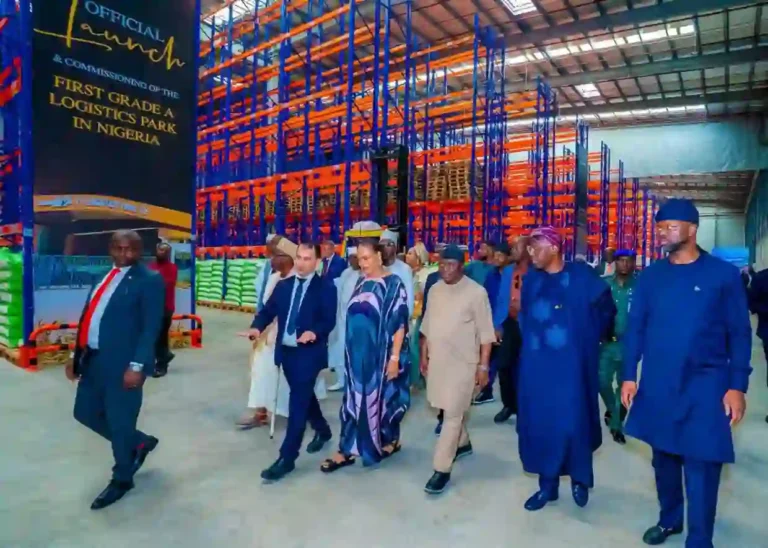
Governor Sanwo-Olu spoke on Monday at the official unveiling of the new TY Logistics Park, FZE, a state-of-the-art trade and warehousing complex in Alaro City, Lagos. The commissioning marks a major milestone for Nigeria’s logistics and supply chain infrastructure.

The facility, commissioned by Governor Sanwo-Olu alongside Governor Agbu Kefas of Taraba State, is a 29,000 square metre purpose-built logistics hub equipped with advanced warehouse management systems designed to improve the movement of goods across Nigeria and the West African region.

Speaking at the event, Governor Sanwo-Olu applauded TY Holdings for its corporate responsibility and investment confidence in Lagos. He described the project as a development that would permanently sit in the economic story of Lagos and Nigeria. According to him, the project reflects the transformation of Alaro City into one of Sub-Saharan Africa’s preferred industrial destinations and aligns with Lagos’ focus to modernise logistics, attract foreign investment and accelerate economic growth.

The Governor also highlighted ongoing infrastructure projects supporting trade within the Lekki industrial corridor. He mentioned plans for a road linking Lekki Port, Dangote Refinery and Alaro City to ease pressure on the Lekki Expressway. He added that Lagos is building the largest food logistics hub in West Africa and expanding critical infrastructure to support businesses in the area.

Speaking earlier, Taraba State Governor Agbu Kefas commended the initiative and expressed pride in his state’s participation. He described the project as a deliberate effort to advance development and economic progress in Nigeria. He said the project strengthens ties between Taraba and Lagos, especially through ongoing partnerships to move agricultural produce from Taraba to Lagos markets and processing hubs.

In his address, Chairman of TY Logistics Park, Theophilus Danjuma Jr, said the vision for the project began four years ago when his father, Lt General Theophilus Danjuma (retired), approved investment into the land. He explained that the goal was to build a modern logistics solution that meets international trade standards and supports commerce across Nigeria and West Africa.

He noted that the facility will provide contract logistics, digital warehouse operations and end-to-end supply chain services for electronics, auto parts, pharmaceuticals, fashion and other sectors.

FG launches My Nigeria My Responsibility citizenship campaign

0

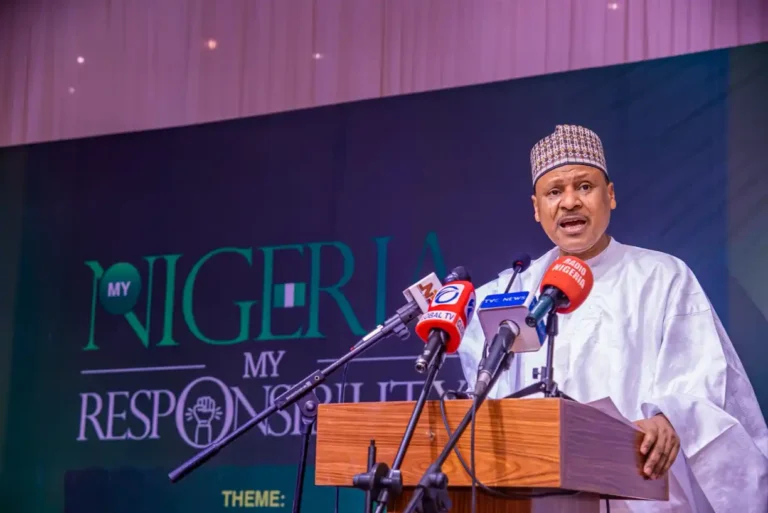
The Federal Government has launched a nationwide citizenship movement aimed at turning patriotism into practical actions that support nation-building. The initiative, called My Nigeria, My Responsibility, was officially introduced at the State House in Abuja by the Minister of Information and National Orientation, Mohammed Idris, FNIPR, who represented President Bola Ahmed Tinubu, GCFR.

The Presidency, through the Office of the Special Assistant to the President on Citizenship and Leadership, is driving the campaign to revive responsible citizenship and remind Nigerians that everyone has a direct role in influencing the country’s prosperity, global image, and democratic future. Speaking for the President, the Minister described patriotism as “an active verb”, stating that it involves values, honesty in public discussions, tax responsibility, and a commitment to national development.

“True patriotism is the daily choice to be responsible for our nation’s story, its progress, and its image,” he said. He added that “Nigeria’s destiny does not rest in the hands of a few, but in the actions of 200 million citizens.”

The Minister noted President Tinubu’s long defence of democracy, saying his political journey reflects the responsible citizenship the campaign seeks to promote. He linked the administration’s major reforms, including fuel subsidy removal, foreign exchange changes, tax justice efforts, and digital revenue systems, to the idea of citizen responsibility and shared growth.

“The pain is real, but it is the pain of healing, not decay,” he stated while explaining that reforms have more than doubled monthly FAAC allocations to states and local governments. According to him, these funds now give governments more capacity to address education, healthcare, infrastructure, and security needs.

He emphasized tax payment as part of civic duty and national progress. “Patriotism is in the taxes you pay. When you pay your fair share, you are directly investing in the school your child attends, the road your business uses, and the security that guards your home,” he explained.

Idris also announced that the Ministry will launch the National Media and Information Literacy Institute in February 2026. The institution is expected to equip citizens with critical skills to verify information, resist misinformation, and behave responsibly online. “We must not weaponize falsehood. In this digital age, truthful communication is a patriotic duty,” he warned.

He encouraged Nigerians to uphold the principles outlined in the newly adopted Citizens’ Charter of National Values, which promotes integrity, patriotism, diligence, tolerance, and excellence. The Minister urged all citizens to accept the campaign as a national commitment to building a responsible society.

“The President is providing the canvas of stability and vision; the rest of us must pick up the brush. Let us paint together the masterpiece of a new Nigeria, through our values, our taxes, our stories, and our actions. My Nigeria, My Responsibility,” he concluded.

FG Moves to Modernise NYSC with Digital Reform Plan

0

The federal government says the National Youth Service Corps must be transformed into a modern, digitally driven and fiscally sustainable institution capable of meeting Nigeria’s manpower needs today and in the future. Hadiza Usman, special adviser to the president on policy and coordination Andrew head of the central results delivery coordination unit, made this known on Monday in Abuja at the NYSC Reform Stakeholders’ Consultative Engagement Forum. The forum was organised by the Office of the Special Adviser to the President on Policy and Coordination to validate recommendations made by the NYSC reform committee.

Ms Usman said the NYSC had, for more than 50 years, stood as a symbol of unity and civic responsibility, but she warned that the scheme could not continue to operate under structures designed for the 1990s. “For over five decades, the NYSC has symbolised unity, civic responsibility and national integration. Yet, as with all human institutions, relevance requires reinvention,” she said. She stated that the current structure was outdated, overstretched and misaligned with national priorities. “These realities have made clear that the current structure – centralised, analogue, financially overstretched, and misaligned with national manpower needs – cannot carry the scheme into the future,” she said.

According to her, diagnostic reviews conducted by the committee revealed legal, operational, digital and fiscal gaps that required urgent action. Ms Usman explained that the findings showed centralisation slowed service delivery, the funding model was too dependent on the federal government, and skill programmes did not align with labour-market needs. In response, she said the committee proposed broad reforms, including amending the NYSC Act to provide for digital service, gender-responsive deployment, co-funding by states and local governments and clear employer obligations.

Other proposals include a three-tier governance structure for improved accountability, a unified digital command and service platform, zonal innovation hubs under a redesigned skill development system, and the creation of a N2 billion NYSC Innovation Fund. Ms Usman said, “The reform proposal envisions a phased implementation between 2026 and 2028, beginning with legislative amendments and digital pilots in 2026, and culminating in a nationwide sector-aligned deployment model by 2028.” She noted that the success of the reforms depended on broad stakeholder ownership.

Earlier, the minister of youth, Ayodele Olawande, said the reforms were necessary to ensure corps members were better prepared for employment and self-reliance. He explained that the NYSC must produce graduates capable of contributing meaningfully to the economy. “Let us make NYSC productive so that after one year, corps members will not just come out looking for government jobs but can become employers of labour,” he said. Mr Olawande added that with corps member numbers expected to rise from 400,000 to 600,000 annually, Nigeria must ensure the scheme remained relevant and aligned with current realities.

The director-general of the NYSC, Brig. Gen. Olakinle Nafiu, said the scheme had undergone several internal and external reforms over the years and must continue to evolve. He explained that the NYSC grew significantly since its creation, noting that “as a matter of fact, in 1973, the first set of corps members mobilised were 2,364. Today, we mobilise 400,000 annually, and we expect 650,000 locally trained graduates to present for service next year.” He added that the NYSC remained a model in Africa and must keep improving to maintain that position.

The director-general of the National Information Technology Development Agency, Kashifu Inuwa, said the reforms must enable Nigeria to harness its human capital for national growth and global competitiveness. He stressed that the country’s rapidly expanding population presented both an opportunity and a challenge. “In Nigeria, we can conveniently train our youth and help them to reach the global talent gap. Imagine we have two million Nigerians working remotely; this can earn the country nothing less than 100 billion dollars annually. We can achieve a one trillion-dollar economy if we harness our human capital,” he said.

A youth participant, Fatima Lamisula, representing Borno North at the Nigerian Youth Parliament, said the reforms were timely and aligned with the needs of young graduates facing a changing labour market. “These policies are outdated and youth have to bring in their ideas and innovations. Life after NYSC is something we have to think of even before finishing the programme, so the reforms should align with the future of corps members,” she said.

Recommendations from the forum will be forwarded to the federal executive council and subsequently to the National Assembly for legislative action.

World Bank Pledges Partnership on Energy, Jobs, Empowerment for Nigeria

0

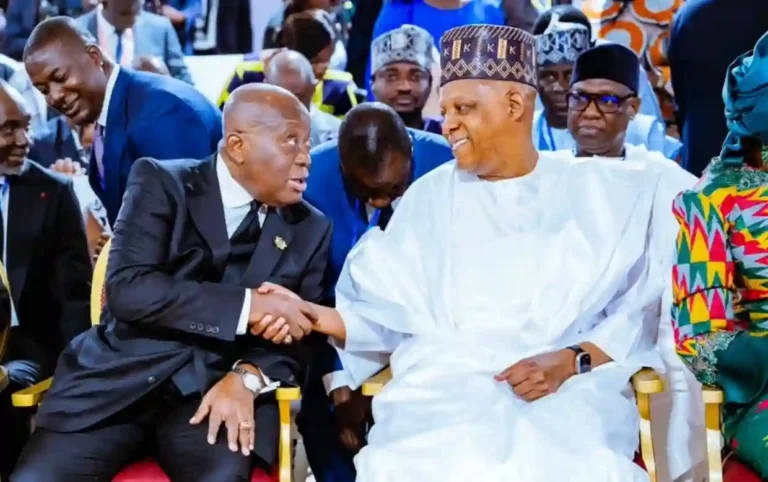
The World Bank has applauded the reform policies of the administration of President Bola Ahmed Tinubu, pledging to heighten its partnership with Nigeria on energy, job creation and gender empowerment initiatives. The institution made this commitment as Nigeria’s Vice President, Kashim Shettima, attended the inauguration and swearing-in ceremony of President Alassane Ouattara in Côte d’Ivoire, where he reaffirmed Nigeria’s continued commitment to regional peace and stability.

Vice President Shettima represented President Tinubu at the event held on Monday in Abidjan. The inauguration attracted West African leaders and other international dignitaries who gathered at the Presidential Palace, where President Ouattara took his oath of office for another term. The Ivorian President pledged to prioritise national reconciliation and economic stability as he begins his new mandate.

Speaking on behalf of Nigeria, the Vice President conveyed President Tinubu’s congratulations to President Ouattara and expressed confidence in his continued leadership. Shettima wished him success in his new term and emphasised that Nigeria values its long-standing relationship with Côte d’Ivoire. He stated that both nations will continue working together to advance peace, security and prosperity across the West African region.

Shettima noted that the two countries have opportunities to strengthen economic ties, especially through agriculture and trade relations. He said the administration of President Tinubu remains committed to deepening cooperation with Côte d’Ivoire.

In his inaugural speech, President Ouattara thanked visiting leaders who attended the ceremony in solidarity with Côte d’Ivoire. He promised to continue promoting the welfare of citizens while boosting diplomatic engagements for shared benefits among regional partners.

Among the dignitaries present at the event were leaders of South Africa, Liberia, Senegal, Gambia, Angola, Ghana and former Nigerian President, Dr. Goodluck Jonathan. The United States sent a presidential delegation led by Under Secretary of State for Economic Affairs, Jacob Helberg, while high-level representatives from ECOWAS and other nations were in attendance.

Meanwhile, Nigeria received commendation from the World Bank during a meeting between Vice President Shettima and the Managing Director of Operations at the World Bank Group, Ms. Anna Bjerde, held in Abidjan on the sidelines of the inauguration ceremony. The global institution applauded the reform efforts of the Tinubu administration and noted its intention to strengthen support in critical sectors.

The Vice President explained to Ms Bjerde that the administration, from inception, had to deal with the negative impact of the oil subsidy regime on economic growth. He highlighted positive results from ongoing reforms, saying the bold decisions taken were necessary for long-term development. He remarked that the ongoing tax reforms have been fruitful, declaring “we have crossed the Rubicon.”

Shettima acknowledged that some reforms were painful at the initial stage but insisted that they have started yielding dividends. He said the government aims to convert Nigeria’s demographic growth into economic strength by promoting gender empowerment, boosting digital economy participation and supporting agricultural productivity.

The Vice President commended the World Bank for its support to Nigeria and called for continued collaboration in key sectors that will drive economic advancement and social improvement.

On her part, Ms Bjerde praised Nigeria’s pragmatic initiatives and stated the World Bank’s readiness to increase cooperation, especially in the energy sector. According to her, “First, on energy, we’re stepping up on a number of possibilities to ensure that about four million people are connected.”

She also revealed that the World Bank will place more focus on girl-child education and empowerment in Nigeria. The meeting further affirmed the global lender’s commitment to strengthening its partnership with the country, particularly in projects targeted at improving livelihoods, supporting women and expanding access to reliable power.