Home Blog Page 245

CBN Licenses 82 BDCs, Warns Against Unauthorised Forex Dealers

0

The Central Bank of Nigeria has confirmed that 82 Bureaux De Change have been fully licensed under its revised guidelines, with the approval taking effect from November 27, 2025. The bank said on Monday that the move was carried out under the Bank and Other Financial Institutions Act 2020 and its 2024 guidelines for BDC operations. According to the notice, only the BDCs published on the CBN website are authorised to operate from the stated date.

The CBN also announced that it will continue to update the list of licensed operators online for public verification. It warned Nigerians to avoid engaging unlicensed foreign exchange dealers, stressing that running a BDC business without approval is an offence under Section 57(1) of the BOFIA Act 2020.

“Members of the public are hereby advised to note and be guided accordingly,” the statement signed by Acting Director of Corporate Communications, Hakama Sidi Ali, said.

This update follows increased enforcement against unlicensed operators in 2025. In February, a Lagos court sentenced a BDC operator to six months in prison for carrying out forex transactions without a valid licence. Authorities also intensified market cleanup earlier in the year when the Economic and Financial Crimes Commission arrested 13 suspected fake operators in Lagos over illegal currency trading.

Meanwhile, legitimate operators welcomed CBN support measures in January 2025, when the Association of Bureau de Change Operators of Nigeria praised the waiver of licence renewal fees for 2025. The group said the decision gave operators “more breathing room” to adjust to tougher capital requirements and compliance rules under the revised regulatory framework.

The CBN noted that these reforms aim to promote stability and transparency in Nigeria’s foreign exchange market, while ensuring that only authorised BDCs operate within the law.

Advertisement

Makinde approves 2025 13th-month salary for Oyo workers

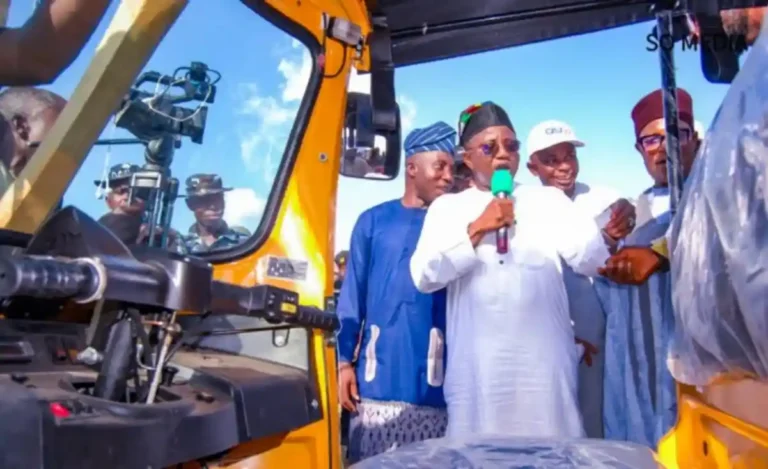
Governor Seyi Makinde has approved the payment of the 13th-month salary bonus for 2025 to Oyo State workers. He made the announcement on Monday at the executive chamber of his office, Secretariat, Agodi, Ibadan, while inaugurating the governing board of the Ladoke Akintola University of Technology (LAUTECH) Teaching Hospital, Ogbomoso. The governor said the 13th-month salary has been a tradition since he assumed office in 2019.

Makinde also revealed that outstanding salaries and minimum wage arrears owed to members of staff of LAUTECH had been cleared. He assured the public that his administration would soon address the ongoing strike by medical lecturers in the institution. According to him, the government is committed to restoring stability within the teaching hospital system.

He charged the newly inaugurated governing board to revamp the Oyo annexe of the teaching hospital within 12 months. Makinde promised full government support to ensure the facility becomes functional and meets the needs of residents. The board is chaired by Banji Oyelaran-Oyeyinka, while Aderemi Adediji will serve as secretary. Other members include Gabriel Oyelade, Adebayo Taiwo, Agnes Isola, Kehinde Ayinde, Adebayo Olakulehin, Adenike Olugbenga-Bello and Oluwajoba Olayinka.

Speaking on behalf of the board, Mr Oyelaran-Oyeyinka thanked the governor for the opportunity to serve, saying the team is ready to support the state’s health goals. He stated that the board would introduce policies capable of transforming LAUTECH Teaching Hospital into a world-class health facility.

In September 2025, Makinde increased the monthly subvention to LAUTECH Teaching Hospital, Ogbomoso by ₦35 million to reduce operational pressure and improve staff welfare. During the same period, he approved an ₦80,000 monthly stipend for 65 non-staff security personnel, bringing them in as ad-hoc workers as part of efforts to settle arrears and resolve the strike affecting medical lecturers.

Oyo Agency Gives Food And Cash To 10,000 Vulnerable Residents

0

The Oyo State Community and Social Development Agency on Monday distributed foodstuffs and cash gifts to over 10,000 widows, the aged, and people living with disabilities in the state. The OYCSDA Chairman, Abideen Adeaga, made this known while addressing beneficiaries at Alegongo Community Hall, Akobo, in Lagelu Local Government Area. He appreciated Governor Seyi Makinde for providing funds used in micro-projects across the state and for supporting vulnerable groups under the psychosocial programme.

Adeaga said, “We appreciate God and governor Makinde for giving our agency the leverage to impact people’s lives through the implementation of micro-projects in 144 communities in the areas of portable water, erosion control, education support and community healthcare centres, as well as this psychosocial support for those in dire economic conditions.” He explained that the programme was ongoing across the state, adding, “Over 10,000 beneficiaries are enjoying this psychological support programme across the state, which means as we are distributing the welfare packages here in Ibadan, people are doing the same in Oke-Ogun, Oyo, Ibarapa and Ogbomoso.”

Speaking on behalf of other beneficiaries, Hamzat Ade thanked the State Government for including support for widows, the aged and people with disabilities in its approach to governance.

According to officials, the psychosocial support programme was introduced under the Nigeria Community Action for Resilience and Economic Stimulus, backed by the World Bank, the Federal Government and the State Government. It focuses on providing relief to people facing economic hardship.

Dignitaries present at the event included the Chairman of Akinleye Local Government, Ayobami Akinwole, former Commissioner for Local Government and Chieftaincy Matters, Oribayo Okeyode, PDP State Organising Secretary, Wulemotu Ibitoye, and Babatunde Tijani among others.

This support aligns with other interventions in the state. In June, the government distributed 10kg bags of rice to 30,000 residents under the second phase of the Sustainable Action for Economic Recovery.

In December last year, about 12,000 residents across Oyo benefited from welfare items, funds and counselling under OYCSDA’s 2024 psychosocial programme, showing continued efforts to ease the burden on vulnerable citizens.

Apply for DSS medical officers recruitment (circulating claims)

0

Claims are circulating online, especially on Facebook, that recruitment for medical officers in the Department of State Services (DSS) is now open. The post lists categories such as “Medical Doctors, Dentists, Nurses, Pharmacists, Physiotherapists, Optometrists, Imagine Scientists, Clinical Psychologists, Medical Laboratory Scientists, and Dieticians.”

According to the information being shared, interested applicants are told to submit a comprehensive curriculum vitae with a handwritten application and photocopies of academic qualifications. These are said to be addressed to the “Director General State Services (DGSS).”

The claims also outline requirements, stating that applicants “must be a Nigerian, and the application MOST be submitted in the State Command of origin.” It adds that applicants must be between “twenty (20) and thirty (30) years,” and should possess five O’level credits including English in one sitting.

The circulating message further notes that applicants must hold at least a 2:2 Bachelor’s Degree or Higher National Diploma with lower credit from an institution accredited by the Federal Government, along with an NYSC discharge certificate. It also states that “Female applicants must be single and male applicants must be at least 1.60m in height.”

The post claims that “the recruitment exercise commences on Monday 15th, December, 2025,” and that applications must be submitted at the Administrative Unit of the DSS Command headquarters in each applicant’s state of origin. It ends by saying that further directives on the exercise “will be communicated in due course.”

Ajaokuta Lawmaker Launches Stipend Scheme for 200 Elderly Residents

0

Ajaokuta witnessed a three-day empowerment drive led by Hon. Sanni Egidi Abdulraheem (SEA), the Member representing Ajaokuta Federal Constituency in Nigeria’s House of Representatives. The event, which took place from November 1 to 3, 2025, marked one of the most extensive welfare outreach programmes seen in the area, focusing on strengthening community development and improving livelihoods.

The visit began with the launch of a Mega Empowerment Programme that targeted youths, women, farmers, traders, persons with disabilities, and senior citizens. The lawmaker rolled out various economic support items including motorcycles, tricycles, deep freezers, business tools and farm inputs.

He also introduced ICT training with start-up grants for young people and provided financial assistance for households considered vulnerable. According to Hon. Abdulraheem, this initiative was “a defining moment in the journey toward economic emancipation,” and he described each distributed item as “a seed of prosperity” meant to encourage self-reliance among constituents.

One of the major announcements was the introduction of a ₦10,000 monthly stipend for 200 elderly citizens. The lawmaker stated that the programme was designed to support ageing members of society who often struggle with welfare access.

He credited Kogi State Governor Ahmed Usman Ododo for enabling what he called “a supportive atmosphere for development,” noting projects such as the Ajaokuta Free Trade Zone, the Eganyi–Ebiya Road, and LNG installations. He also acknowledged former Governor Yahaya Bello for laying the developmental groundwork that allowed new initiatives to expand. Traditional rulers, political leaders, and hundreds of beneficiaries attended the event and celebrated what they described as an inclusive outreach.

Day Two of the tour focused on humanitarian programmes. Working with the State and National Emergency Management Agencies, SEMA and NEMA, Hon. Abdulraheem supervised the distribution of food relief across several communities. He explained that he personally pushed for Ajaokuta to be included in national relief coverage. “I represent everyone,” he said.

“The food must reach all Ajaokutans.” Elderly beneficiaries of the monthly stipend programme were also issued ATM cards to make disbursement easier. Community figures described the approach as a first in local welfare management.

The final day involved an inspection of the ongoing renovation of the Ajaokuta Local Government Secretariat. The lawmaker, accompanied by Executive Chairman Hon. Haruna Ogido, revealed that the building had not been renovated in more than thirty years, dating back to his own early civil servant days. He praised Governor Ododo for prioritising infrastructure renewal and commended Ogido for improved governance and security efforts.

Later, he met with thousands of residents from Geregu, Ajaokuta Village, Upake, and Adogu/Ogodo wards. Emphasising balanced representation, he said, “For the past three days, I have been home with my people, listening, engaging, and distributing support. No community will be left behind.” Residents from different ethnic groups expressed gratitude for what they described as a fair leadership model and assured support.

Closing the engagement, Hon. Abdulraheem connected current developmental progress with the policies of President Bola Ahmed Tinubu and Governor Ododo. He encouraged constituents to support their re-election bid in 2027, insisting that continuity at state and federal levels would sustain Ajaokuta’s development trajectory.

Stanbic IBTC, AfDB Partner to Boost Sustainable Financing

0

Stanbic IBTC Bank and the African Development Bank (AfDB) have entered a strategic partnership aimed at strengthening sustainable economic growth in Nigeria. The agreement enables Stanbic IBTC, a subsidiary of Stanbic IBTC Holdings Plc, to expand access to long-term financing for businesses that support job creation and national development.

According to a statement, the bank will channel the funding into critical sectors of the economy, including trade, infrastructure, and small and medium-sized enterprises (MSMEs). The initiative is expected to improve resilience in key industries while widening financial inclusion for companies that contribute to national progress.

The collaboration also highlights Stanbic IBTC’s commitment to sustainability. The bank noted that the deployment of funds will follow international standards and align with its internal sustainability framework. The Independent Project Monitoring Company (IPMC) recently ranked Stanbic IBTC as one of the leading institutions in sustainability performance, a recognition the bank says reflects its ongoing effort to support environmental and social responsibility.

“This agreement reflects our forward-looking strategy to support the sectors that matter most to Nigeria’s future. Our focus is on empowering businesses, enabling sustainable growth, and ensuring that our financial system remains strong enough to meet the evolving needs of the economy,” the chief executive of Stanbic IBTC Bank, Mr Wole Adeniyi, said.

Also commenting on the deal, the Director General of AfDB Nigeria, Mr Abdul Kamara, explained that the partnership supports AfDB’s mission. “Working with Stanbic IBTC aligns with our mission to accelerate Africa’s economic transformation. This collaboration ensures the bank can continue to play a pivotal role in financing infrastructure and sustainable development projects in Nigeria,” he stated.

AfDB has been active in Nigeria’s development efforts. In November 2025, the bank approved a US$500 million loan to support reforms in economic governance and energy transition. The intervention aims to improve the investment environment and strengthen infrastructure and private-sector growth.

Earlier in May 2025, AfDB introduced a new five-year Country Strategy for Nigeria for 2025 to 2030. The plan commits around US$650 million annually to support sustainable infrastructure, industrial expansion, and green growth with a focus on youth and women inclusion.

Recent Q3 2025 economic data show Nigeria’s real GDP grew by 3.98%, driven mainly by non-oil sectors like ICT, trade, agriculture, and financial services. These sectors are expected to benefit from the enhanced financing opportunities created by the AfDB partnerships.

Calpe Partners, AfriBA Partner Imo on OKOBI MSME Growth Platform

0

The recently concluded two-day Imo Economic and Investment Summit in Owerri continues to generate interest beyond the state as two international organisations, Calpe Partners USA and Africa Business Affairs (AfriBA), have shown willingness to collaborate with the Imo State government under the “One Kindred, One Business Initiative” (OKOBI) Microenterprise Growth Platform. This was disclosed by the Special Adviser to the Imo State Governor on Public Enlightenment, Prince Eze Ugochukwu, who said the state has also identified other investors and institutions around the world monitoring the initiative closely.

According to him, the OKOBI Microenterprise Growth Platform is designed to benefit over 1,000 Micro, Small and Medium Enterprises (MSMEs) in the state, with projections of achieving more than N600 billion in economic impact by 2028. The statement noted, “Just days after the lights dimmed on the 2025 Imo State Economic Summit, its impact has continued to ripple outward, reaching investors, business leaders, and institutions watching closely from across the world.

Among those impressed by the conversations and commitments emerging from the summit were Calpe Partners USA and Africa Business Affairs (AfriBA).”

The organisations were said to be moved by Imo State’s “bold demonstration of community-driven economic ambition”, leading to a collaboration which Ugochukwu described as one of Africa’s most promising enterprise development models.

He said, “The summit presented a tapestry of bold ideas and commitments, with OKOBI emerging as one of the pivotal expressions of that vision; investors recognised its potential, and together they have set in motion a model that may redefine how communities across Africa build wealth, create jobs, and scale enterprises from the ground up.”

The Special Adviser explained that the initiative would operate through a 16-week system combining pooled community capital, shared services, AI-enabled enterprise tracking, and a mix of business support structured to grow small businesses into scalable ventures.

He noted that the OKOBI model was created in Imo State under Governor Hope Uzodimma, adding that the governor’s summit speech clarified its grassroots economic focus, which helped convince Calpe Partners USA and AfriBA to enter into partnership at a continental level.

Ugochukwu highlighted the challenges the initiative seeks to address, stating that Africa has around 44 million micro-enterprises responsible for more than 60 percent of jobs and 40 percent of GDP, but these businesses only access 2 percent of global MSME capital flows. “The summit amplified this disparity, and the OKOBI platform emerged as a direct response,” he noted.

He revealed that AfriBA’s Managing Director, Mrs Jovita Agwu, had emphasised the potential of the initiative for wealth creation. She said, “With this service platform, we now have a scalable mechanism to ensure community enterprises move from survival to growth, and from growth to shared wealth. OKOBI communities are not just beneficiaries; they are engines of economic transformation.”

The OKOBI Microenterprise Growth Platform was described as an innovation combining finance injection with flexible revenue-sharing agreements, powered by automated repayment systems that recycle capital within cohorts. This structure, according to Ugochukwu, ensures the model remains self-sustaining while balancing social benefits, financial returns, and early-stage risk. The initiative, he said, “bridges the space between microfinance and traditional private equity, a gap long recognised but rarely addressed at scale.”

Ugochukwu further revealed that the founder and Chief Executive Officer of Calpe Partners would be partnering with the initiative, adopting what was described as a micro-private equity approach to African enterprise development. He added, “The OKOBI MSME Growth Platform marks a shift from short-term empowerment programmes to a long-term economic system. We are building the structure our small businesses need to thrive, scale, and compete, right here in Imo State.”

Projections released for the first cohort suggest that the platform would deliver by 2028 more than 30 percent MSME growth, over 20,000 jobs, N8 billion in deployed capital, N15 billion in revenue gains, and more than N600 billion in total economic impact. Ugochukwu explained that Calpe Partners and AfriBA are already collaborating with other institutions including the Imo Agribusiness Network, Paysoko, Innopower Africa, and Evatech.

These partnerships aim to close the financing gap between microfinance and private equity by launching the OKOBI programme with at least 20 businesses in the state, and then scaling the model across other African markets based on lessons from the initial rollout.

He said the summit had laid a foundation for deeper private sector involvement and international partnerships, attracting attention to Imo State’s economic ambitions. According to Ugochukwu, more investors are expected to show interest as the programme evolves, reinforcing the message that grassroots development, if properly structured, can draw global economic participation and create sustainable wealth pathways for communities.


NADDC’s Japan Trip Secures ELV Recycling Partnership

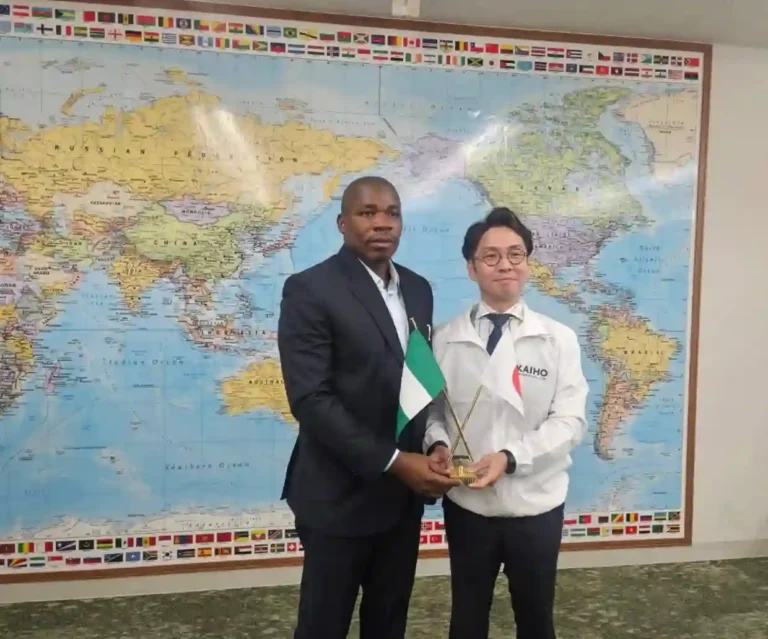
The National Automotive Design and Development Council (NADDC) has concluded a high-level working trip to Japan, securing new partnerships and technical cooperation to support Nigeria’s first modern End-of-Life Vehicle (ELV) recycling ecosystem. The visit was led by the Director General, Otunba Oluwemimo Joseph Osanipin, who explained that the engagement marks a major step in building a structured and sustainable automotive waste system in the country.

During the visit, the NADDC delegation held meetings with Kaiho Industry Co. Ltd., described as a global leader in End of Life Vehicle processing. Officials received detailed briefings on internationally certified recycling frameworks and toured dismantling, material recovery and eco-friendly waste treatment facilities. Kaiho reaffirmed its commitment to support Nigeria through what was called a multi-phase programme covering a pre-feasibility study, factory design, equipment installation, heavy machinery deployment and capacity-building trainings in both Japan and Nigeria. According to NADDC, this collaboration will help strengthen Nigeria’s auto used parts market and raise recycling standards.

The Council also held strategic talks with the United Nations Industrial Development Organization – Investment and Technology Promotion Office (UNIDO–ITPO) Japan. Discussions centred on Nigeria’s newly adopted ELV and Automotive Waste Recycling Regulations (2024). UNIDO officials commended the framework and explored new areas of cooperation, including links with JICA and opportunities to attract Japanese investors and technology partners into Nigeria’s growing ELV sector.

To reinforce diplomatic support, NADDC paid a courtesy visit to the Nigerian Embassy in Tokyo, briefing the Chargé d’Affaires, Mrs Folashade Shobande, on the mission’s objectives and investment opportunities within the automotive landscape. The Embassy pledged to continue facilitating investor linkages and industry-focused collaborations with Japanese stakeholders.

The delegation rounded off its mission with a meeting with the leader of the Nigerian community in Japan, Mr Emeka, sensitizing them on the ELV Regulations and automotive initiatives. They emphasized the need for collective support in ensuring vehicles exported to Nigeria, especially pre-owned, meet global standards.

The mission recorded progress toward building a safe, environmentally sound and economically viable ELV recycling industry that supports Nigeria’s circular economy, job creation ambitions and sustainable automotive growth.

Adamawa Begins PAWECA Data Capture for Fintiri Business Wallet Applicants

0

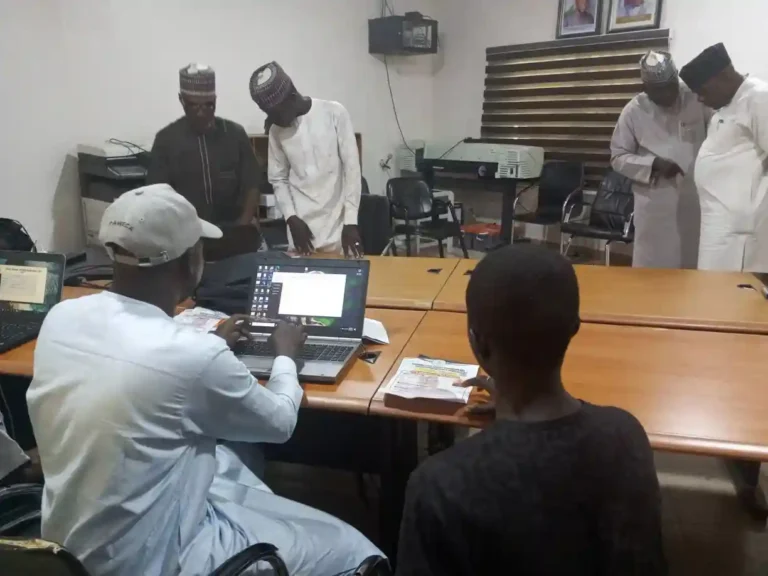
The Poverty Alleviation and Wealth Creation Agency, PAWECA, has begun data capture for beneficiaries of the Fintiri Business Wallet Empowerment Programme in Adamawa State. The Director-General of the agency, Dr. Michael Zira, expressed satisfaction with the turnout of applicants, describing the participation as encouraging. He urged intending beneficiaries to remain patient, explaining that the process is being carried out systematically to ensure transparency and fairness.

Dr. Zira said the Adamawa State Government remains committed to supporting small-scale business owners and boosting grassroots economic development through the empowerment initiative. According to officials, the data capture exercise is ongoing, and eligible applicants are expected to follow laid down procedures.

Requirements shared include that the bank account name must match the beneficiary name, and applicants who previously filled the Fintiri Business Wallet should not reapply. Microfinance and fintech accounts such as Opay, PalmPay, and Moniepoint are not accepted. Forms cannot be cancelled or corrected, and applicants must submit the original copy while keeping a photocopy for reference.

FG launches N50m Student Venture Capital Grant for campus innovation

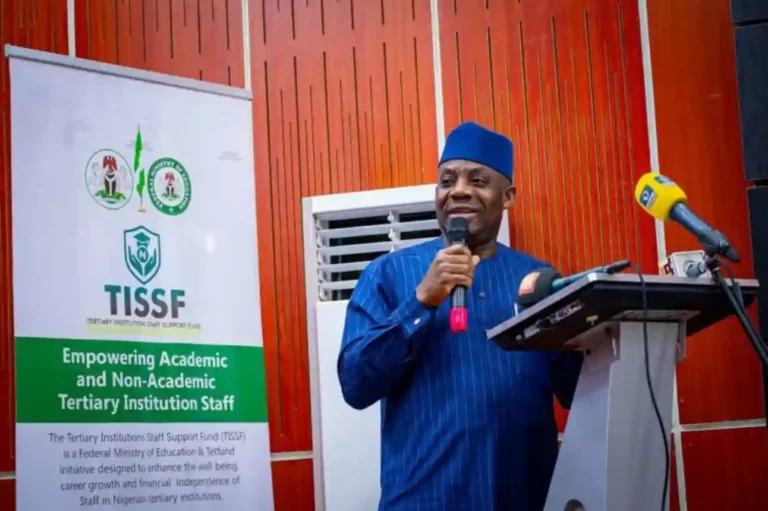
The Federal Government has launched the N50 million Student Venture Capital Grant (S-VCG) to boost innovation, research, and entrepreneurship across Nigeria’s tertiary institutions. The programme was unveiled on Monday in Abuja by the Minister of Education, Dr. Tunji Alausa, who said it reflects a strategic investment in young innovators under President Bola Tinubu’s Renewed Hope Agenda for Education.

Alausa explained that the programme is not just a grant initiative but a deliberate effort to identify bright ideas within campuses and nurture creativity among students. He said beneficiaries could access up to N50 million in equity-free seed funding, including incubation, expert mentorship, and access to vital startup development tools.

The initiative is jointly driven by the Federal Ministry of Education and TETFund, working with partners such as the Bank of Industry, Afara Initiative, Afrilabs, Entrepreneurship and Skills Development Centre, and Google. According to the minister, the programme is open to full-time students in federal, state, and private institutions from Year 3 upward, although younger students may participate when listed as team members. Eligible ideas must focus on Nigeria’s key development sectors Science, Technology, Engineering, Mathematics, and Medical Sciences.

“The S-VCG is structured to identify exceptional talent, give them a fair and credible opportunity to succeed, and inspire thousands of others to believe in their capacity to innovate,” Alausa stated. He added that many successful innovators did not achieve success on their first attempt, but their journey often began with a spark. According to him, the programme aims to light that spark and prove the strength of Nigerian ingenuity to the world.

He noted that successful applicants would receive support designed to raise their chances of developing scalable ventures. Alausa also said that eligible ventures must have a CAC-registered business name and demonstrate a strong foundation in STEM and medical fields. Every application will be carefully screened, after which shortlisted teams will pitch before a 12-member expert panel consisting of representatives from academia, industry, venture capital, and government. Participants are expected to receive feedback and may be matched with complementary teams to improve collaboration and shared innovation.

Alausa stressed that the programme intends to speed up research commercialisation, strengthen intellectual property development, and help students create globally relevant solutions. “Not every idea will become a startup, but some will evolve into patents and licensable technologies capable of significant impact,” he said.

Giving an overview of the programme, Mr. Adebayo Onigbanjo, National Programme Coordinator, said the grant seeks to close investment gaps that discourage venture capital investment in early-stage university projects. He revealed that the application portal recorded 17,914 entries from 402 schools, including 346 public and 56 private institutions, while over 1,000 applications have already been successfully submitted.

Former Minister of Power, Prof. Barth Nnaji, whose board awards a 100,000 dollar annual prize for scientific innovation, praised the initiative. He said it aligns with ongoing efforts to deepen research and create inventions with national and global relevance. “This is how students and their mentors can develop impactful inventions that serve global needs but solve local problems,” he noted.

The application portal opened on November 17 and will close on January 23, 2026, after which evaluation will commence. Eligible students are advised to apply through svcg.education.gov.ng.